
The right mixing drill is not simply the one with the biggest wattage. Match low-speed torque, paddle size, and duty cycle to the mortar, thinset, plaster, grout, or coating you actually mix.
Dense mortar, thinset, and self-leveling products can load a motor and twist a paddle suddenly. Follow the material maker’s mixing instructions, use a stable two-hand grip, and choose a mixer and paddle rated for the batch size.
What type of mixing drill should you buy?
For occasional paint, primer, or light joint compound, a variable-speed drill with a small paddle can be enough. For repeated thinset, mortar, plaster, or floor compound batches, choose a purpose-built mixing drill with a low-speed gearbox, side handles, and a paddle size the manufacturer approves. If you regularly mix dense material in full buckets, corded power and a robust two-hand mixer are usually the safer investment.
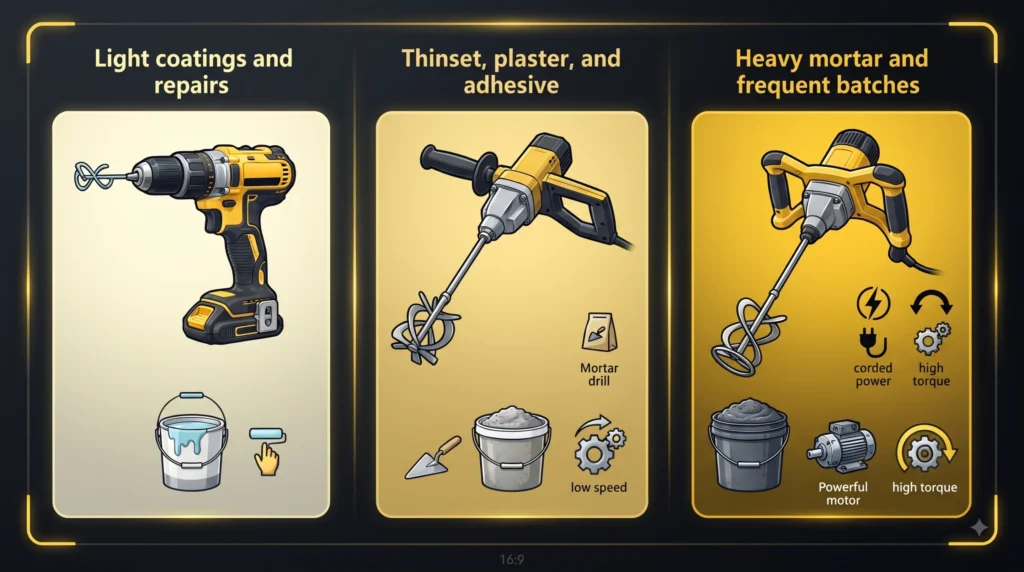
Light coatings and repairs
A quality variable-speed drill and small paddle can handle paint, primer, small grout batches, and light compound without overworking the tool.
Thinset, plaster, and adhesive
Look for slow, controllable mixing speed, a durable gearbox, and a comfortable two-hand handle layout for routine medium-bucket batches.
Heavy mortar and frequent batches
Prioritize torque, a large approved paddle diameter, mechanical speed control, and sustained corded power over portability or high top speed.
Mixing drill vs regular drill: what is the real difference?
A standard drill is built mainly for drilling holes and driving fasteners, often at high speed. A construction mixer is built around lower RPM, higher torque, a stronger gearbox, and better control under side load. That difference becomes obvious when a thick mix starts to resist the paddle. A regular drill may survive small, occasional batches, but frequent heavy mixing can overheat the motor, strain the chuck, and increase wrist fatigue.
Choose a mixer for the resistance you expect
The best mixing drill keeps turning steadily at low speed without forcing you to feather a trigger all day. A soft start helps reduce splashing, while a lockable speed setting can make longer mixes more consistent. For mortar and adhesive, stable control is more useful than a drill that advertises an extremely high maximum RPM.
A drill suitable for paint may not be suitable for dense mortar. Always check the tool manual for approved mixing applications, chuck capacity, and maximum paddle diameter.
Power and RPM: prioritize torque at a controlled speed
Published wattage, amp rating, and battery voltage are useful comparisons, but they do not tell the whole story. For a mixing drill, look at the rated low-speed range, gearbox design, paddle limit, and intended material class. Many cement-based products specify slow mixing to limit air entrainment and splashing. Use the material manufacturer’s instructions as the final authority.
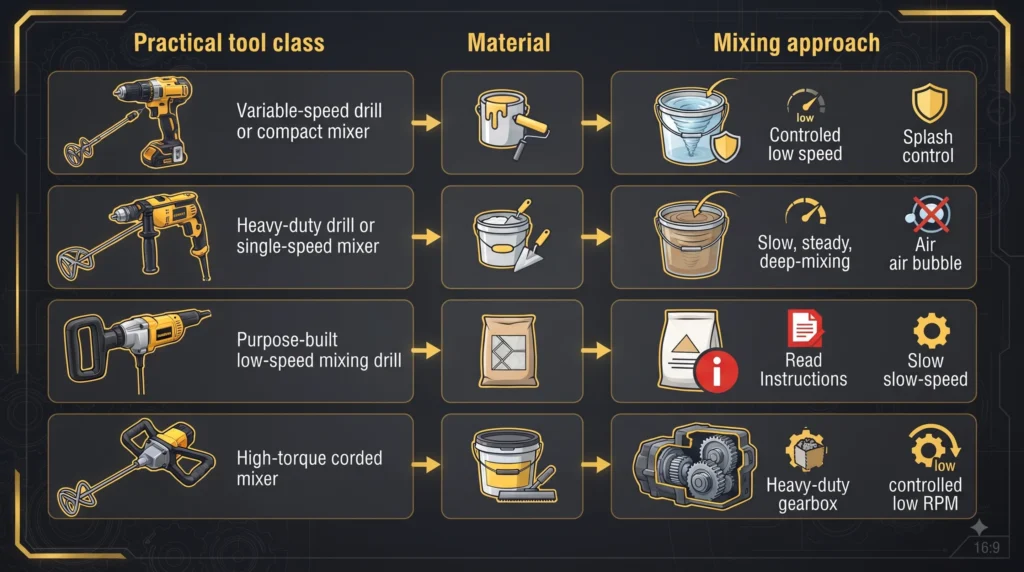
| Material | Practical tool class | Mixing approach | What matters most |
|---|---|---|---|
| Paint and primer | Variable-speed drill or compact mixer | Low to moderate speed with a small paddle | Splash control and easy cleanup |
| Grout and joint compound | Heavy-duty drill or single-speed mixer | Slow, steady speed; avoid whipping air in | Variable speed and an appropriate paddle |
| Thinset and tile adhesive | Purpose-built low-speed mixing drill | Slow speed following bag instructions | Low-speed torque and a two-hand grip |
| Mortar and self-leveling compound | High-torque corded mixer | Controlled low RPM; do not overspeed | Gearbox durability and batch capacity |
Paddle compatibility matters as much as the motor
A larger paddle moves more material, but it also increases load on the motor and your arms. Do not fit the biggest paddle that will physically enter the chuck. Use the maximum diameter specified for the mixer, and select a paddle shape intended for your material. Some designs pull material downward to reduce splashing; others lift dense mix from the bottom of the bucket.
Match the paddle to both mix and bucket
The paddle should clear the bucket wall and bottom without scraping. A paddle that is too small can leave dry pockets; one that is too large can stall the mixer or throw material over the rim. Check the paddle shank type as well: common options include hex, threaded, and chuck-mounted shafts.
- Keep the paddle submerged before starting to reduce splashing.
- Move around the bucket wall and bottom instead of holding the paddle in one spot.
- Clean the paddle before cured material can build up and affect balance.
Corded or cordless mixing drill?
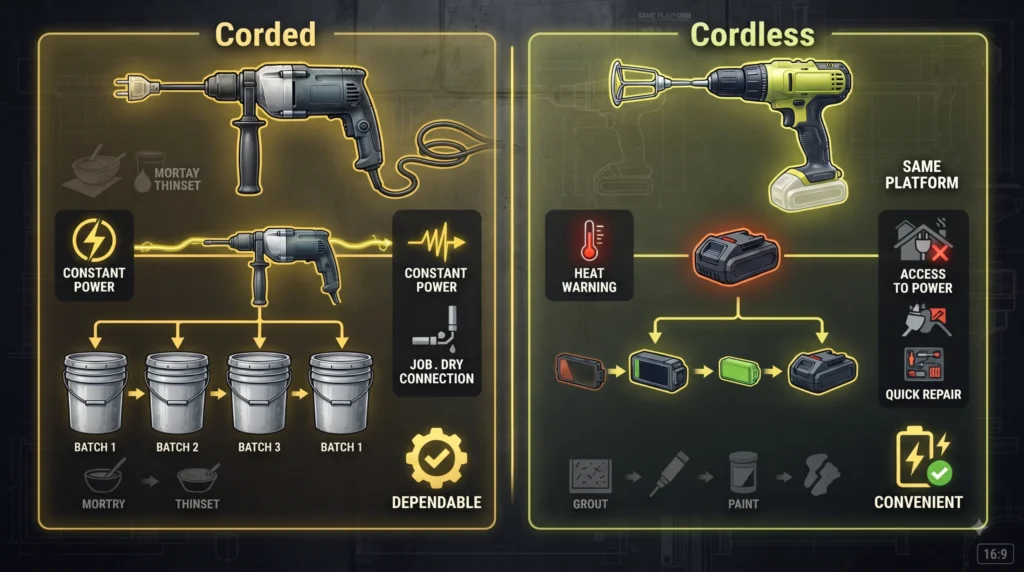
Cordless mixers are convenient for quick repairs, remote work, and smaller batches, especially when you already use the same battery platform. But repeated heavy mixing drains batteries quickly and can expose the tool to significant heat. For large batches of mortar, thinset, plaster, or self-leveling compound, a corded mixer is typically the more dependable choice because it can sustain power without battery swaps.
Best for repeated heavy work
Choose corded power when you need consistent output through a series of full buckets. Inspect extension leads, use suitable jobsite-rated cords, and keep connections clear of wet mixing areas.
Best for mobility and smaller batches
Cordless is useful when access to power is limited, but budget for spare batteries and respect the manufacturer’s batch-size guidance. Stop if the tool or battery becomes unusually hot.
Mixing drill safety: control the bucket, the cord, and the torque
Mixing is a high-torque task. Secure the bucket on a level surface, stand with balanced footing, and hold the mixer with both hands. Start slowly, keep the paddle below the material surface, and never reach into a bucket while the tool is plugged in or a battery is fitted. Check local rules and product safety data for dust, respirator, and skin-protection requirements.
Wear the PPE the material calls for
At minimum, use eye protection and suitable work footwear. Cement-based powders can create irritating dust and wet material can affect skin, so use gloves and respiratory protection as directed by the product label and safety data sheet.
Mixing drill categories compared
Instead of naming a universal “best mixing drill,” compare the tool class against the workload. Exact specifications vary by manufacturer and model, so use these categories to narrow your shortlist before checking each product’s rated paddle size and approved applications.
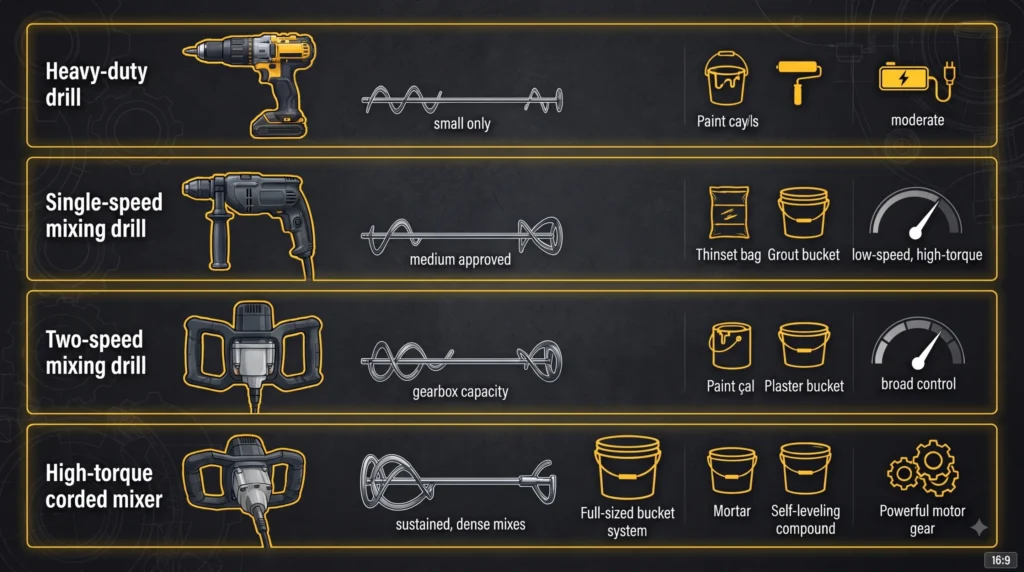
| Mixer category | Typical strength | Paddle guidance | Best for |
|---|---|---|---|
| Heavy-duty drill | Moderate; dependent on drill gearbox and battery or mains supply | Small paddle only, within manual limits | Paint, primer, light compound, occasional small grout batches |
| Single-speed mixing drill | Low-speed, high-torque design | Medium paddle approved by maker | Thinset, grout, plaster, tile adhesive, regular trade use |
| Two-speed mixing drill | Broadest practical control range | Medium to large, depending on rated gearbox capacity | Mixed workloads where different materials need different mixing speeds |
| High-torque corded mixer | Built for sustained, dense mixes | Large approved paddle and bucket system | Mortar, self-leveling compound, large plaster jobs, frequent full batches |
Mixing drill FAQs
Can I use a regular drill to mix mortar?
For a very small, occasional batch, some heavy-duty drills may be capable if their manufacturer permits mixing and you use an approved paddle. But mortar places high load on the motor, gearbox, chuck, and user. For repeated work or larger batches, a purpose-built mixing drill is the safer and more durable choice.
What RPM is best for a mixing drill?
There is no universal RPM because product instructions vary. Many cement-based products call for slow mixing to reduce air and splashing, while lighter coatings may tolerate more speed. Start with the material manufacturer’s instructions, then choose a mixer that can hold that speed under load rather than racing at a high no-load RPM.
Should I buy a corded or cordless mixer?
Cordless mixers work well for portable, smaller, or occasional batches when you have enough battery capacity. For daily trade use, dense mixes, and multiple full buckets, corded mixers normally provide more dependable sustained power and avoid downtime from battery changes.