

An oscillating multi tool earns its place on a workbench by making controlled cuts where bigger saws cannot fit. Here are the oscillating tool uses that matter most, and the accessory to choose for each job.
An oscillating multi tool is best for precise plunge cuts, flush cuts, scraping, grout removal, and sanding in tight spaces.
Its accessory moves rapidly through a very small side-to-side arc rather than spinning in a full circle. That controlled motion lets you work close to walls, floors, trim, and finished surfaces, provided you use a blade rated for the material.
What is an oscillating multi tool?
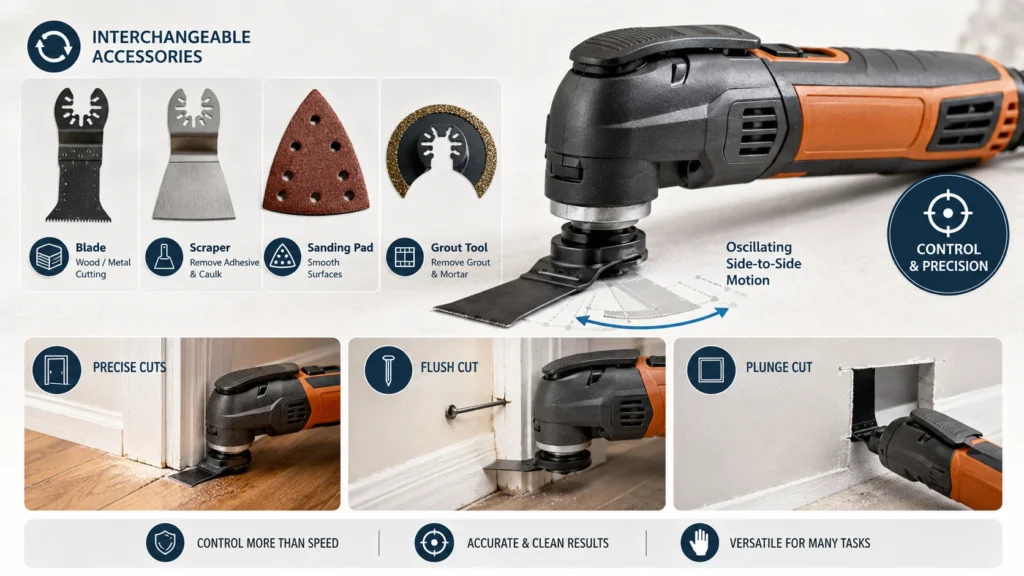
An oscillating multi tool is a handheld power tool that accepts interchangeable blades, scrapers, sanding pads, and grout-removal accessories. Its motor drives the attachment through a small oscillating arc, often measured in oscillations per minute (OPM).
The small movement makes the tool especially useful when you need control more than speed. Think of trimming a door jamb from the floor up, cutting a nail behind installed trim, or opening a neat rectangle in drywall. Check your tool manual and the accessory packaging for approved materials and mounting compatibility.
10 practical oscillating tool uses
For every job, match the accessory to the material, support the workpiece where possible, and let the teeth do the cutting. Pressing hard usually creates extra heat and shortens blade life.
1. Make plunge cuts
Use a wood or drywall-rated plunge blade to start a cut in the middle of a panel—useful for access openings, outlet cutouts, or a small repair. Mark the depth first; the tool is precise, but it can still reach wiring or pipes behind a wall.
2. Make flush cuts
A flush-cut blade can trim a protruding dowel, cut a fastener near a surface, or shorten pipe close to a wall. Keep the blade flat and protect nearby finished surfaces with a thin shim when practical.
3. Trim wood and repair trim
Fine-tooth wood blades handle small cuts in baseboards, cabinet parts, trim, laminate, and wood panels. It is excellent for adjustment cuts; for long sheet cuts, a jigsaw or circular saw is normally faster.
4. Cut nails, screws, and thin metal
Fit a bi-metal blade rated for metal to cut a finish nail, screw, or thin non-structural metal. Work patiently and expect heat. This is not the efficient choice for thick steel, rebar, or high-volume metal cutting.
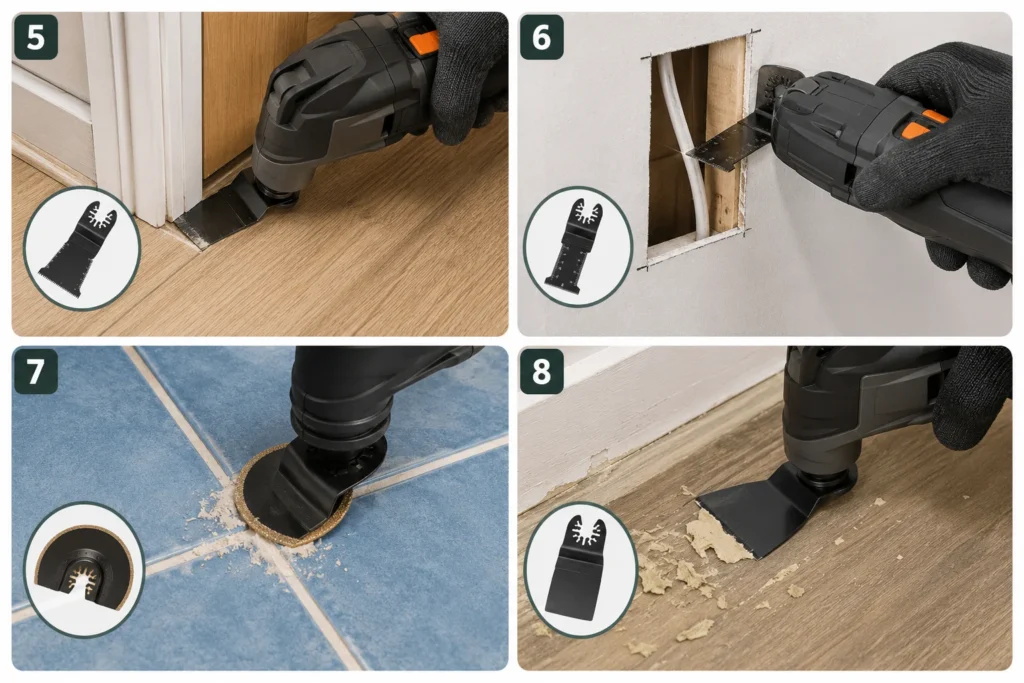
5. Undercut door jambs
For flooring installation, lay a flooring offcut and underlayment beside the jamb as a height guide. Rest a wood blade on the guide and make a controlled horizontal flush cut so the new floor can slide neatly underneath.
6. Cut drywall openings
A plunge blade makes tidy openings for electrical boxes, vents, or patch work where a larger saw would be awkward. Before cutting existing walls, verify that the planned path is clear of live electrical wiring and plumbing.
7. Remove damaged grout
Use a carbide or diamond-rated grout accessory to remove grout from around a damaged tile. Stay centered in the joint and make light passes; aggressive pressure can chip tile edges or damage waterproofing behind the tile.
8. Scrape adhesive, caulk, and residue
A rigid or flexible scraper blade can lift softened adhesive, old caulk, flooring residue, and loose paint. Test a small area first—some substrates scratch easily, and very hard adhesive may need a different removal method.
9. Sand corners and edges
The triangular pad reaches corners on trim, furniture, stairs, and window frames. Start with the grit appropriate for the surface, keep the pad moving, and use dust collection or a suitable respirator for dust-producing work.
10. Make small flooring adjustments
An oscillating tool helps notch laminate or engineered flooring around casings and make small correction cuts during remodeling. Use it for the detail work; use a dedicated flooring saw or circular saw for repeated long cuts.
Choose the blade before you choose the speed
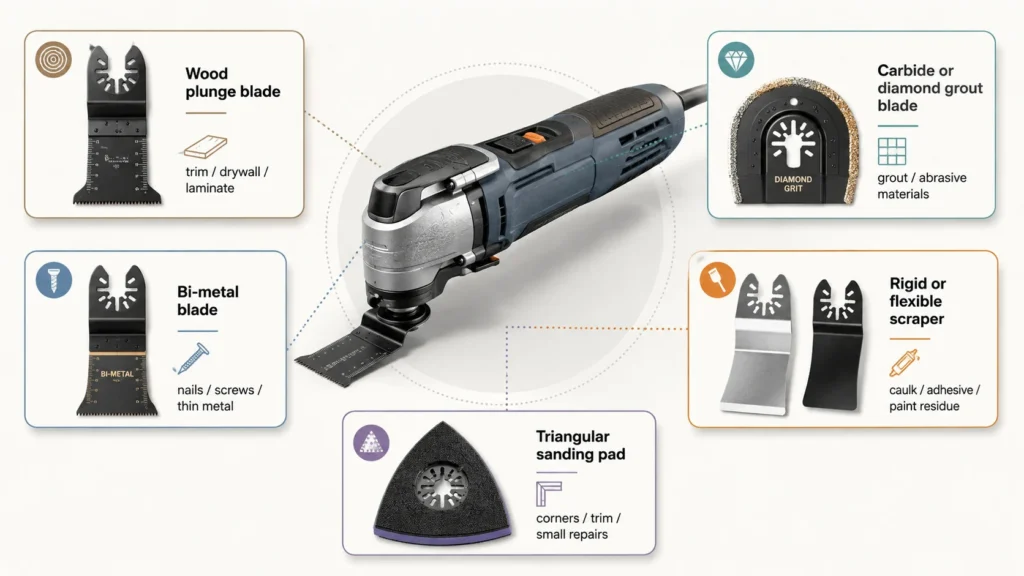
Not all oscillating tool blades are universal. Mounting systems and accessory interfaces vary, so verify compatibility with your exact tool before buying. A blade that fits is not automatically rated for every material.
| Accessory | Best use and watch-out |
|---|---|
| Wood plunge blade | Trim, wood panels, drywall, and laminate. Choose tooth spacing appropriate for the finish you need. |
| Bi-metal blade | Nails, screws, and thin metal. Cut slowly enough to manage heat and avoid forcing the blade. |
| Carbide or diamond grout blade | Grout joints and some abrasive materials. Keep it in the joint to protect tile edges. |
| Rigid or flexible scraper | Caulk, adhesive, paint residue, and soft flooring material. Flexible blades are gentler on delicate surfaces. |
| Triangular sanding pad | Corners, trim, and small repairs. Replace worn hook-and-loop sheets for consistent sanding. |
Oscillating tool vs. other power tools
The multi tool is a specialist in access and control. It complements other saws instead of replacing them.
| Tool | Best for |
|---|---|
| Oscillating multi tool | Precise plunge cuts, flush cuts, scraping, sanding, and tight spaces. |
| Jigsaw | Curved and longer cuts through sheet material. |
| Reciprocating saw | Fast demolition and rough cutting with longer blades. |
| Circular saw | Long, fast, straight cuts in sheet goods and lumber. |
| Angle grinder | Aggressive metal cutting, grinding, and some masonry work. |
| Rotary tool | Fine-detail cutting, grinding, engraving, and very small workpieces. |
Use it safely: four non-negotiables
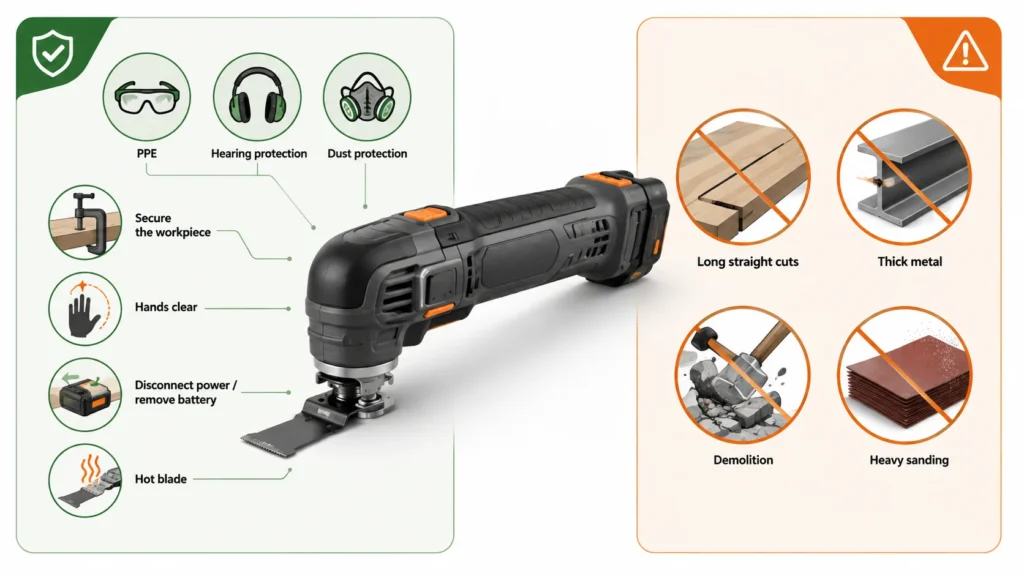
Wear eye protection and hearing protection; use suitable dust protection for dust-producing materials. Secure the work, keep hands clear of the accessory path, unplug or remove the battery before changing accessories, and never touch a blade immediately after a cut—it can be hot.
Jobs it is not ideal for
An oscillating tool is generally not the best choice for long, fast, straight cuts; thick structural metal; large demolition; or high-volume sanding. Choose the tool built for the job when speed, cut depth, or production output matters most.
Oscillating multi tool FAQ
Can an oscillating tool cut wood, drywall, and PVC?
Yes, with a blade specifically rated for the material. Wood and drywall are common uses, and some manufacturer-rated blades can cut PVC. Read the blade packaging rather than assuming any toothed blade is suitable.
Can an oscillating tool kick back?
It does not react like a circular saw, but the accessory can bind, snag, or jump if forced into the material. Use a stable grip, start gently, let the blade establish the cut, and keep your body and hands out of the accessory path.
Is an oscillating multi tool worth owning for DIY?
For homeowners doing trim, flooring, drywall repairs, bathroom refreshes, or small remodeling tasks, it is often one of the most useful specialty tools. Its value comes from solving awkward detail jobs rather than replacing a drill, circular saw, or jigsaw.