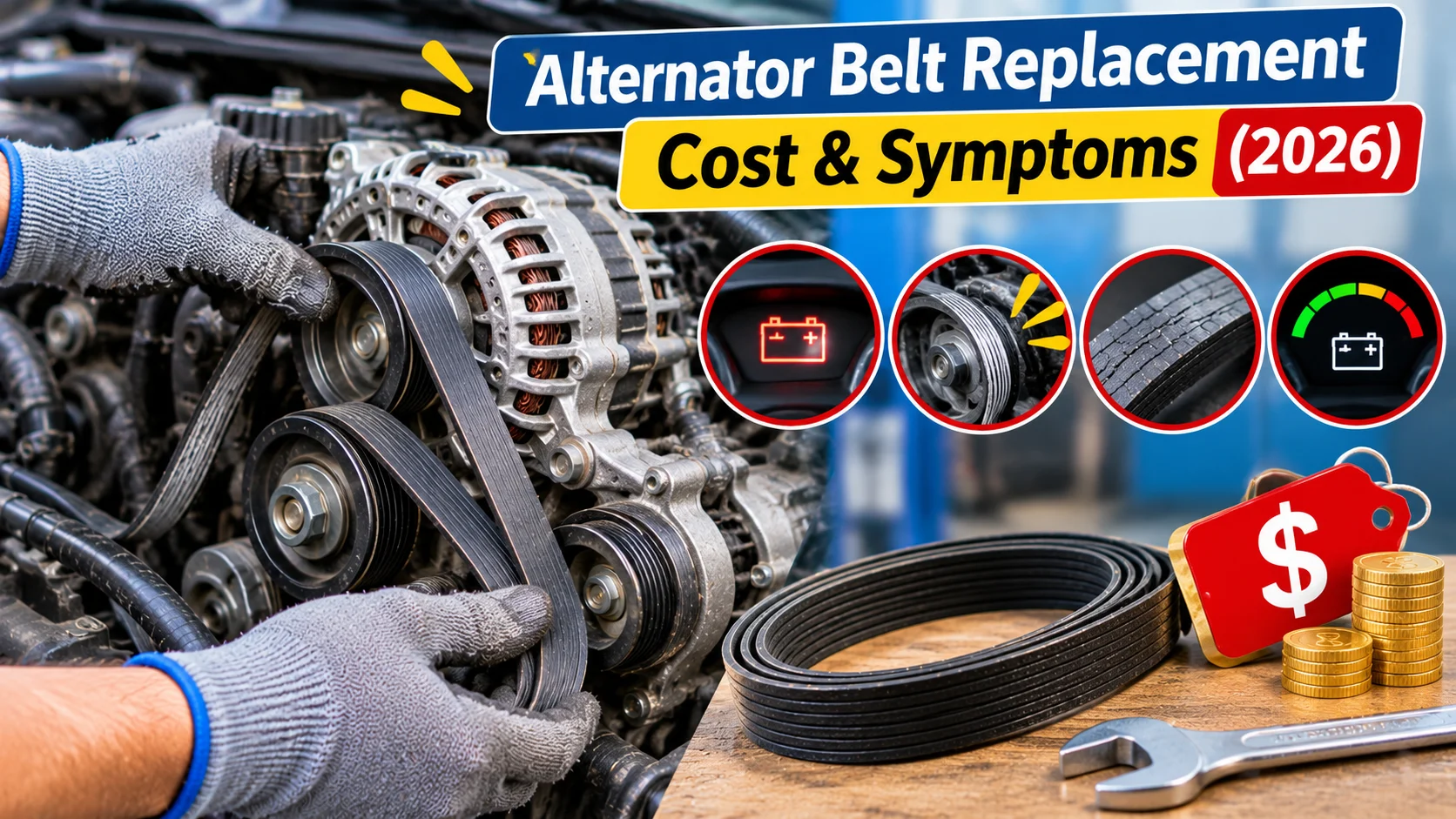
The alternator belt replacement cost typically depends on your vehicle’s belt design, labor requirements, and whether other components need attention. If you hear squealing from under the hood, notice a battery warning light, or discover a worn drive belt, you may be wondering whether a simple belt replacement will solve the problem or if a more expensive repair is necessary.
In many modern vehicles, the alternator is driven by a serpentine belt that also powers other accessories. Some older vehicles use a separate alternator belt. Understanding which system your car uses is important because replacement procedures, repair prices, and potential consequences of belt failure can differ.
Quick Answer: Alternator Belt Replacement Cost
According to RepairPal’s September 2026 national estimate, serpentine belt replacement averages $154–$212 in the United States, including approximately $65–$82 in parts and $89–$130 in labor. A vehicle with a dedicated alternator belt may have a different cost. Additional tensioner, pulley, or charging-system repairs can increase the total. Common warning signs include belt squealing, visible wear, and charging problems, but these symptoms require diagnosis before replacing parts.
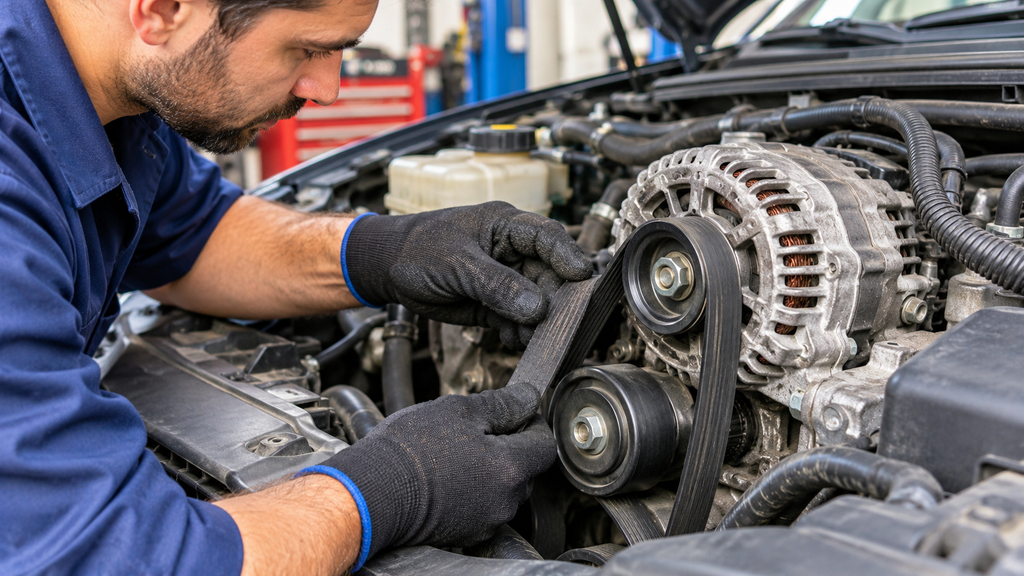
How Much Does Alternator Belt Replacement Cost in 2026?
For a vehicle where the alternator is driven by a serpentine belt, RepairPal estimates the average US replacement cost at $154 to $212. This includes parts and labor but excludes taxes, fees, location-specific differences, and related repairs.
The actual cost for alternator belt replacement can be lower or higher depending on whether your vehicle has a dedicated alternator V-belt, a multi-rib accessory belt, or a serpentine system requiring additional component removal.
Average Parts and Labor Cost
| Cost Component | 2026 US Estimate | Description |
|---|---|---|
| Replacement belt parts | $65–$82 | Estimated serpentine belt parts expense |
| Labor | $89–$130 | Professional replacement labor |
| Total replacement | $154–$212 | National average repair estimate |
Source: RepairPal Serpentine Belt Replacement Cost Estimate, updated September 3, 2026. Individual estimates may differ.
Alternator Belt Replacement Cost by Vehicle
Vehicle-specific serpentine belt estimates demonstrate why one national price should not be treated as a guaranteed quote.
| Vehicle | Estimated Replacement Cost |
|---|---|
| Toyota Camry | $145–$204 |
| Honda Civic | $148–$194 |
| Toyota Corolla | $107–$151 |
| Ford F-150 | $136–$181 |
| Chevrolet Silverado 1500 | $196–$303 |
These are RepairPal model-level estimates, not prices for every year, engine, trim, or belt configuration. Confirm your vehicle’s exact specifications before comparing quotes.
What Affects the Total Replacement Cost?
Vehicle Make, Model, and Engine
Some vehicles provide straightforward belt access, while others have limited space around the engine. A transverse engine layout may require special tools or removal of nearby components.
Labor Rates and Repair Shop
Local labor rates differ significantly. Dealerships and independent repair shops may also use different labor pricing and parts-selection policies.
Tensioner and Idler Pulley Condition
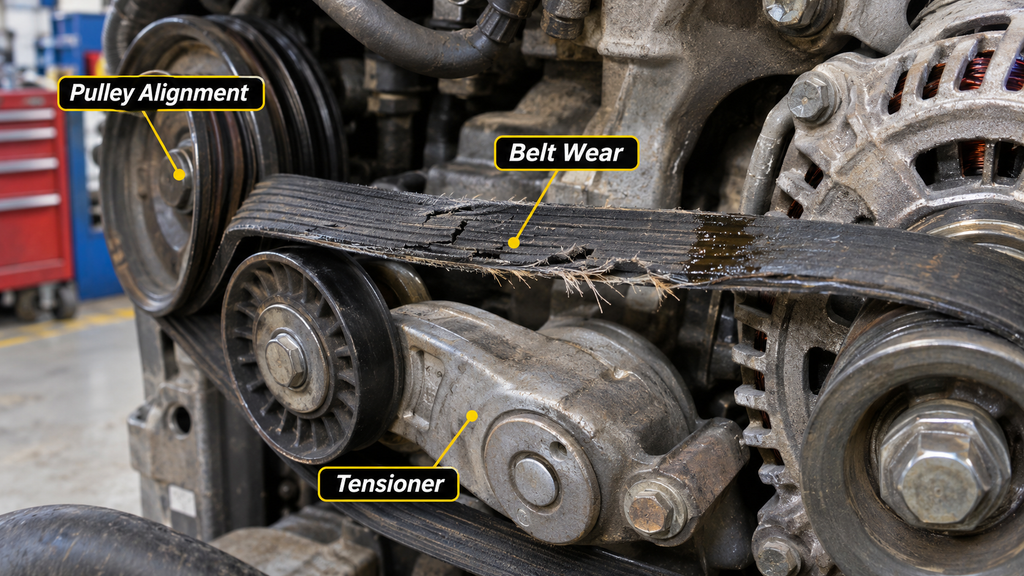
If a tensioner is weak or an idler pulley bearing is failing, replacing the belt alone may not resolve squealing or premature wear. Additional repairs should be supported by inspection findings.
Original Equipment vs. Aftermarket Parts
Different belt brands can vary in price, construction, warranty, and availability. Choose a belt that matches the vehicle’s engine and accessory configuration.
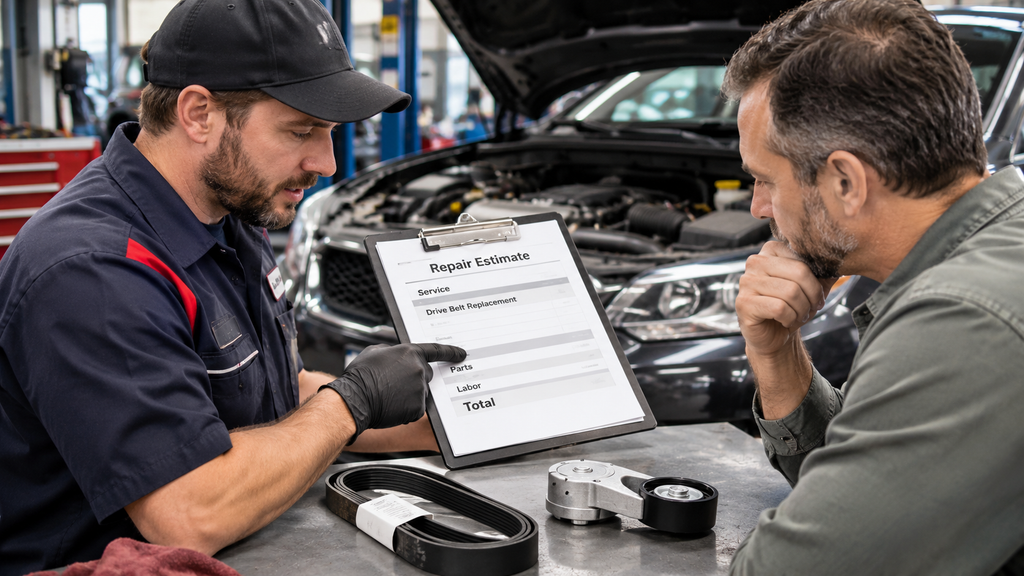
What Is an Alternator Belt and What Does It Do?
An alternator belt is an engine-driven accessory belt that transfers rotational power from the crankshaft pulley to the alternator. When the engine runs, the belt turns the alternator pulley so the charging system can generate electricity.
The alternator supplies electrical power while the engine is running and helps recharge the battery. If the belt stops driving the alternator, the vehicle may temporarily operate using battery power until the available charge becomes insufficient.
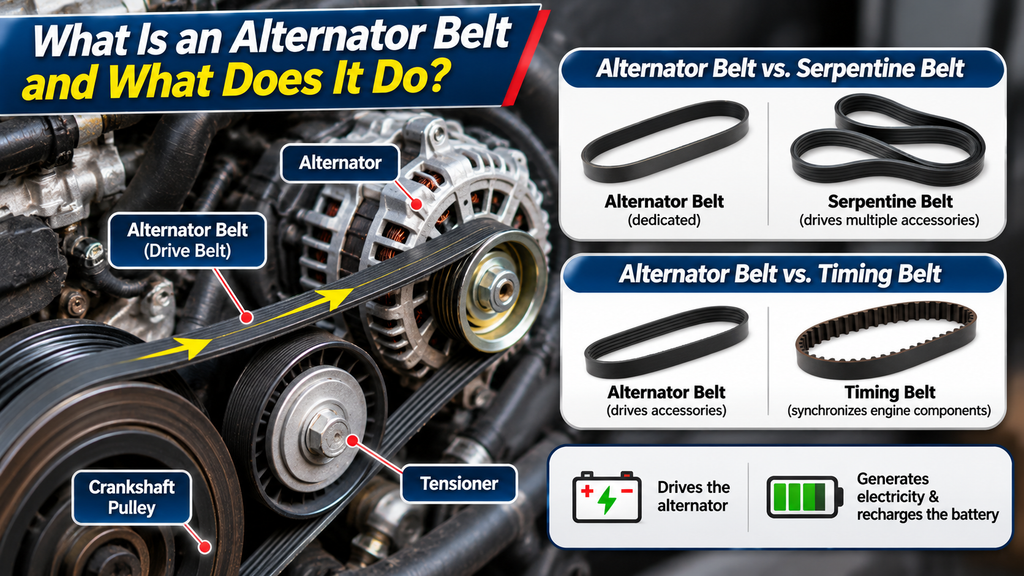
Alternator Belt vs. Serpentine Belt
A dedicated alternator belt drives the alternator as part of a specific accessory-belt arrangement. A serpentine belt is a single multi-rib belt that follows a routed path around multiple accessory pulleys.
On many modern engines, the serpentine belt operates the alternator along with accessories such as the air-conditioning compressor and, where fitted, a belt-driven power steering pump or water pump.
Other engines use multiple belts or electric accessories, so the exact equipment powered by a belt depends on the vehicle.
Alternator Belt vs. Timing Belt
An alternator belt drives external accessories. A timing belt synchronizes engine components such as the crankshaft and camshafts on engines designed with a timing belt.
These belts serve very different purposes and have different replacement procedures. An estimate for alternator or serpentine belt replacement should never be confused with a timing belt replacement quote.
Alt: Serpentine accessory belt diagram showing alternator, crankshaft, tensioner, and idler pulleys.
Common Symptoms of a Bad Alternator Belt
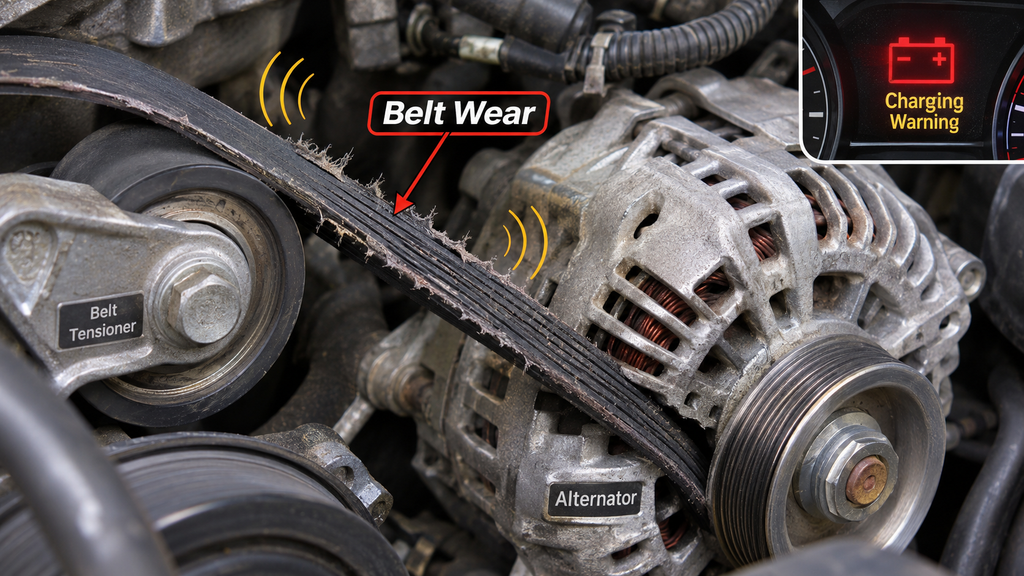
A deteriorated alternator belt may produce noise, show visible wear, or affect charging performance. However, none of these signs proves that the belt alone is defective. A worn tensioner, misaligned pulley, or alternator problem can cause similar symptoms.
1. Squealing or Chirping Noise From the Engine
A high-pitched squeal from the front of the engine is a common reason drivers suspect a worn alternator belt. Belt slippage can occur when tension is insufficient, a pulley is misaligned, or fluid contaminates the belt.
A chirping sound may also indicate a pulley alignment or bearing issue. The mechanic should inspect the entire accessory drive rather than immediately fitting a new belt.
2. Battery Warning Light Appears
If the belt slips severely or stops turning the alternator, the charging system may fail to supply adequate electrical power. The battery or charging warning light may illuminate.
The same warning can also occur because of alternator failure, wiring problems, charging-system faults, or other electrical issues. Proper testing is necessary to distinguish these possibilities.
3. Visible Cracks, Fraying, or Missing Belt Material
A belt with damaged ribs, missing chunks, fraying edges, or exposed reinforcement material may need replacement. Severe deterioration increases the possibility of belt failure.
Modern EPDM serpentine belts may also wear through gradual rib material loss without obvious cracking. Consequently, visual checks alone may not reveal every worn belt. Appropriate belt-wear measurement tools can help.
4. Intermittent Charging Problems
An alternator belt that slips may reduce alternator output under certain operating conditions. Depending on the vehicle, this can contribute to electrical warnings or insufficient battery charging.
However, dim lights, slow starting, and other electrical symptoms can result from battery or alternator faults even when the belt is working correctly.
5. Heavy Steering or Rising Engine Temperature
On vehicles where the accessory belt drives a hydraulic power steering pump, belt failure can cause a sudden loss of steering assistance. If the same belt operates the engine water pump, cooling-system circulation may also be affected.
Not all vehicles use this configuration. Many have electric power steering or a water pump driven by another mechanism.
| Symptom | Possible Cause | Next Step |
|---|---|---|
| Engine squealing | Slipping belt or tensioner fault | Inspect belt drive |
| Battery warning light | Charging problem or belt failure | Stop safely and diagnose |
| Frayed belt edges | Belt wear or misalignment | Assess belt and pulleys |
| Heavy steering | Possible loss of hydraulic assist | Stop safely; seek assistance |
| Rising temperature | Possible water-pump drive failure | Stop engine safely |
What Causes an Alternator Belt to Fail?
Accessory belts operate under repeated bending, temperature changes, and mechanical load. Normal wear contributes to deterioration, but some belts fail prematurely because of problems elsewhere in the accessory drive system.
Normal Belt Wear and Aging
Over time, belt rubber can lose material, develop surface damage, or experience deterioration. Heat, mileage, driving conditions, and maintenance history can all affect belt life.
Incorrect Belt Tension
Insufficient tension may allow slippage and noise. Excessive tension on manually adjusted systems can place unnecessary load on bearings and accessories.
Automatic tensioners regulate belt loading, but their springs, bearings, pivots, and dampers can wear.
Pulley Misalignment
A pulley that does not align correctly with the belt path may cause chirping, abnormal belt tracking, and edge wear. A replacement belt may quickly develop the same problem if the alignment issue remains unresolved.
Worn Idler Pulley or Tensioner Bearings
A rough or seized pulley bearing can create noise, heat, abnormal belt loading, or complete belt-drive failure. Qualified inspection should determine which component needs attention.
Oil or Coolant Contamination
Engine oil or coolant leaking onto a belt can affect friction and damage belt material. A mechanic should identify and correct the fluid leak before installing a replacement belt.
Do not use belt dressing as a substitute for diagnosing the cause of persistent squealing.
Can You Drive With a Bad Alternator Belt?
Driving with a deteriorated alternator belt carries a risk of unexpected failure. The urgency depends on whether the belt is still intact, the actual condition of the accessory drive, and which components the belt powers.
A complete belt failure may stop alternator charging. Some vehicles may continue operating briefly on stored battery power, but there is no reliable distance or time that applies to every vehicle.
When to Stop Driving
- The belt breaks, comes off a pulley, or is visibly shredding.
- The battery or charging warning light appears while the engine is running.
- Steering assistance suddenly disappears or becomes unusually heavy.
- The engine temperature begins rising unexpectedly.
- You hear severe grinding or other abnormal accessory-drive noises.
Move to a safe location, stop the engine when appropriate, and arrange professional assistance. If the vehicle is overheating, do not continue driving.
What Happens if the Alternator Belt Breaks?
If the belt drives only the alternator, charging stops and the vehicle depends on the remaining battery charge. If it also powers a hydraulic steering pump, steering effort may increase substantially. If it drives the water pump, engine overheating can occur.
Because these consequences vary by design, the safest response to a suspected broken accessory belt is to avoid continuing the journey and obtain an inspection.
How Is an Alternator Belt Replaced?
The exact procedure differs by vehicle. Most conventional serpentine belt replacements involve inspecting the belt-drive system, releasing belt tension, removing the old belt, installing the correct replacement, and verifying its operation.
Step 1: Inspect the Belt and Accessories
With the engine off, cool, and secured against accidental starting, the technician examines the belt, tensioner, pulleys, and nearby components for damage, contamination, and alignment problems.
The technician should confirm that the belt is responsible for the complaint before ordering replacement parts.
Step 2: Confirm the Correct Belt Routing
The belt routing diagram is checked against the vehicle’s engine configuration. Accessory-drive systems may differ even between trims or engine choices of the same model.
Step 3: Release Tension and Remove the Belt
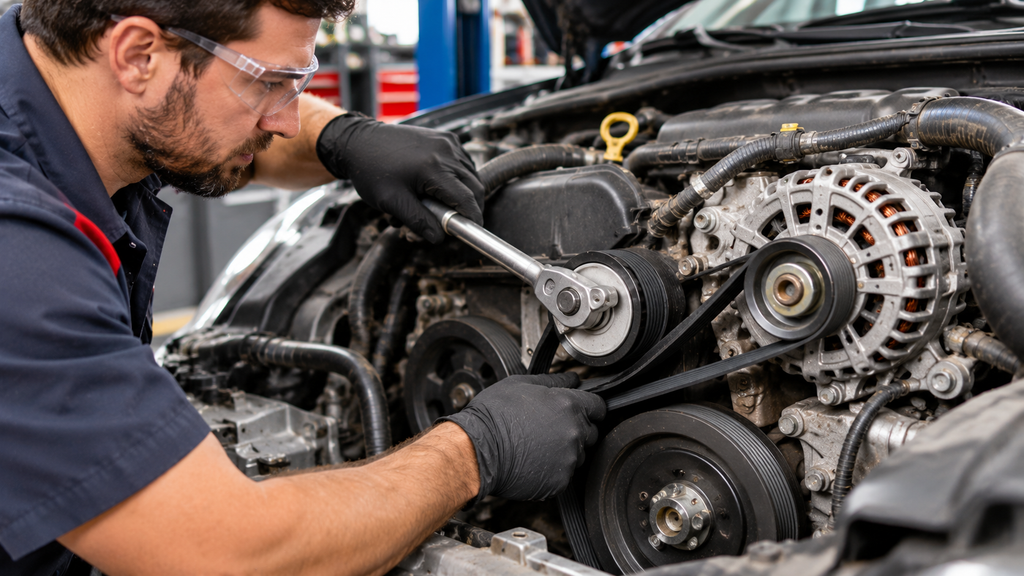
On systems with an automatic tensioner, the correct tool is used to move the tensioner according to the manufacturer’s service instructions. Systems with manual belt adjustment require a different procedure.
A tensioner can contain substantial spring force. Incorrect tool use can cause injury or component damage.
Step 4: Install the Replacement Belt
The new belt must match the vehicle’s required length, rib count, and routing configuration. It is positioned around the designated pulleys, with the grooves fully seated where applicable.
The technician then restores the specified tension using the correct method for the belt system.
Step 5: Verify Belt Tracking and Charging
After ensuring all tools are removed and guards are correctly fitted, a professional may check belt tracking and accessory operation using the vehicle’s approved service procedure.
If the vehicle previously showed charging problems, the charging system should also be tested rather than assuming the new belt has resolved every issue.
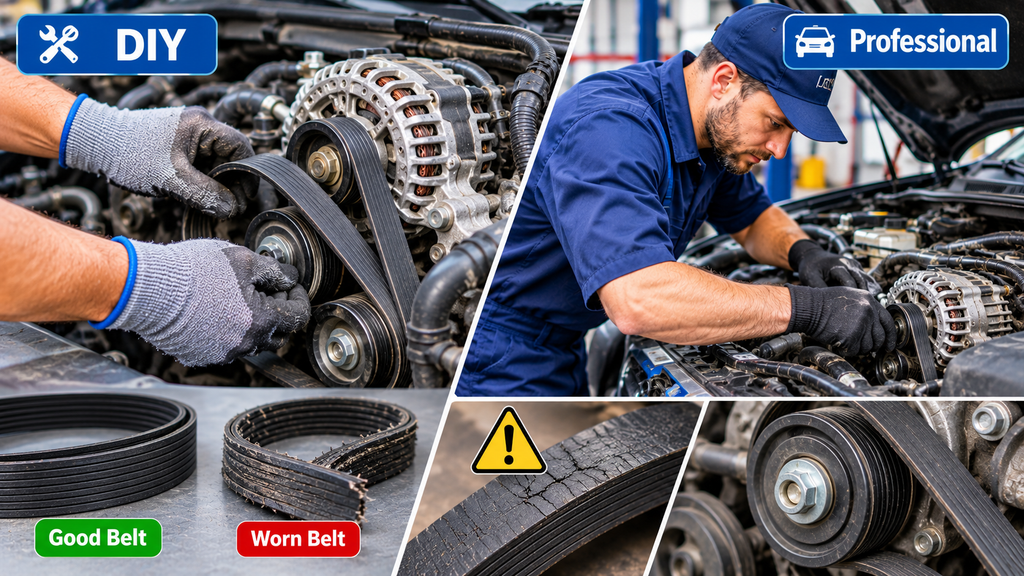
DIY vs. Professional Alternator Belt Replacement
Replacing an accessible accessory belt may be manageable for someone with mechanical experience and the correct tools. However, difficult access, spring-loaded tensioners, and complicated belt routing can make the job unsuitable for beginners.
| Factor | DIY Replacement | Professional Replacement |
|---|---|---|
| Cost | Parts and tools | Parts and labor |
| Experience | Mechanical knowledge needed | Qualified technician |
| Diagnosis | Depends on tools and knowledge | Can include belt-drive and charging tests |
| Best suited for | Accessible, straightforward systems | Complex or uncertain repairs |
When Should You Choose a Mechanic?
Professional service is preferable when you cannot identify the cause of belt noise, the belt has come off repeatedly, an accessory pulley appears damaged, the engine bay has restricted access, or the vehicle has an unresolved charging-system warning.
Never work near a running accessory drive or place hands near rotating pulleys. Follow vehicle-specific service instructions before attempting any repair.
How Long Does an Alternator Belt Last?
There is no universal replacement interval for every alternator belt. Belt construction, engine design, operating conditions, and manufacturer maintenance schedules all influence service life.
Some accessory drive belts may last many tens of thousands of miles, but mileage alone should not determine whether a belt is safe to reuse. Follow your vehicle’s maintenance schedule and inspect the complete belt-drive system when symptoms occur.
Signs the Belt Should Be Inspected or Replaced
- Visible fraying, missing ribs, or structural damage.
- Abnormal belt wear measured with the appropriate gauge.
- Persistent slipping or belt noise after proper diagnosis.
- Oil or coolant contamination affecting the belt.
- Incorrect belt tracking or recurring belt failure.
- A manufacturer-specified replacement interval has been reached.
A relatively new belt may still fail early if a tensioner, pulley, or accessory bearing is defective. Inspecting the system as a whole helps avoid repeat repairs.
How to Save Money on Alternator Belt Replacement
The best way to manage alternator belt repair expenses is to confirm what actually failed and compare estimates for the same repair scope.
Ask for an Itemized Repair Estimate
Request separate charges for the belt, labor, and any recommended tensioner or pulley replacement. Confirm whether diagnostic fees and shop charges are included.
Compare Equivalent Parts and Warranty Coverage
A lower price does not automatically mean better value. Confirm belt compatibility, manufacturer reputation, and the repair shop’s parts and labor warranty.
Avoid Replacing Unnecessary Components
A worn belt does not necessarily mean the alternator needs replacement. Similarly, a mechanic should explain why a tensioner or idler pulley is defective before recommending additional work.
Address the Root Cause of Repeated Belt Failure
If a previous belt wore out prematurely, ask the shop to inspect pulley alignment, bearing condition, tensioner movement, and fluid leaks. Replacing the belt without correcting the underlying problem can lead to another repair bill.
Use Your Vehicle Details When Comparing Quotes
Provide your vehicle’s year, make, model, engine, and relevant equipment specifications. This helps shops identify the correct belt and estimate labor more accurately.
Frequently Asked Questions About Alternator Belt Replacement
How much does alternator belt replacement cost?
RepairPal’s September 2026 national estimate for serpentine belt replacement is $154–$212, including parts and labor. A dedicated alternator belt or a more complex repair may cost differently.
Is an alternator belt the same as a serpentine belt?
Not always. A serpentine belt can drive the alternator along with several accessories. Some vehicles use a separate alternator V-belt or another dedicated accessory belt.
How do I know if my alternator belt is bad?
Possible signs include belt squealing, visible fraying, missing belt ribs, charging warnings, or abnormal belt tracking. These symptoms may have other causes, so the belt and related components should be inspected.
Can a bad alternator belt drain the battery?
A slipping or broken alternator belt can prevent the alternator from charging the battery correctly. However, battery drain and charging problems can also result from alternator, wiring, battery, or electrical-system faults.
Can I drive with a broken alternator belt?
Continuing to drive is not recommended. The charging system may stop working, and other accessories such as hydraulic steering or a belt-driven water pump may also be affected. Stop safely and arrange assistance.
How long does it take to replace an alternator belt?
Replacement time depends on the engine layout, access, belt type, and whether additional parts need repair. A straightforward belt-only service is often relatively quick, while restricted access or related component repairs may require more time. Ask your shop for a vehicle-specific labor estimate.
Should I replace the tensioner with the belt?
Not automatically. Replace a tensioner when inspection reveals a fault, the manufacturer requires replacement, or the component has reached an applicable service limit. A technician should check its movement, alignment, and bearing condition.
Will a new belt stop engine squealing?
Only if the belt itself is the cause and the rest of the accessory drive is operating correctly. Squealing can continue if the tensioner, pulley alignment, bearings, or fluid contamination remains unresolved.
Final Thoughts: Replace the Right Part, Not Just the Belt
The alternator belt replacement cost is generally more manageable than repairs involving major engine or charging components. For a typical serpentine belt replacement, the 2026 US national estimate is $154–$212, although your actual price may differ.
Before authorizing repairs, ask whether the vehicle uses a dedicated alternator belt or a serpentine belt, what caused the problem, and whether the tensioner or pulleys are functioning correctly.
If the belt breaks, a charging warning appears, steering assistance changes, or the engine begins overheating, prioritize safety and obtain professional assistance. Accurate diagnosis and timely maintenance can help prevent unexpected breakdowns and unnecessary replacement costs.