A complete guide to every tire type — from all-season to mud-terrain — so you can pick the right tires for your vehicle, climate and driving style.
What Are Tires?
A tire is the rubber component that wraps around a wheel and makes direct contact with the road. Tires provide traction, absorb road impacts, support vehicle weight, and transmit braking and steering forces. Whether you spell it “tires” or “tyres” (the British English variant), the function is the same — they are the single most important safety component connecting your vehicle to the road surface.
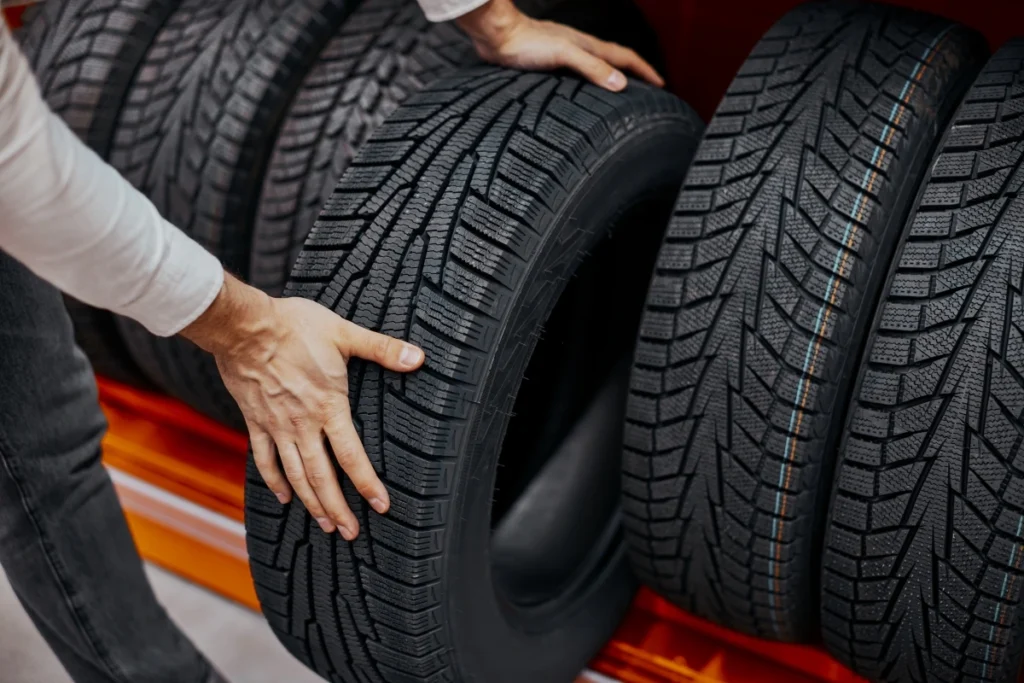
Modern passenger-car tires are engineered with multiple layers: an inner liner that holds air, body plies for structural strength, steel belts for stability, and an outer tread compound designed for grip. Understanding how tires work helps you appreciate why choosing the right type matters so much for safety, fuel economy and ride comfort.
Pneumatic Tires Explained
Pneumatic tires are tires inflated with compressed air. The air inside acts as a cushion, absorbing road irregularities and distributing weight evenly across the tire’s contact patch. Nearly every passenger car, SUV, pickup truck and motorcycle on the road today uses pneumatic tires.
The alternative — solid (non-pneumatic) tires — exists mainly on forklifts, lawnmowers and some industrial equipment. Solid tires don’t go flat, but they offer a much harsher ride and less grip. For everyday driving, pneumatic tires remain the standard because their air-filled design provides superior comfort, handling and traction.
Key takeaway: if you drive a car, SUV or truck, your tires are almost certainly pneumatic. Maintaining proper air pressure is essential — underinflated pneumatic tires wear unevenly, reduce fuel economy and compromise braking distance.
Wheels, Rims & Tires: What’s the Difference?
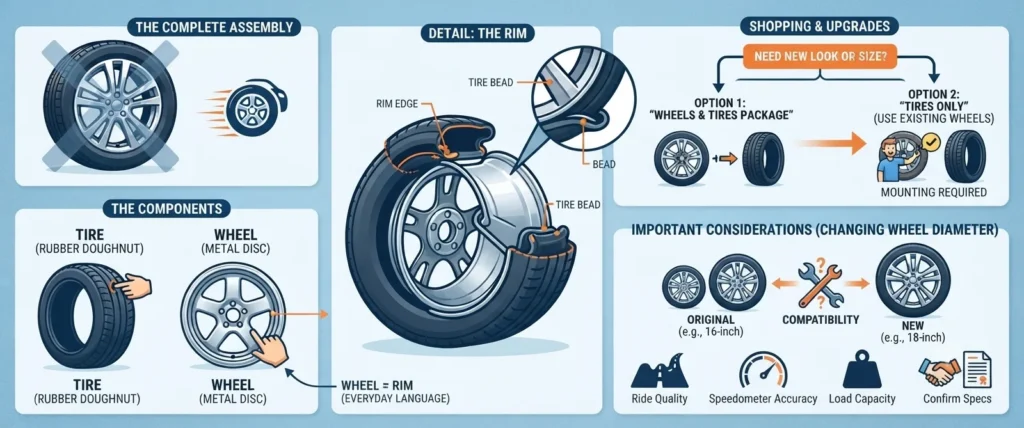
Many drivers search for “wheels and tires” or “rims and tires” without knowing the distinction. Here’s the simple breakdown: the tire is the rubber doughnut that grips the road. The wheel (often called a rim) is the metal disc the tire mounts onto. Technically, the “rim” is just the outer edge of the wheel where the tire bead seats, but in everyday language “wheel” and “rim” are used interchangeably.
When shopping, “wheels and tires” packages include both components — useful when upgrading to a different wheel size or style. If your current wheels are in good condition, you usually only need new tires mounted onto your existing rims.
Important: changing wheel diameter (for example, moving from 16-inch to 18-inch rims) affects which tires fit and may alter ride quality, speedometer accuracy and load capacity. Always confirm compatibility with your vehicle manufacturer’s specifications or consult a qualified tire technician.
Types of Tires: A Complete Breakdown
Below is every major tire category you’ll encounter when shopping. Each type is designed for specific conditions — there is no single “best” tire for everyone. Your ideal choice depends on your vehicle, local climate, driving habits and budget.
All-Season Tires
All-season tires are the default choice on most new vehicles sold in the United States. They’re designed to handle dry roads, light rain and mild cold — the conditions most commuters face year-round in temperate climates. Their tread patterns balance grip, tread life and road noise.
Best for: daily commuters in mild-to-moderate climates who want one set of tires year-round. Not ideal for: regions with heavy snowfall or sustained temperatures below 45°F — in those conditions, traction drops significantly compared to dedicated winter tires.
All-Weather Tires
All-weather tires bridge the gap between all-season and winter tires. They carry the Three-Peak Mountain Snowflake (3PMSF) symbol, meaning they meet minimum snow-traction standards. You can run them year-round without seasonal swaps while still getting better cold-weather performance than standard all-season tires.
Best for: drivers in areas with unpredictable winters — occasional snow and cold snaps but not months of deep snow. Trade-off: they don’t match the warm-weather grip of summer tires or the extreme-cold traction of dedicated winter tires. Think of them as a versatile compromise.
Summer Tires

Summer tires use a softer rubber compound and tread patterns optimized for maximum grip on hot, dry and wet pavement. They deliver noticeably sharper steering response and shorter braking distances in warm weather. However, their compound hardens in cold temperatures (below ~45°F), causing dramatic traction loss. Never use summer tires in winter conditions — they become unsafe.
Winter / Snow Tires
Winter tires are engineered from the ground up for cold, snow and ice. Their rubber stays pliable below freezing, their deep tread channels evacuate slush, and thousands of tiny slits (called sipes) bite into ice for grip. They carry the 3PMSF symbol and dramatically outperform all-season tires once temperatures drop consistently below 45°F.
Best for: anyone in a region with sustained cold, regular snowfall or icy roads. Swap them on in late fall and off in spring — running winter tires in warm weather accelerates tread wear because the soft compound degrades faster on hot pavement.
Touring Tires
Touring tires prioritize ride comfort, low road noise and long tread life. They’re a refined subset of all-season tires, often found on sedans and crossovers. If your top priorities are a quiet cabin and maximum mileage between replacements, touring tires are an excellent choice — though they sacrifice some cornering sharpness compared to performance-oriented options.
Performance Tires
Performance tires (including ultra-high-performance variants) deliver aggressive grip, precise steering feedback and shorter stopping distances. They use stickier rubber and wider tread blocks. The trade-off is a firmer ride, more road noise and shorter tread life — typically 25,000–40,000 miles versus 50,000–80,000 for touring tires. Best for enthusiast drivers who prioritize handling.
All-Terrain Tires
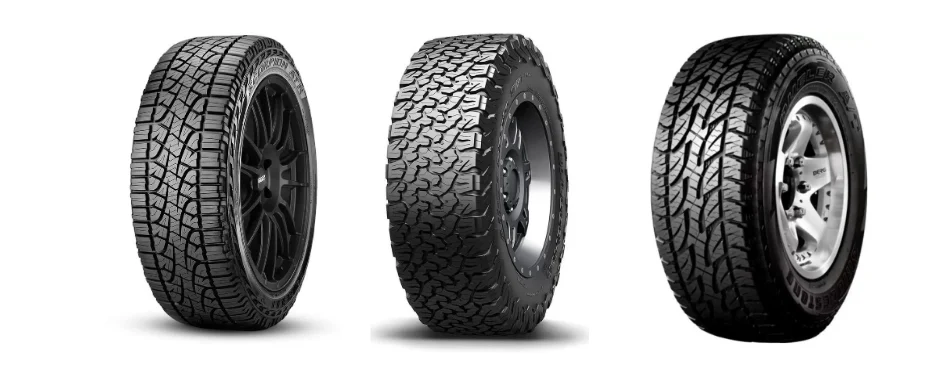
All-terrain (A/T) tires split the difference between highway comfort and off-road capability. Their chunkier tread handles gravel, dirt and light mud while remaining reasonably quiet on pavement. Popular on pickup trucks and SUVs driven both on-road and off. Expect slightly more road noise and marginally lower fuel economy versus standard highway tires.
Mud-Terrain Tires
Mud-terrain (M/T) tires feature aggressive, widely spaced tread lugs designed to claw through deep mud, loose rock and sand. They excel in extreme off-road conditions but are noticeably louder and rougher on pavement. Tread life on highways is shorter. Choose M/T tires only if you regularly tackle serious off-road trails — otherwise all-terrain tires offer a better daily-driving balance.
Run-Flat Tires
Run-flat tires have reinforced sidewalls that support the vehicle’s weight even after a complete loss of air pressure. They allow you to drive approximately 50 miles at up to 50 mph to reach a service location — eliminating the need for a spare tire. The trade-offs: a firmer ride, higher replacement cost (typically 20–40% more than standard tires) and limited repair options after a puncture.
Tire Type Comparison Table
| Tire Type | Best For | Main Limitation |
|---|---|---|
| All-Season | Everyday commuting, mild climates | Limited severe-winter grip |
| All-Weather | Year-round with occasional snow | Not equal to dedicated winter tires |
| Summer | Warm-weather handling & braking | Poor cold-weather performance |
| Winter | Snow, ice & sustained cold | Faster wear in warm weather |
| Touring | Comfort, quietness & tread life | Less sporty response |
| Performance | Responsive handling & braking | Firmer ride, shorter tread life |
| All-Terrain | Highway + moderate off-road | More road noise |
| Mud-Terrain | Deep mud & difficult trails | Rough & loud on pavement |
| Run-Flat | Temporary mobility after puncture | Higher cost, firmer ride |
How to Choose the Right Tires
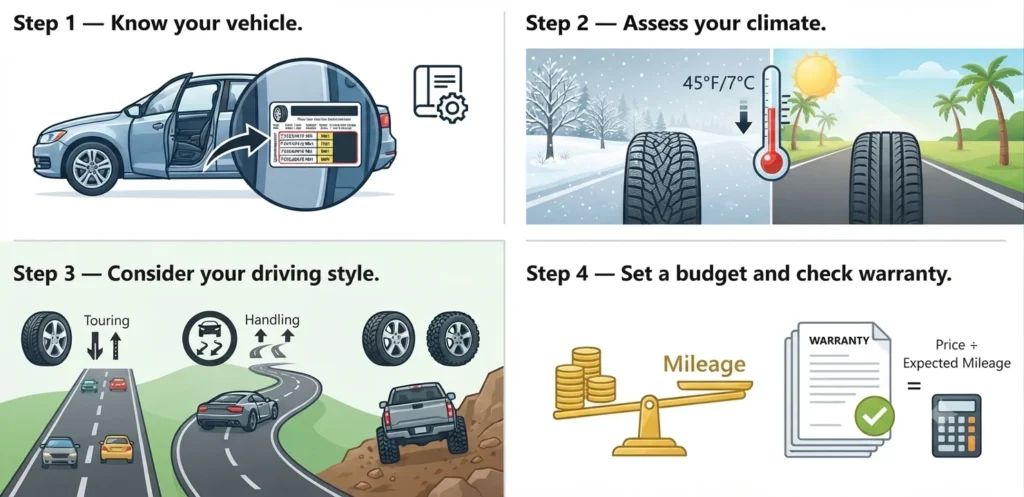
Step 1 — Know your vehicle.
Check your owner’s manual or door jamb sticker for the recommended tire size, load index and speed rating. Never install tires that don’t meet these minimum specifications.
Step 2 — Assess your climate.
If winter temperatures regularly drop below 45°F and snow is common, consider dedicated winter tires (or at minimum all-weather tires). In consistently warm climates, all-season or summer tires may be the better fit.
Step 3 — Consider your driving style.
Highway commuters benefit from touring tires (comfort + tread life). Enthusiast drivers prefer performance tires. Truck and SUV owners who go off-road need all-terrain or mud-terrain options depending on trail severity.
Step 4 — Set a budget and check warranty.
Higher-priced tires often include longer mileage warranties and better wet-traction ratings. Compare total cost of ownership (price ÷ expected mileage) rather than sticker price alone.
⚠️ Tire Safety Reminder
Never mix tire types on the same axle (for example, a winter tire paired with an all-season tire). Mismatched tires create unpredictable handling, especially in emergency maneuvers. If you can only afford two new tires, place them on the rear axle regardless of whether your vehicle is front- or rear-wheel drive — this reduces the risk of oversteer on wet roads.
Buying Tires Online: What You Need to Know
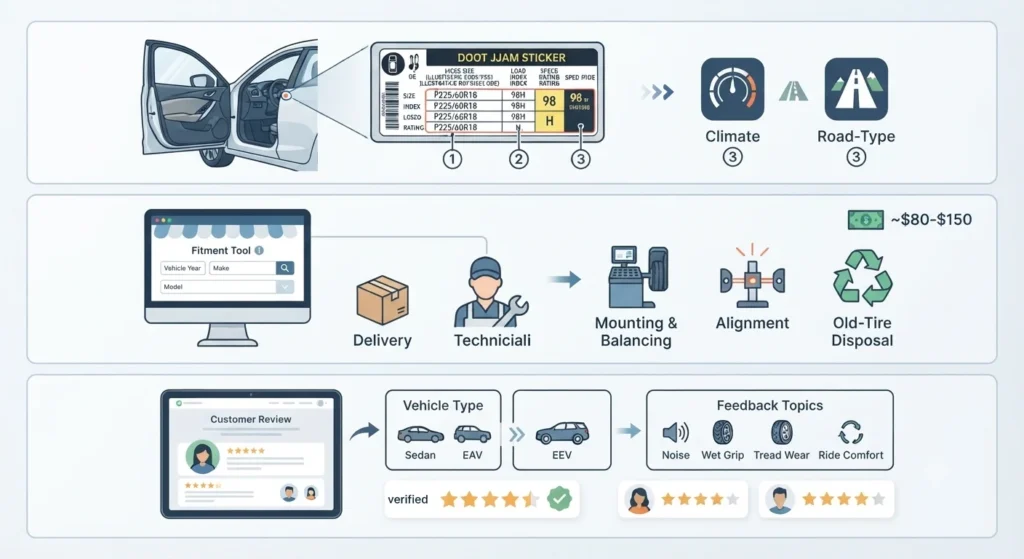
Shopping for online tires has become mainstream — major retailers ship directly to your door or to a local installer. Before purchasing, confirm three things: (1) the exact tire size from your door jamb sticker, (2) the load index and speed rating that match or exceed your vehicle’s requirements, and (3) the tire category that suits your climate and driving needs.
Reputable online tire retailers offer fitment tools — enter your vehicle’s year, make and model, and the site filters to compatible options. Many partner with local shops for installation, alignment and old-tire disposal. Factor in mounting, balancing and alignment costs (typically $80–$150 total for four tires) when comparing online prices to in-store quotes.
Pro tip: read recent customer reviews filtered by your vehicle type. A tire that performs well on a lightweight sedan may behave differently on a heavy SUV. Look for feedback on noise, wet grip, tread wear and ride comfort from drivers with vehicles similar to yours.
💡 When to Replace Tires vs. Rims and Tires
If your current wheels are undamaged (no cracks, bends or excessive corrosion), you only need new tires mounted on your existing rims. Buy a complete rims and tires package when you want a different wheel size or style, when your current wheels are damaged, or when purchasing a dedicated winter set you can swap seasonally without paying for mounting each time.
Frequently Asked Questions About Tires
What are pneumatic tires, and does my car have them?
Pneumatic tires are air-filled tires — and yes, virtually every passenger car, SUV and pickup truck uses them. The air inside provides cushioning and load support. Solid (non-pneumatic) tires are reserved for industrial equipment like forklifts.
What’s the difference between all-season and all-weather tires?
All-season tires handle mild conditions well but struggle in heavy snow and ice. All-weather tires carry the Three-Peak Mountain Snowflake symbol, meaning they meet a minimum snow-traction threshold. All-weather tires are a better year-round option if you experience occasional winter weather but don’t want to swap to dedicated winter tires.
Do I need winter tires if it only snows a few times a year?
If snowfall is rare and temperatures mostly stay above 45°F, all-weather tires are likely sufficient. If you regularly encounter icy roads or temperatures below freezing for weeks at a time, dedicated winter tires offer significantly better safety.
Can I buy tires online and have them installed locally?
Yes. Most major online tire retailers partner with installer networks. You order the tires, choose a local shop, and the tires ship there directly. You then schedule an appointment for mounting, balancing and alignment. Confirm total installed cost before ordering.
Should I replace just the tires or buy new rims and tires together?
If your current wheels are in good condition, replace only the tires — it’s more cost-effective. Buy rims and tires as a package if your wheels are damaged, if you want a different size/style, or if you’re building a dedicated seasonal set (e.g., winter wheels and tires you swap each year).
How do I find the correct tire size for my vehicle?
Check the sticker on your driver’s door jamb — it lists the manufacturer-recommended tire size (e.g., 225/65R17). You can also find it in your owner’s manual. The numbers indicate width (mm), aspect ratio (sidewall height as a percentage), construction type (R = radial) and wheel diameter (inches). Always match this size unless a qualified technician approves an alternative.