Everything you need to know about checking tire pressure, inflating tires, and locating air pumps — written by an ASE-certified mechanic with 18 years of experience.
How Air Pressure Affects Your Fuel Economy
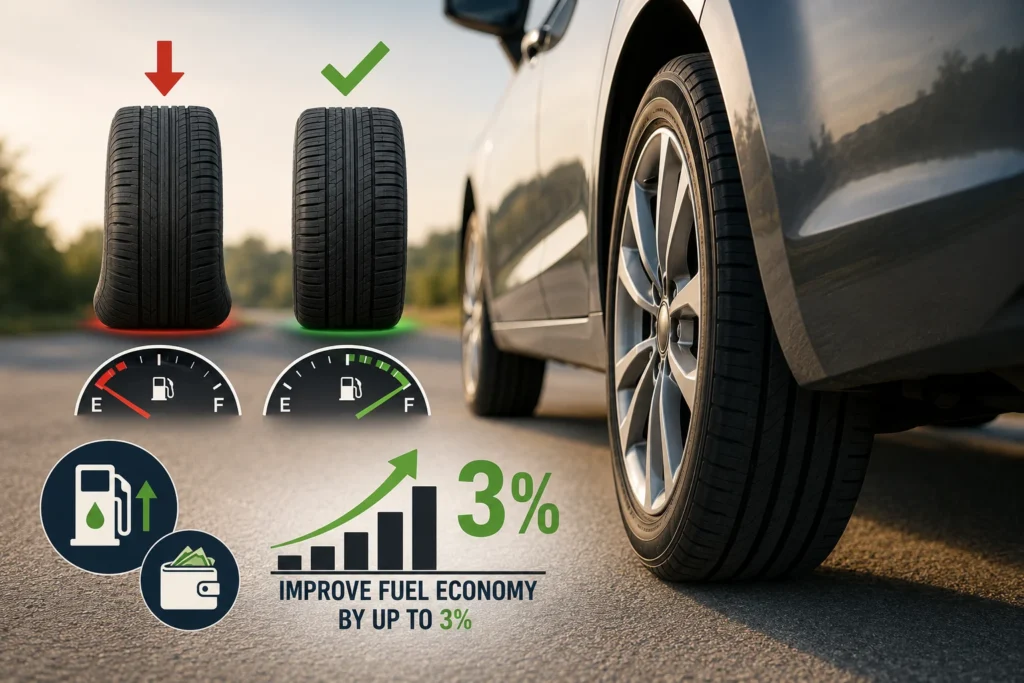
Under-inflated tires are one of the most overlooked causes of poor gas mileage. When your tire pressure drops even 5 PSI below the manufacturer’s recommendation, rolling resistance increases significantly — forcing your engine to work harder and burn more fuel on every trip.
According to the U.S. Department of Energy, properly inflated tires can improve fuel economy by up to 3%. That translates to roughly $0.08–$0.12 per gallon saved. Over a year of daily driving, maintaining correct air pressure can save you $100 or more at today’s gas prices.
Pro Tip: I check my customers’ tire pressure at every oil change and find that 60% are at least 4 PSI low. Make it a monthly habit — your wallet will thank you.
How to Check Tire Pressure (Step-by-Step)
Checking your tire pressure takes less than 5 minutes and requires only a basic tire pressure gauge (available for $5–$15 at any auto parts store). Here’s exactly how I do it in my shop:
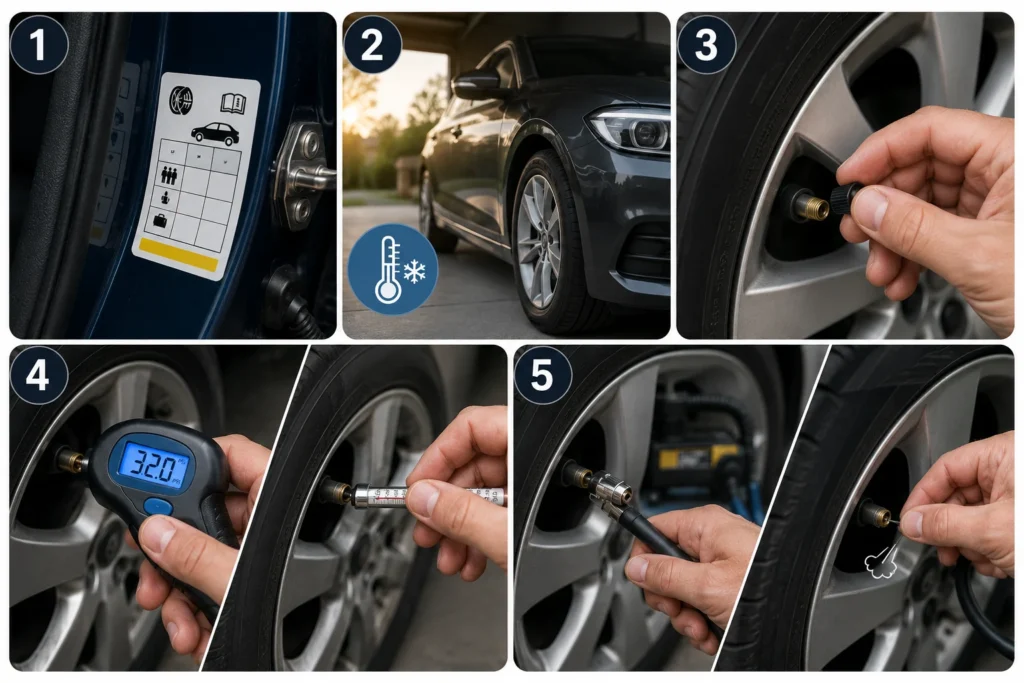
- Find your recommended PSI on the sticker inside your driver’s door jamb (not the number on the tire sidewall — that’s the maximum, not the target).
- Check pressure when tires are cold — ideally before driving or after the car has sat for 3+ hours. Heat from driving inflates tires and gives a false reading.
- Remove the valve stem cap and press your gauge firmly onto the valve. You’ll hear a brief hiss — that’s normal.
- Read the measurement. Digital gauges display PSI directly; pencil-style gauges push out a numbered rod.
- Compare to your recommended PSI. If low, head to a tire air pump near you to inflate. If over-inflated, press the small pin inside the valve to release air.
How to Put Air in Tires at a Gas Station
Once you’ve located a gas station with an air pump near you, follow these steps to inflate your tires safely and accurately:
- Park close enough so the air hose can reach all four tires. Most hoses extend 8–12 feet.
- Set the machine to your target PSI if it has a digital display. Many modern pumps auto-stop at the set pressure.
- Remove the valve cap, attach the nozzle firmly, and listen for air flowing in (not leaking around the seal).
- Fill in short bursts of 3–5 seconds, then check with your gauge. Over-inflating is just as bad as under-inflating.
- Replace valve caps tightly when done — they keep dirt and moisture out of the valve mechanism.
Finding Free Tire Air Near You
Many drivers don’t realize that free air for tires is available at numerous locations. In several U.S. states (including California and Connecticut), gas stations are legally required to provide free air when you purchase fuel. Even in other states, plenty of options exist.
Where to Find Free Air for Tires Close to You
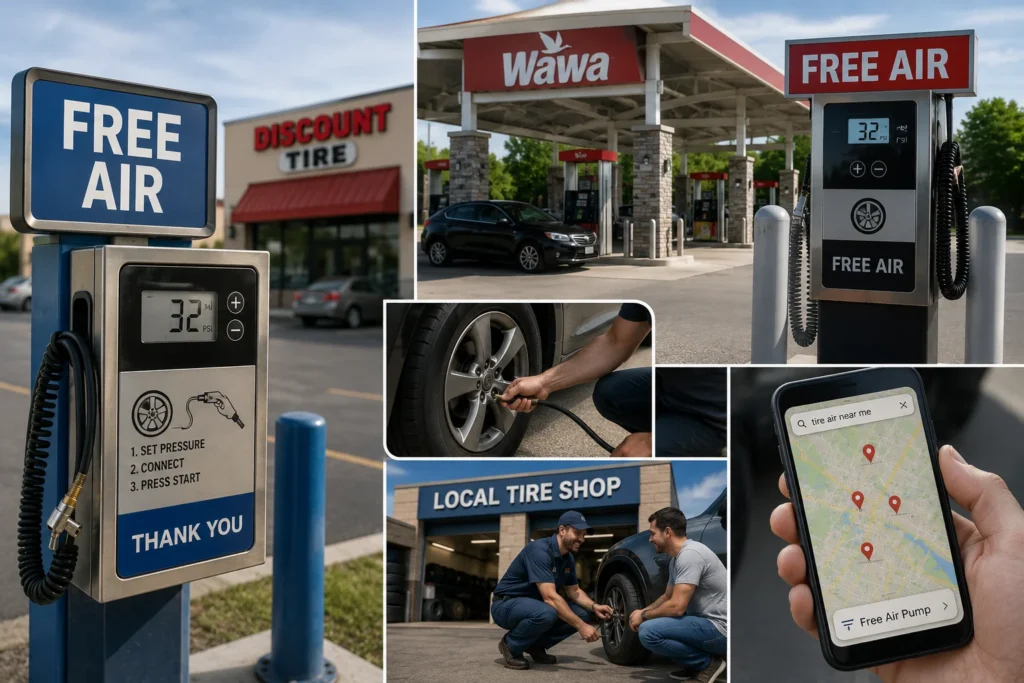
- Discount Tire / America’s Tire — always free, no purchase required. Just pull up to their air station.
- Wawa, QuikTrip, Sheetz, and Costco gas stations typically offer free air pumps for customers.
- Many local tire shops will top off your air for free — it’s good customer service and takes 30 seconds.
- Use the “Free Air Pump” filter on Google Maps when searching “tire air near me” or “air for tires near me.”
If free options aren’t available, most gas station air pumps cost $1.50–$2.00 for 3–5 minutes. That small investment prevents uneven tire wear and improves your safety and fuel economy.
Hubcaps & Valve Stem Access
A common frustration at the tire air pump: you can’t reach the valve stem because a hubcap is in the way. Most snap-on plastic hubcaps have a small notch or access hole aligned with the valve. Rotate the hubcap until the hole lines up — no removal needed.
If your hubcap doesn’t have a valve access hole, you can carefully pry it off with a flat-head screwdriver wrapped in a cloth (to prevent scratches). Reattach firmly after inflating. Loose hubcaps can fly off at highway speeds — I’ve seen it happen dozens of times.
Frequently Asked Questions
How often should I check my tire pressure?
At least once a month and before long road trips. Tires naturally lose 1–2 PSI per month, and temperature swings (especially seasonal changes) can cause pressure to drop or rise significantly.
Is it safe to use a gas station air pump?
Absolutely. Gas station tire pumps are designed for consumer use. Just make sure you’re adding air slowly and checking pressure frequently to avoid over-inflation. Bring your own gauge for accuracy — station gauges can drift over time.
Can low tire pressure cause a blowout?
Yes. Severely under-inflated tires flex excessively, generating dangerous heat buildup in the sidewall. This is the #1 cause of highway tire blowouts. If your TPMS warning light comes on, address it immediately — don’t wait until you “get around to it.”