
Learn how long tires last, how tire aging affects safety, and what to check before buying used tires so you can make a smarter and safer tire decision.
Buying used tires can save you 30–50% compared to new ones — but are they actually safe? The answer depends on age, tread depth, storage history, and knowing what to look for before you buy.
This guide covers everything a cost-conscious vehicle owner needs to know about used tires: how long tires last, how many miles tires last by type, how to inspect used tires for hidden damage, when to replace tires, and whether affordable tires are worth the savings. Whether you drive a sedan, SUV, or truck, you’ll find safety-first guidance below.
Are Used Tires Safe to Buy?
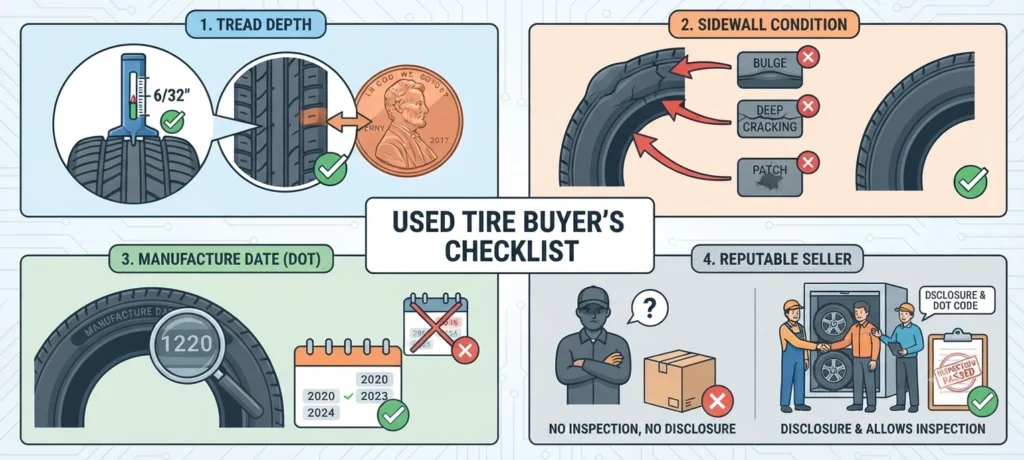
Used tires can be safe — if you know what to check. A used tire with 6/32″ or more of remaining tread, no sidewall damage, and a manufacture date within the last 4 years can deliver thousands of reliable miles. The key is distinguishing a quality used tire from a dangerous one that looks fine on the surface but has aged rubber or hidden internal damage.
The biggest risk with used tires isn’t visible wear — it’s invisible aging. Rubber compounds degrade over time from UV exposure, ozone, and temperature cycling. A used tire may look almost new, but if it has been sitting in storage for several years, the rubber may have already started cracking internally. This is why checking the DOT manufacture date is the single most important step when buying any used tire.
Avoid used tires that show any sidewall bulges, deep cracks, uneven wear patterns, or signs of previous puncture repairs near the sidewall. These conditions indicate structural compromise that cannot be reversed. A reputable used tire seller will allow you to inspect before purchasing and will disclose the tire’s age and history.
How Long Do Tires Last?
Most tires last between 40,000 and 70,000 miles depending on tire type, driving habits, climate, and maintenance. All season tires typically deliver 50,000–65,000 miles with proper rotation. Economy tires may offer 40,000–50,000 miles, while premium touring tires can exceed 70,000 miles. How many miles do tires last on your vehicle depends heavily on alignment, inflation, and road conditions.
Regardless of remaining tread, tire manufacturers and NHTSA recommend replacing any tire older than 6 years — and absolutely by 10 years. Rubber compounds deteriorate from UV, ozone, and heat cycling even when a tire looks fine. Check the DOT code on the sidewall: the last four digits indicate the week and year of manufacture (e.g., “2422” = week 24 of 2022). Hot climates and outdoor parking accelerate this aging process significantly.
How Long Should Tires Last by Type
Tire lifespan varies significantly by category. Here’s what to expect from common tire types — and what to look for when buying used versions of each.
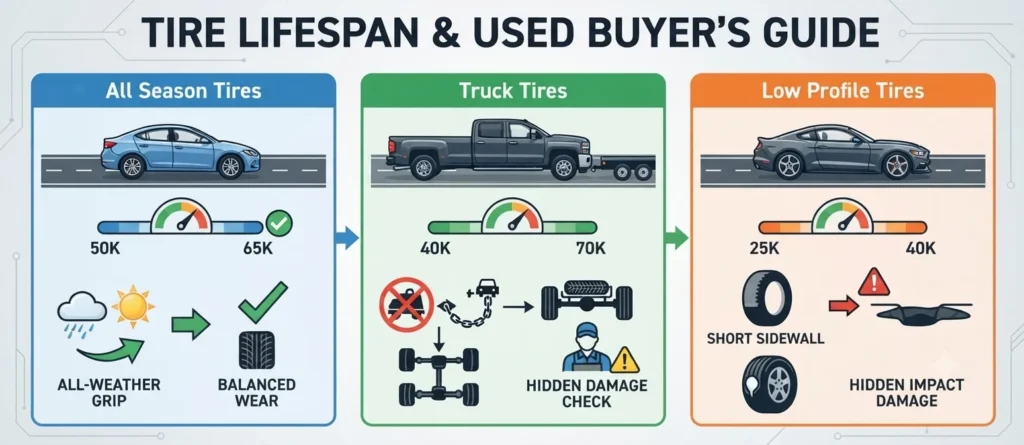
All Season Tires
50,000 – 65,000 miles
Best balance of longevity and year-round grip. Used all season tires are the most common and safest used tire purchase if age and tread check out.
Truck Tires
40,000 – 70,000 miles
Heavy loads and towing accelerate wear. Used truck tires can be safe for light duty but inspect carefully for towing stress — internal belt damage isn’t always visible.
Low Profile Tires
25,000 – 40,000 miles
Shorter sidewalls make them vulnerable to pothole damage. Low profile tires wear faster and are riskier as used purchases due to hidden impact damage.
How to Inspect Used Tires Before Buying
Never buy a used tire without a hands-on inspection. Here’s your step-by-step checklist to avoid wasting money on unsafe rubber:
1. Check the DOT date code: reject any tire older than 5 years.
2. Measure tread depth at multiple points (inside, center, outside edge): minimum acceptable is 4/32″ for used tires to ensure reasonable remaining life.
3. Run your hand: along the entire sidewall feeling for bulges, soft spots, or raised areas that indicate internal belt separation.
4. Look for dry rot: fine spider-web cracks in the sidewall or between tread blocks mean the rubber is degrading and the tire should be rejected regardless of tread depth.
5. Check for uneven wear patterns: cupping (scalloped edges) indicates suspension problems the tire endured; one-sided wear means chronic misalignment. Both reduce remaining safe life.
6. Inspect for previous repairs: a single plug-patch in the tread center is acceptable, but multiple repairs, sidewall patches, or oversized plugs are deal-breakers.
7. Ask about the tire’s history: where it came from, why it was removed, and how it was stored. Tires stored outdoors in sunlight age dramatically faster than warehouse-stored inventory.
When to Replace Tires: Key Decision Points
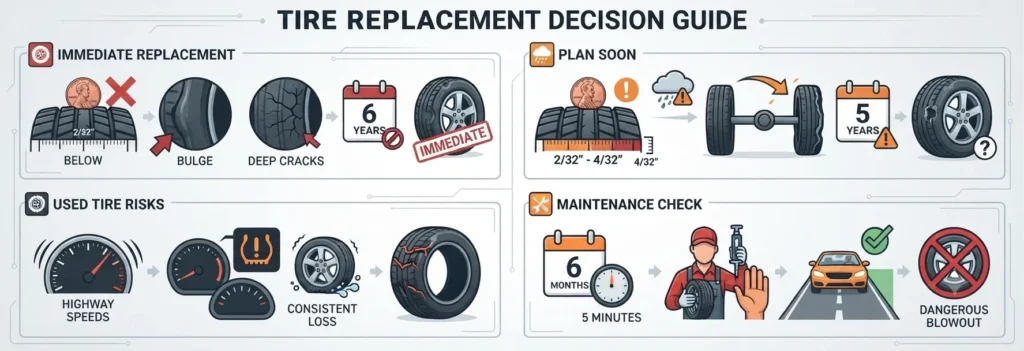
Replace immediately if tread depth is at or below 2/32″, there are visible sidewall bulges or deep cracks, the tire is over 6 years old regardless of tread, or you’ve experienced a blowout or significant impact. For used tires specifically, replace sooner rather than later if you notice vibration at highway speeds or if the tire consistently loses pressure — both indicate internal damage that worsens over time.
Plan replacement soon if tread is between 2/32″ and 4/32″ (dangerous in wet conditions), you notice uneven wear that alignment didn’t fix, or you’re approaching 5 years of age on a used tire of unknown history. How often to replace tires depends on your mileage, climate, and driving style — but checking every 6 months takes 5 minutes and can prevent a dangerous blowout.
Used Tires vs New Tires: Making the Right Choice
Used tires cost $30–$80 per tire compared to $80–$200+ for new economy or mid-range tires. That’s a significant savings — especially if you need all four. For vehicles you plan to keep short-term, or as a temporary solution while saving for premium tires, quality used tires with verified age and 6/32″+ tread are a smart budget option.
New tires are the better choice when: you plan to keep the vehicle 3+ years, you drive in harsh weather regularly, you tow or carry heavy loads (truck tire safety is critical under stress), or you simply want the peace of mind of a full manufacturer warranty. Affordable tires from budget brands offer a middle ground — new rubber with warranties at $60–$120 per tire.
The bottom line: a quality used tire that passes inspection is safer than driving on bald or cracked tires because you couldn’t afford new ones. But never compromise on age or structural integrity to save money — the risk of a blowout at highway speed far outweighs any cost savings.
How to Make Your Tires Last Longer
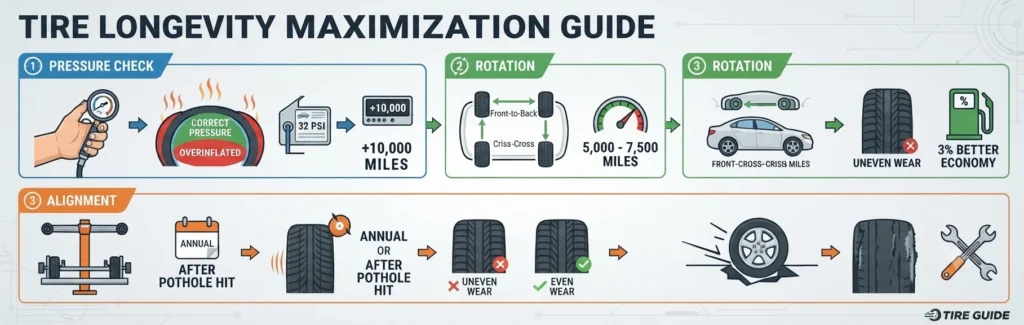
Check tire pressure monthly — underinflated tires wear the edges prematurely and overheat at highway speeds, while overinflated tires wear the center. The correct PSI is on your driver’s door jamb placard (not the number on the tire sidewall). Proper inflation alone can add 10,000+ miles to tire life and improve fuel economy by 3%.
Rotate tires every 5,000–7,500 miles to distribute wear evenly. Get wheel alignment checked annually or after hitting a significant pothole — misalignment causes rapid, uneven wear that shortens how long tires last regardless of quality. For used tires especially, these maintenance steps are critical because you’re starting with less remaining life.
Frequently Asked Questions
How long do used tires last?
A quality used tire with 6/32″ of tread and a manufacture date within 3 years can last 20,000–40,000 additional miles depending on driving habits and maintenance. However, the 6-year age limit still applies — even if tread remains, replace any tire older than 6 years from its DOT manufacture date.
How many miles do tires last on average?
New tires last 40,000–70,000 miles on average. All season tires typically deliver 50,000–65,000 miles, truck tires 40,000–70,000 miles depending on load, and low profile tires 25,000–40,000 miles. Regular rotation and proper inflation maximize these numbers.
How often should I replace my tires?
Most drivers replace tires every 3–5 years or 40,000–70,000 miles, whichever comes first. Check tread depth and tire age every 6 months. Replace immediately when tread reaches 2/32″ or the tire exceeds 6 years of age regardless of appearance.
Are used truck tires safe for towing?
Used truck tires can be safe for light-duty driving but are risky for towing. Heavy loads stress internal belts that may already be weakened by previous use. For towing, invest in new truck tires with proper load ratings — the safety margin matters when you’re hauling weight at highway speeds.
What tread depth is acceptable for used tires?
Look for at least 4/32″ of remaining tread on used tires — this gives you reasonable remaining life and wet-weather traction. New tires start at 10/32″ to 11/32″. Anything below 4/32″ on a used tire means you’re paying for rubber that will need replacement soon.
How can I check the age of a used tire?
Find the DOT code on the sidewall — the last four digits indicate manufacture week and year. For example, “3521” means week 35 of 2021. If the code only has three digits, the tire was made before 2000 and should never be purchased as a used tire.
Are economy tires and affordable tires safe?
Yes — all tires sold in the US must meet FMVSS safety standards regardless of price. Economy tires from reputable brands are safe for normal driving. They may offer shorter tread life (40,000–50,000 miles) and slightly less wet grip than premium brands, but they’re a legitimate option for budget-conscious drivers.
Do low profile tires wear out faster?
Generally yes. Low profile tires use softer rubber compounds for grip and have less sidewall flex to absorb impacts, making them more susceptible to pothole damage. Expect 25,000–40,000 miles compared to 50,000+ for standard all season tires. They’re also riskier as used purchases due to hidden impact damage.
When should I change tires on my vehicle?
Change tires when: tread depth reaches 2/32″ (penny test), the tire is 6+ years old, you see sidewall cracks or bulges, the tire loses air repeatedly, or you feel vibration at highway speed. Don’t wait for a blowout — when to change tires is always before failure, not after.
Is it better to buy one used tire or a full set?
Ideally buy in pairs (both fronts or both rears) to maintain balanced handling. A single used tire is acceptable if it closely matches the opposite tire in size, brand, tread depth, and age. On AWD vehicles, all four tires must match within 2/32″ of tread — mismatched tires can damage the drivetrain.