
A master technician explains the dreaded knocking noise — and whether your engine can be saved.
Key Takeaway
Rod knock is a deep, rhythmic knocking sound from your engine’s bottom end caused by worn connecting rod bearings. It almost always signals major internal damage and requires immediate attention to avoid catastrophic engine failure.
What Is Rod Knock?
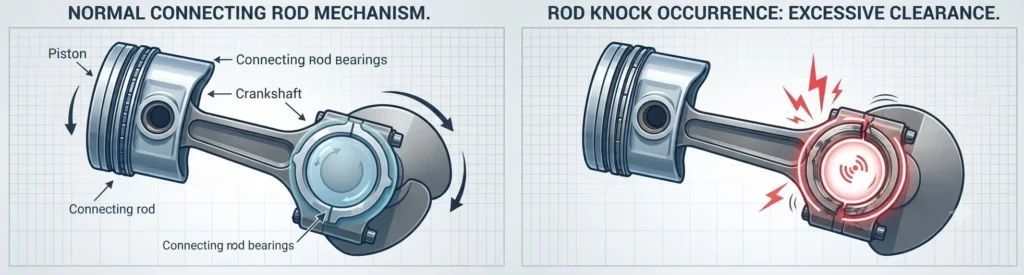
Rod knock occurs when the connecting rod bearings — the thin metal sleeves that cushion each rod’s contact with the crankshaft — wear down or lose oil pressure. Once the clearance between the bearing surface and the crank journal becomes excessive, metal strikes metal with every revolution of the engine.
In my 18 years turning wrenches, rod knock is one of the most common ‘death sentences’ I deliver to vehicle owners. The noise itself is unmistakable once you’ve heard it, and unfortunately, it rarely appears without significant internal wear already present.
What Does Rod Knock Sound Like?
A rod knock sound is a consistent, rhythmic banging or knocking that comes from deep within the engine block. It’s often described as someone tapping a metal pipe with a hammer. The noise increases in tempo as you rev the engine — because the crankshaft spins faster, the rod slaps the journal more frequently.
Unlike valve-train tick (which is higher-pitched and comes from the top of the engine) or piston slap (a hollow slapping that fades as the engine warms), rod knock stays constant or gets worse with heat. If the noise doesn’t go away after warm-up, that’s a strong indicator.
What Causes Rod Knock?
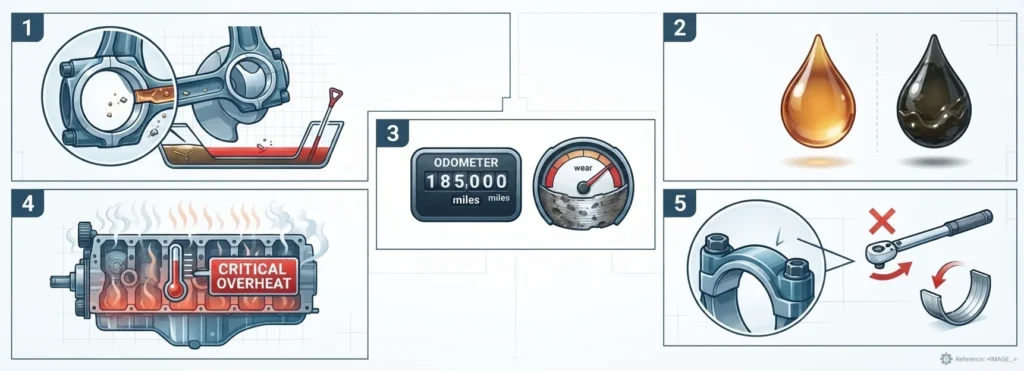
Several factors lead to connecting rod bearing failure:
- Low oil level or oil starvation — the #1 cause I see in the shop. Without adequate lubrication, bearings overheat and disintegrate.
- Neglected oil changes — old, degraded oil loses viscosity and can’t maintain the protective film between bearing and journal.
- High mileage wear — even with perfect maintenance, bearings eventually reach end of life (typically 150,000–250,000 miles).
- Engine overheating — excessive heat warps bearing surfaces and accelerates wear.
- Manufacturing defects or improper previous repairs — incorrectly torqued rod caps or wrong bearing size.
Can Rod Knock Be Fixed?
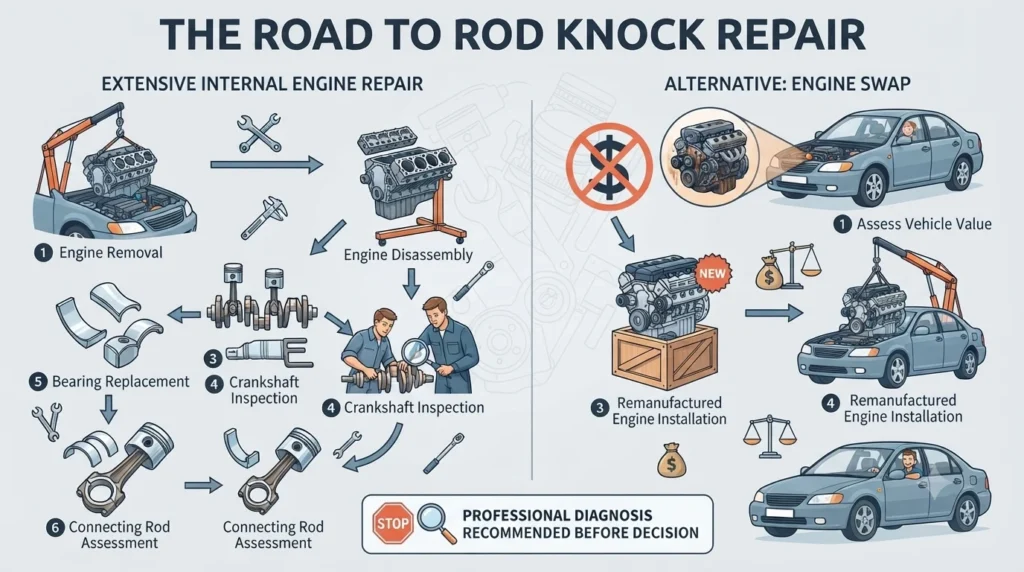
Technically, yes — but the repair is extensive. Fixing rod knock requires removing the engine, disassembling the rotating assembly, inspecting the crankshaft for scoring, replacing bearings, and potentially machining or replacing the crank itself. If the rod has spun a bearing, the connecting rod may also need replacement.
For many vehicles, especially older or high-mileage ones, the cost of repair exceeds the car’s value. In those cases, a used or remanufactured engine swap is often more economical. I always recommend getting a professional diagnosis before committing to either path.
How Much Does Rod Knock Repair Cost?
Bearing replacement with machine work typically runs $2,000–$4,000+ in labor and parts. A full engine rebuild can cost $3,000–$6,000. A used engine swap ranges from $1,500–$4,500 depending on availability and vehicle.
These are general ranges — luxury and performance vehicles will be significantly higher. Always get multiple quotes and verify the shop’s warranty policy on internal engine work.
How to Prevent Rod Knock
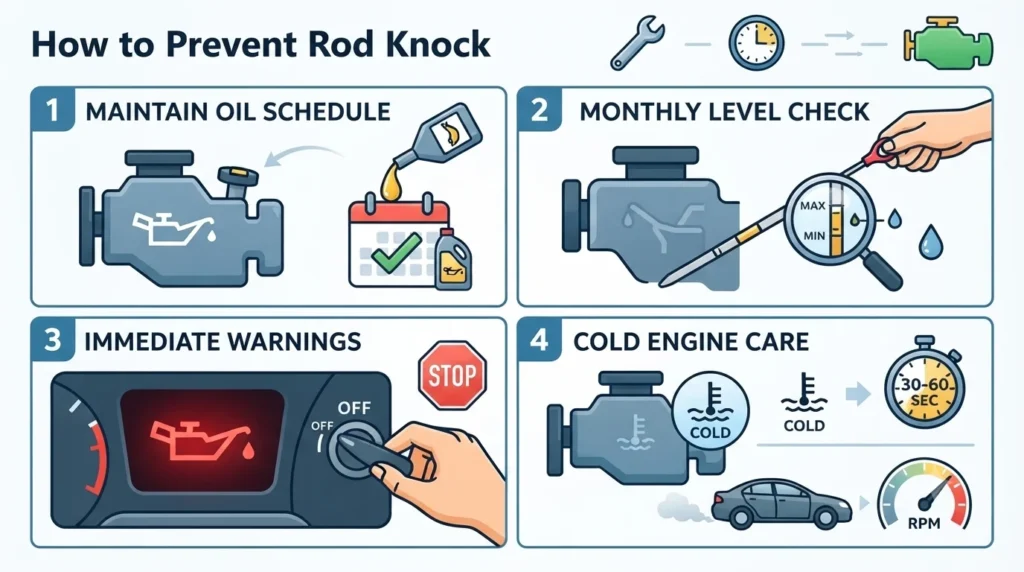
- Change your oil on schedule — follow your manufacturer’s recommended interval, not the ‘3,000-mile myth’ unless using conventional oil in severe conditions.
- Check oil level monthly — catching a slow leak early can save your engine.
- Address warning lights immediately — the oil pressure light means STOP driving now, not ‘get to it this weekend.’
- Avoid sustained high RPM on cold engines — let oil circulate for 30–60 seconds before aggressive driving.
Frequently Asked Questions
Can I drive with rod knock?
You can, but you shouldn’t. Every mile driven with rod knock causes more damage. The bearing material is being destroyed, contaminating your oil, and the rod could eventually break free — causing catastrophic engine failure, potentially punching a hole through the block.
Will thicker oil fix rod knock?
Heavier oil may temporarily quiet the noise by filling the excess clearance, but it does not fix the underlying damage. It’s a band-aid at best. I’ve seen people use it to buy time before a planned repair, but never as a permanent solution.
How do I confirm it’s rod knock and not something else?
A mechanic can isolate the cylinder by disconnecting injectors one at a time. When the knocking cylinder is disabled, the noise disappears. An oil pressure test and oil filter inspection (for metal flakes) also help confirm bearing failure.