A broken bolt can turn a straightforward repair into a frustrating workshop problem. Whether you are working on an engine bracket, motorcycle component, machinery housing, or household equipment, a bolt that snaps inside a threaded hole can stop the entire job.
A bolt extractor Easy-Out is a specialized tool designed to help remove some broken or damaged fasteners. But choosing the wrong extractor, drilling off-center, or applying excessive force can cause additional damage.
This guide explains how an Easy-Out works, which type to choose, how to remove a broken bolt step by step, and what to do when the extractor does not work. You will also learn how to protect threads and prevent future fastener failures.
Quick Answer: How Do You Use an Easy-Out?
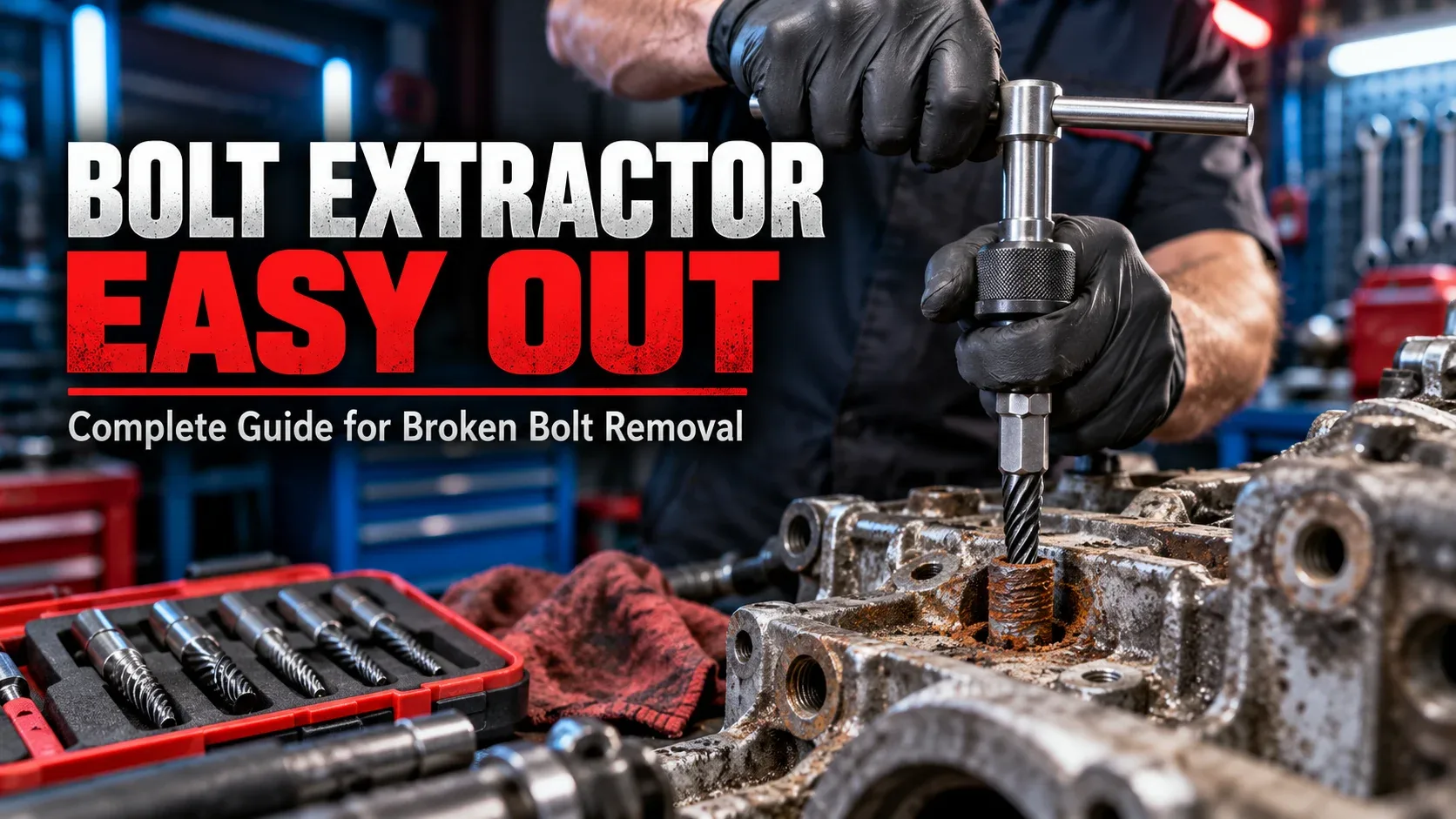
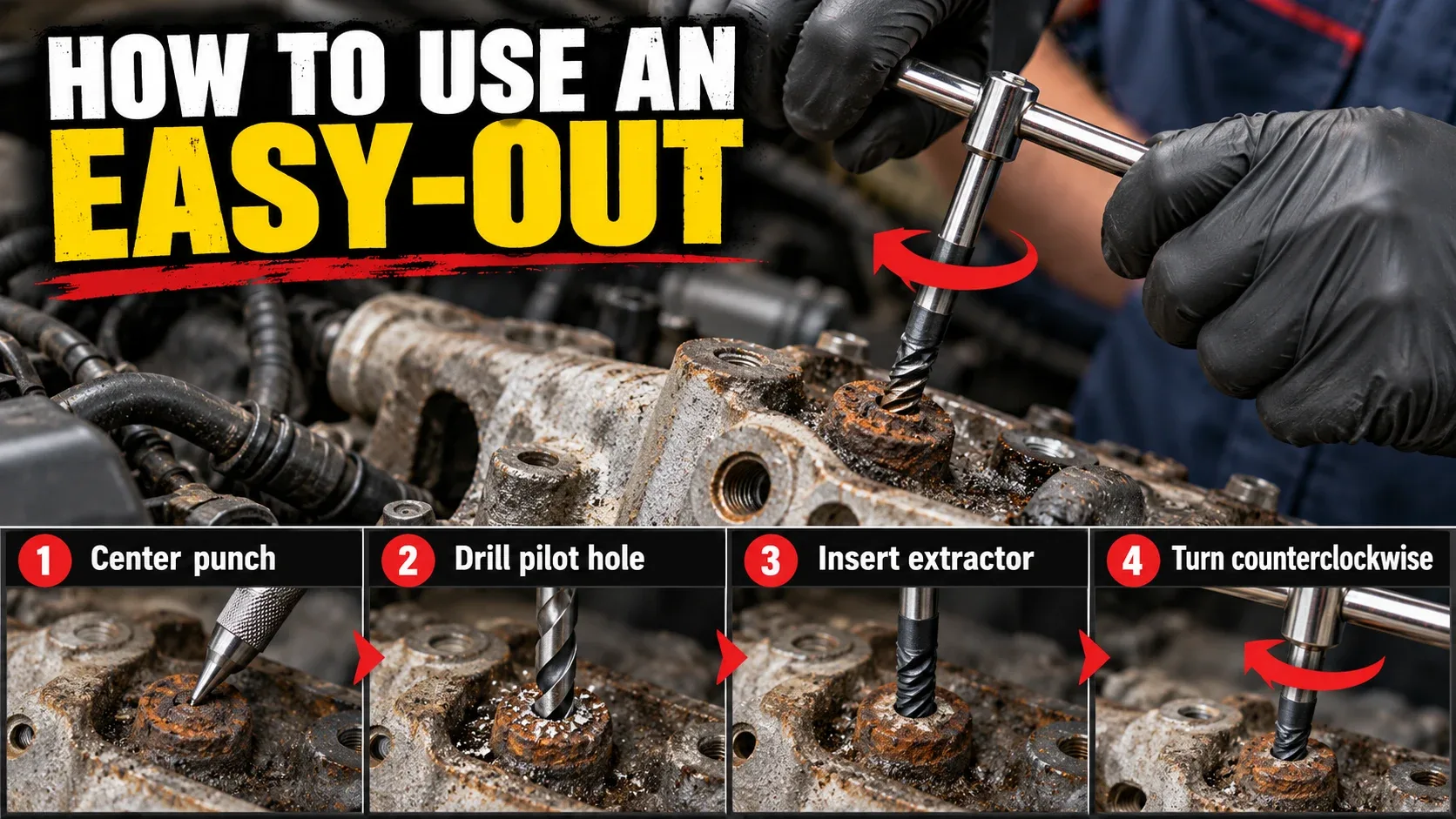
To use a conventional spiral Easy-Out, center-punch the broken bolt, drill a straight pilot hole with the manufacturer-recommended drill bit, seat the extractor, and carefully turn it counterclockwise for a standard right-hand-threaded bolt.
Important: Stop if the extractor twists without moving the bolt. Excessive force can fracture the tool and complicate the repair.
What Is an Easy-Out Bolt Extractor?
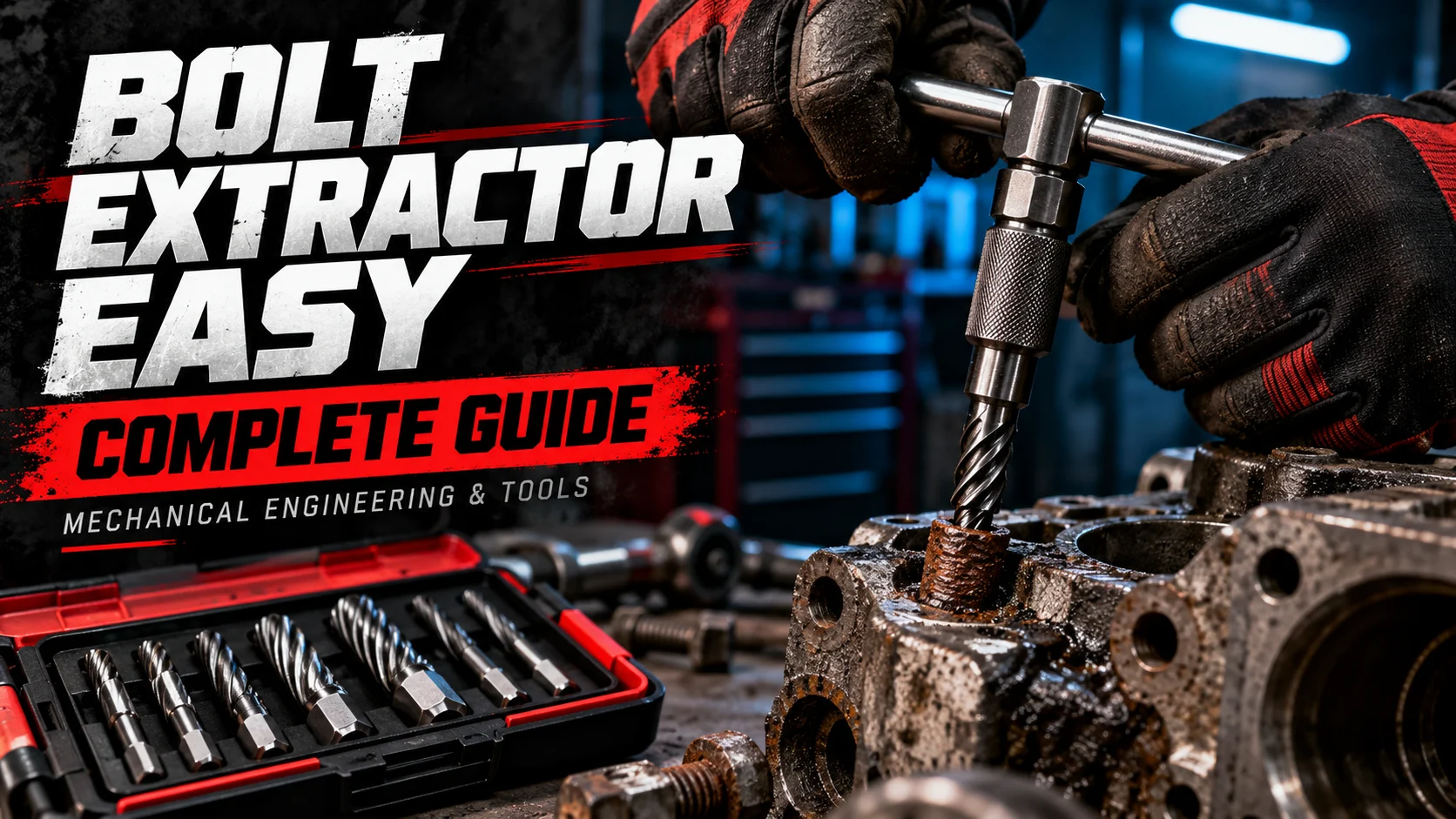
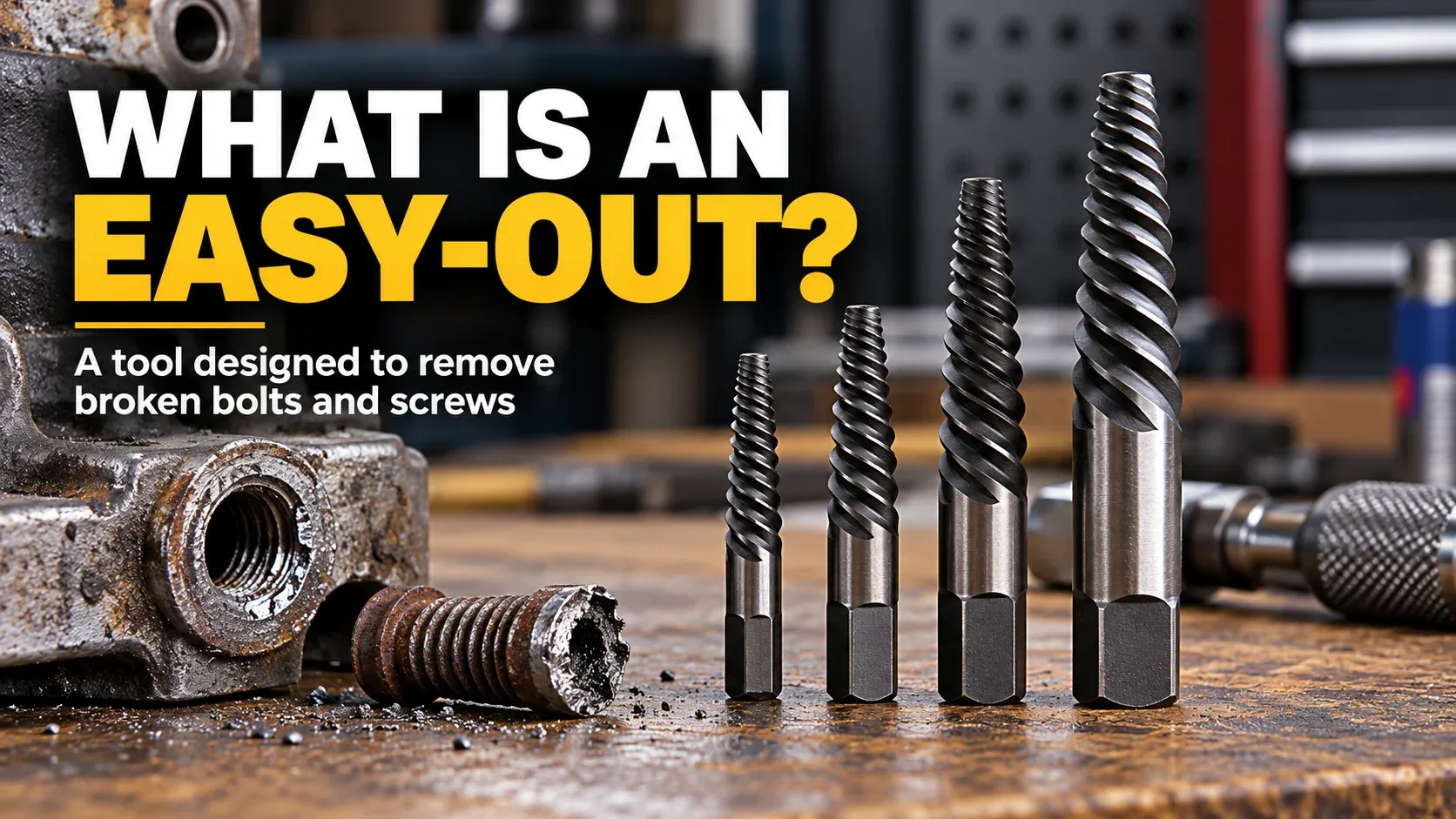
An Easy-Out bolt extractor is a removal tool used to grip certain broken screws, bolts, studs, and other threaded fasteners. It is especially useful when the fastener head has snapped off and an ordinary wrench or socket cannot grip what remains.
A typical spiral Easy-Out has tapered, reverse-cut flutes. After a properly sized pilot hole has been drilled into a broken right-hand-threaded fastener, the extractor is seated in the hole. Turning counterclockwise makes the flutes grip and transmit loosening torque.
Where Are Easy-Out Extractors Used?
- Broken engine mounting and accessory bolts.
- Damaged bolts in machinery and brackets.
- Snapped screws in equipment housings.
- Certain broken studs and threaded fittings.
- Automotive, motorcycle, and general workshop repairs.
Despite the name, extraction is not automatically easy. Bolt material, corrosion, drilling accuracy, and existing thread damage all affect the outcome.
How Does an Easy-Out Bolt Extractor Work?
The conventional spiral screw extractor relies on its tapered left-hand flutes engaging the inside wall of a drilled pilot hole. As it turns in the direction that loosens a standard right-hand bolt, the flutes bite into the metal and transfer torque.
If the fastener is only moderately tight, that grip may be enough to rotate it out. But spiral designs can also push outward on the bolt wall. On a heavily seized fastener, that wedging effect can increase resistance.
Pilot Hole
A centered hole provides room for the tool to engage.
Flute Engagement
The reverse-cut flutes grip the hole wall.
Bolt Removal
Controlled torque may rotate the bolt if its threads can release.
Increasing force is not a substitute for checking why a fastener is stuck. If the bolt is immovable, forcing the extractor increases the risk of fracture.
Types of Bolt Extractors and Their Uses
A rounded bolt head, protruding stud, and flush broken bolt require different approaches. Select an extractor according to how much of the fastener is accessible and the condition of the surrounding material.
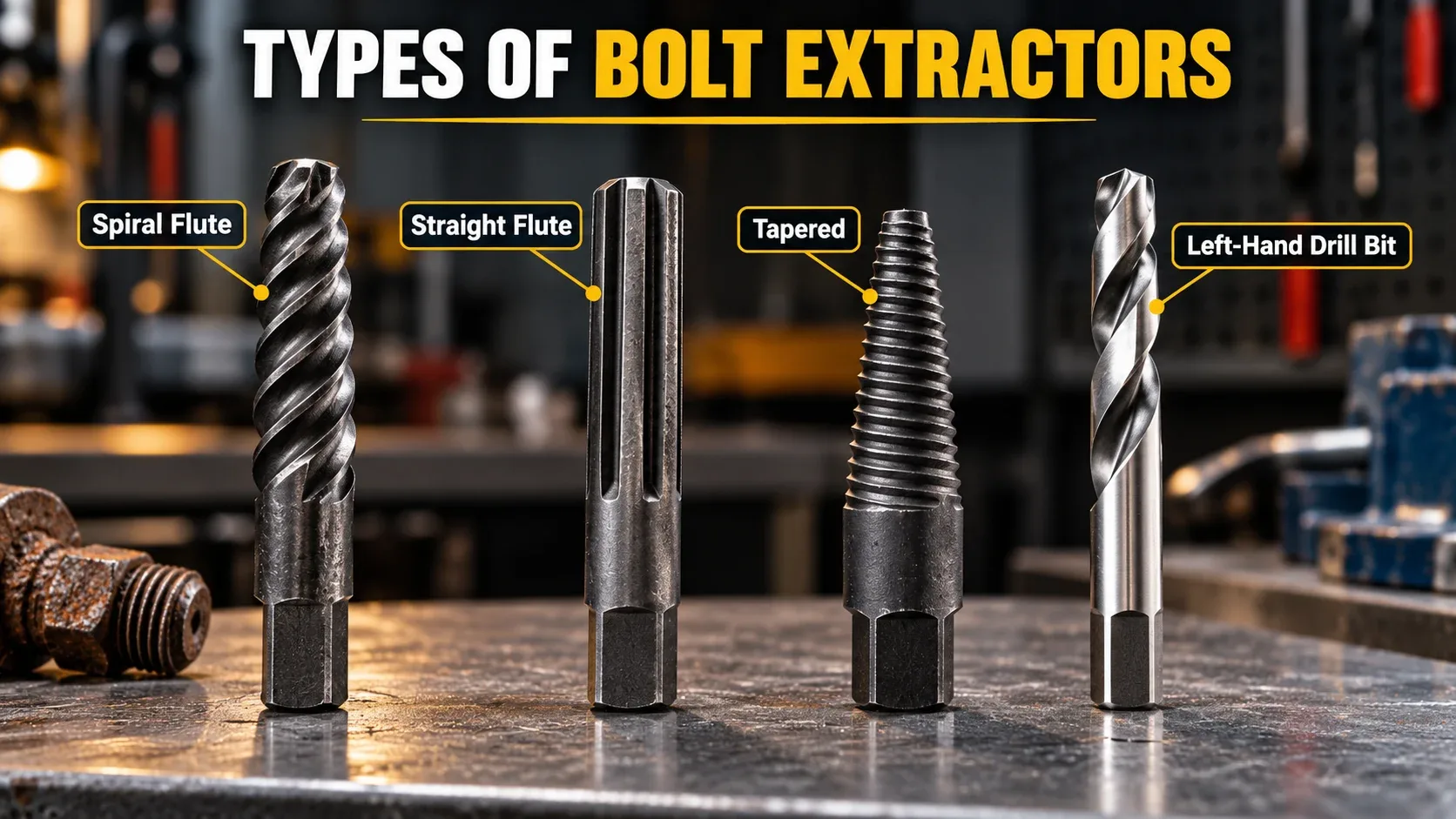
| Extractor Type | Best Application | Key Limitation |
|---|---|---|
| Spiral Easy-Out | Broken fasteners with centered pilot holes. | Can wedge the bolt outward if severely seized. |
| Straight-flute extractor | Selected drilled broken studs and bolts. | Correct hole size and engagement are critical. |
| External extractor socket | Rounded or damaged bolt heads. | Needs accessible outside surfaces. |
| Left-hand drill bit | Drilling a pilot hole that may loosen the fastener. | Removal is not guaranteed. |
| Specialty extraction kit | Multiple fastener conditions. | Requires choosing the correct tool for each job. |
Tools and Safety Equipment Needed
Organize the equipment and secure the workpiece before beginning. Stable positioning improves pilot-hole accuracy and reduces unexpected tool movement.
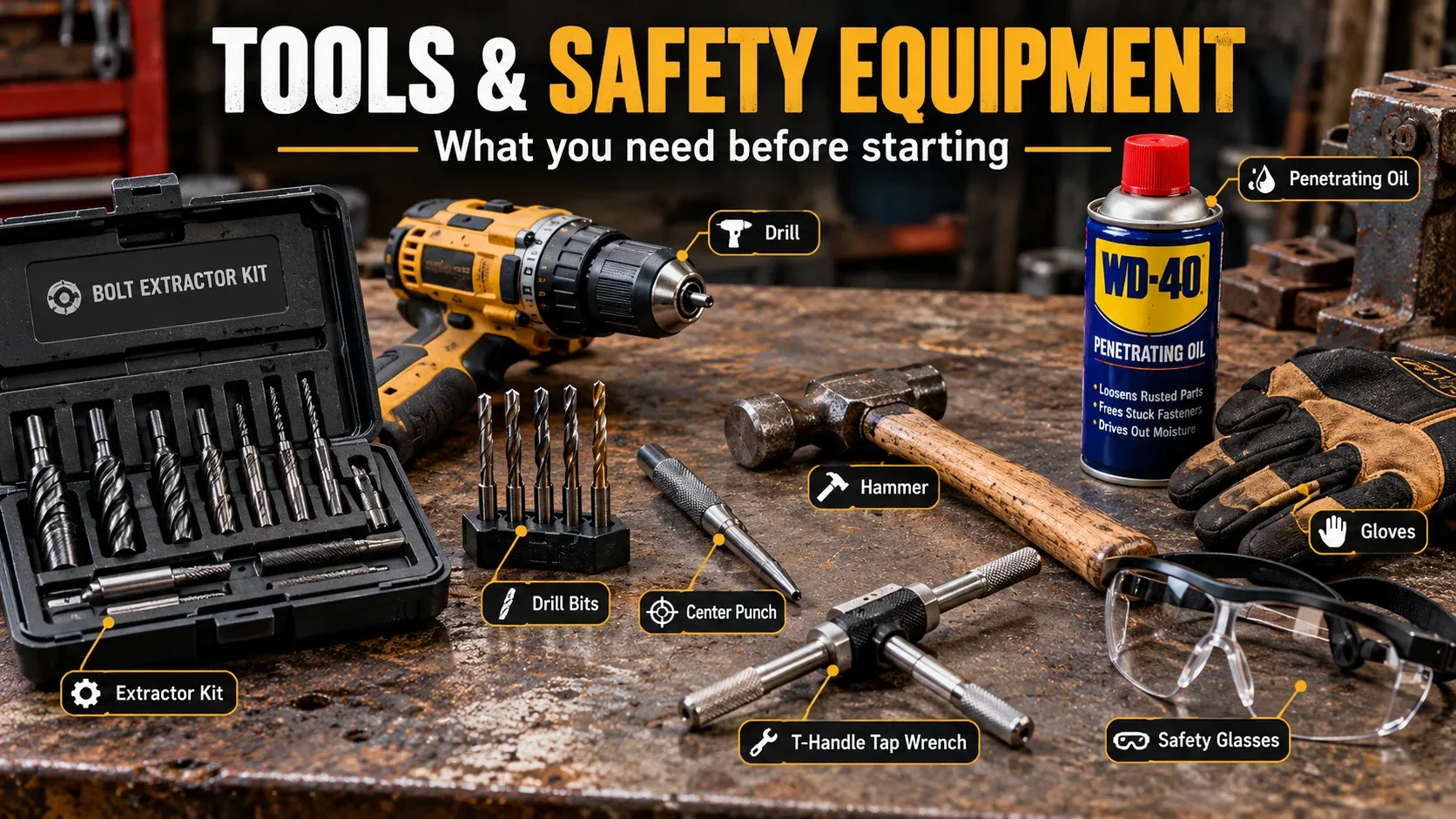
Essential Tool Checklist
Safety First
Wear suitable eye protection and secure loose workpieces. Keep hands, loose clothing, and hair away from rotating equipment. Do not use an impact wrench with a manual extractor unless expressly permitted. Avoid drilling into components near fuel systems, wiring, pressure lines, or sensitive engine parts without the correct service procedure.For safety-critical braking, steering, or suspension fasteners, follow the vehicle repair manual and seek qualified assistance where appropriate.
How to Use an Easy-Out to Remove a Broken Bolt: Step by Step
This procedure describes a conventional spiral Easy-Out on a standard right-hand-threaded bolt. Follow the instructions for your actual tool if they differ.
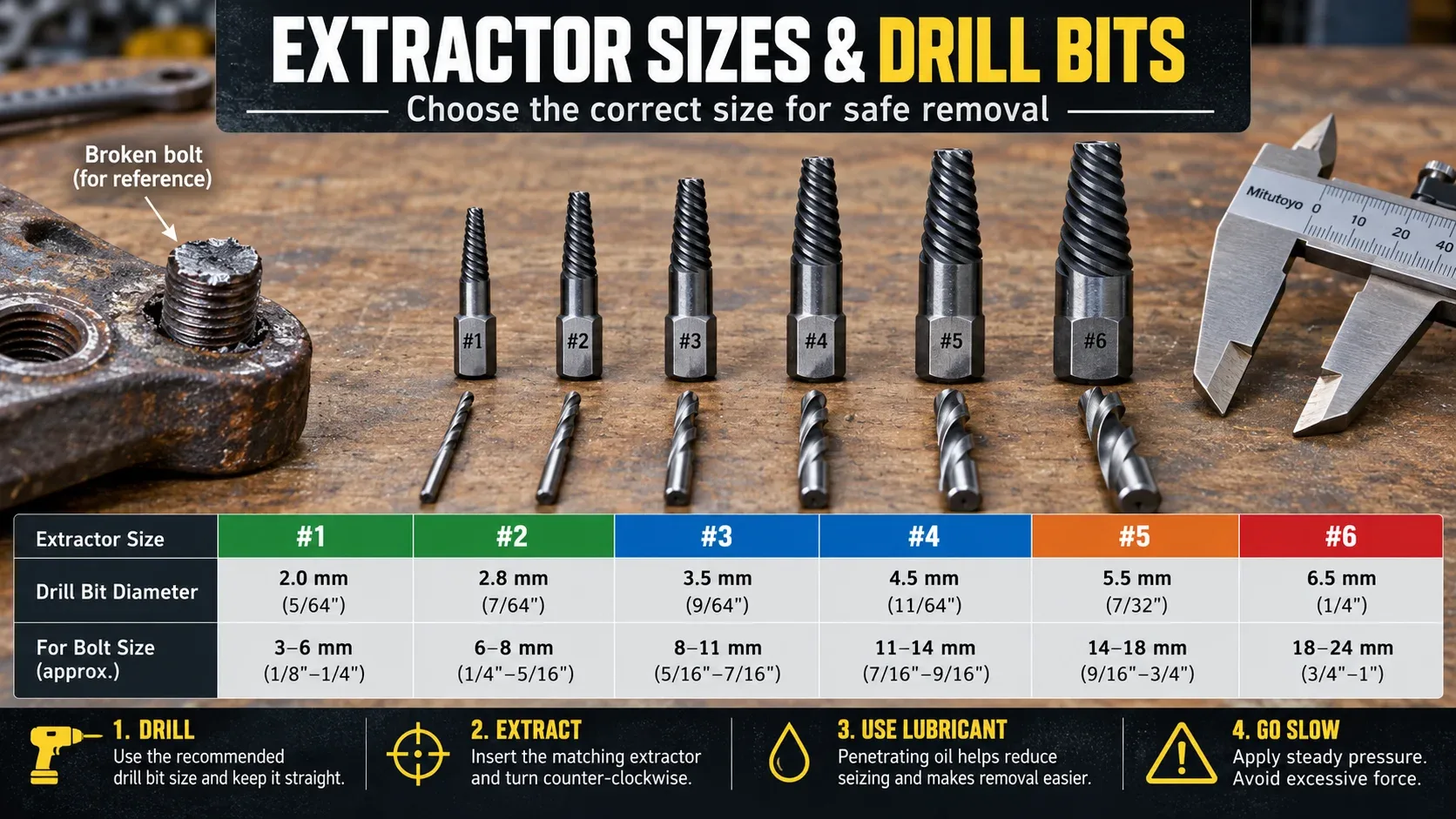
Easy-Out Extractor Sizes and Drill Bit Selection
Choosing the correct size is essential. An undersized extractor can break under load, while an oversized pilot hole can thin the fastener wall or damage the receiving threads.
There is no universal extractor drill-bit size chart for every brand. Use the exact tool manufacturer’s bolt range, pilot drill diameter, and engagement instructions.
| Selection Factor | What to Check |
|---|---|
| Fastener diameter | Match the bolt to the extractor’s rated range. |
| Pilot drill diameter | Use the drill size specified on the tool or manufacturer packaging. |
| Drilling depth | Provide sufficient engagement without cutting into underlying components. |
| Bolt material | Consider hardness and machinability. |
| Extractor type | Follow the instructions for the particular design. |
Why Extractor Size Matters
The extractor needs enough material to withstand reasonable torque while leaving sufficient bolt wall for controlled engagement. Similar-looking tools from different brands may require different pilot hole dimensions.
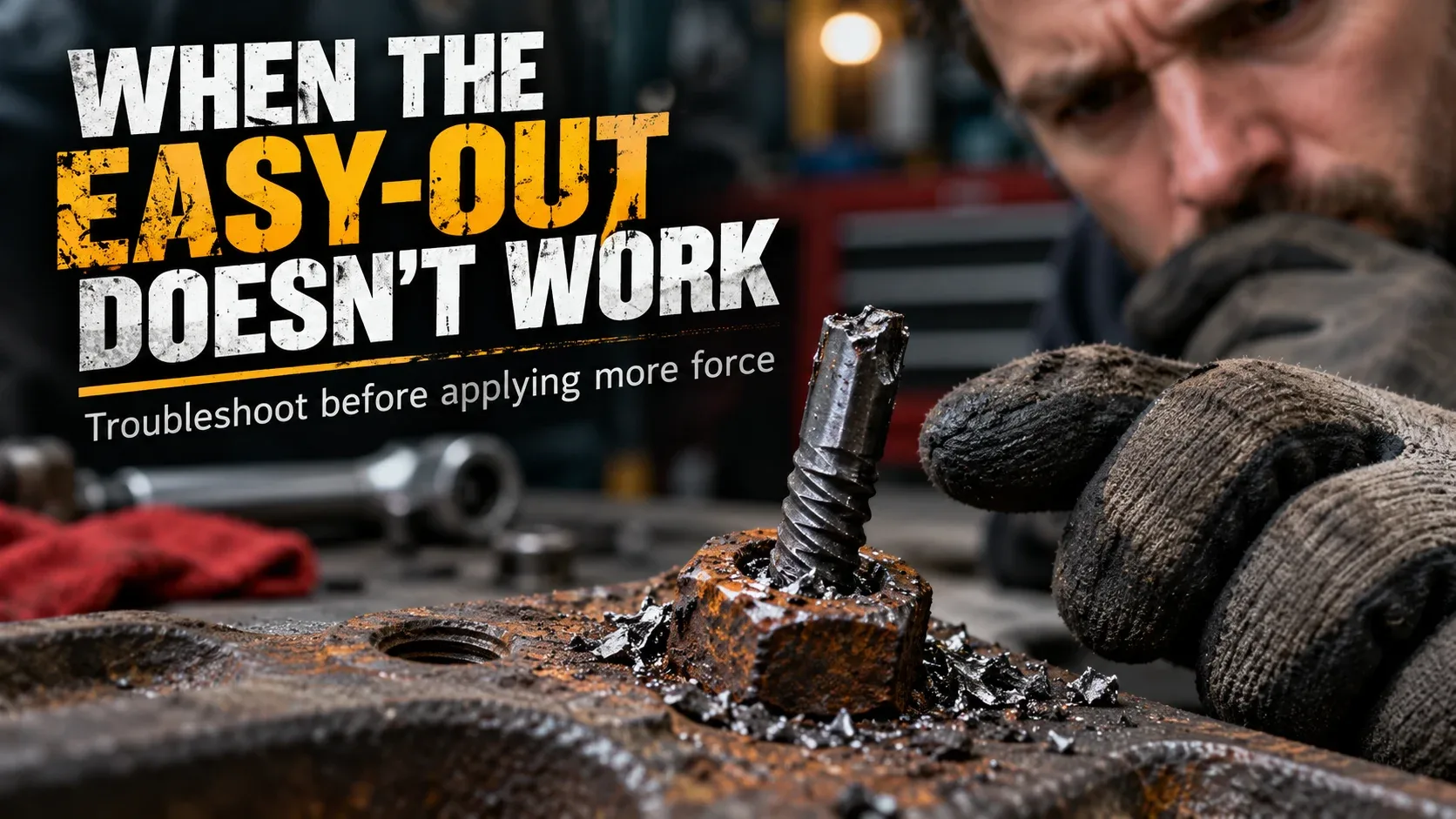
What to Do When an Easy-Out Bolt Extractor Does Not Work
An extractor may slip or fail to move a bolt because of corrosion, damaged threads, wrong sizing, or poor alignment. Identify the cause before increasing force.
| Problem | Likely Cause | Safer Response |
|---|---|---|
| Extractor slips | Incorrect fit or poor engagement. | Stop and check extractor and pilot-hole specifications. |
| Bolt does not move | Corrosion, galling, or thread damage. | Reassess; use another appropriate removal method. |
| Off-center drilling | Bit wander or uneven bolt surface. | Avoid enlarging blindly; consider professional correction. |
| Extractor twists | Excessive resistance. | Stop before it fractures. |
| Extractor breaks | Overload or tool fracture. | Consider specialist extraction or machining. |
What If the Bolt Is Completely Seized?
A severely seized fastener may stay immovable even when the extractor grips properly. Corrosion, galling, and thread damage can produce more resistance than the extractor safely withstands. Penetrating oil or a professional repair method may be a better option.
Alternative Methods for Removing Broken Bolts
An Easy-Out is only one repair option. The best alternative depends on how much bolt material remains accessible and whether the surrounding component can be safely preserved.
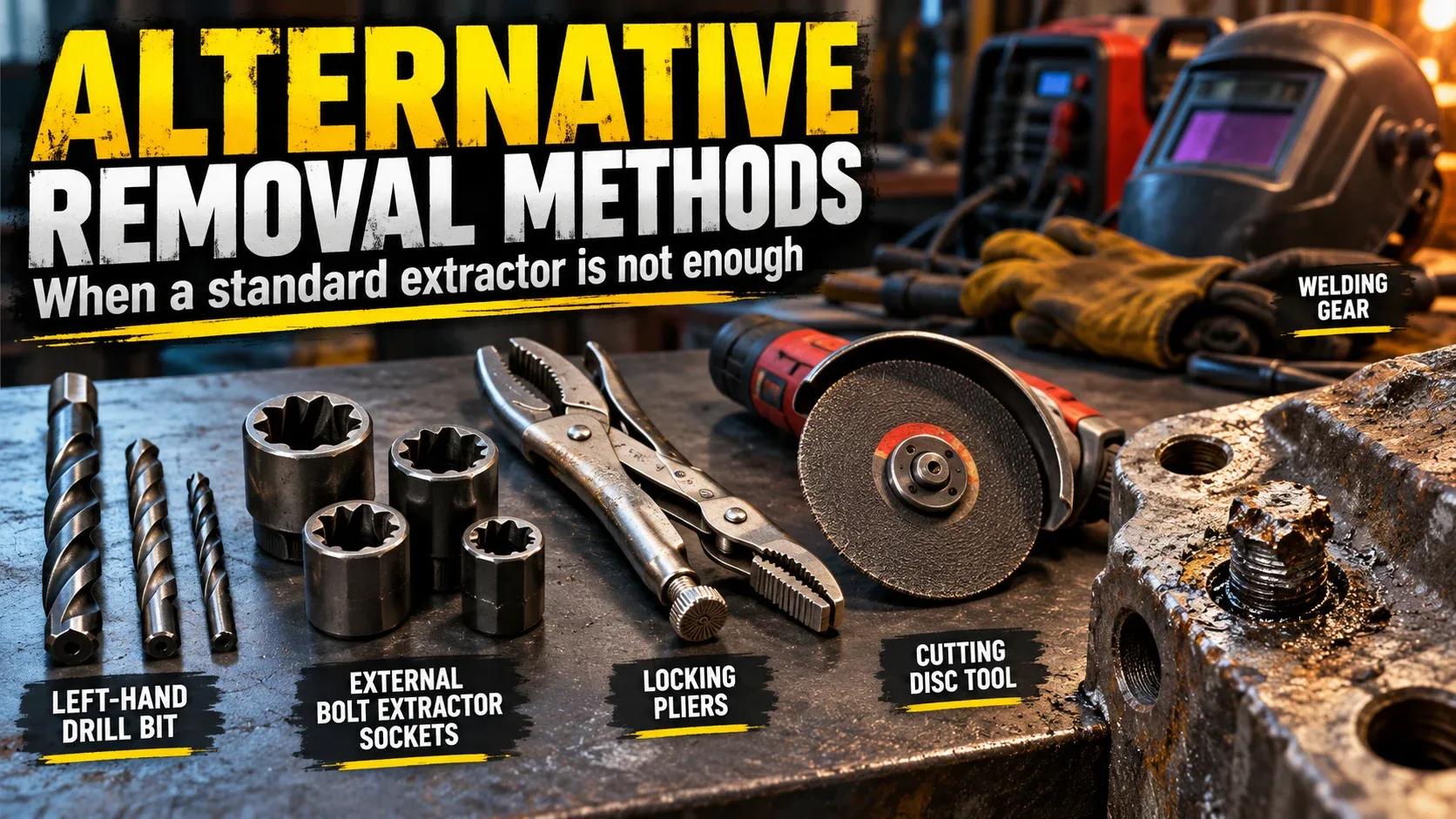
1. Left-Hand Drill Bit
Cuts a pilot hole while rotating in reverse; it may occasionally turn out a right-hand-threaded bolt.
2. External Extractor Socket
Grips a damaged or rounded bolt head from the outside where sufficient material remains.
3. Welding a Nut
A qualified welder may attach a nut to an accessible stud, subject to heat and material safety restrictions.
4. Machining and Thread Repair
Precision machining or electrical discharge machining can address difficult broken fasteners; damaged threads may need an engineered repair.
For expensive castings, sensitive equipment, or inaccessible fasteners, professional extraction may be less costly than damage caused by repeated failed attempts.
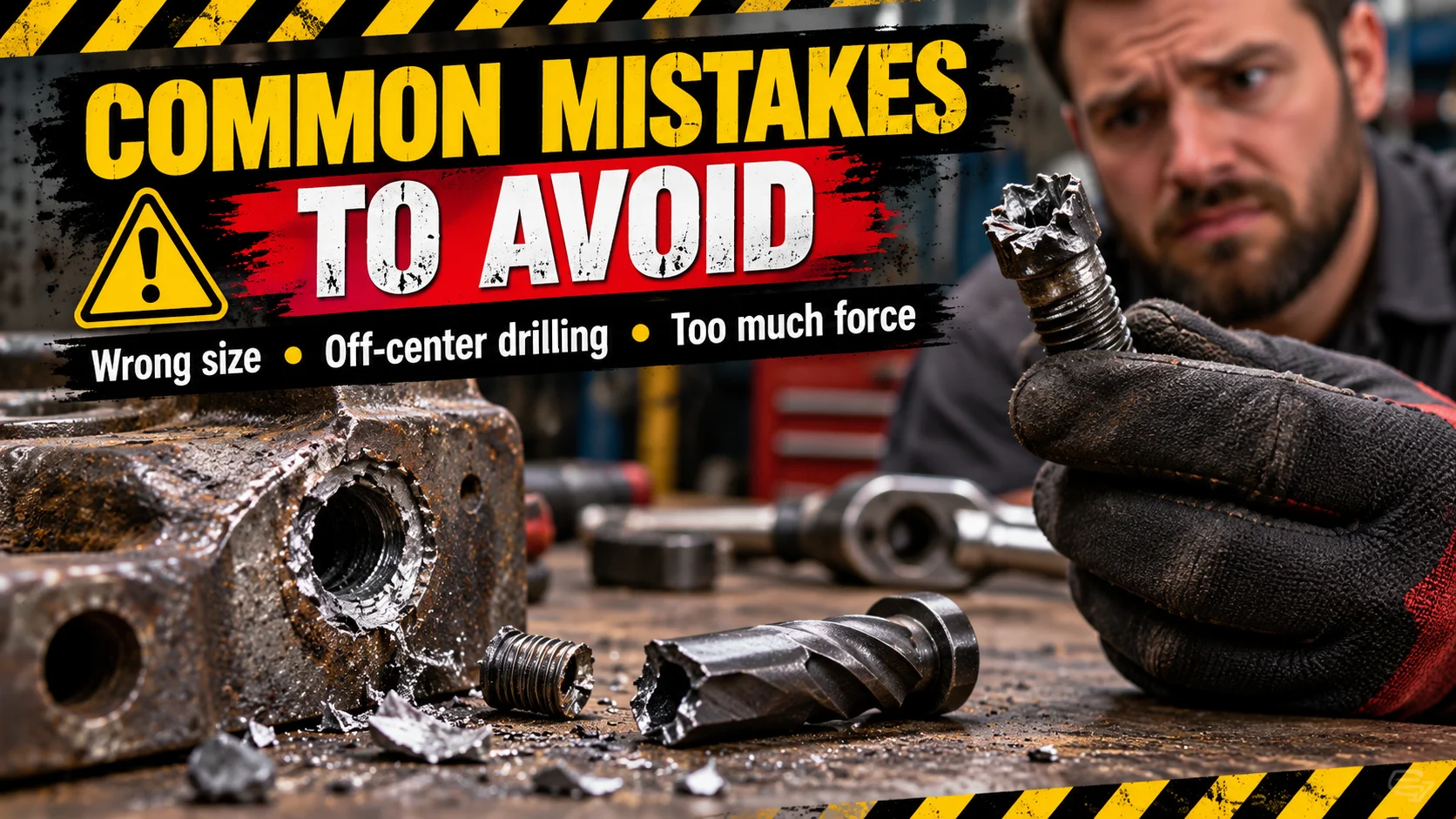
Common Mistakes When Using a Bolt Extractor
Several common mistakes increase the likelihood of damage. Careful setup and recognizing when to stop are more valuable than applying greater force.
| Mistake | Why It Matters | Better Approach |
|---|---|---|
| Drilling off-center | Can damage the receiving threads. | Center punch accurately and maintain drill alignment. |
| Wrong extractor size | Can slip, expand bolt wall, or fracture. | Use the manufacturer sizing information. |
| Excessive torque | May break a hardened extractor. | Increase force cautiously and stop if the bolt stays fixed. |
| Ignoring thread direction | May tighten rather than loosen a fastener. | Verify left- or right-hand threads before extraction. |
| Wrong power tool | May overload the extractor suddenly. | Use the manufacturer-approved holder and technique. |
Grip does not guarantee removal. A seized bolt can remain stationary even when the extractor is fully engaged.
How to Prevent Broken and Seized Bolts
Sound installation practices and maintenance reduce the risk of future fastener problems, though no method prevents every failure.
- Use correct tightening torque: Follow service specifications.
- Keep threads clean: Remove debris and corrosion before installation.
- Use proper fasteners: Match bolt grade, diameter, pitch, and material.
- Avoid cross-threading: Start fasteners carefully by hand when possible.
- Manage corrosion: Protect exposed fasteners appropriately.
- Use thread compounds properly: Anti-seize or lubricants should be used only if the procedure allows.
Lubricants affect tightening friction and can alter clamping force. Do not assume dry and lubricated torque specifications are interchangeable.
Frequently Asked Questions About Easy-Out Bolt Extractors
These answers cover the practical questions DIY mechanics and workshop technicians encounter most often.
What is an Easy-Out used for?
It grips certain broken or damaged threaded fasteners, generally after drilling a pilot hole, so they may be turned out.
How do you use an Easy-Out on a broken bolt?
Prepare and inspect the bolt, mark its center, drill the specified pilot hole, seat the extractor, and apply controlled loosening torque.
Which direction do you turn an Easy-Out?
For a standard right-hand-threaded bolt and a conventional left-hand spiral extractor, normally counterclockwise. Check special-thread cases.
What drill bit size do I need?
Use the size required by the exact extractor manufacturer. Generic drill-size charts are not reliable for every product.
Can it remove rusted or seized bolts?
Sometimes. Severe corrosion or galling may prevent removal and increase the risk of extractor breakage.
Can a bolt extractor work without drilling?
External extractor sockets may work without drilling if there is an accessible bolt head. Conventional internal Easy-Out tools generally require a hole.
What happens if an extractor breaks inside the bolt?
A hard fragment may remain in the fastener, and specialist machining may be needed to remove it.
Can an extractor damage internal threads?
Yes, especially if drilling is off-center or the tool is oversized or overloaded.
Is an Easy-Out better than a left-hand drill bit?
They perform different tasks: one grips a prepared hole; the other drills and may sometimes rotate a bolt free.
When should I stop a DIY extraction?
Stop if the tool twists without moving the bolt, the hole becomes badly misaligned, or important nearby components may be damaged.
Final Thoughts: Using a Bolt Extractor the Right Way
An Easy-Out bolt extractor can help remove certain broken fasteners when drilling can be carried out accurately and thread resistance is manageable.
Successful removal starts with selecting the correct tool, drilling a centered pilot hole, and applying controlled force. If the bolt does not move, stop and reconsider the method rather than risk a broken extractor.
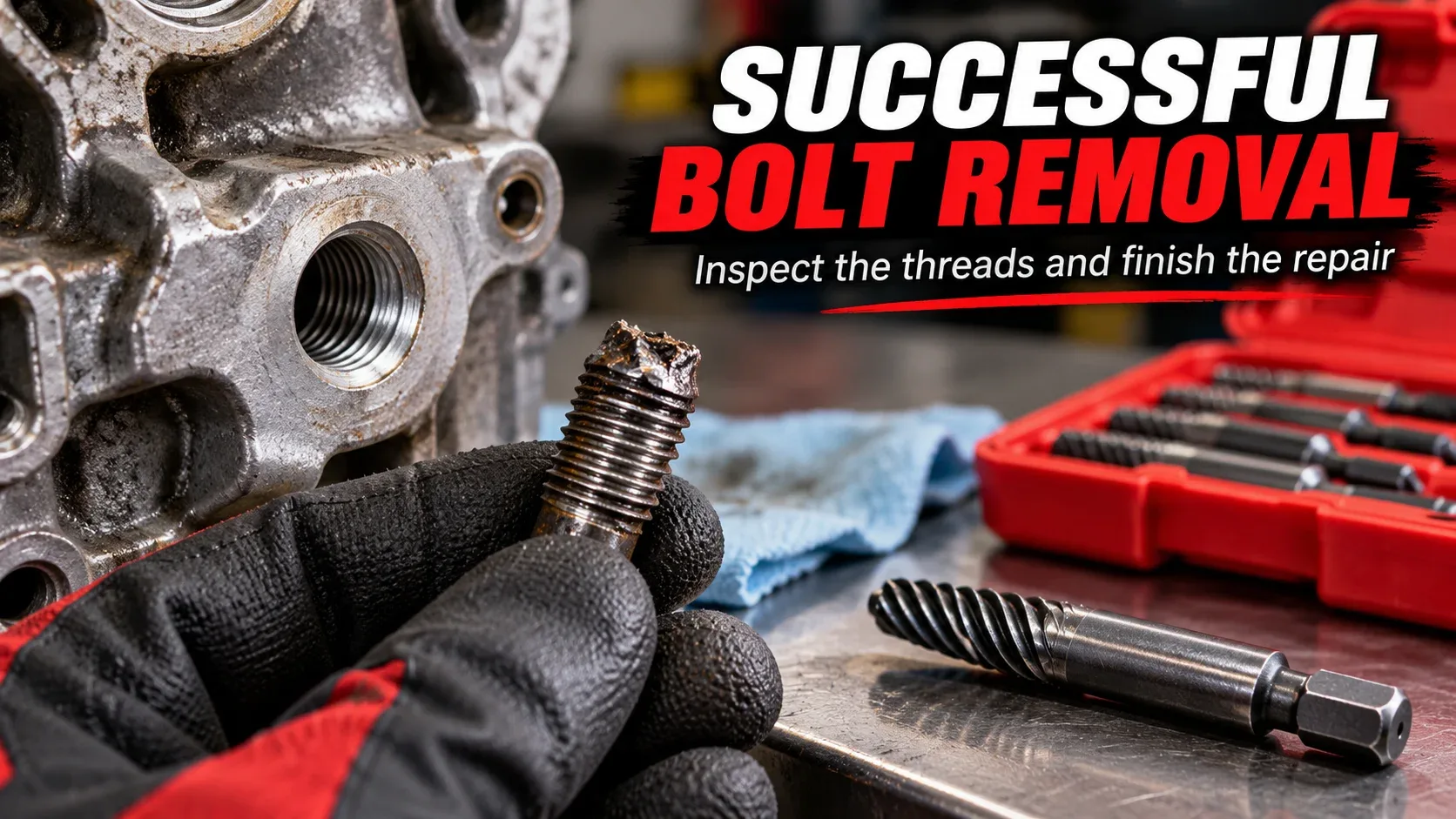
The best repair is one that restores the threaded connection without damaging the surrounding component. Where conditions are unsuitable, qualified professional assistance may be the safest option.
Key Takeaways
- Match the extractor to the fastener condition.
- Use the exact manufacturer-recommended drill size.
- Keep the pilot hole centered and straight.
- Stop before the extractor fractures.
- Inspect the threads after removal.
- Consider alternative methods when extraction is unsuitable.