
If your car is locked, dead, overheating, stuck, or sitting on a flat tire, use this roadside assistance checklist before panic takes over. The goal is simple: stay safe, figure out what kind of help you need, and avoid turning a small roadside problem into a bigger repair bill.
This guide is for drivers who are stranded in a parking lot, driveway, gas station, school pickup line, or on the side of the road. It is written for everyday drivers, not mechanics. You will learn what to check first, what information to collect, when to call roadside assistance, and when to treat the situation as an emergency.
Emergency first: If a child, pet, vulnerable adult, medical device, or medication is locked inside the vehicle, or if you are in immediate danger, call 911 now.
TL;DR: Roadside Assistance Checklist
- Move yourself and passengers to a safe location.
- Turn on hazard lights.
- Do not stand in traffic or behind the vehicle.
- Identify the problem: lockout, flat tire, dead battery, no fuel, stuck vehicle, overheating, or accident.
- Check your insurance app, vehicle app, AAA membership, credit card, or warranty for roadside coverage.
- Collect your location, vehicle details, license plate, and visible problem.
- Ask for a price estimate before approving paid service.
- Stay with your phone and keep your location visible.
- Call 911 for children, pets, fire risk, crash injuries, extreme heat, or unsafe roadside conditions.
Table of Contents
- What to Do First When You’re Stranded
- Roadside Assistance Checklist by Problem
- What Information to Give Roadside Assistance
- What Not to Do While Waiting
- How Much Roadside Assistance May Cost
- How to Prepare Before Your Next Breakdown
- FAQ
What to Do First When You’re Stranded
The first few minutes matter. Your car problem may feel urgent, but your safety matters more than the vehicle.
1. Get Out of Traffic
If the vehicle can still move, guide it to the safest nearby spot. Good options include:
- A parking lot
- A wide shoulder
- A side street
- A well-lit gas station
- A rest area
- A business entrance away from traffic
If you are on a highway and cannot move the vehicle, turn on your hazard lights and stay away from moving traffic. Do not try to inspect the car while standing in a live lane.
2. Turn On Hazard Lights
Hazard lights help other drivers see that your vehicle is stopped or disabled. Use them even in daylight.
If you have reflective triangles, flares, or LED warning lights, use them only when it is safe to place them. Do not walk into traffic to set up warning equipment.
3. Decide Whether It Is an Emergency
Call 911 first if:
- A child is locked inside the vehicle
- A pet is locked inside during hot or cold weather
- Someone is injured
- You smell fuel or smoke
- The vehicle is in a dangerous traffic position
- The engine is running in an enclosed space
- You feel unsafe or threatened
- Extreme heat or cold creates a health risk
Roadside assistance is for vehicle problems. Emergency services are for immediate safety risks.
Roadside Assistance Checklist by Problem
Different problems need different help. Use the sections below to identify what to request.
Locked Out of Your Car
A vehicle lockout is one of the most stressful roadside problems because the car may be perfectly fine, but you cannot access it.
Do This First
- Check every door.
- Check the trunk or hatch.
- Look for a keypad, key card, or digital key.
- Open your manufacturer app and look for remote unlock.
- Call someone with a spare key.
- Check insurance, AAA, warranty, or roadside coverage.
Call for Help If
- The keys are in the ignition.
- The engine is running.
- The keys are in the trunk.
- The car has push-button start.
- You cannot safely access the spare key.
- A child, pet, or vulnerable person is inside.
Avoid
Do not pry the door with screwdrivers, knives, crowbars, or random metal tools. You may bend the frame, scratch the paint, tear the weather stripping, or damage wiring. A professional lockout call is usually cheaper than body or glass repair.
Dead Battery
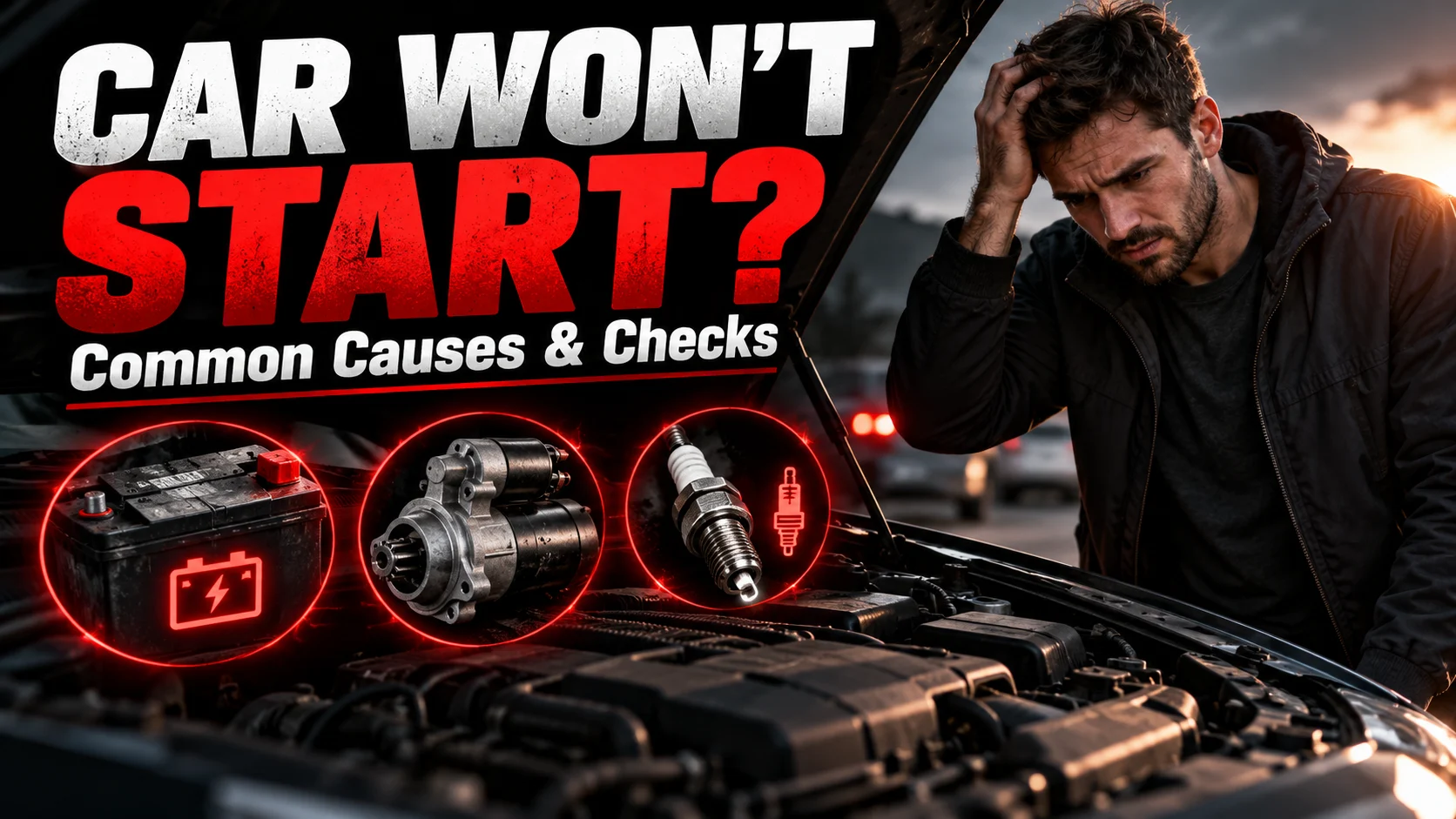
A dead battery often shows up as clicking, dim lights, no crank, or a dashboard that flickers and dies.
Do This First
- Turn off headlights, radio, fan, and interior lights.
- Make sure the car is in Park or Neutral.
- Check whether the battery terminals look loose or corroded.
- Look for a portable jump starter if you have one.
- Ask roadside assistance for a jump start or battery service.
Call for Help If
- The vehicle will not start after one safe jump attempt.
- The battery is swollen, leaking, or smells like rotten eggs.
- You drive a hybrid or electric vehicle and are unsure where to connect jump leads.
- The car starts but dies again quickly.
Avoid
Do not connect jumper cables randomly. Incorrect connections can damage electronics or create sparks. If you are unsure, request professional battery assistance.
Flat Tire
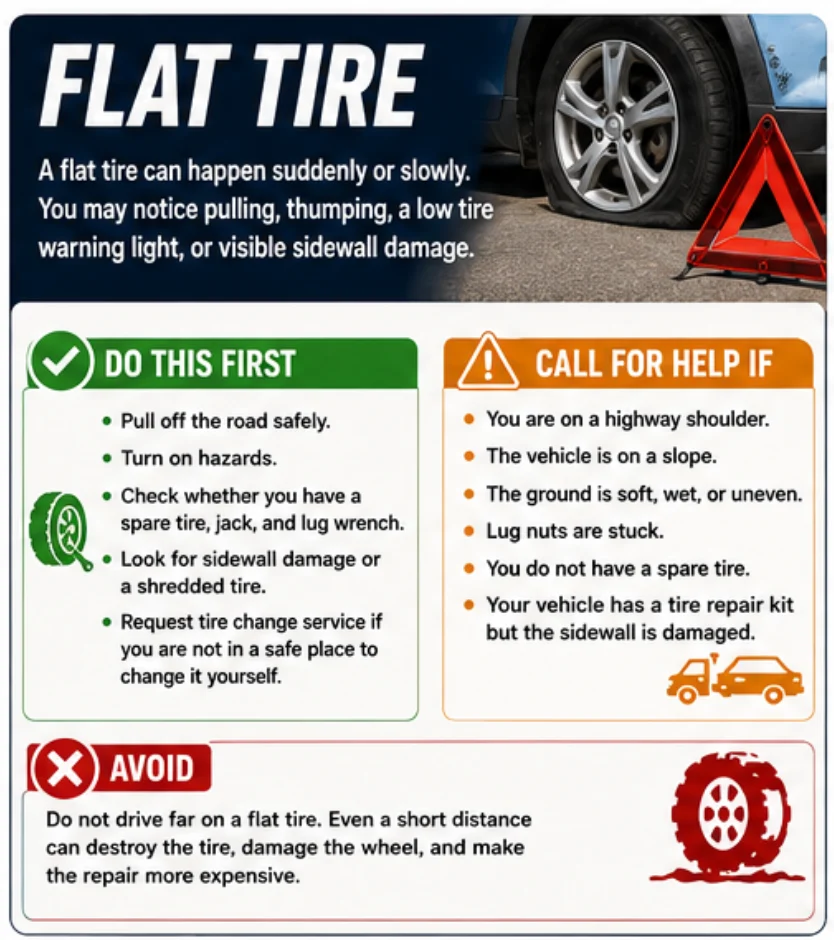
A flat tire can happen suddenly or slowly. You may notice pulling, thumping, a low tire warning light, or visible sidewall damage.
Do This First
- Pull off the road safely.
- Turn on hazards.
- Check whether you have a spare tire, jack, and lug wrench.
- Look for sidewall damage or a shredded tire.
- Request tire change service if you are not in a safe place to change it yourself.
Call for Help If
- You are on a highway shoulder.
- The vehicle is on a slope.
- The ground is soft, wet, or uneven.
- Lug nuts are stuck.
- You do not have a spare tire.
- Your vehicle has a tire repair kit but the sidewall is damaged.
Avoid
Do not drive far on a flat tire. Even a short distance can destroy the tire, damage the wheel, and make the repair more expensive.
Out of Gas or Low Fuel
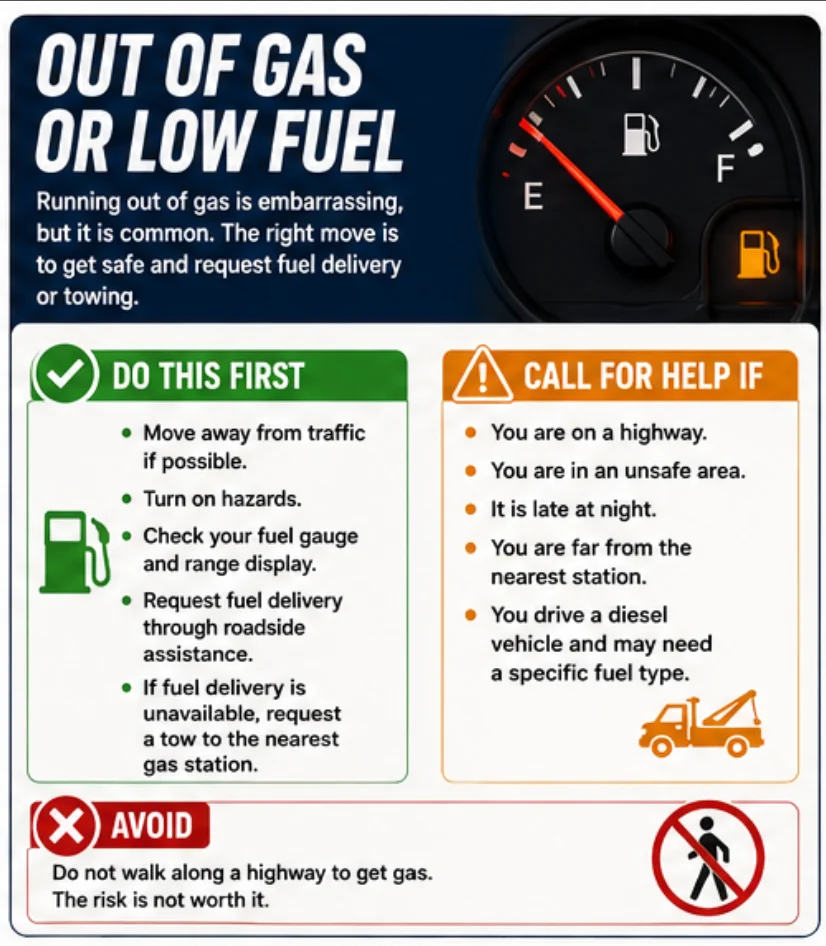
Running out of gas is embarrassing, but it is common. The right move is to get safe and request fuel delivery or towing.
Do This First
- Move away from traffic if possible.
- Turn on hazards.
- Check your fuel gauge and range display.
- Request fuel delivery through roadside assistance.
- If fuel delivery is unavailable, request a tow to the nearest gas station.
Call for Help If
- You are on a highway.
- You are in an unsafe area.
- It is late at night.
- You are far from the nearest station.
- You drive a diesel vehicle and may need a specific fuel type.
Avoid
Do not walk along a highway to get gas. The risk is not worth it.
Overheating Engine
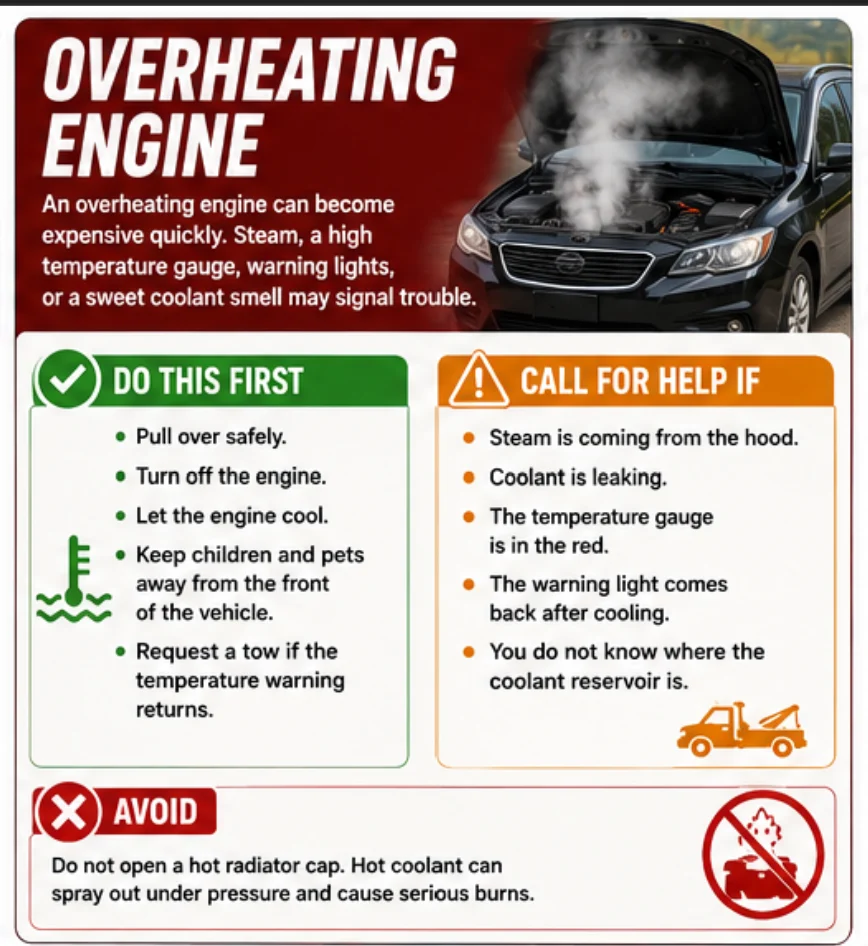
An overheating engine can become expensive quickly. Steam, a high temperature gauge, warning lights, or a sweet coolant smell may signal trouble.
Do This First
- Pull over safely.
- Turn off the engine.
- Let the engine cool.
- Keep children and pets away from the front of the vehicle.
- Request a tow if the temperature warning returns.
Call for Help If
- Steam is coming from the hood.
- Coolant is leaking.
- The temperature gauge is in the red.
- The warning light comes back after cooling.
- You do not know where the coolant reservoir is.
Avoid
Do not open a hot radiator cap. Hot coolant can spray out under pressure and cause serious burns.
Stuck Vehicle
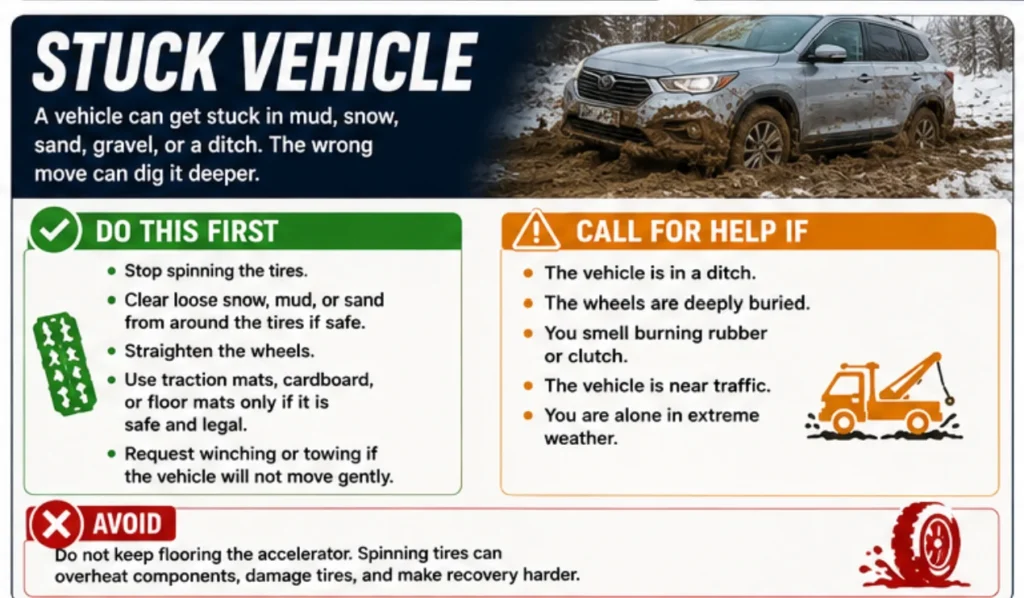
A vehicle can get stuck in mud, snow, sand, gravel, or a ditch. The wrong move can dig it deeper.
Do This First
- Stop spinning the tires.
- Clear loose snow, mud, or sand from around the tires if safe.
- Straighten the wheels.
- Use traction mats, cardboard, or floor mats only if it is safe and legal.
- Request winching or towing if the vehicle will not move gently.
Call for Help If
- The vehicle is in a ditch.
- The wheels are deeply buried.
- You smell burning rubber or clutch.
- The vehicle is near traffic.
- You are alone in extreme weather.
Avoid
Do not keep flooring the accelerator. Spinning tires can overheat components, damage tires, and make recovery harder.
After an Accident
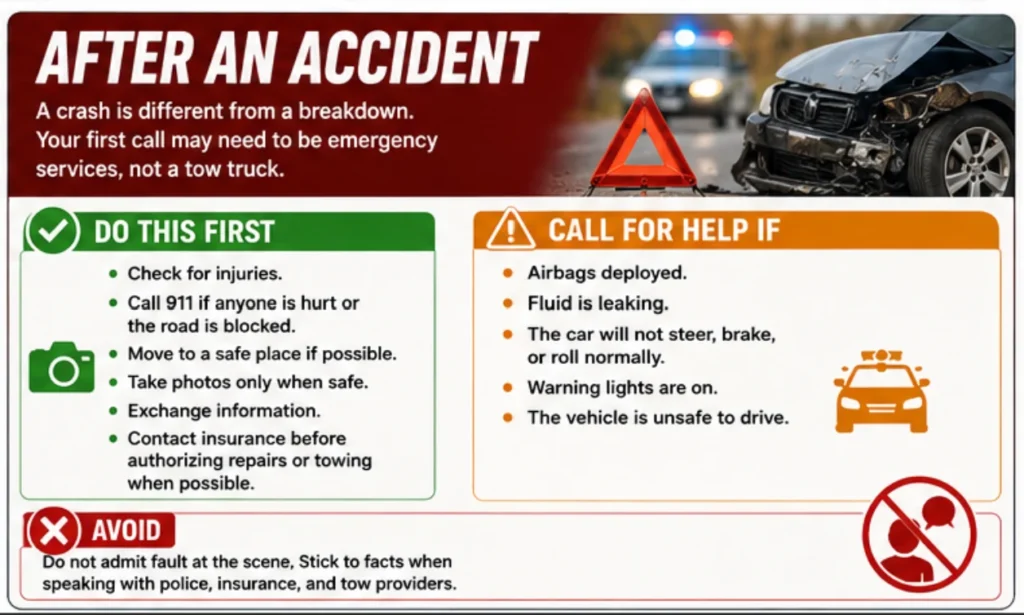
A crash is different from a breakdown. Your first call may need to be emergency services, not a tow truck.
Do This First
- Check for injuries.
- Call 911 if anyone is hurt or the road is blocked.
- Move to a safe place if possible.
- Take photos only when safe.
- Exchange information.
- Contact insurance before authorizing repairs or towing when possible.
Call for Help If
- Airbags deployed.
- Fluid is leaking.
- The car will not steer, brake, or roll normally.
- Warning lights are on.
- The vehicle is unsafe to drive.
Avoid
Do not admit fault at the scene. Stick to facts when speaking with police, insurance, and tow providers.
What Information to Give Roadside Assistance
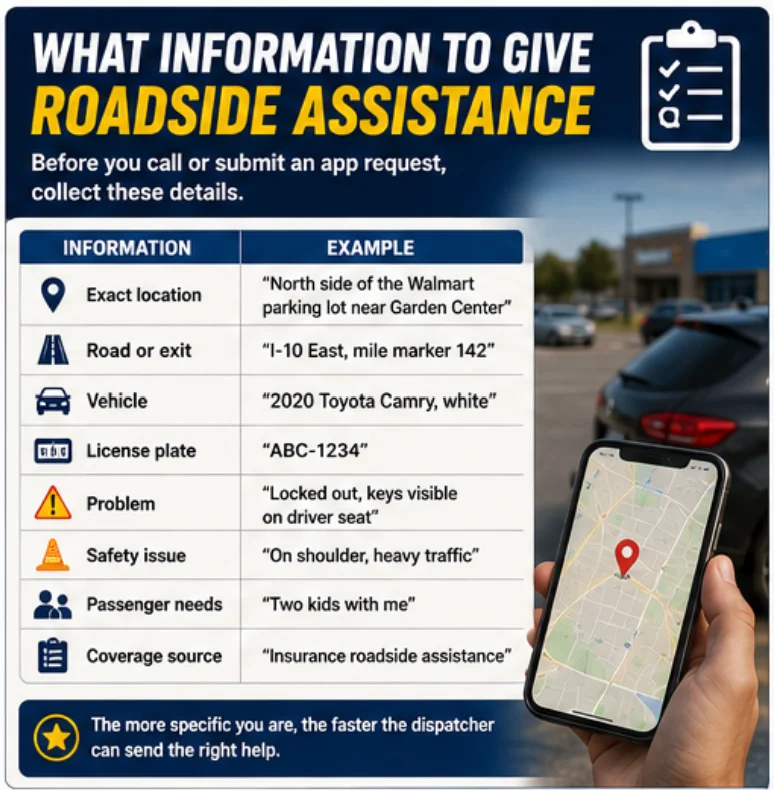
Before you call or submit an app request, collect these details.
| Information | Example |
| Exact location | “North side of the Walmart parking lot near Garden Center” |
| Road or exit | “I-10 East, mile marker 142” |
| Vehicle | “2020 Toyota Camry, white” |
| License plate | “ABC-1234” |
| Problem | “Locked out, keys visible on driver seat” |
| Safety issue | “On shoulder, heavy traffic” |
| Passenger needs | “Two kids with me” |
| Coverage source | “Insurance roadside assistance” |
The more specific you are, the faster the dispatcher can send the right help.
What Not to Do While Waiting
Waiting is frustrating, especially when you are late, tired, or worried about cost. Still, avoid these mistakes.
Do Not Accept Random Help Too Quickly
A kind stranger may mean well, but vehicle recovery can be risky. Be careful with people who offer to unlock, tow, jump, or repair your car without credentials.
Do Not Leave Your Vehicle Unsecured
If you must step away, take valuables, lock what you can, and stay in a visible, safe location. If the keys are locked inside, wait nearby in a secure area.
Do Not Ignore Weather
Heat and cold can change the situation fast. Move passengers indoors when possible. If a child or pet is inside a locked vehicle, treat it as urgent and call emergency services.
Do Not Approve Surprise Charges
Before a paid service starts, ask:
- What is the service call fee?
- What is included?
- Are there mileage fees?
- Are there after-hours fees?
- Is payment due before or after service?
- Will insurance or membership reimburse this?
A clear price conversation can prevent frustration later.
How Much Roadside Assistance May Cost
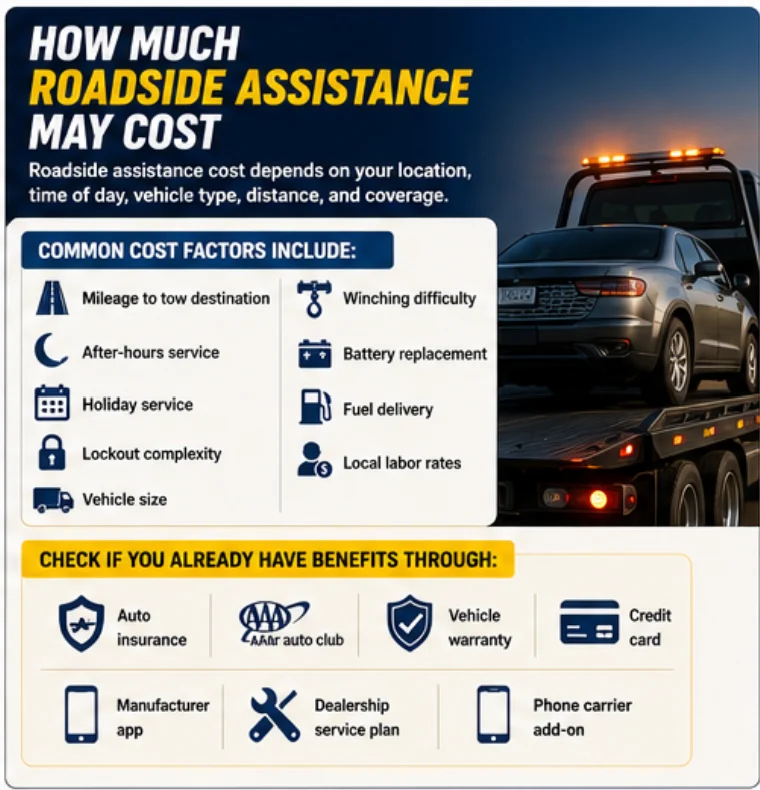
Roadside assistance cost depends on your location, time of day, vehicle type, distance, and coverage. A simple jump start in a city may cost less than a long-distance tow at night.
Common cost factors include:
- Mileage to tow destination
- After-hours service
- Holiday service
- Lockout complexity
- Vehicle size
- Winching difficulty
- Battery replacement
- Fuel delivery
- Local labor rates
Before paying cash, check whether you already have benefits through:
- Auto insurance
- AAA or another auto club
- Vehicle warranty
- Certified pre-owned warranty
- Credit card
- Manufacturer app
- Dealership service plan
- Phone carrier add-on
How to Prepare Before Your Next Breakdown
The best roadside assistance checklist is the one you prepare before you need it.
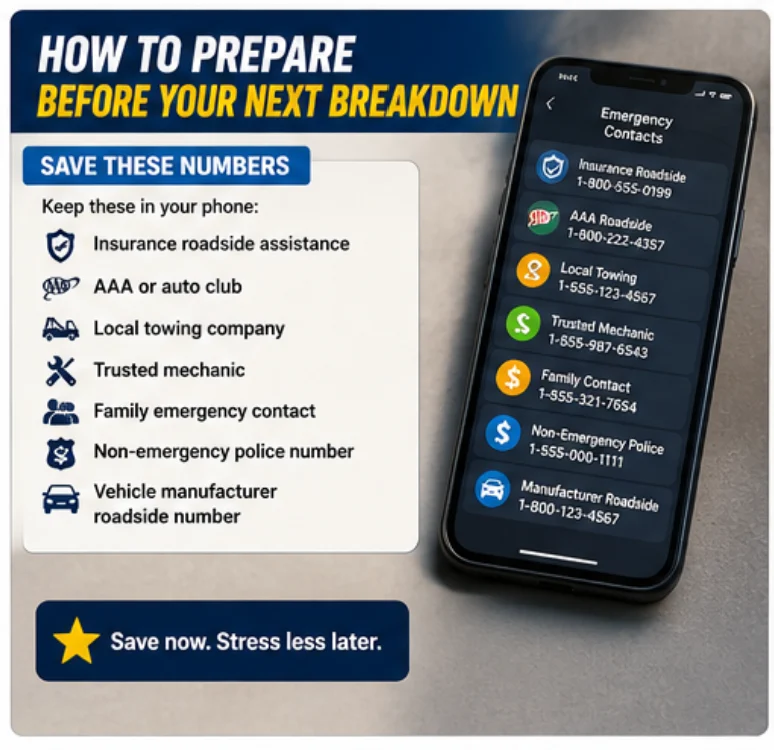
Save These Numbers
Keep these in your phone:
- Insurance roadside assistance
- AAA or auto club
- Local towing company
- Trusted mechanic
- Family emergency contact
- Non-emergency police number
- Vehicle manufacturer roadside number
Keep These Items in Your Car
A basic emergency kit should include:
- Phone charger
- Flashlight
- Reflective vest
- Reflective triangles
- Tire pressure gauge
- Portable jump starter
- First aid kit
- Water
- Blanket
- Gloves
- Paper copy of insurance
- Pen and notepad
- Small amount of cash
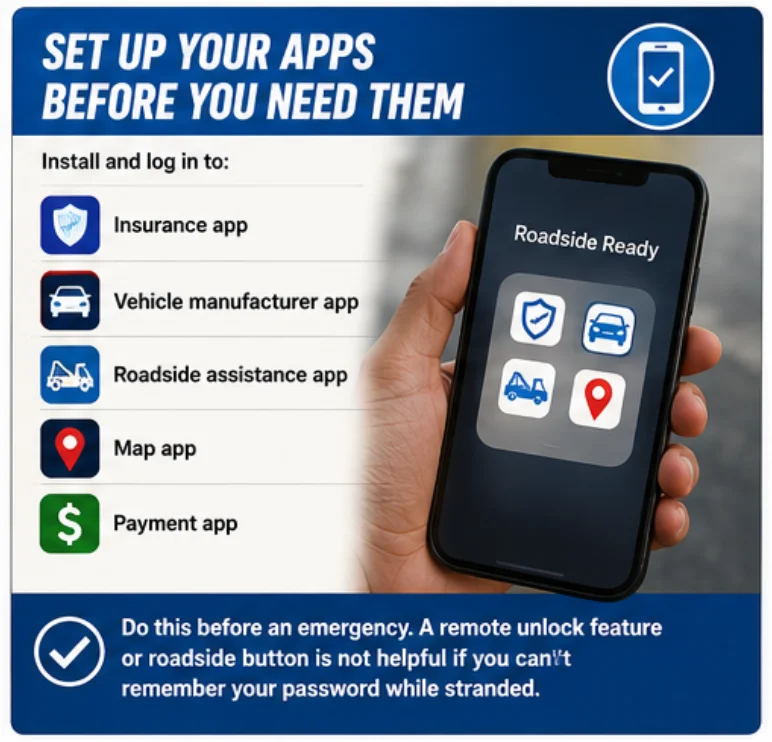
Set Up Your Apps
Install and log in to:
- Insurance app
- Vehicle manufacturer app
- Roadside assistance app
- Map app
- Payment app
Do this before an emergency. A remote unlock feature or roadside button is not helpful if you cannot remember your password while stranded.
FAQ: Roadside Assistance Checklist
What is roadside assistance?
Roadside assistance is a service that helps drivers with common vehicle problems such as lockouts, dead batteries, flat tires, fuel delivery, towing, and minor roadside issues. It may be included through insurance, an auto club, a vehicle warranty, or a manufacturer program.
What should I do first if my car breaks down?
Move to a safe location if possible, turn on hazard lights, keep passengers away from traffic, and identify the problem. If anyone is injured, trapped, or in danger, call 911 before roadside assistance.
Should I stay in my car while waiting for roadside assistance?
It depends on location. In a parking lot, staying inside may be fine. On a highway shoulder, it may be safer to exit away from traffic and stand behind a barrier if one is available. Always prioritize your safety over the vehicle.
Does roadside assistance unlock cars?
Many roadside assistance programs include vehicle lockout help. Coverage depends on the provider and plan. Some programs may unlock the vehicle, send a locksmith, tow the vehicle, or reimburse part of the locksmith cost.
Can roadside assistance replace a car key?
Usually, roadside assistance helps with access, towing, or locksmith referral. Full key replacement may require an automotive locksmith, dealership, or key programming service, especially for transponder keys, smart keys, and push-button start vehicles.
What should I do if my child is locked in the car?
Call 911 immediately. Do not spend time trying non-emergency solutions if a child is locked inside, especially in warm weather. Follow emergency instructions and prioritize the child’s safety over vehicle damage.
Is roadside assistance worth it?
Roadside assistance can be worth it if you drive often, commute long distances, have an older vehicle, travel with children, or do not have nearby help. One tow, lockout, or battery call can make coverage valuable.
What should I ask before hiring a tow truck?
Ask for the total estimated cost, mileage fees, destination options, payment methods, arrival window, and whether the company works with your insurance. Also ask where the vehicle will be taken if you do not choose a repair shop.
Can I call roadside assistance for someone else’s car?
Sometimes. Some memberships cover the member rather than the vehicle, while others cover a specific car. Check your plan terms. If you are a passenger or helping a friend, explain the situation clearly when requesting service.
What should be in a roadside emergency kit?
A good kit includes a phone charger, flashlight, reflective triangles, reflective vest, first aid kit, gloves, water, blanket, tire pressure gauge, portable jump starter, and a paper copy of insurance and emergency contacts.
Conclusion
A roadside problem is stressful, but a clear roadside assistance checklist helps you make safer decisions fast. First, protect yourself and your passengers. Then identify the problem, check your coverage, collect your location details, and call the right kind of help.
Do not risk injury, traffic danger, or expensive vehicle damage to save a few minutes. Open your insurance, roadside, or vehicle app now and save your emergency contact options before the next breakdown happens.
Also read roadside assistance and safety guides
Also read emergency car kit checklist
Also read how to change a flat tire