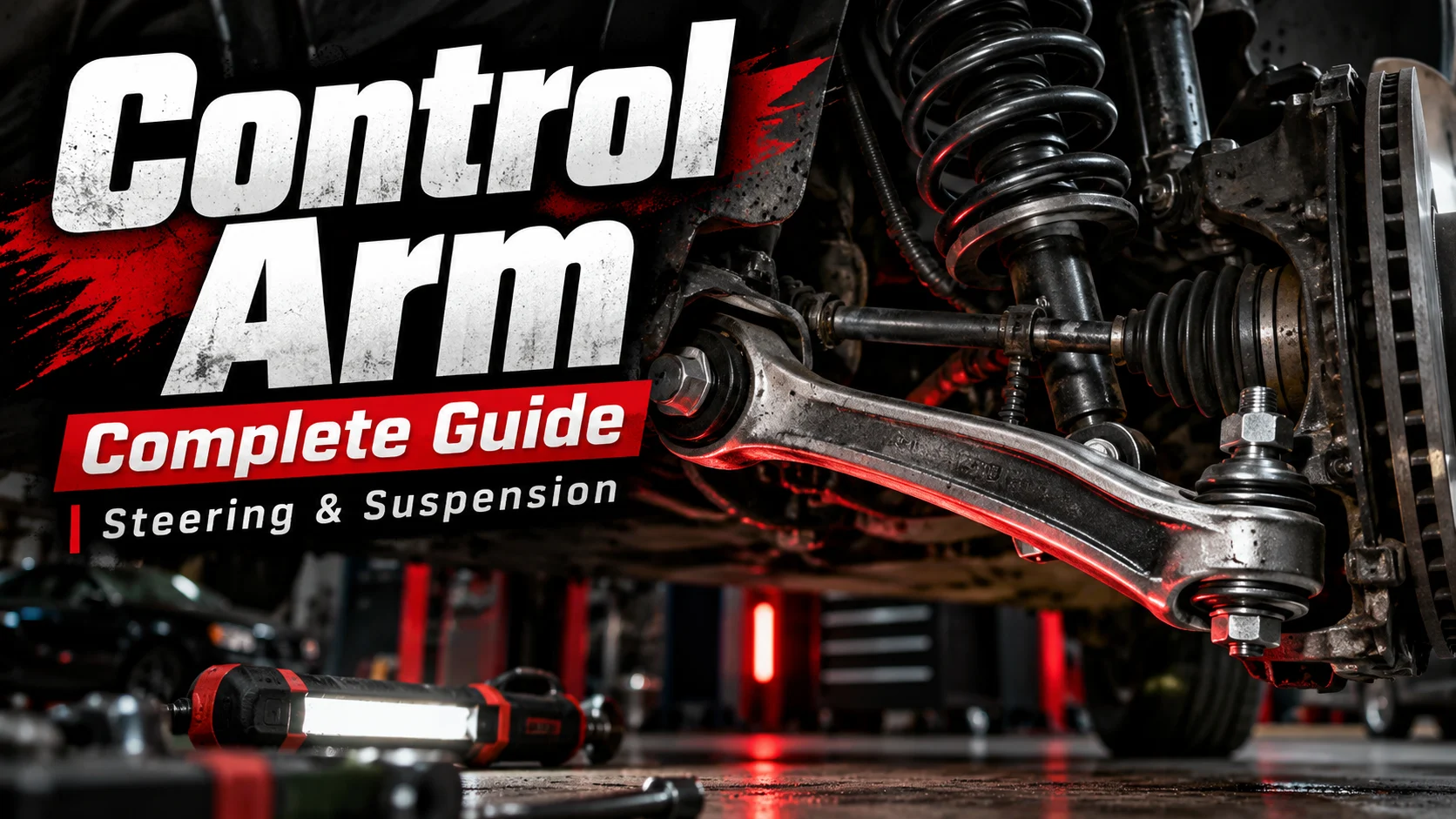
Hearing a clunk when driving over bumps? Noticing uneven tire wear or a steering wheel that feels less stable than usual? A worn control arm or one of its connecting components could be responsible.
A car control arm plays an important role in keeping the wheels positioned correctly while allowing the suspension to move. When its bushings, ball joints, or structure become damaged, handling and ride quality may suffer.
This guide explains what control arms do, the symptoms of failure, control arm replacement cost in the United States, and how to decide whether your vehicle needs professional repair.
A control arm connects the vehicle’s body or subframe to the wheel assembly and helps guide suspension movement. Common problems include worn bushings, loose ball joints, and impact damage.
According to a September 2026 RepairPal national estimate, control arm replacement averages approximately $791–$909, including parts and labor. Actual prices depend on the vehicle, repair location, and components being replaced.
Significant control arm damage can compromise steering and wheel control. Have suspected suspension damage inspected promptly.
What Is a Control Arm in a Car?
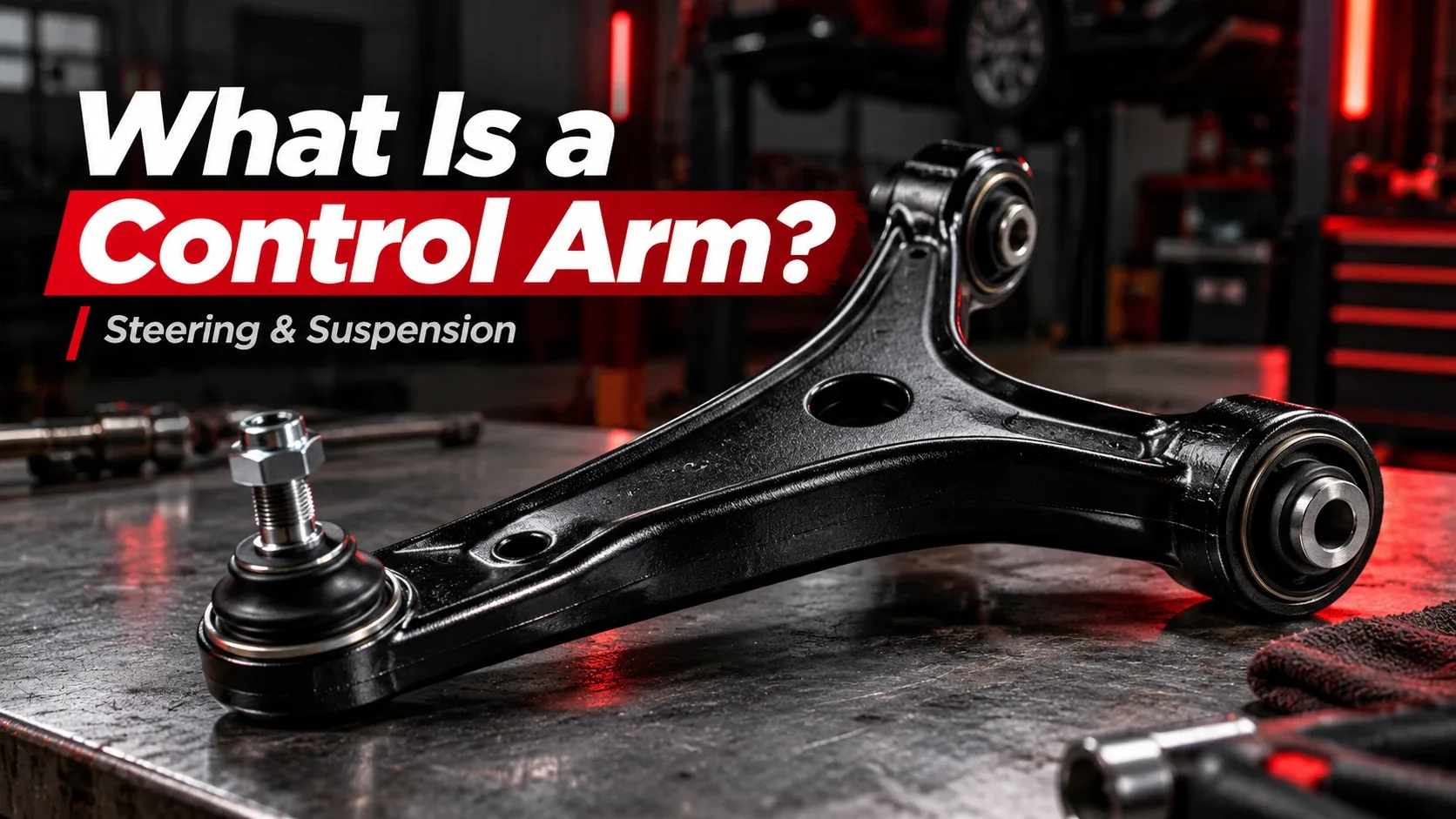
A control arm is a suspension component that connects the vehicle’s chassis or subframe to a steering knuckle or wheel-support assembly. It helps maintain wheel positioning while allowing controlled suspension movement.
Most control arms are constructed from stamped steel, cast iron, forged steel, or aluminum. Their design varies according to the vehicle’s suspension system.
A typical control arm assembly may include:
- Control arm body: The structural component that links suspension mounting points.
- Rubber or hydraulic bushings: Allow controlled movement while reducing vibration and noise transmitted to the vehicle body.
- Ball joint: Provides an articulated connection between the control arm and steering knuckle on many suspension designs.
- Mounting hardware: Bolts and fasteners securing the assembly to the chassis or subframe.
Control arms are important for maintaining suspension geometry, steering stability, and predictable handling.
How Does a Car Control Arm Work?
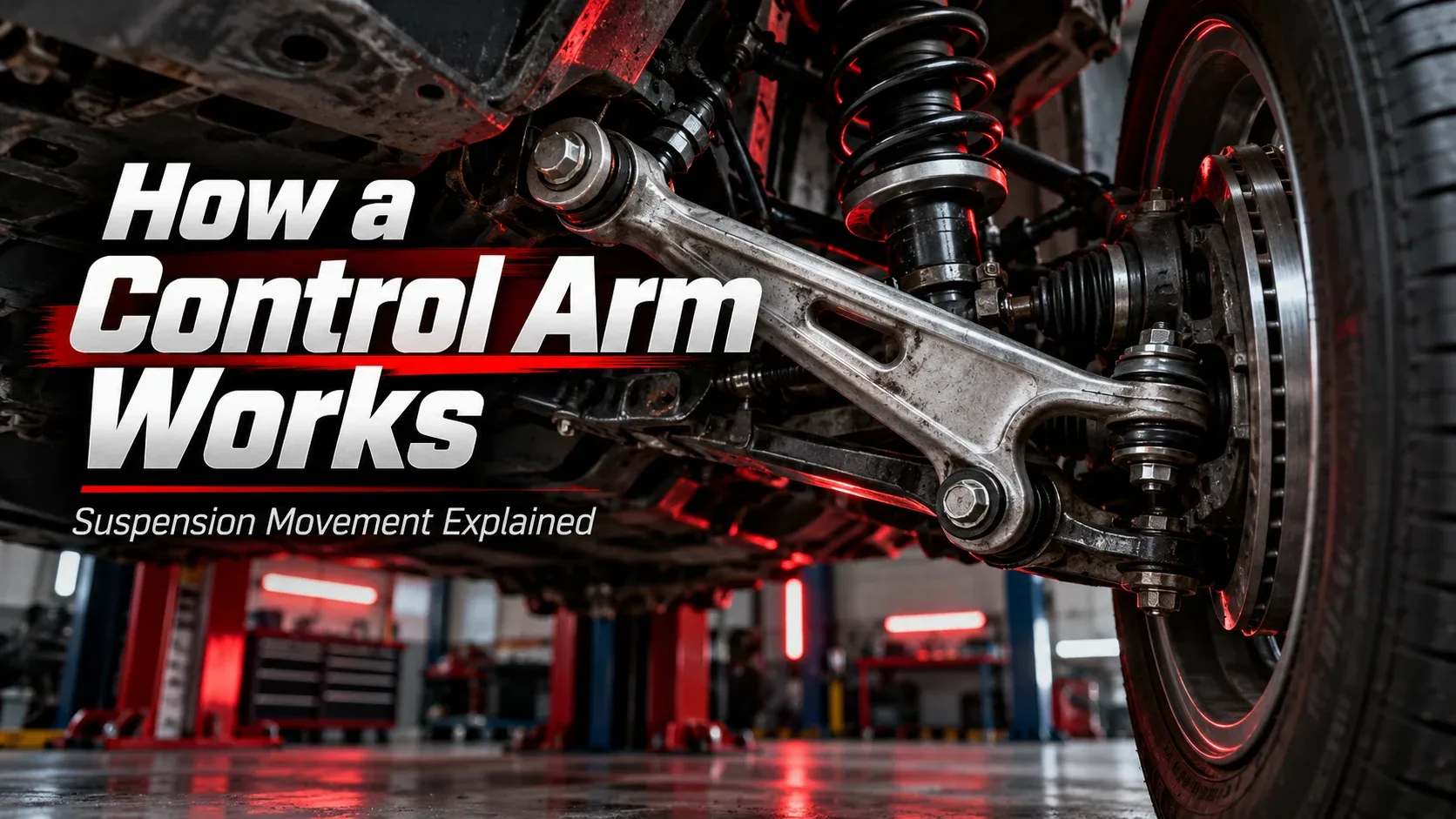
When a vehicle travels over a bump, its wheels move upward and downward relative to the body. The suspension must allow this movement while controlling the position and angle of each wheel.
Control arms guide that movement through their mounting points. Bushings allow limited rotation and flexibility, while ball joints provide angular movement where the suspension design requires it.
Along with other suspension components, properly functioning control arms contribute to:
- Stable wheel alignment and suspension geometry.
- Predictable steering response.
- Controlled wheel movement over uneven surfaces.
- Reduced transmission of road vibration.
- More consistent tire contact with the road.
Important: Control arms do not function independently. Struts, springs, shock absorbers, steering links, and other suspension components work together to control vehicle movement.
Types of Control Arms
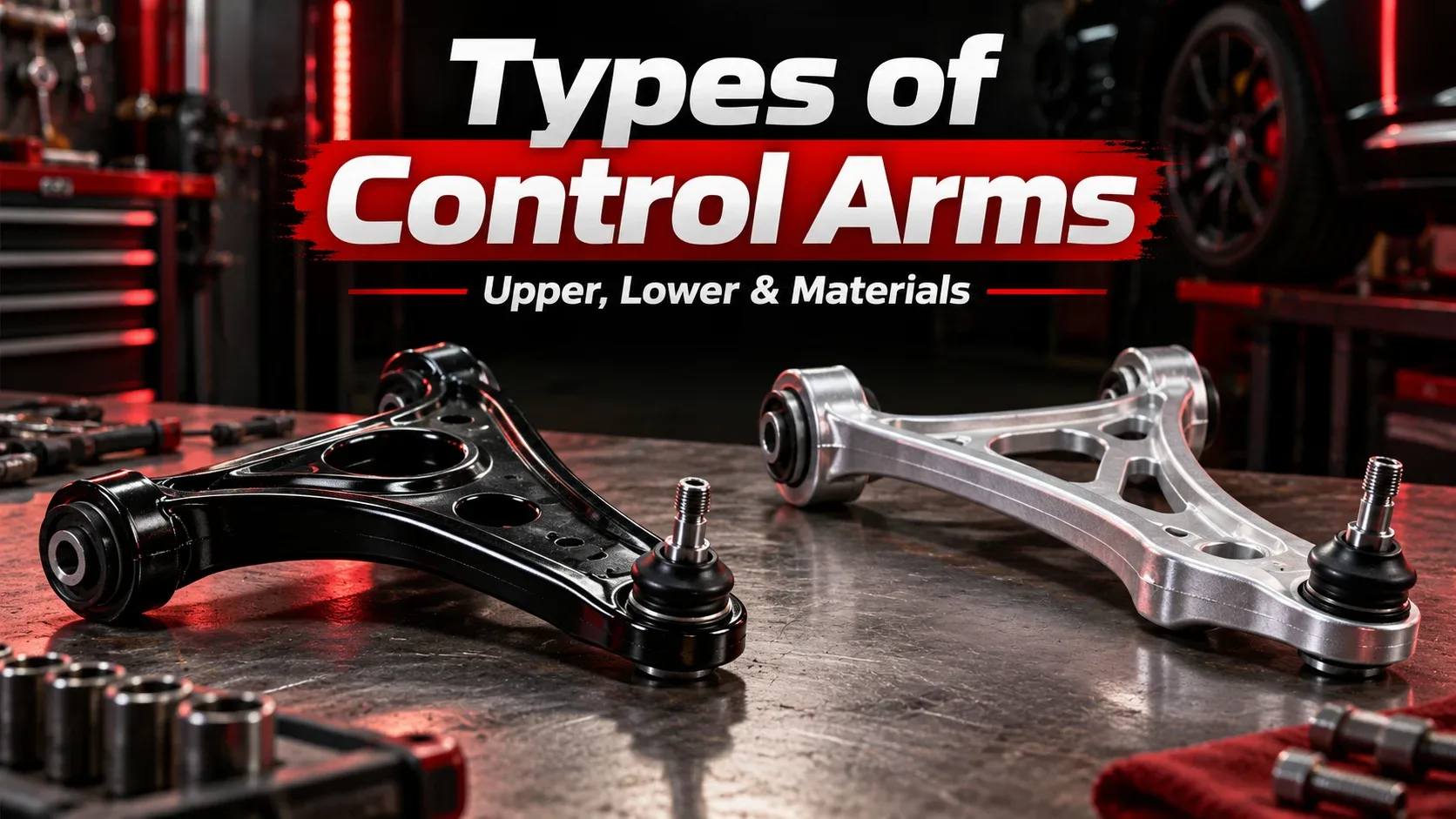
The number and design of control arms depend on the vehicle’s suspension configuration.
Upper Control Arms
Upper control arms are commonly found in double-wishbone suspension systems and some truck suspension designs. They help locate the upper part of the steering knuckle and control its movement.
Lower Control Arms
Lower control arms connect the lower suspension mounting points to the wheel assembly. Many MacPherson strut systems use a lower control arm without a corresponding upper control arm.
Control Arm Materials
| Material | Characteristics |
|---|---|
| Stamped steel | Common, generally economical, and susceptible to corrosion if protective coatings deteriorate. |
| Cast iron | Strong and relatively heavy; used in certain suspension designs. |
| Forged steel | High-strength construction used where the design requires it. |
| Aluminum | Lower weight and good corrosion resistance, though replacement costs may be higher. |
The correct replacement part must match the vehicle’s suspension design and manufacturer specifications.
Symptoms of a Bad Control Arm
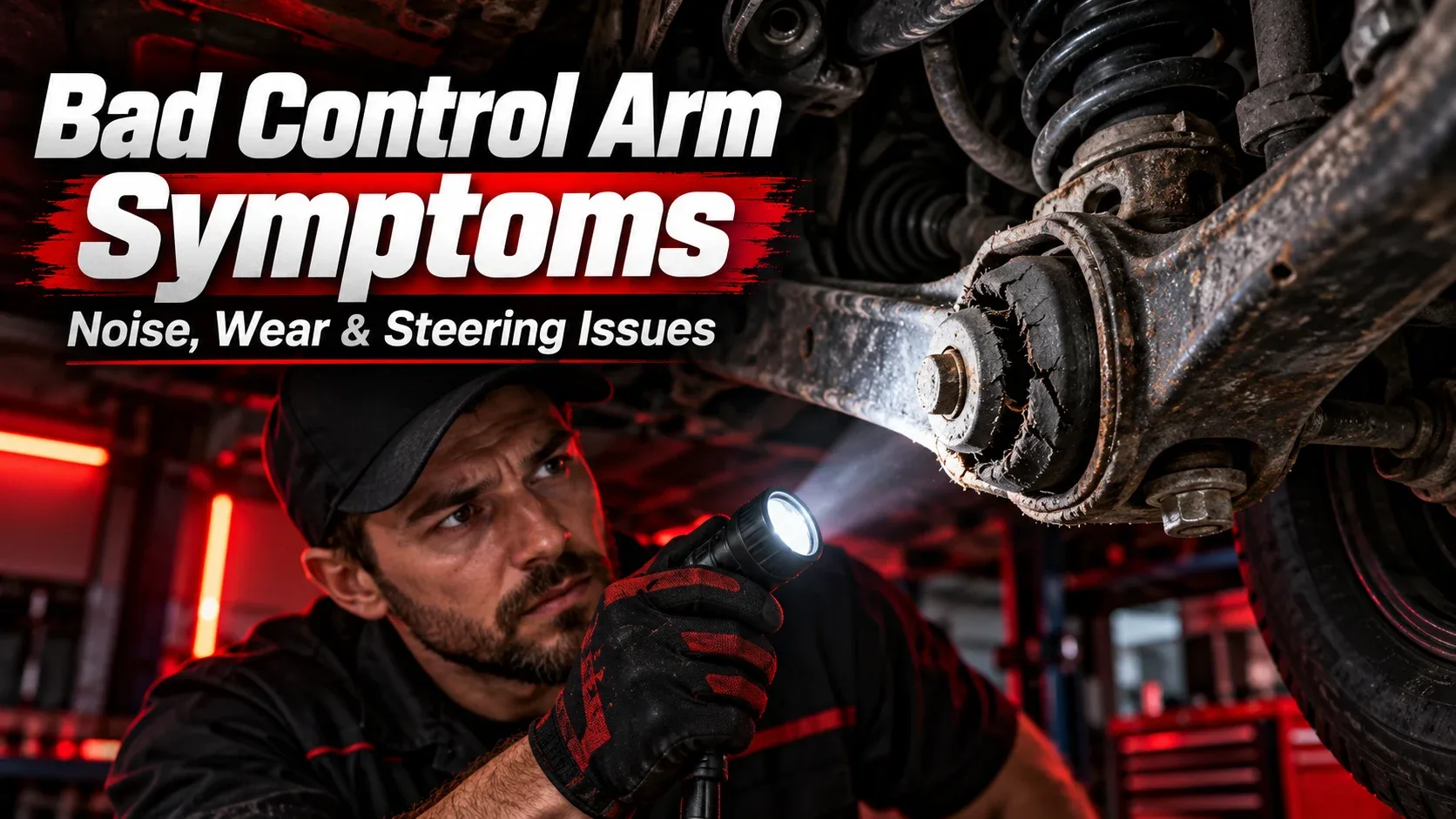
A damaged car control arm can produce noticeable changes in handling, noise, and tire wear. However, these symptoms can also result from other suspension or steering problems.
1. Clunking or Knocking Noises
Worn bushings or loose ball joints may create knocking sounds when driving over bumps, turning, or changing direction. Similar noises can also originate from sway bar links, strut mounts, or other loose components.
2. Uneven Tire Wear
Excessive control arm movement or a bent component may alter wheel alignment, contributing to irregular tire wear. Incorrect tire pressure and other alignment problems are also common causes.
3. Unstable Steering
A vehicle may wander, pull, or feel less predictable if suspension mounting points allow excessive movement. Steering and tire problems must also be considered during diagnosis.
4. Vibration While Driving
Deteriorated bushings can allow unwanted movement and transmit vibration. However, vibration is not specific to control arms and may come from wheels, tires, brakes, or drivetrain components.
5. Visible Damage
Cracked bushings, separated rubber, bent metal, excessive corrosion, or damaged mounting points can indicate the need for repair.
| Symptom | Possible Explanation | Recommended Action |
|---|---|---|
| Clunking noises | Bushing wear or loose suspension joint | Inspect suspension components |
| Uneven tire wear | Alignment change or excessive joint movement | Inspect suspension and alignment |
| Steering wander | Loose or damaged steering/suspension parts | Arrange prompt inspection |
| Excessive vibration | Worn bushings or unrelated wheel problems | Perform diagnostic checks |
| Bent or cracked arm | Structural suspension damage | Do not continue driving; seek professional assistance |
What Causes Control Arm Failure?
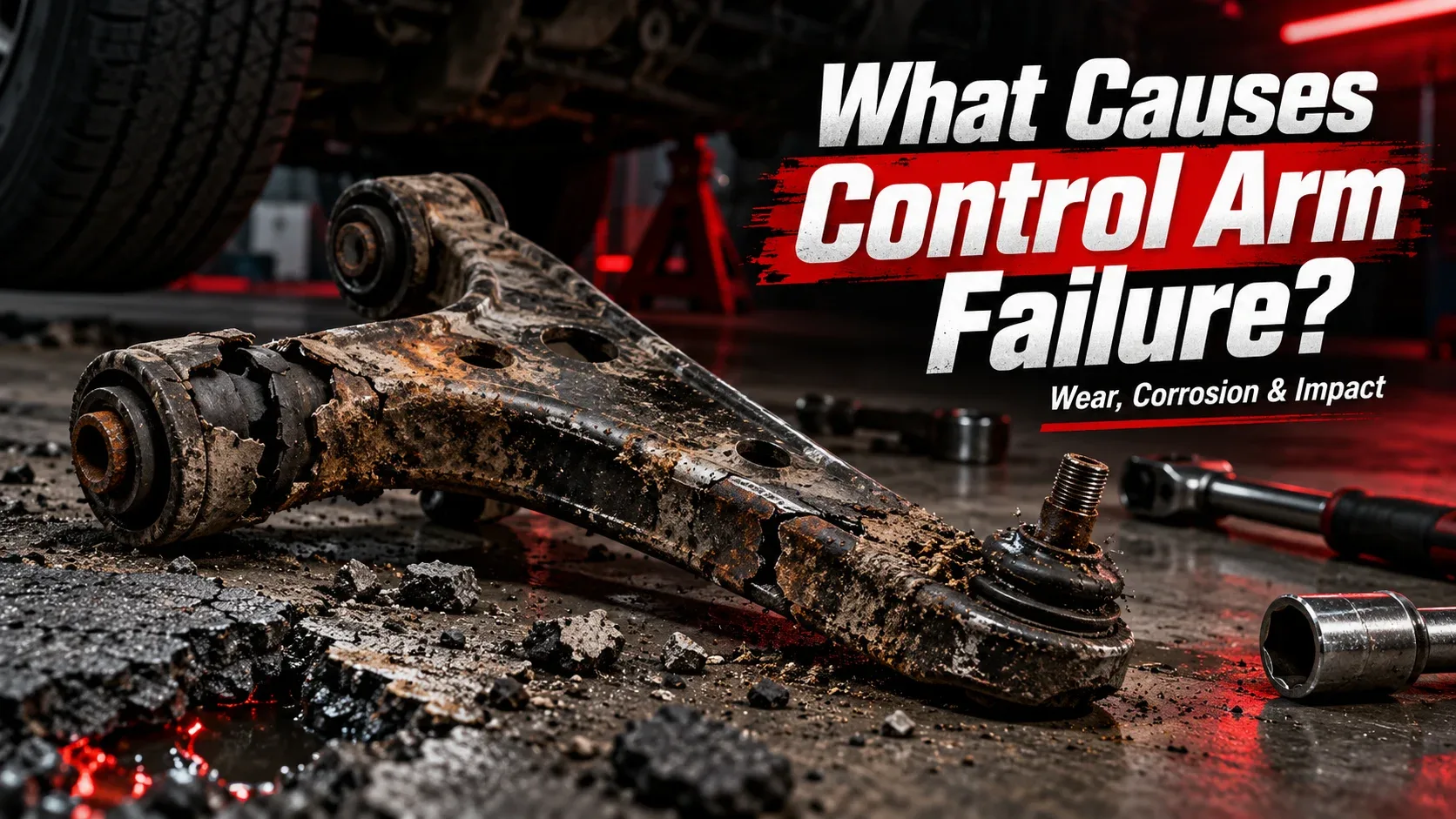
Control arms and their connecting components can deteriorate from ordinary use or sustain damage from sudden impacts.
Age and Bushing Deterioration
Rubber bushings gradually age and may crack, harden, or separate. Their lifespan depends on materials, environmental exposure, and operating conditions.
Potholes and Road Impacts
Severe potholes, curbs, and road debris can bend control arms or damage joints and mounting points. Damage may occur even when the wheel and tire appear normal.
Corrosion
Road salt and moisture can accelerate corrosion, particularly on steel components. Advanced corrosion may compromise structural strength.
Ball Joint Wear
Some control arm assemblies include an integrated ball joint. When the joint wears beyond allowable limits, the complete arm may need replacement depending on the vehicle and part design.
Control Arm Replacement Cost in the US
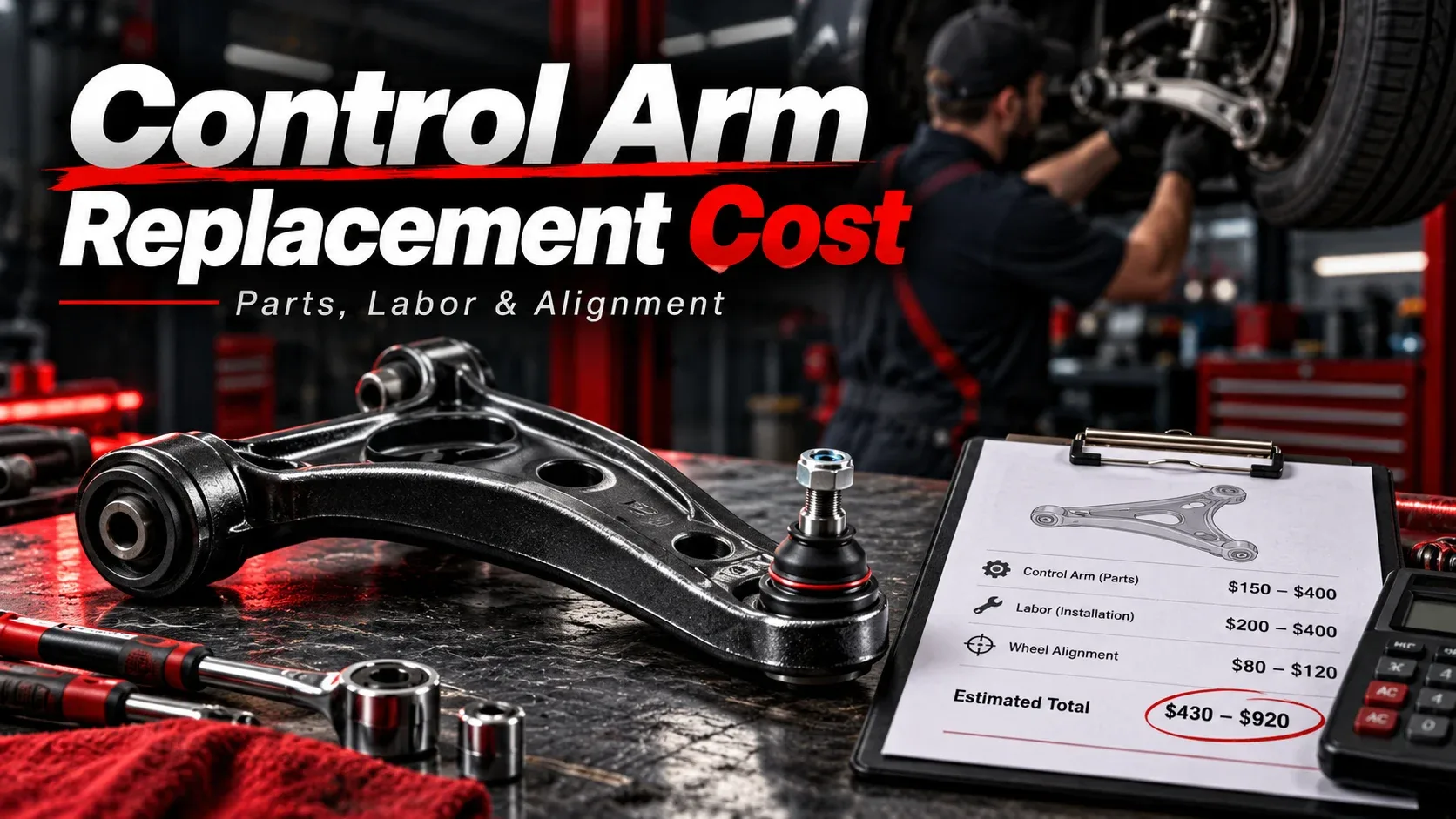
The control arm replacement cost depends on your vehicle’s make and model, the specific arm being replaced, local labor rates, and whether additional suspension work is necessary.
A RepairPal national estimate published in September 2026 places typical control arm replacement costs at approximately $791–$909. This is a general national benchmark rather than a guaranteed price for every vehicle.
| Cost Component | Estimated US Cost |
|---|---|
| Replacement parts | $571–$587 |
| Labor | $220–$322 |
| Total estimated cost | $791–$909 |
Source: RepairPal national control arm replacement estimate, September 2026. Estimates exclude taxes, fees, and additional repairs. Wheel alignment or related services may increase the final invoice.
What Affects Control Arm Replacement Cost?
- Vehicle type: Compact cars, SUVs, trucks, and luxury vehicles use different suspension designs and components.
- OEM versus aftermarket parts: Original-equipment and aftermarket components may differ in cost and available configurations.
- Labor requirements: Some vehicles have easier access, while others require removing additional suspension components.
- Related repairs: Damaged ball joints, mounting hardware, or adjacent components may require additional attention.
- Wheel alignment: An alignment check and any necessary adjustment may add to the overall repair cost.
Money-saving tip: Request an itemized estimate showing parts, labor, alignment, taxes, and additional repairs. Ask the repair shop which specific component failed and why replacement is necessary.
Can You Drive With a Bad Control Arm?
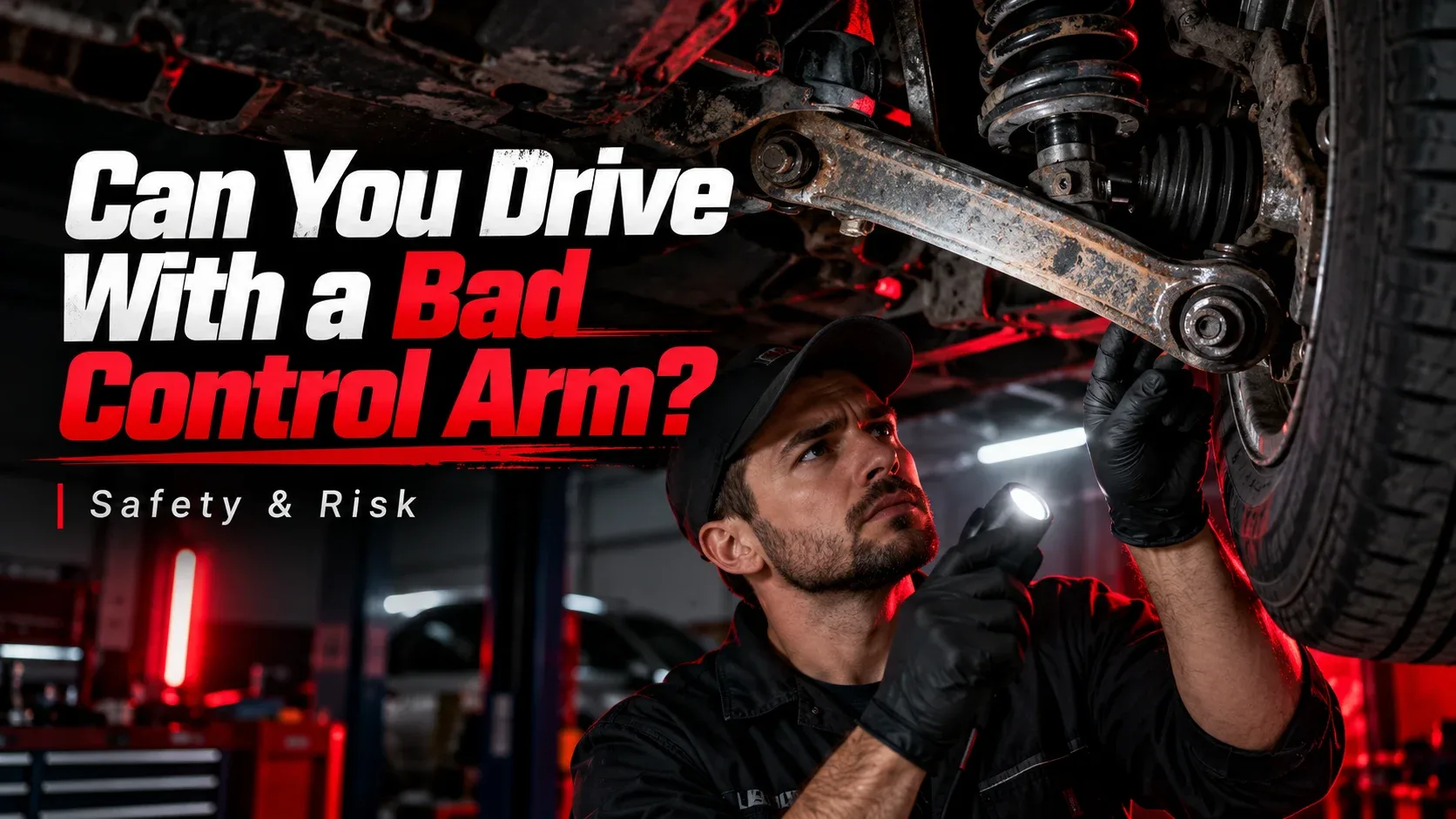
Driving safety depends on the type and severity of the damage. Minor bushing deterioration may produce noise before major handling problems develop, but a severely damaged control arm or ball joint can create a dangerous loss of wheel control.
Safety Warning: Do not drive a vehicle with a cracked or severely bent control arm, a loose ball joint, compromised mounting points, or serious steering instability. Have the vehicle professionally inspected and arrange towing if necessary.
There is no universal safe driving distance for a damaged suspension component. If you suspect a failure, arrange an inspection rather than waiting for symptoms to worsen.
Control Arm Replacement: How Does It Work?
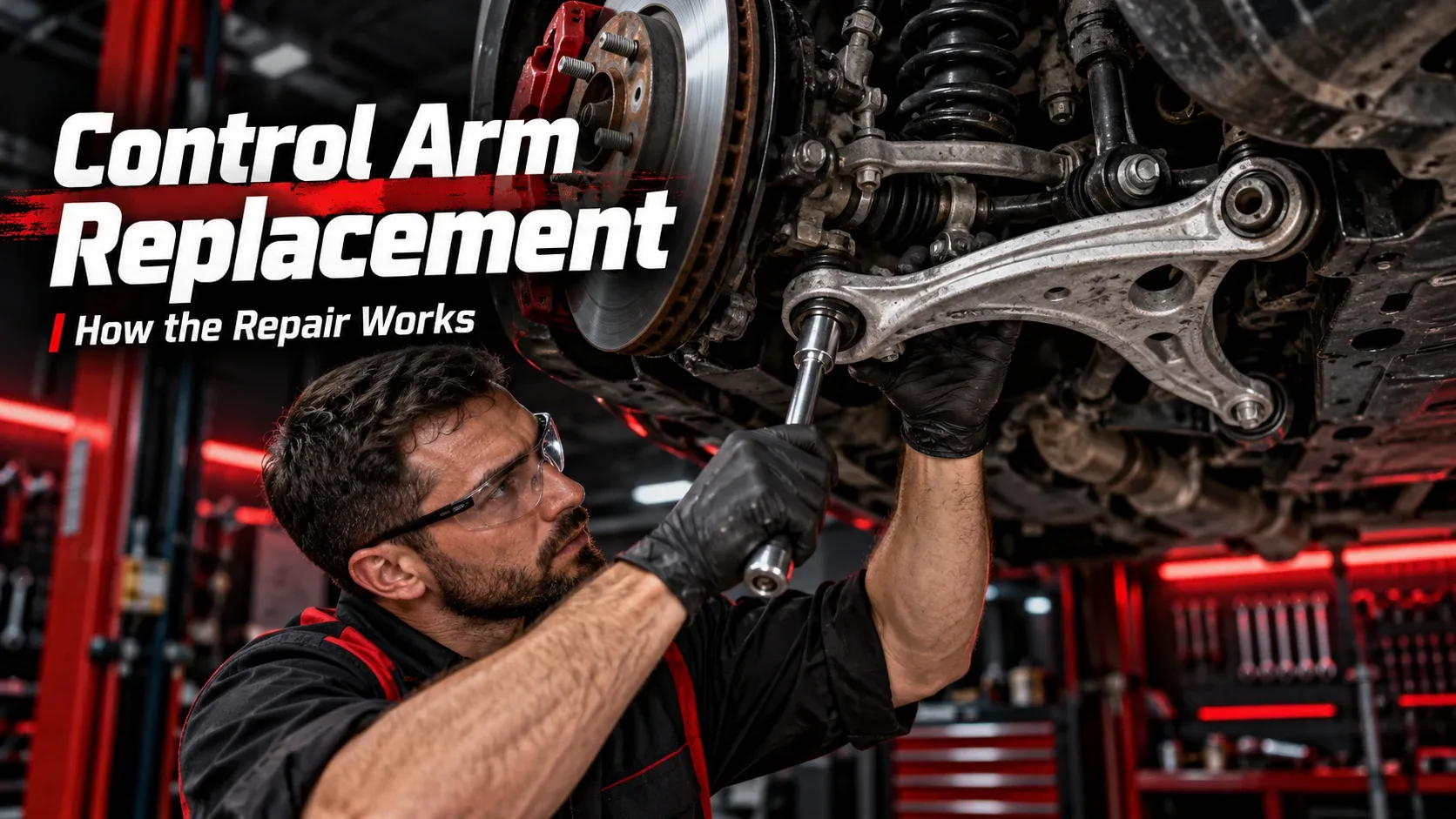
Control arm replacement is a mechanical repair requiring correct parts, safe lifting equipment, appropriate tools, and vehicle-specific service instructions.
A professional replacement generally involves the following stages:
- Inspect the suspension: Confirm which component is damaged and check related parts.
- Support the vehicle: Lift and secure the vehicle using approved equipment and manufacturer procedures.
- Remove connected components: Disconnect the necessary joints, fasteners, and related parts according to the service manual.
- Install the replacement arm: Fit the correct part and replace any fasteners designated as single-use.
- Apply specified torque: Tighten components to the manufacturer’s specifications. Some bonded rubber bushings require final tightening at normal ride height.
- Check alignment and operation: Verify suspension movement, inspect related components, and check wheel alignment.
Important: This is a general process overview, not a universal repair procedure. Suspension spring loads, joint designs, torque specifications, and removal methods vary significantly between vehicles.
Replace the Control Arm, Bushings, or Ball Joint?
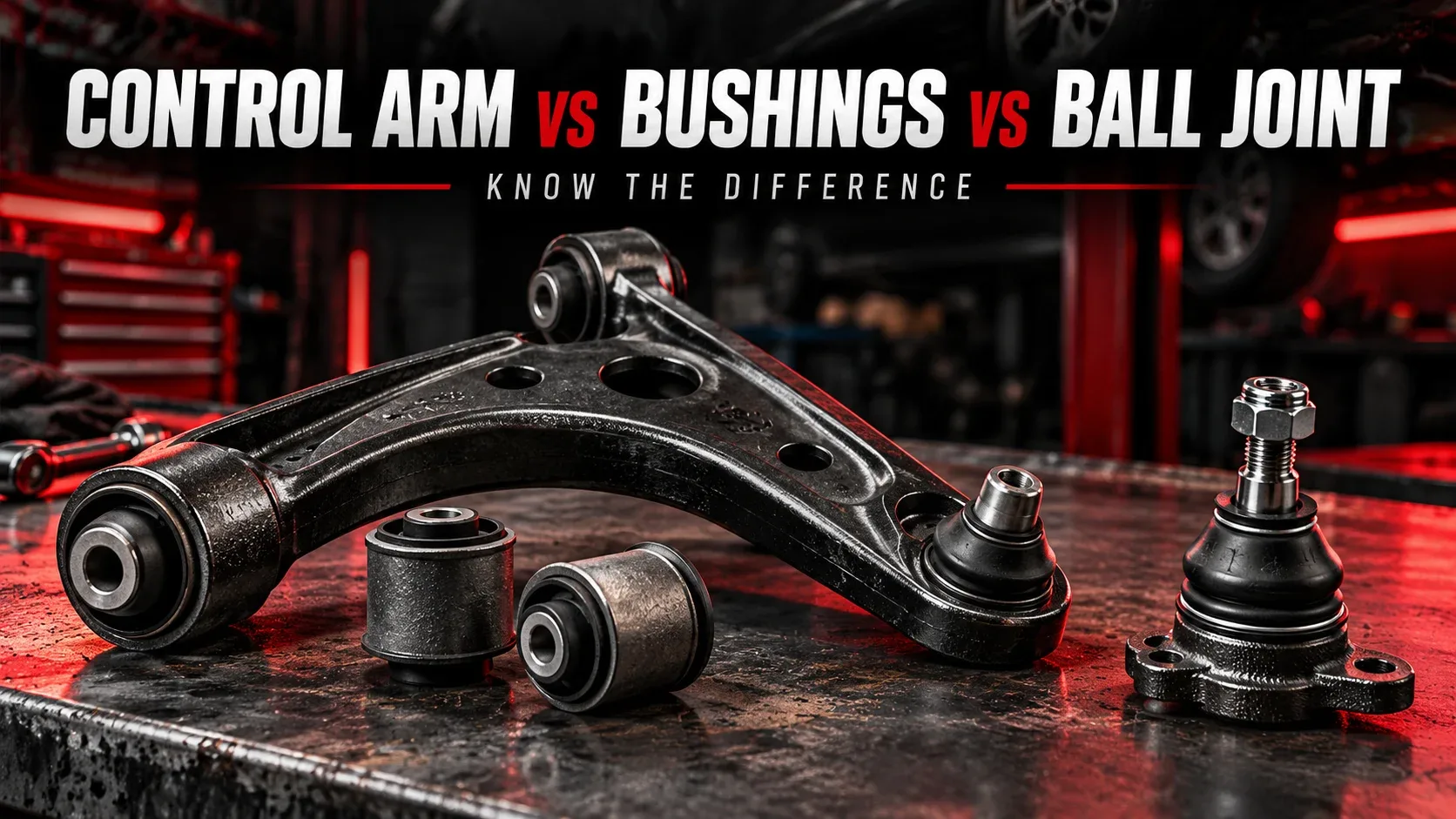
Not every suspension problem requires replacing the complete control arm. The correct repair depends on the damaged component and the manufacturer’s service recommendations.
| Component | When Replacement May Be Needed | Considerations |
|---|---|---|
| Complete control arm | Bent, cracked, severely corroded, or supplied as a non-serviceable assembly | May include new bushings and ball joint |
| Control arm bushings | Cracked, separated, or excessively worn rubber | Separate replacement may require a press and specialized labor |
| Ball joint | Excessive play, physical damage, or failure under manufacturer inspection criteria | May be separately serviceable or integrated into the arm |
Sometimes replacing a complete assembly is more practical than pressing out individual bushings. However, this decision should be based on actual damage, part availability, labor cost, and the vehicle’s repair procedures.
DIY vs. Professional Control Arm Replacement
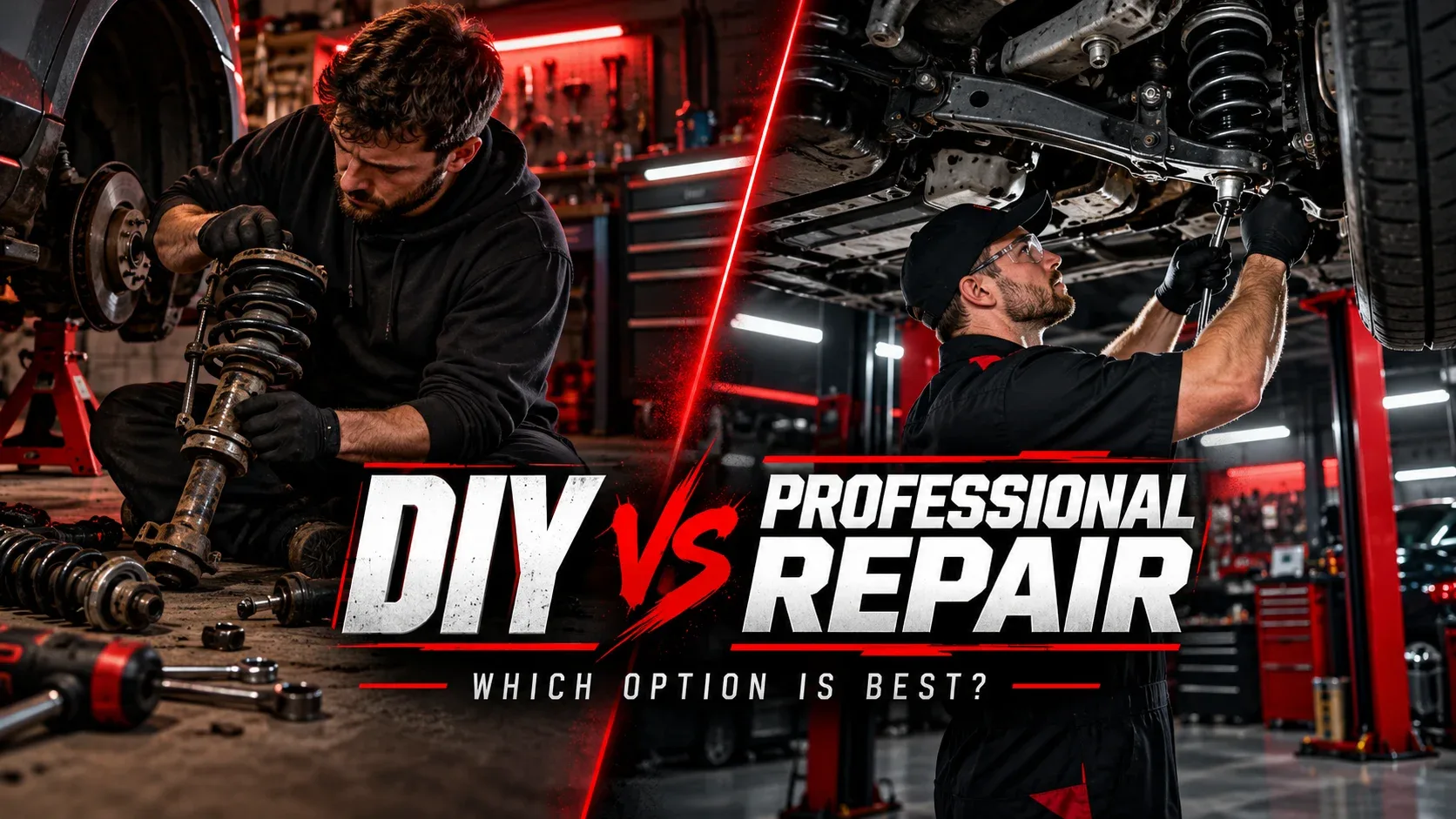
Experienced home mechanics may be able to replace control arms on certain vehicles. However, the work can involve heavy components, seized fasteners, loaded suspension parts, and safety-critical joints.
| Factor | DIY Replacement | Professional Repair |
|---|---|---|
| Labor expense | Potentially lower | Includes shop labor |
| Tools | Owner must supply suitable equipment | Shop provides equipment |
| Technical skill | Intermediate to advanced depending on vehicle | Qualified technician |
| Safety risks | Owner manages lifting and suspension hazards | Professional procedures and facilities |
| Alignment | Often requires a separate shop visit | May be offered with repair |
If you lack secure lifting equipment, vehicle-specific repair information, or experience with suspension components, professional replacement is the safer option.
How Long Do Control Arms Last?
Control arms do not have a universal replacement interval. Their service life depends on road conditions, corrosion exposure, vehicle design, driving habits, and the condition of their bushings and joints.
Some assemblies remain serviceable for many years, while others require attention earlier because of bushing wear, joint deterioration, or impact damage.
How to Help Your Control Arms Last Longer
- Avoid potholes and severe road impacts where possible.
- Have suspension noises investigated early.
- Inspect components for corrosion and damaged bushings.
- Maintain correct tire pressure and address unusual tire wear.
- Arrange alignment checks when recommended after suspension repairs.
- Follow the vehicle manufacturer’s inspection schedule.
Routine inspections are more reliable than replacing control arms solely because a vehicle has reached a particular mileage.
Frequently Asked Questions About Control Arms
How much does it cost to replace one control arm?
A September 2026 RepairPal national estimate places control arm replacement at approximately $791–$909 including parts and labor. The actual price for one control arm depends on vehicle type, part selection, labor requirements, and additional services.
Can a bad control arm cause shaking while driving?
Yes. Excessive movement from worn bushings or joints may contribute to vibration. However, shaking can also result from tire imbalance, bent wheels, brake problems, and other mechanical conditions.
How long does control arm replacement take?
Repair time varies with vehicle design, fastener condition, and whether related suspension components require removal. A repair shop can provide a vehicle-specific labor estimate after identifying the required work.
Should both control arms be replaced together?
Not automatically. Both sides should be inspected, but replacing an undamaged control arm may not be necessary. Paired replacement may be appropriate when both assemblies show significant wear or the manufacturer recommends it.
Can control arm bushings be replaced separately?
On some vehicles, yes. Serviceable bushings can be removed and replaced using the correct tools and procedures. Other designs require replacing the complete control arm assembly.
Do you need wheel alignment after replacing a control arm?
A wheel alignment check is generally recommended after control arm replacement. Actual adjustment requirements depend on the vehicle and whether the repair changes suspension geometry.
Is replacing a control arm worth it on an older car?
If the vehicle is otherwise in good condition, repairing a damaged control arm can be worthwhile. Compare the repair estimate with the vehicle’s condition, value, and any other necessary maintenance.
What happens if a control arm breaks while driving?
A structural control arm failure can cause a serious loss of wheel positioning and vehicle control. A ball joint separation can also be dangerous. Suspected structural damage requires immediate professional attention.
Final Thoughts: When Should You Replace a Control Arm?
Control arms are essential suspension components that help keep your vehicle’s wheels correctly positioned during steering, braking, and travel over uneven roads.
Clunking noises, steering instability, unusual tire wear, or visible suspension damage should not be ignored. However, these symptoms require proper diagnosis before deciding which component to replace.
Key Takeaway: If your vehicle shows signs of a failing control arm, arrange a professional suspension inspection. Ask for an itemized replacement estimate, confirm whether bushings or ball joints are separately serviceable, and verify whether wheel alignment is included.
Correct diagnosis and proper repair help restore predictable handling while reducing the risk of unnecessary parts replacement.