
Most oil changes cost $35 to $125+ in 2026. See what drives the bill, how conventional and synthetic oil compare, and where to get fair service without surprise upsells.
Oil change cost at a glance
Conventional oil
$35–$75
Synthetic blend
$50–$90
Full synthetic
$70–$125+
If you are wondering how much an oil change should cost, a realistic 2026 budget is usually $35 to $125 or more. The low end is typically a basic conventional-oil service for an older car. The higher end is more common for modern vehicles that require full synthetic oil, use a larger oil capacity, or need a specialized filter. Your owner’s manual, not a menu board, should determine the oil specification your engine receives.
Average oil change cost by oil type
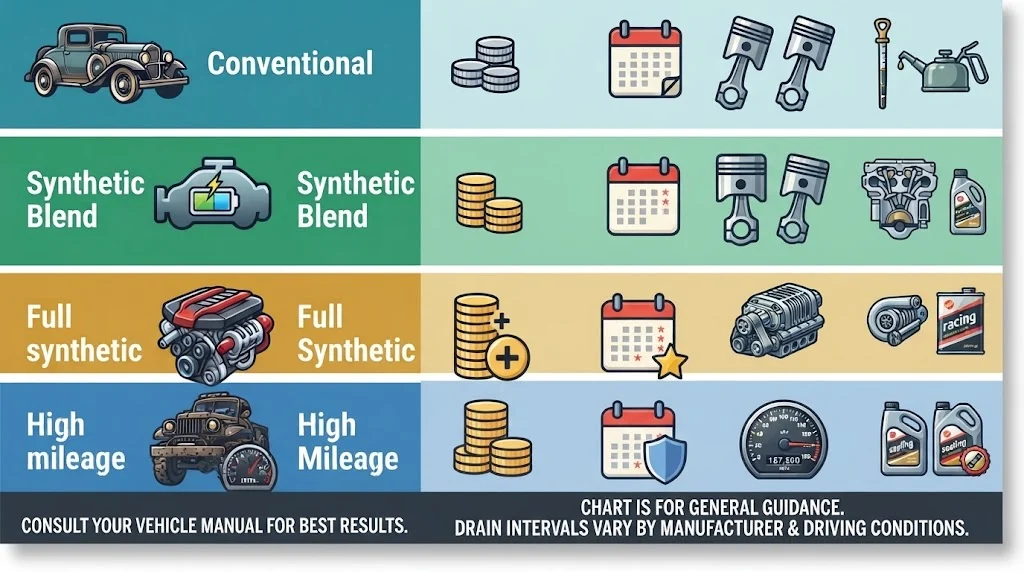
The advertised change oil price often starts with an entry-level package, but the right oil for your vehicle may cost more. These ranges include typical oil, a standard filter, and labor before regional taxes or extra shop fees.
| Oil type | Average cost | Best for | Typical interval |
|---|---|---|---|
| Conventional | $35–$75 | Older, traditional engines approved for it | 3,000–5,000 miles |
| Synthetic blend | $50–$90 | Everyday driving when approved by the manufacturer | 5,000–7,500 miles |
| Full synthetic | $70–$125+ | Most modern engines, turbos, severe temperatures | 7,500–10,000+ miles |
| High mileage | $60–$110 | Vehicles with 75,000+ miles when suitable | 5,000–7,500 miles |
Conventional oil: the budget option, when your engine allows it
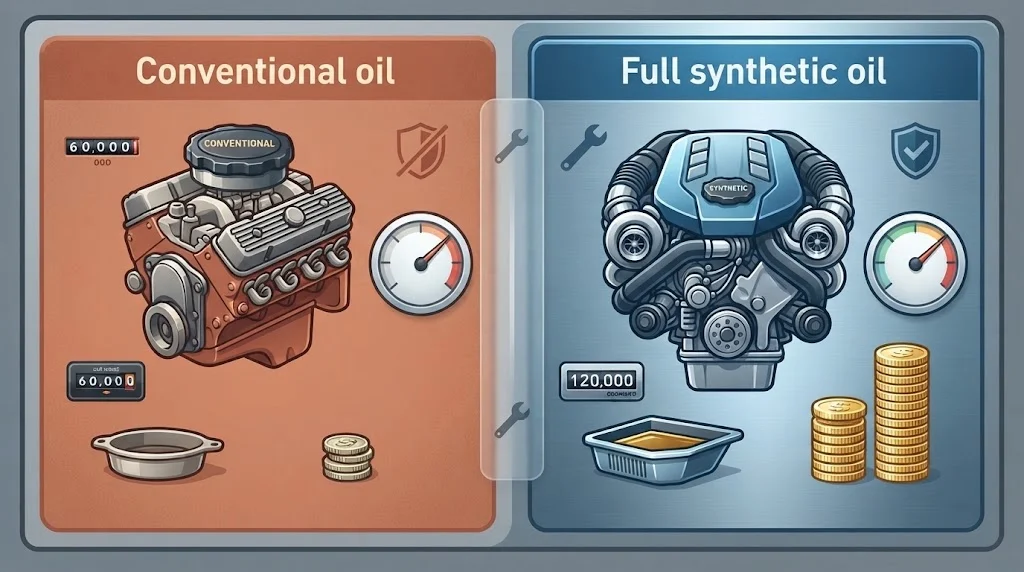
A conventional oil change is often the normal cost of oil change advertised in local specials. It can be a sensible choice for an older engine designed for conventional oil. It is not automatically a bargain, though: using conventional oil in an engine that specifies synthetic may reduce protection and can conflict with manufacturer guidance.
Full synthetic oil: higher upfront cost, longer service life
Full synthetic oil costs more because the base oil and additive package are engineered for more stable performance. Many newer engines require it, particularly turbocharged models. While the change oil cost is higher, the approved interval may be longer, so compare the cost per mile and follow your vehicle’s oil-life monitor or manual.
Where to get an oil change: price and service comparison
There is no single best place for every driver. The most useful comparison is the final out-the-door price for the correct oil, filter, and listed inspection, not a headline coupon for an oil your vehicle cannot use.
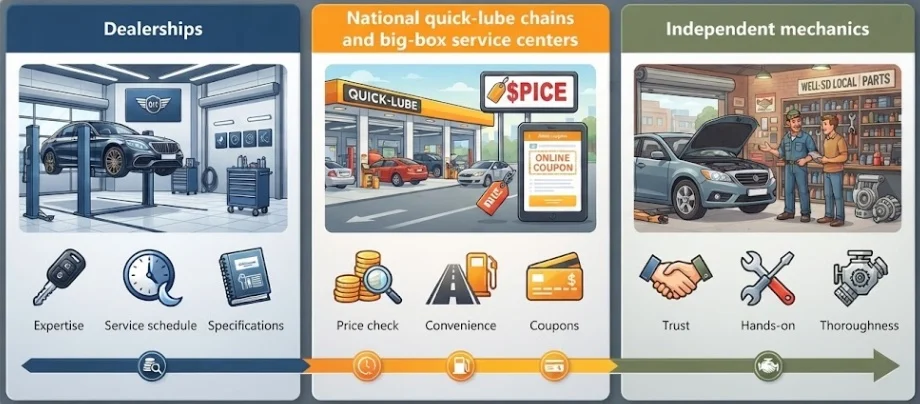
Dealerships
Dealers commonly cost more, especially for full synthetic service, but they are familiar with brand-specific oil approvals, filters, service bulletins, and maintenance schedules. Look for dealer service specials; they can narrow the price gap for routine work.
National quick-lube chains and big-box service centers
Chains are convenient, usually fast, and frequently offer online coupons. The tradeoff is that the basic advertised price may not include your required synthetic oil, extra quarts, or premium filter. Confirm the total before work begins and decline add-ons you do not need.
Independent mechanics
A trusted independent shop can offer competitive oil change service cost and a more complete view of your vehicle’s condition. Pricing varies by area, but a shop that clearly lists parts, labor, and fees is often a strong long-term option.
Why oil change prices vary so much
Two drivers can get different bills at the same shop because the cost of an oil change is tied to the vehicle and the service package, not just the shop name.
- Oil capacity: trucks, SUVs, performance vehicles, and some European models need more quarts, so each extra quart raises the bill.
- Required oil and manufacturer approvals: a specific synthetic blend, full synthetic oil, or certified formula can cost more than a generic package.
- Filter quality: a standard filter is usually included, while premium, cartridge, or specialty filters can add cost.
- Labor market and location: metropolitan labor rates, local taxes, and environmental rules affect pricing from one region to another.
Hidden fees to watch for on the receipt
A low advertised price can look different at checkout. Ask for an out-the-door estimate that includes all known charges before authorizing the work.
Oil disposal or environmental fee: a small charge that may be required or separately listed.
Shop supplies fee: a variable charge for materials such as rags or cleaners; ask whether it is included in the quote.
Extra-quart and filter upgrades: common when a vehicle exceeds the package capacity or needs a specialty filter.
How to save money on your next oil change
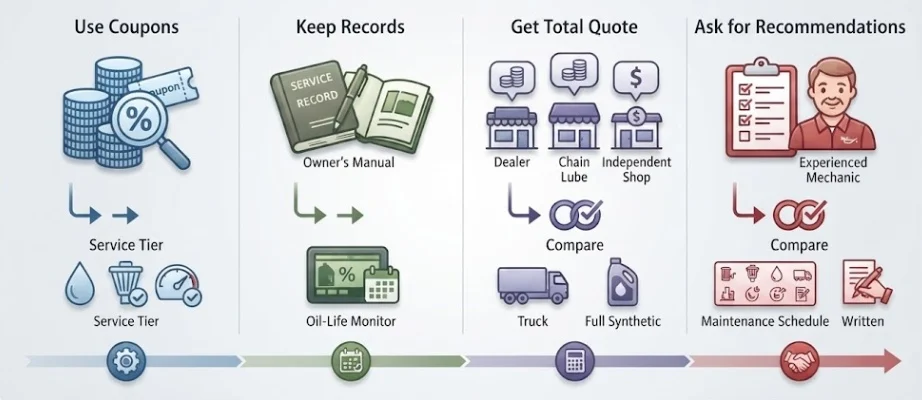
Saving money does not mean choosing the cheapest oil for the job. It means paying a fair price for the exact service your engine needs and avoiding maintenance that is not yet due.
- Use coupons for the correct service tier, then verify whether the offer includes your oil type, filter, capacity, fees, and tax.
- Keep service records and use your owner’s manual or oil-life monitor instead of changing oil by an outdated universal schedule.
- Get a total quote from two or three nearby providers when the cost seems unusually high, especially for a truck or full synthetic service.
- Ask for recommendations in writing and compare them with your maintenance schedule before approving filters, flushes, wipers, or other add-ons.
Oil change cost FAQ
How much should an oil change cost in 2026?
For a typical passenger vehicle, expect roughly $35 to $75 for conventional oil, $50 to $90 for a synthetic blend, and $70 to $125 or more for full synthetic oil. The final total depends on capacity, filter type, location, tax, and any separately listed fees.
How often do I really need to change my oil?
Follow your vehicle owner’s manual and oil-life monitoring system. Many modern vehicles using approved synthetic oil can go 7,500 to 10,000 miles or more in normal driving, while some older vehicles and severe-use schedules call for shorter intervals. Time also matters if you drive very little.
Why do trucks and SUVs often cost more for an oil change?
Many trucks and SUVs have larger engines and hold more oil. Service packages often cover only a set number of quarts, so each extra quart adds to the total. Some models also use larger or more specialized filters.
Can I mix conventional and synthetic oil in an emergency?
In an emergency, adding compatible oil of the correct viscosity to bring a low oil level back into a safe range is generally preferable to driving low on oil. Still, check your owner’s manual, use the approved specification when possible, and return to the correct oil at the next service.
Is a dealership oil change worth the extra money?
It can be worthwhile if you value brand-specific expertise, factory-approved fluids, or convenient warranty-related records. For routine service, a reputable independent or chain can also be a good value if it uses the exact oil and filter your vehicle requires and gives you a transparent final quote.