
Synthetic oil prioritizes thermal stability and longer intervals. High-mileage oil adds seal conditioners and wear-focused additives for aging engines. Here is how to choose without falling for the label alone.
Synthetic vs. high-mileage oil at a glance
Standard full synthetic
Best for heat, cleanliness & long-life performance
High-mileage oil
Best for older engines with minor seepage or consumption
Full synthetic high mileage
The premium option for many vehicles past 75,000 miles
The direct answer: mileage alone does not require a switch. Choose the oil that meets your manual’s viscosity and approval, then consider high-mileage additives if your older engine has a relevant symptom.

The oil aisle can make an ordinary service feel like a major decision, especially once a car passes 75,000 or 100,000 miles. The important distinction is not that high-mileage oil uses a magical new base oil. Its defining feature is an additive package designed for the realities of an older engine: seal conditioning, deposit control, and wear protection. Many drivers can get those additives and the benefits of synthetic base oil in one full synthetic high-mileage product.
The practical difference is additives versus base-oil performance
Full synthetic and high-mileage are not opposing categories. “Synthetic” describes the base oil and its performance characteristics. “High mileage” describes a formulation designed around an older engine’s needs. That is why you can buy conventional high-mileage, synthetic-blend high-mileage, and full synthetic high-mileage oils.
| Oil category | Primary focus | Best for | Typical mileage range |
|---|---|---|---|
| Standard full synthetic | Thermal stability, flow, cleanliness, and service life | Modern, turbocharged, high-performance, or manual-specified engines | Any mileage |
| Traditional high mileage | Seal conditioning, anti-wear protection, and consumption control | Older engines developing minor seeps or using oil between services | Often 75,000+ miles |
| Full synthetic high mileage | Synthetic longevity plus high-mileage additive protection | Older cars that still need or benefit from premium synthetic oil | Often 75,000+ miles |
What full synthetic oil does well
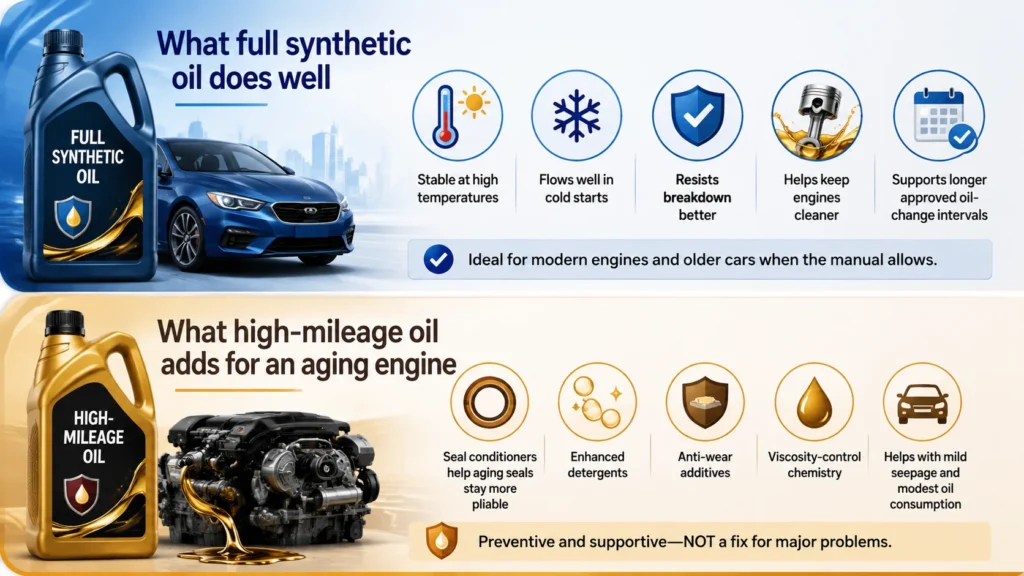
Full synthetic oil is engineered to remain stable at high temperatures, flow well in cold starts, and resist breakdown better than conventional oil. Those qualities can help keep an engine cleaner and support longer approved oil-change intervals. It is especially common in modern engines with turbochargers, tight tolerances, variable valve timing, or manufacturer requirements for a specific approval. Synthetic oil is not only for new cars: an older car can benefit from it too when the manual allows it.
What high-mileage oil adds for an aging engine
High-mileage motor oil usually includes seal conditioners intended to help aging rubber seals remain more pliable. It may also use enhanced detergents, anti-wear additives, and viscosity-control chemistry. These features can be useful when an engine has mild seepage, small driveway spots, or modest oil consumption. They are preventive and supportive measures, not a substitute for diagnosing a failing gasket, cracked component, or severe internal wear.
Yes, you can get full synthetic high-mileage oil
For a driver who wants synthetic performance but is starting to notice age-related engine behavior, full synthetic high-mileage oil is often the most straightforward choice. It combines synthetic base-oil qualities with additives aimed at older seals and deposits. It is not automatically necessary just because the odometer crosses a round number, but it is a reasonable option when the product meets the vehicle’s specification and the engine has a relevant need.
How seal conditioners work
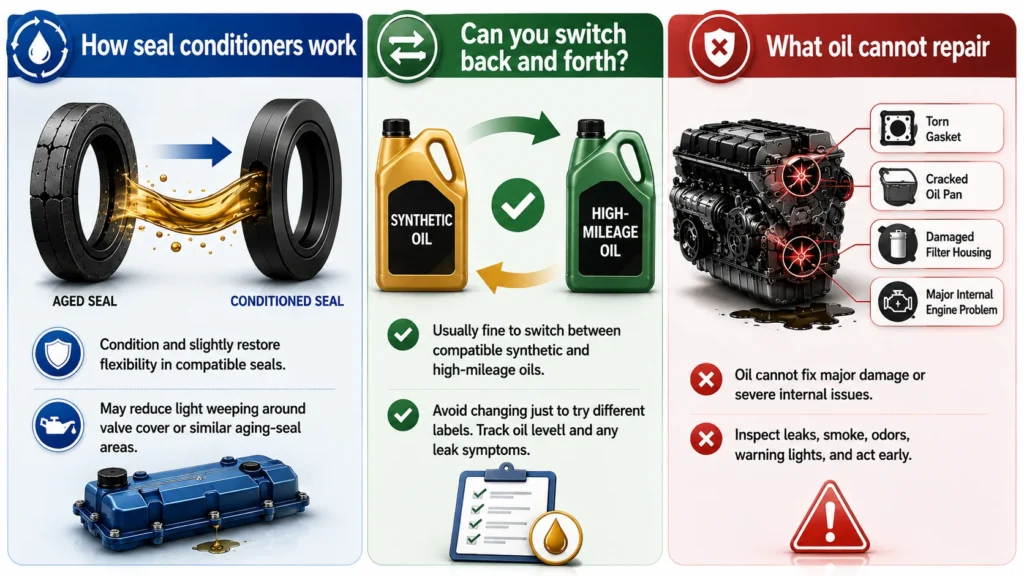
Over time, some seals can harden and shrink. High-mileage additives are formulated to condition and slightly restore flexibility in compatible seals. That may reduce light weeping around a valve cover or similar aging-seal area, but results vary by engine and condition.
Can you switch back and forth?
In most cases, moving between a compatible standard synthetic oil and a compatible high-mileage oil at normal service intervals is fine. Avoid changing viscosity or ignoring manufacturer approvals just to try a different label. Track oil level and any leak symptoms so you can judge whether the change helped.
What oil cannot repair
High-mileage oil will not mend a torn gasket, cracked oil pan, damaged oil filter housing, or major internal engine problem. A rapidly falling oil level, visible puddle, burning-oil smell, smoke, warning light, or fresh leak should be inspected rather than masked with a different oil.
When a high-mileage formula may be worth considering
The 75,000-mile mark is a useful shopping cue, not a mechanical rule. Consider a compatible high-mileage oil when your car is older and one or more of these practical signs applies:
- You notice minor dampness or light oil seepage around an aging seal, but no major leak.
- The engine uses a modest amount of oil between changes and there is no urgent warning symptom.
- Your vehicle is beyond 75,000 miles and you want a formulation designed for long-term seal and deposit care.
- A qualified technician has ruled out a repair that should be handled directly.
How often should you change synthetic or high-mileage oil?
A high-mileage label does not automatically mean a shorter or longer interval. The right synthetic oil change interval is the interval in your owner’s manual or oil-life monitor, adjusted for severe operating conditions. Many vehicles using approved full synthetic oil are scheduled around 7,500 to 10,000 miles in normal use, while some call for less or more. For low-mileage drivers, many manufacturers also specify a time limit, commonly around six to twelve months.
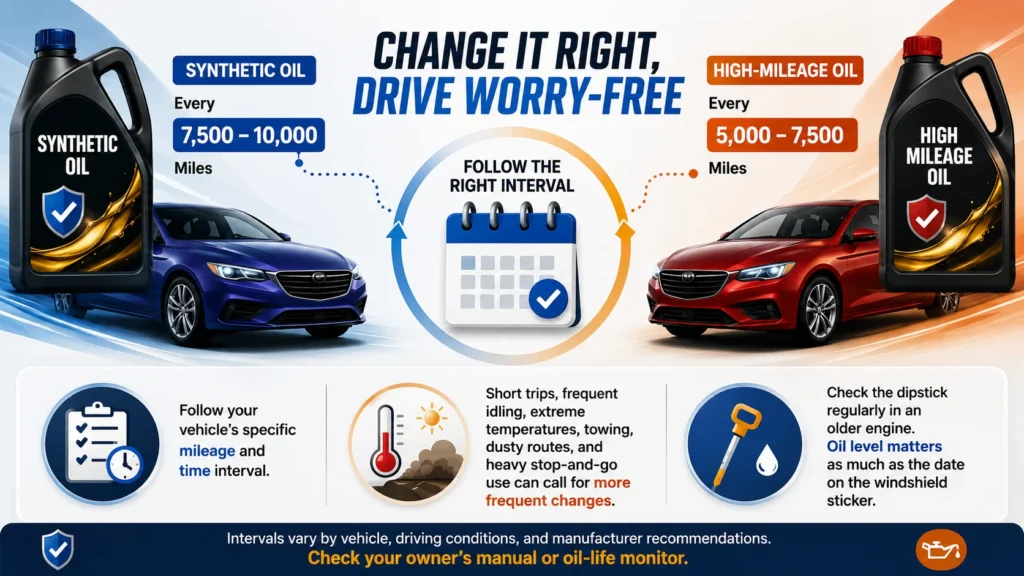
- Follow the vehicle-specific mileage and time interval, not a universal rule printed on an oil bottle.
- Short trips, frequent idling, extreme temperatures, towing, dusty routes, and heavy stop-and-go use can call for the severe-service schedule.
- Check the dipstick regularly in an older engine. Oil level matters as much as the date on the windshield sticker.
Synthetic and high-mileage oil FAQ
Will high-mileage oil stop an active oil leak?
It may reduce minor seepage related to aging seals, but it will not reliably stop an active or major leak. Torn gaskets, damaged pans, loose filters, and cracked parts require diagnosis and repair. If oil loss is noticeable, check the level often and have the source identified.
Is high-mileage oil only for cars with more than 75,000 miles?
No. The mileage figure is a marketing guideline rather than a hard threshold. An engine at 60,000 miles with age-related seepage may be a candidate, while a well-maintained engine at 120,000 miles may be doing perfectly well on the compatible synthetic oil it has always used.
Can high-mileage synthetic oil be used in a newer car?
Usually, the key issue is compatibility with the manual’s viscosity and required specification. A newer vehicle does not normally need high-mileage additives solely because they are available. Use the oil grade and approvals required by the manufacturer, and choose a high-mileage formula when there is a sensible reason to do so.
How often should I change high-mileage synthetic oil?
Use the same vehicle-specific interval you would use for another oil that meets the same manufacturer requirements. Consult the owner’s manual and oil-life monitor, and shorten the interval only when your driving conditions or manufacturer schedule call for it—not simply because the bottle says high mileage.