

Learn how to read a dipstick the right way — where the oil level should sit, what the marks mean, and how to tell if your oil is low, full, or ready for a change.
The short answer: to read an oil dipstick, pull it out, wipe it clean, reinsert it fully, then pull it out again and check where the oil film sits between the low and full marks. That second reading is the accurate one — and it tells you almost everything about your engine’s health.
If you’ve searched how to read oil dipstick, how to read a dipstick, or how to read oil level on dipstick, you want a clear, jargon-free answer. Whether you’re a first-time car owner, prepping for a road trip, an oil light just came on, or you’re inspecting a used car, this guide walks you through what the dipstick is, a step-by-step reading method, what the marks and oil color mean, the risks of too little or too much oil, and how often to check. Simple steps, real confidence.
What Is an Oil Dipstick and Why Does It Matter?
The dipstick is a long metal rod that reaches into your oil pan, usually with a bright yellow or orange loop handle. It’s your simplest window into engine health — learning to read dipstick oil correctly protects one of the most expensive parts of your car.
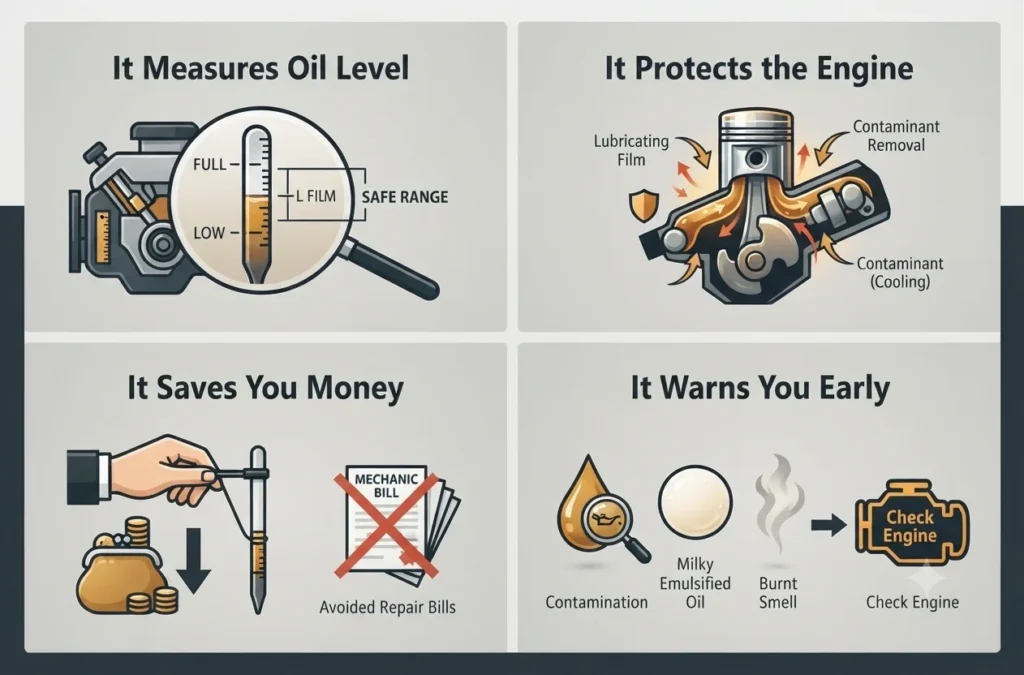
It Measures Oil Level
Marks near the tip show the safe oil range. The oil film left on the stick tells you exactly how much oil is in the engine right now.
It Protects the Engine
Oil lubricates, cools and cleans moving parts. Keeping it in range prevents overheating, excess wear and costly damage.
It Saves You Money
A 60-second dipstick check is free and easy. Catching low or dirty oil early avoids expensive repairs and mechanic trips.
It Warns You Early
Dropping oil, milky film or a burnt smell on the stick are early signs of a leak or a problem — long before the warning light appears.
Before You Check: Get the Car Ready
An accurate dipstick reading starts with a few simple conditions. Park on level ground — a slope skews the oil level to one side. Turn the engine off and let the oil settle back into the pan so the reading is true. For most modern cars, check with the engine cold (before starting) or wait about 10–15 minutes after driving so hot oil drains down; always follow your owner’s manual, as a few makes want the engine warm. Have a clean paper towel or rag ready, then pop the hood and find the dipstick — usually the bright yellow or orange loop handle sticking out of the engine.
How to Read Oil Dipstick Step by Step
Here’s the correct process to read the oil level on a dipstick. The key is the two-pull method — wipe, reinsert, then read — so you get an accurate line instead of a smeared one.
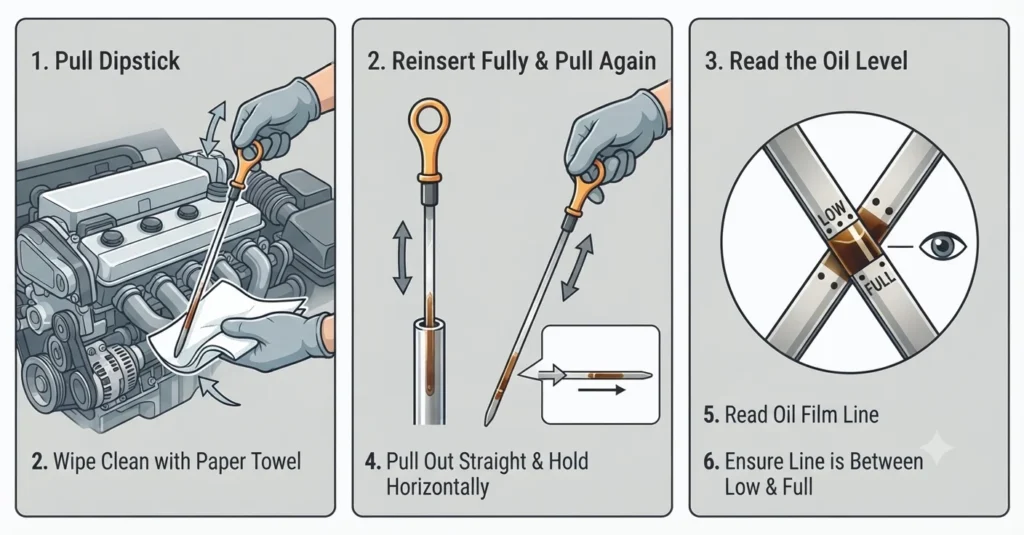
1. Pull & Wipe Clean
With the engine off and cool, pull the dipstick all the way out. Wipe it completely clean with a paper towel — this removes the splashed oil so your next reading is accurate.
2. Reinsert Fully & Pull Again
Slide the clean dipstick all the way back in, then pull it straight out again. Hold it horizontally so the oil doesn’t run and blur the line you’re about to read.
3. Read the Oil Level
Look at where the oil film ends. It should sit between the low and full marks — ideally near the top. Then wipe the stick and reinsert it fully when you’re done.
Understanding Oil Dipstick Marks
Where Should the Oil Actually Reach?
Near the tip you’ll see two marks. The lower one is MIN (also shown as ‘L’, ‘ADD’, or a lower hole) and the upper one is MAX (shown as ‘H’, ‘FULL’, or an upper hole). Many dipsticks have a crosshatched or textured area between them — that whole zone is the safe operating range. Your oil should reach somewhere in that band, ideally close to the MAX / full mark but never above it. If the film sits at or below MIN, your oil is low and you should add some. The gap between MIN and MAX is usually about one quart (roughly one liter), which helps you judge how much to add.
What Does Oil on a Dipstick Look Like?
Color and texture tell you about oil condition — not just level. Rub a drop between your fingers and hold the stick to the light to judge what your oil is telling you.
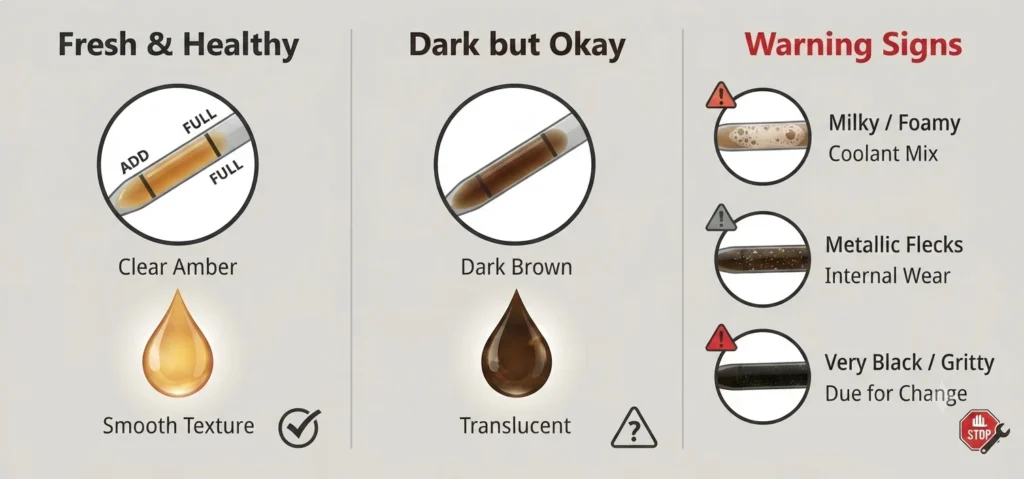
Fresh & Healthy
New oil is clear amber to light honey-brown and feels smooth. This is exactly what good engine oil should look like — no change needed.
Dark but Okay
Oil naturally darkens with use, so dark brown alone isn’t bad. If it’s very black, thick, or gritty, it’s dirty and likely due for a change.
Warning Signs
Milky, foamy or coffee-colored oil can mean coolant is mixing in. Metal flecks or a strong burnt smell also signal trouble — have it inspected.
Should You Check Oil Hot or Cold?
This trips up a lot of people. For most modern cars, check the oil cold — before you start the engine — or wait 10 to 15 minutes after driving so hot oil drains back into the pan and settles. Checking right after a drive gives a false low reading because oil is still splashed around the engine. A few manufacturers do ask for a warm check, so the golden rule is simple: follow your owner’s manual. When in doubt, check first thing in the morning on level ground for the most consistent, accurate result.
What Happens If Oil Is Too Low or Too High?
Both extremes are hard on your engine. Too low is the more urgent danger: below the MIN mark, or barely showing on the stick, means moving parts aren’t fully lubricated. That leads to overheating, rapid wear and, if ignored, serious engine damage. If oil is low, add a little at a time — roughly the amount to move from MIN to MAX is about one quart — recheck, and never overfill. If the stick shows no oil at all, don’t drive; add oil first and look for a leak. Too high is also a problem: overfilled oil can foam as the crankshaft whips through it, reducing lubrication and stressing seals and gaskets. If you’ve overfilled, some needs to be drained. The safe target is always within the marks, ideally near full but never above the MAX line.
How Often Should You Check Engine Oil?
Reading your dipstick regularly is the easiest habit in car care. Use this simple routine so you catch problems early and keep your engine happy.
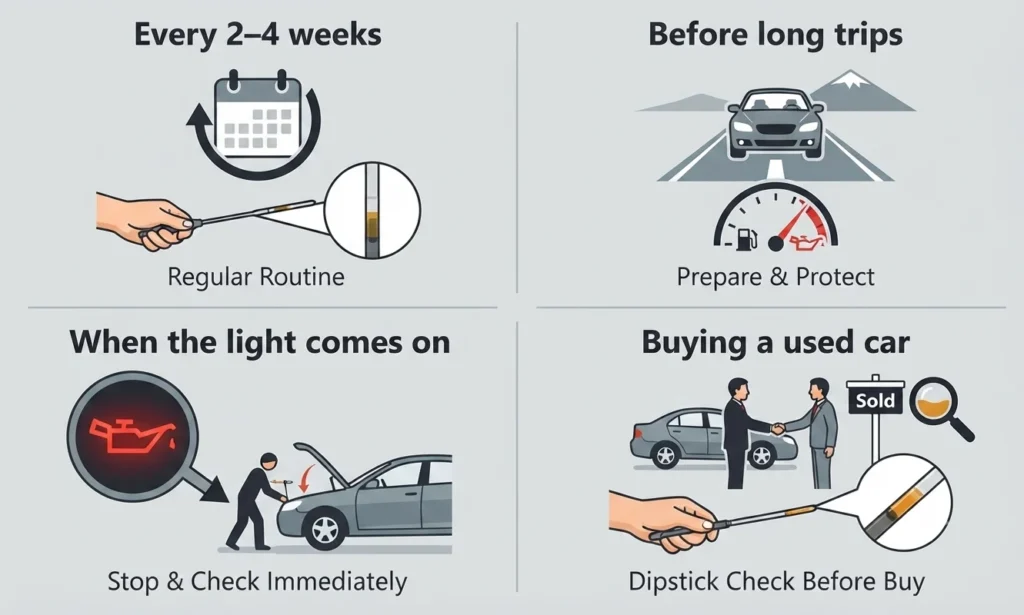
Every 2–4 weeks
For newer cars, a monthly check is plenty. Older cars or ones that burn a little oil should be checked more often — about every couple of weeks.
Before long trips
Always check the oil before a road trip or heavy towing. Long highway miles put more demand on your engine and its oil.
When the light comes on
If an oil warning light appears, pull over safely and check the level with the dipstick as soon as it’s safe to do so.
Buying a used car
Pull the dipstick before you buy. Clean amber-to-brown oil at the right level is a good sign; black, milky or low oil is a red flag.
FAQs: Reading Your Oil Dipstick
How do you read an oil dipstick correctly?
Park on level ground with the engine off and cool. Pull the dipstick out, wipe it clean, reinsert it fully, then pull it out again and read where the oil film sits. It should be between the low and full marks, ideally near the top.
Where should the oil level be on the dipstick?
In the safe range — between the MIN and MAX marks (often a crosshatched area). Aim close to the full mark but never above it. At or below MIN means it’s time to add oil.
What does low oil on a dipstick look like?
The oil film sits at or below the MIN mark, only lightly coats the tip, or barely shows at all. If there’s no visible oil, don’t drive — add oil and check for a leak first.
Should I check the oil when the engine is hot or cold?
For most cars, check it cold or wait 10–15 minutes after driving so the oil settles. A few makes want a warm check, so always follow your owner’s manual for the most accurate reading.
Is dark oil on the dipstick bad?
Not necessarily — oil naturally darkens with use. It’s a concern if it’s very black and thick, gritty, milky, or smells burnt. Those signs mean it’s dirty or contaminated and likely needs changing.
How much oil should be on a dipstick?
Enough to reach within the marked range, ideally near the full mark. The gap between MIN and MAX is usually about one quart (roughly one liter), so add a little at a time and recheck to avoid overfilling.
Check Your Oil With Confidence
Now you know exactly how to read your oil dipstick, understand the marks, judge the oil color, and know when your engine needs attention. It’s a two-minute habit that saves real money.
🛢️ Wipe, reinsert, then read🚗 Keep it near the full mark
Also read oil and fluid checking guides
Also read milky oil on the dipstick
Also read engine oil warning signs