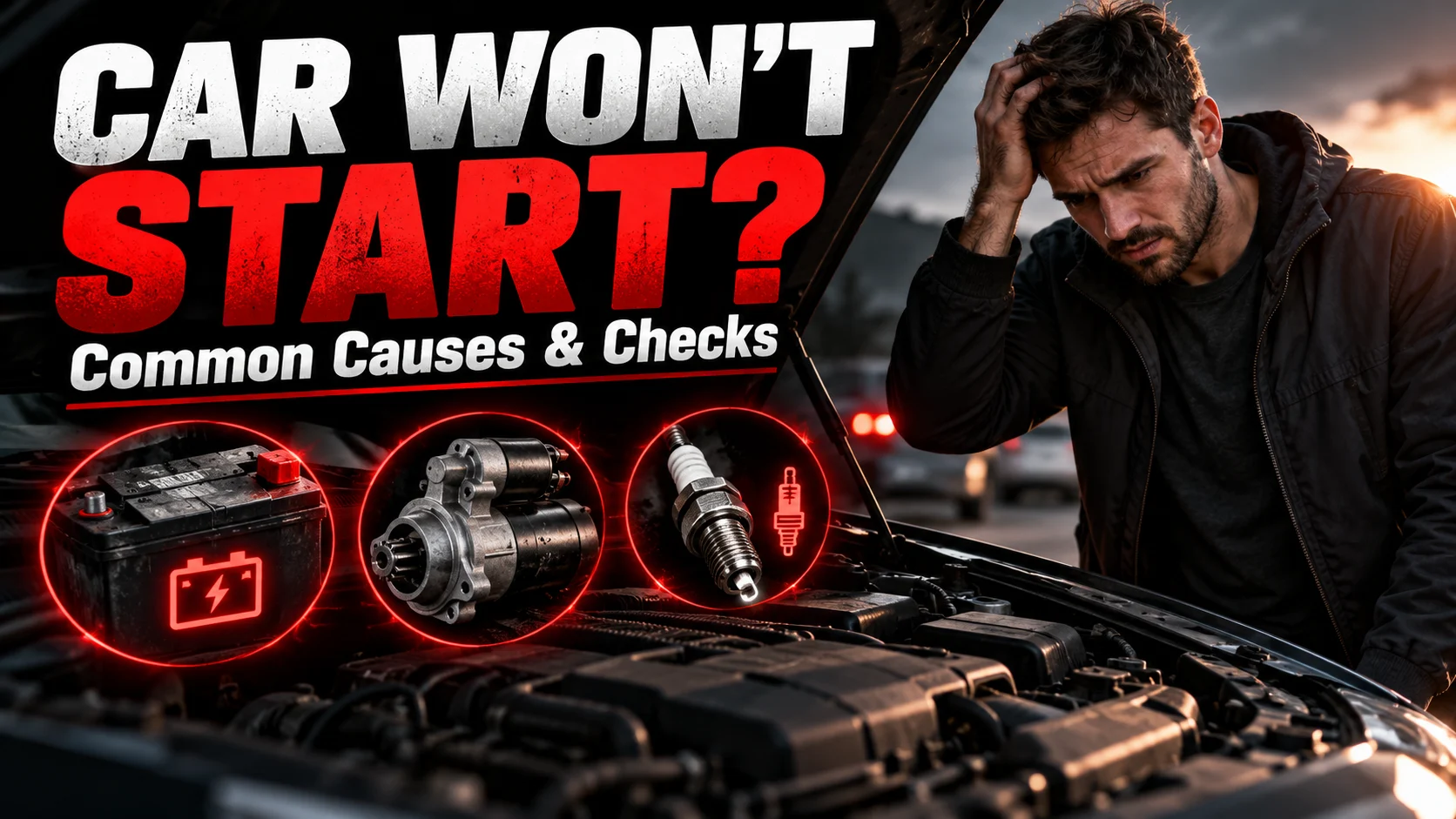

⚡ Quick Answer
How Do You Tell If a Starter Is Bad?
Listen to what happens when you turn the key. One loud click but no crank usually means a bad starter solenoid or a failing starter motor. Rapid clicking points to a weak battery or corroded connections. Complete silence points to the starter relay, ignition switch, or wiring. A whirring or grinding sound means the solenoid isn’t engaging the starter gear properly. The sound is your first — and best — diagnostic tool.
🔊 The 60-Second Sound Diagnosis — Turn the Key and Listen
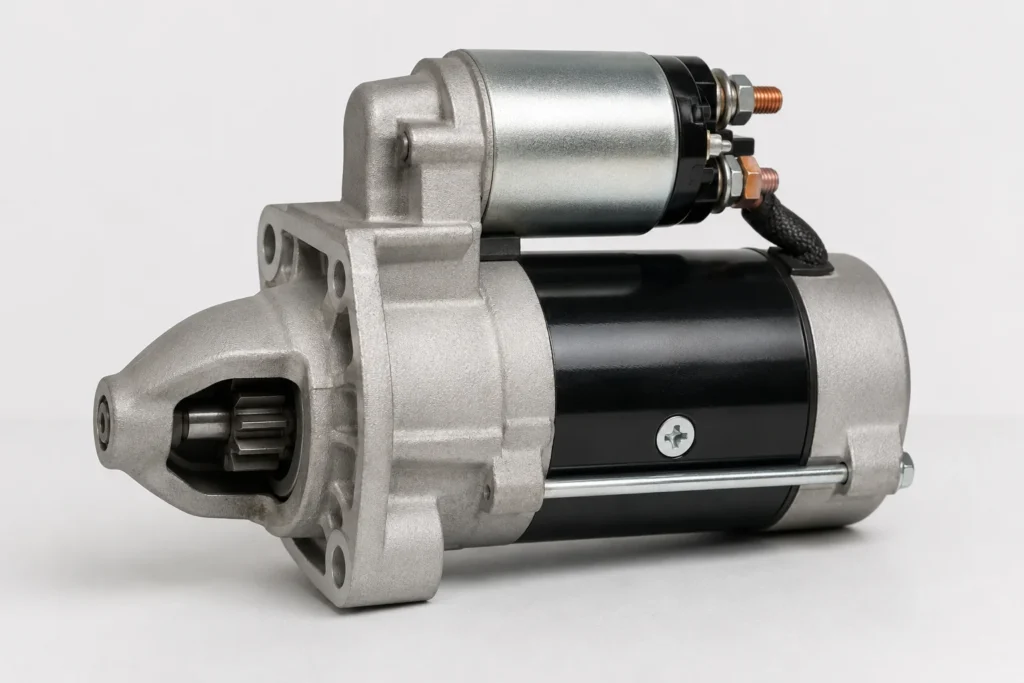
The starter system has three separate parts that fail in different ways, cost wildly different amounts to fix, and get confused with each other constantly. Before diagnosing anything, you need to know which part does what — because “bad starter” could mean a $12 relay or a $450 starter motor.
Starter Relay vs Solenoid vs Starter Motor — What’s the Difference?
When you turn the key, the signal passes through three components in order. A failure at any point stops the chain — but each failure has its own signature.
1. Starter Relay
📍 Fuse box (engine bay)
A small plastic cube — an electrical switch that lets your ignition key’s tiny current trigger the much larger current the starter needs. When it fails, the signal never leaves the fuse box. You hear nothing at all.
Part: $10–$25 · Fix: plug-in, 2 minutes
2. Starter Solenoid
📍 Mounted on the starter motor
A cylinder bolted to the starter itself. It does two jobs at once: closes the high-current circuit AND physically pushes the pinion gear into the flywheel. That loud click when you turn the key? That’s the solenoid plunger slamming forward.
Part: $30–$80 · Fix: moderate DIY, 1–2 hrs
3. Starter Motor
📍 Bolted to engine/transmission
The heavy electric motor that actually cranks the engine. Inside are brushes, windings, and bearings that wear out over 100,000–150,000 miles. When it fails, the solenoid clicks but nothing turns.
Part: $80–$350 · Fix: harder DIY or shop, 1–3 hrs
The starting chain: turning the key sends a small signal → the relay switches on the heavy current → the solenoid clicks and pushes the gear forward → the starter motor cranks the engine. A failure anywhere breaks the chain — and each break sounds different.
💡 Why This Matters for Your Wallet
Many shops replace the entire starter assembly (motor + solenoid together) even when only the $15 relay failed. Knowing which component your symptoms point to protects you from paying $350–$500 for a repair a $15 part would have fixed. Most modern starters come as a combined unit, so a bad solenoid often means replacing the whole starter — but a bad relay never does.
Bad Starter Solenoid Symptoms — 6 Signs to Check
The solenoid is the most failure-prone part of the starter system because it works mechanically and electrically at once. Here are the symptoms ranked by how definitively they point to the solenoid.
1. Single Loud Click, No Crank
🔴 Classic solenoid signYou hear the solenoid plunger engage — one solid clack — but the engine doesn’t turn. Either the solenoid’s internal contacts are burned and can’t pass the high current, or the starter motor behind it has died. This is the single most reported bad starter solenoid symptom.
2. Starter Spins But Doesn’t Crank
🔴 Solenoid mechanical failureA whirring or freewheeling sound means the motor is running but the solenoid isn’t pushing the pinion gear into the flywheel. The plunger or shift fork inside the solenoid is worn or stuck. The engine will never crank in this state no matter how long you hold the key.
3. Intermittent Starting
🟡 Worn contacts — worseningStarts fine five times, clicks dead on the sixth. Burned solenoid contacts make connection unpredictably. Heat makes it worse — a car that starts cold but clicks when warm is a strong solenoid indicator. This always progresses to total failure.
4. Starter Stays Engaged After Start
🟡 Stop driving — damage riskA grinding whine continues after the engine starts. The solenoid plunger is stuck forward, keeping the pinion locked to the spinning flywheel. This destroys the starter drive within minutes of driving. Shut the engine off and disconnect the battery if it persists.
5. Slow, Labored Cranking
🟡 Test battery firstDragging, weak cranking can mean high resistance across corroded solenoid contacts — but a weak battery causes the identical symptom. Rule the battery out with a voltage test (12.4V+ resting) before blaming the solenoid.
6. Smoke or Burning Smell
🟢 Rare but definitiveA burning electrical smell or visible smoke from the starter area means overheated solenoid windings — usually from repeated long cranking attempts or a stuck plunger. Stop cranking immediately. The solenoid (and likely starter) will need replacement.
Bad Starter Relay Symptoms — 4 Signs to Check
The relay fails less often than the solenoid, but when it does, the symptoms are distinct — mostly defined by silence.
1. Total Silence When Turning the Key
🔴 Top relay symptomNo click, no whir, nothing — but the dashboard lights, radio, and headlights all work normally. Power is available; the signal just isn’t reaching the starter. The relay is the first suspect, followed by the ignition switch and the neutral safety switch.
2. Clicking From the Fuse Box
🟡 Relay contacts failingA faint click from the fuse box area (not the engine) with no crank means the relay coil is energising but its internal contacts are too burned to pass current through. The relay is doing half its job — replace it.
3. Starter Works Randomly
🟡 Corroded relay contactsSometimes starts instantly, sometimes needs 5–10 key cycles. Corroded or pitted relay contacts connect unreliably. Cycling the key sometimes “wipes” the contacts clean enough to work — a classic sign the relay is on its way out.
4. Starter Doesn’t Stop After Release
🟢 Stuck relay — act nowThe starter keeps cranking after you release the key, or even after the engine starts. The relay contacts have welded shut from heat. Pull the relay out of the fuse box immediately — continued engagement will burn out the starter motor.
🔧 From the Workshop — First-Hand Experience
“The most expensive mistake I see is people replacing the starter when the problem was a $12 relay. Here’s the 30-second test I show everyone: most fuse boxes have two or more identical relays — the horn relay is usually the same part number as the starter relay. Swap them. If the car now starts and your horn is dead, you’ve just diagnosed a bad starter relay for free. I’ve seen this save people $400 shop bills more times than I can count. Check your fuse box lid diagram — the relay positions are labelled.”
— GearHead Grove workshop experience · Multiple makes diagnosed · 2025
Why Your Car Starts Sometimes — Intermittent Starter Failure Explained
Intermittent failure confuses more people than total failure, because a car that starts 80% of the time feels like it might be fine. It isn’t. Here’s what’s actually happening.
Inside both the relay and the solenoid are copper contacts that physically touch to complete the circuit. As they age, they burn, pit, and corrode. A pitted contact might connect cleanly on one key turn and hit a dead spot on the next. That’s why the failure feels random — it’s the microscopic geometry of a worn contact surface.
Heat accelerates everything. Resistance rises with temperature, so a marginal solenoid that works on a cold morning can fail in a hot parking lot after a highway drive. If your no-start events cluster around hot restarts, the solenoid is the prime suspect.
⚠️ The Intermittent Timeline
Intermittent starter failures do not stabilise or fix themselves — burned contacts only get worse with every cycle. Once a starter system begins failing intermittently, total failure typically follows within days to a few weeks, not months. Fix it while the car still starts, or the car chooses the time and place of its final failure for you — usually a petrol station, school pickup, or airport car park.
How to Test a Starter Relay and Solenoid Yourself
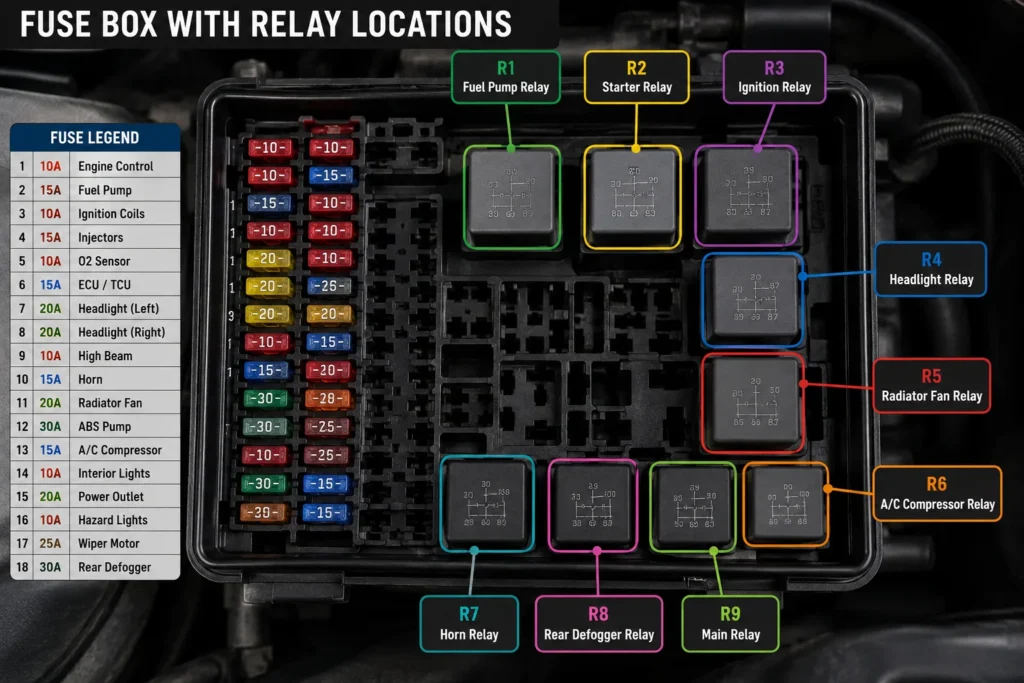
Test 1 — The Relay Swap (free, 2 minutes, no tools)
Test 2 — Battery Voltage Check (rules out the impostor)
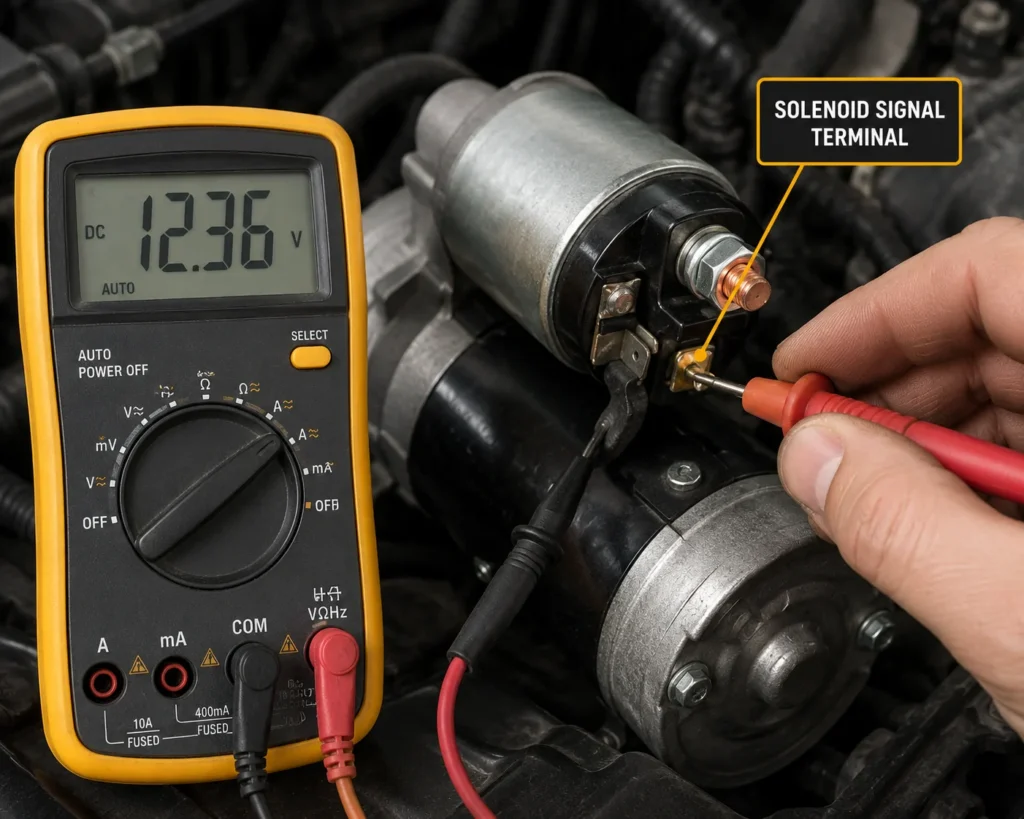
Test 3 — Solenoid Voltage Test (confirms the diagnosis)
⚠️ Safety First
The thick cable on the starter is always live — it connects directly to the battery with no fuse. Never let a metal tool bridge that terminal to the engine block or body. Disconnect the battery negative terminal before removing or handling any starter wiring. Wear eye protection when working near the battery.
How to Start a Car With a Bad Starter — Emergency Workarounds
These are get-to-the-repair-shop tricks, not fixes. They work because they temporarily overcome worn contacts or a stuck plunger.
- The tap trick: Have someone hold the key in START while you tap the side of the starter motor firmly with a hammer or wheel wrench handle (not on the electrical terminals). The vibration can free a stuck plunger or jolt worn brushes into contact. Works surprisingly often — once or twice. Then replace the starter.
- Cycle the key: For intermittent relay or solenoid contacts, turning the key off and back to START 5–10 times can land the contacts on a clean spot.
- Push start (manual transmission only): Ignition on, clutch down, second gear, get the car rolling at walking pace (helpers or a slope), then release the clutch sharply. The wheels crank the engine, bypassing the starter entirely. Does not work on automatics.
- Straighten the wheel + wiggle the shifter (automatics): If the car is in Park but the neutral safety switch is marginal, shifting to Neutral and trying again can complete the circuit the switch was blocking.
💡 What to Tell Your Mechanic
Say exactly what you hear: “Single click, no crank, battery tests at 12.6V” or “Complete silence, dash lights normal, relay swap made no difference.” That sentence saves 30 minutes of diagnostic time — and signals you’ll notice if you’re quoted for parts you don’t need.
Starter Relay, Solenoid & Motor Replacement Costs
| Repair | Part Cost | Shop Cost (parts + labour) | DIY Difficulty | Time |
|---|---|---|---|---|
| Starter relay | $10–$25 | $50–$120 | Easy — plug in | 2–10 min |
| Solenoid only (where sold separately) | $30–$80 | $150–$300 | Moderate | 1–2 hrs |
| Complete starter assembly | $80–$350 | $250–$650 | Moderate–hard (access varies) | 1–3 hrs |
| Starter (luxury/hard-access vehicles) | $200–$500 | $500–$1,100 | Shop recommended | 3–6 hrs |
| Flywheel repair (from grinding damage) | $150–$400 | $800–$1,800 | Shop only | 4–8 hrs |
On most modern vehicles the solenoid comes built into the starter assembly, so a failed solenoid usually means replacing the complete unit. The exception is older vehicles and some trucks (notably Ford, which mounts a separate fender-mounted solenoid/relay) where the solenoid is a cheap standalone part.
Frequently Asked Questions
How do you tell if a starter is bad or it’s the battery?
Rapid clicking almost always means the battery — there’s enough power to trigger the solenoid repeatedly but not enough to crank. A single loud click with a fully charged battery (12.4V+) points to the starter or solenoid. The fastest check: turn on the headlights. Bright, steady lights plus a no-crank means the battery is fine and the starter circuit is the problem. Dim or dying lights mean charge or replace the battery first.
What are the most common bad starter solenoid symptoms?
The five most common signs of a bad starter solenoid are: a single loud click with no cranking, the starter motor spinning without engaging the engine (whirring), intermittent starting that worsens when the engine is hot, the starter staying engaged after the engine starts, and slow labored cranking with a healthy battery. The single-click-no-crank pattern is the classic solenoid signature.
What are bad starter relay symptoms?
A bad starter relay usually produces complete silence when you turn the key — no click, no crank — while dashboard lights and accessories work normally. Other symptoms include a faint click from the fuse box without cranking, random intermittent starting, and in rare cases the starter continuing to run after you release the key (welded relay contacts — pull the relay immediately). The relay swap test diagnoses it for free in two minutes.
Can you jump start a car with a bad starter solenoid?
No — a jump start only helps when the battery is weak. If the solenoid or starter motor has failed, adding more battery power changes nothing, because the failure is in the switch or motor, not the power supply. The workarounds that can help are tapping the starter body while cranking, cycling the key repeatedly, or push starting (manual transmissions only).
How long can you drive with a bad starter solenoid?
Once the engine is running, the starter system does nothing — driving is unaffected. The risk is every restart. An intermittently failing solenoid typically fails completely within days to a few weeks, and it will choose the moment. If your car currently starts, drive it directly to get the starter repaired rather than parking it somewhere you can’t afford to be stranded.
How much does it cost to fix a bad starter relay or solenoid?
A starter relay costs $10–$25 and takes two minutes to replace yourself — it plugs into the fuse box like a fuse. A standalone solenoid costs $30–$80 where available, but on most modern cars the solenoid is built into the starter, making the real-world repair a complete starter replacement at $250–$650 at a shop, or $80–$350 in parts if you do it yourself.
📚 Sources & Methodology
- ASE (Automotive Service Excellence) — starting and charging system diagnostic standards
- SAE International — starter motor and solenoid engineering specifications
- RepairPal and AutoMD — starter replacement cost benchmarks across vehicle makes
- Manufacturer service manuals — relay locations and starter circuit wiring diagrams
- GearHead Grove workshop experience — starting system faults diagnosed and repaired, 2024–2025