
Your car is sputtering, stalling, losing power, or refusing to start—and a bad fuel pump could be the reason. The fuel pump delivers fuel from the tank to the engine at the correct pressure. When it begins to fail, your engine may not receive enough fuel to run properly, causing performance problems that can quickly leave you stranded.
Below are the most common signs of a bad fuel pump, what they feel like, and what you should do next.
Quick Answer: What Are the Signs of a Bad Fuel Pump?
The most common signs of a bad fuel pump include:
- Engine sputtering at highway speeds
- Whining noise from the fuel tank
- Engine cranks but won’t start
- Loss of power during acceleration
- Random engine surges
- Frequent stalling
- Check Engine Light along with performance issues
A bad fuel pump can cause anything from minor drivability problems to a complete no-start condition. If your vehicle is showing several of these symptoms at once, fuel delivery may be the problem.
What Does a Fuel Pump Do?
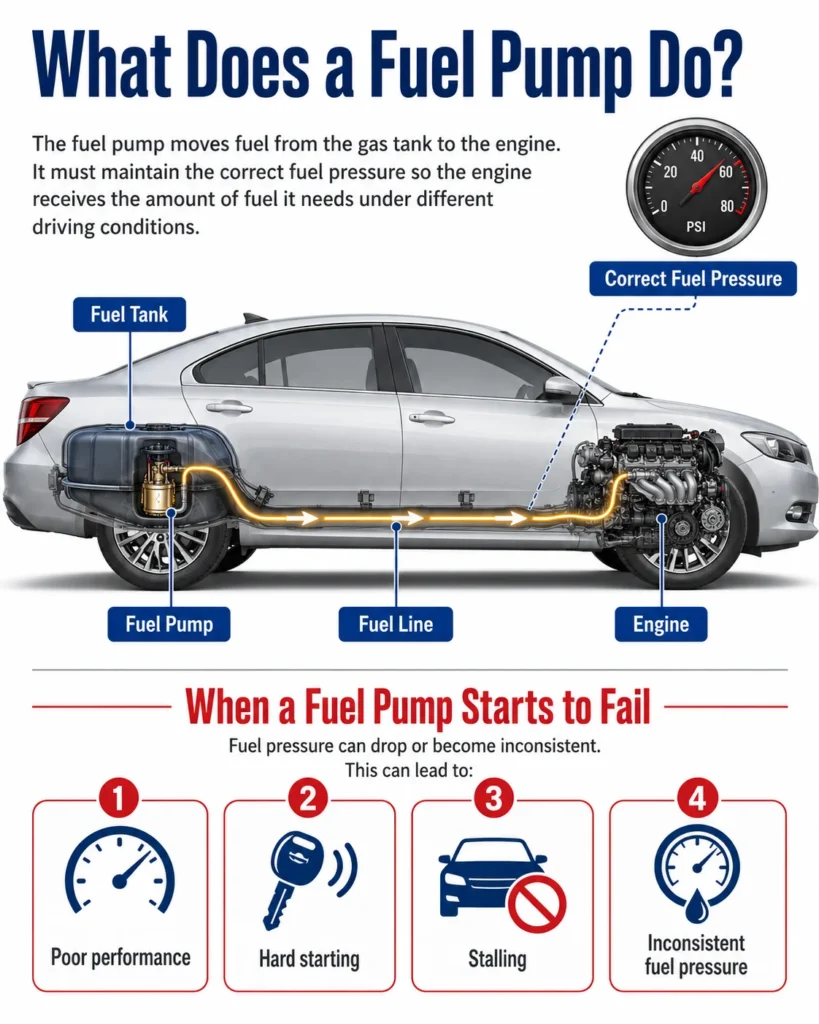
The fuel pump moves fuel from the gas tank to the engine. It must maintain the correct fuel pressure so the engine receives the amount of fuel it needs under different driving conditions.
When a fuel pump starts to fail, fuel pressure can drop or become inconsistent. This can lead to poor performance, hard starting, stalling, and other symptoms.
Top 6 Signs Your Fuel Pump Is Failing
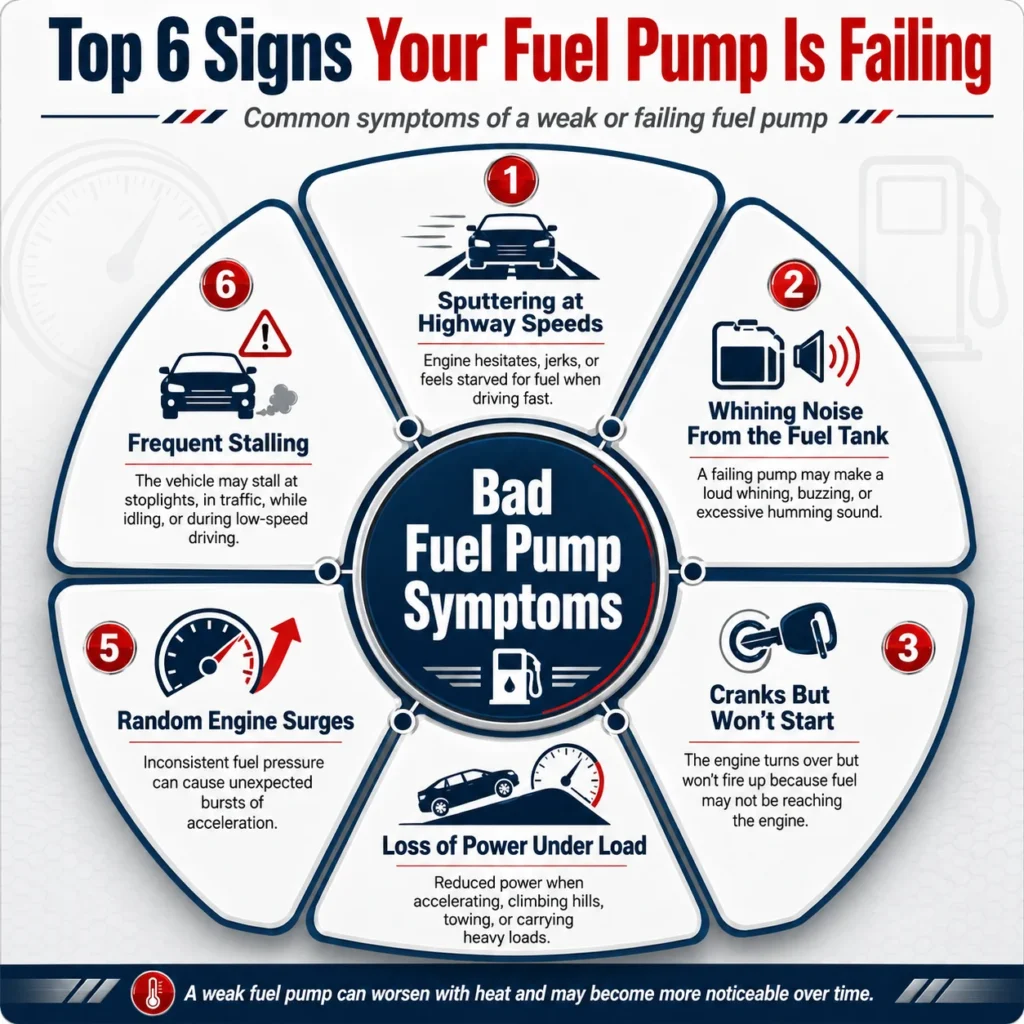
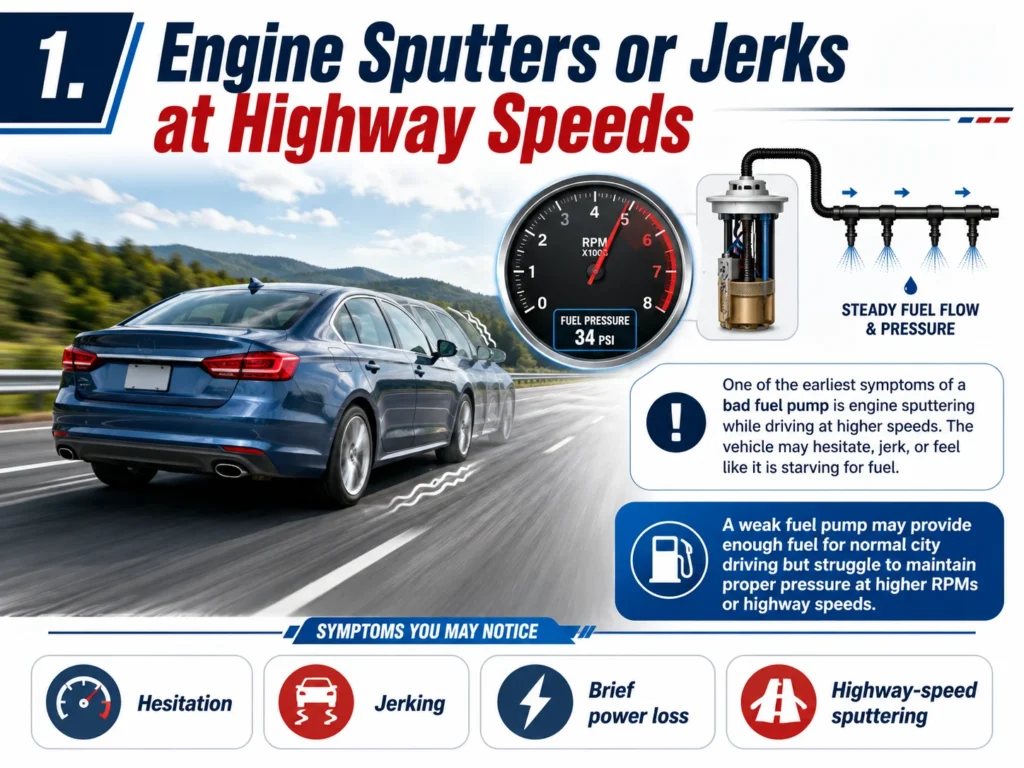
1. Engine Sputters or Jerks at Highway Speeds
One of the earliest symptoms of a bad fuel pump is engine sputtering while driving at higher speeds. You’re cruising normally when the engine suddenly hesitates, jerks, or feels like it’s starving for fuel.
A weak fuel pump may provide enough fuel for normal city driving but struggle to maintain proper pressure at higher RPMs or highway speeds.
2. Whining Noise From the Fuel Tank
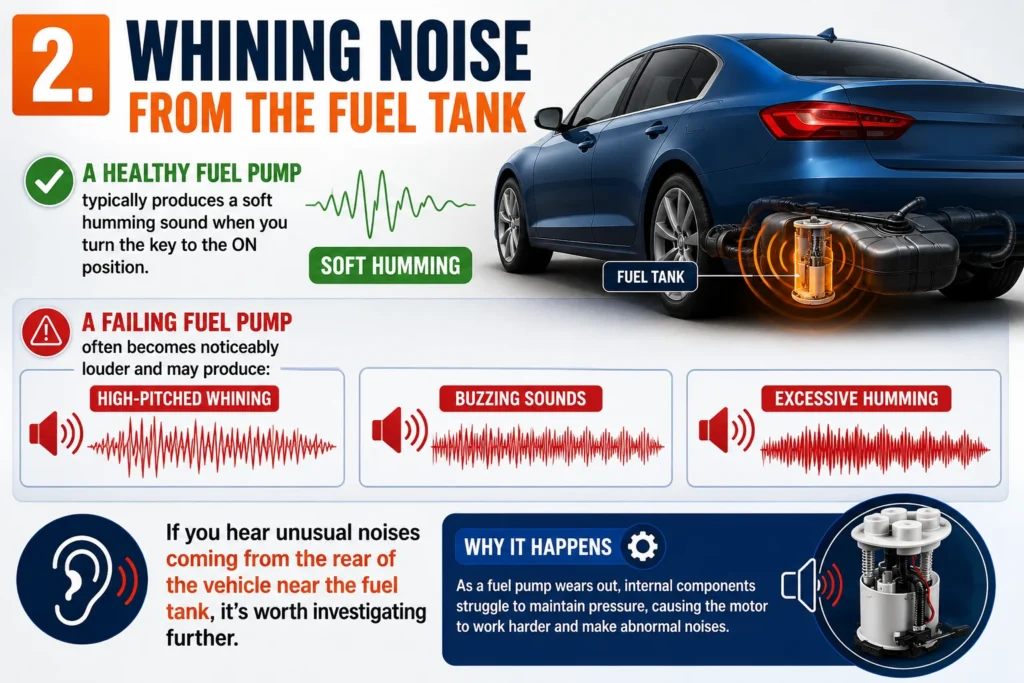
A healthy fuel pump typically produces a soft humming sound when you turn the key to the ON position.
A failing fuel pump often becomes noticeably louder and may produce:
- High-pitched whining
- Buzzing sounds
- Excessive humming
If you hear unusual noises coming from the rear of the vehicle near the fuel tank, it’s worth investigating further.
3. Engine Cranks But Won’t Start
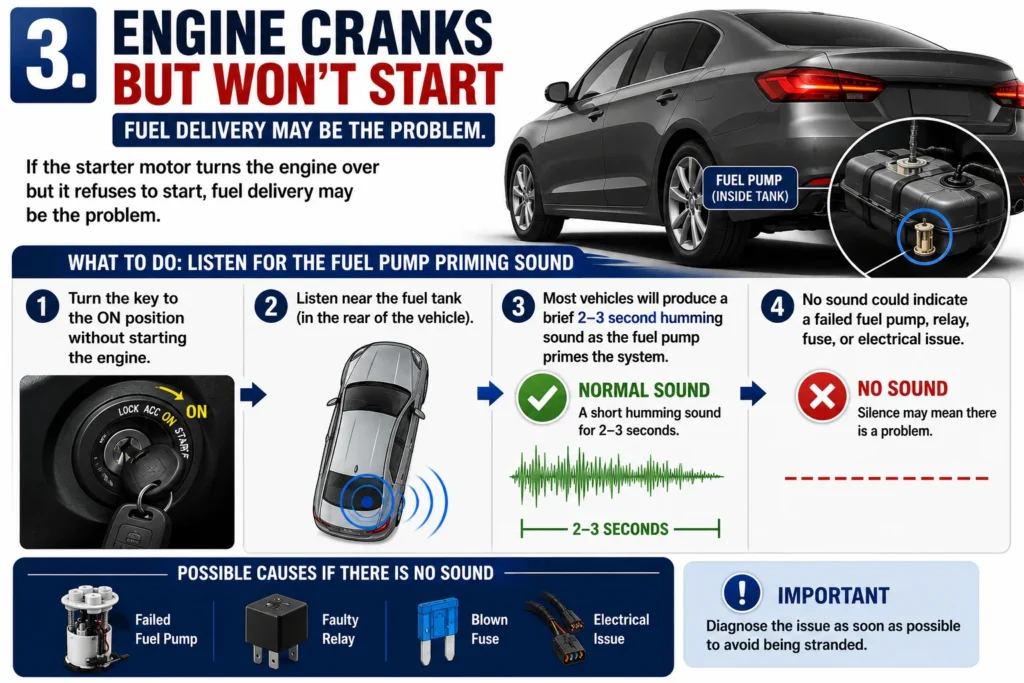
If the starter motor turns the engine over but it refuses to start, fuel delivery may be the problem.
Turn the key to the ON position without starting the engine and listen near the fuel tank. Most vehicles will produce a brief 2–3 second humming sound as the fuel pump primes the system. No sound could indicate a failed fuel pump, relay, fuse, or electrical issue.
4. Loss of Power Under Load
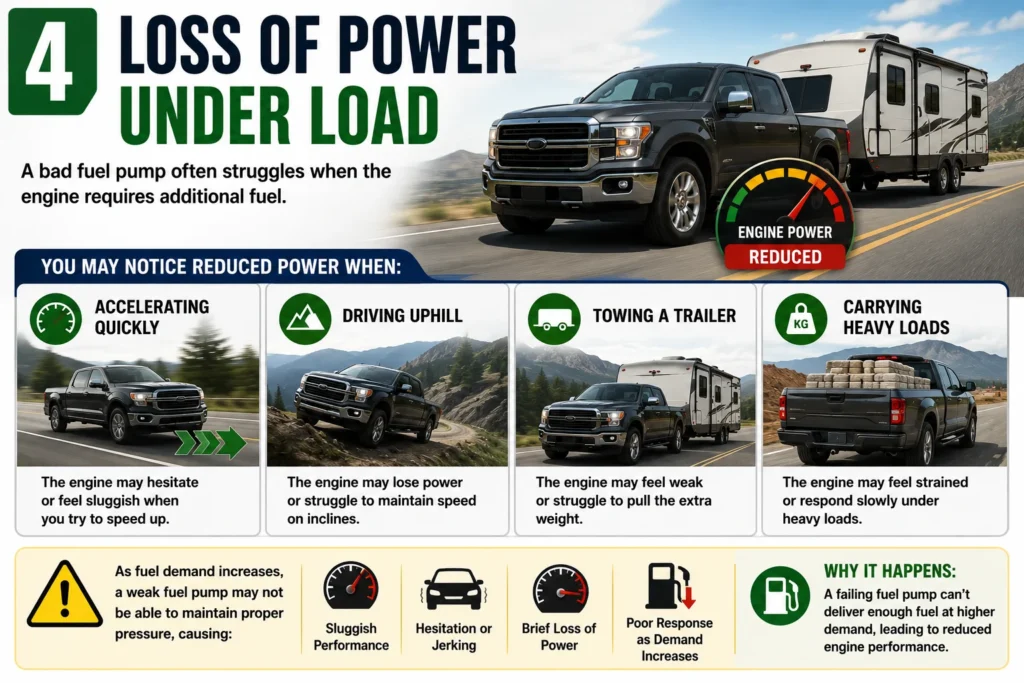
A bad fuel pump often struggles when the engine requires additional fuel.
You may notice reduced power when:
- Accelerating quickly
- Driving uphill
- Towing a trailer
- Carrying heavy loads
The vehicle may feel sluggish, hesitate, or briefly lose power as fuel demand increases.
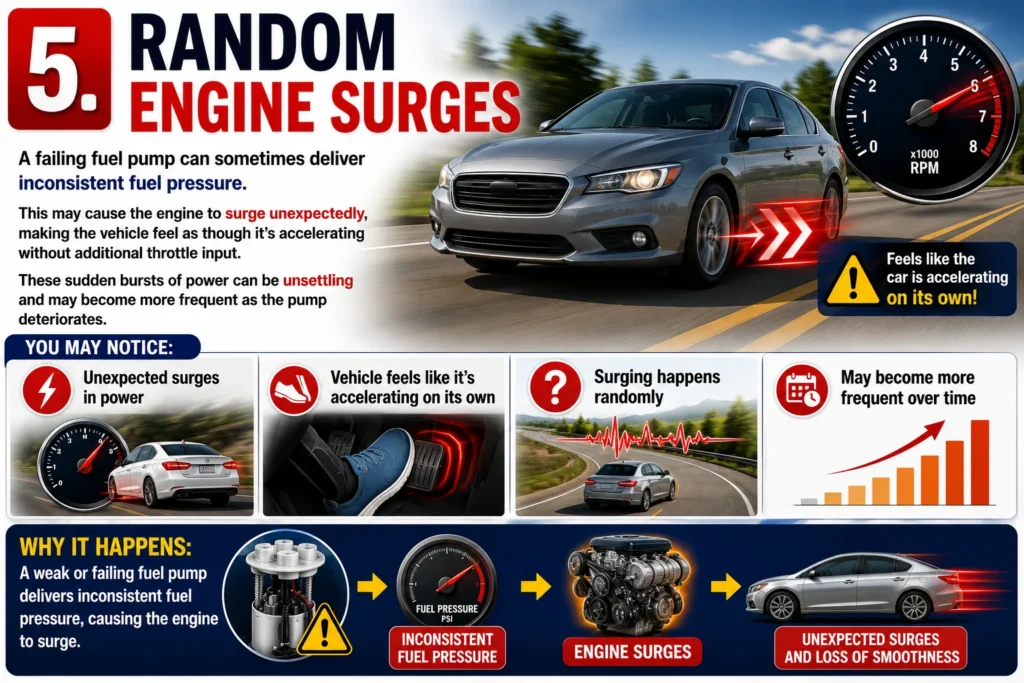
5. Random Engine Surges
A failing fuel pump can sometimes deliver inconsistent fuel pressure.
This may cause the engine to surge unexpectedly, making the vehicle feel as though it’s accelerating without additional throttle input. These sudden bursts of power can be unsettling and may become more frequent as the pump deteriorates.
6. Frequent Stalling
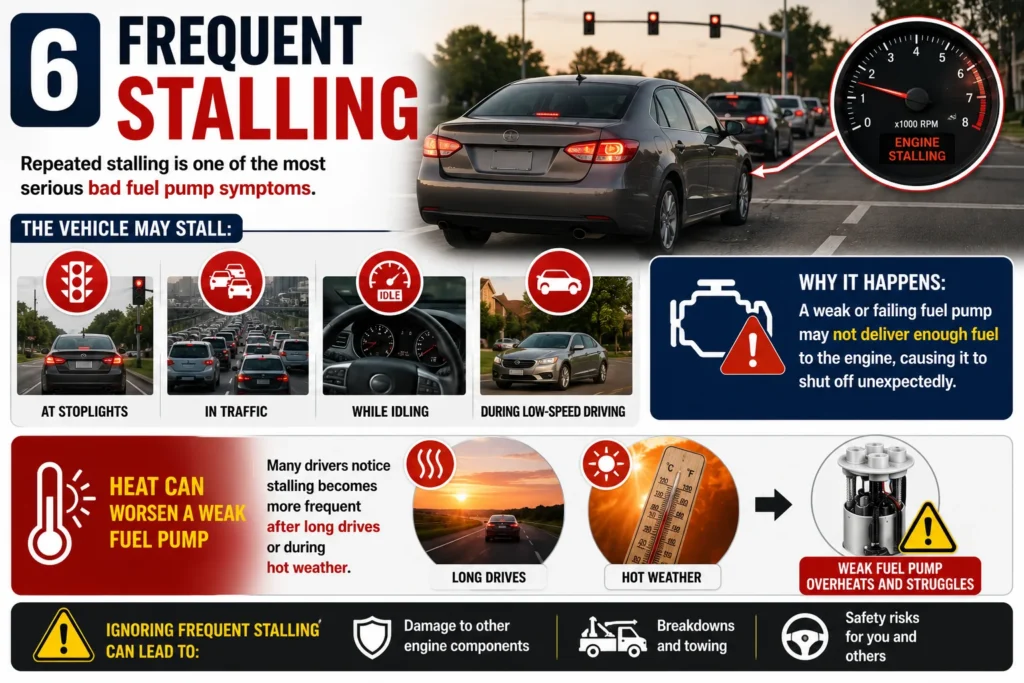
Repeated stalling is one of the most serious bad fuel pump symptoms.
The vehicle may stall:
- At stoplights
- In traffic
- While idling
- During low-speed driving
Heat can worsen a weak fuel pump, which is why many drivers notice stalling becomes more frequent after long drives or during hot weather.
What To Do If You Suspect a Bad Fuel Pump
If your vehicle is showing signs of fuel pump failure, take these steps:
- Turn the key to the ON position and listen for the fuel pump priming.
- Check the fuel pump fuse and relay.
- Test fuel pressure using a fuel pressure gauge.
- Scan for diagnostic trouble codes.
- Avoid long trips or highway driving until the issue is diagnosed.
Because fuel pump failures can worsen suddenly, it’s best to address the problem before it leaves you stranded.
How Much Does Fuel Pump Replacement Cost?
Fuel pump replacement typically costs between $400 and $900, including parts and labor.
Average costs include:
- Fuel Pump: $100–$300
- Labor: $300–$600
Labor costs are often higher because many vehicles require the fuel tank to be removed to access the pump. Always compare multiple repair quotes before proceeding.
Frequently Asked Questions
Can a bad fuel pump trigger the Check Engine Light?
Yes. A failing fuel pump can cause fuel pressure problems that trigger fault codes and illuminate the Check Engine Light.
Will a bad fuel pump leave me stranded?
Yes. A fuel pump can fail completely without warning, preventing the engine from starting.
Can I drive with a bad fuel pump?
Driving with a failing fuel pump is not recommended. Symptoms often worsen over time and can lead to sudden stalling or a no-start condition.
How long does a fuel pump last?
Most fuel pumps last between 100,000 and 150,000 miles. However, driving habits, fuel quality, and vehicle maintenance can affect lifespan.
Final Thoughts
A bad fuel pump can cause hard starting, loss of power, sputtering, surging, and repeated stalling. Recognizing these warning signs early can help you avoid a breakdown and potentially save money on repairs.
While these symptoms commonly point to a bad fuel pump, similar problems can also be caused by a clogged fuel filter, faulty fuel injectors, ignition issues, or sensor failures. If your vehicle is showing several of these symptoms, have the fuel system inspected to confirm the cause before replacing parts.
Also read car engine repair guides
Also read common car engine problems