Proven methods to permanently eliminate smoke smell — not just mask it.
If you’ve ever bought a used car from a smoker or let someone light up inside your vehicle, you know the struggle. Cigarette odor clings to every soft surface — seats, headliner, carpet, even the air vents. Air fresheners only layer fragrance on top of the problem. This guide walks you through every effective method to truly neutralize and remove cigarette smell from your car, from budget-friendly DIY solutions to professional treatments.
Why Does Cigarette Smell Stay in a Car So Long?
Cigarette smoke contains over 7,000 chemicals, many of which are sticky residues (tar and nicotine) that bond to fabric fibers, leather pores, plastic surfaces, and the foam inside your seats. This residue is called third-hand smoke, and it continuously off-gasses, releasing odor molecules back into the air.
Because the residue penetrates deep into porous materials, surface-level cleaning or masking with fragrance will never provide a permanent solution. You need to either remove or chemically neutralize the residue itself.
DIY Methods to Remove Cigarette Odor
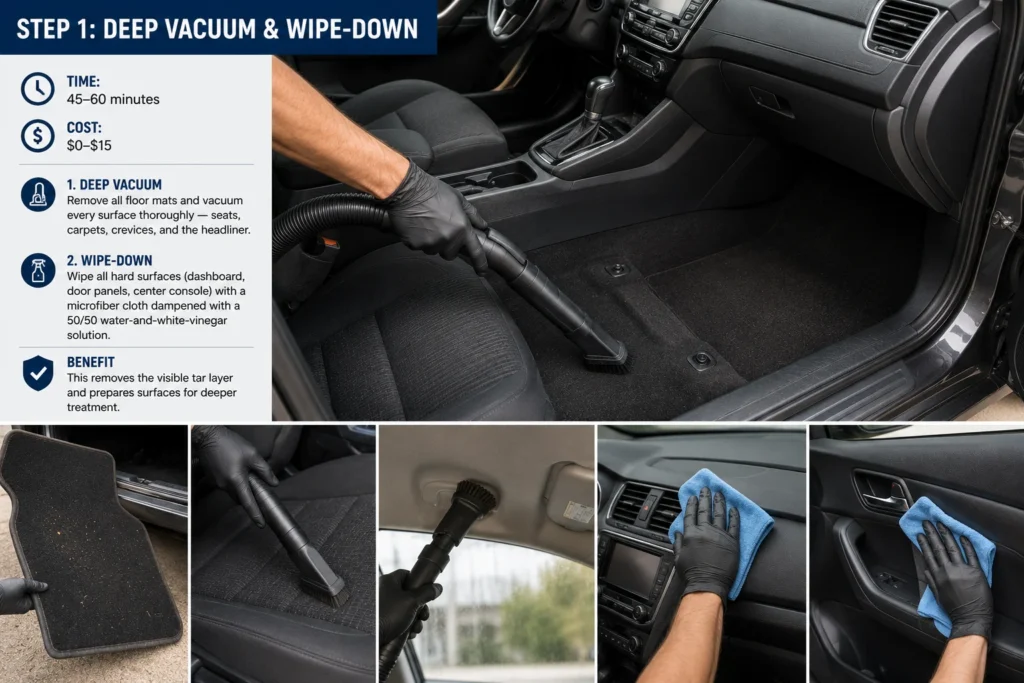
Step 1: Deep Vacuum & Wipe-Down
⏱ Time: 45–60 minutes · Cost: $0–$15
Start by removing all floor mats and vacuuming every surface thoroughly — seats, carpets, crevices, and the headliner. Then wipe all hard surfaces (dashboard, door panels, center console) with a microfiber cloth dampened with a 50/50 water-and-white-vinegar solution. This removes the visible tar layer and prepares surfaces for deeper treatment.
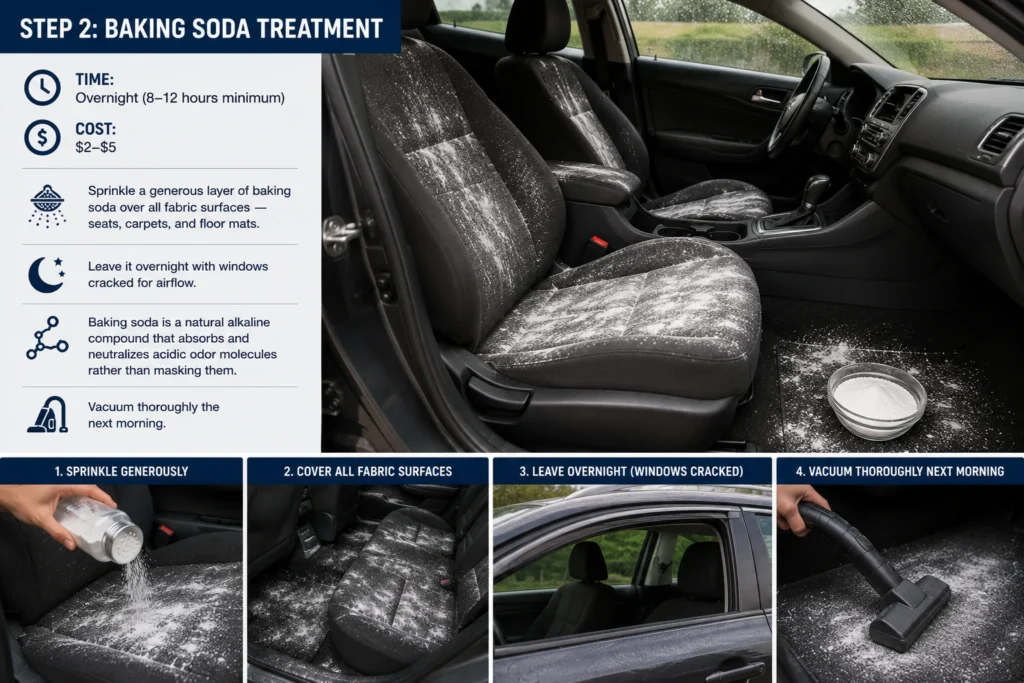
Step 2: Baking Soda Treatment
⏱ Time: Overnight · Cost: $2–$5
Sprinkle a generous layer of baking soda over all fabric surfaces — seats, carpets, and floor mats. Leave it overnight (8–12 hours minimum) with windows cracked for airflow. Baking soda is a natural alkaline compound that absorbs and neutralizes acidic odor molecules rather than masking them. Vacuum thoroughly the next morning.
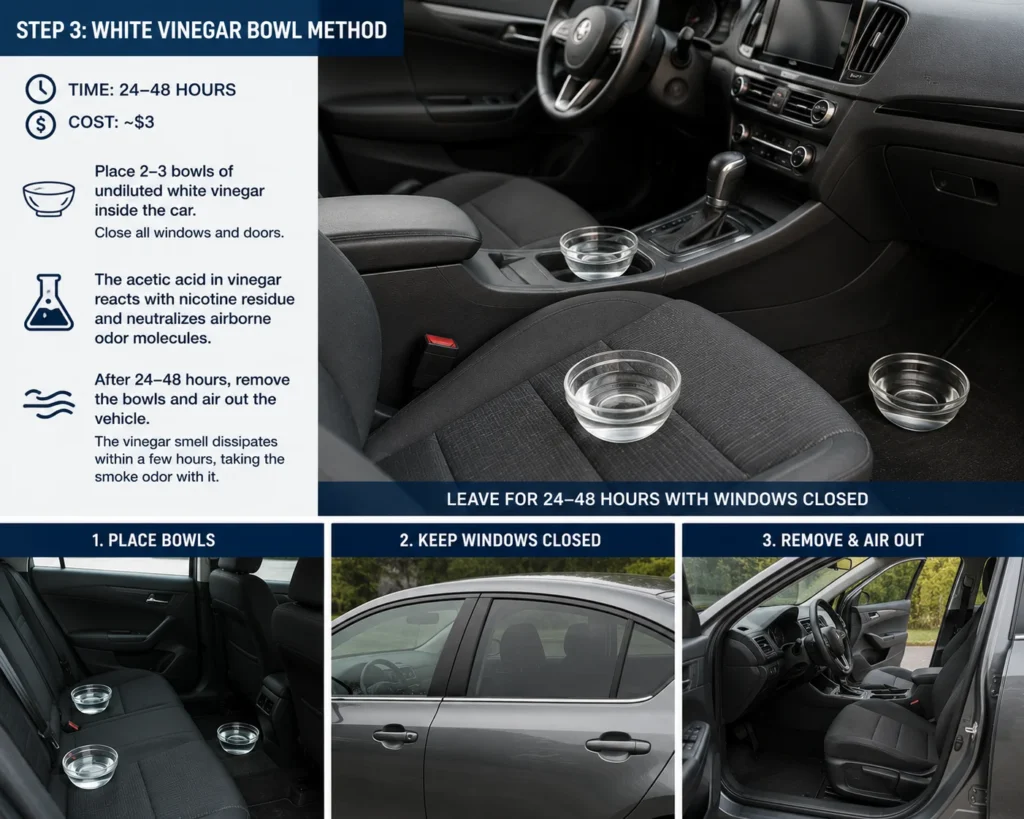
Step 3: White Vinegar Bowl Method
⏱ Time: 24–48 hours · Cost: $3
Place 2–3 bowls of undiluted white vinegar inside the car with all windows closed. The acetic acid in vinegar reacts with nicotine residue and neutralizes airborne odor molecules. After 24–48 hours, remove the bowls and air out the vehicle. The vinegar smell dissipates within a few hours, taking the smoke odor with it.
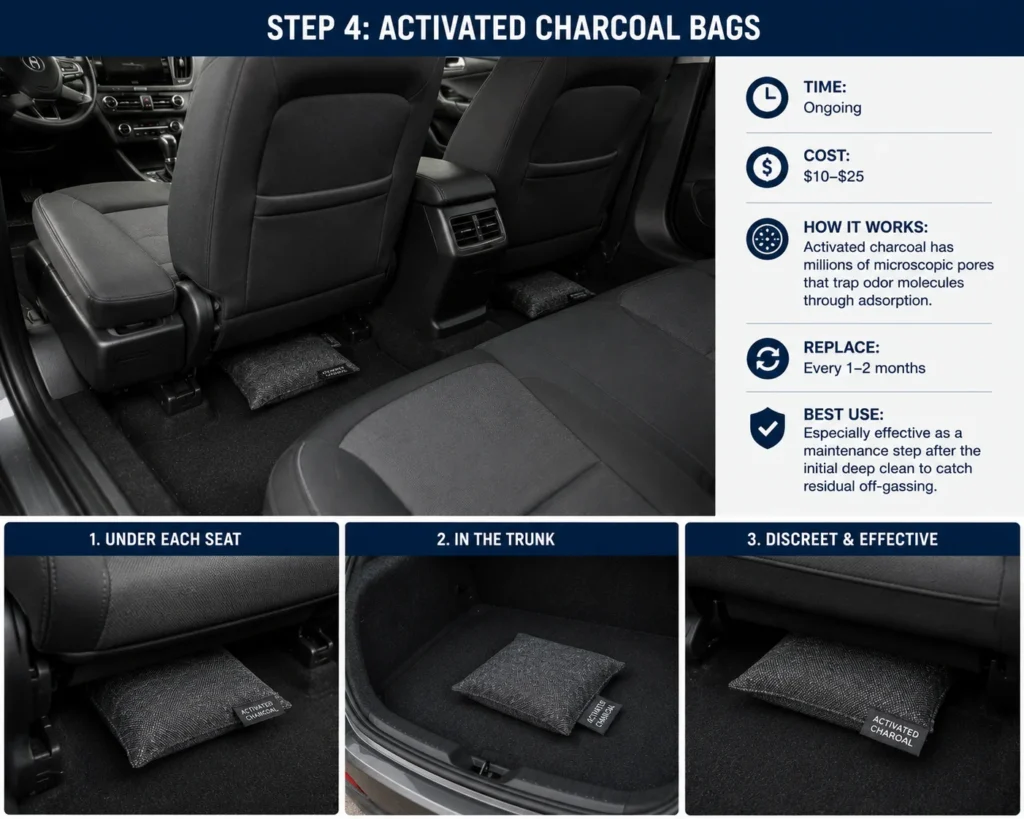
Step 4: Activated Charcoal Bags
⏱ Time: Ongoing · Cost: $10–$25
Place activated charcoal bags under each seat and in the trunk. Activated charcoal has millions of microscopic pores that trap odor molecules through adsorption. Replace bags every 1–2 months. This is especially effective as a maintenance step after the initial deep clean to catch residual off-gassing.
Step 5: Ozone Treatment (Advanced)
⏱ Time: 1–3 hours · Cost: $50–$150 (rental) or $80–$200 (service)
Ozone (O₃) generators produce highly reactive oxygen molecules that break down odor-causing compounds at a molecular level. Run the machine inside the sealed car for 1–3 hours depending on severity. Ozone is one of the most effective single treatments for severe smoke contamination.
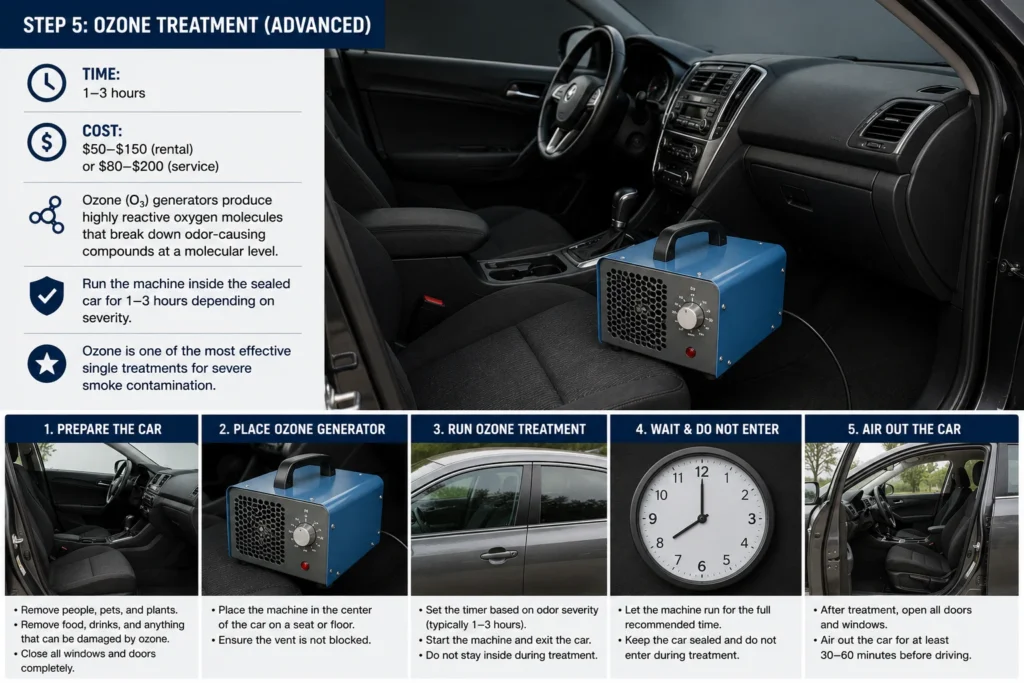
⚠️ Safety: Never occupy the car during treatment. Ventilate for at least 30 minutes afterward. Ozone is harmful to breathe and can degrade rubber seals if overused.
Don’t Forget the Cabin Air Filter
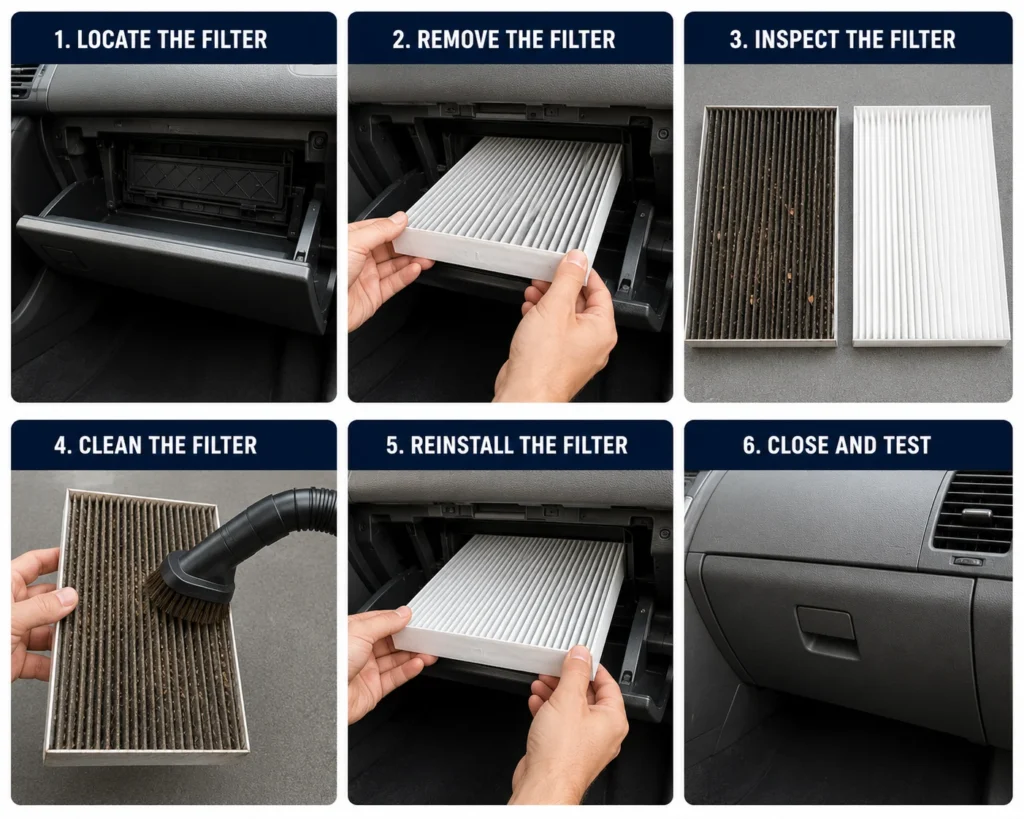
Your cabin air filter traps airborne particles — including smoke residue — every time you run the HVAC system. A smoke-saturated filter will recirculate odor even after you’ve cleaned everything else. Replacing it costs $15–$40 and takes 5–10 minutes on most vehicles.
While you’re at it, run the AC on max with the windows down for 10 minutes to flush the ductwork. For heavily contaminated systems, spray an HVAC disinfectant into the air intake (located below the windshield wipers on most cars).
When to Hire a Professional Detailer
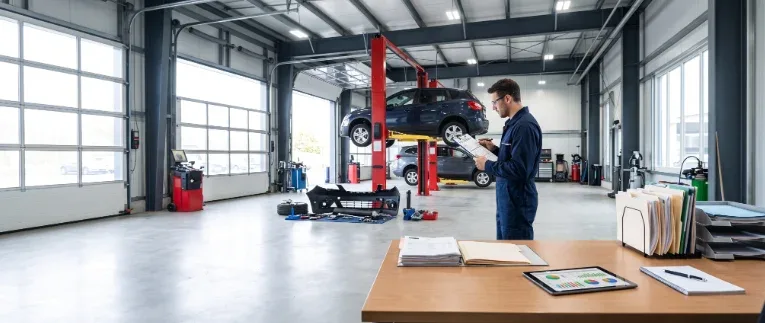
If you’ve tried the DIY methods above and the smell persists — or if the car was smoked in heavily for years — professional detailing is worth the investment. Professionals use commercial-grade ozone machines, hot water extractors, and enzymatic cleaners that aren’t available to consumers.
Expect to pay $150–$400 for a full interior odor-removal detail. Most reputable shops offer a satisfaction guarantee. This cost often pays for itself in higher resale value — smoke smell can reduce a car’s trade-in value by $500–$2,000.
Cost & Effectiveness Comparison
| Method | Cost | Time | Effectiveness |
|---|---|---|---|
| Baking Soda | $2–$5 | Overnight | ★★★☆☆ Moderate |
| White Vinegar | $3 | 24–48 hrs | ★★★☆☆ Moderate |
| Activated Charcoal | $10–$25 | Ongoing | ★★★☆☆ Maintenance |
| Ozone Treatment | $50–$200 | 1–3 hrs | ★★★★★ Excellent |
| Professional Detail | $150–$400 | 3–6 hrs | ★★★★★ Excellent |
How to Prevent Cigarette Smell From Returning
The only guaranteed prevention is a strict no-smoking policy inside the vehicle. If that’s not possible, crack windows fully while smoking, use a dedicated car ashtray with a lid, and place an activated charcoal bag under the seat. Replace your cabin air filter every 6 months and do a quick wipe-down of hard surfaces monthly with a vinegar solution.
Frequently Asked Questions
Can cigarette smell come back after cleaning?
Yes, if residue remains deep in foam padding or the HVAC system. That’s why a multi-step approach (clean surfaces + neutralize air + replace filter) is more effective than any single method. Heat and humidity can cause residual tar to off-gas again.
Is third-hand smoke in a car dangerous?
Research from San Diego State University shows that third-hand smoke residue contains carcinogens including NNK and NNA. Children and non-smokers exposed to contaminated car interiors absorb these compounds through skin contact and inhalation. Removing the residue is a health consideration, not just an aesthetic one.
Does replacing the cabin air filter really help?
Absolutely. A saturated cabin filter acts like a reservoir of smoke particles that recirculates every time you turn on the fan. It’s one of the cheapest and most overlooked steps. Choose a carbon-activated filter for better odor absorption.
How long does it take to fully remove cigarette smell?
For light contamination (occasional smoking over a few months), 2–3 days of combined DIY methods usually works. For heavy contamination (daily smoking over years), expect 1–2 weeks of treatment or a single professional ozone session to achieve significant results.
What’s the fastest way to remove smoke smell?
A professional ozone treatment is the fastest single-step solution — typically 1–3 hours plus ventilation time. For DIY, combining a deep vacuum and wipe-down with an overnight baking soda treatment gives noticeable improvement within 24 hours.
Ready to breathe fresh air in your car again?
Start with Step 1 today. Most drivers notice a dramatic difference within 48 hours using the methods above.