
Key Takeaways
- Build a cleaning schedule around how often and where the vehicle is driven.
- Remove trash, spills, dust, and grime regularly to prevent buildup.
- Use separate, vehicle-safe tools for paint, wheels, glass, and interior surfaces.
- Wash and dry the exterior carefully to reduce scratches and water spots.
- Adjust cleaning frequency for sun, rain, salt, pets, children, and heavy use.
- Use waxes or protectants to help maintain paint, trim, and other surfaces.
- Seek professional detailing for severe stains, odors, oxidation, or specialized restoration.
A clean vehicle is easier to enjoy, easier to maintain, and less stressful to use every day. Drivers who are also considering convenience upgrades, such as a remote start for car, can pair those improvements with a straightforward care routine to keep the cabin and exterior in good shape. The goal is not to spend every Saturday performing a full detail. A few repeatable habits can control crumbs, dust, stains, road film, and water spots before they become a time-consuming project.
Why A Routine Matters
Regular cleaning limits the buildup that makes a vehicle feel worn out. Dust collects in vents, food residue settles into seams, and wet shoes leave grime under floor mats. Staying ahead of those small issues also helps prevent stubborn odors and stains. A daily driver parked outdoors needs more frequent attention than a garage-kept weekend car. The outdoor vehicle faces sun, pollen, bird droppings, rain, and road debris, while the occasional-use vehicle may only need a light reset between deeper cleanings.
Choose A Schedule That Fits Your Car
For drivers looking into remote starters installation near me, it makes sense to plan routine cleaning around the way the vehicle is actually used. A commuter vehicle, family SUV, or pet-friendly car will usually need more frequent interior care than a lightly driven vehicle.
Weekly Or After Heavy Use
- Remove trash, receipts, bottles, and loose belongings.
- Wipe the steering wheel, door handles, console, and gear selector.
- Clean fresh spills immediately.
- Check the windshield, mirrors, headlights, and taillights for dirt.
Every Two To Four Weeks
- Wash the exterior with vehicle-safe soap.
- Vacuum carpets, seats, mats, cargo areas, and storage pockets.
- Clean interior glass and remove windshield haze.
- Wash wheels and tires with dedicated tools.
Every Few Months
Schedule a deeper interior clean, inspect paint for bonded grime and light marks, refresh exterior protection, and check rubber seals, wiper blades, trim, and headlight clarity. A tiered plan like the one used in this practical car-cleaning routine keeps routine upkeep manageable without treating every wash as a full restoration project.
Build A Small, Useful Cleaning Kit
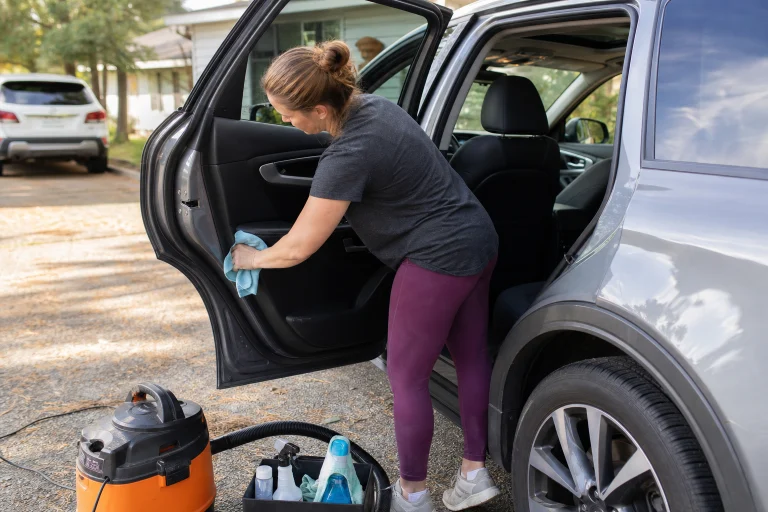
A shelf full of specialty products is not necessary for most drivers. Start with vehicle-safe wash soap, two buckets or a reliable rinse setup, microfiber wash mitts and drying towels, a vacuum with narrow attachments, soft interior brushes, glass cleaner, an interior cleaner suited to the vehicle’s materials, wheel tools, gloves, and a small waste bag. Label towels by job. Keep wheel towels away from paint, glass, screens, and interior surfaces. Brake dust and road grit can become trapped in fibers, so separating tools reduces the chance of scratching more delicate areas.
Use A Quick Interior Reset
A five-minute reset after a commute or road trip prevents clutter from taking over. Remove trash, shake out floor mats, wipe down high-touch surfaces, briefly air out a damp cabin, and note any new spills or odors that need attention. Coffee, milk, sunscreen, food, and pet moisture are easier to manage while fresh. Check under the seats and beneath mats as well, since hidden crumbs and damp debris are common sources of lingering odors.
Wash The Exterior In The Right Order
- Work in shade when possible and begin with a thorough rinse.
- Clean wheels and tires first with dedicated brushes and towels.
- Wash body panels from the roof downward using plenty of lubrication.
- Rinse the mitt often so that grit does not return to the paint.
- Rinse fully, then dry promptly with clean microfiber towels.
Lower panels typically collect the heaviest road grime, so cleaning them last helps keep that contamination away from cleaner upper surfaces. Drying quickly also reduces mineral deposits that can leave water spots after evaporation.
Protect Paint, Glass, And Trim
Cleaning removes dirt, while protection makes later cleaning easier. A suitable wax, sealant, or protectant can help paint shed grime and improve the appearance of trim. Follow product directions, apply only to cool surfaces when required, and keep tire dressing away from brake components. No protectant can compensate for rough washing habits. Dirty towels, aggressive brushes, and rushed drying can still create visible marks, especially on dark paint, glossy trim, touchscreens, and instrument panels.
Adjust Care For Weather And Driving Habits
- Hot, sunny areas: Remove baked-on bugs promptly and watch for dry trim or fading.
- Coastal or winter regions: Remove salt residue before it sits on metal and painted surfaces.
- Rainy climates: Keep glass clear and inspect drainage areas for leaves and debris.
- Urban driving: Address brake dust, soot, and construction debris more often.
- Families and pet owners: Plan extra vacuuming and spot cleaning.
When washing at home, use less water and avoid sending dirty runoff toward storm drains. The EPA recommends steps that minimize runoff from home car washing, including reducing water use and choosing spot-cleaning methods when appropriate.
Avoid Common Detailing Mistakes
Skip dish soap as a regular wash product, avoid letting soap dry in direct sun, and never use one towel for wheels, paint, and glass. Test interior cleaners in a hidden spot before treating stains, use gentle tools on leather and screens, and do not mix cleaning chemicals unless the labels specifically say it is safe.
Know When To Seek Professional Help
Professional detailing may be worthwhile for deep stains, mold-related odors, flood or smoke damage, heavy paint oxidation, widespread swirl marks, cloudy headlights, or delicate materials that need specialized treatment. Ask what the service includes, which products will be used, how long it will take, and what care is recommended afterward.
Common Questions About Car Detailing
How Often Should A Car Be Detailed?
Light upkeep can happen weekly, while deeper cleaning may only be needed several times each year. Mileage, weather, parking, passengers, pets, and vehicle condition all affect the right schedule.
Is Car Washing The Same As Car Detailing?
Washing removes surface dirt. Detailing goes further with interior cleaning, stain treatment, paint decontamination, polishing, and surface protection.
Can Every Car Be Detailed At Home?
Most routine tasks can be handled at home. Paint correction, severe odors, and major restoration work often require specialized equipment and experience.
Keep The Routine Simple
Consistent care beats occasional panic cleaning. A short weekly reset, a careful wash every few weeks, and a deeper seasonal check can keep a vehicle cleaner, more comfortable, and easier to maintain throughout 2026.
Conclusion
Keeping a vehicle clean does not require constant detailing or expensive products. A simple routine of quick interior resets, regular exterior washing, seasonal care, and proper cleaning tools can make everyday driving more comfortable while helping protect the vehicle’s appearance. By adapting the schedule to driving habits, weather, passengers, and the vehicle’s condition, owners can prevent small messes from becoming difficult cleaning projects. Consistent care is ultimately more practical than occasional deep cleaning, helping the vehicle stay cleaner, fresher, and easier to maintain throughout 2026.