The complete, no-nonsense guide for beginners, busy people, and deep-clean warriors. From two-bucket basics to water-spot-free finishes.
First Things First: Stop Using Dish Soap
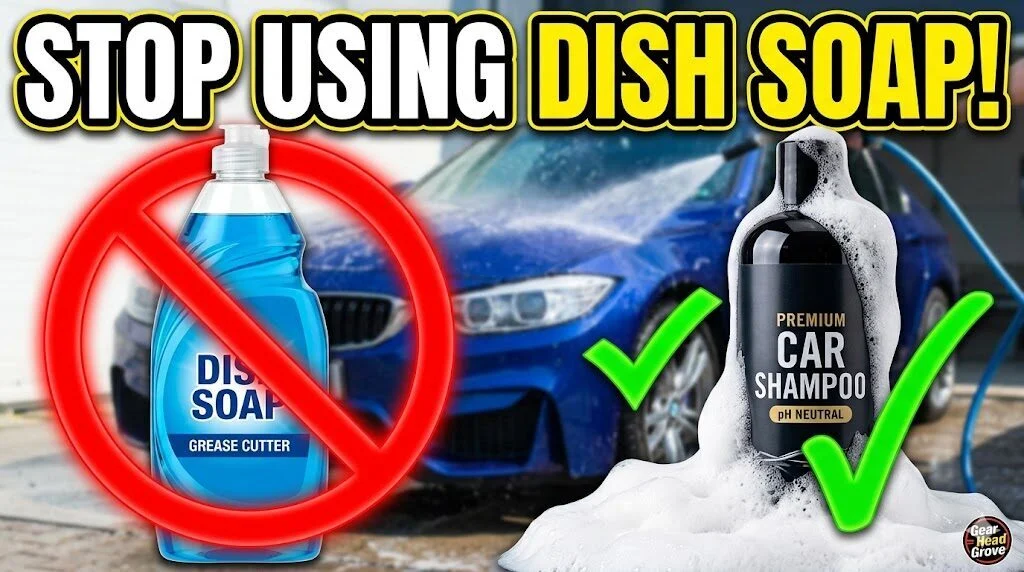
🚫 The Myth: “Dawn dish soap works great on cars.”
We get it, Bella—it cuts grease on pots, so it should cut road grime too, right? Unfortunately, dish soap is formulated to strip oils. On your car, that means it strips your wax coating, dries out rubber seals, and accelerates oxidation on older paint.
✅ Use Instead: A pH-neutral car shampoo
Costs $8–$15 and lasts 30+ washes. It cleans effectively while preserving your wax or sealant. Brands like Meguiar’s Gold Class or Chemical Guys Honeydew are great entry points.
Equipment List: Good, Better, Best
You don’t need to spend $200. Here’s what matters at each level:
🟡 The Basics (~$25)
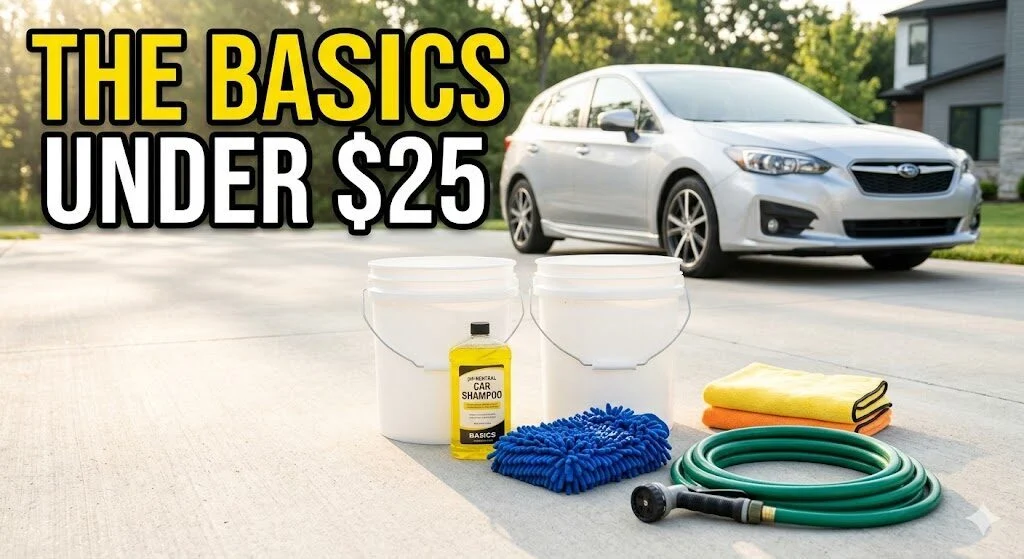
Good
- 2 buckets (any 5-gallon)
- pH-neutral car shampoo
- Microfiber wash mitt
- Garden hose with nozzle
- 2 microfiber drying towels
Perfect for Bella’s 45-minute Saturday wash
🟠 Enthusiast (~$60)
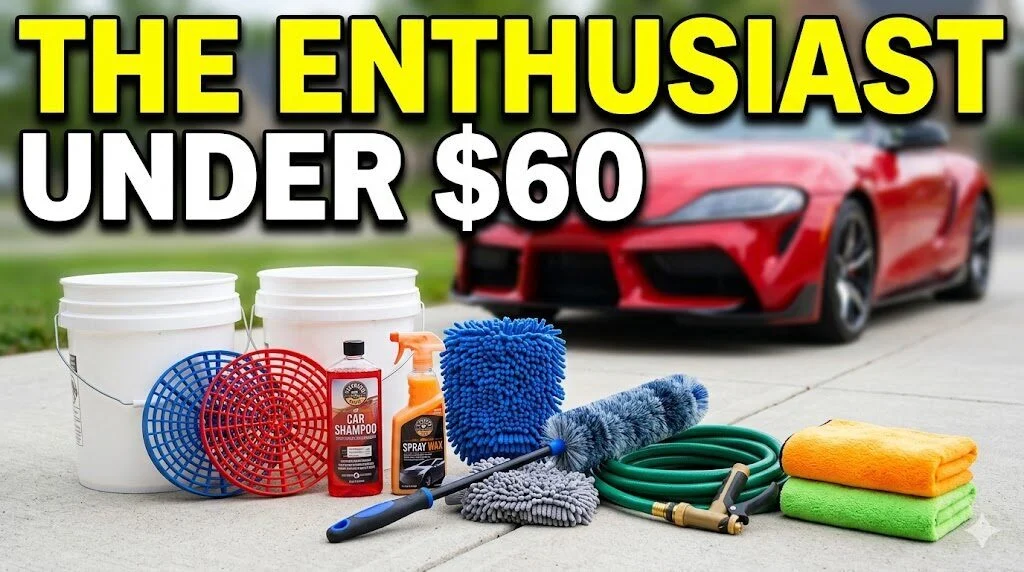
Better
- Everything above, plus:
- Grit guards for each bucket
- Dedicated wheel brush
- Spray wax (for after drying)
- Separate wheel mitt
Dan’s sweet spot — safe technique without overkill
🟢 Pro-Level (~$120+)
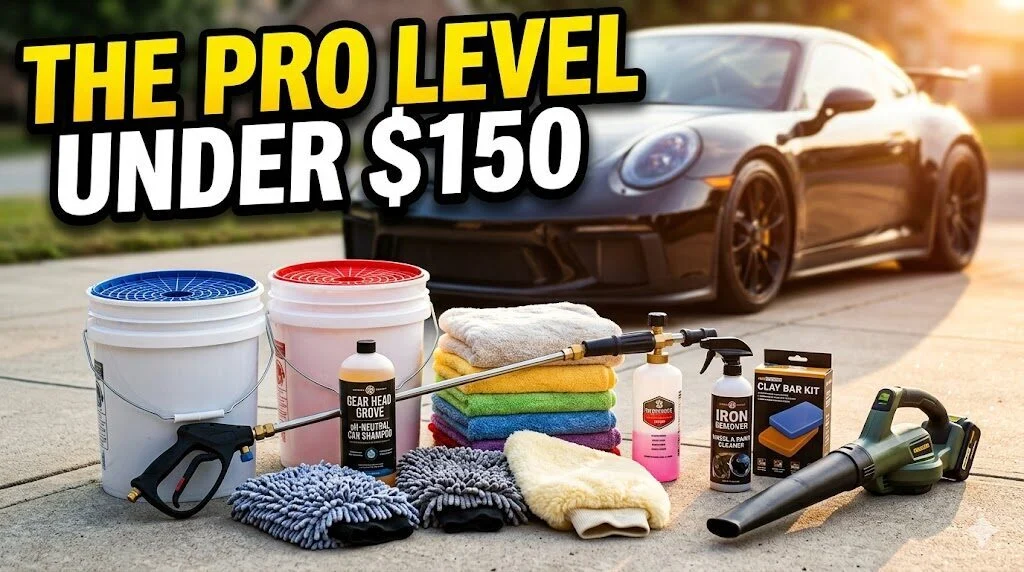
Best
- Everything above, plus:
- Foam cannon + pressure washer
- Iron remover (for wheels)
- Forced-air dryer/leaf blower
- Clay bar kit
Pete’s arsenal for pre-sale restoration
The Step-by-Step Process
Follow this exact order. Skipping steps or rearranging causes cross-contamination and scratches.
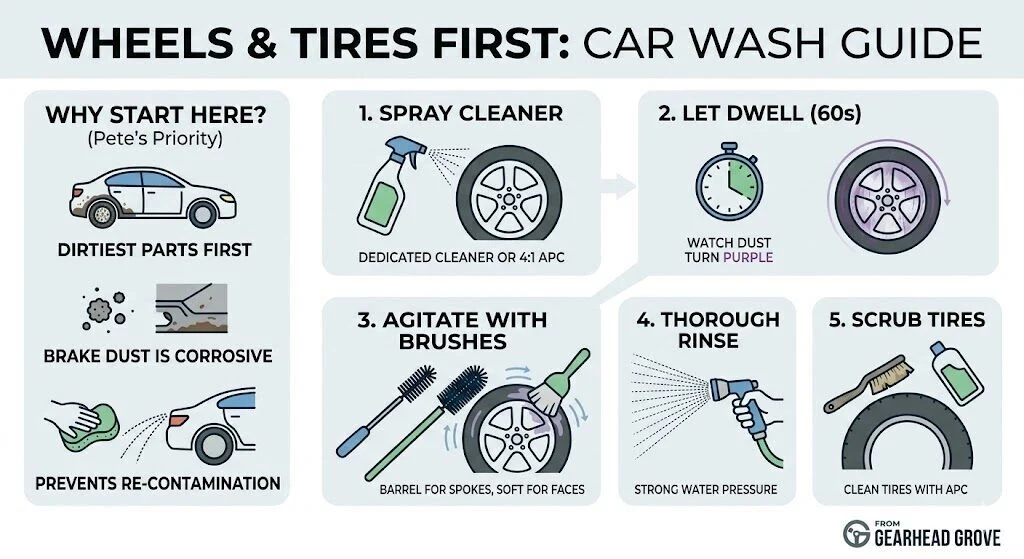
Wheels & Tires First
Pete’s Priority
Always start with the dirtiest part. Brake dust is corrosive and contains iron particles. If you wash the body first, dirty wheel spray will re-contaminate clean panels.
How to do it:
- Spray each wheel with a dedicated wheel cleaner (or all-purpose cleaner diluted 4:1)
- Let it dwell for 60 seconds — you’ll see brake dust turn purple with iron removers
- Agitate with a stiff wheel brush (barrel brush for spokes, soft brush for faces)
- Rinse thoroughly with strong water pressure
- Scrub tires with an old brush and all-purpose cleaner
Pre-Rinse the Entire Car
Bella’s Quick Win
A thorough rinse (or foam cannon pre-soak) removes loose dirt and sand. This single step prevents 80% of wash-induced scratches because you’re not dragging grit across paint with your mitt.
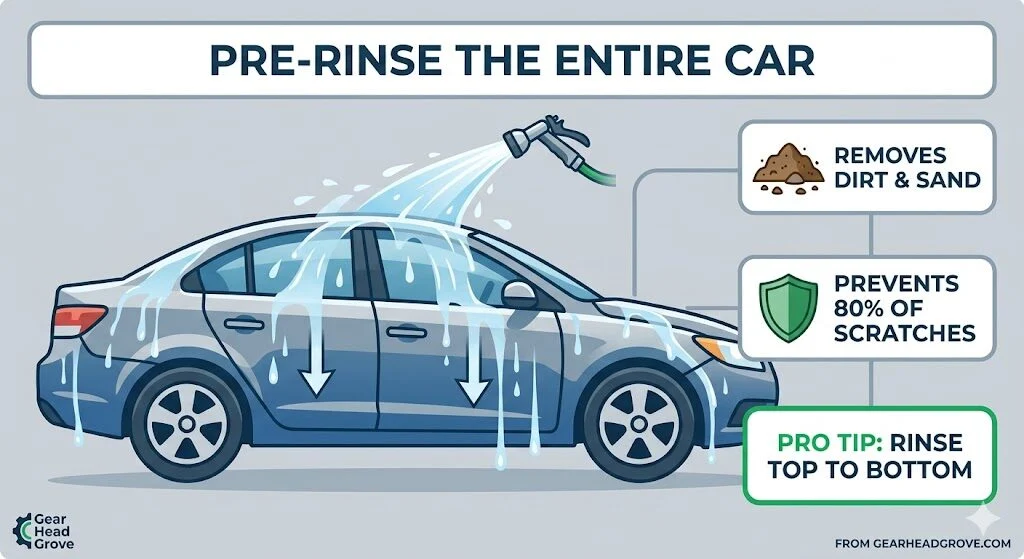
Pro tip: Rinse from top to bottom. Gravity is your friend—let water carry dirt downward.
Two-Bucket Wash (Top to Bottom)
Dan’s Core Technique
This is the heart of safe washing. One bucket has soapy water, the other has clean rinse water. After each panel, rinse your mitt in the clean bucket before reloading with soap.
The method:
- Dunk mitt in soap bucket, wash one panel (roof, hood, door, etc.)
- Rinse mitt in the clean-water bucket (rub against grit guard)
- Reload mitt with soap and move to next panel
- Work top-down: roof → glass → hood/trunk → upper sides → lower sides
- Use straight-line motions, never circles (circles create swirl marks)
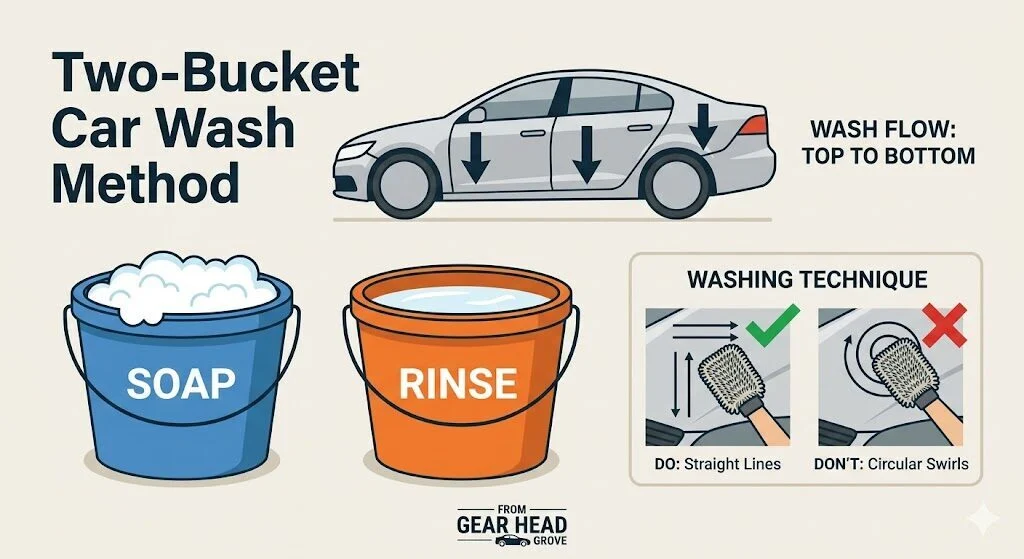
⚠️ Why top-down? The lower third of your car has the heaviest grime (road tar, mud, sand). Washing it first means your mitt picks up abrasives early, then drags them across cleaner upper panels.
Final Rinse
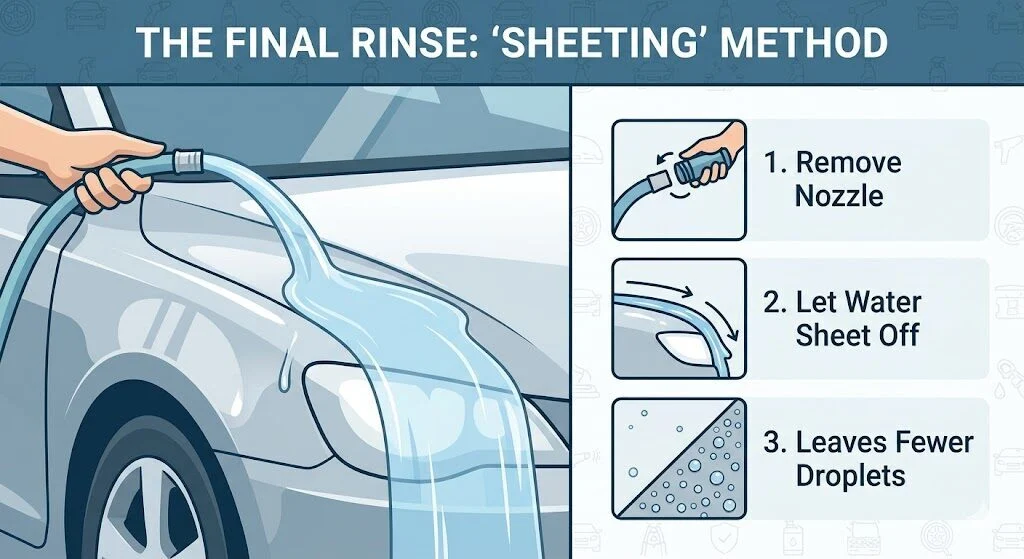
Remove all soap residue. If using a hose, remove the nozzle and let water “sheet” off the paint — this leaves fewer droplets and makes drying faster.
Drying: The #1 Missed Step
Pete’s Secret Weapon
Air drying = water spots. Old bath towels = scratches. The only safe option is a clean, plush microfiber drying towel (at least 400 GSM).
Proper technique:
- Blot, don’t drag. Lay the towel flat on a panel, press lightly, and lift.
- For large panels, gently pull the towel across in one direction (no circular wiping)
- Use a second, dry towel for final detail/buff
- Don’t forget door jambs, mirror caps, and fuel door
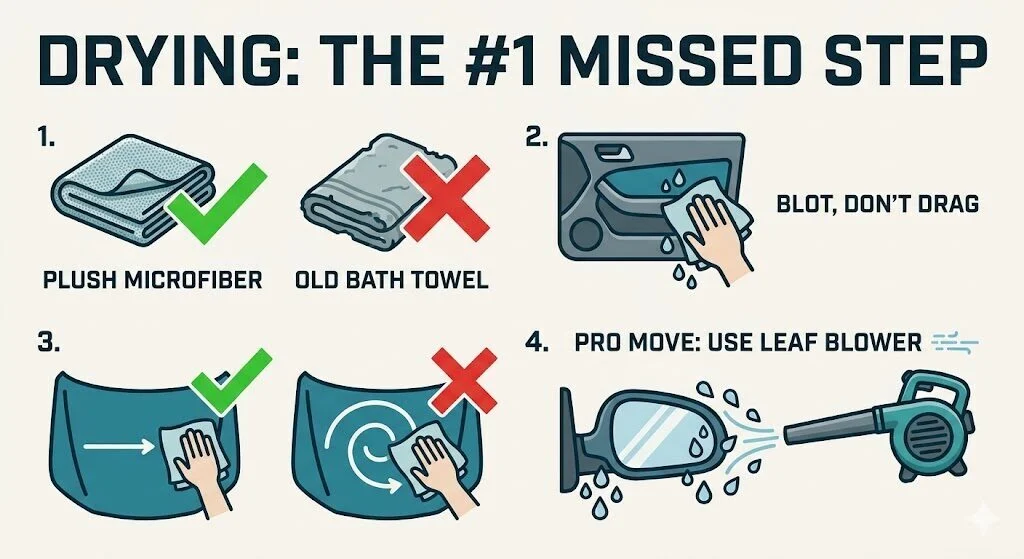
Pete’s pro move: A leaf blower on the “cool” setting pushes water out of crevices (mirrors, trim, emblems) that would otherwise drip later and leave spots.
Frequently Asked Questions
Can I wash my car in direct sunlight?
Avoid it if possible. Sunlight heats panels, causing soap and water to evaporate before you can rinse — leaving water spots and soap residue. Early morning, late afternoon, or a shaded spot is ideal. If you must wash in sun, work one panel at a time and rinse immediately.
How often should I wash my car?
Every 1–2 weeks for most climates. If you park under trees (sap, bird droppings) or live near the coast (salt spray), weekly is better. Contamination left on paint for days can etch into the clear coat permanently.
Is a pressure washer necessary?
No — a standard garden hose works fine for most washes. A pressure washer is a “nice to have” for the pre-rinse step and for foam cannons, but it’s not essential. If you do use one, keep it at 1200–1900 PSI max and maintain 12+ inches from the paint.
What about waterless wash products?
Waterless washes are great for lightly dusty cars (like Bella’s mid-week touch-up). They’re NOT suitable for heavily soiled vehicles — you need water to safely flush away grit before touching the paint. Use them only when your car has light dust, not caked mud or sand.