
Stop masking bad smells. Learn how to eliminate odors at the source for under $30 — no detailer needed.
If you’ve ever opened your car door and been hit by a wall of stale, unidentifiable funk, you’re not alone. Americans spend an average of 51 minutes per day in their vehicles — eating, sweating, hauling groceries, and shuttling pets. Your car’s cloth seats and carpet are basically giant sponges absorbing every odor molecule they encounter.
I’ve been detailing cars professionally since 2014, and the number-one mistake I see is people trying to cover smells instead of eliminating them. That pine tree dangling from your mirror? It’s doing nothing. In this guide, I’ll walk you through the exact process I use on client vehicles — adapted so you can do it in your driveway for under $30.
Why Cheap Air Fresheners Don’t Work
Standard vent clips and cardboard tree fresheners use fragrance oils to overlay a pleasant scent on top of existing odors. The problem? The bacteria, mold spores, and organic residue causing the smell are still there, multiplying. Within 48 hours the masking scent fades and you’re back to square one — or worse, you get a nauseating cocktail of “vanilla meets week-old gym socks.”
💡 Pro Tip: If you can still smell the bad odor underneath your air freshener, you haven’t cleaned — you’ve just added another layer. Always eliminate first, freshen second.
The 5-Step Odor Elimination Checklist
Follow this exact sequence. Skipping steps is why most DIY attempts fail — you can’t deodorize fabric that’s still full of crumbs and spilled coffee.
Step 1: Full Trash Removal & Declutter
Remove everything from your car — floor mats, seat covers, items in the trunk, contents of door pockets. Check under seats where french fries go to die. You’d be surprised how often a single forgotten apple core or leaking fast-food bag is the entire source of a car’s smell.
Step 2: Thorough Vacuuming
Use a shop vac or a powerful cordless vacuum with a crevice attachment. Hit every seam in the seats, the gap between the console and seats, under the pedals, and the trunk carpet. Pet hair? Use a rubber glove or squeegee first to lift it from fabric before vacuuming. This step alone removes 60% of trapped odor particles.
Step 3: Wipe All Hard Surfaces
Mix a solution of warm water and a few drops of dish soap. Wipe down the dashboard, steering wheel, center console, door panels, and cup holders. Bacteria film builds up on these surfaces and contributes to that “stale” smell. For stubborn grime in cup holders, use an old toothbrush.
Step 4: Deep-Clean Fabric Seats & Carpet
For cloth seats, spray a fabric-safe enzyme cleaner (like Chemical Guys Lightning Fast or Folex) directly on stained and smelly areas. Work it in with a soft brush using circular motions, then blot with microfiber towels. For overall freshening, sprinkle baking soda liberally on all fabric surfaces, let sit for 30 minutes, then vacuum thoroughly.
Step 5: Treat the AC & Ventilation System
Turn your car on, set AC to maximum with recirculation OFF (fresh air mode). Spray a disinfectant like Ozium or Lysol into the exterior air intake (usually at the base of the windshield). Let it run for 5 minutes. This kills mold and bacteria living inside your evaporator coils — the source of that “dirty socks” smell from your vents.
The $15 Secret: Your Cabin Air Filter
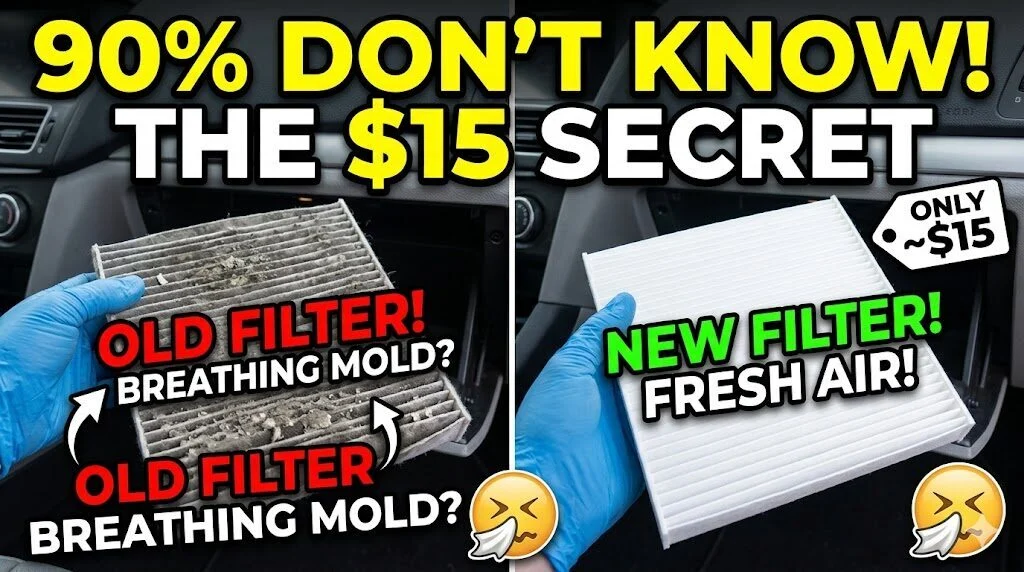
Here’s the tip that 90% of car owners don’t know: your vehicle has a cabin air filter, usually located behind the glovebox, that filters all air entering the passenger compartment. When this filter gets clogged with dust, pollen, and moisture, it becomes a breeding ground for mold — and every time you turn on your AC, you’re blowing that musty air directly into your face.
Replacement is dead simple (YouTube your car’s year/make/model + “cabin air filter replacement” — it’s usually 4 clips and 2 minutes). A new filter costs $12–$20 at AutoZone or Walmart. I recommend replacing it every 15,000 miles or once a year, whichever comes first. If you have allergies or live in a dusty area, go every 10,000 miles.
Targeted Solutions by Odor Type
🍟 The Drive-Thru Spill (Grease & Old Food)
Grease is hydrophobic, so water alone won’t cut it. Use a degreasing all-purpose cleaner (diluted Simple Green works great) on the affected area. Spray, let dwell for 2 minutes, agitate with a brush, and extract with towels. Follow up with baking soda overnight to absorb residual grease odor molecules.
🐕 The Wet Dog (Pet Dander in Carpets)
Pet odor is protein-based, which means you need an enzyme cleaner — not just soap. Spray an enzyme-based product (Nature’s Miracle or Rocco & Roxie) heavily on carpet and seat fabric where your pet sits. Enzymes literally eat the odor-causing proteins. Let it air dry completely with windows cracked. For ongoing prevention, use a waterproof seat cover.
💪 The Gym Bag (Sweat Trapped in Seat Fabric)
Body odor embeds deep in cloth seat foam. Mix one part white vinegar with two parts water in a spray bottle. Mist the seat backs and bottoms (where your body contacts the fabric), then let air dry with windows open. Vinegar neutralizes the alkaline compounds in sweat. The vinegar smell dissipates within an hour, taking the body odor with it.
❄️ The Musty AC (Mildew in the Ventilation System)
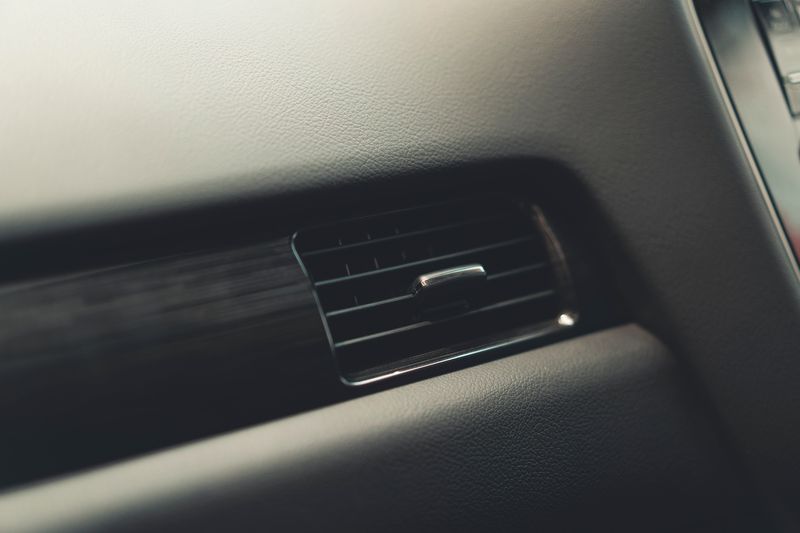
That vinegar or dirty-sock smell from your AC is caused by mold on the evaporator coil. Beyond the Ozium spray trick in Step 5, try running your AC on heat for 10 minutes after every drive to dry out the evaporator. For severe cases, use a Meguiar’s Whole Car Air Re-Fresher bomb: close all windows, set AC to recirculate on max, activate the can, exit the car for 15 minutes, then air out.
DIY Kitchen Hacks That Actually Work
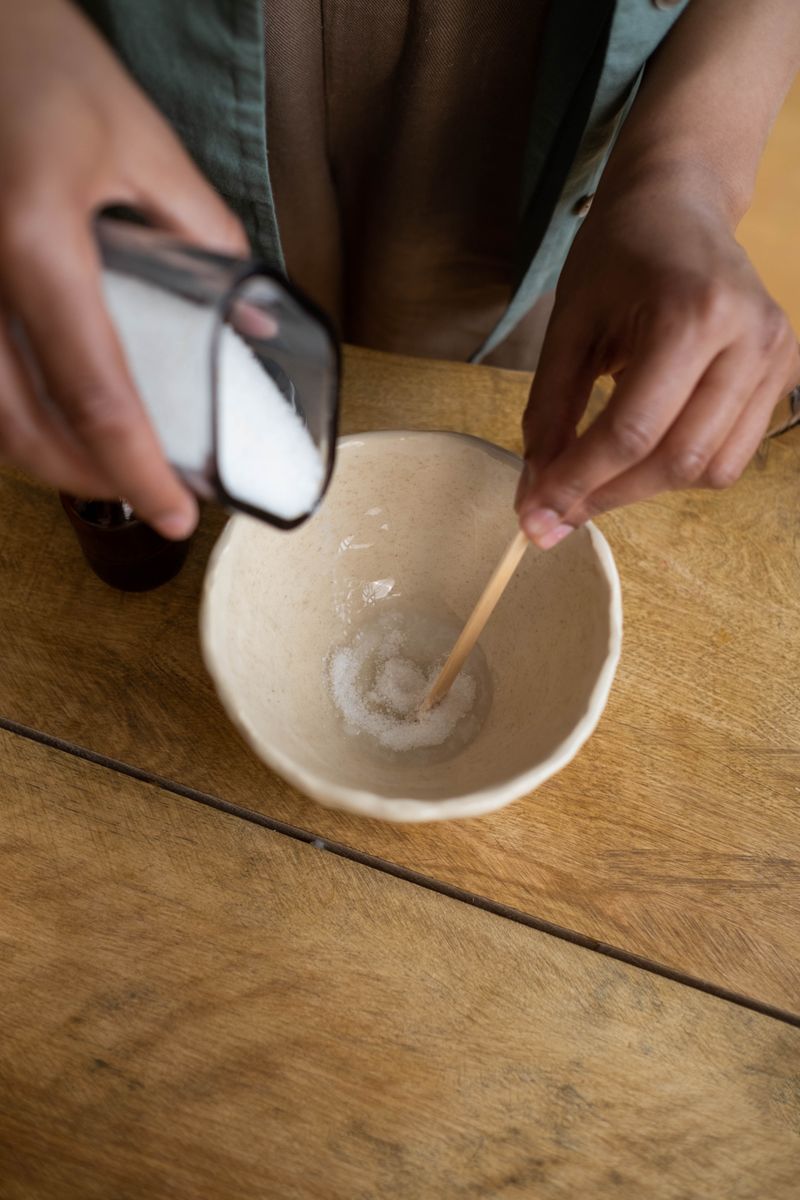
Baking Soda Overnight: Sprinkle a generous layer on all fabric surfaces before bed. It absorbs odor molecules (not just masks them). Vacuum in the morning. For concentrated areas, leave an open bowl of baking soda under the seat for 24–48 hours.
Other proven kitchen methods: Place a bowl of white vinegar on the floor overnight (absorbs smoke and cooking smells). Stuff dryer sheets under seats for a mild fresh scent between cleanings. Activated charcoal bags ($8 on Amazon) work like baking soda but last 2 years — just recharge them in sunlight monthly.
Recommended Products (Available at Walmart, AutoZone & Amazon)
If DIY methods aren’t enough, these are the professional-grade products I use on client cars. All are available for under $15 each at major US retailers.
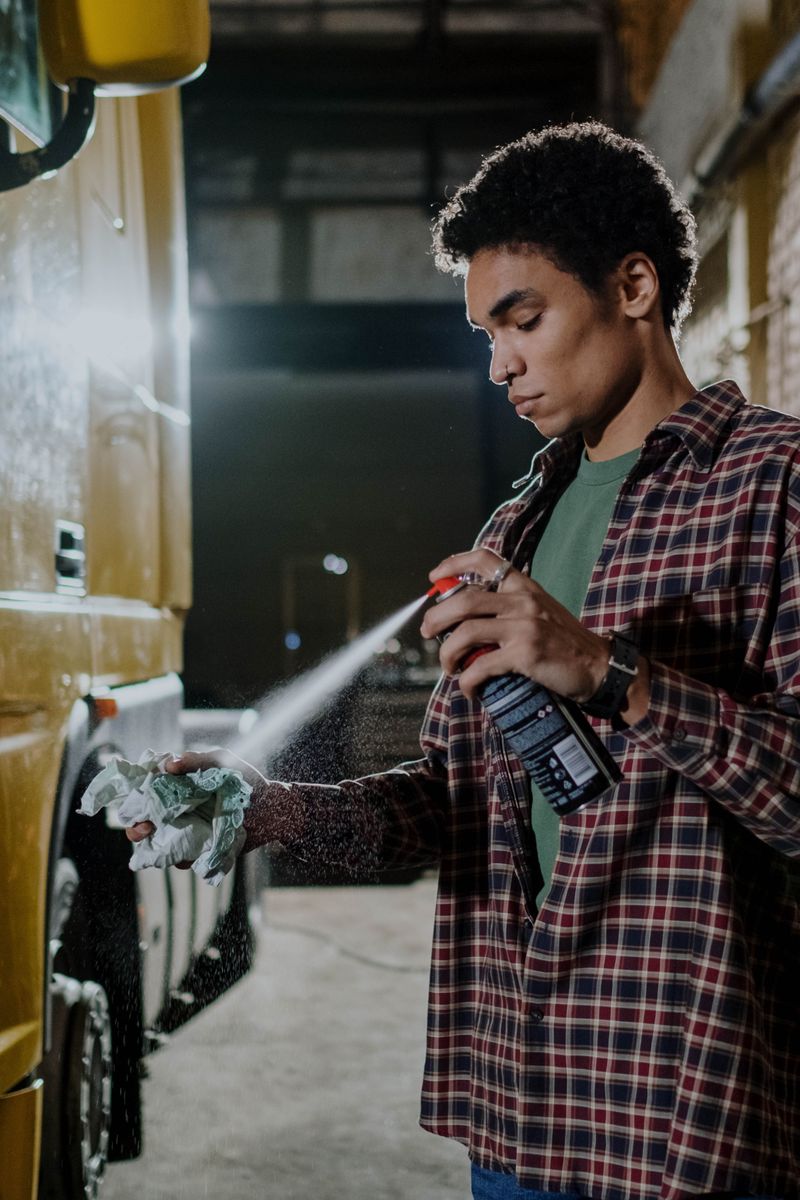
Ozium Air Sanitizer
The gold standard for smoke and general odor elimination. Clinically proven glycol-based formula that actually reduces airborne bacteria. One 3-second spray treats an entire car cabin. ~$5 at Walmart.
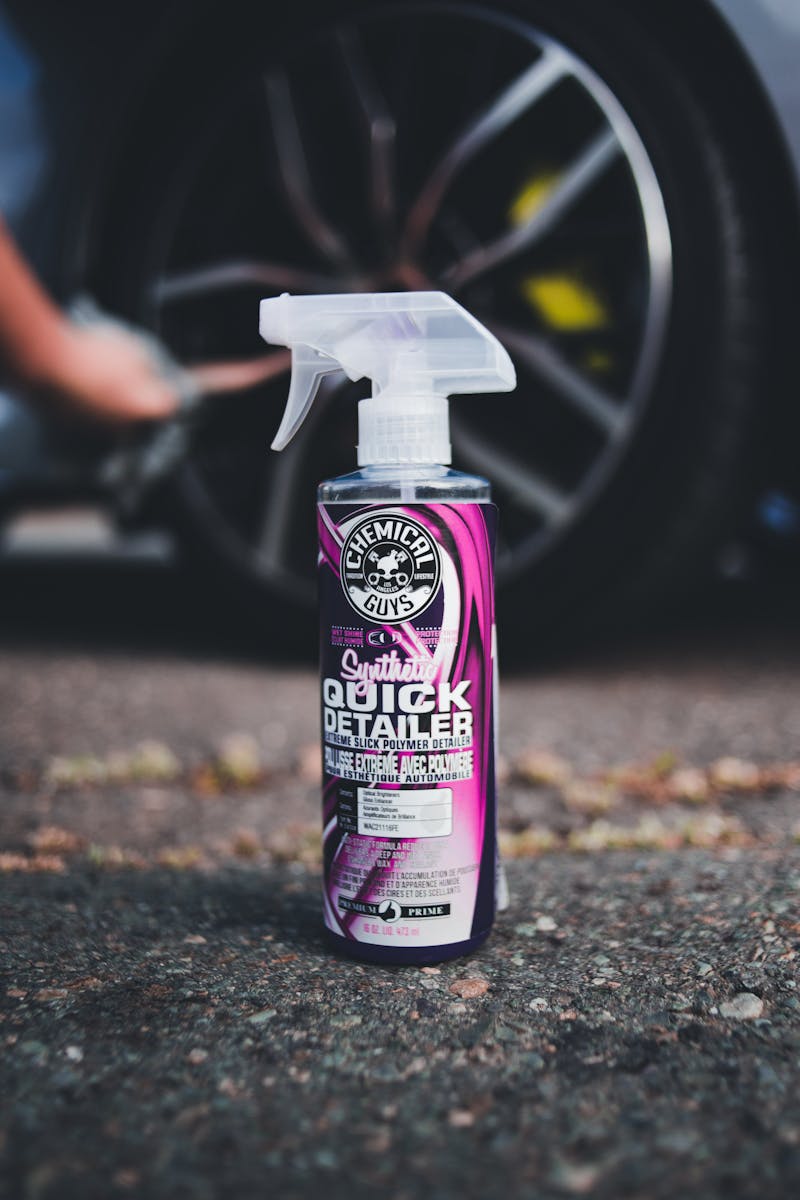
Meguiar’s Whole Car Air Re-Fresher
An aerosol ‘bomb’ that circulates through your entire HVAC system, killing odor-causing mold and bacteria inside the vents and evaporator. Set it and forget it for 15 minutes. ~$10 at AutoZone.