

Everything you need to know about flat tire repair — from roadside emergency steps to professional patch-and-plug methods, repair costs, and finding a tire shop fix near you.
🟢 Quick Answer: Can a Tire Shop Fix Your Flat?
Yes — most tire shops can permanently repair a flat tire in 30–45 minutes if the puncture is in the tread area, smaller than ¼ inch, and hasn’t caused internal damage. The industry-standard fix is a combination patch-and-plug, which costs $20–$40 at most shops. Discount Tire offers this service free, even for tires purchased elsewhere.
Can a Tire Shop Fix Your Flat Tire?
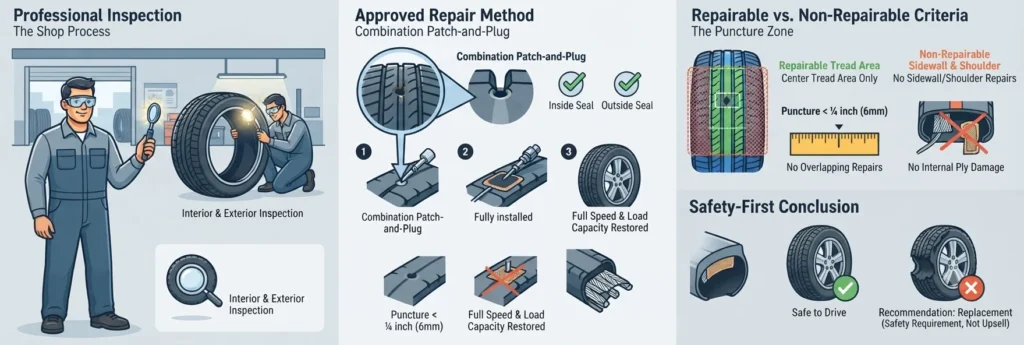
A professional tire shop fix is the safest and most reliable way to handle a punctured tire. When you bring a flat tire to a qualified shop, technicians remove the tire from the rim, inspect both the interior and exterior for damage, and apply an industry-approved combination patch-and-plug repair if the puncture meets safety criteria. This tire repair method seals the puncture from both inside and outside, restoring the tire to its full speed rating and load capacity.
Not every flat tire can be saved. A tire shop fix is only appropriate when the puncture is located in the repairable tread area, is no larger than ¼ inch (6mm) in diameter, doesn’t overlap a previous repair, and hasn’t caused structural damage to the internal plies. If any of these conditions aren’t met, the technician will recommend replacement — this isn’t an upsell, it’s a safety requirement.
What to Do Immediately After Getting a Flat Tire
Your first priority with a flat tire is safety — not repair. Follow these steps before attempting any fix:
- Turn on hazard lights immediately and reduce speed gradually — do not brake suddenly.
- Pull to the far right shoulder or nearest safe, flat surface away from traffic.
- Apply the parking brake and place wheel wedges (or rocks) behind the opposite tires.
- Do NOT remove a nail or screw — it’s actually helping seal the puncture and slowing air loss.
- Decide: install the spare tire, use a tire repair kit temporarily, or call roadside assistance.
⚠️ Safety Warning: Never attempt a tire repair on a busy highway shoulder. If you cannot safely exit the vehicle, stay belted inside with hazards on and call for assistance. A flat tire is not worth risking your life in traffic.
How to Tell Whether Your Tire Can Be Repaired
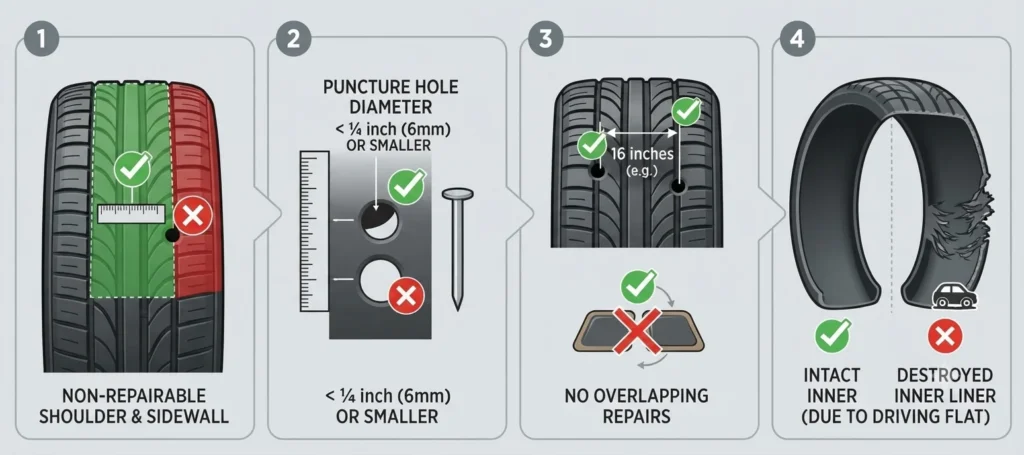
Before driving to a tire shop fix appointment, here’s how to assess whether your puncture flat tire is likely repairable. A professional inspection is always needed to confirm, but these criteria will help set your expectations:
- Puncture is in the center tread area (not the shoulder or sidewall)
- Hole diameter is ¼ inch (6mm) or smaller — roughly the size of a standard nail or screw
- No previous repair exists within 16 inches of the new puncture, and repairs don’t overlap
- The tire wasn’t driven flat for an extended distance (which destroys the inner liner)
If your tire meets all four criteria, a tire shop fix using the patch-and-plug method is likely possible. If you’re unsure, most shops offer free inspections — Discount Tire, for example, will inspect any tire at no charge regardless of where it was purchased.
Repairable Tread Area vs. Shoulder and Sidewall Damage
The single most important factor in flat tire repair is puncture location. The repairable area is limited to the central tread zone — the portion of the tire that makes direct contact with the road. This area has multiple reinforcing belts beneath the rubber that can safely hold a patch-and-plug repair at highway speeds. The shoulder (where tread curves into sidewall) and sidewall itself flex constantly during driving, making patches unreliable and potentially dangerous in these zones.
A sidewall puncture cannot be safely patched — the sidewall flexes thousands of times per mile, and no repair material can maintain a reliable seal under that stress. If your puncture is in the sidewall or shoulder, replacement is the only safe option. This isn’t a tire shop trying to upsell you; it’s a fundamental limitation of tire construction and repair materials.
Tire Patch vs. Tire Plug vs. Patch-and-Plug: Which Repair Is Best?
Understanding how to patch a tire versus plugging one helps you make informed decisions at the repair shop. Here’s how the three main tire repair methods compare:
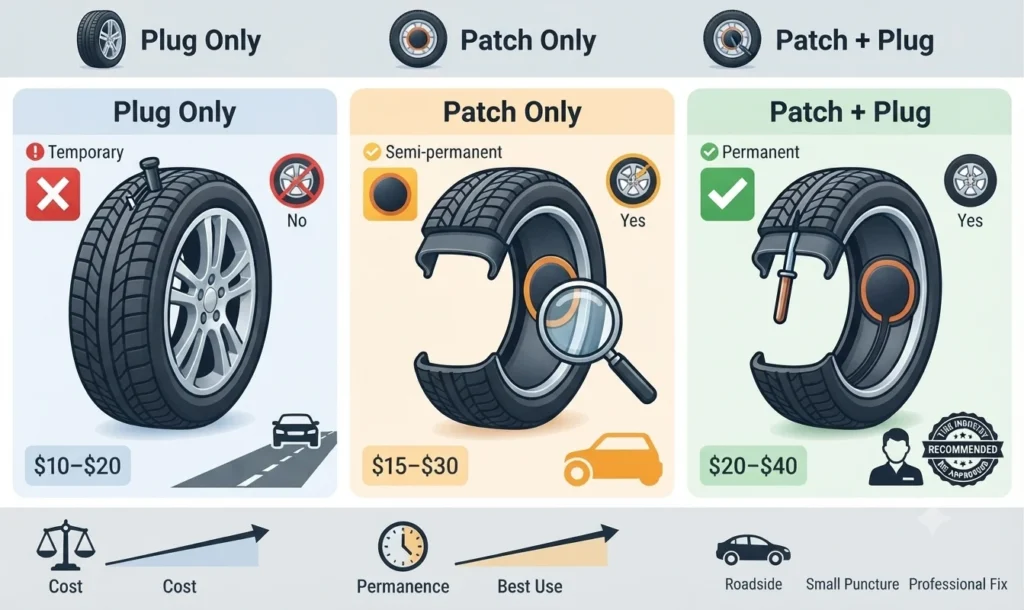
| Method | Permanent? | Tire Removed? | Cost | Best For |
|---|---|---|---|---|
| Plug Only | Temporary | No | $10–$20 | Emergency roadside |
| Patch Only | Semi-permanent | Yes | $15–$30 | Small tread punctures |
| Patch + Plug | Permanent | Yes | $20–$40 | Industry-recommended fix |
The U.S. Tire Manufacturers Association (USTMA) and all major tire manufacturers recommend the combination patch-and-plug as the only acceptable permanent repair. A plug-only repair seals the puncture channel from outside but doesn’t address potential inner liner damage. A patch-only repair covers the inner surface but doesn’t fill the puncture hole. The combination method does both — the plug fills the wound while the patch seals the inner liner, creating a permanent, air-tight repair rated for the tire’s full speed and load specifications.
How a Professional Tire Shop Fixes a Puncture (Step-by-Step)
When you bring your flat tire to a professional tire shop fix service, here’s what happens during a proper repair:
- The tire is removed from the wheel completely — a proper repair is never done with the tire still mounted.
- The interior is thoroughly inspected for hidden damage, previous repairs, and structural integrity.
- The puncture area is cleaned, buffed, and prepared with vulcanizing cement.
- A combination patch-and-plug unit is pulled through the puncture from inside, sealing both surfaces.
- The tire is remounted, balanced, inflated to spec, and tested for leaks before returning to your vehicle.
This process typically takes 30–45 minutes. Discount Tire’s published 18-step process follows this same methodology and includes a final quality inspection. Any shop that offers to plug your tire without removing it from the rim is performing a temporary emergency repair, not a permanent tire shop fix.
How to Use a Tire Repair Kit (Temporary Emergency Fix)
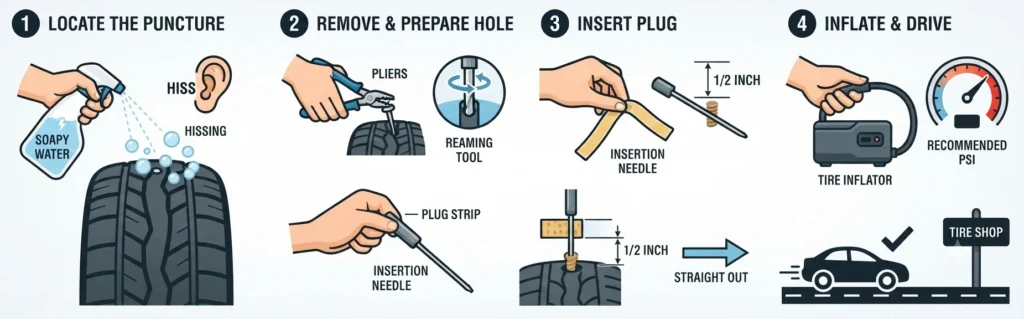
A tire repair kit can get you to the nearest tire shop — but it is not a permanent solution. Most kits include either plug strips with an insertion tool, or a can of sealant with a built-in inflator. Here’s how to fix a flat tire temporarily with a plug-style kit:
- Locate the puncture (listen for hissing or spray soapy water on the tread to find bubbles).
- Remove the nail/screw with pliers, then immediately insert the reaming tool to clean and enlarge the hole.
- Thread a plug strip through the insertion needle, push it into the hole until ½ inch protrudes, then pull the tool straight out.
- Inflate the tire to the recommended PSI and drive directly to a tire shop for a proper patch-and-plug repair.
⚠️ Important: A tire repair kit provides a temporary fix only. Drive no faster than 50 mph and no farther than 50 miles before getting a professional tire shop fix. Sealant-type kits may also damage your TPMS sensor — inform the technician if you used one.
When a Flat Tire Must Be Replaced (Not Repaired)
Some flat tire damage is beyond repair. A tire must be replaced — not patched — in these situations:
- Puncture is in the sidewall or shoulder area (outside the repairable tread zone)
- Puncture diameter exceeds ¼ inch (6mm)
- The tire was driven flat, causing internal heat damage and delamination of the inner liner
- A previous repair exists too close to the new puncture (within 16 inches or overlapping)
- Remaining tread depth is below 2/32″ — the tire is already at end-of-life regardless of the puncture
How Much Does Flat Tire Repair Cost?
Professional flat tire repair typically costs between $20 and $40 for a combination patch-and-plug at most independent tire shops and national chains. Some shops — notably Discount Tire — offer free flat tire repair regardless of where you purchased the tire. Costs vary by region and shop, but tire repair is significantly less expensive than replacement ($100–$300+ per tire).
If you’re quoted more than $50 for a single tire repair, ask for an itemized breakdown. Legitimate additional charges may include tire balancing ($15–$25), valve stem replacement ($5–$10), or TPMS sensor service ($10–$25 if sealant was used). But the patch-and-plug itself should rarely exceed $40 at any reputable tire shop fix service.
Does Discount Tire Repair Flat Tires? (Free Service)
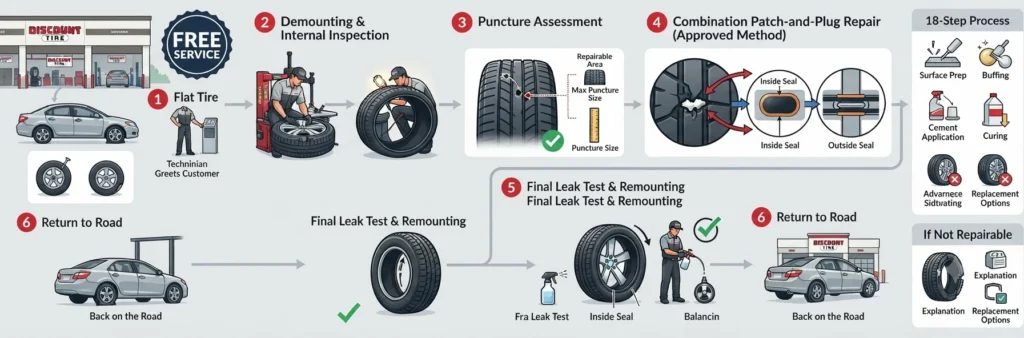
Yes. Discount Tire (America’s largest independent tire retailer) offers free flat tire inspection and free tire repair for punctures that meet their repair criteria — even if you purchased the tire elsewhere. Their approved method is the combination patch-and-plug repair performed only after the tire is demounted and internally inspected. Walk-ins are typically accepted, though wait times vary by location.
If the tire cannot be safely repaired, Discount Tire will explain why and provide replacement options. Their technicians follow a published 18-step repair process that includes internal inspection, proper surface preparation, and final leak testing. Search “Discount Tire tire repair” or visit discounttire.com to find your nearest location and check current hours.
How to Find Flat Tire Repair Near You
When you need a tire shop fix quickly, here are the fastest ways to locate tyre repair near me (or tire repair near me in American English):
- Search Google Maps for “tire plug near me” or “flat tire repair near me” — results show ratings, hours, and distance.
- National chains with widespread locations include Discount Tire, Firestone Complete Auto Care, Goodyear Auto Service, and Walmart Auto Care.
- Call ahead to confirm the shop does tire repair (not just sales) and ask if walk-ins are accepted or if an appointment is needed.
Common Mistakes to Avoid When Fixing a Flat Tire
These errors can turn a simple puncture into an expensive replacement or a dangerous blowout:
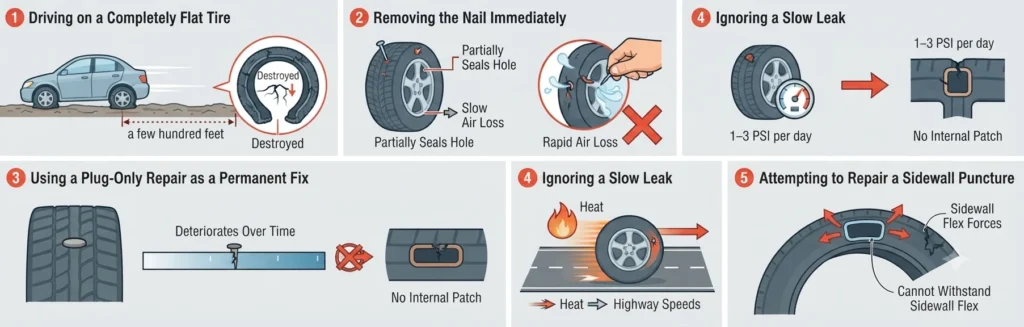
- Driving on a completely flat tire — even a few hundred feet destroys the inner liner and sidewalls.
- Removing the nail immediately — leave it in place, as it partially seals the hole and slows air loss.
- Using a plug-only repair as a permanent fix — plugs deteriorate over time without an internal patch.
- Ignoring a slow leak — a tire losing 1–3 PSI per day has a puncture that will worsen under heat and highway speeds.
- Attempting to repair a sidewall puncture — no adhesive or patch can safely withstand sidewall flex forces.
Frequently Asked Questions: Tire Shop Fix & Flat Tire Repair
Can I drive on a flat tire to reach a tire shop?
Only if the tire still holds some air (a slow leak, not completely flat). Drive no faster than 20 mph, use hazard lights, and keep the distance under 1–2 miles. Driving on a completely flat tire destroys the inner structure within seconds and makes the tire unrepairable. If the tire is fully deflated, install the spare or call for assistance.
How long does a tire patch last?
A properly applied combination patch-and-plug repair is considered permanent and will last the remaining life of the tire. It’s rated for the tire’s full speed and load capacity. You can safely drive on a patched tire at highway speeds indefinitely — the repair is as strong as the surrounding rubber when done correctly.
Should I remove the nail from my tire before going to the shop?
No — leave it in. The nail or screw is partially sealing the puncture. Removing it allows air to escape much faster, potentially making the tire undrivable before you reach the shop. The technician will remove it during the repair process after the tire is demounted.
Can a tire be patched more than once?
Yes, but with strict limitations. A second repair is acceptable only if it doesn’t overlap or come within 16 inches of an existing repair, is still within the repairable tread area, and the tire hasn’t suffered internal damage from the first puncture. Most shops limit repairs to two per tire lifetime as a safety measure.
Is a tire repair kit safe to use?
A tire repair kit is safe as a temporary emergency measure — it can get you off the roadside and to a tire shop. However, it is NOT a permanent fix. Plug-style kits don’t seal the inner liner, and sealant kits may damage your TPMS sensor. Always follow up with a professional tire shop fix within 50 miles or 24 hours.
How much does Discount Tire charge for flat tire repair?
Discount Tire offers free flat tire repair for punctures that meet their safety criteria — regardless of where the tire was purchased. There’s no charge for the inspection or the repair itself. If the tire is unrepairable, they’ll explain the damage and provide replacement quotes. No appointment is typically needed; most locations accept walk-ins.
Final Safety Recommendation
A puncture flat tire is stressful, but most tread punctures are safely and affordably repairable at any qualified tire shop. The key decisions are simple: if the tire holds some air and the puncture is in the tread, drive carefully to the nearest tire shop fix service. If the tire is completely flat or the damage is in the sidewall, install your spare or call roadside assistance — never drive on a destroyed tire.
Keep a tire repair kit in your vehicle for emergencies, know your nearest tire shop locations, and remember that a professional patch-and-plug repair restores your tire to full safety. When in doubt, get a free inspection at Discount Tire or your preferred local shop. Your safety on the road is always worth a 30-minute stop.