A key that will not come out is often linked to the steering lock, the shifter position, or a worn ignition cylinder. Learn the safe checks to try before you call for help, and the signs that mean it is time to stop forcing it.
A key stuck in the ignition is frustrating, but it is usually a mechanical interlock or alignment problem—not a reason to force the key. In many vehicles, the key can only be removed when the ignition is fully in the LOCK position and the automatic transmission confirms that it is in PARK.
Quick answer: how do you get a stuck key out of the ignition?
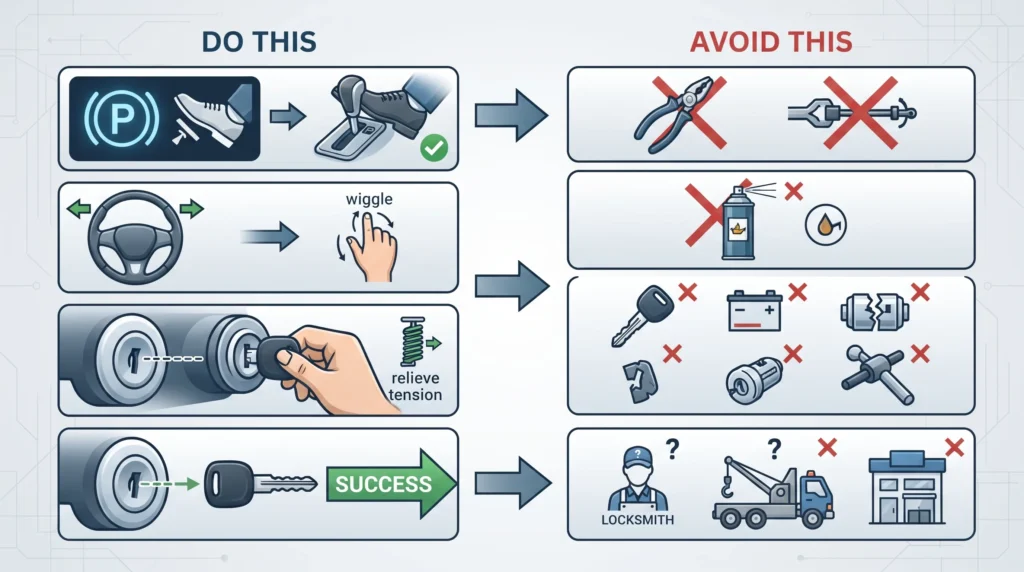
Start by making sure the vehicle is safely parked. Hold the brake, move the shifter firmly into PARK, then gently wiggle the steering wheel left and right while turning the key fully back toward LOCK. Keep the pressure light: the goal is to relieve tension, not overpower the mechanism.
If the key still will not release, avoid pliers, heavy pulling, or spraying random lubricants into the ignition. A worn key, faulty park-position switch, weak battery, damaged ignition cylinder, or steering-lock issue may need a locksmith, roadside service, or qualified repair shop.
Safe steps to try before calling for assistance
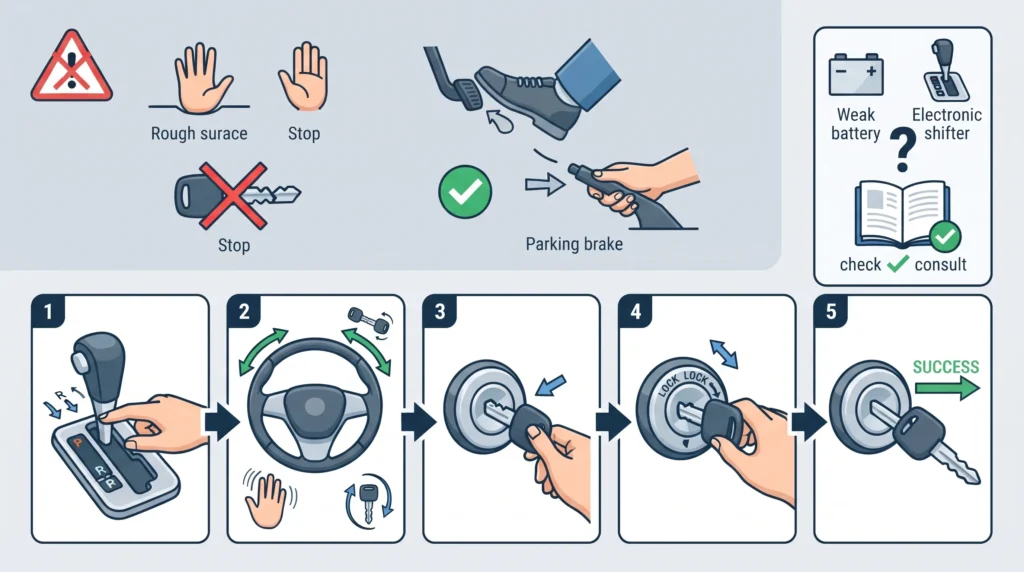
Try these checks in order. Stop if you feel grinding, unusual looseness, sharp resistance, or a key that appears bent or cracked.
A careful release sequence
- Apply the parking brake and press the foot brake so the vehicle remains secure.
- Move the shifter firmly into PARK. If it already appears to be in PARK, hold the brake and move it slightly toward REVERSE, then back into PARK.
- Turn the steering wheel gently in both directions. Keep slight pressure in the direction where it moves while rotating the key back toward LOCK.
- Push the key in very slightly, then rotate it gently toward the OFF or LOCK position before pulling it straight out.
- If your vehicle has a weak battery or electronic shifter, consult the owner’s manual for its key-release or shift-lock procedure rather than guessing.
Why a key gets stuck in the ignition
The ignition, steering column, and transmission interlock work together. A small mismatch between those systems can prevent the cylinder from reaching its key-release position. Mechanical wear becomes more likely as keys and lock cylinders age.
What the symptom may be telling you
The way the key behaves can help narrow down the issue. These clues are useful starting points, but vehicle-specific diagnosis is still important before replacing parts.
| Likely cause | Typical clue | First check |
|---|---|---|
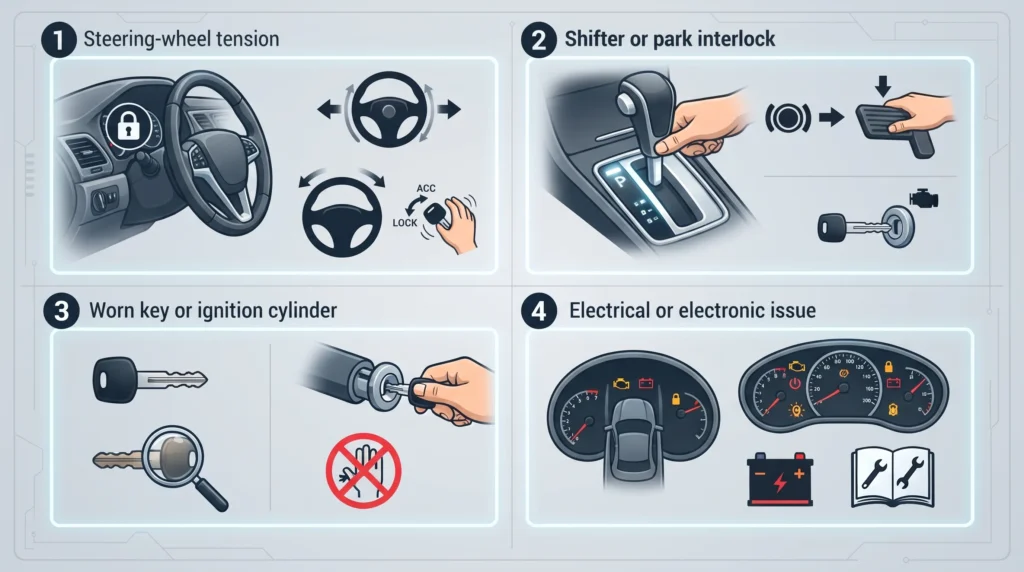
| Steering-wheel tension | The wheel is locked or pushes firmly against one side while the key will not turn back. | Gently move the wheel while turning the key toward LOCK. |
| Shifter or park interlock | The key will not come out even though the engine is off and the wheel is free. | Press the brake and reseat the shifter firmly in PARK. |
| Worn key or ignition cylinder | The key feels sticky, needs repeated jiggling, or has been difficult to turn for weeks. | Try a lightly used spare key if available; do not force either key. |
| Electrical or electronic issue | Other electrical functions are weak, warning lights behave oddly, or the shifter will not respond normally. | Check the battery condition and use the owner’s manual release procedure. |
Repair options and how to prevent it happening again
A repair depends on the confirmed cause. A simple adjustment to the shifter linkage or park-position switch may solve the problem. A worn ignition cylinder, damaged key, or steering-column component can require parts replacement and key programming, depending on the vehicle.
If the key eventually comes out, do not assume the problem is gone if it returns. Intermittent sticking is often an early warning that the lock cylinder or interlock system is wearing. Arrange an inspection before the key becomes trapped away from home.
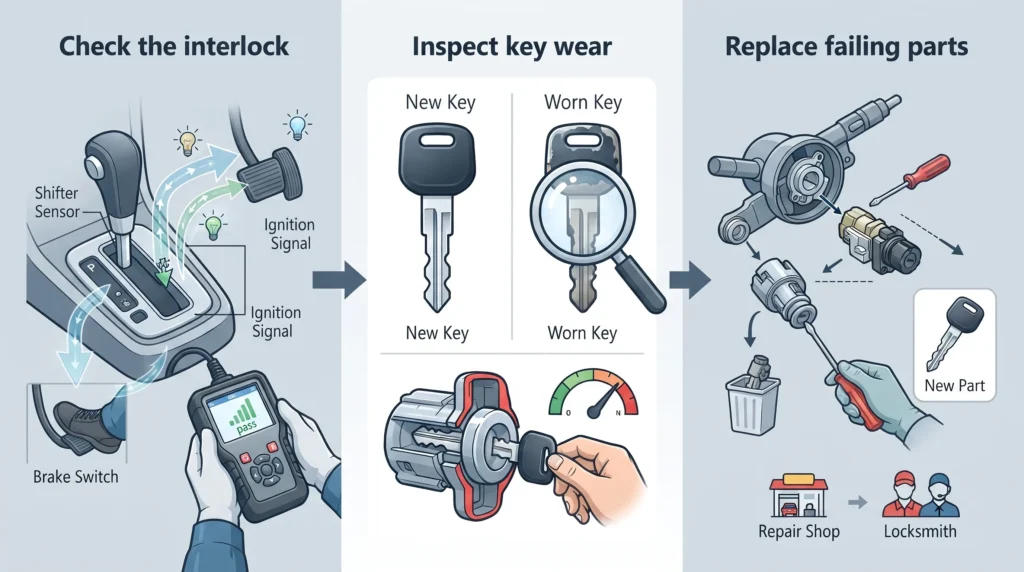
Check the interlock
A technician can test whether the shifter and park-position signal are reaching the ignition release system.
Inspect key wear
A fresh correctly cut key can sometimes improve a worn-key problem before cylinder damage becomes worse.
Replace failing parts
A locksmith or repair shop can replace a worn cylinder, damaged key, switch, or related column component.
Key stuck in ignition FAQs
Can a dead battery cause a key to get stuck in the ignition?
It can on some vehicles, especially those with electronically controlled shifters or ignition interlocks. A low battery may prevent systems from recognizing PARK or completing a normal shutdown. Check the owner’s manual for the correct release procedure rather than forcing the key.
Why will my key not come out even though the car is in PARK?
The shifter may look like it is in PARK without fully activating the park-position switch. Hold the brake, reseat the shifter in PARK, and try again. If that does not help, the linkage, switch, or ignition interlock may need service.
Can I use lubricant in a stuck ignition?
Avoid household oils and sprays because they can attract dirt or damage nearby components. If a locksmith recommends a lock-specific product for your vehicle, follow that guidance. Lubricant will not solve a faulty park interlock, damaged key, or worn electrical switch.
Can I drive with the key stuck in the ignition?
If the key is stuck but the vehicle operates normally, you may be able to drive directly to a repair facility. However, do not leave the vehicle unattended if the key cannot be removed, and seek help sooner if the steering, shifter, ignition, or electrical system behaves abnormally.