
Picture a delivery truck drifting into your lane on the freeway, or a big rig that cannot stop in time as traffic slows ahead. Crashes like these happen in seconds, but the injuries, repairs, and paperwork can last for months. If you were hurt in one, a truck accident lawyer in Santa Barbara can explain your options while you focus on getting better.
Truck crashes are not just bigger car accidents. They often involve trucking companies, federal safety rules, and electronic records that can disappear quickly. The steps below explain what to do, what evidence matters most, and who may be held responsible when a commercial truck causes a wreck.
Why Truck Crashes Hit Harder
A fully loaded tractor-trailer can weigh up to 80,000 pounds, while most passenger cars weigh around 4,000 pounds. That huge difference means even a slow-speed crash can crush a car’s frame and cause serious harm to the people inside. Broken bones, spinal injuries, head trauma, and internal injuries are common results.
Trucks also behave differently on the road. They need much more distance to stop, have large blind spots on every side, and swing wide when they turn. When a driver is tired, rushed, or poorly trained, those limits can quickly turn a small mistake into a major collision.
Truck Traffic Around Santa Barbara
Santa Barbara sits along Highway 101, the main coastal route between Los Angeles and the Central Coast. Big rigs hauling produce, freight, and building materials share the freeway with commuters, tourists, and locals every day. Merge points near Milpas Street, Castillo Street, and the stretch toward Montecito can get tight, especially during rush hour and on busy summer weekends.
Trucks also move through the city itself. Delivery vehicles serve restaurants and shops along State Street and in the Funk Zone, where narrow streets, parked cars, cyclists, and pedestrians leave little room for error. Farther from downtown, Highway 154 over San Marcos Pass brings steep grades and sharp curves that test a truck’s brakes and a driver’s patience.
Steps to Take in the Days After the Crash
The first few days after a truck crash set the stage for everything that follows. Taking these steps can protect both your health and your ability to recover money for your losses.
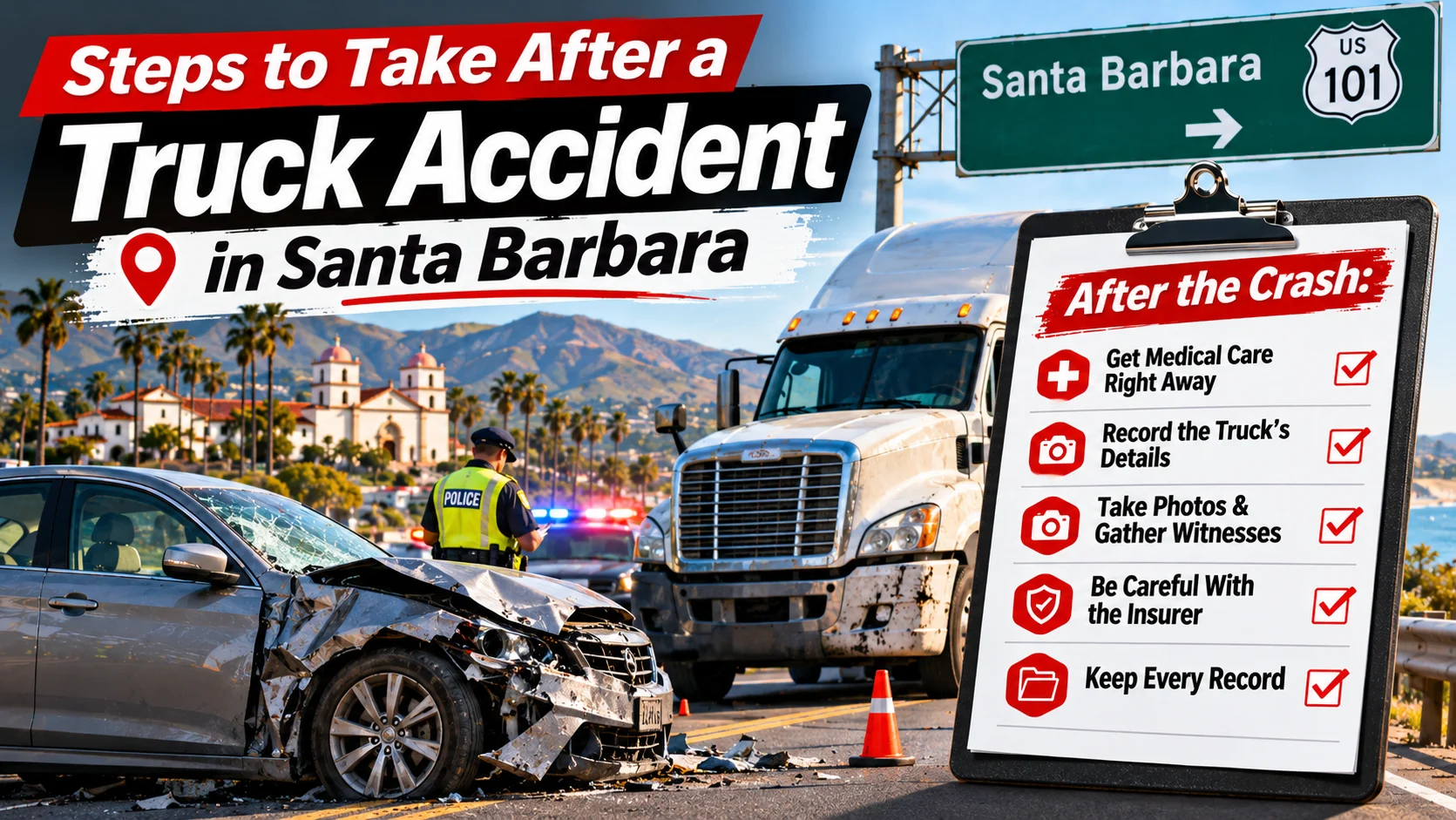
- Get medical care right away. Some injuries, like internal bleeding or a concussion, do not show symptoms at first, and early records tie your injuries to the crash.
- Write down the truck’s details. Note the company name on the door, the USDOT number, the license plate, and the driver’s name if you can.
- Take photos and gather witnesses. Pictures of the vehicles, skid marks, and road conditions, plus names of people who saw the crash, can be very useful later.
- Be careful with the trucking company’s insurer. Adjusters may call quickly and ask for a recorded statement, and you do not have to give one.
- Keep every record. Save medical bills, repair estimates, pay stubs, and notes about how your injuries affect your daily life.
Trucking companies often send their own investigators to a crash scene within hours. Acting fast helps make sure your side of the story is backed by evidence too.
Who May Be Responsible for the Crash
In a car accident, fault usually rests with one driver. Truck crashes are different, because several businesses may have played a part in putting an unsafe truck or driver on the road.
| Party | How They Might Share Blame |
| Truck driver | Speeding, fatigue, phone use, or unsafe lane changes |
| Trucking company | Poor hiring, weak training, or pushing drivers past legal hours |
| Cargo loader or shipper | Overloaded or unbalanced freight that shifts or tips the truck |
| Maintenance shop | Skipped inspections or faulty brake and tire repairs |
| Parts maker | Defective brakes, tires, or other equipment |
Each of these parties may carry its own insurance. Finding every responsible party can make a real difference when injuries are serious and costs are high.
California’s pure comparative fault rule also applies. If you were partly at fault, your award is reduced by your share of the blame, but you can still recover the rest.
Federal Rules and the Evidence That Disappears Fast
Commercial trucks must follow federal safety rules that do not apply to regular drivers. The FMCSA hours-of-service rules limit how long a truck driver can drive before taking a break, which helps prevent crashes caused by fatigue. When a company or driver breaks these rules, that violation can be strong proof of negligence.
Most big rigs now carry electronic logging devices that track driving hours, along with event data recorders that capture speed and braking just before a crash. Some also have dash cameras facing the road or the driver. This data can be overwritten or lost in a short time, so attorneys often send a letter right away asking the trucking company to preserve it. Driver files, maintenance logs, and dispatch records can also show whether the company cut corners.
Timing matters for the lawsuit too. In California, most injury claims must be filed within two years of the crash, but evidence should be secured long before that deadline.
Protecting Your Recovery After a Truck Crash
A truck accident can upend your health, your income, and your daily routine all at once. Getting medical care, saving the truck’s details, and holding on to every record are simple steps that make a big difference later. Avoiding quick statements to the trucking company’s insurer is just as important.
Because these cases can involve several companies and fast-moving evidence, having someone on your side early can help keep the claim on track. A local attorney can gather the records, deal with insurers, and push for compensation that covers both your current bills and the costs still ahead.