Thinking about a dually truck for towing or hauling? Here’s a plain-English walk through what a dually is, why it has four rear tires, its benefits and downsides, and how dually tires work — no heavy mechanic jargon.
A dually truck is built for serious towing and hauling. Instead of one rear wheel on each side, it has two. That wider rear setup helps spread heavy weight, improve stability, and give the truck more control when pulling large trailers.
If you own or plan to buy a Ford F-350, Ram 3500, Chevy Silverado 3500HD, or GMC Sierra 3500HD, you’ve probably wondered whether a dually is really worth it. This guide keeps it simple: what a dually truck actually is, why it has extra rear wheels, the real benefits and downsides, how dually tires and tire pressure work, plus a quick FAQ. No mechanic experience needed.
What Is a Dually Truck?
A dually truck is a heavy-duty pickup with four tires on the rear axle instead of two. That extra pair of rear wheels is what sets it apart from a standard single-rear-wheel truck — and it’s the best place to start when you’re comparing your options.
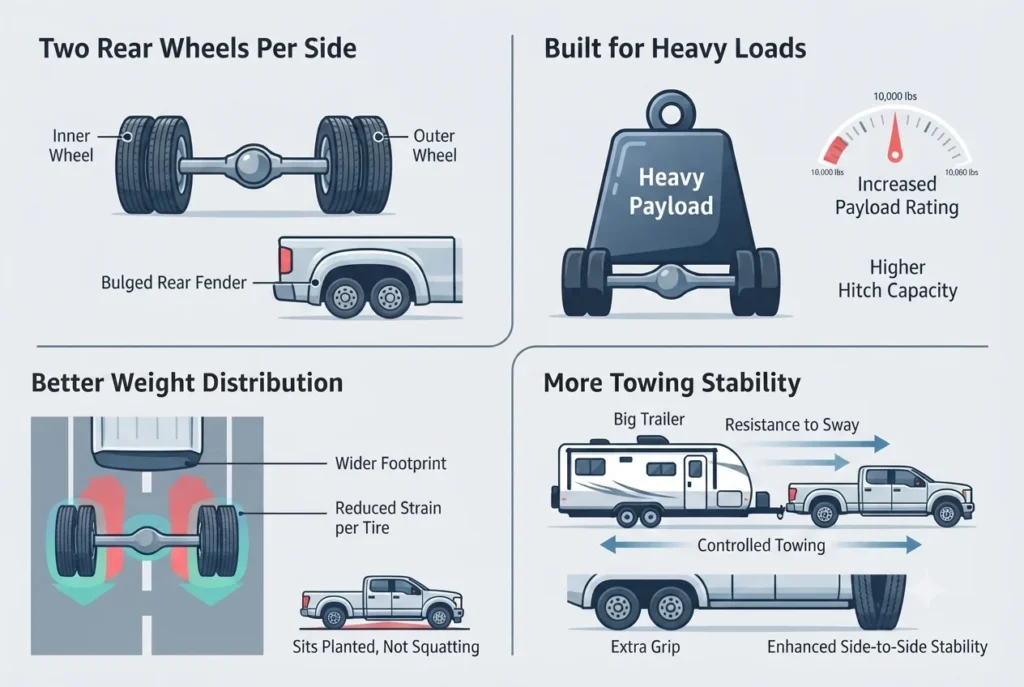
Two Rear Wheels Per Side
A dually has two wheels on each side of the rear axle — six tires total instead of four. The rear fenders bulge out wider to cover them, which is the easiest way to spot a dually in a parking lot.
Built for Heavy Loads
The four rear tires share the weight of whatever you’re carrying or towing. That means a higher payload rating and more capacity for hitch weight from big trailers and campers.
Better Weight Distribution
With more rubber on the road, heavy loads are spread across a wider footprint. That reduces strain on any single tire and helps the truck sit planted rather than squatting under a load.
More Towing Stability
The wider rear stance resists side-to-side sway when a big trailer pushes the truck around. On highways and in crosswinds, that extra grip makes towing feel far more controlled.
Dually vs Single Rear Wheel Truck
A single rear wheel (SRW) truck has one tire on each side of the rear axle — four tires total. A dually adds a second tire on each side for six. For everyday driving, light towing, and better fuel economy, an SRW truck is often plenty. But once you’re regularly towing a heavy fifth-wheel, large RV, gooseneck, or loaded gooseneck trailer, the dually’s extra payload and sway control really earn their keep. The rule of thumb: match the truck to the heaviest, most frequent load you’ll actually tow — not the occasional light run to the hardware store.
Main Benefits of a Dually Truck
Beyond the extra wheels, here’s what those four rear tires actually do for you when the truck is loaded and working hard.
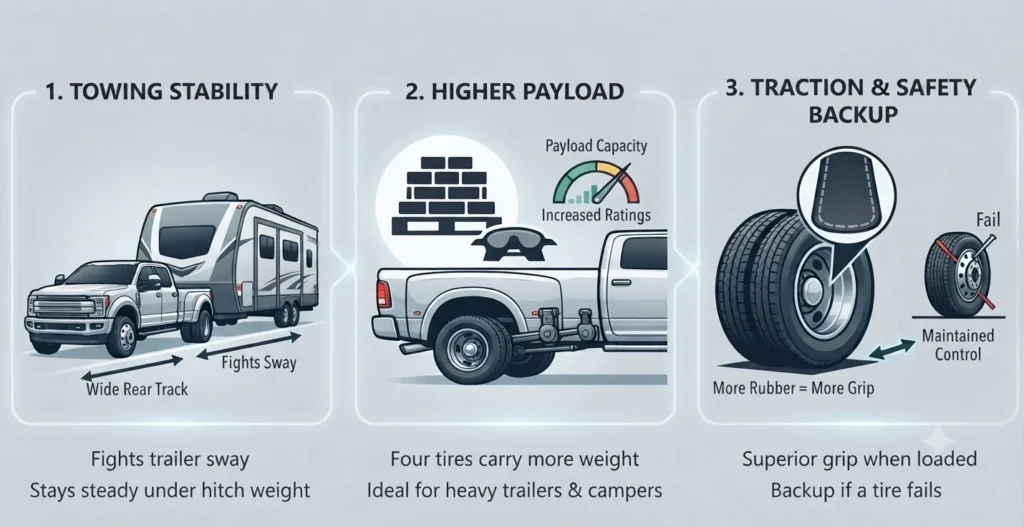
Towing Stability
The wide rear track fights trailer sway and keeps the truck steady under heavy hitch weight. Pulling a big RV or gooseneck feels noticeably more planted and predictable.
Higher Payload
Four rear tires carry more weight than two, so duallys have higher payload and towing ratings. That’s why they’re the go-to for fifth-wheels, campers, and loaded work beds.
Traction & Safety Backup
More rubber means more grip when loaded. And if one rear tire fails on the highway, the second tire on that side helps you keep control while you slow down safely.
How Dually Tires Work
Dually Tire Basics
Dually tires are heavy-duty tires designed to work in pairs on each side of the rear axle. The two rear tires are mounted close together, so there’s a small gap between them. Because they carry load together, both tires on a side need to match in size, brand, and tread depth. A mismatch makes one tire carry more than its share, which leads to uneven wear, overheating, and in the worst case, tire failure under a heavy load.
Dually Truck Disadvantages
A dually isn’t the right answer for everyone. Weigh these downsides honestly before you buy — they matter most if you don’t tow heavy every week.
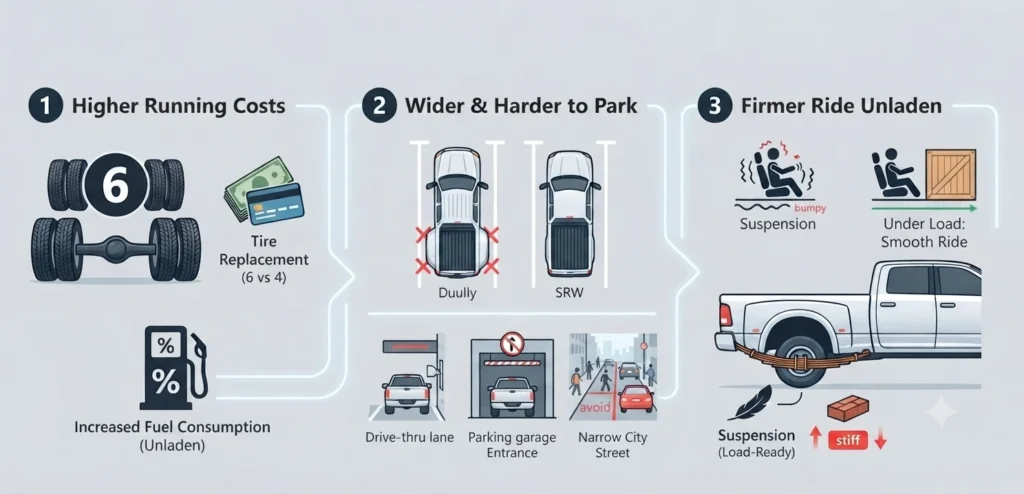
Higher Running Costs
Six tires cost more to replace than four, and duallys usually drink more fuel unladen. Budget for the extra pair of tires whenever it’s time to re-shoe the truck.
Wider & Harder to Park
Those flared rear fenders make a dually wider than a standard truck. Tight parking spots, garages, drive-thrus, and city streets take more care to navigate.
Firmer Ride Unladen
A dually’s stiff, load-ready suspension can feel bouncy or firm when the bed is empty. The ride smooths out under a load — which is exactly what it’s built for.
Dually Tire Pressure Basics
Correct tire pressure matters even more on a dually. Always follow the pressures on your driver’s-door placard or owner’s manual — inner and outer rear tires usually run the same pressure, but front and rear specs often differ. Check pressure cold, before driving, since heat raises it. Underinflated dually tires run hot, wear unevenly, and can even touch each other under load, which risks a blowout. The inner rear tire is easy to forget, so use a valve extender or a long gauge to check both tires on each side every time.
Tire Matching, Tread Depth & Rotation
On a dually, tire matching isn’t optional. Both tires on a rear side should be the same size, type, and within a close tread-depth range so they share the load evenly — mixing a fresh tire with a worn one forces the deeper-tread tire to carry more, which overheats it. Keep an eye on tread depth across all six tires and replace them as a matched pair per side.
Rotation is different from a normal truck: because you have six tires, a common pattern moves the front tires to the outer rear, the outer rear to the inner rear, and the inner rear up to the front, keeping wear even. A good tire shop that knows duallys can set the right rotation pattern and torque the wheels correctly — worth it to avoid an expensive mistake.
Best Use Cases & Buying Tips
A dually shines when you tow or haul heavy, and often. Think large RVs and fifth-wheels, horse and livestock trailers, boats, construction equipment, farm loads, and loaded flatbeds. If that’s your world, the payload and stability pay off. If you mostly daily-drive with the occasional light tow, a single-rear-wheel truck may suit you better. Use these four checks before you buy.
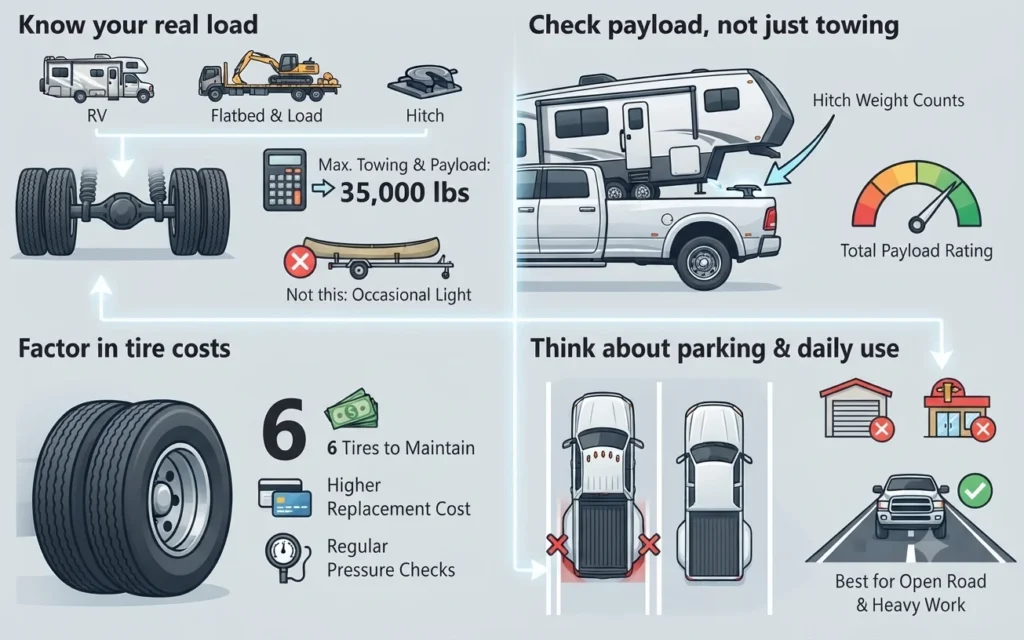
Know your real load
Add up your heaviest trailer, cargo, and hitch weight. Match the truck to that number — not to the occasional light run.
Check payload, not just towing
Fifth-wheel and gooseneck hitch weight counts as payload. A dually’s higher payload rating is often the deciding factor.
Factor in tire costs
Remember you’re buying and maintaining six tires, not four. Budget for matched replacements and regular pressure checks.
Think about parking & daily use
The extra width matters in garages, driveways, and cities. Make sure the dually fits your everyday life, not just tow days.
Dually Truck FAQs
How many tires does a dually have?
Six. A dually has two tires on each side of the rear axle (four total in the back) plus the two front tires. That’s what gives it extra payload, stability, and a wider rear stance than a standard truck.
Are dually trucks good for towing?
Yes — duallys are among the best towing trucks you can buy. The wide rear track and higher payload make them ideal for large RVs, fifth-wheels, gooseneck trailers, and heavy work loads where stability and capacity matter most.
How is dually tire pressure different?
Inner and outer rear tires usually run the same pressure, but you must check both — the inner tire is easy to miss. Always use the pressures on your door placard or manual, check them cold, and consider a valve extender to reach the inner rear tire.
What happens if dual rear tires touch under load?
If the two rear tires touch, it usually means one is underinflated or mismatched. Rubbing generates heat and can lead to a blowout under load. Keep both tires properly inflated and matched in size and tread depth so they never make contact.
Do dually trucks cost more to maintain?
Generally yes. You’re buying and rotating six tires instead of four, and fuel use is often higher when unladen. For heavy, frequent towing the trade-off is worth it; for light-duty use, a single-rear-wheel truck is usually cheaper to run.
Why do people call it a dually?
It’s just short for “dual rear wheels” — the dual setup that gives the truck four rear tires. So when someone says “dually” or even jokes “dually dually,” they mean the same thing: a dually truck with two wheels on each side of the rear axle.
Ready to Choose Your Dually
From the dual rear wheels to towing stability, payload, tire pressure, and matching, you now know what makes a dually truck different — and whether it fits your towing life. Next stop at the tire shop or dealer, you’ll ask the right questions.
🚚 Match the truck to your load🔧 Keep those six tires matched
Also read truck tire and dually tire guides
Also read choosing the right tires for your vehicle
Also read 2-wheel vs 4-wheel alignment for trucks
Also read checking tire pressure on truck tires