
Key Highlights
- Your boat anchor setup affects holding power, safety, and daily ease of use.
- Savwinch offers a robust range built for practical boat owner needs.
- A plough anchor winch suits many common seabed conditions.
- A claw anchor can fit a wider range of bow rollers.
- Stainless steel and galvanised options change corrosion resistance and upkeep.
- Good anchor choice starts before installation, not after.
Introduction
If you are a practical boat owner, choosing a boat anchor winch can feel harder than it should. The right setup depends on anchor design, fit, and smooth translation direction from roller to water and back again. Before you install a Savwinch unit, it helps to compare common anchor styles and understand what each one means for real use.
Understanding Boat Winches – Their Role and Importance
Boat winches help raise and lower your boat anchor in a controlled way. That matters because your anchor of choice must move cleanly through the right translation direction without snagging.
The main types often discussed are plough, claw, and slider styles. They differ in anchor design, fit on rollers, and holding power across changing seabed conditions. That leads into what the winch itself actually does.
What Does a Boat Anchor Winch Do?
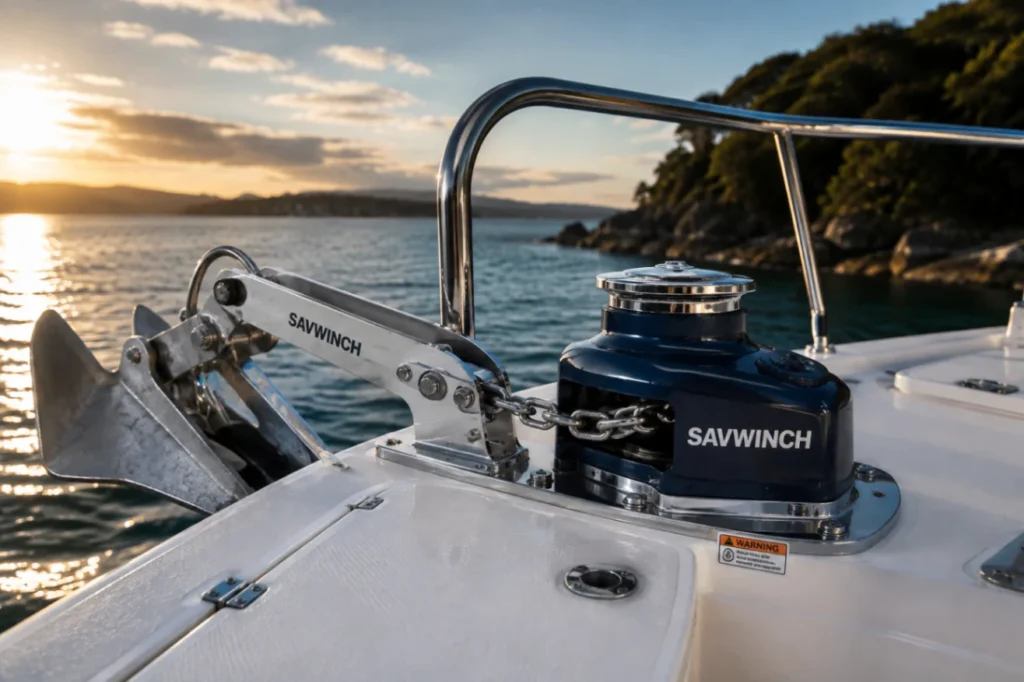
A boat anchor winch handles deploying and retrieving your anchor, guiding it smoothly across bow rollers for steady movement.
This reduces strain and gives owners more control at the bow. It acts as the practical link between anchor storage and safe use on the water.
An “anchor slider” refers to a style that moves into position during launch and retrieval. If your setup doesn’t align with the roller path, anchoring can become noisy, slow, or unreliable.
Types of Boat Winches for Anchoring Explained
Not all winches suit all anchors. The match depends on anchor design, how the unit sits on the bow, and whether you use plough anchors, claw shapes, or a plough style anchor slider pattern.
Some owners ask if a new generation anchor is always better. The short answer is no. Better means better fit, cleaner handling, and dependable storage. Start with the main three styles below.
Plough Anchor Winches – Features & Advantages
A plough anchor is designed to dig into the seabed and reset easily, making it a good choice for mixed ground and general-purpose use.
Key features to consider:
- A plough shape that fits well on the bow
- High-tensile steel for strength
- Streamlined plough design for easy storage
For example, a boat moving from sand to light mud benefits from this anchor’s ability to settle without twisting, making retrieval smoother.
Claw Anchor Winches – When Are They Best Used?
A claw anchor is popular for easy stowage and broad hardware compatibility. Its curved shape fits more bow rollers than pointed designs.
Benefits include:
- easier fit on various roller layouts
- familiarity for those used to traditional claw-shaped anchors
- good handling with rock combination setups
Unlike sharper anchors, claw anchors prioritise stable placement and easy retrieval. For day-trip boats, this trade-off is often practical.
Slider Anchor Winches – Unique Benefits
A “slider” isn’t a separate anchor shape — it’s a sliding ring or shaft added to a plough-style or claw anchor. The added ring lets you drive your boat over the anchor and slide the chain down the shaft to free it, rather than pulling directly against a snag.
Key benefits include:
- Easier retrieval if the anchor gets caught on reef, rock, or debris
- Available as an option on both plough- and claw-style anchors
- Retains the holding power of the base anchor design it’s built on
A common issue is losing an anchor permanently when it snags on the bottom. A slider setup helps prevent this by letting the chain release along the shaft instead of hauling the anchor against the obstruction.
Comparing Plough, Claw, and Slider Anchor Winches
When you compare these three, the biggest differences come from anchor design, storage behaviour, and how cleanly each type runs over the bow. That affects daily use more than many owners expect.
Greater holding power matters, but so does fit. A setup that works on cruising boats may not suit racing yachts, where space, balance, and fast handling can shape the final choice.
Key Differences – Operation and Performance
Here’s the short answer: choose an anchor that stores neatly, deploys smoothly, and matches your typical seabed. Shank angle, shape, and roll bar design affect use as much as holding power across different anchor types.
| Type | Operation | Best Strength | Main Fit Concern |
| Plough | Tracks forward into bottom | Versatile all-round use | Needs proper bow alignment |
| Claw | Settles with a curved profile | Easy roller compatibility | May not suit every seabed |
| Slider | Self-aligns during recovery | Clean storage and retrieval | Depends on winch path |
These aren’t just marketing terms—poor fit causes more problems than theory suggests. Measure first, then compare how each anchor moves between your bow and the water.
Which Anchor Winch Suits Different Boat Types?
Different boats have different needs. Small boats prioritise compact storage; larger boats focus on weight handling and stable retrieval.
Quick guide:
- Small boats: prefer neat stowage and easy deployment
- Racing yachts: need secure seating and minimal bow interference
- Boats with fixed bow rollers: require anchors that fit the roller path
If you use a modern self-launching anchor style, compare seating space before switching systems. Sand and reef bottoms also affect anchoring choices.
Choosing the Right Savwinch for Your Boat
Choosing a Savwinch model starts with honest use, not guesswork. A practical boat owner should look at anchor choice, bow layout, storage room, and how often the system will be used.
That approach saves money and hassle later. If the winch, anchor, and bow hardware work together, you get easier handling and fewer installation surprises. Next, look at size and weight.
Matching Winch to Boat Size and Weight
Boat size and anchor weight should immediately narrow your options. Even if specs look good, a winch can fail if the angle from locker to roller is too sharp.
Consider:
- boat size and bow space
- anchor and chain weight
- how aluminium or heavier gear affects balance
For example, a lighter aluminium boat is more sensitive to extra bow weight than a heavier hull. Matching the winch to actual onboard load is as important as motor strength.
Important Features to Consider Before Installing
Before installation, focus on fit, materials, and operating feel. Good classification starts with where the anchor sits, how it travels, and whether features such as a roll bar create clearance issues.
Some owners compare shapes such as lightweight fluke-style anchors or other designs without checking the bow first. That often leads to avoidable problems. The next sections cover what to check before drilling anything.
Installation Requirements and Space Considerations
Begin by measuring the bow, locker opening, and path across the bow rollers. Space is often limited, especially on small boats.
Consider:
- anchor length and resting angle
- roller width and spacing
- extra height from a roll bar
An anchor may seem to fit while stationary but can hit the bow during retrieval if movement is overlooked. Always check for clearance throughout its motion, not just when parked.
Stainless Steel vs Galvanised – Material Decisions
Material choice affects upkeep, appearance, and durability — and it’s worth weighing both, not just one.
- Stainless steel: better corrosion resistance and finish; easier to maintain
- Galvanised: more affordable, tougher for workboat-style knocks; zinc coating can wear over time
Neither is universally better — stainless suits owners after longevity and looks, galvanised suits practical, heavy-use setups. Fit and use case matter more than material alone.
Noise, Speed & Control: What to Expect
Most owners first notice noise, speed, and control. If the anchor drags or bangs over rollers, even a strong system feels subpar.
Check for:
- smooth launch and retrieval
- steady bow control
- minimal noise from misalignment or hard contact
Imagine anchoring early in the morning. If the system is slow, noisy, or needs manual correction, it’s not performing properly.
Conclusion
Choosing the right Savwinch boat winch is essential for smooth anchoring and safer boating. Understanding the differences between plough, claw, and slider anchor winches can improve convenience and safety. Consider your boat’s size, weight, and installation needs to make an informed choice. The right winch simplifies anchoring and enhances your experience on the water. Explore our range of Savwinch winches to find the perfect fit for your boat today!
Frequently Asked Questions
How does a claw anchor winch work?
A claw anchor winch lowers and retrieves a rock combination anchor in a controlled line over bow rollers. The curved claw shape and shank often help it sit neatly, while the winch improves handling and supports reliable holding power through cleaner deployment.
What is an anchor slider and why is it useful?
An anchor slider isn’t a separate anchor design — it’s a sliding ring or shaft fitted to a plough or claw anchor. It lets you drive over the anchor and slide the chain down the shaft to free it if snagged, rather than hauling directly against the obstruction. It’s especially useful on reef or rocky bottoms where a standard anchor is more likely to catch.
Can I find Savwinch boat winches for sale online in Australia?
Yes, Savwinch boat winches are available online in Australia through the Savwinch website. For a practical boat owner, it helps to review product details, aluminium or other material needs, and translation direction before choosing the right unit.