Checking tire pressure sounds technical, but it only takes a few minutes. Once you know where to find the right PSI and how to use a tire pressure gauge, it becomes one of the easiest car care habits you’ll ever pick up.
If you’ve just seen a tire pressure warning light, or you simply want to learn checking tire pressure the right way, you’re in the right place.
Maybe you searched how to check tire pressure, how do you check tire pressure, or even tire pressure guage and tire pressur — spelling doesn’t matter, the answer is the same. This guide keeps it simple: why it matters, what PSI pressure for tires you actually need, the tools to use, and a clear step-by-step process for how to check air pressure in tires safely. Don’t worry — this is easy, and you’ll be done in minutes.
Why Checking Tire Pressure Matters
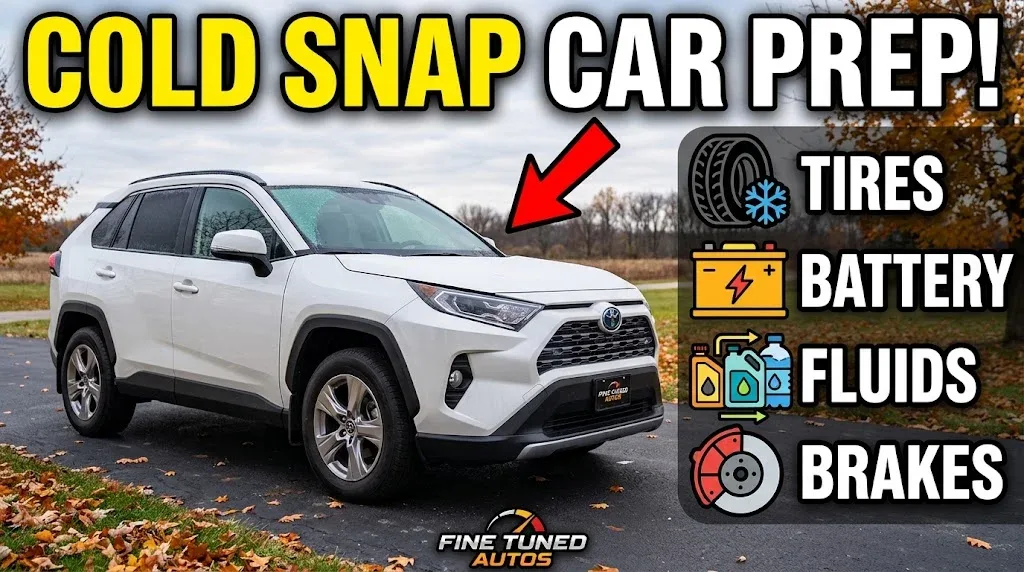
Correctly inflated tires keep you safer, help your tires last longer, and improve fuel economy. Underinflated tires wear out faster, overheat, and make your car harder to control — while overinflated tires give a rough ride and less grip. A quick tire pressure check every month keeps everything running smoothly and can save you money at the pump.
First time checking your tyre pressure? Relax. It’s a two-minute job with one small tool. Once you’ve done it once, you’ll do it without thinking.
What Should My Tire Pressure Be?
Don’t guess your PSI, and don’t use the big number printed on the tire sidewall — that’s the maximum, not the recommended pressure. The correct air pressure for tires is set by your car maker, and it’s easy to find.
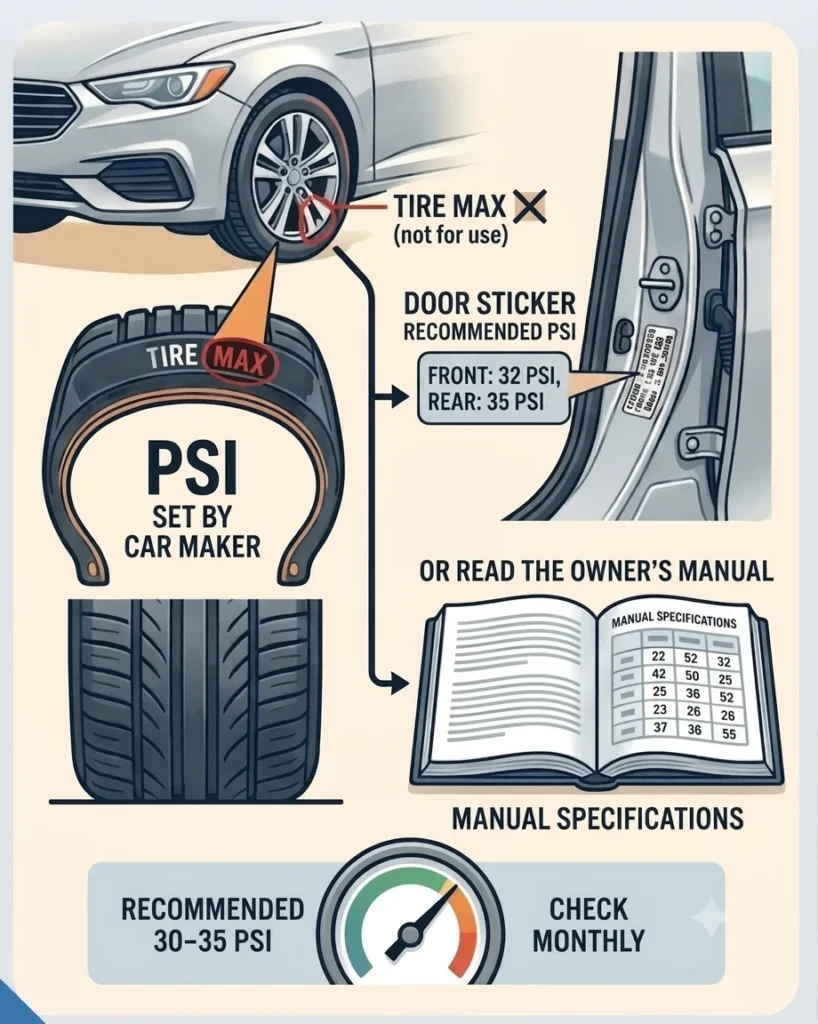
Check the driver’s door sticker
Open the driver’s door and look at the frame. A small label lists the recommended PSI for your front and rear tires.
Or read the owner’s manual
No sticker? Your owner’s manual lists the same numbers. Most cars sit between 30 and 35 PSI.
The number on the tire is the max
The PSI written on the tire itself is the maximum safe limit — not the pressure you should inflate to. Always use the door-sticker number.
Tools You Need to Check Tire Pressure
You only need one or two simple, cheap tools to check air pressure in tires at home.
A tire pressure gauge
A car tire pressure gauge — digital, dial, or stick — is your main tool. Keep one in the glovebox so a tire pressure check is always a minute away.
An air pump or air machine
For tire inflation, use a home air pump or the air pressure gauge machine at a gas station to add air when a tire reads low.
Your recommended PSI
Know your target number before you start — from the door sticker or manual — so you know exactly what to aim for.
How to Check Tire Pressure Step by Step
Follow these simple steps for how to check tire pressure at home or at a gas station.1
Find your recommended PSI
Check the driver’s door sticker or owner’s manual for the correct PSI pressure for your tires.
Check tires when cold
Test tire pressure before driving or after the car has rested a few hours. Warm tires read higher and give a false number.
Remove the valve cap
Unscrew the small cap on the tire’s valve stem and keep it somewhere safe so you don’t lose it.
Press the gauge onto the valve
Push the tire pressure gauge firmly and straight onto the valve stem. A short hiss is normal — a long hiss means it’s not sealed.
Read the number
Read the PSI on the gauge and compare it to your recommended number. Repeat for all four tires (and the spare).
Add air if needed, then recheck
If a tire is low, add air in short bursts and recheck with the gauge until you hit the right PSI. Refit the valve caps.
How to Use a Tire Pressure Gauge
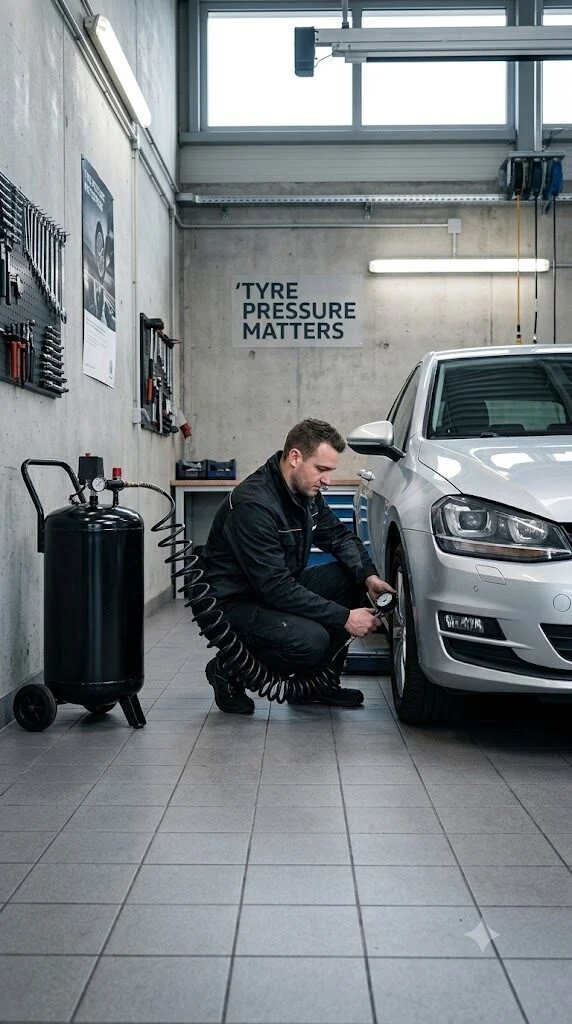
Learning how to use a tire pressure gauge takes seconds. Press it firmly and squarely onto the valve stem so no air leaks out around the edges, then read the number. There are three common types of tyre pressure gauge:
Digital gauge
Shows the PSI as a clear number on a screen. Easiest to read and great for beginners.
Dial gauge
Uses a needle on a round dial, like a clock. Sturdy and known for good accuracy.
Stick (pencil) gauge
A slim metal gauge where a marked bar slides out to show the reading. Cheap, pocket-sized, and reliable.
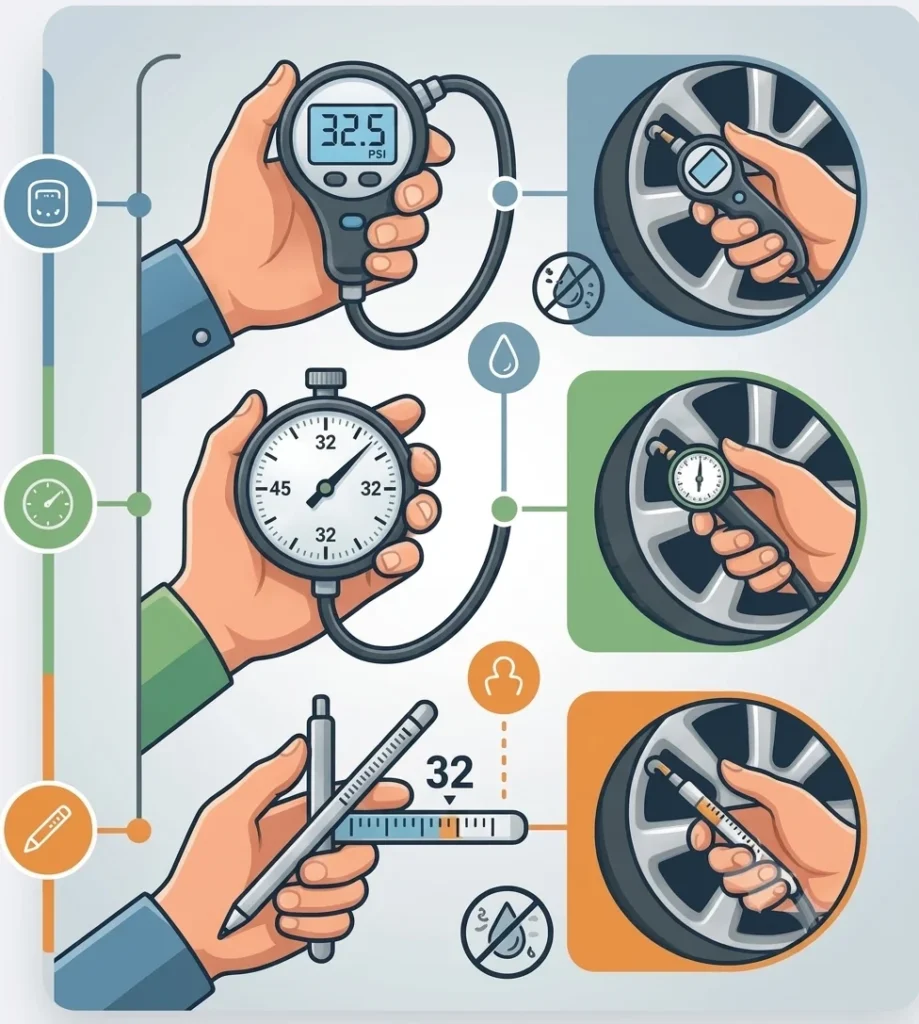
How to Read Tire Pressure
Reading tire pressure is simple. On a digital gauge, just read the number on the screen. On a dial gauge, read where the needle points. On a stick gauge, read the last number showing on the bar that slid out. That number is your PSI — compare it to your recommended pressure. If it’s lower, the tire needs air; if it’s higher, let a little out.
Being a couple of PSI off is common and easy to fix. Cheap gauges can vary slightly, so if you want the best air pressure gauge accuracy, use the same gauge each time so your readings stay consistent.
How to Add Air to Your Tires
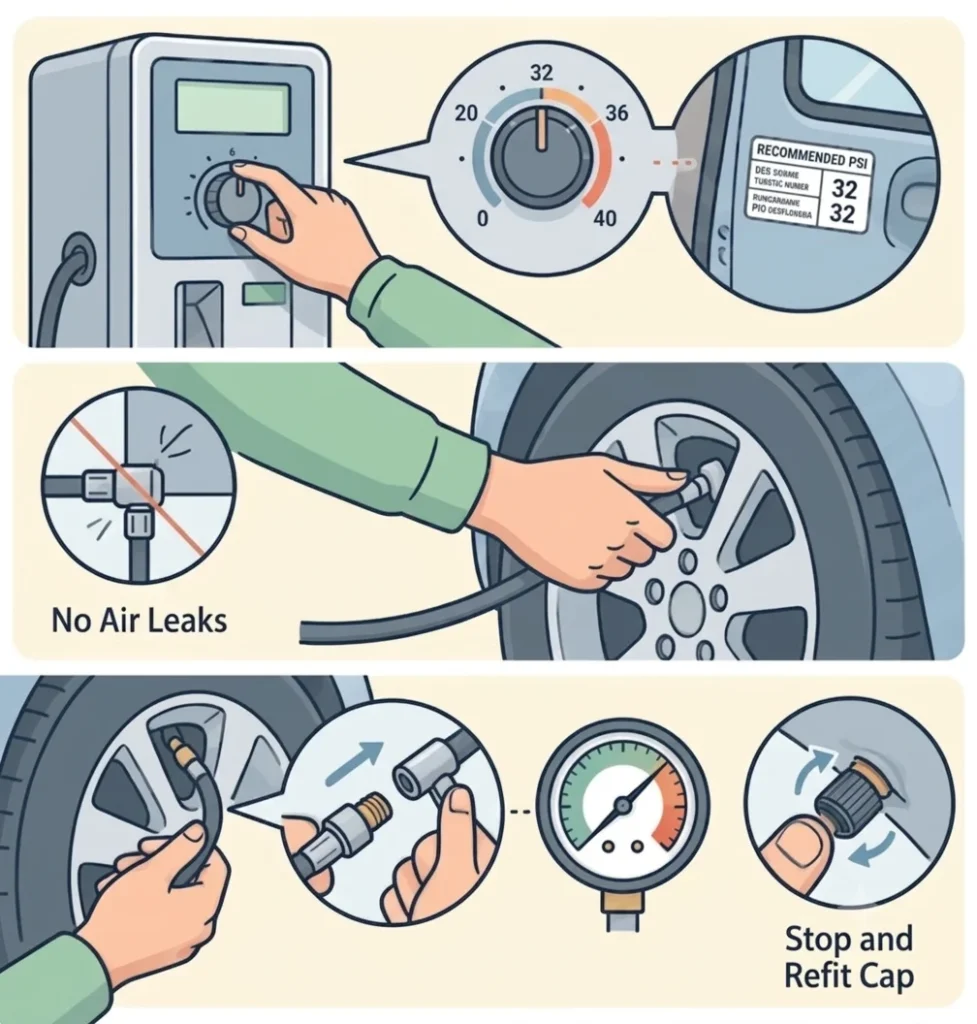
Tire inflation is easy once you know your target PSI. Use a home tire pump or the air machine at a gas station and add air a little at a time.
- Set the air machine to your recommended PSI if it has a dial
- Press the nozzle firmly onto the valve stem
- Add air in short bursts — don’t overinflate
- Recheck the pressure with your gauge after each burst
- Stop when you reach the correct PSI and refit the valve cap
Common Tire Pressure Mistakes to Avoid
Steer clear of these easy-to-make errors when checking tire pressure.
- Checking pressure on hot tires right after a long drive — always check cold
- Using the sidewall’s maximum PSI instead of the door-sticker number
- Forgetting the spare tire, which also loses pressure over time
- Overinflating — more air is not better and reduces grip
- Only checking when the warning light comes on instead of monthly
Quick FAQs
How often should I check tire pressure?
Check tire pressure about once a month, and always before a long road trip. Tires naturally lose a little air over time, so a regular tire pressure check keeps you safe.
What should my tire pressure be?
What tire pressure should your tires be depends on your car. Most cars sit between 30 and 35 PSI, but always use the exact number on the driver’s door sticker or in your owner’s manual.
Where do I find the correct tire pressure?
Look on the sticker inside the driver’s door frame, or in the owner’s manual. That’s the recommended PSI — not the maximum number printed on the tire sidewall.
Should I check tires when hot or cold?
Always check the tyre pressure when the tires are cold — before driving or after the car has been parked for a few hours. Driving heats the air inside and gives a higher, inaccurate reading.
Why did my tire pressure warning light come on?
The TPMS light usually means one or more tires are low. Cold weather is a common cause, since air contracts as temperatures drop. Check all four tires, add air to the right PSI, and see a mechanic if a tire keeps losing air.
How accurate are tire pressure gauges?
Most gauges are accurate enough for everyday use, though very cheap ones can vary by a PSI or two. Digital and dial gauges tend to be the most consistent. Use the same gauge each time for reliable results.
Check Your Tire Pressure Before Your Next Drive
Now you know how to check tire pressure, read a gauge, and add air the right way. Keep a tire pressure gauge in your car and make it a monthly habit.
🔧 Keep a gauge in your car🗓️ Recheck once a month
About This Guide
We write simple, beginner-friendly car care guides that skip the jargon. This tire pressure guide is for general information — always follow your vehicle’s manual and see a trusted mechanic if a tire keeps losing air.
Also read tire maintenance guides
Also read signs of tyre dry rot