
Noticed cracks or faded, dry-looking rubber on your tires? Here’s a calm, plain-English guide to what tyre dry rot is, whether dry rot tires are safe to drive, and what to do next — no mechanic experience needed.
Tyre dry rot happens when tire rubber becomes dry, brittle, and cracked. Small surface cracks may not look serious at first, but they can be an early warning that the tire is aging and losing strength.
If you’ve spotted cracked sidewalls, grey faded rubber, or a tire that keeps going low, you’re right to check. This guide keeps it simple: what dry rot tires look like, what causes tire rubber cracking, whether cracked tires are safe to drive, why dry rot can’t truly be repaired, when to replace, and how to prevent it. Whether you drive a daily car, an older second vehicle, an RV, or a trailer that sits for months, the same rules apply.
Warning Signs of Dry Rot Tires
Tyre dry rot rarely appears overnight. Here are the most common signs to look for when you inspect your tires — often more than one shows up together.
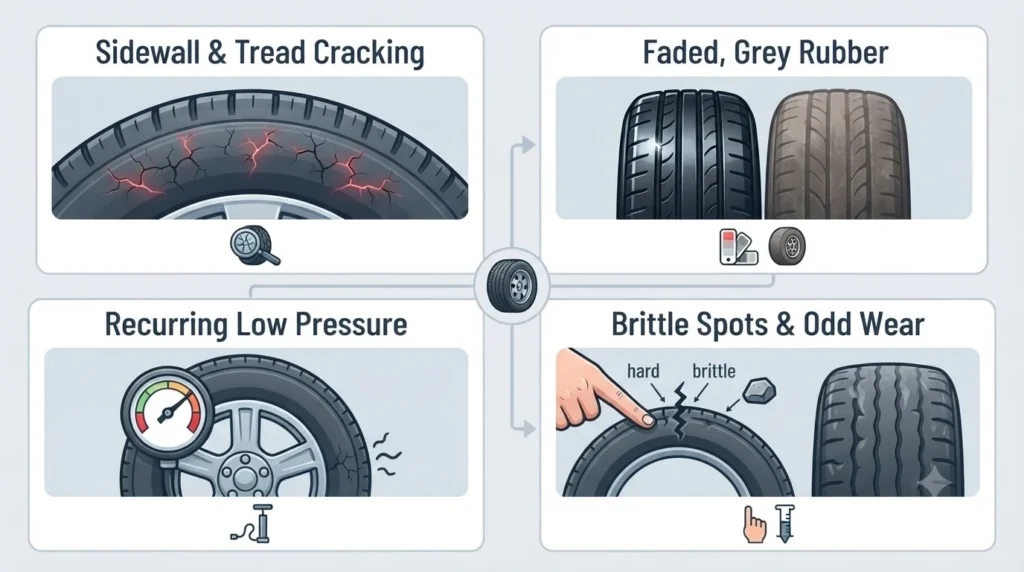
Sidewall & Tread Cracking
The classic sign. Fine spider-web cracks appear on the sidewall or between tread blocks. As dry rot advances, the cracks get deeper and wider — a clear signal the rubber is drying out.
Faded, Grey Rubber
Healthy tires look deep black. Dry-rotted tires often turn a dull, chalky grey and lose their sheen as the oils that keep rubber flexible break down over time.
Recurring Low Pressure
A tire that keeps losing air with no obvious puncture can be leaking through tiny cracks. If you’re topping up the same tire again and again, have it inspected.
Brittle Spots & Odd Wear
Press a finger near the sidewall — dry rot rubber can feel hard and brittle rather than slightly springy. Uneven or unusual wear patterns can appear alongside the cracking.
What Do Dry Rot Tires Look Like?
Up close, dry-rotted tires show a network of shallow cracks running across the sidewall or into the grooves of the tread — a bit like the cracks you’d see in dried mud or old leather. The rubber looks dry and faded rather than glossy black, and the surface can feel rough and hard to the touch. Early tyre dry rot may only show as light surface crazing, while advanced cases have deep cracks you can slip a fingernail into. Cracks that reach deep into the rubber, expose the cords underneath, or ring the whole tire are the most serious.
What Causes Tyre Dry Rot?
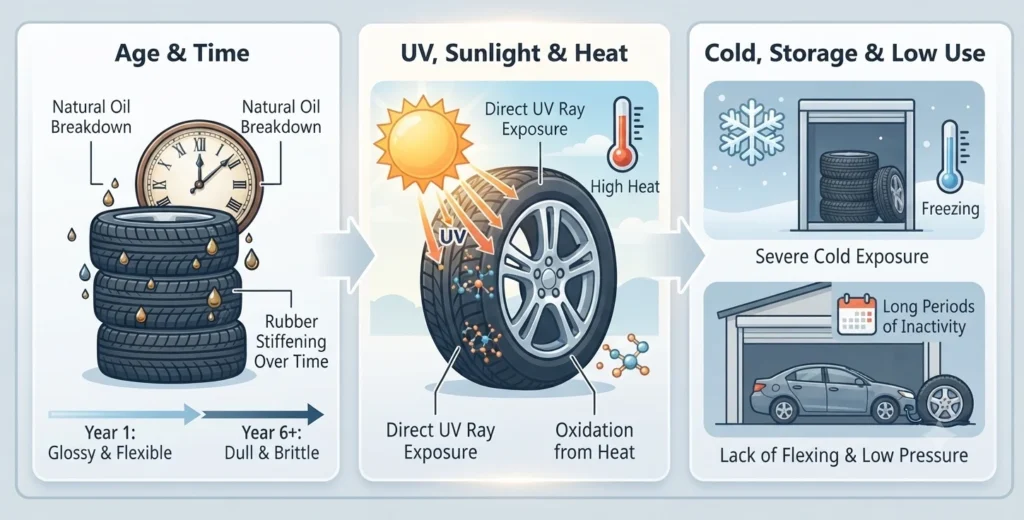
Dry rot is really about aging rubber losing its flexibility. Several everyday factors speed it up — and they often work together.
Age & Time
Even unused tires age. Over the years the protective oils and compounds in the rubber break down, so older tires — roughly six years and up — are far more prone to cracking, whatever the tread looks like.
UV, Sunlight & Heat
Constant sun, UV rays, and high heat dry out rubber fastest. Vehicles parked outdoors in hot climates or under bright sun often develop dry-rotted tires sooner than garaged cars.
Cold, Storage & Low Use
Freezing cold, poor storage, and sitting unused all contribute. A car, RV, or trailer that rarely moves doesn’t flex its tires, so the rubber stiffens and cracks. Chronically low or wrong tire pressure adds extra stress.
Are Dry Rot Tires Safe to Drive?
The Honest Answer
Driving on dry-rotted tires is not recommended. Cracking weakens the tire’s structure, and as it gets worse it can lead to sudden air loss, tread separation, or a blowout — especially at speed, under a heavy load, or in hot weather. Very light surface crazing may not be urgent, but deep or spreading cracks are a real safety risk. When in doubt, treat cracked tires as a reason to slow down and get them checked.
Why Dry Rot Can’t Really Be Repaired
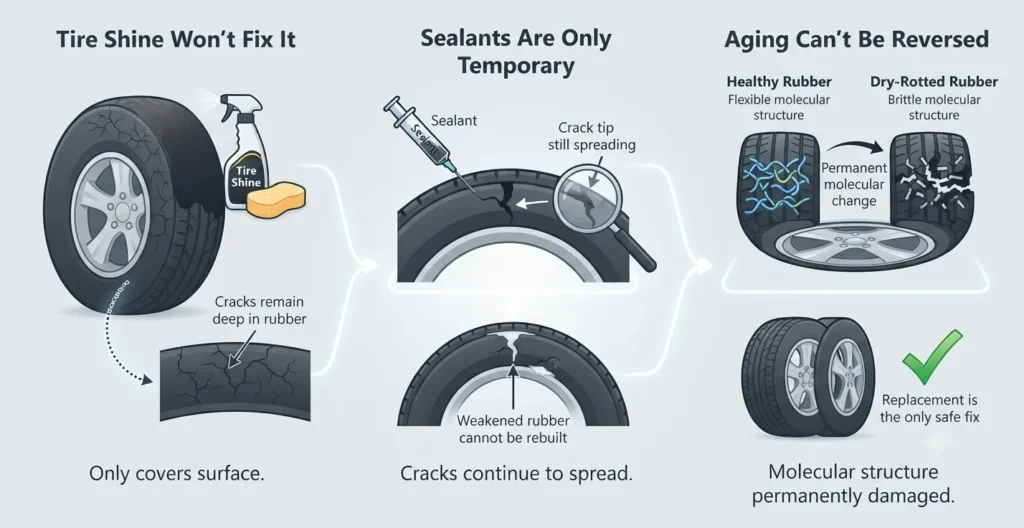
Lots of products promise to fix cracked tires. The honest truth: they can improve appearance, but they can’t restore a tire’s strength. Here’s why.
Tire Shine Won’t Fix It
Dressings and tire shine can make faded rubber look darker for a while, but they only cover the surface. They don’t repair cracks or bring back the flexibility the rubber has lost.
Sealants Are Only Temporary
Conditioners and sealants may slow drying slightly, but they can’t rebuild damaged rubber. A crack that has already formed is still there, still spreading, and still weakening the tire.
Aging Can’t Be Reversed
Once dry rot starts, it can’t be undone — the rubber has permanently changed. That’s why the only truly safe fix for seriously cracked tires is replacement, not a repair.
When to Replace Dry Rot Tires
Replace tires when cracks become deep, wide, or numerous, when you can see the cords or fabric beneath the rubber, when the cracking rings the sidewall, or when a tire keeps losing pressure. Age matters too — many tire makers suggest replacing tires around six years old and no later than about ten, even if the tread looks fine. If any single tire shows serious dry rot, have all of them inspected, since they usually age together. When cracking is only very light surface crazing, monitor it closely and re-check often. If you’re unsure how serious it is, a professional inspection is the safest way to decide.
How to Inspect Your Tires at Home
You don’t need special tools for a first check. In good light, look closely at each sidewall and across the tread for fine cracks, faded grey rubber, or brittle spots — gently flex the rubber near the sidewall to feel whether it’s still slightly springy or hard and dry. Check every tire, including the spare and any trailer or RV tires, since these often sit unused and dry out first.
Note any tire that keeps going low, and look for cracks deep enough to catch a fingernail. It also helps to find the tire’s age: the DOT code on the sidewall ends in a four-digit number showing the week and year it was made. If you spot deep cracking, exposed cords, or you’re simply not sure, stop driving on it and book a tire shop safety check rather than guessing.
How to Prevent Tyre Dry Rot
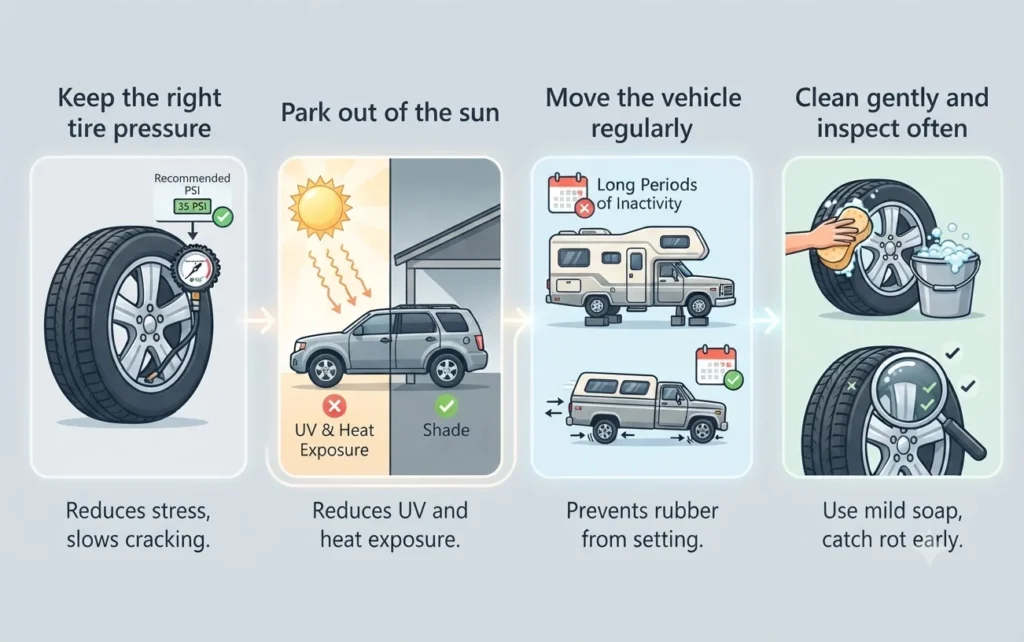
You can’t stop rubber from aging, but a few simple habits slow tire dry rot down and help your tires last their full safe life. This matters most for older vehicles, second cars, RVs, and trailers that spend a lot of time parked.
Keep the right tire pressure
Check pressure monthly against your door placard or manual. Correct, consistent pressure reduces stress that speeds up cracking.
Park out of the sun
Whenever you can, park in a garage or shade. Reducing UV and heat exposure is one of the biggest ways to slow tire rubber cracking.
Move the vehicle regularly
Tires that sit dry out faster. For stored cars, RVs, and trailers, roll them a little now and then and keep them properly inflated.
Clean gently and inspect often
Wash tires with mild soap and water, skip harsh chemicals, and look them over regularly so you catch dry rot early.
Dry Rot Tires FAQs
Are small cracks in my tires dangerous?
Very light surface cracks may not be urgent, but they’re an early warning that the rubber is aging. Keep a close eye on them. Deep, wide, or spreading cracks — or any that expose the cords — should be inspected right away, as they can weaken the tire.
Can dry rot tires be repaired?
No — not in a way that makes them safe again. Products can improve appearance, but dry rot permanently changes the rubber and can’t be reversed. Once cracking becomes serious, replacement is the only safe fix.
How fast does tyre dry rot get worse?
It varies with heat, sunlight, use, and storage. In hot, sunny conditions or on a vehicle that sits unused, cracking can advance surprisingly quickly. That’s why regular checks matter — early cracks can deepen over a season.
Why do tires on a car that sits unused crack?
Tires need to flex and roll to keep their oils spread through the rubber. When a car, RV, or trailer sits for months, the rubber stiffens and dries, so dry-rotted tires often appear on rarely driven vehicles even with plenty of tread left.
Will tire shine or sealant fix cracked tires?
No. Tire shine only darkens the surface, and sealants can’t rebuild damaged rubber. They may hide the look of dry rot but do nothing for the tire’s strength — the cracks and the risk remain.
Can cracked sidewalls cause a blowout?
They can. Sidewall cracking weakens the tire’s structure, and under heat, load, or high speed that weakness can lead to air loss, tread separation, or a blowout. Seriously cracked sidewalls are a strong reason to replace the tire.
Not Sure How Serious It Is?
When cracked tires leave you uncertain, don’t guess. A quick professional inspection tells you whether your dry rot tires are safe for now or need replacing — and it’s the safest choice for you and anyone riding with you.
🔍 Inspect your tires regularly🛞 Replace once cracking is serious
Also read car tire safety guides
Also read how to check tire pressure correctly
Also read tire tread wear warning signs
Also read alignment issues that damage tires