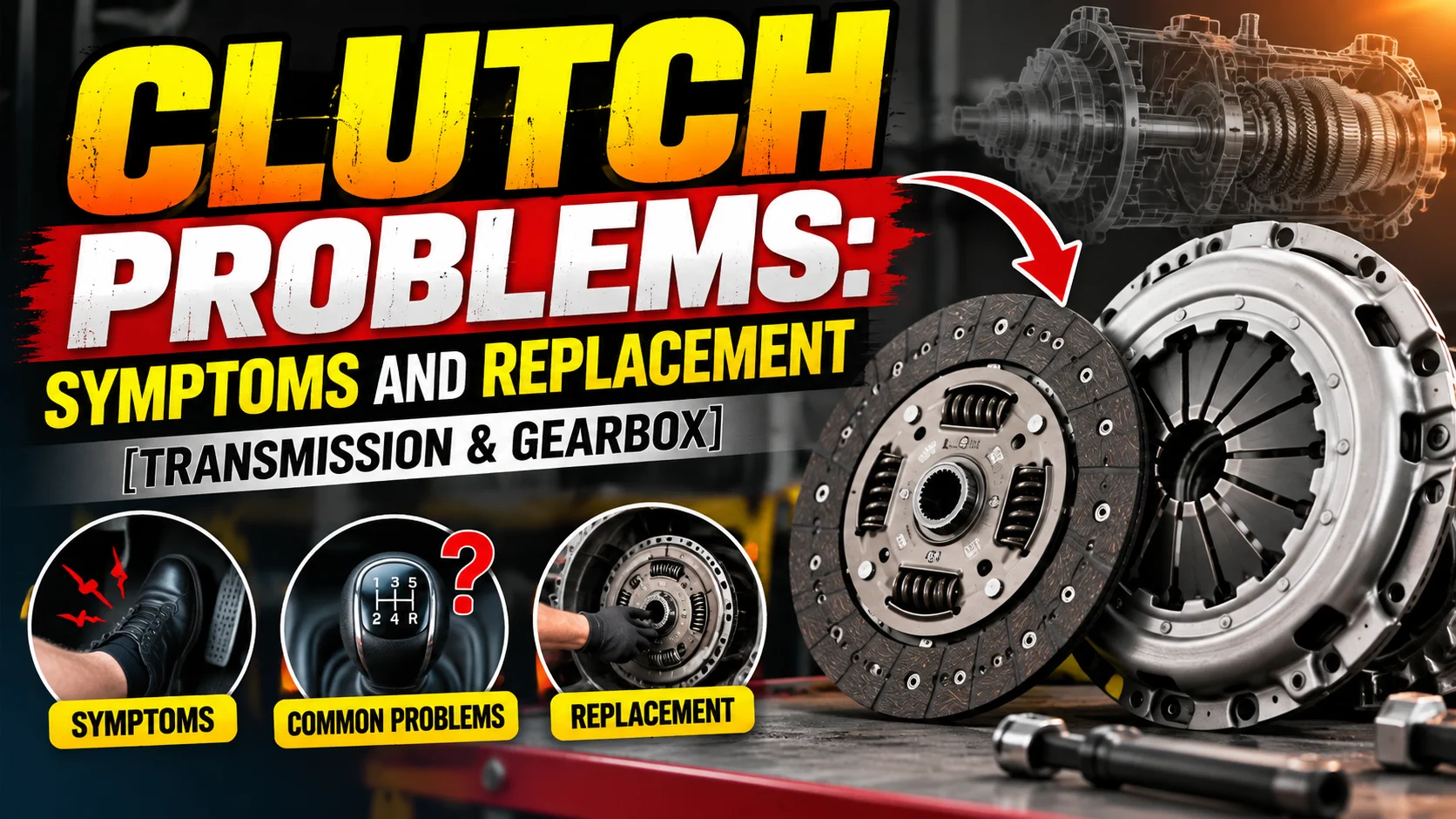
A slipping clutch, difficult gear changes, or an unusual burning smell can make everyday driving stressful. These symptoms sometimes indicate a worn clutch disc, but problems with the clutch master cylinder, slave cylinder, hydraulic fluid, or release mechanism can produce similar warning signs.
Understanding the difference matters. Replacing an entire clutch when the real problem is a leaking hydraulic component could lead to unnecessary repair expenses. On the other hand, continuing to drive with a severely slipping clutch can cause additional damage and leave the vehicle unable to move safely.
Quick Answer: How Do You Know If Your Clutch Is Bad?
Common signs include engine RPM rising without corresponding acceleration, difficulty shifting gears, clutch judder, a burning friction smell, and abnormal pedal behavior. However, these symptoms do not automatically confirm that the clutch disc needs replacement. A proper diagnosis should check the hydraulic system, linkage, transmission, and related components before parts are replaced.
What Is a Car Clutch and How Does It Work?
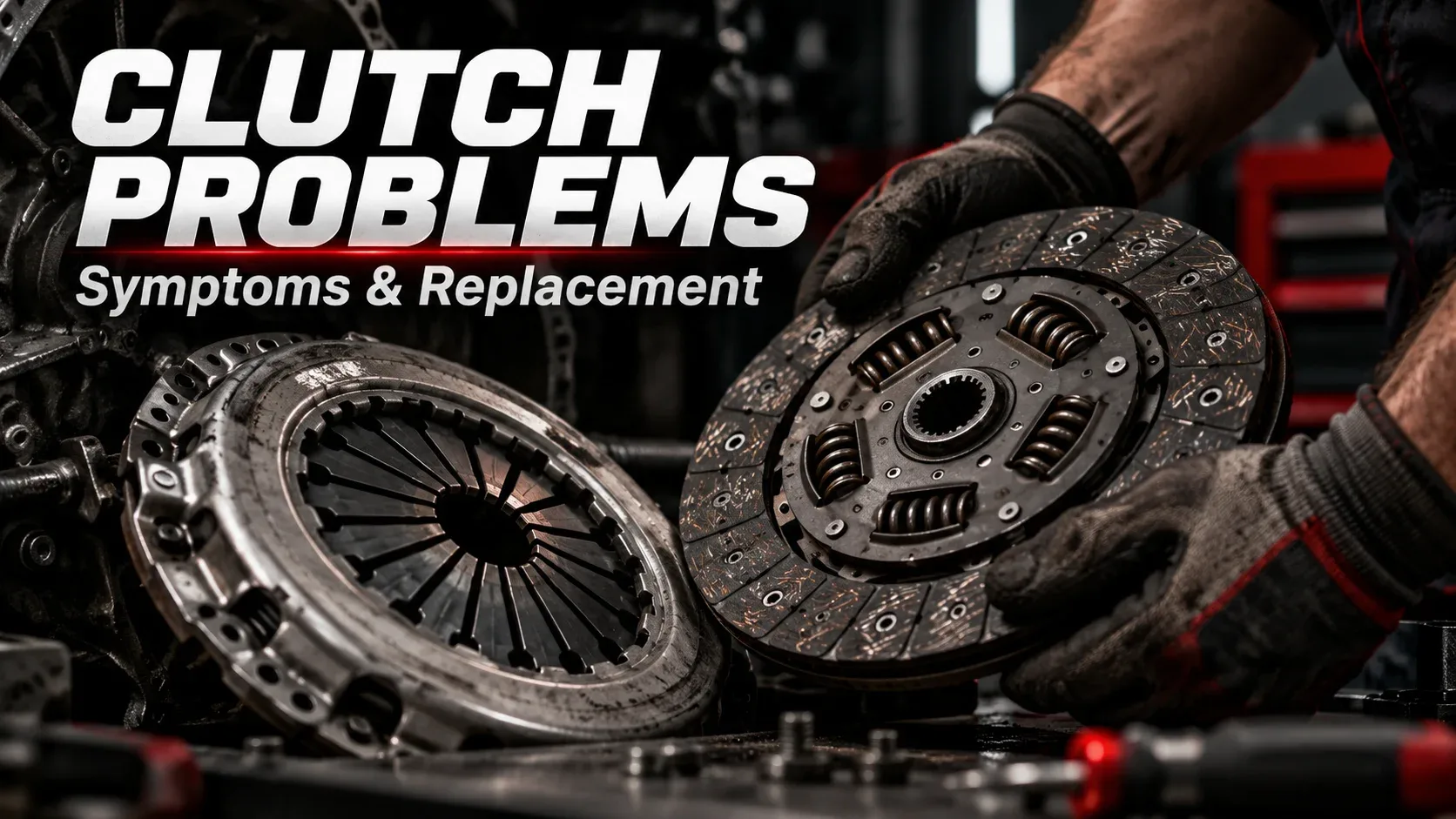
A car clutch is a mechanical system that manages the connection between the engine and the transmission. In a conventional manual-transmission vehicle, it allows the driver to temporarily interrupt power transfer when changing gears or coming to a stop.
When the clutch pedal is released, the pressure plate normally clamps the friction disc against the engine flywheel, allowing engine torque to pass into the transmission. Pressing the clutch pedal activates the release mechanism and reduces this clamping force, separating the engine from the transmission input.
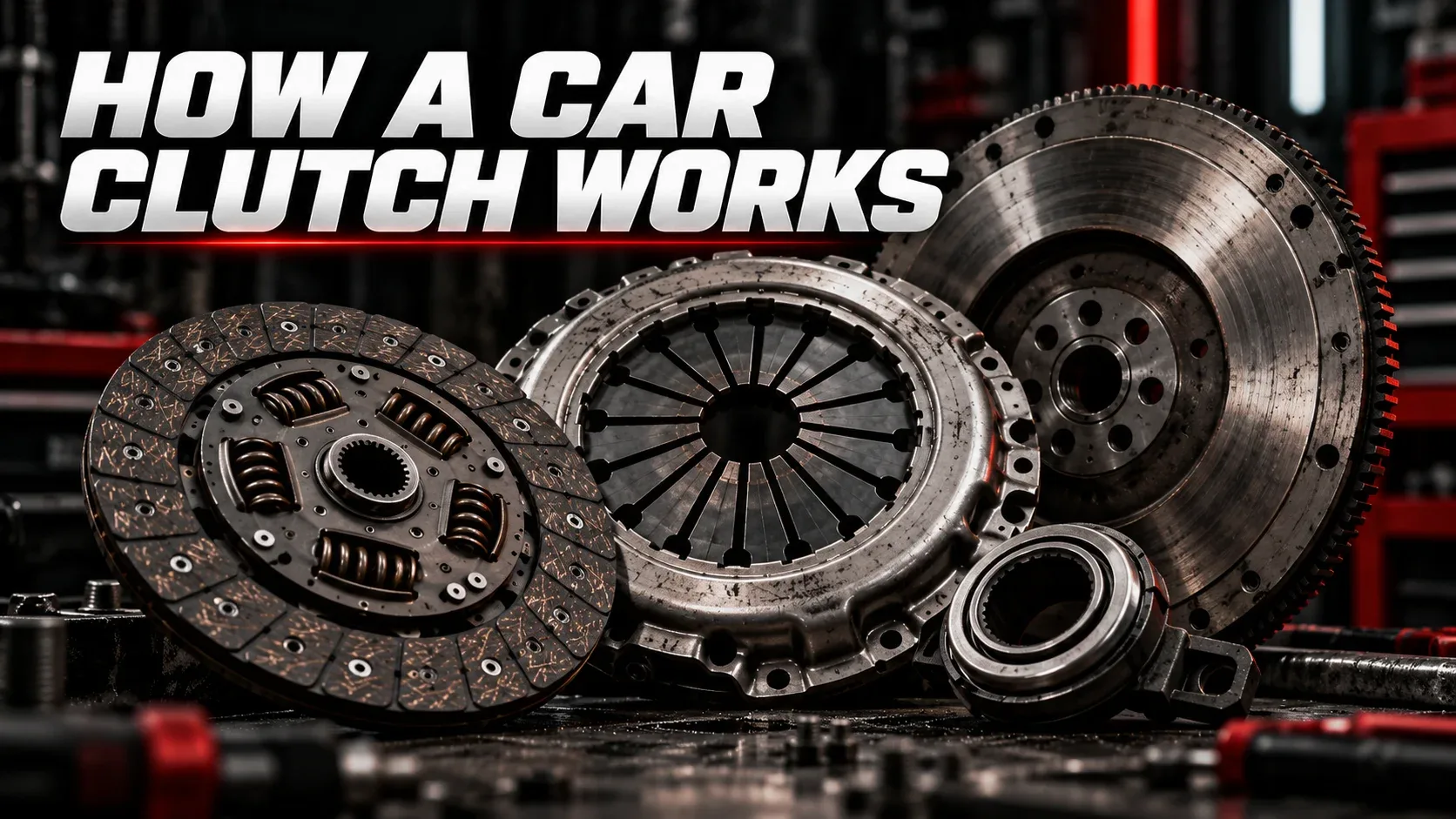
Main Components of a Manual Clutch
The friction component that transfers engine torque when clamped between the flywheel and pressure plate.
Provides the clamping force required to transmit engine power through the clutch disc.
An engine-mounted rotating component that provides a contact surface for the clutch disc.
Acts on the pressure plate release mechanism when the clutch is disengaged.
Many modern vehicles use hydraulic clutch operation, while others use mechanical cables or linkages. The specific design determines how problems should be diagnosed and repaired.
10 Common Symptoms of a Bad Clutch
Clutch problems often begin gradually. Recognizing early symptoms may prevent unexpected breakdowns and reduce the risk of damaging other drivetrain components.
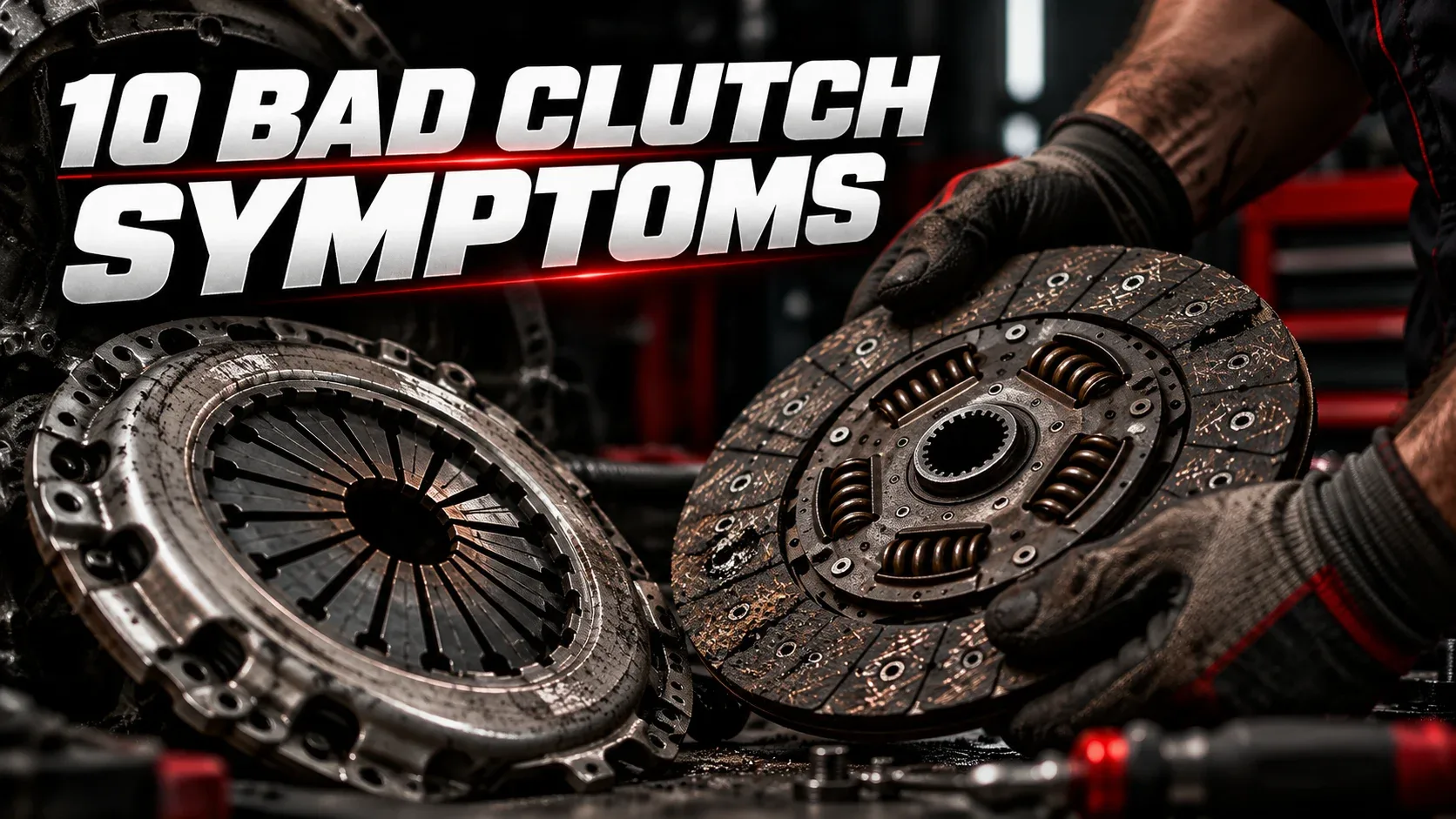
Engine RPM increases without a matching increase in road speed, especially under load. Worn friction material, contamination, or loss of clamping force may be responsible.
Gears are difficult to engage because the clutch may not fully disengage. Hydraulic faults, linkage issues, or transmission wear are possible causes.
Excessive clutch slipping can generate heat and a noticeable friction smell. Other vehicle components can also create burning odors.
Shaking or vibration while moving away may indicate an uneven clutch contact surface, contamination, or drivetrain mounting issues.
Air in a hydraulic circuit, low fluid, or cylinder seal problems can alter pedal resistance and engagement.
A pedal that does not return normally may indicate hydraulic leakage, spring damage, or release mechanism failure.
Grinding may occur when the clutch does not disengage completely, although worn transmission synchronizers can also be responsible.
Whirring, chirping, or rattling that changes with clutch pedal operation may involve the release bearing or another transmission component.
A slipping clutch may prevent full engine torque from reaching the wheels, making the vehicle feel weak under acceleration.
Leaks around hydraulic components may prevent proper disengagement. Engine or transmission oil leaks can also contaminate the clutch disc.
Clutch Symptom Diagnosis Chart
| Symptom | Possible Cause | Recommended Action |
|---|---|---|
| Engine revs without accelerating | Clutch slipping | Arrange prompt inspection |
| Soft or sinking pedal | Hydraulic fault | Check for leaks; avoid driving if control is impaired |
| Grinding while shifting | Incomplete release or gearbox wear | Have clutch and transmission diagnosed |
| Shuddering when pulling away | Clutch contamination or mounting problems | Inspect clutch and mounts |
| Pedal-related noise | Release bearing or associated mechanism | Identify noise source before replacement |
If the clutch cannot disengage, the vehicle is unexpectedly losing drive, gears cannot be selected safely, or there is smoke or a strong burning smell, stop in a safe location and arrange professional assistance. Do not force the shifter or continue driving a vehicle with unreliable clutch control.
Clutch Master Cylinder, Slave Cylinder, and Pedal Problems
Many manual vehicles use a hydraulic system that transfers pedal force to the clutch release mechanism. This normally consists of a master cylinder, hydraulic line, fluid reservoir or shared reservoir, and a slave cylinder or concentric hydraulic release bearing.
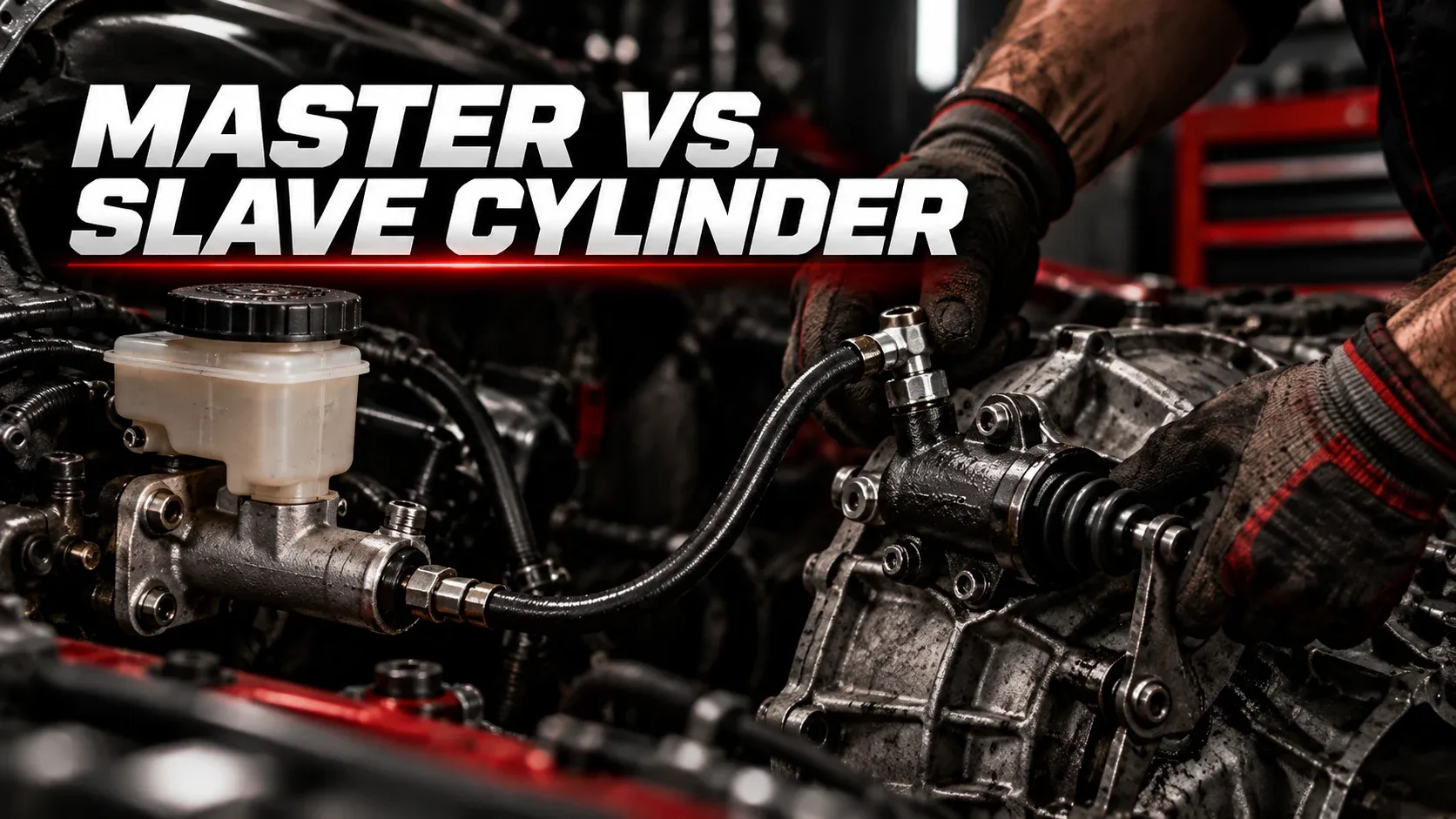
Clutch Master Cylinder
The clutch master cylinder converts clutch pedal movement into hydraulic pressure. Internal seal failure or external leakage can reduce pressure and prevent complete clutch disengagement.
Clutch Slave Cylinder
The slave cylinder uses hydraulic pressure to move the clutch release mechanism. A failed slave cylinder can cause difficult shifting, reduced clutch travel, fluid loss, or a pedal that feels abnormal.
Clutch Fluid Problems
Low clutch fluid is often a sign of a leak rather than ordinary fluid consumption. Use only the fluid specification stated by the vehicle manufacturer. Some systems share a brake fluid reservoir, while other vehicles use separate reservoirs.
- Check the manufacturer-specified fluid reservoir level.
- Inspect accessible hydraulic lines and connections for leaks.
- Look for moisture around the master cylinder and pedal area.
- Check for possible leakage at the transmission bell housing.
- Have the system tested and bled using the correct service procedure.
Should You Repair or Replace a Bad Clutch?
The correct repair depends on which component is faulty. A worn clutch disc generally requires replacement, while some hydraulic, cable, or external linkage issues can be corrected without replacing the complete clutch assembly.
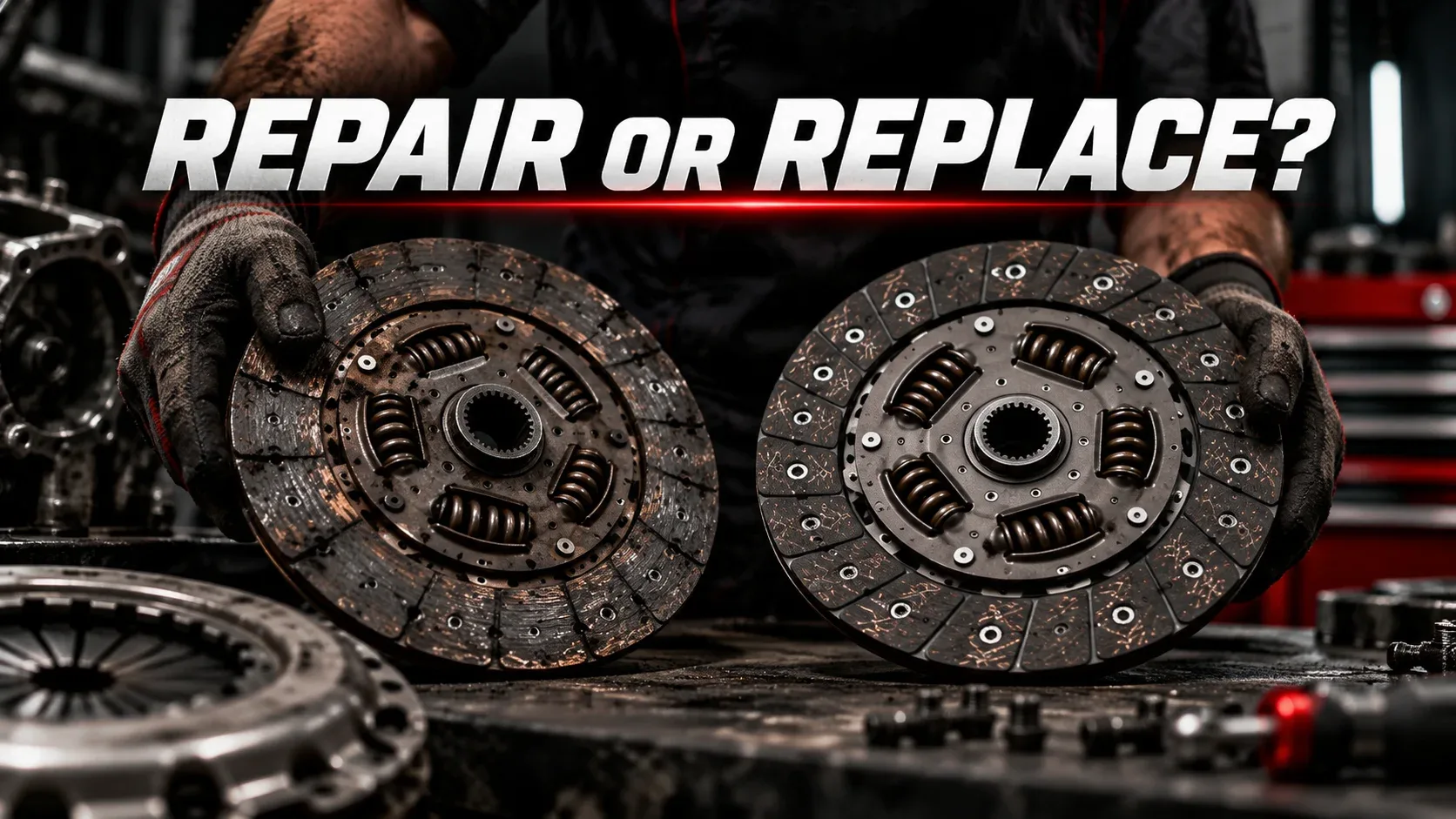
| Condition | Likely Repair | Reason |
|---|---|---|
| Worn friction disc | Clutch assembly replacement | Friction material cannot be restored through adjustment |
| Leaking master cylinder | Master cylinder repair or replacement as applicable | Hydraulic pressure is compromised |
| Failed slave cylinder | Slave cylinder replacement | Release travel may be insufficient |
| Incorrect cable adjustment | Adjustment where manufacturer permits | Release or engagement travel is incorrect |
| Damaged release bearing | Bearing replacement, often during clutch service | May produce noise or release problems |
When transmission removal is necessary, replacing related worn parts during the same job may reduce the chance of paying for the same major labor operation again. However, every additional repair should be justified by inspection.
How Much Does Clutch Replacement Cost in 2026?
Clutch replacement costs vary significantly across the United States. The vehicle’s design, labor rates, parts availability, and whether flywheel or hydraulic repairs are needed all influence the final bill.
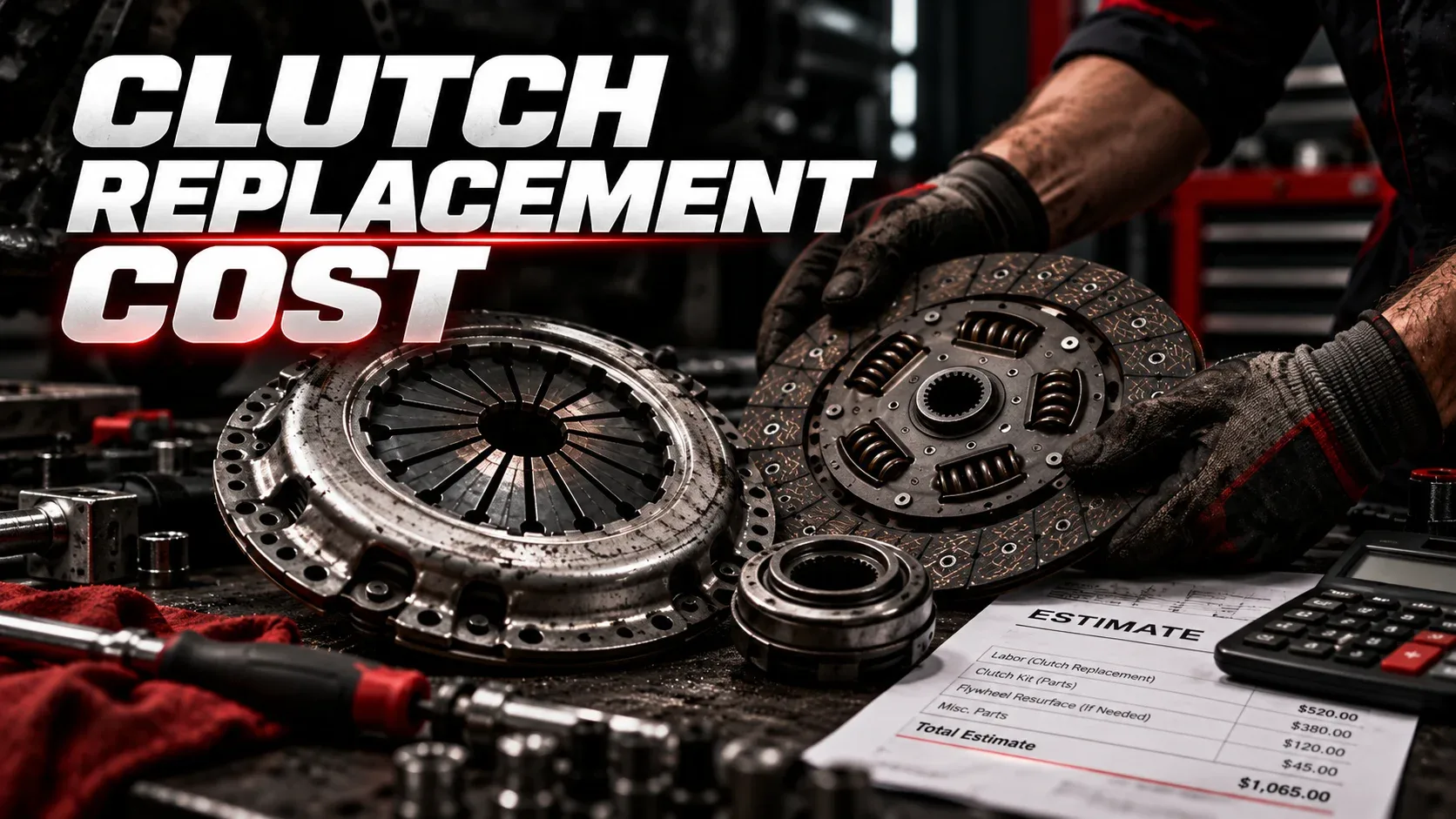
Published U.S. clutch replacement estimate, September 2026
$1,630 – $2,047
Indicative average replacement range, not a vehicle-specific repair quote.
Estimated Parts and Labor Breakdown
| Expense | Published Estimate |
|---|---|
| Replacement parts | $809–$843 |
| Labor | $821–$1,204 |
| Overall estimate | $1,630–$2,047 |
Editorial note: These are published general U.S. estimates from September 2026 and are not guaranteed prices. Taxes, local rates, vehicle-specific adjustments, and additional repair work can change the total.
What Affects the Clutch Change Price?
- Vehicle make and model: Some drivetrains are much more labor-intensive to dismantle.
- Transmission accessibility: Front-wheel drive, rear-wheel drive, all-wheel drive, and four-wheel drive layouts require different work.
- Clutch kit quality: Original equipment and aftermarket components may have different prices.
- Flywheel condition: Resurfacing or replacement, where applicable, increases total costs.
- Hydraulic components: An internal slave cylinder may be replaced during clutch service.
- Labor location: Local repair shop labor rates vary.
Ask for a written estimate showing the clutch kit, labor, flywheel work, hydraulic components, fluids, taxes, diagnostic fees, and warranty coverage. Confirm whether additional repairs require separate approval.
What Is Included in a Clutch Kit?
A clutch kit groups several replacement components typically serviced together. Contents vary by manufacturer and vehicle application, so buyers should confirm the exact included parts before ordering.
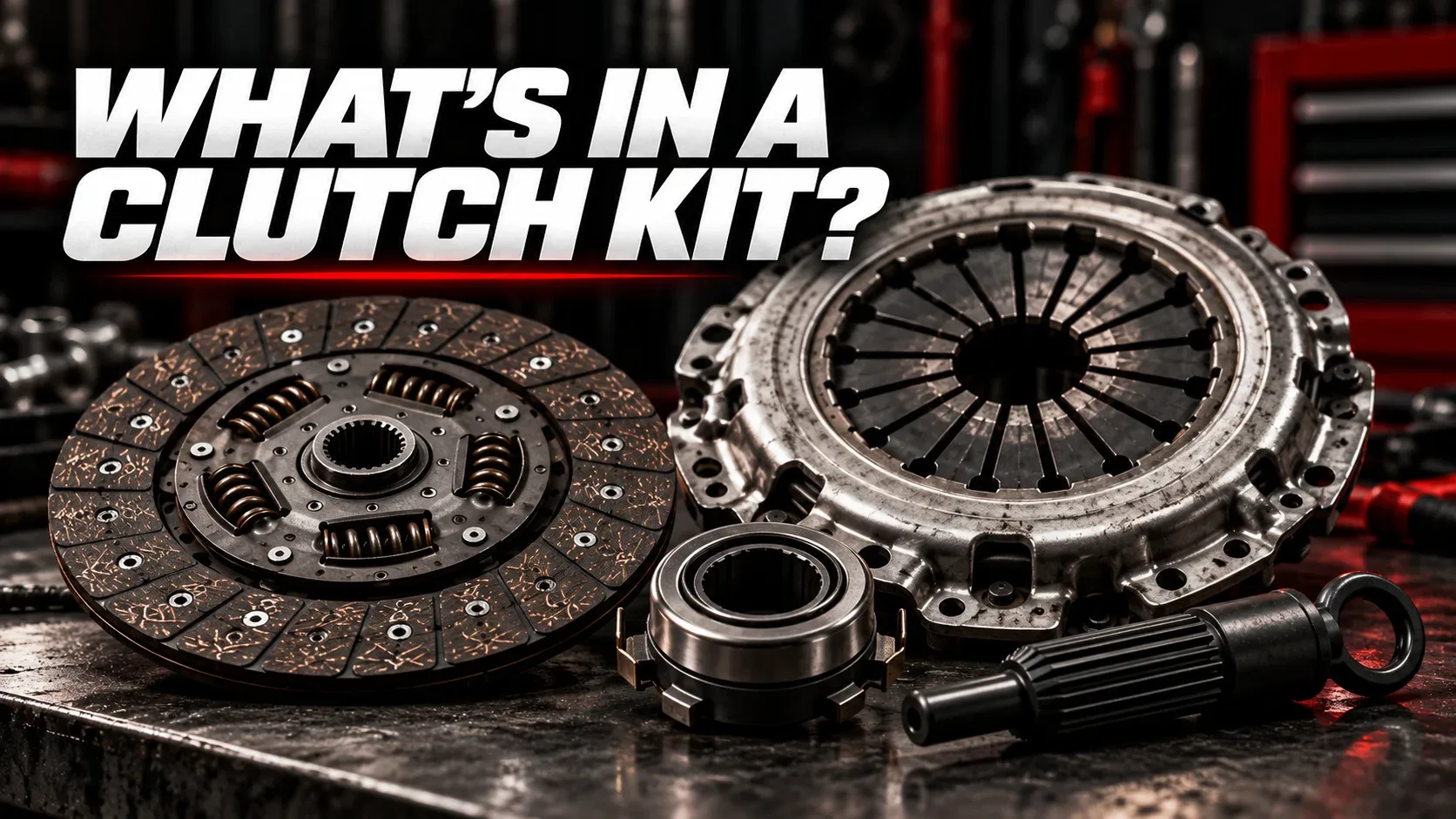
- Friction disc: Transfers torque through friction.
- Pressure plate: Provides the necessary clamping force.
- Release bearing: Operates the pressure plate release mechanism.
- Pilot bearing or bushing: Included on some applications, depending on design.
- Clutch alignment tool: Supplied with some kits to help position the friction disc during installation.
The flywheel, transmission input seals, hydraulic release bearing, clutch fork, and other related parts are not necessarily supplied in the kit.
Why Is a Clutch Alignment Tool Important?
A clutch alignment tool centers the friction disc relative to the flywheel and pilot support where applicable. Proper alignment helps the transmission input shaft enter the clutch hub during reassembly. The tool must match the vehicle’s clutch design and dimensions.
How to Replace a Car Clutch: General Step-by-Step Overview
Manual clutch replacement normally requires removing or separating the transmission from the engine. It is a substantial repair requiring vehicle-specific technical information, appropriate lifting equipment, correct torque specifications, and experience handling heavy drivetrain assemblies.
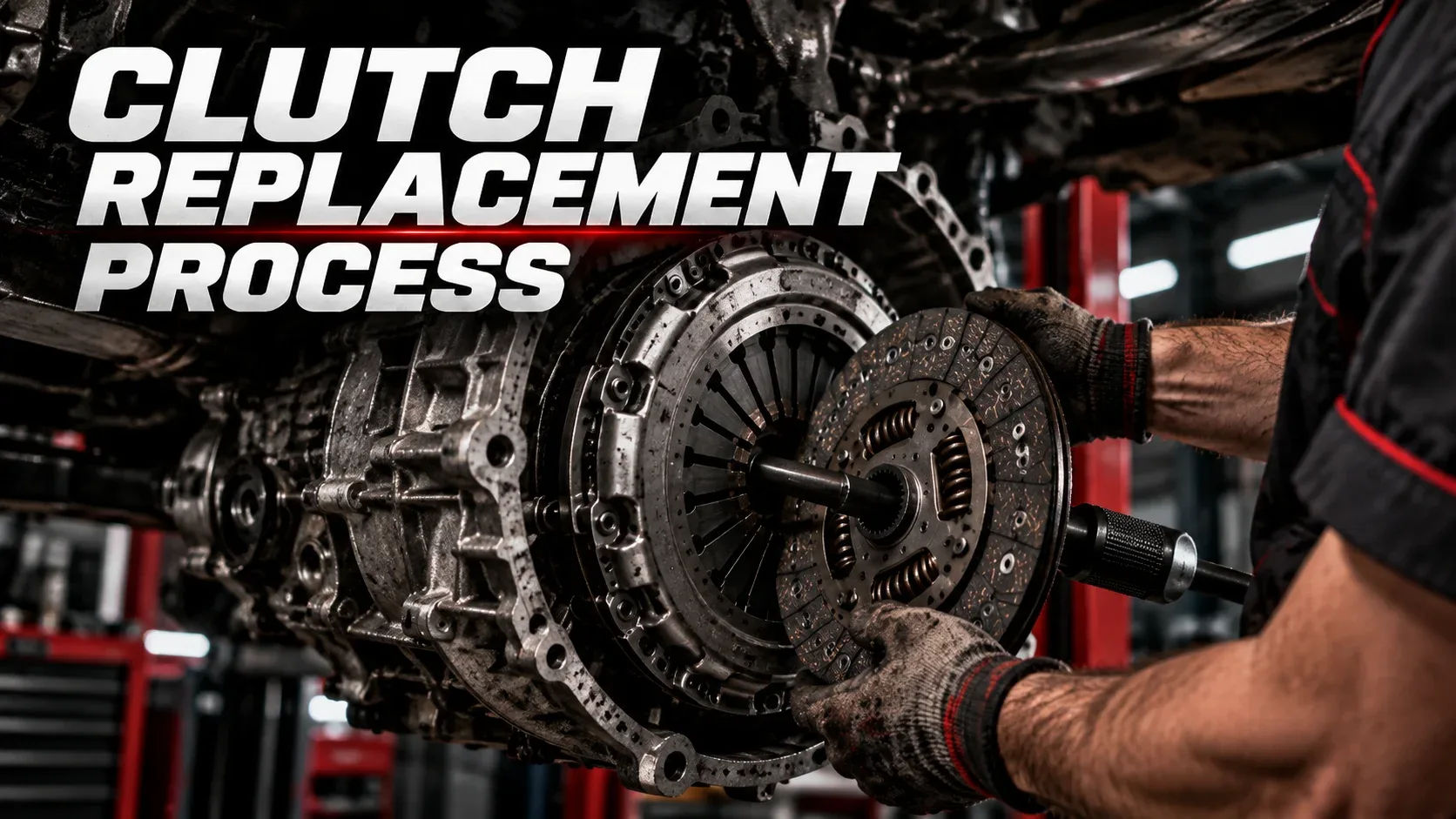
- Confirm the fault: Diagnose the clutch and hydraulic system before ordering replacement parts.
- Prepare the vehicle: Follow manufacturer instructions for battery isolation, vehicle lifting, and drivetrain support.
- Access the transmission: Remove or reposition the vehicle-specific components required for transmission removal.
- Separate the transmission: Support its weight correctly and avoid damaging the input shaft or related components.
- Inspect the assembly: Examine the clutch disc, pressure plate, flywheel, bearings, and relevant seals.
- Install new parts: Use the correct clutch alignment tool and the manufacturer’s required installation sequence and torque specifications.
- Reassemble the drivetrain: Reinstall components according to service instructions, including correct fasteners and fluid procedures.
- Verify operation: Check engagement, hydraulic operation, fluid leaks, unusual noise, and shift quality before returning the vehicle to service.
Never work beneath a vehicle supported only by a jack. Incorrect support, transmission handling, installation, or torque procedures can cause serious injury or vehicle damage. This overview is educational and is not a substitute for the manufacturer’s repair manual.
Do Automatic Cars Have a Clutch?
Yes, many automatic transmissions contain clutches, but they generally operate differently from the foot-pedal clutch in a conventional manual-transmission car.
Traditional torque-converter automatic transmissions commonly use internal multi-plate clutch packs to select gear ratios. They may also use a torque converter lockup clutch to reduce slip under appropriate driving conditions.
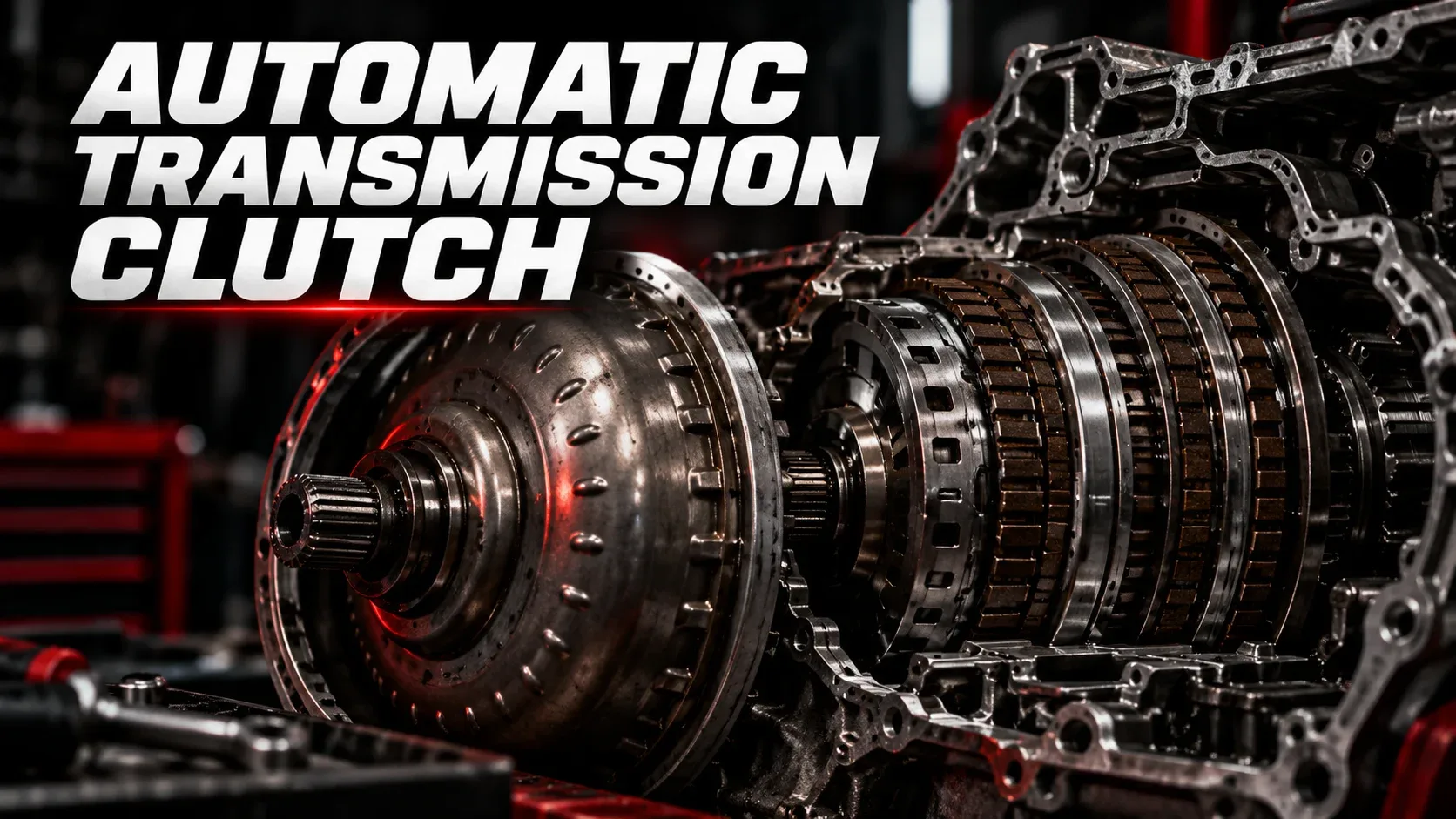
What Is a Torque Converter Clutch?
The torque converter clutch, sometimes called the TCC or lockup clutch, creates a more direct mechanical connection inside the torque converter when commanded by the transmission control system. This can improve efficiency by reducing converter slip.
Torque Converter Clutch Solenoid Problems
A torque converter clutch solenoid helps control hydraulic pressure applied to the lockup clutch. Depending on the transmission and failure mode, problems may produce shuddering, abnormal lockup behavior, certain stalling conditions, or diagnostic trouble codes.
Codes such as P0740 or P0741 may indicate issues involving the torque converter clutch control system, but they do not identify a failed solenoid on their own. Wiring, valve-body, fluid-pressure, converter, and internal mechanical faults may also need investigation.
| Transmission | Clutch Operation |
|---|---|
| Manual transmission | Driver typically operates a clutch pedal. |
| Conventional automatic | Hydraulic/electronic controls operate internal clutches and converter lockup. |
| Dual-clutch transmission | Automated controls operate two clutch systems to manage alternating gear sets. |
Fan Clutch Problems and Removal Tools
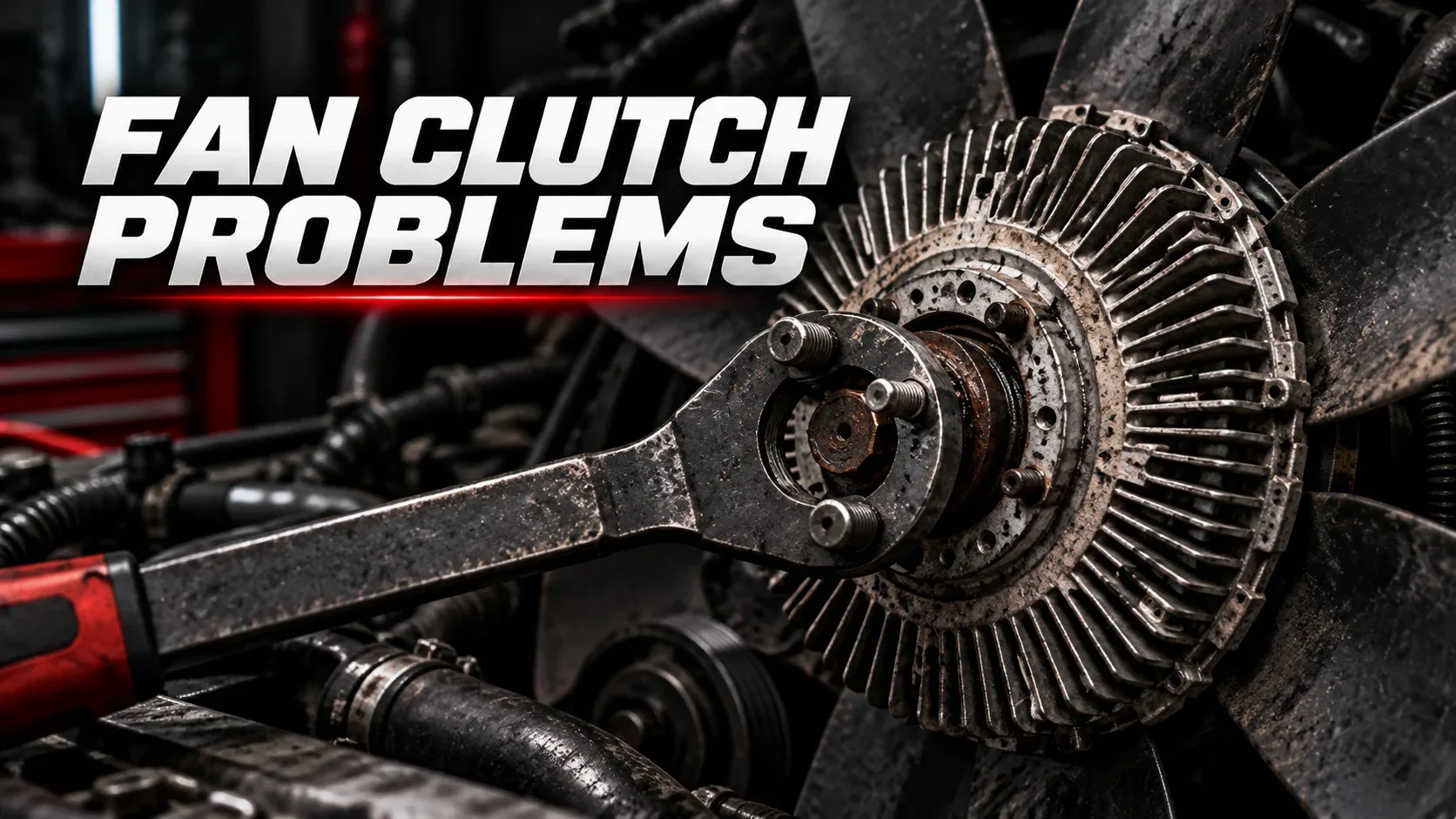
A fan clutch is a separate engine-cooling component. It should not be confused with the clutch used by a manual transmission.
On vehicles equipped with a mechanical engine-driven cooling fan, the fan clutch helps regulate fan operation based on its design and operating conditions. Faults may contribute to overheating at low road speeds, excessive fan noise, or abnormal fan behavior.
Common Signs of a Faulty Fan Clutch
- Engine temperature increases during idle or low-speed driving.
- Fan noise remains unusually loud under conditions when engagement should reduce.
- Fan response is inconsistent with the cooling demands of the engine.
- There is visible leakage from a viscous fan clutch, where applicable.
Which Fan Clutch Removal Tool Do You Need?
Common tools for removing a fan clutch include a fan clutch wrench and a pulley-holding tool. The correct tool depends on the engine and fan assembly. Certain threaded fan clutches have different thread directions, and some are attached with bolts instead.
Always identify the exact fan clutch design before attempting removal. Never place hands or tools near a fan that could begin rotating, and follow the service procedure for engines with electronically controlled fans.
A/C Compressor Clutch Problems: Symptoms and Repair
The air-conditioning compressor clutch is another separate automotive clutch system. In vehicles equipped with a clutch-driven A/C compressor, it uses an electromagnetic mechanism to connect the compressor to the pulley when air conditioning is requested and operating conditions permit.
Some modern vehicles use variable-displacement or clutchless compressor designs, so a visible clutch engagement test does not apply to every vehicle.
Common A/C Clutch Symptoms
- Air conditioning does not cool as expected.
- The compressor clutch does not engage when the system requests operation.
- Unusual pulley or bearing noises occur.
- The clutch engages inconsistently on applicable designs.
- There is evidence of damaged wiring or clutch coil failure.
Can You Fix an A/C Compressor Clutch?
Some compressor clutch assemblies can be repaired or replaced separately, depending on compressor design, parts availability, and the underlying failure. In other cases, compressor replacement is required.
Before replacing an A/C clutch, a technician should determine whether the fault involves electrical supply, control commands, refrigerant-system pressure, the compressor itself, the clutch coil, or the pulley bearing.
Do not vent refrigerant or open a pressurized A/C system. Refrigerant handling and many types of A/C servicing require specialized equipment and applicable technician certification in the United States.
Search terms such as fix AC clutch, air con pump clutch, compressor AC clutch, and aircon clutch repair generally refer to this air-conditioning system rather than a gearbox clutch.
Ford Clutch Recalls: What Owners Should Know
Vehicle manufacturers sometimes issue recalls involving clutch components, hydraulic lines, transmission control systems, or other related equipment. A recall applies only to specified vehicles and defects.
2024 Ford Mustang Clutch Pressure Line Recall
In June 2024, Ford submitted recall 24V-394, manufacturer recall number 24S36, concerning certain 2024 Ford Mustang vehicles equipped with manual transmissions.
The reported defect involved possible improper retention of the clutch pressure line at the firewall. The line could contact hot exhaust components and become damaged, potentially causing fluid leakage, difficulty changing gears, engine stalling under certain conditions, or an underhood fire.
NHTSA Recall: 24V-394
Ford Recall: 24S36
Vehicle: Certain 2024 Ford Mustang models with manual transmissions
How to Check for an Open Recall
- Locate your vehicle identification number (VIN).
- Use the official National Highway Traffic Safety Administration recall lookup service.
- Enter the VIN and review any listed incomplete safety recalls.
- Contact an authorized manufacturer dealership for clarification and applicable recall service.
A news headline about Ford recalls or improper clutch repairs does not mean every Ford model is affected. Always verify recall eligibility using the specific VIN and official documentation.
How to Make Your Car Clutch Last Longer
Driving habits, vehicle use, mechanical condition, and maintenance all influence clutch service life. Although normal wear cannot be eliminated, avoiding unnecessary slipping and addressing mechanical problems early can help extend clutch life.
Do not rest your foot on the pedal while driving, because unintended partial engagement may accelerate wear.
Avoid holding the vehicle stationary by slipping the clutch. Use the parking or service brake as appropriate.
Use appropriate clutch pedal travel and avoid forcing gears when engagement is difficult.
Address hydraulic, engine oil, and transmission leaks that could interfere with clutch operation.
Heavy loads and excessive slipping during launches can increase heat and wear.
Use the manufacturer’s specified fluids and inspection intervals for your vehicle.
Frequently Asked Questions About Clutch Problems
These answers address common questions about clutch repair, replacement, costs, and diagnosis.
What are the first signs of clutch failure?
Early signs may include slipping under acceleration, difficulty selecting gears, juddering, pedal changes, or unusual smells. Similar symptoms can also come from hydraulic or transmission problems.
How much does it cost to replace a clutch?
A published September 2026 U.S. estimate gives a general range of $1,630 to $2,047. Your actual cost may be substantially different depending on the vehicle, location, and additional repairs.
Can you drive with a slipping clutch?
Continuing to drive may overheat and damage clutch components and can cause unexpected loss of effective drive. Arrange prompt assessment; if the vehicle is difficult to control or drive safely, stop and arrange recovery.
How long does a car clutch last?
Clutch life varies widely with driving habits, vehicle design, traffic, load, and maintenance. There is no reliable universal mileage at which every clutch must be replaced.
What happens when the clutch master cylinder fails?
The system may be unable to produce or maintain hydraulic pressure, causing abnormal pedal travel, difficulty shifting, fluid leakage, or incomplete clutch disengagement.
Is a clutch slave cylinder expensive to replace?
Cost depends heavily on accessibility. External slave cylinders are often easier to service, while internal concentric slave cylinders may require transmission removal and substantial additional labor.
Do automatic transmissions have clutches?
Yes. Many conventional automatic transmissions use internal clutch packs and a torque converter lockup clutch. Dual-clutch transmissions use electronically controlled clutch mechanisms.
What does a clutch alignment tool do?
It helps center the clutch friction disc during installation so the transmission input shaft can align correctly when the transmission is reinstalled.
Can low clutch fluid cause shifting problems?
Yes. Low fluid or air entering a hydraulic clutch circuit can prevent the release mechanism from moving through its full range. The cause of fluid loss should be investigated.
How long does clutch replacement take?
The required labor varies by vehicle, drivetrain layout, workshop equipment, and related repairs. A shop can provide a more useful estimate after identifying the specific vehicle and repair scope.
Final Verdict: Diagnosing Clutch Problems Before Replacement
Clutch problems can range from relatively straightforward hydraulic faults to a worn clutch assembly requiring major transmission removal. The most important step is identifying the source of the symptoms before approving expensive repair work.
A slipping clutch may need mechanical replacement, while a soft clutch pedal, fluid leak, or difficulty shifting could result from hydraulic problems. Automatic transmission clutch systems, fan clutches, and A/C compressor clutches serve different purposes and require their own diagnostic procedures.
Your Clutch Repair Action Checklist
- Identify the symptoms and when they happen.
- Stop driving if clutch operation becomes unsafe or unpredictable.
- Request diagnosis of the hydraulic, mechanical, and transmission systems.
- Obtain a written estimate before authorizing repairs.
- Confirm replacement components are correct for your vehicle.
- Ask about the parts and labor warranty.
Technical and Safety Information
This article provides general automotive information. Diagnosis and repair methods differ by vehicle, engine, transmission, and model year. Always follow manufacturer-approved service procedures. Replacement prices are estimates, not guaranteed quotes. Recall eligibility should be checked using the vehicle’s VIN and official manufacturer or safety recall records.