
A field-minded guide to the best impact driver categories for decking, framing, cabinetry and repair work, plus the brushless features that make a measurable difference when the trigger stays busy.
Choose the driver you can control all day, not simply the one with the biggest headline number
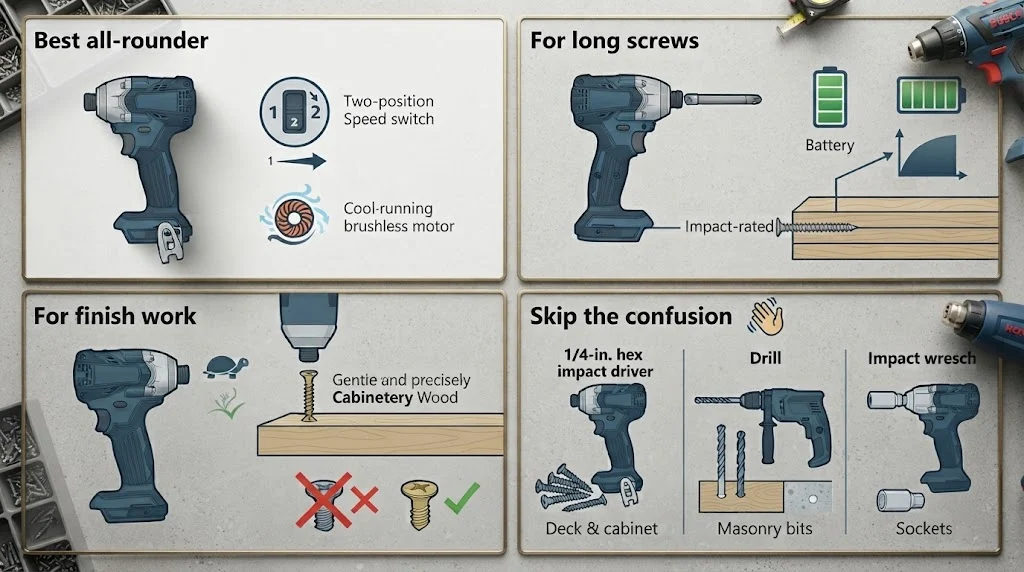
Best all-rounder
A compact brushless 18V-class driver with two or more speed settings.
For long screws
Prioritize sustained power, a healthy battery platform and impact-rated bits.
For finish work
Look for low-speed or assist modes that help prevent cam-out and snapped screws.
Skip the confusion
A 1/4-inch hex driver is for fasteners; use a drill for holes and a wrench for sockets.
What makes an impact driver the right first cordless fastening tool?
A cordless impact driver uses a hammer-and-anvil mechanism behind a 1/4-inch hex collet. Instead of constantly twisting your wrist like a drill can, it delivers short rotational impacts once resistance rises. That makes it especially effective for repetitive deck screws, structural screws, self-tappers and cabinet-install hardware.
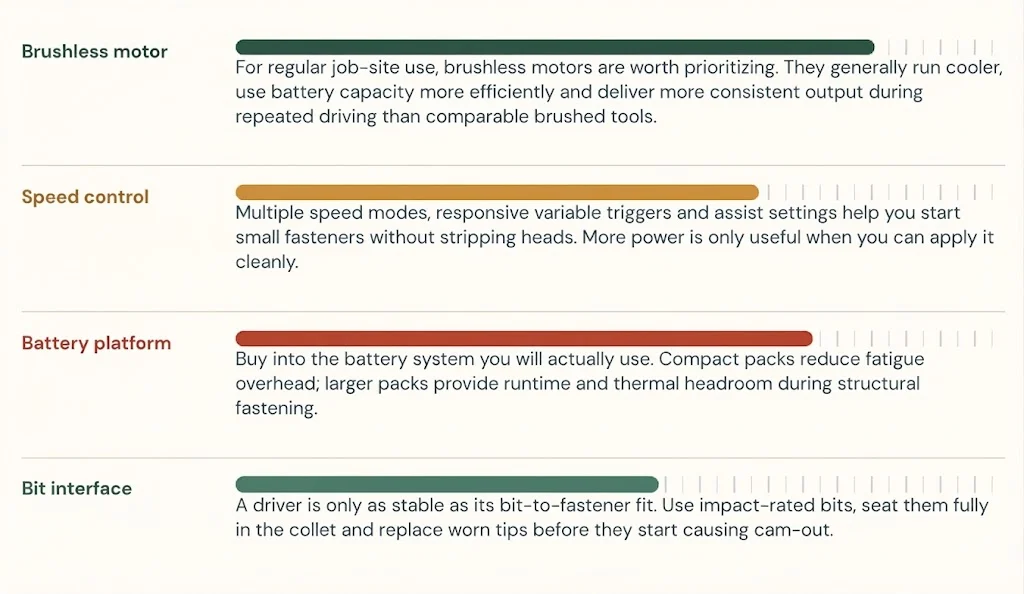
The best impact driver is not necessarily the highest-torque model. In day-to-day work, trigger control, tool length, battery balance, collet reliability and the ability to start a fastener cleanly matter just as much. A brushless impact driver is usually the practical starting point for frequent users because it tends to manage heat and battery energy better under repeated loads.
How to choose a brushless impact driver that earns its place
Ignore vague labels such as “pro power” until you have checked the features that affect the work in your hands. The following four areas determine whether a driver feels useful on a long deck build, controlled in a cabinet face frame or durable through a busy maintenance shift.
Top ten impact driver picks by job, not hype
These top ten impact driver categories are application-first recommendations. Confirm current manufacturer specifications, kit contents, warranty terms and battery compatibility before buying a particular model. The goal is to match the tool profile to the fasteners and access constraints you face most often.
Best overall: compact brushless 18V driver
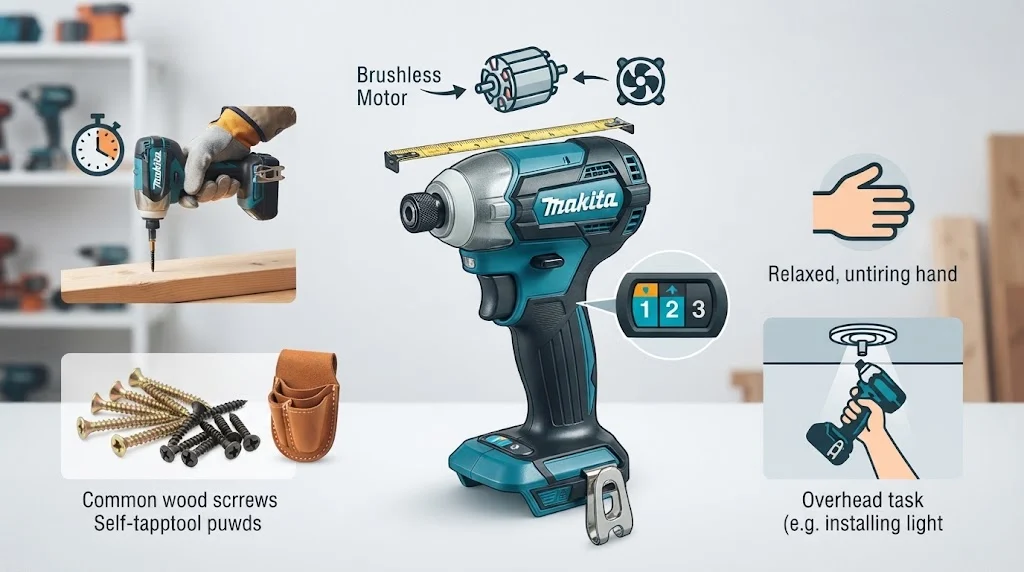
The most useful profile for mixed trade work: short head length, a brushless motor and at least two speed settings. It covers common wood screws and self-tappers without becoming tiring in a pouch or overhead.
Best for decking: high-output brushless driver
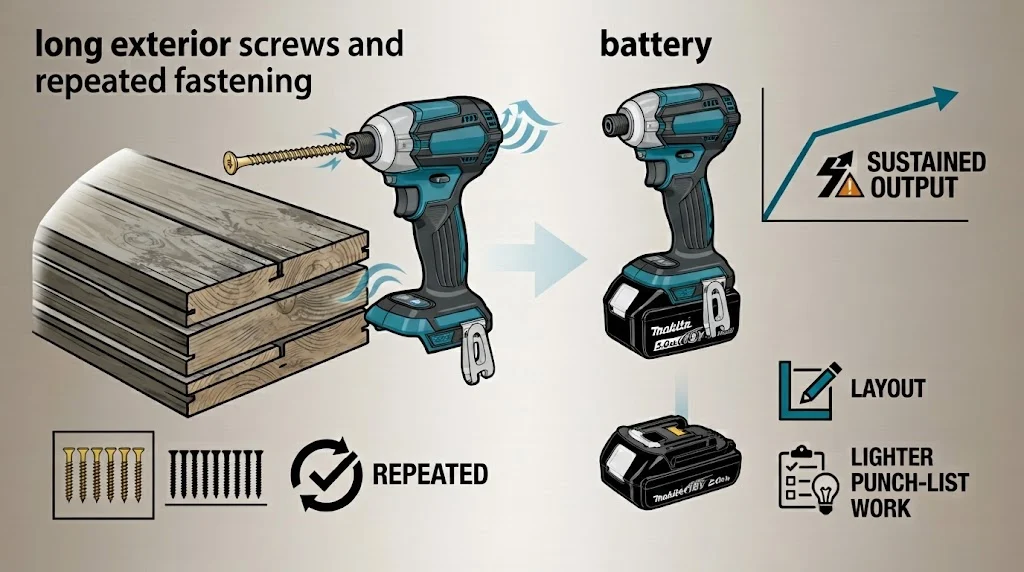
For long exterior screws and repeated fastening, choose a driver with strong sustained output and a larger compatible battery option. Keep a compact pack available for layout and lighter punch-list work.
Best for cabinetry: multi-mode precision driver
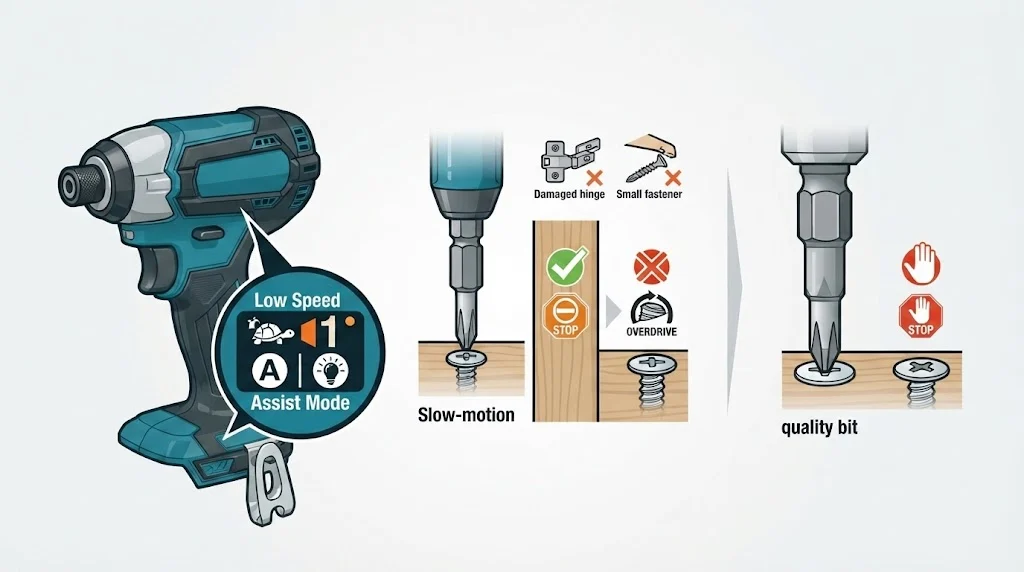
Low-speed and assist modes reduce the chance of overdriving cabinet screws, damaging hinges or snapping small fasteners. Pair it with quality bits and stop before the fastener bottoms hard.
Best for framing: durable workhorse driver
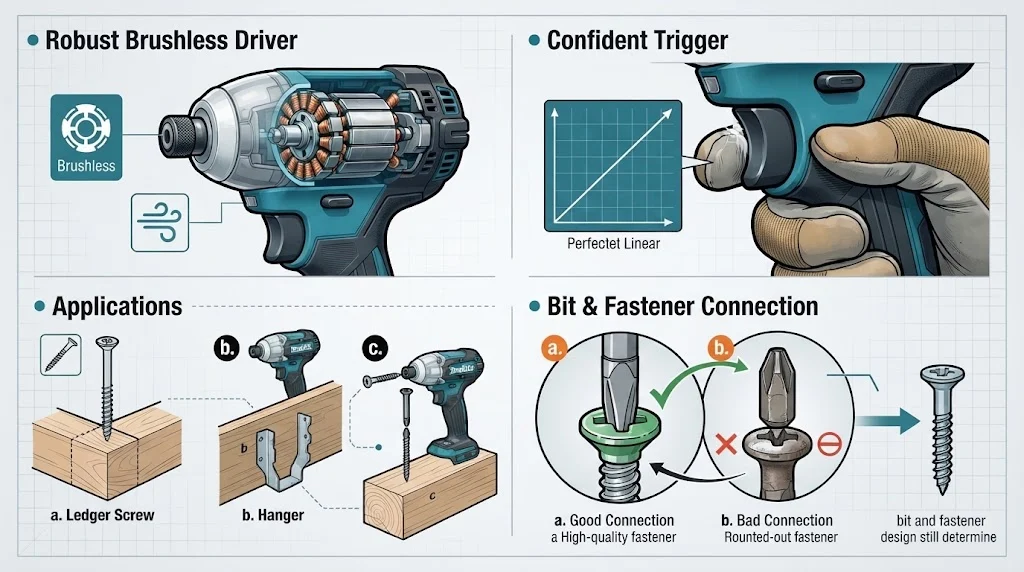
A robust brushless driver with good cooling and a confident trigger suits ledger screws, hangers and blocking. The bit and fastener design still determine whether a connection drives cleanly.
Best compact: short-head installation driver
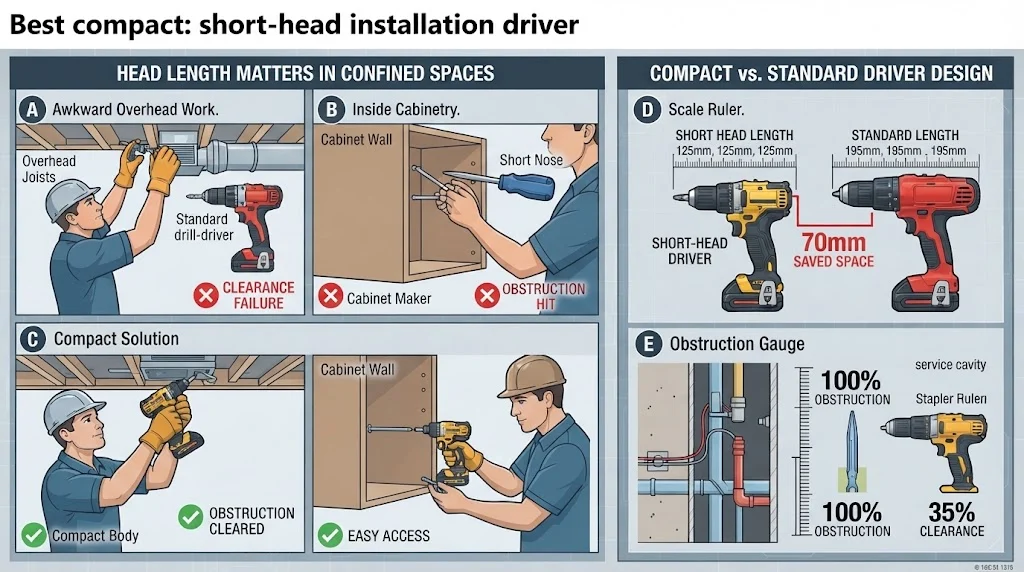
For inside cabinets, service cavities and awkward overhead work, head length matters. A compact unit can save more time than a higher-torque tool that will not physically clear the obstruction.
Best value: simple brushless kit
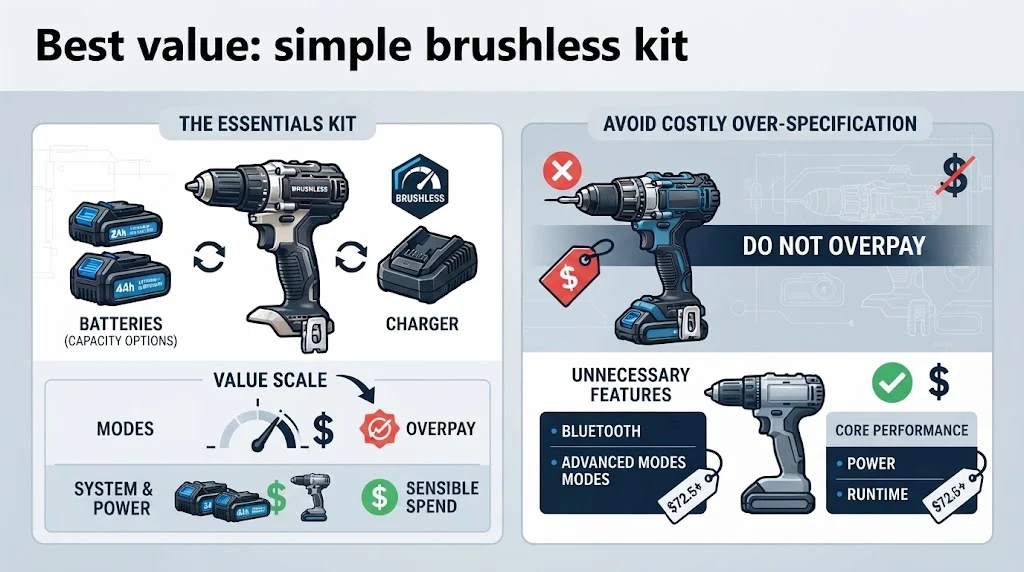
A sensible value pick includes the driver, charger and batteries with capacity suited to your workload. Do not overpay for modes you will not use while underbuying the battery system.
Best for metal fastening: controlled high-speed driver
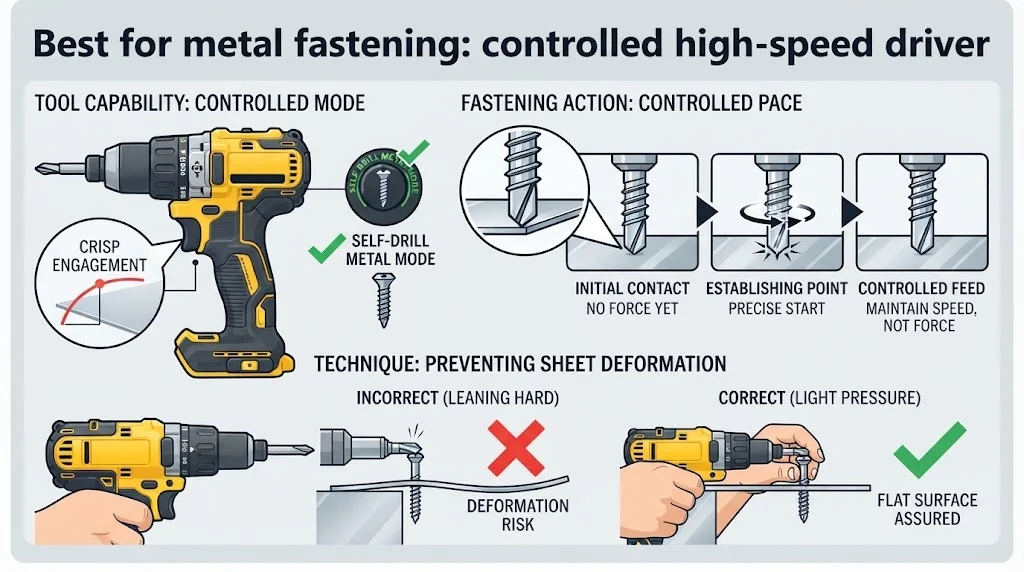
For self-drilling screws in thin metal, a crisp trigger and controlled mode are valuable. Let the screw establish its point, keep the bit square and avoid leaning hard enough to deform the sheet.
Best for maintenance: balanced daily-carry driver
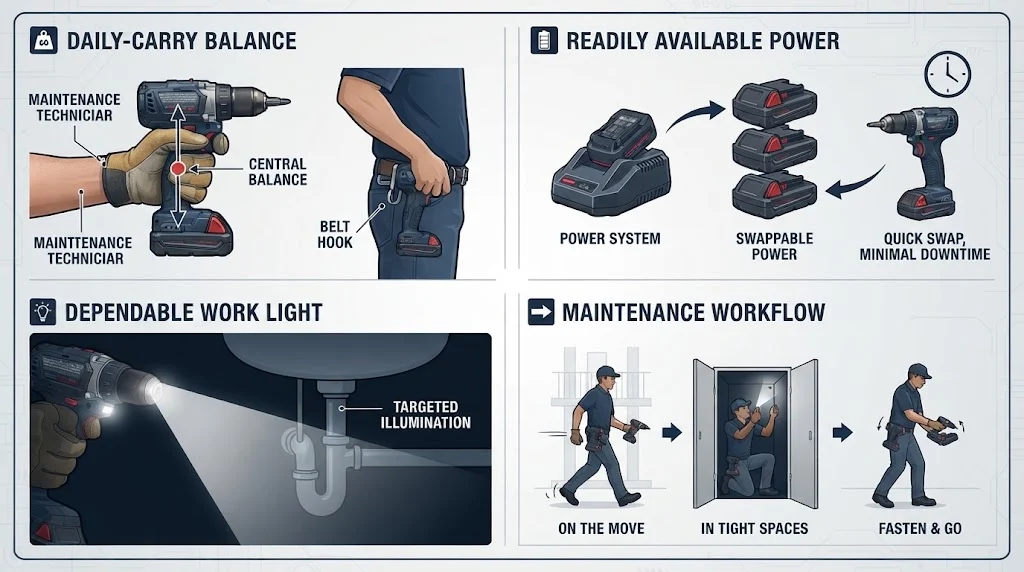
Maintenance staff benefit from a well-balanced tool that is easy to carry between calls. A belt hook, dependable work light and readily available batteries are practical advantages.
Best for occasional DIY: reliable entry brushless model
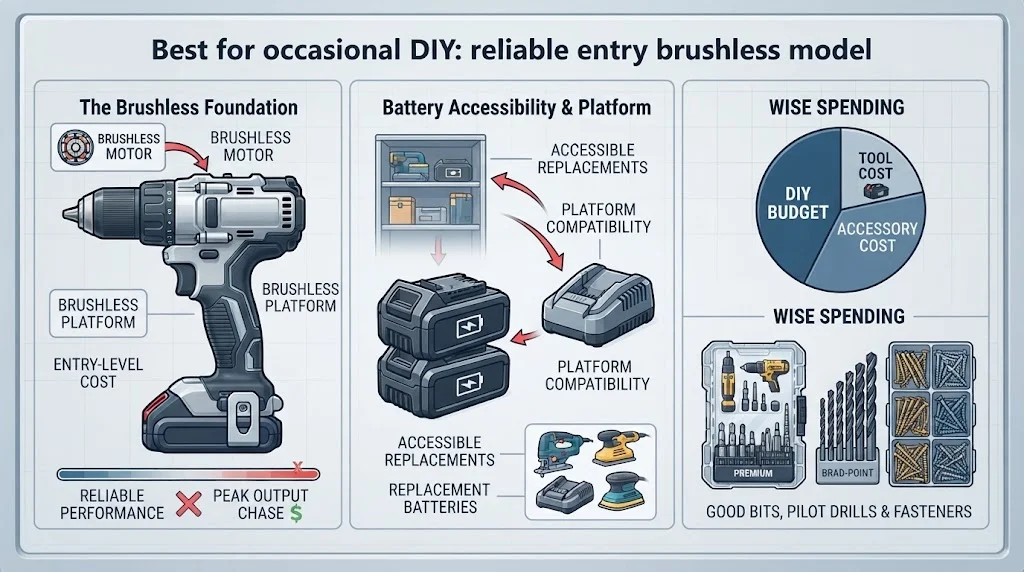
For periodic projects, buy a reputable brushless platform with accessible replacement batteries rather than chasing peak output. Spend the difference on good bits, pilot drills and proper fasteners.
Best upgrade: connected or advanced-mode driver
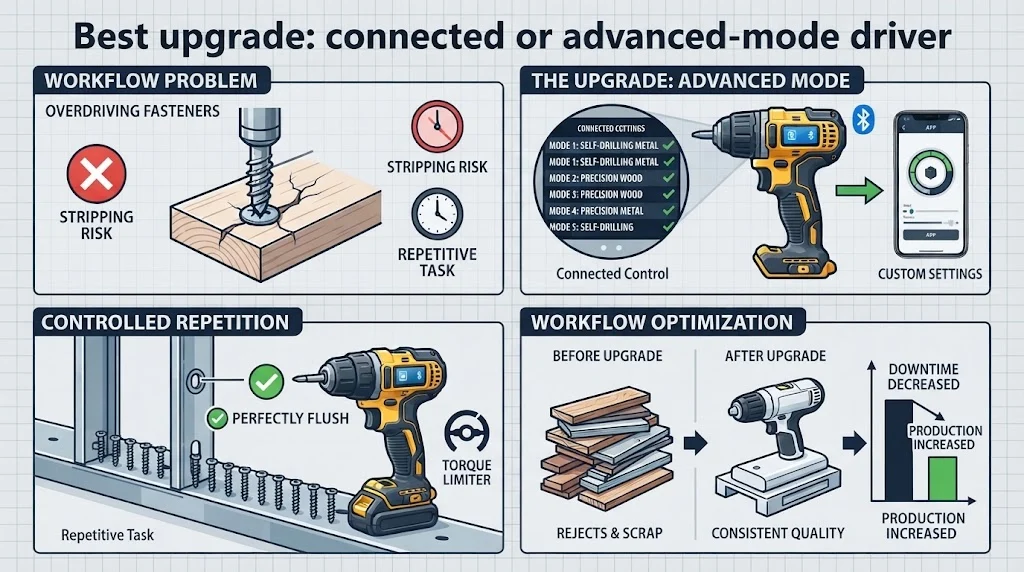
Advanced modes can be useful for repetitive trade tasks when they improve control, not just specification-sheet appeal. Upgrade when the extra setting solves a recurring problem in your workflow.
What real job-site use exposes quickly
A driver that feels impressive on a short test can still be awkward after an hour of overhead fastening. Check grip shape with gloves on, battery balance, the ease of changing bits and whether the work light illuminates the fastener instead of your hand.
The limitation to remember
An impact driver is not a drill press, a hammer drill or an impact wrench. It can turn occasional small socket adapters, but a square-drive impact wrench is the correct choice for lug nuts and stubborn bolts.
Match the driver to the fastener and workspace
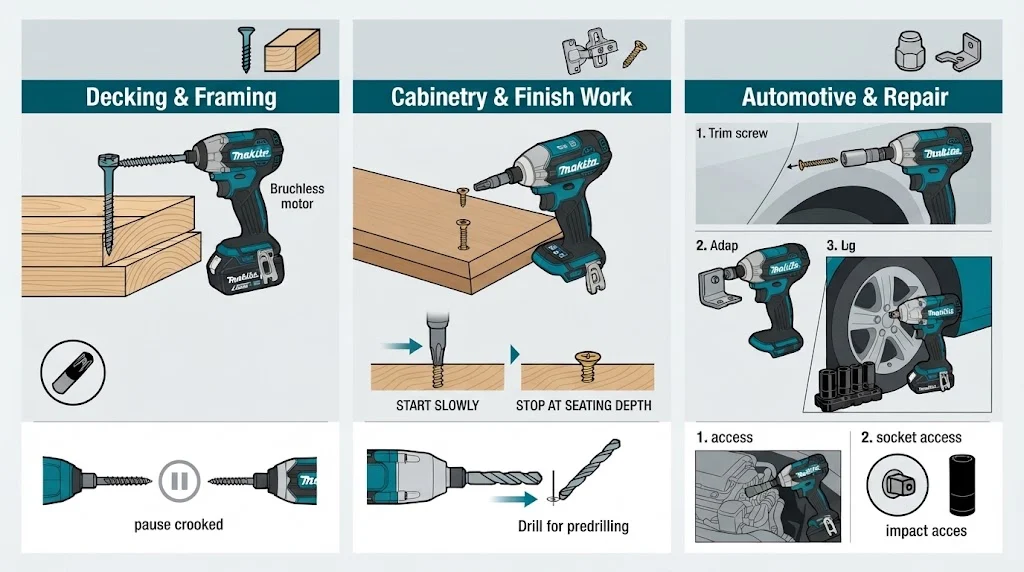
The best cordless impact driver choice changes when the work changes. Use the same practical filter a working contractor would: fastener diameter and length, material, access, repetition, and the consequence of an overdriven screw.
Decking & framing
Choose brushless power and adequate battery capacity. Use the bit specified for the structural screw, hold the driver inline and pause if the fastener starts to wander or bind.
Cabinetry & finish work
Controlled modes beat brute force. Start slowly, predrill when the material requires it and stop at seating depth instead of hammering a small screw into fragile stock.
Automotive & repair
Use an impact driver for trim screws, light brackets and occasional small adapters. Reach for an impact wrench and impact-rated sockets when bolt torque and square-drive access are required.
Best impact driver FAQs
Is a brushless impact driver worth paying more for?
For frequent use, usually yes. Brushless tools generally offer better battery efficiency, heat management and sustained performance. For occasional users, the right battery platform and quality bit set may matter more than paying for every premium control mode.
Can an impact driver replace a drill?
Not completely. Hex-shank drill bits work in an impact driver for some holes, but a drill/driver with a keyless chuck, clutch and lower-speed control is the better tool for precise drilling, hole saws, large spade bits and delicate materials.
How much torque do I need in an impact driver?
Enough for your longest and most common fasteners, with enough control to avoid damaging smaller ones. Compare real application capability, speed modes, battery options and tool size instead of relying on a single torque figure from the box.