
A complete guide to SE trim levels — what SE stands for, how it differs by manufacturer, and whether an SE model is worth the extra cost.
What Does SE Mean on a Car?
SE on a car most commonly stands for “Sport Edition” or “Special Edition.” It is a trim level — a specific package of features, styling and equipment that a manufacturer assigns to distinguish one version of a model from another. When you see a vehicle listed as “Toyota Camry SE” or “Hyundai Elantra SE,” the SE badge indicates it sits at a particular position in that model’s lineup, typically above the base trim.
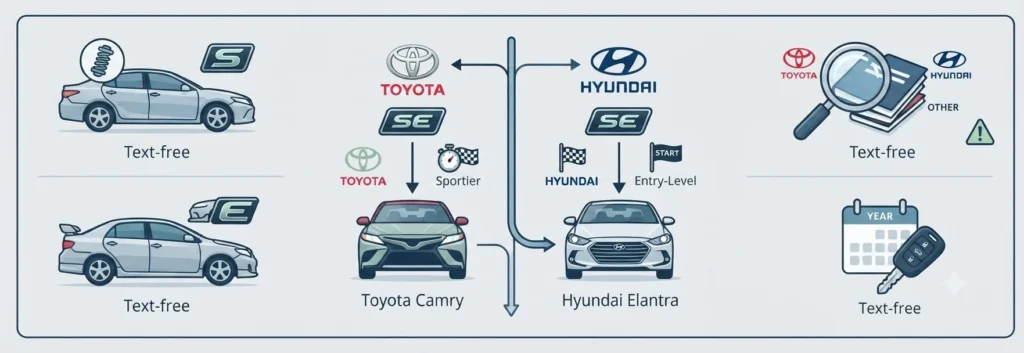
Here’s the important caveat: SE does not have one universal definition across all car brands. Toyota may use SE to mean “Sport Edition” with firmer suspension and a sportier body kit, while Hyundai may use SE as its entry-level trim name. The letters themselves are a manufacturer-specific label — not an industry standard. This is why understanding what does SE mean on a car requires looking at the specific brand and model year.
What Does the SE Mean on a Car by Manufacturer?
Because SE can mean different things depending on the automaker, let’s break down how major brands use the SE designation. This is where many shoppers get confused — and where dealership language can be misleading if you don’t know the specifics.
Toyota:
SE typically means “Sport Edition.” On models like the Camry and Corolla, the SE trim adds sport-tuned suspension, unique front and rear bumpers, larger alloy wheels, a rear spoiler, and paddle shifters. The engine is often the same as the base model, but the driving dynamics feel sportier. The SE sits between the LE (base) and XSE (premium sport) trims.
Hyundai:
SE is often used as the base or near-base trim level. On the Elantra and Tucson, SE is the most affordable version with standard equipment. This is the opposite of Toyota’s approach — here SE does not imply sport upgrades. Kia uses a similar strategy where SE-equivalent trims (like LX or S) are entry-level.
Ford:
SE historically represented a mid-level trim on vehicles like the Escape and Focus. It typically included upgraded cloth seats, larger touchscreens, and convenience features above the base S trim but below the SEL or Titanium. Volkswagen: SE sits in the middle of VW’s lineup (S → SE → SEL → SEL Premium), offering a balance of features and price.
Typical SE Trim Features: What Does SE on Cars Mean for Equipment?
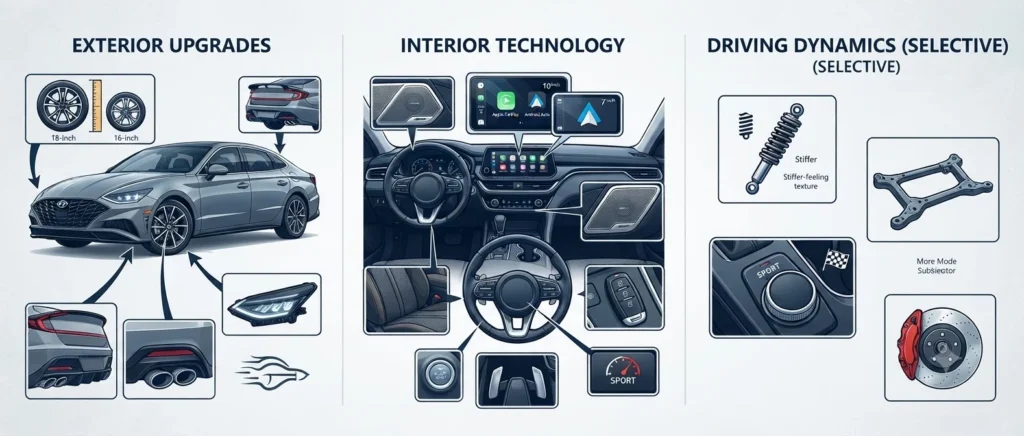
While exact features vary by vehicle, SE trims commonly include upgrades in three categories: exterior styling, interior technology, and sometimes driving dynamics. Understanding what does SE mean on cars in terms of actual equipment helps you evaluate whether the price premium is justified.
Interior and technology upgrades on SE trims often include: a larger touchscreen infotainment system (typically 8–10 inches vs 7 inches on base), Apple CarPlay and Android Auto, upgraded speaker systems, sport-patterned cloth or partial leather seats, a leather-wrapped steering wheel, and keyless entry with push-button start. Some SE trims add paddle shifters and a sport driving mode.
Exterior upgrades typically include: larger alloy wheels (17–18 inches vs 15–16 on base), unique front grille design, sport-tuned bumpers, a rear spoiler or diffuser, dual exhaust tips (sometimes cosmetic), and LED headlights or fog lights. These changes make the vehicle look more aggressive without necessarily changing how it performs mechanically.
Base Trim vs SE Trim: Feature Comparison
| Feature | Base Trim | Typical SE Trim |
|---|---|---|
| Price | Lowest starting price | Usually $1,500–$3,500 higher |
| Exterior | Standard styling | Sportier or upgraded design |
| Wheels | Basic or smaller alloys | Larger or unique alloy wheels |
| Interior | Essential features | Upgraded materials or tech |
| Engine | Standard engine | Often the same, but varies |
| Suspension | Comfort-focused | Sometimes sport-tuned |
| Technology | Basic infotainment | May include additional features |
| Best For | Budget-focused buyers | Buyers wanting style + equipment |
Appearance vs Performance: What Does SE Mean for Driving?
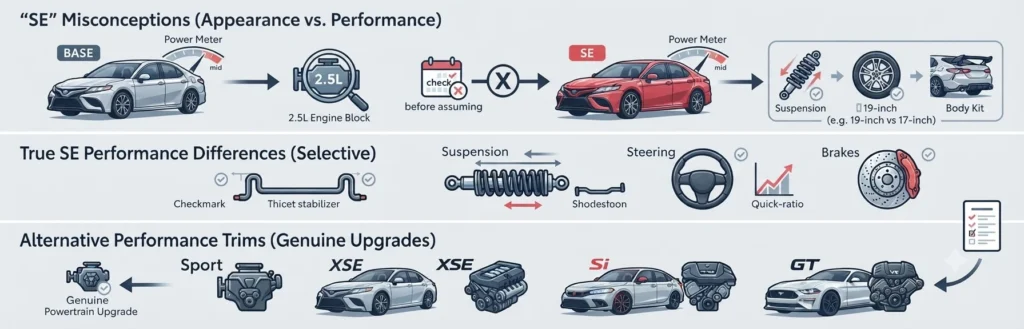
One of the biggest misconceptions is that an SE badge automatically means a more powerful engine or significantly better performance. In reality, many SE trims use the exact same powertrain as the base model. The upgrades are primarily cosmetic and comfort-oriented. A Toyota Camry SE, for example, shares its 2.5L engine with the LE — the difference lies in suspension tuning, wheel size, and body styling.
That said, some SE trims do include genuine performance differences: sport-tuned suspension (firmer dampers and springs), a thicker stabilizer bar for reduced body roll, quicker steering ratios, and larger brakes. Always check the specific model’s specification sheet rather than assuming the SE badge means faster. If outright performance is your priority, look for trims labeled “Sport,” “XSE,” “Si,” or “GT” — these typically include powertrain upgrades.
Is an SE Trim Worth Buying?
Whether an SE trim is worth the extra cost depends on which features matter to you. If you value sportier styling, larger wheels, and upgraded technology, the SE package often delivers meaningful improvements over the base model for a reasonable price increase — typically $1,500 to $3,500. These upgrades can also improve resale value, since buyers in the used market tend to prefer equipped vehicles over stripped-down base models.
However, if you primarily want reliability and low ownership costs, the base trim may be the smarter financial choice. Larger wheels mean more expensive tire replacements. Sport-tuned suspension can feel harsher on rough roads. And cosmetic upgrades like spoilers and body kits have no impact on the vehicle’s mechanical reliability or fuel efficiency.
A practical approach: list the SE features that are available for your target vehicle. Cross off anything purely cosmetic that doesn’t improve your daily experience. If the remaining functional upgrades (better infotainment, keyless entry, upgraded seats) justify the price difference, the SE is worth it. If most of the premium goes toward appearance, consider whether that styling matters enough to you personally.
How to Verify a Vehicle’s SE Trim Level
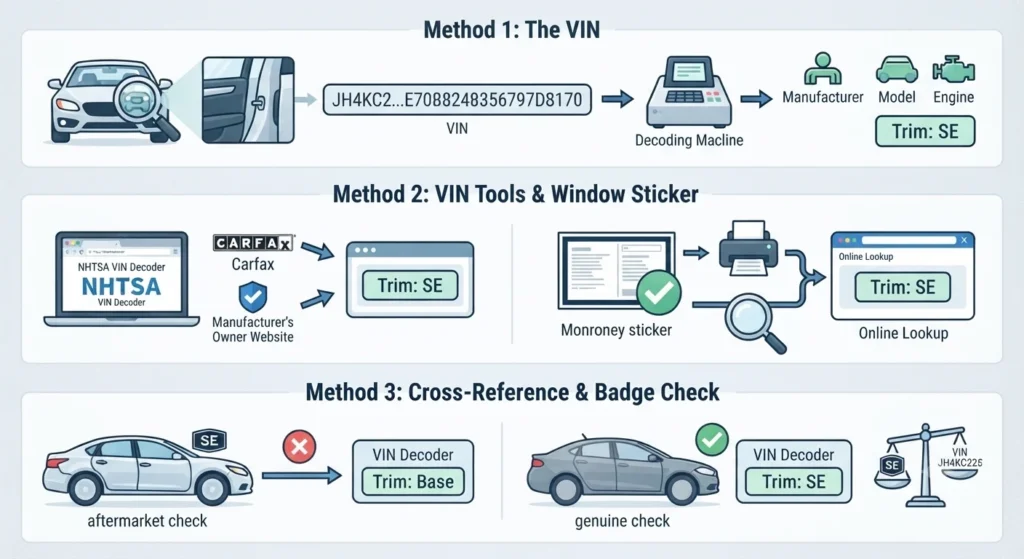
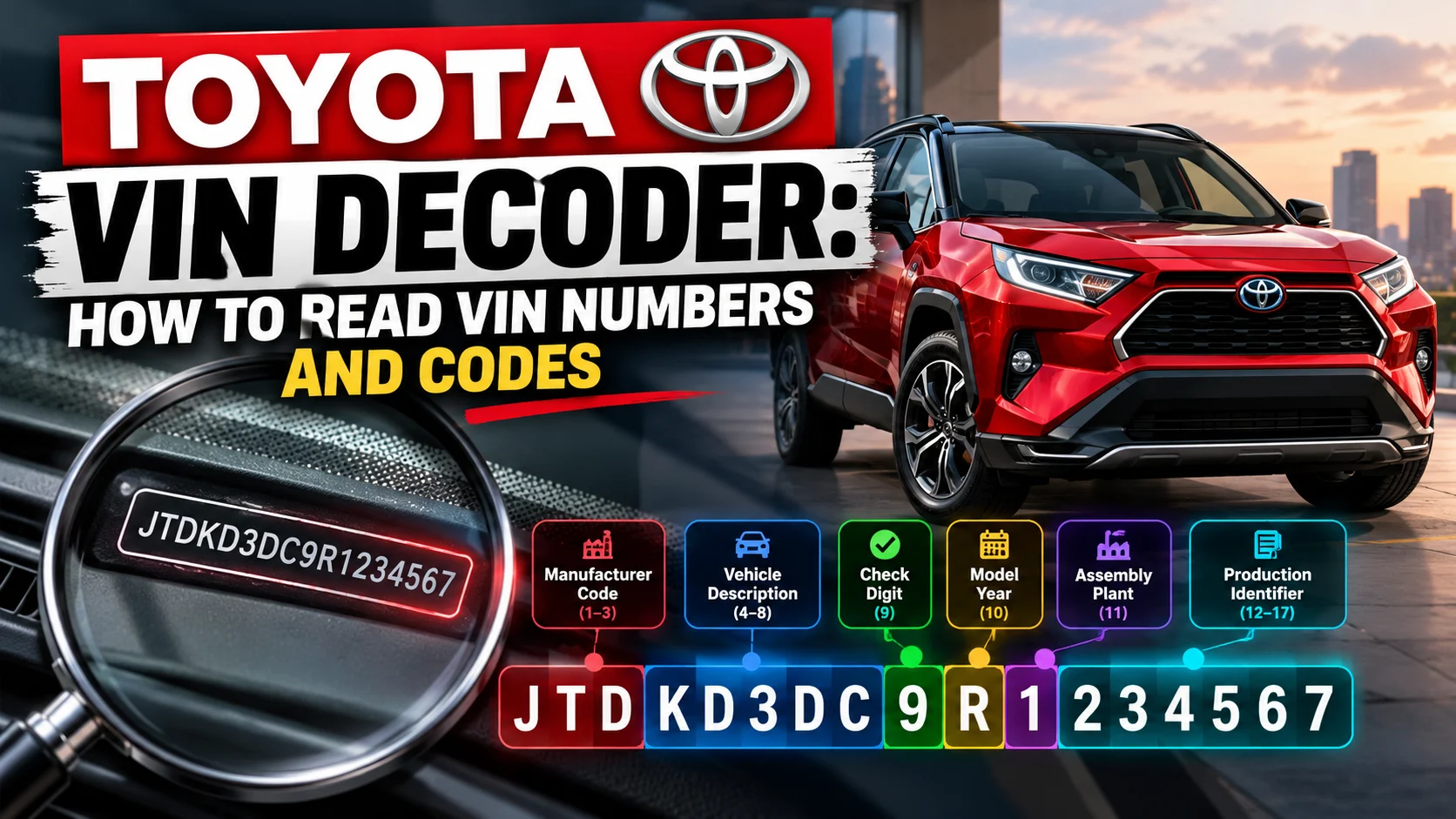
Never rely solely on a badge to confirm trim level. The most reliable method is decoding the Vehicle Identification Number (VIN). Every vehicle has a 17-character VIN — typically visible through the driver’s side windshield or on the driver’s door jamb sticker. The VIN encodes the manufacturer, model, engine, and trim from the factory.
You can decode a VIN for free using the NHTSA VIN Decoder (vpic.nhtsa.dot.gov), the manufacturer’s owner website, or reputable third-party tools like Carfax or AutoCheck. The original window sticker (Monroney sticker) also lists every factory-installed feature — some manufacturers let you look up the original sticker online using the VIN.
When buying used, cross-reference the VIN-decoded trim with the physical features on the vehicle. If the VIN says “base” but the car has SE badges, those badges were likely added aftermarket. Conversely, a genuine SE with a missing badge is still an SE — the VIN tells the truth.
Frequently Asked Questions About SE Trim Levels
Does SE always mean Sport Edition?
No. SE can mean Sport Edition, Special Edition, or Special Equipment depending on the manufacturer. Some brands use SE simply as a trim-level name without officially spelling it out. Toyota’s SE typically means Sport Edition, while other brands may use it differently. Always check the specific manufacturer’s documentation for your model year.
What does SE mean on cars vs LE, SEL, or EX?
These are all trim level names that indicate different feature packages. LE (Luxury Edition) is often Toyota’s base trim. SEL (SE + Luxury) adds premium features above SE on Hyundai and VW models. EX is Honda’s mid-level trim. The position of SE in the lineup varies: it may be entry-level (Hyundai), mid-level (VW, Ford), or sport-focused (Toyota). Compare specific features rather than assuming alphabetical hierarchy.
Does an SE trim have a more powerful engine?
Usually not. Most SE trims share the same engine as the base model. The differences are typically in styling, suspension tuning, wheels, and interior features. Some exceptions exist — check the specific vehicle’s spec sheet. If you want more power, look for trims explicitly marketed around performance (XSE, Sport, GT, Si, RS).
Is an SE trim more expensive to insure?
SE trims can be slightly more expensive to insure because they have a higher MSRP and replacement cost. However, the difference is often minimal — typically $5–$20 per month compared to the base trim. Factors like your driving record, location, and coverage levels have a much larger impact on insurance cost than trim level alone. Get quotes for both trims before deciding.
What does SE mean on a car listing online?
When you see SE in an online vehicle listing (e.g., “2024 Toyota Camry SE”), it identifies the trim level of that specific vehicle. This tells you which features package it includes from the factory. Use the listing’s VIN to verify the trim independently — especially on used vehicles where badges may have been added or removed.
Does an SE trim have better resale value?
Generally yes, but modestly. SE trims tend to hold value slightly better than base trims because buyers in the used market prefer vehicles with more features. The difference is typically a few hundred to a couple thousand dollars after 3–5 years. However, resale value depends heavily on mileage, condition, and market demand — trim level is just one factor among many.