An emergency car kit checklist helps you prepare before a flat tire, dead battery, lockout, breakdown, storm, or long roadside delay catches you off guard. You do not need a mechanic’s garage in your trunk. You need practical items that help you stay visible, communicate, handle minor problems, and wait safely for help.
This guide is for commuters, parents, students, delivery drivers, road-trippers, and anyone who depends on a vehicle every week. Use it to build a simple kit in 30–60 minutes, then customize it for your climate, passengers, and driving habits.
Emergency Car Kit Checklist
Keep these basics in your vehicle:
- Phone charger and backup power bank
- Flashlight or headlamp
- Reflective vest and warning triangles
- First aid kit
- Drinking water
- Shelf-stable snacks
- Jumper cables or portable jump starter
- Tire pressure gauge
- Portable tire inflator
- Gloves and basic hand tools
- Blanket or emergency mylar blanket
- Rain poncho
- Paper copy of insurance and emergency contacts
- Roadside assistance contact information
- Seasonal gear for heat, cold, snow, or storms
Table of Contents
- Why Every Driver Needs an Emergency Car Kit
- The Essential Emergency Car Kit Checklist
- Roadside Safety Gear
- Basic Tools and Repair Items
- First Aid and Personal Safety Items
- Food, Water, and Comfort Supplies
- Seasonal Emergency Car Kit Add-Ons
- How to Store and Maintain Your Kit
- FAQ
Why Every Driver Needs an Emergency Car Kit
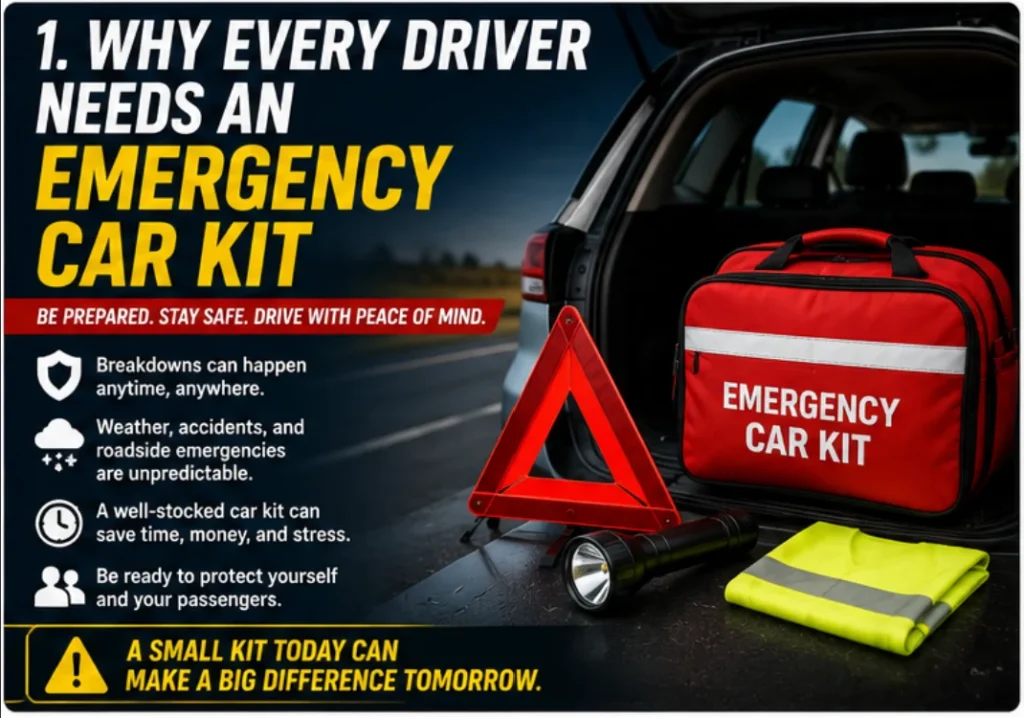
A roadside emergency rarely happens when conditions are perfect. It happens when your phone battery is low, it is raining, the kids are tired, traffic is moving fast, or you are already late.
An emergency car kit gives you options. It helps you stay visible at night, keep your phone alive, manage a minor tire or battery issue, and wait more comfortably for roadside assistance.
It is especially useful if you:
- Commute daily
- Drive with children
- Travel at night
- Drive in rural areas
- Work delivery or rideshare
- Live somewhere with snow, extreme heat, or heavy rain
- Own an older vehicle
- Take road trips
- Have medical needs or carry medication
A good kit is not about fear. It is about reducing stress when something goes wrong.
The Essential Emergency Car Kit Checklist
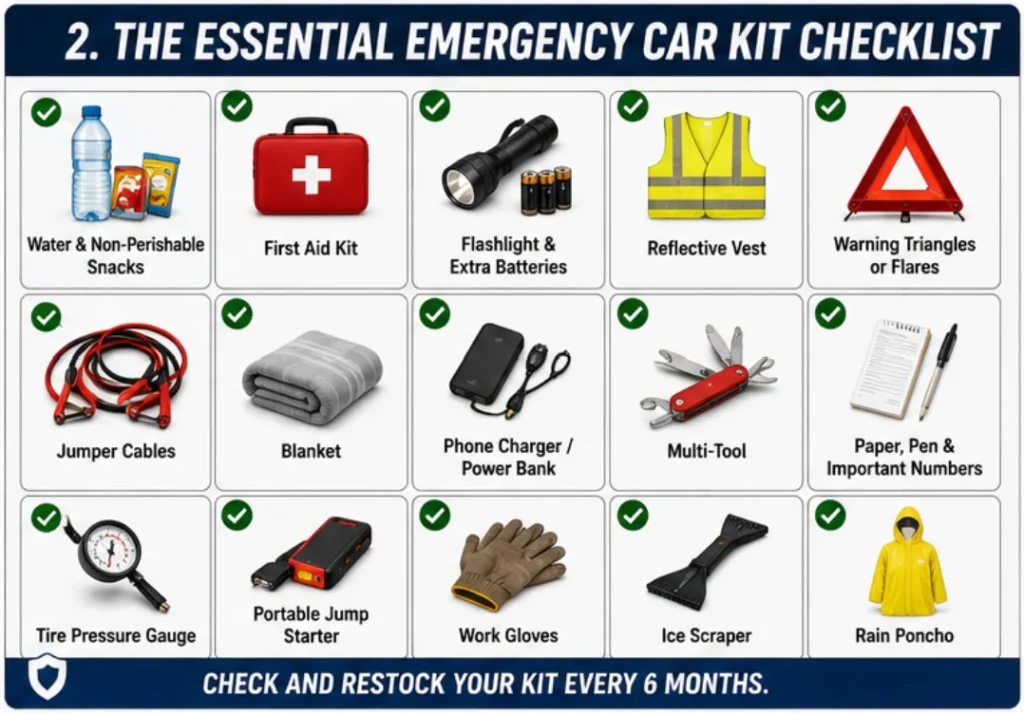
Start with the core items first. These are useful for most drivers in most vehicles.
| Item | Why You Need It | Suggested Quantity |
| Phone charger | Keeps your phone usable for calls, maps, and roadside apps | 1–2 |
| Power bank | Backup power if the car battery dies | 1 |
| Flashlight or headlamp | Helps you see and be seen at night | 1 |
| Reflective vest | Makes you more visible outside the vehicle | 1 per regular passenger |
| Warning triangles | Alerts approaching drivers | 3 |
| First aid kit | Handles minor cuts, scrapes, and basic injuries | 1 |
| Water | Helps during delays, heat, and long waits | 1 gallon or several bottles |
| Shelf-stable snacks | Useful for children, diabetics, and long delays | 3–6 servings |
| Jumper cables or jump starter | Helps with dead batteries | 1 |
| Tire pressure gauge | Checks underinflated tires | 1 |
| Tire inflator | Adds air to low tires | 1 |
| Gloves | Protects hands during tire or battery checks | 1 pair |
| Blanket | Warmth during cold-weather delays | 1–2 |
| Rain poncho | Keeps you dry outside the vehicle | 1–2 |
| Emergency contacts | Backup if your phone dies | 1 paper copy |
Roadside Safety Gear
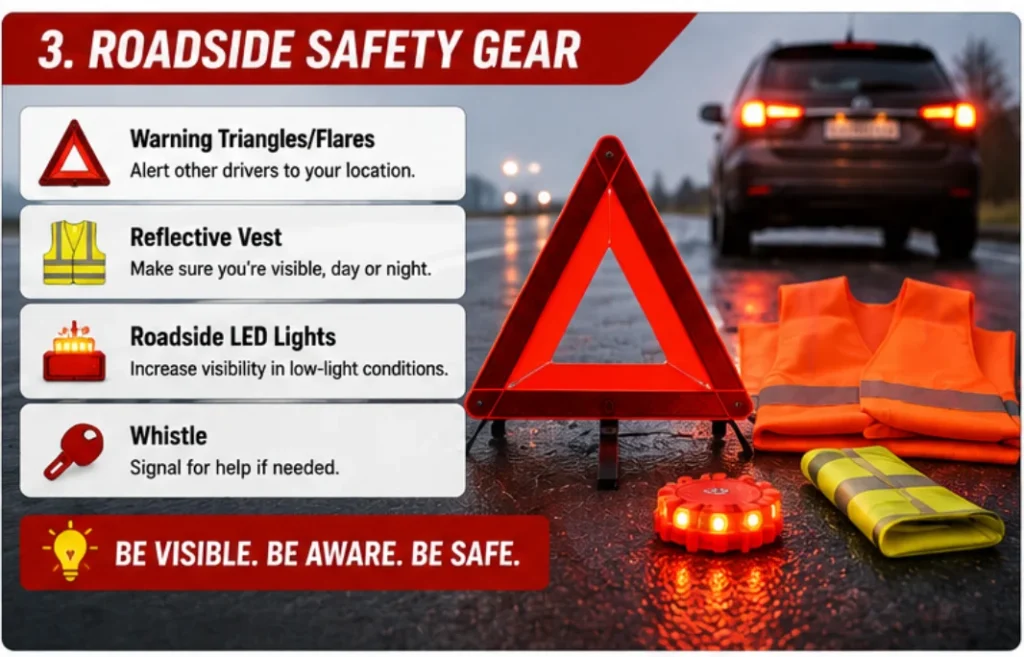
Roadside safety gear helps other drivers see you and helps you avoid standing in dangerous places.
Reflective Vest
A reflective vest is one of the most useful items in the kit because it improves visibility when you step outside the car. Keep it in the cabin, not buried under luggage.
Best places to store it:
- Driver-side door pocket
- Seat-back pocket
- Center console
- Glove compartment
If you drive with family, keep more than 1 vest.
Warning Triangles or LED Road Flares
Warning triangles help alert approaching drivers that your vehicle is stopped. A set of 3 gives you more flexibility than a single marker.
Use them only if you can place them safely. Do not walk into traffic, cross active lanes, or stand behind the vehicle on a highway shoulder.
Flashlight or Headlamp
A flashlight is useful, but a headlamp is even better because it keeps both hands free. Choose one that uses common batteries or is rechargeable.
Keep spare batteries in a small bag, or recharge the light every 3–6 months.
Window Breaker and Seat Belt Cutter
A safety hammer or emergency escape tool can help in rare situations where doors or seat belts cannot be opened after a crash. Store it where the driver can reach it from the seat.
Do not keep it buried in the trunk. In an emergency, unreachable tools are not useful.
Basic Tools and Repair Items
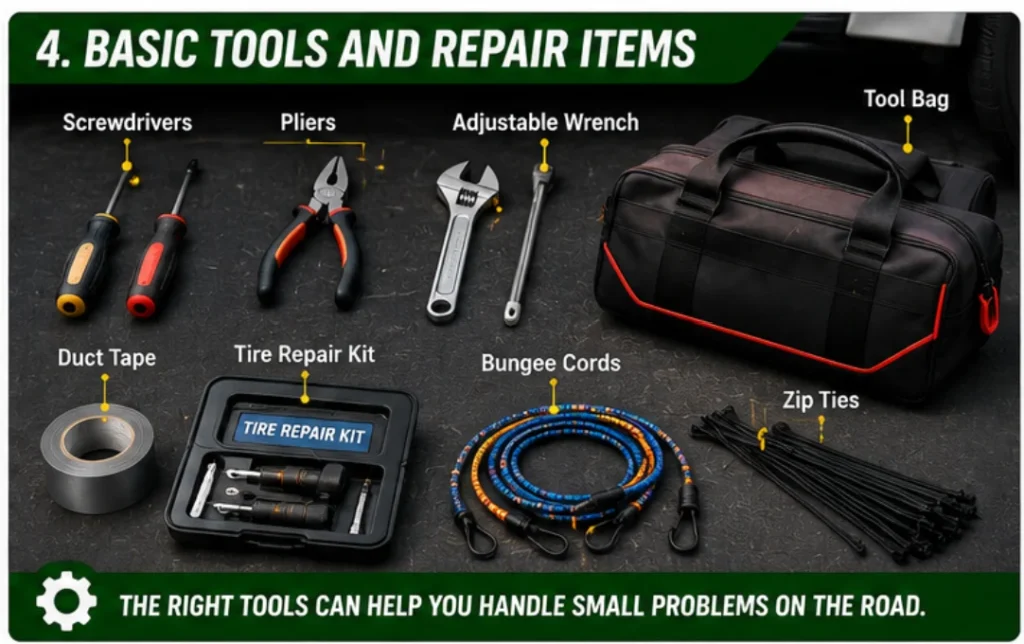
You do not need to repair the whole car from the roadside. The goal is to handle simple problems safely or stay stable until help arrives.
Jumper Cables or Portable Jump Starter
A dead battery is one of the most common reasons drivers need help. Jumper cables are affordable, but they require another vehicle. A portable jump starter can help when no one else is nearby.
Choose one that matches your vehicle size. Larger engines may require a stronger jump starter.
Tire Pressure Gauge
A tire pressure gauge helps you confirm whether a tire is low before it becomes flat. Low pressure can affect handling, fuel economy, and tire wear.
Check your tire pressure when the tires are cold, and follow the pressure listed on the driver-side door placard.
Portable Tire Inflator
A portable tire inflator can help you top off a low tire long enough to reach a repair shop. It is not a fix for every tire problem.
Do not rely on an inflator if:
- The tire sidewall is damaged
- The tire is shredded
- The wheel is bent
- The tire will not hold air
- You hear air escaping quickly
In those cases, request tire service or towing.
Basic Tool Kit
A small tool kit can help with loose parts, battery terminals, license plates, and minor adjustments.
Useful tools include:
- Screwdrivers
- Adjustable wrench
- Pliers
- Utility knife
- Duct tape
- Zip ties
- Work gloves
- Shop towel
- Small multi-tool
Avoid major roadside repairs unless you know what you are doing and are in a safe location.
Spare Tire Tools
Check whether your vehicle has:
- Spare tire
- Jack
- Lug wrench
- Wheel lock key
- Tire sealant kit
- Compressor kit
Many newer vehicles do not include a full-size spare. Some include a sealant kit instead. Know what you have before a flat tire happens.
First Aid and Personal Safety Items
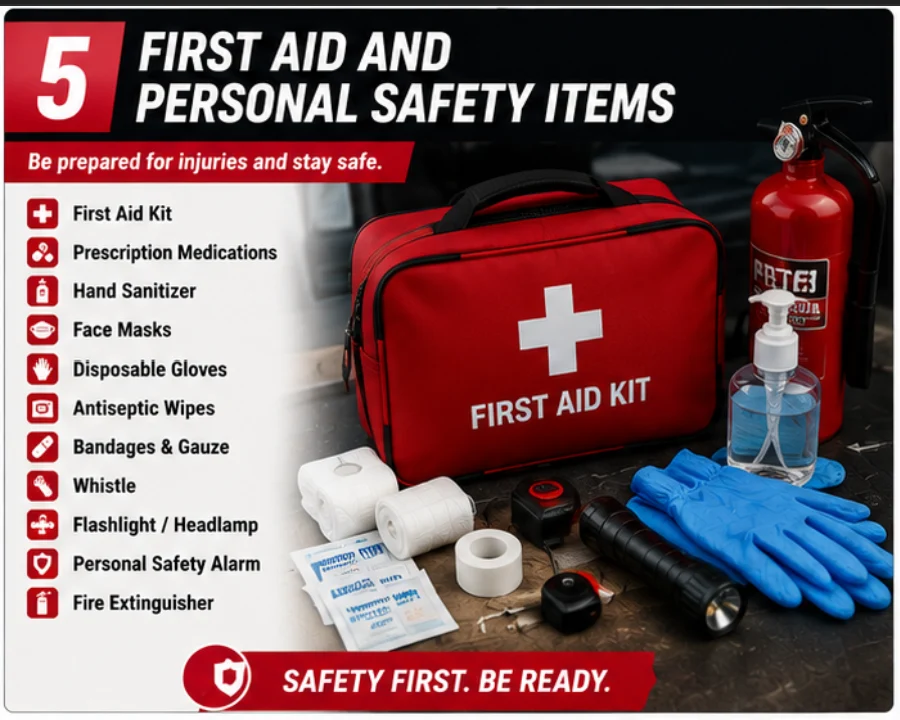
A first aid kit is useful for small injuries and delays, but it does not replace emergency care.
First Aid Kit Basics
Look for a kit with:
- Adhesive bandages
- Sterile gauze
- Medical tape
- Antiseptic wipes
- Antibiotic ointment
- Tweezers
- Disposable gloves
- Elastic bandage
- Cold pack
- Pain reliever
- Burn dressing
- First aid guide
Check expiration dates every 6 months.
Personal Medications
If you or a regular passenger depends on medication, plan for delays. Keep a small backup only if it is safe for the medication and allowed by your doctor or pharmacist.
Examples may include:
- Inhaler
- Allergy medication
- Glucose tablets
- Motion sickness medication
- Prescription backup dose, if appropriate
Do not store heat-sensitive medication in a hot vehicle unless a healthcare professional confirms it is safe.
Paper Emergency Information
Phones die. Apps log out. Signals disappear.
Keep a paper card with:
- Emergency contacts
- Roadside assistance number
- Insurance information
- Medical alerts
- Allergies
- Preferred repair shop
- Vehicle year, make, model, and VIN
Store it in the glove box or document pouch.
Food, Water, and Comfort Supplies
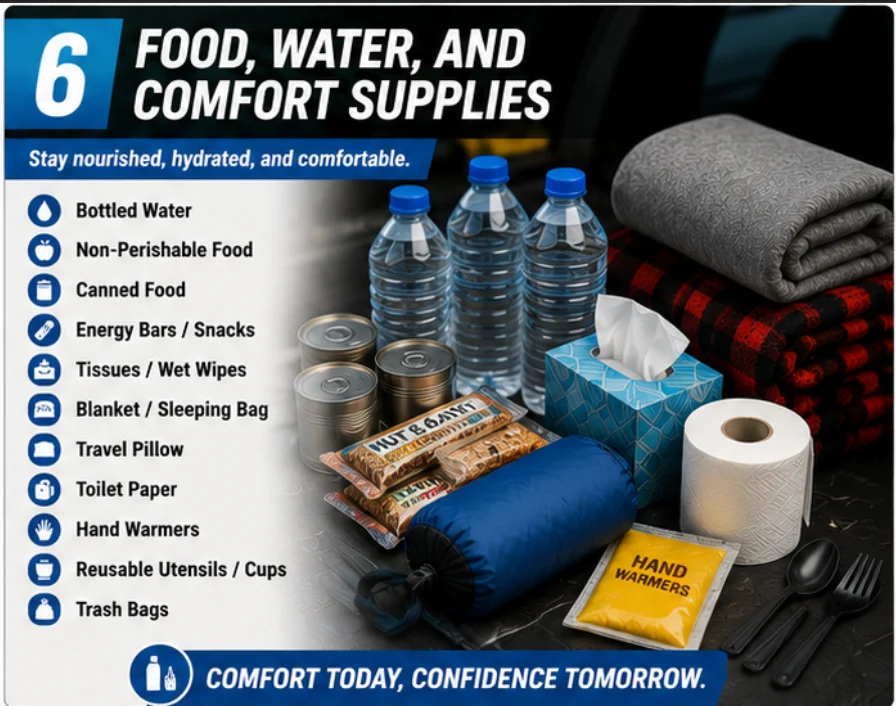
Food and water make long waits less stressful, especially with children, older passengers, or medical needs.
Water
Keep water in sealed containers and rotate it regularly. Heat can affect plastic bottles over time, so inspect them for leaks or damage.
For daily driving, several bottles may be enough. For road trips, rural driving, or extreme heat, carry more.
Shelf-Stable Snacks
Choose snacks that tolerate temperature changes and do not crumble easily.
Good options include:
- Granola bars
- Protein bars
- Trail mix
- Crackers
- Dried fruit
- Nut butter packets
- Applesauce pouches for children
Avoid chocolate-heavy snacks in hot climates because they melt.
Blankets and Warmth
A blanket is useful in winter, but it also helps passengers rest during long roadside delays. Mylar emergency blankets are compact and inexpensive, while fleece or wool blankets are more comfortable.
Families should keep at least 1 warmth item per regular passenger during cold-weather travel.
Hygiene Items
Small comfort items can make a major difference during a long wait.
Pack:
- Tissues
- Wet wipes
- Hand sanitizer
- Small trash bags
- Toilet paper
- Feminine hygiene products
- Disposable gloves
Parents may also want spare diapers, wipes, and a change of clothes.
Seasonal Emergency Car Kit Add-Ons
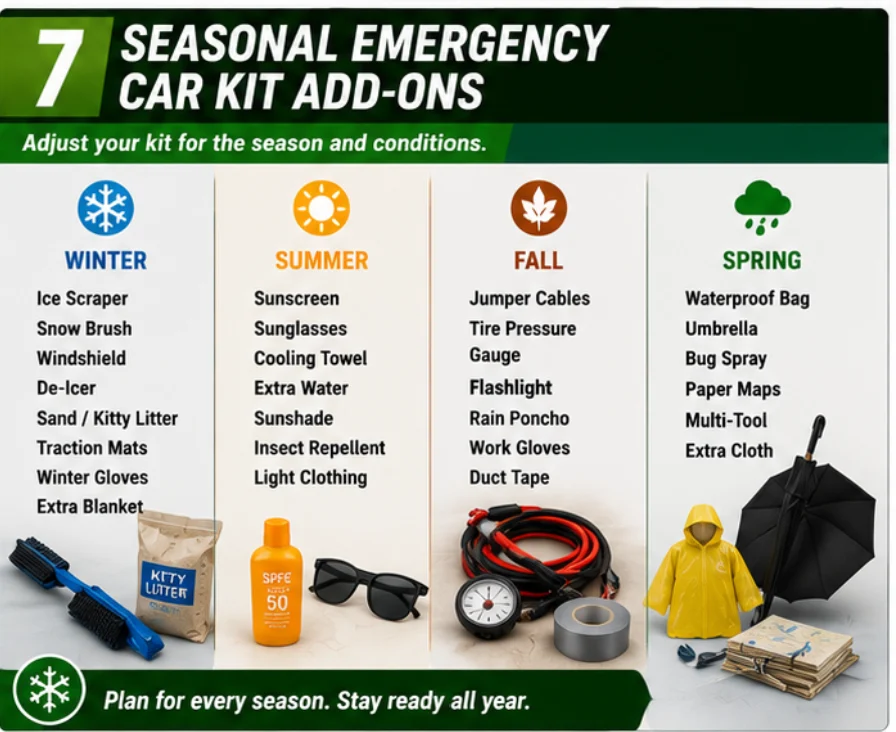
Your emergency car kit should change with the weather. A summer kit in Arizona and a winter kit in Michigan should not look the same.
Winter Emergency Car Kit
Add these for cold, snow, and ice:
- Ice scraper
- Snow brush
- Small shovel
- Warm gloves
- Winter hat
- Extra socks
- Blanket
- Hand warmers
- Windshield washer fluid rated for freezing temperatures
- Sand or traction material
- Tire chains, where legal and appropriate
- Extra snacks and water
Winter Tip
Keep the gas tank at least 1/2 full during storm season when possible. It gives you more flexibility if you are delayed, rerouted, or stuck in traffic.
Summer Emergency Car Kit
Add these for heat and sun:
- Extra water
- Sunscreen
- Hat
- Cooling towel
- Electrolyte packets
- Window shade
- Extra phone power
- Light blanket or towel
- Pet water bowl, if traveling with pets
Summer Tip
Never leave children, pets, or vulnerable passengers alone in a parked car. Heat can become dangerous quickly, even when the outside temperature seems mild.
Rain and Flood Kit
Add these for storm-prone areas:
- Rain poncho
- Waterproof flashlight
- Dry bag for documents
- Extra socks
- Small towel
- Battery weather radio
- Plastic bags
- Backup shoes
Do not drive through floodwater. Turn around and find a safer route.
Road Trip Emergency Kit
For longer drives, add:
- Printed route backup
- Extra water
- Extra snacks
- Tire repair information
- Roadside membership card
- Cash
- Spare glasses or contacts
- Entertainment for children
- Extra medication, if appropriate
- Portable phone charger for each adult
Tell someone your route and expected arrival time when driving through remote areas.
Emergency Car Kit for Parents
Parents should build the kit around the people in the car, not just the vehicle.
Add:
- Diapers
- Wipes
- Formula or shelf-stable toddler snacks
- Child medication, if appropriate
- Extra clothes
- Small blanket
- Comfort item
- Phone charging cable for tablets
- Plastic bags
- Sunscreen
- Hand sanitizer
A 30-minute roadside wait feels much longer with a hungry child.
Emergency Car Kit for Delivery and Rideshare Drivers
If you drive for work, your vehicle is also your workplace. Add:
- Extra phone charging cables
- High-capacity power bank
- Reflective vest
- Dash flashlight
- Tire inflator
- Jumper pack
- Cleaning wipes
- Hand sanitizer
- Bottled water
- Spare glasses, if needed
- Printed insurance and registration copy
- Small clipboard or document pouch
Professional drivers should inspect their kit monthly because they spend more hours on the road.
How to Store Your Emergency Car Kit
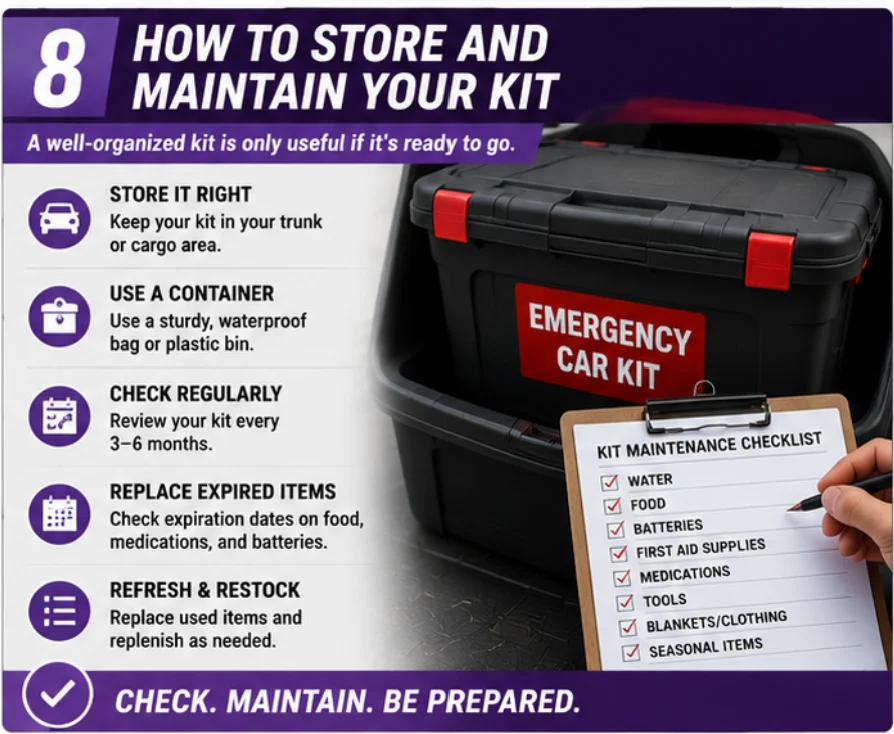
A kit only helps if you can find it quickly.
Best Storage Options
Use:
- A soft-sided tool bag
- Plastic storage bin
- Trunk organizer
- Backpack
- Under-seat pouch
- Waterproof dry bag
Keep high-priority items in the cabin:
- Flashlight
- Reflective vest
- Escape tool
- Phone charger
- Emergency contact card
Keep larger tools in the trunk or cargo area:
- Jumper cables
- Tire inflator
- Warning triangles
- Blanket
- Shovel
- Tool kit
How Often to Check Your Emergency Car Kit
Check your kit every 6 months. A good schedule is:
- Once before summer
- Once before winter
- Before long road trips
- After using any item
Replace:
- Expired first aid supplies
- Leaking water bottles
- Melted snacks
- Dead batteries
- Missing tools
- Damaged gloves
- Expired medication
- Cracked flashlight casing
- Used tire sealant
A neglected kit can give you false confidence.
Emergency Car Kit Checklist by Driver Type
| Driver Type | Priority Items |
| Teen driver | Phone charger, roadside card, flashlight, reflective vest, emergency contacts |
| Commuter | Jump starter, tire gauge, inflator, water, snacks |
| Parent | Child supplies, wipes, snacks, water, blanket, charger |
| Delivery driver | Power bank, tire inflator, jump starter, reflective vest |
| Road trip driver | Extra food, water, paper map, blankets, repair basics |
| Winter driver | Shovel, ice scraper, gloves, blanket, traction material |
| Rural driver | Extra water, flashlight, power bank, first aid, tow contact |
What Not to Keep in Your Car
Some items are unsafe or unreliable in a vehicle.
Avoid storing:
- Aerosol cans in extreme heat
- Heat-sensitive medication without guidance
- Loose tools that can fly around during a crash
- Expired food
- Leaking batteries
- Open fuel containers
- Unsecured heavy objects
- Valuables visible from outside
Secure your kit so it does not slide, spill, or become a hazard.
FAQ: Emergency Car Kit Checklist
What should be in an emergency car kit?
An emergency car kit should include a phone charger, power bank, flashlight, reflective vest, warning triangles, first aid kit, water, snacks, jumper cables or jump starter, tire pressure gauge, tire inflator, gloves, blanket, rain poncho, and emergency contact information.
How much water should I keep in my car?
For everyday driving, several sealed bottles may be enough. For road trips, rural routes, hot climates, or family travel, carry more. Rotate water regularly and inspect bottles for heat damage, leaks, or broken seals.
Do I need jumper cables or a portable jump starter?
Jumper cables are useful if another vehicle is available. A portable jump starter gives you more independence because it can work without another driver. For many commuters, a jump starter is the more convenient option, but it must be charged regularly.
Should I keep a first aid kit in the car?
Yes. A first aid kit helps with minor cuts, scrapes, burns, and small injuries while waiting for help. It should include bandages, gauze, antiseptic wipes, gloves, tape, tweezers, cold pack, and a simple first aid guide.
Where should I store my emergency car kit?
Store larger items in the trunk, cargo area, or under-seat organizer. Keep urgent items like a flashlight, reflective vest, phone charger, escape tool, and emergency contact card within reach of the driver.
How often should I update my emergency car kit?
Check your kit every 6 months, before winter, before summer, and before long road trips. Replace expired first aid supplies, dead batteries, leaking water bottles, melted snacks, and missing tools.
What should I keep in my car during winter?
A winter car kit should include an ice scraper, snow brush, small shovel, warm gloves, hat, blanket, hand warmers, traction material, winter washer fluid, extra snacks, and extra water. Add tire chains only where legal and appropriate.
What should I keep in my car during summer?
A summer kit should include extra water, sunscreen, hat, cooling towel, electrolyte packets, window shade, light blanket, power bank, and pet supplies if you travel with animals. Never leave children or pets alone in a parked car.
Are pre-made car emergency kits worth it?
Pre-made kits can be a good starting point, especially for new drivers. However, many kits need upgrades. Check the quality of the jumper cables, flashlight, first aid supplies, tire tools, and storage bag before relying on the kit.
What is the most important item in a car emergency kit?
The most important item depends on the emergency, but a charged phone and backup power are critical because they let you call roadside assistance, share your location, check maps, and contact family. Visibility gear and water are close behind.
Conclusion
An emergency car kit checklist gives you a safer, calmer plan for lockouts, flat tires, dead batteries, weather delays, and roadside breakdowns. Start with the essentials: phone power, visibility gear, first aid, water, snacks, tire tools, and basic warmth.
Then customize your kit for your climate, passengers, and driving routine. Your next action is simple: choose a bag or bin today, add the first 10 essentials, and set a reminder to check the kit every 6 months.
Also read DIY roadside emergency guides
Also read roadside assistance checklist
Also read tire pressure gauge for emergency kits