Gear Head Grove / Emissions & Troubleshooting
Can a bottle of fuel additive really save a failing catalytic converter?
Catalytic converter cleaners promise an affordable alternative to expensive repairs. But their usefulness depends on what is actually wrong with your vehicle.
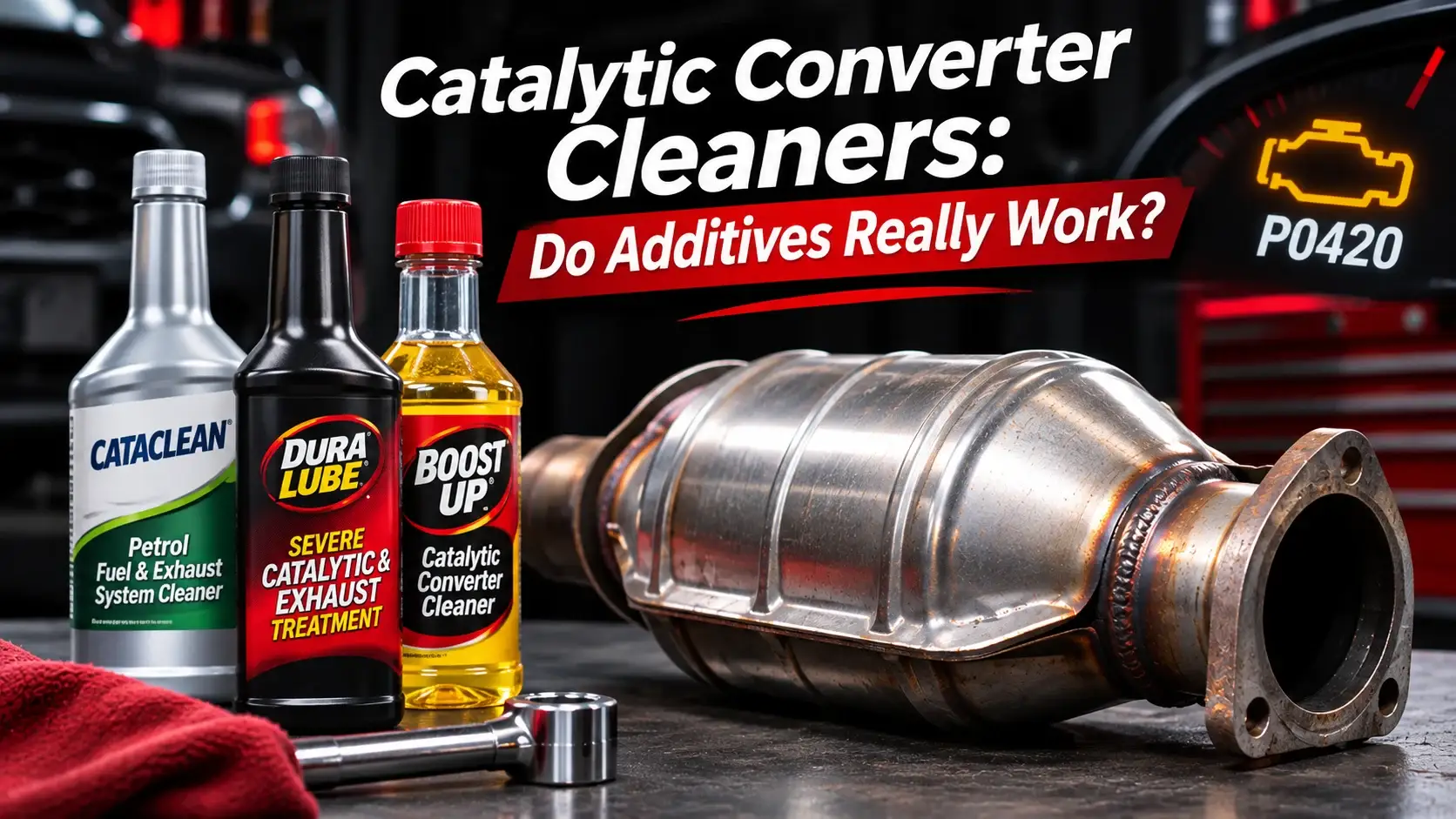
A check-engine light or failed emissions inspection can make a catalytic converter problem seem expensive. Before agreeing to a replacement, many drivers consider trying a catalytic converter cleaner such as Cataclean, Dura Lube, or Boost Up.
These products are marketed to help with deposits, exhaust-system cleanliness, or emissions-related problems. Some drivers report improvements after using them, while others notice no meaningful change.
The key question is whether the problem involves deposits that might respond to a treatment, an unrelated engine fault, or a catalytic converter that has physically deteriorated.
This guide explains what catalytic converter cleaners can realistically do, what popular brands claim, how these products relate to codes such as P0420, and when professional diagnosis makes more sense than buying another additive.
The Short Answer
Do Catalytic Converter Cleaners Really Work?
Catalytic converter cleaners may offer limited deposit-related benefits in some situations, but they are not a proven universal repair for catalytic converter faults.
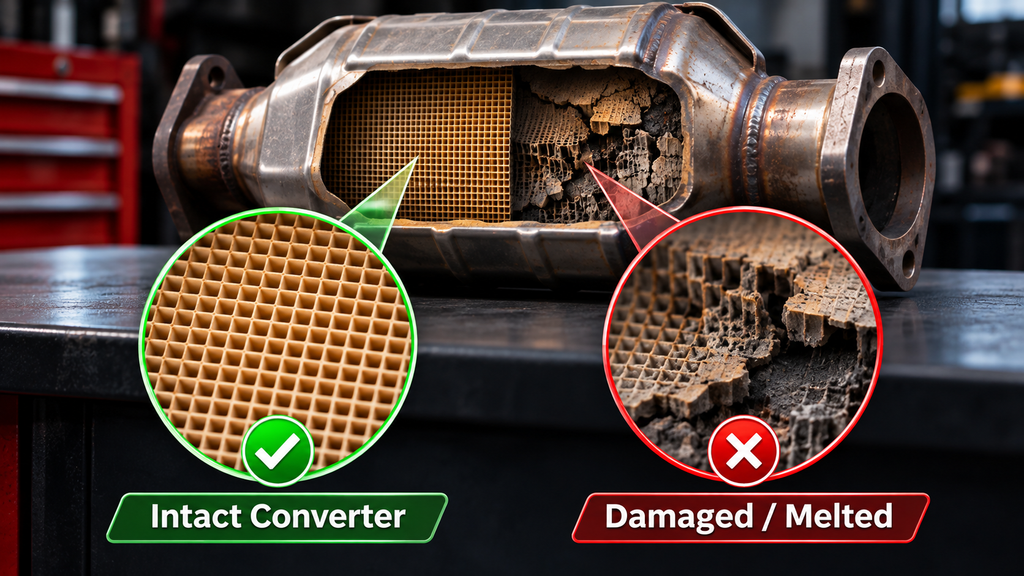
They cannot rebuild a melted or broken converter, restore physically damaged internal material, or reliably fix every P0420 or P0430 code. Before using an additive, identify the underlying issue and confirm that the product is appropriate for your vehicle.
What Is a Catalytic Converter Cleaner?
A catalytic converter cleaner is a chemical product marketed to help manage deposits or improve the performance of parts of the fuel and exhaust system.
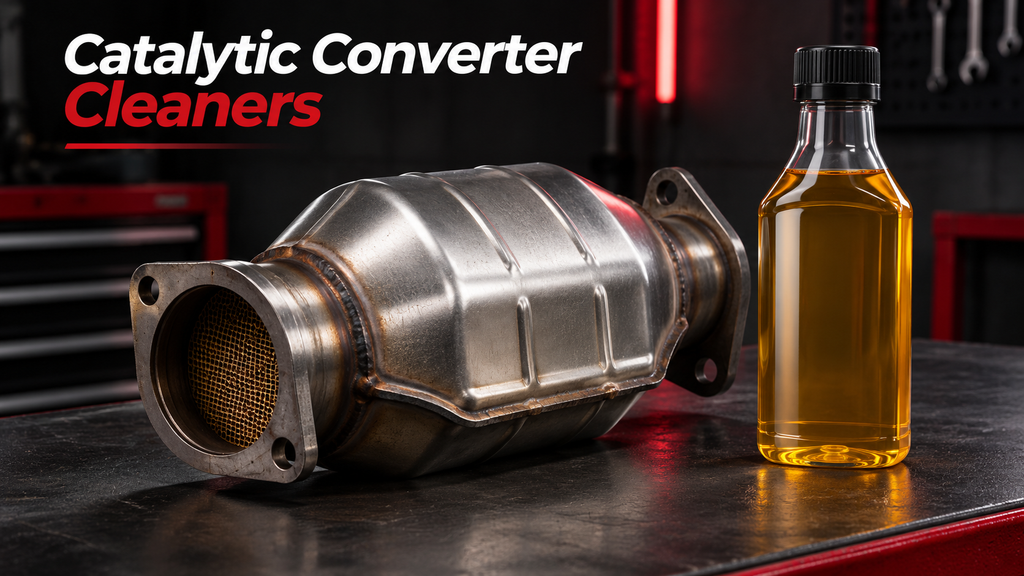
Many products are sold as fuel additives. These are poured into the vehicle’s fuel tank according to the product’s instructions.
The additive mixes with the fuel and passes through the engine’s combustion process. Manufacturers may claim that this process helps reduce certain deposits in the fuel system or exhaust.
How Does a Fuel Additive for Catalytic Converter Cleaning Work?
A catalytic converter sits in the exhaust system and helps transform harmful exhaust gases into less harmful substances through chemical reactions.
A fuel-tank additive does not travel through the converter as a liquid cleaning bath. Instead, the product first enters the fuel system, and any claimed exhaust-side effect depends on what happens after the fuel and additive are burned.
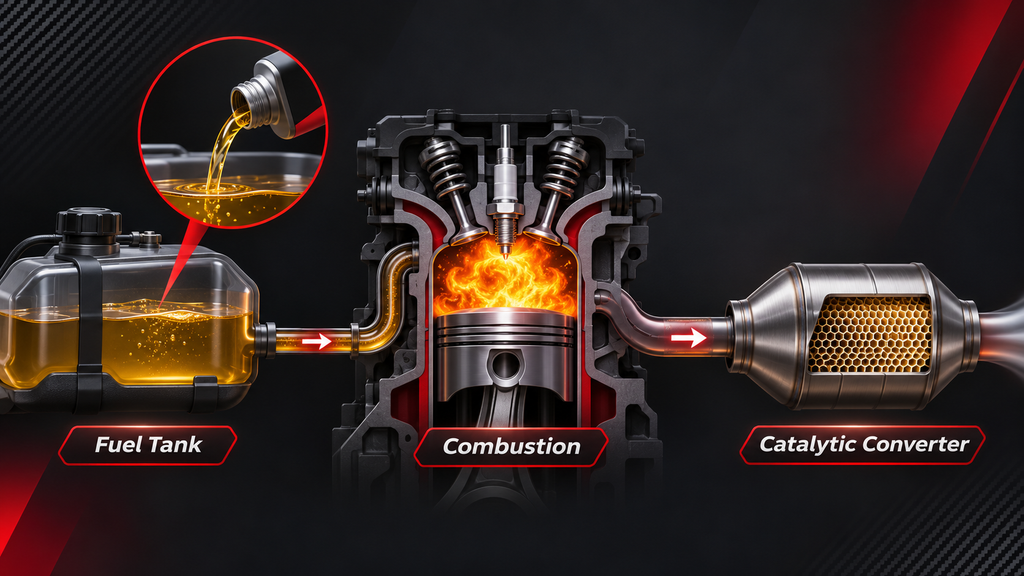
Different products use different formulations, and their advertised mechanisms should not be assumed to be equally effective.
Does Every Fuel-System Cleaner Also Clean a Catalytic Converter?
No. Products designed primarily to clean fuel injectors or intake deposits are not automatically proven catalytic converter cleaners.
Always distinguish the manufacturer’s intended use from claims about confirmed catalytic converter repair.
Do Catalytic Converter Cleaners Actually Work?
The answer depends on what you expect the product to accomplish.
Some additives may affect certain fuel-system deposits or operating conditions. However, there is not enough independently verified, vehicle-specific evidence to promise that pouring a catalytic converter cleaner into the tank will restore a converter that has failed an efficiency test.
Possible Benefit
Minor Deposits
A compatible additive might help with certain deposit-related conditions. The result is not guaranteed, and the underlying engine condition still matters.
Cannot Repair
Physical Damage
No fuel additive can rebuild broken ceramic material, repair a melted substrate or restore a converter that is physically destroyed.
A Clogged Converter Is Not Always the Same as an Inefficient Converter
This distinction matters when deciding whether a cleaner makes sense.
| Condition | What It Means | Can an Additive Fix It? |
|---|---|---|
| Light deposits | Some deposits may be present without major physical damage. | Possible limited benefit, but uncertain. |
| Low catalyst efficiency | The emissions monitor detects lower-than-expected performance. | No reliable guarantee. |
| Oil or coolant contamination | Engine problems allow substances into the exhaust. | Cannot correct the source of contamination. |
| Melted or broken substrate | The converter’s internal structure is physically damaged. | No. Repair or replacement is required. |
For a more detailed explanation of the difference between converter restriction, low efficiency and physical failure, read our guide to bad or clogged catalytic converter symptoms, tests and fixes.
Can a Catalytic Converter Cleaner Fix P0420 or P0430?
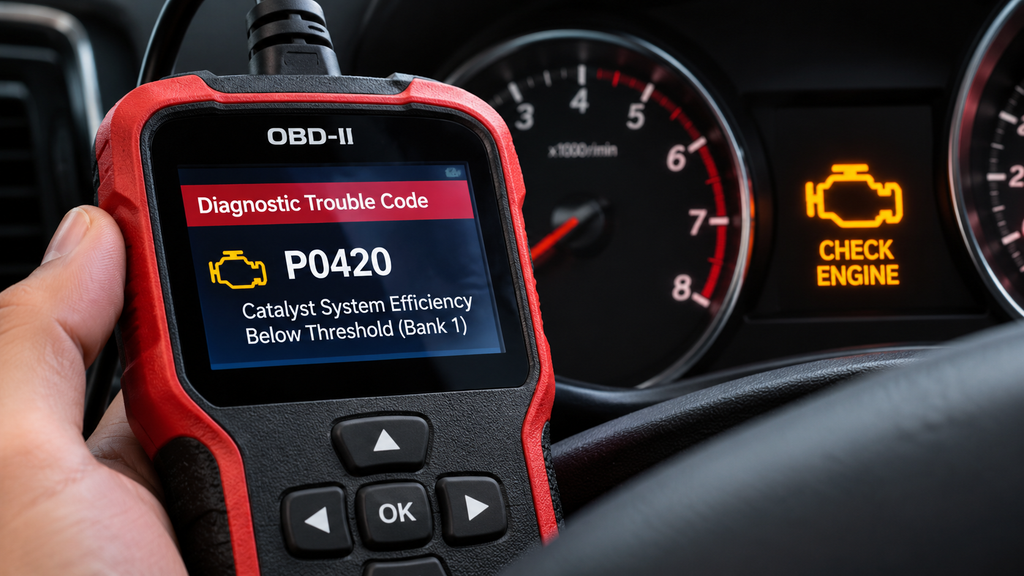
Many drivers begin searching for cleaners after seeing a check-engine light with code P0420 or P0430.
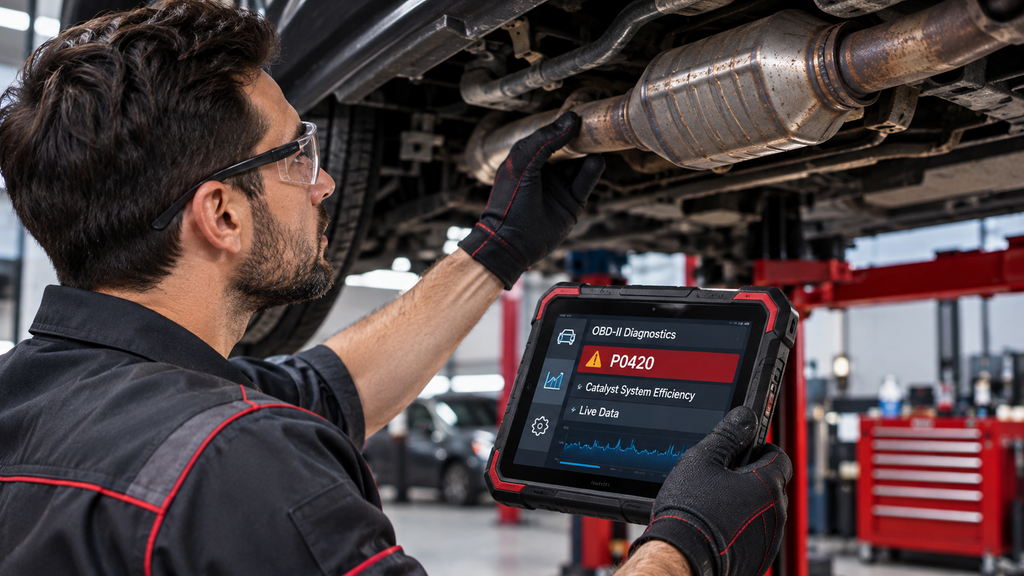
P0420 generally indicates that the catalyst system on Bank 1 is performing below the expected efficiency threshold. P0430 indicates a similar concern for Bank 2 on vehicles with that engine layout.
These codes do not automatically mean the converter is clogged or that replacement is required.
Other Problems That Can Trigger Catalyst-Efficiency Codes
- Engine misfires: Unburned fuel can overheat and damage the converter.
- Incorrect air-fuel mixture: Rich or lean running conditions can affect catalyst performance.
- Exhaust leaks: Leaks can alter readings used by the emissions monitoring system.
- Oxygen-sensor or wiring faults: Incorrect signals may complicate diagnosis.
- Oil or coolant consumption: Internal engine problems can contaminate exhaust components.
- Actual converter deterioration: The catalyst may have lost the ability to perform its intended reactions.
Why Clearing the Code Is Not the Same as Fixing It
A check-engine light that goes off temporarily does not prove the catalytic converter has been repaired.
The vehicle’s emissions monitors need to complete their required tests. If the underlying fault remains, the code may return.
You can review common trouble-code meanings using our OBD-II code lookup and diagnostic tool. For sensor-related concerns, our Bank 1 Sensor 2 guide explains how the downstream oxygen sensor relates to catalytic converter monitoring.
Diagnosis first: A P0420 or P0430 code is a starting point for testing. Buying an additive—or replacing the converter—without checking for underlying faults can lead to unnecessary expense.
Product Research
Cataclean, Dura Lube and Boost Up
These products are marketed for related problems, but their claims, instructions and available documentation differ. Brand popularity is not the same as proven repair effectiveness.
Cataclean Catalytic Converter Cleaner: Does It Work?
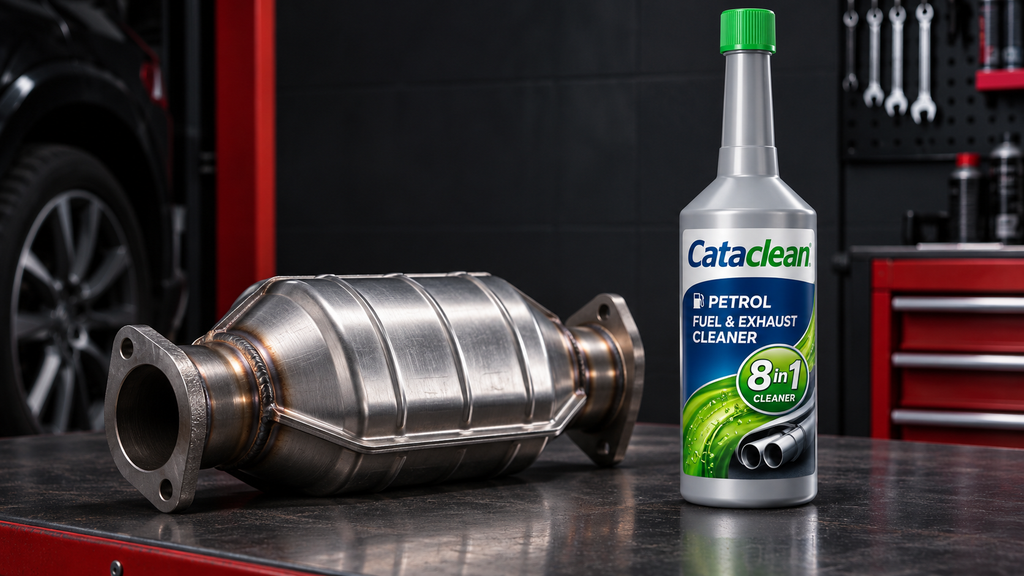
Cataclean is marketed as a fuel and exhaust system cleaner. The brand describes its product as acting on deposits in the fuel system and, through the combustion process, on parts of the exhaust system.
Cataclean’s manufacturer claims that the product can help maintain or clean components including the catalytic converter. However, these claims should not be interpreted as proof that the product will repair a failed converter in every vehicle.
When Might Cataclean Be Worth Considering?
A compatible Cataclean product may be worth discussing when a vehicle runs normally, an underlying mechanical fault has not been identified, and the goal is limited deposit-related maintenance.
It should not be relied upon when a converter is physically broken, the vehicle is actively misfiring, or a confirmed emissions-related repair is needed.
Check the Exact Cataclean Formula
Cataclean sells products intended for different applications. Choose only a formula compatible with your vehicle’s fuel and follow its current label instructions.
Manufacturer information: Cataclean Petrol product page.
Dura Lube Catalytic Converter Cleaner: What Should You Expect?
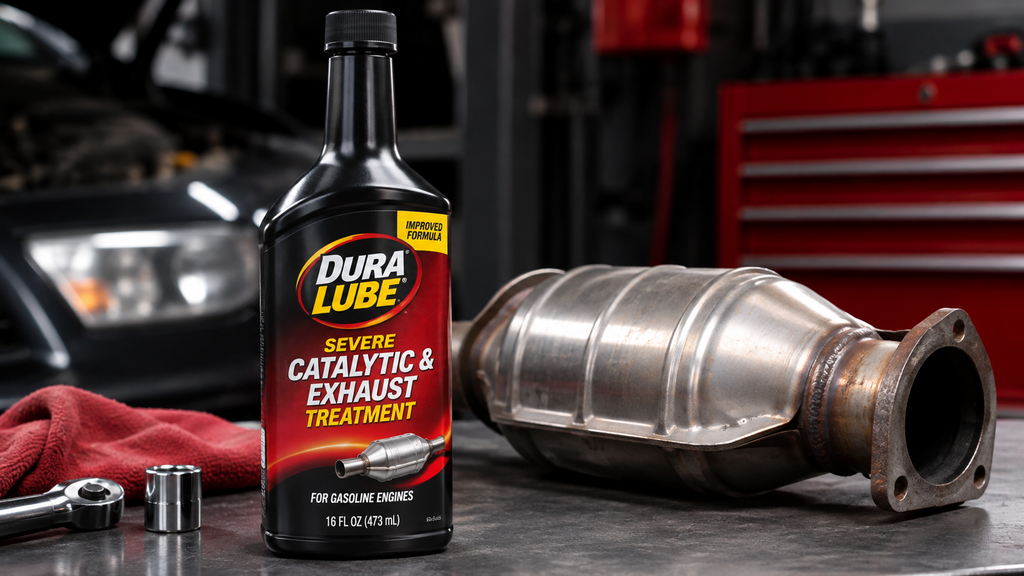
Dura Lube sells a product called Severe Catalytic & Exhaust Treatment.
The company markets this treatment for catalytic converter and exhaust-system concerns, including certain emissions-related trouble codes.
Its marketing discusses treatment of contamination-related problems, but a manufacturer’s claim is not independent confirmation that the product will restore catalyst efficiency or eliminate P0420.
Can Dura Lube Repair a Clogged Converter?
It cannot repair a physically collapsed or melted internal substrate.
If a vehicle has a catalyst-efficiency problem caused by engine faults, exhaust leaks, or failed sensors, those issues must be addressed separately.
Dura Lube is also sold through automotive retailers, including AutoZone. Product availability and compatibility should be checked for the exact formulation.
Product information: Dura Lube Severe Catalytic & Exhaust Treatment.
Boost Up Catalytic Converter Cleaner: What Does the Evidence Show?
Products sold under names such as Boost Up or BoostUp Catalytic Converter Cleaner appear in online listings and product documents, including small-bottle formulations.
However, the available product documentation is less consistent and harder to verify than information published through the established manufacturer websites of Cataclean and Dura Lube.
Should You Trust Boost Up Cleaner Claims?
Do not assume a seller’s description or customer testimonial proves that the product can restore catalytic converter performance.
Before considering an unfamiliar product, check the actual manufacturer identity, product instructions, intended fuel type, safety information and compatibility statements.
If these details cannot be verified reliably, skipping the product is a reasonable choice.
Why We Do Not Rank Boost Up Above Other Products
Without comparable independent testing, there is no sound basis for declaring Boost Up more effective than Cataclean, Dura Lube, or another fuel additive.
Product ratings, advertising language and before-and-after testimonials are not substitutes for controlled, independently documented test results.
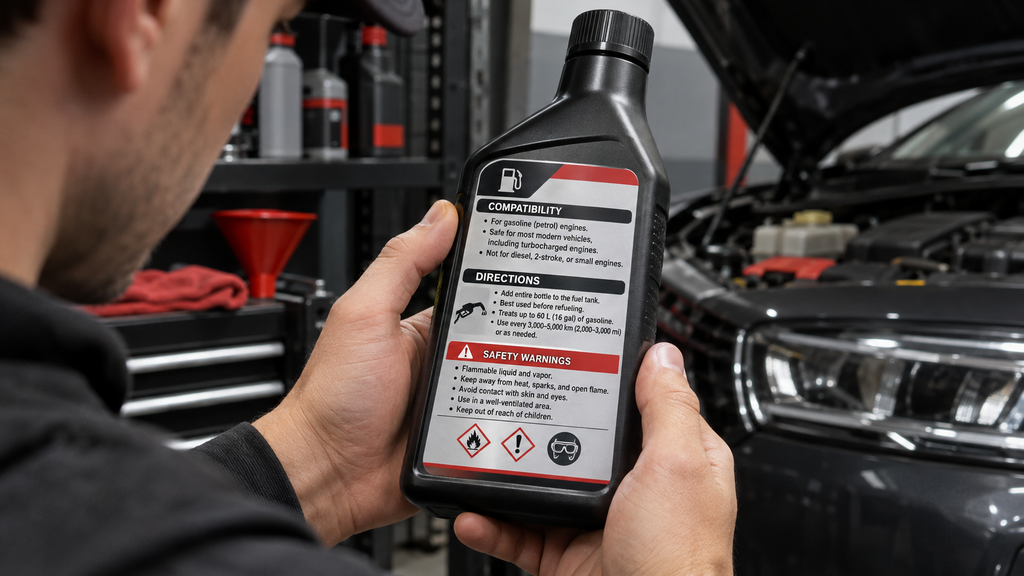
Catalytic Converter Cleaner at AutoZone: What to Look For
Drivers searching for catalytic converter cleaner AutoZone are usually comparing products they can purchase locally or online.
AutoZone lists Dura Lube Severe Catalytic & Exhaust Treatment among its automotive fuel-additive products.
However, a product being sold by a major automotive retailer does not mean that the retailer has independently verified all of its performance claims.
What to Check Before Buying
- Fuel compatibility: Confirm whether the exact product is intended for gasoline, diesel, or another application.
- Manufacturer instructions: Check the correct amount and permitted use.
- Vehicle restrictions: Follow your owner’s manual and any product warnings.
- Purpose: Determine whether the treatment is marketed for fuel-system deposits, exhaust deposits, or both.
- Evidence: Separate advertised benefits from independently verified results.
- Return and warranty terms: Do not assume a product guarantees an emissions-test pass or code removal.
Check the exact product details at AutoZone’s Dura Lube listing.
Cataclean vs. Dura Lube vs. Boost Up: Comparison
These brands are marketed toward overlapping concerns, but their documentation and claims differ. The following table compares what can be verified without pretending that the products have been independently tested under identical conditions.
| Product | Marketed Purpose | Documentation | Key Limitation |
|---|---|---|---|
| Cataclean | Fuel and exhaust system cleaning | Published manufacturer product information | No guaranteed repair of failed catalysts |
| Dura Lube | Catalytic and exhaust treatment | Manufacturer and major retailer listings | Cannot repair broken or melted substrates |
| Boost Up | Catalytic converter or engine deposit cleaning | Variable online listings and third-party product documents | Greater uncertainty about documentation and effectiveness |
This comparison describes product positioning and documentation, not a controlled performance ranking.
Which Catalytic Converter Cleaner Is Best?
There is no responsible basis to name one of these products the best at repairing catalytic converters without comparable, independent evidence.
If you decide to consider an additive, prioritize verified compatibility, transparent manufacturer documentation and realistic claims.
For a vehicle with a persistent catalyst-efficiency fault, an accurate diagnosis is more valuable than choosing a product based on popularity.
When Is a Catalytic Converter Cleaner Worth Considering?
A fuel additive may be reasonable to consider as an optional maintenance product in a vehicle that is operating normally, provided the product is compatible with the vehicle and its stated purpose matches your expectations.
It should not be your primary response to serious drivability problems or confirmed catalytic converter damage.
When Considering an Additive May Be Reasonable
- The vehicle runs normally with no urgent warning signs.
- The product is specifically compatible with the fuel and vehicle.
- You understand that the claimed benefits are not guaranteed.
- You are not using the additive to avoid correcting a known engine fault.
When You Should Skip the Cleaner
- The check-engine light is flashing or the engine is severely misfiring.
- The vehicle has substantial power loss or overheating.
- A converter has been confirmed melted, broken or internally collapsed.
- Oil or coolant is entering the exhaust because of an unresolved engine problem.
- A proper diagnosis has identified a fault that an additive cannot repair.
What Happens if the Cleaner Does Not Work?
If a cleaner produces no meaningful improvement or a catalyst-efficiency code remains, do not continue using different additives in place of diagnosis.
A qualified technician can check stored codes, fuel-control data, misfires, exhaust leaks, sensor behavior and the converter itself.
If a converter has failed, the condition responsible for the damage should also be corrected. Otherwise, a replacement converter may suffer the same problem.
For broader guidance on recognizing when a vehicle needs professional attention, see our guide to warning signs that need a mechanic.
Can Catalytic Converter Cleaner Help Pass an Emissions Test?
Some cleaner products are marketed to drivers concerned about emissions inspections.
However, passing an inspection depends on the vehicle’s actual emissions performance and the requirements of the applicable testing program.
A fuel additive cannot guarantee a successful inspection or repair an unresolved malfunction.
Does EPA Registration Prove That a Cleaner Works?
No. The U.S. Environmental Protection Agency explains that fuel-additive registration is not proof that advertised performance claims—such as improved fuel economy or reduced emissions—are valid.
Registration should not be confused with independent certification of catalytic converter repair effectiveness.
Read more in the EPA’s transportation and fuel-additive guidance.
Common Myths About Catalytic Converter Cleaners
| Common Myth | What Drivers Should Know |
|---|---|
| “Every P0420 code can be fixed with a cleaner.” | P0420 has several possible causes and requires diagnosis. |
| “A cleaner can repair a melted converter.” | Chemical additives cannot rebuild damaged internal structures. |
| “If the check-engine light goes off, the converter is fixed.” | The underlying condition must be corrected and verified. |
| “EPA registration proves the product’s claims.” | Registration does not establish that advertised performance benefits are valid. |
| “The most popular cleaner must be the most effective.” | Brand popularity and customer reviews are not controlled comparative testing. |
Frequently Asked Questions
Do catalytic converter cleaners really work?
Some may provide limited benefits for certain deposit-related conditions, but there is no guarantee that a fuel additive will restore a failing converter. Results depend on the cause of the problem.
Can Cataclean fix a P0420 code?
Cataclean is marketed for fuel and exhaust system cleaning, but it cannot guarantee a P0420 repair. The code may result from exhaust leaks, engine-running problems, sensor concerns or an inefficient converter.
Does Dura Lube catalytic converter cleaner work?
Dura Lube markets a catalytic and exhaust treatment, but its effectiveness depends on the actual problem. It cannot reverse physical converter damage or correct unrelated engine faults.
Is Boost Up catalytic converter cleaner effective?
Verified independent evidence for specific Boost Up catalytic converter repair claims is limited. Confirm the exact product identity, compatibility and manufacturer instructions before considering it.
Can a fuel additive unclog a catalytic converter?
A product may be marketed for deposit-related concerns, but it cannot reliably clear every restriction. A melted, broken or collapsed converter cannot be repaired by adding chemicals to the fuel tank.
Will catalytic converter cleaner turn off the check-engine light?
It is possible for a warning light to go off after operating conditions change, but that does not prove the underlying fault has been repaired. The vehicle needs a confirmed diagnosis and appropriate verification.
Can a catalytic converter cleaner help pass an emissions test?
No cleaner can guarantee an emissions-test pass. The vehicle must meet the applicable inspection requirements, and unresolved mechanical or emissions-system faults should be repaired.
Can catalytic converter cleaner damage an engine?
Risk depends on the product, formulation, dosage, vehicle and existing mechanical condition. Use only compatible products as directed, and do not assume that mixing treatments or exceeding the recommended amount is safe.
When does a catalytic converter need replacement?
Replacement may be necessary when proper testing confirms physical damage, severe internal restriction or permanently inadequate catalyst performance after other relevant faults have been addressed.
Final Verdict: Are Catalytic Converter Cleaners Worth It?
Catalytic converter cleaners are not a guaranteed solution to catalytic converter failure. Some products may have a limited role in deposit-related maintenance, but the available evidence does not justify treating them as substitutes for diagnosing engine and exhaust faults.
Cataclean and Dura Lube provide published product information and market treatments for fuel or exhaust concerns. Boost Up products also appear in online listings, although their documentation is less consistent.
None should be expected to repair a melted converter, rebuild damaged internal material, or resolve every catalyst-efficiency code.
For drivers facing a check-engine light or failed emissions test, the most useful investment is often an accurate diagnosis. Understanding the actual cause can prevent unnecessary additives, repeated repairs and premature converter replacement.
Gear Head Grove Takeaway
Diagnose the problem first. Treat cleaner claims cautiously. Repair the cause—not just the warning light.