Have you ever heard someone say, “This car needs a little TLC,” or “I could really use some TLC today”? You may understand the general idea, but what does TLC actually mean?
TLC stands for Tender Loving Care. It is a common English expression used to describe extra kindness, attention, and care. People use it when talking about relationships, health, pets, homes, and even vehicles.
However, the meaning of TLC can change depending on the context. In car advertisements, it often refers to maintenance or repairs. In New York City transportation, TLC stands for the Taxi and Limousine Commission. Let’s explore these meanings with simple explanations and real-world examples.
Quick Answer: What Does TLC Mean?
TLC means Tender Loving Care. It refers to giving someone or something additional attention, affection, or careful treatment to improve their condition or well-being.
In cars: TLC usually means cleaning, maintenance, or repairs. In NYC transportation: TLC means Taxi and Limousine Commission, the agency responsible for regulating taxis and certain for-hire vehicles.
What Is the Definition of TLC?
The definition of TLC is simple: tender loving care is thoughtful, gentle, and attentive treatment given to a person, animal, or thing that needs extra care.
TLC is an informal English abbreviation pronounced by saying the letters separately: T-L-C.
The three words help explain its meaning:
Tender
Being gentle, considerate, and sensitive to someone’s needs.
Loving
Showing affection, compassion, or genuine concern.
Care
Giving the time, effort, and attention needed to help or maintain something.
For example, when someone feels exhausted after a stressful week, a family member might say, “You need some TLC.” This could mean getting enough rest, eating a comforting meal, or spending time with supportive people.
The expression can also be used for objects. An old house, neglected garden, or aging car may need TLC to improve its appearance or condition.
What Does TLC Mean in Cars?
In cars, TLC means Tender Loving Care and usually refers to maintenance, cleaning, cosmetic improvements, or repairs needed to improve a vehicle’s condition.
If a seller writes, “This car needs TLC,” the vehicle may require anything from basic cleaning to significant mechanical work. The phrase itself does not explain the exact problem or how expensive it will be to fix.
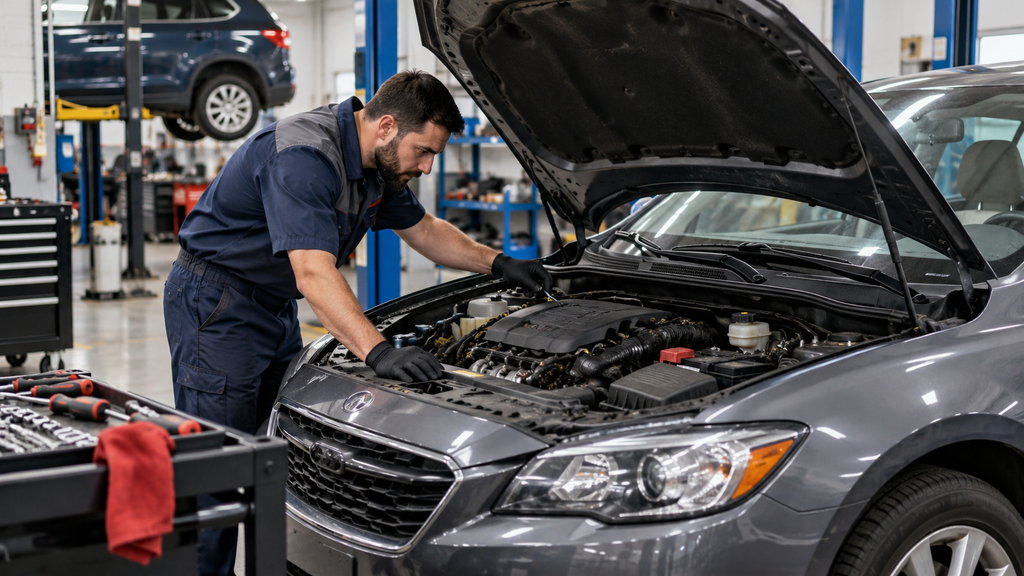
What Does “Needs TLC” Mean in a Car Advertisement?
In a used-car listing, “needs TLC” is a broad description rather than a specific mechanical diagnosis.
For example, consider these advertisements:
“2015 sedan, runs well, needs cosmetic TLC.”The seller may be referring to faded paint, interior stains, or small body imperfections.
“Older SUV needs mechanical TLC.”This could indicate maintenance issues or repairs involving the engine, suspension, brakes, or other systems.
“Great project car, just needs some TLC.”The vehicle may require restoration work or repairs before it is suitable for everyday use.
These descriptions are examples, not guarantees about vehicle condition. Always ask the seller exactly what work is required.
Important: Do not assume that “just needs TLC” means a car only needs inexpensive repairs. Some sellers may use vague wording even when a vehicle has serious problems.
Common Examples of TLC Car Maintenance
A vehicle can benefit from different types of TLC depending on its age, mileage, maintenance history, and current condition.
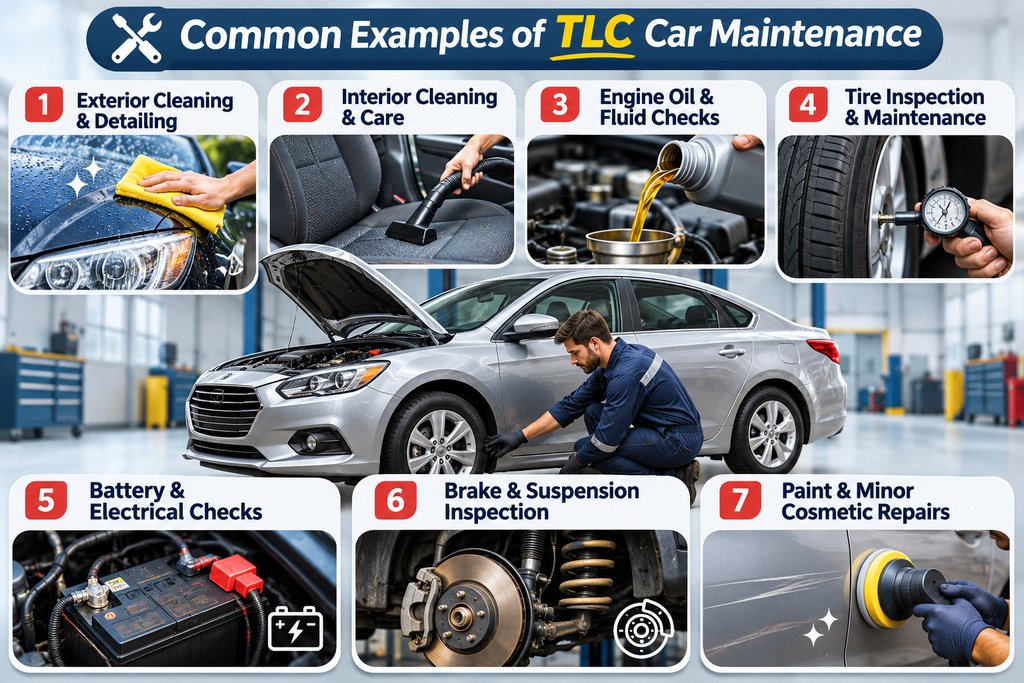
1. Exterior Cleaning and Detailing
Exterior TLC may include washing the vehicle, removing dirt, cleaning the wheels, and carefully polishing suitable painted surfaces.
These tasks can improve appearance, although detailing alone cannot correct rust damage, deep scratches, or structural problems.
2. Interior Cleaning and Care
An older vehicle may have stained seats, dirty carpeting, dusty vents, or worn interior trim.
Interior TLC can involve vacuuming, cleaning upholstery, wiping down surfaces, and repairing minor trim damage.
3. Engine Oil and Fluid Checks
Routine engine care includes checking oil condition and service intervals, inspecting for leaks, and ensuring fluids are maintained according to the owner’s manual.
Brake fluid, coolant, transmission fluid, and other service items have different inspection and replacement requirements depending on the vehicle.
4. Tire Inspection and Maintenance
Tire-related TLC includes checking inflation pressure, tread condition, uneven wear, and visible damage.
Correct tire pressure should follow the vehicle manufacturer’s recommendation, typically found on the driver-side door-jamb label, rather than the tire’s maximum-pressure marking.
5. Battery and Electrical Checks
Weak starting performance, corrosion around battery connections, faulty lights, or other electrical issues may indicate that a vehicle needs attention.
A qualified technician can test battery condition and investigate electrical problems instead of replacing parts based on guesswork.
6. Brake and Suspension Inspection
Worn brake components, damaged suspension parts, or abnormal steering behavior require proper inspection.
Although a seller might describe these repairs as TLC, issues affecting braking, steering, or vehicle control should be treated as potential safety concerns, not cosmetic improvements.
7. Paint and Minor Cosmetic Repairs
Small paint imperfections, worn trim, and minor cosmetic damage are common reasons someone might say an older car needs TLC. However, rust, damaged panels, or evidence of previous collision repairs may require further professional evaluation.
Minor TLC vs. Serious Car Problems
Not all vehicle problems have the same cost, complexity, or safety implications. Understanding the difference can help you avoid making assumptions about a used car’s condition.
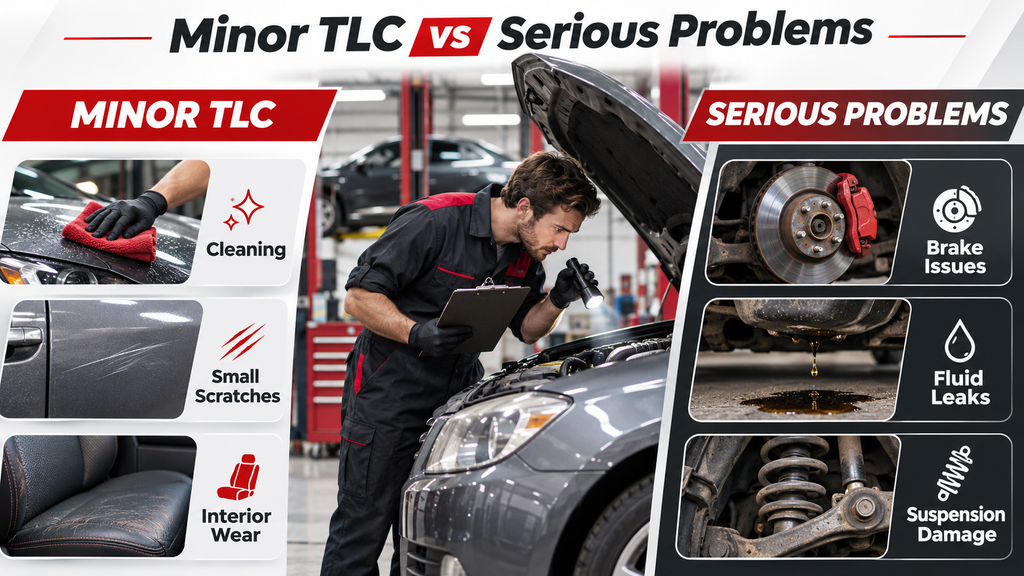
| Minor Cosmetic or Routine TLC | Problems Requiring Further Evaluation |
|---|---|
| Dirty seats and carpets | Engine overheating |
| Faded or dull paint | Significant fluid leaks |
| Minor interior trim wear | Brake system malfunction |
| Routine scheduled servicing | Transmission slipping or shifting problems |
| Basic exterior detailing | Structural rust or collision damage |
| Minor non-safety cosmetic imperfections | Steering or suspension safety concerns |
The examples in the left column may be comparatively straightforward, but the actual difficulty and expense still depend on the vehicle. Routine servicing can also reveal additional problems.
If a car has overheating, abnormal braking, serious steering issues, or significant leaks, have it professionally evaluated before considering it roadworthy.
Used-Car TLC Inspection Checklist
If you’re considering a car advertised as needing TLC, this checklist can help you identify questions to ask before purchasing.
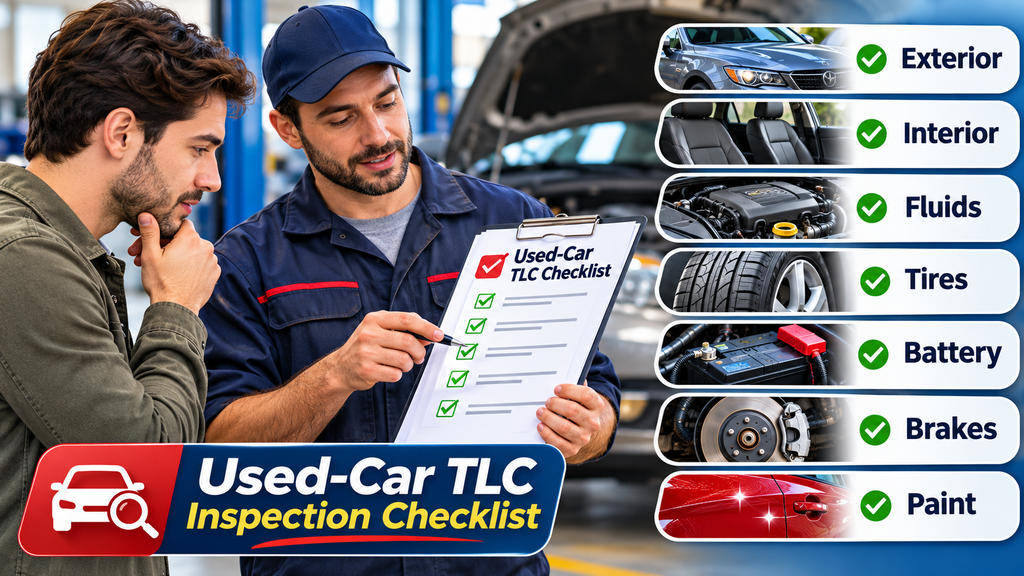
What to Check Before Buying
- □ Inspect the exterior for rust, damaged panels, uneven paint, and visible collision repairs.
- □ Check the interior for excessive wear, water damage, unusual odors, and malfunctioning features.
- □ Look for visible leaks and ask about engine or transmission problems.
- □ Examine tire condition, tread wear, and visible damage.
- □ Ask whether any dashboard warning lights are illuminated or have recently appeared.
- □ Review available service records and the vehicle history report.
- □ Check for outstanding safety recalls using the vehicle identification number (VIN).
- □ Arrange an appropriate test drive when the vehicle is safe and legally permitted to be driven.
- □ Ask an independent mechanic to perform a pre-purchase inspection.
- □ Request a written estimate for necessary repairs before agreeing on a price.
Questions to Ask the Seller
Instead of accepting “needs TLC” as a complete description, ask specific questions:
- What exactly needs to be repaired or replaced?
- Does the vehicle currently have any known mechanical problems?
- Has the car been involved in an accident or experienced flood damage?
- When were the brakes, tires, engine oil, and other major service items last inspected?
- Are maintenance records available?
- Can an independent mechanic inspect the vehicle before purchase?
The Federal Trade Commission recommends obtaining an independent mechanical inspection before buying a used car, even when the seller says the vehicle has already been inspected.
Practical tip: Use the mechanic’s written findings and repair estimates to decide whether the asking price reflects the vehicle’s actual condition. A low purchase price does not automatically mean the car is a good deal.
What Is the Difference Between TLC and Regular Car Maintenance?
TLC and regular maintenance overlap, but they are not exactly the same.
Regular car maintenance refers to scheduled or condition-based servicing intended to keep a vehicle operating properly. Examples include oil changes, tire rotations when recommended, filter replacements, and inspections.
TLC is a broader, informal expression. It can include maintenance, extra cleaning, cosmetic improvements, restoration work, or repairs.
| Feature | Regular Maintenance | TLC |
|---|---|---|
| Meaning | Planned vehicle servicing | General care, attention, or improvements |
| Purpose | Maintain proper function | Improve condition, function, or appearance |
| Examples | Oil changes and inspections | Detailing, servicing, and repairs |
| Timing | Based on service schedules and condition | Whenever extra attention is needed |
For example, replacing engine oil at the recommended interval is regular maintenance. Cleaning a neglected interior, correcting worn trim, and completing overdue servicing might collectively be described as giving the vehicle some TLC.
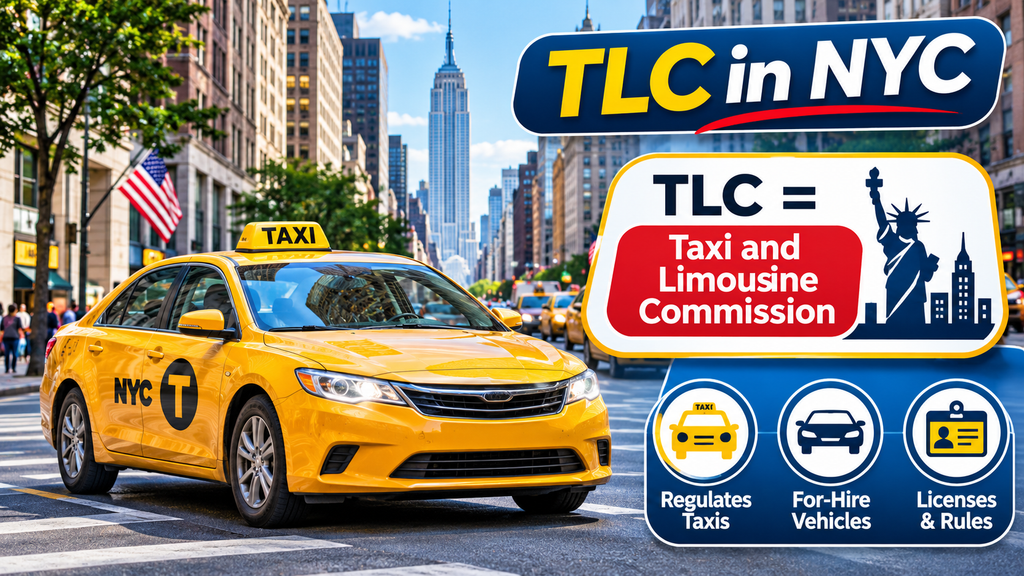
What Is a TLC License?
A TLC license is a type of license issued by New York City’s Taxi and Limousine Commission. Depending on the license category, it may authorize a qualified driver, vehicle, or business to participate in regulated for-hire transportation.
For example, a driver working with a regulated for-hire transportation service may need an appropriate TLC driver license.
Is TLC in Cars the Same as a TLC License?
No. These are two different uses of the same abbreviation.
- Car needs TLC: The vehicle may require additional care, maintenance, or repairs.
- TLC-licensed vehicle: The vehicle has a licensing connection to the NYC Taxi and Limousine Commission.
Understanding the context is the easiest way to tell which meaning applies.
Does TLC Have Other Meanings?
Yes. Although Tender Loving Care is the most familiar everyday meaning, TLC can stand for other terms in specialized fields.
| Context | TLC Full Form |
|---|---|
| Everyday conversation | Tender Loving Care |
| Car care and maintenance | Tender Loving Care |
| New York City transportation | Taxi and Limousine Commission |
| Chemistry | Thin-Layer Chromatography |
| Respiratory medicine | Total Lung Capacity |
If you encounter TLC in a scientific, medical, or transportation document, use the surrounding context to determine its intended meaning.
Examples of TLC in Sentences
Here are some easy examples that demonstrate how people use TLC in everyday English.
Personal Care
“I’ve had a difficult week, and I could use some TLC.”
Relationships
“Taking time to listen is one way to show your partner some TLC.”
Car Care
“My old car needs some TLC before our next road trip.”
Home Improvement
“The kitchen could use a little TLC, especially the cabinets and walls.”
Pet Care
“The shelter volunteers gave the frightened dog some extra TLC.”
In each example, TLC suggests providing attention or care that goes beyond what is currently being given.
Why Do People Say “Needs a Little TLC”?
The expression “needs a little TLC” is a friendly and informal way to say that someone or something needs additional care or attention.
People often choose this expression because it sounds gentler than saying something is neglected, damaged, or in poor condition.
For a person, the phrase usually communicates concern or compassion. For a home or vehicle, it may describe a need for maintenance or improvements without listing every problem.
This difference matters when buying used items. Friendly language may make a project sound manageable, but it should never replace a careful assessment of its actual condition.
Frequently Asked Questions About TLC
What is the full meaning of TLC?
TLC stands for Tender Loving Care. It describes additional kindness, affection, attention, or care given to someone or something.
What does TLC mean in simple words?
In simple words, TLC means giving extra care and attention. It can describe comforting a person, caring for a pet, or looking after something that needs improvement.
What does TLC mean when someone says it?
When someone says they need TLC, they usually mean they would appreciate extra kindness, rest, emotional support, comfort, or personal attention.
What is TLC in cars?
TLC in cars means Tender Loving Care. It commonly describes cleaning, routine maintenance, cosmetic improvements, or repairs needed to improve a vehicle’s condition.
Is buying a car that needs TLC a good idea?
It depends on the vehicle’s condition, repair costs, asking price, and your budget. Before buying, have an independent mechanic inspect the car and estimate any necessary work.
Does TLC mean a car is damaged?
Not necessarily. A car needing TLC might have minor cosmetic imperfections, overdue maintenance, or major mechanical problems. The phrase alone does not establish the severity of its condition.
What does TLC mean on a license plate or in NYC transportation?
In New York City transportation, TLC refers to the Taxi and Limousine Commission. The term is associated with licensing and regulation of taxis and certain for-hire vehicles.
Final Thoughts: What Does TLC Really Mean?
TLC means Tender Loving Care in most everyday conversations. The expression describes kindness, patience, attention, or additional care that helps someone or something feel better or stay in better condition.
When used in the automotive world, TLC often refers to maintenance, cleaning, cosmetic improvements, or repairs. However, if you see “needs TLC” in a used-car advertisement, remember that it is a vague description rather than proof of the vehicle’s condition.
And if you encounter TLC in New York City transportation, it may refer to the Taxi and Limousine Commission instead.
The Bottom Line
TLC is all about care and attention, but its exact meaning depends on the context. For people, it usually means kindness and comfort. For cars, it often means maintenance or repairs. For NYC transportation, it refers to the agency that regulates taxis and certain for-hire services.