
Got a check engine light or a code mentioning bank 1 sensor 2? Here’s a calm, plain-English guide to what this oxygen sensor is, exactly where it sits, and how to tell whether the real problem is the O2 sensor or the catalytic converter — no mechanic experience needed.
In plain terms: bank 1 sensor 2 is the downstream oxygen sensor — the one mounted after the catalytic converter, on the engine side that contains cylinder number 1. Its main job isn’t fuel control; it checks whether your catalytic converter is doing its work.
If a scan tool threw a code like P0138, P0141, or P0430 and mentioned bank 1 sensor 2, you’re in the right place. This guide keeps it simple: what each part of the name means, where the sensor is located, how bank 1 differs from bank 2 and sensor 1 from sensor 2, what STFT readings should look like, the symptoms of a failing sensor, and how to tell an O2 sensor problem apart from a catalytic converter problem — so you don’t throw money at the wrong part.
What Bank 1 Sensor 2 Actually Means
The name is really just a location code. Break it into two halves — the bank and the sensor number — and it stops being confusing.
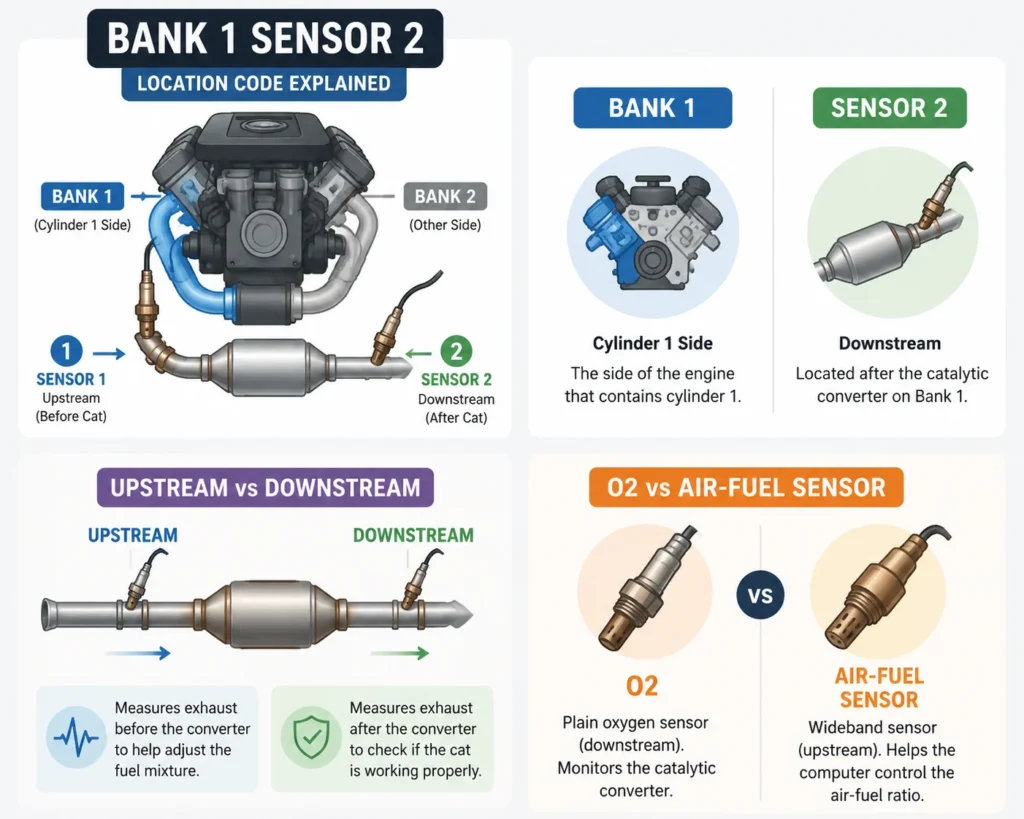
“Bank 1” = Cylinder 1 Side
Bank 1 is simply the side of the engine that holds cylinder number 1. On a V6 or V8 the engine has two banks; on a straight-4 there’s usually only bank 1. If the engine has one exhaust side, everything is bank 1.
“Sensor 2” = Downstream
Sensor 1 is the upstream sensor closest to the engine. Sensor 2 sits farther down the exhaust, after the catalytic converter. So bank 1 sensor 2 is the downstream O2 sensor on the cylinder-1 side.
Upstream vs Downstream
Upstream (sensor 1) measures exhaust before the converter to help the computer trim the fuel mixture. Downstream (sensor 2) measures after the converter to confirm the cat is cleaning the exhaust. Different jobs, different spots.
O2 vs Air-Fuel Sensor
Many modern cars use a wideband air-fuel ratio sensor upstream and a plain oxygen (O2) sensor downstream. Bank 1 sensor 2 is almost always the simpler downstream O2 sensor that monitors the converter.
Bank 1 Sensor 2 Location
To find bank 1 sensor 2, follow the exhaust pipe from the engine backward. The first sensor screwed into the pipe near the engine is sensor 1. Keep going past the catalytic converter — the sensor threaded into the pipe just after the cat is sensor 2. Make sure you’re on the bank 1 side (the side with cylinder 1). One honest warning: which physical side is bank 1 depends on your make and model, so confirm it against your owner’s manual or a repair guide for your exact car before you unbolt anything. A quick scan-tool live-data check while you tap each sensor is the surest way to confirm you have the right one.
Bank 1, Bank 2 & Sensor Numbering
Once you know the naming rule, the other codes fall into place. Here’s how the neighbours compare.
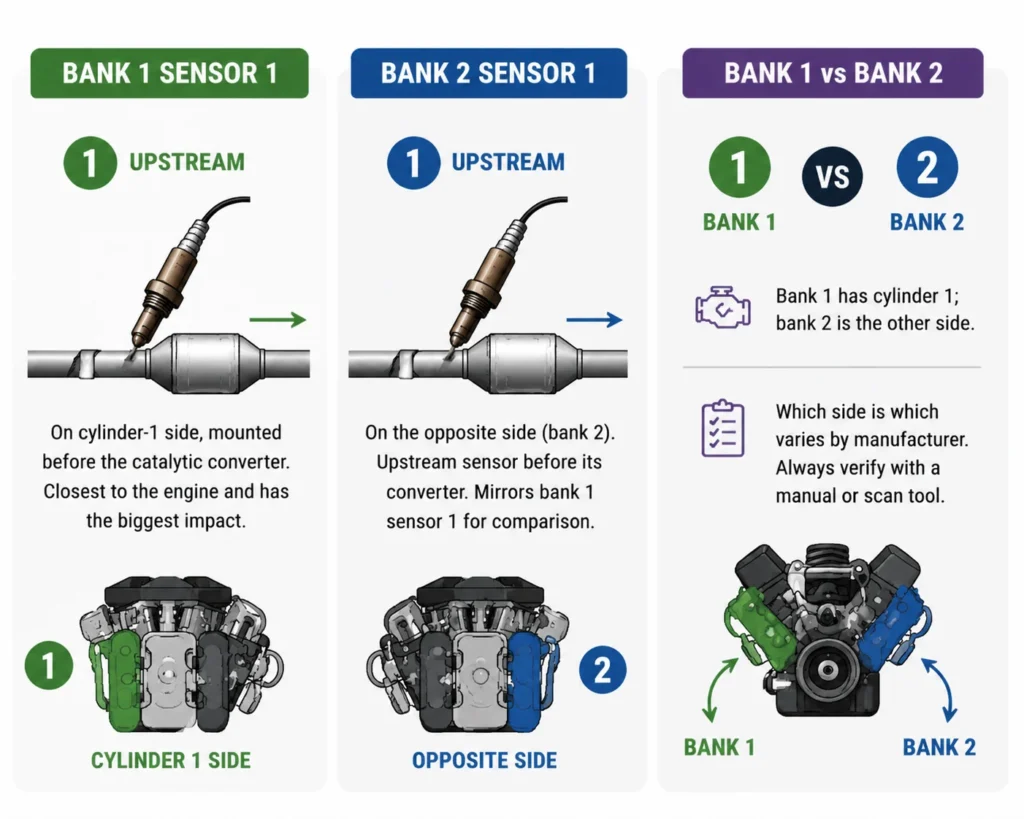
Bank 1 Sensor 1
The upstream sensor on the cylinder-1 side, mounted before the catalytic converter (often in the exhaust manifold). Bank 1 sensor 1 location is closest to the engine and directly affects fuel trim, so it’s the more powerful of the two.
Bank 2 Sensor 1 Location
On V6/V8 engines, bank 2 is the opposite cylinder head from bank 1. Bank 2 sensor 1 is the upstream sensor on that side, again before its converter. It mirrors bank 1 sensor 1 on the other bank — handy for side-by-side comparison of readings.
Bank 1 vs Bank 2
Bank 1 always contains cylinder 1; bank 2 is the other side. A 4-cylinder engine usually has only bank 1. Which physical side is which varies by manufacturer, so never assume — check your specific vehicle’s layout with a manual or scan tool.
Symptoms of a Failing Bank 1 Sensor 2
What You’ll Actually Notice
A weak downstream sensor often shows up as a check engine light with a code like P0136–P0141 or a converter-efficiency code such as P0430. Because sensor 2 mainly watches the catalytic converter, it usually causes fewer drivability problems than sensor 1 — you may see a small drop in fuel economy, a failed emissions test, or lazy sensor readings in live data. If you also feel rough idle, hesitation, or a strong fuel-mixture change, sensor 1 or another issue is more likely. Always confirm the exact code with a scan tool before replacing anything.
O2 Sensor or Catalytic Converter?
This is where people waste the most money. A converter-efficiency code doesn’t automatically mean a bad cat — a lazy sensor, an exhaust leak, or wiring can cause the same reading. Rule out the cheap stuff first.
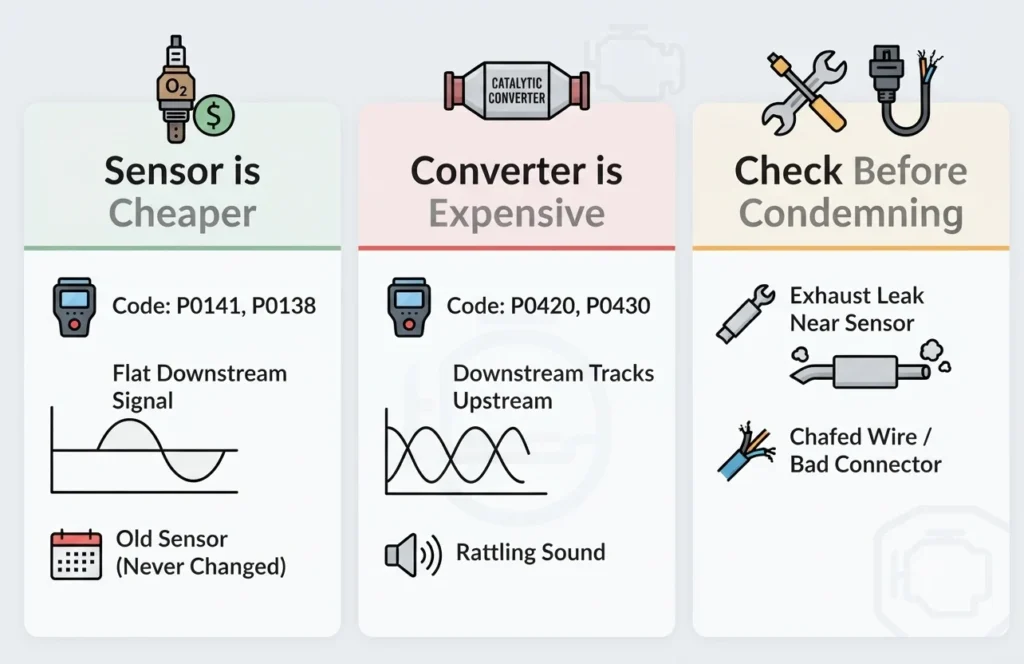
Points to the O2 Sensor
A sensor-specific code (P0141 heater circuit, P0138 high voltage), a downstream signal that’s flat or barely moving, or a sensor that’s old and never been changed. Sensors are cheaper, so it’s often the first suspect.
Points to the Catalytic Converter
A P0420/P0430 efficiency code that stays after a good sensor is fitted, a downstream sensor that swings just like the upstream one (the cat isn’t smoothing it out), plus high mileage or a rattling converter.
Don’t Forget Leaks & Wiring
An exhaust leak near the sensor, a chafed wire, or a bad connector can mimic both problems. Inspect the harness and listen for leaks before condemning an expensive converter — this simple step saves real money.
What Should STFT Bank 1 Sensor 2 Show?
Quick clarification: short-term fuel trim (STFT) is driven by the upstream sensor (sensor 1), not sensor 2 — so there isn’t really a separate “STFT for bank 1 sensor 2.” What you should watch on the downstream sensor itself is voltage: a healthy sensor 2 usually sits fairly steady, often around 0.6–0.9 volts, and moves slowly compared with the fast-switching upstream sensor. If sensor 2 swings rapidly and mirrors sensor 1, that suggests the converter isn’t doing its job. For overall STFT (from sensor 1), roughly ±10% at idle is generally considered normal. Always read these values with a live-data scan tool and compare to your vehicle’s specs.
How to Diagnose It at Home
You can get a long way with a basic OBD-II scanner and good light. First, plug in the scanner and read the exact code — write it down rather than trusting a guess. Next, open live data and watch the bank 1 sensor 2 voltage while the engine is warm: a lazy, flat, or wildly swinging reading tells a story. Then slide under the car (safely, on ramps or stands) and follow the exhaust past the catalytic converter to find the downstream sensor, checking for exhaust leaks, damaged wiring, or a loose connector.
Compare bank 1 and bank 2 readings if your engine has both — a big difference between sides is a strong clue. If the code is a converter-efficiency code, don’t buy a cat yet; rule out the sensor, leaks, and wiring first. When the readings are confusing, the wire is damaged, or you’re simply unsure, that’s the point to hand it to a trusted mechanic.
Fix It Yourself or See a Mechanic?
Replacing a downstream O2 sensor is one of the more DIY-friendly repairs if the sensor is easy to reach and not seized in place. You’ll typically need an O2 sensor socket, penetrating oil, and a little patience. But a rusted-solid sensor, a converter code that won’t clear, or wiring damage are all good reasons to let a shop handle it. Here are practical tips before you decide.
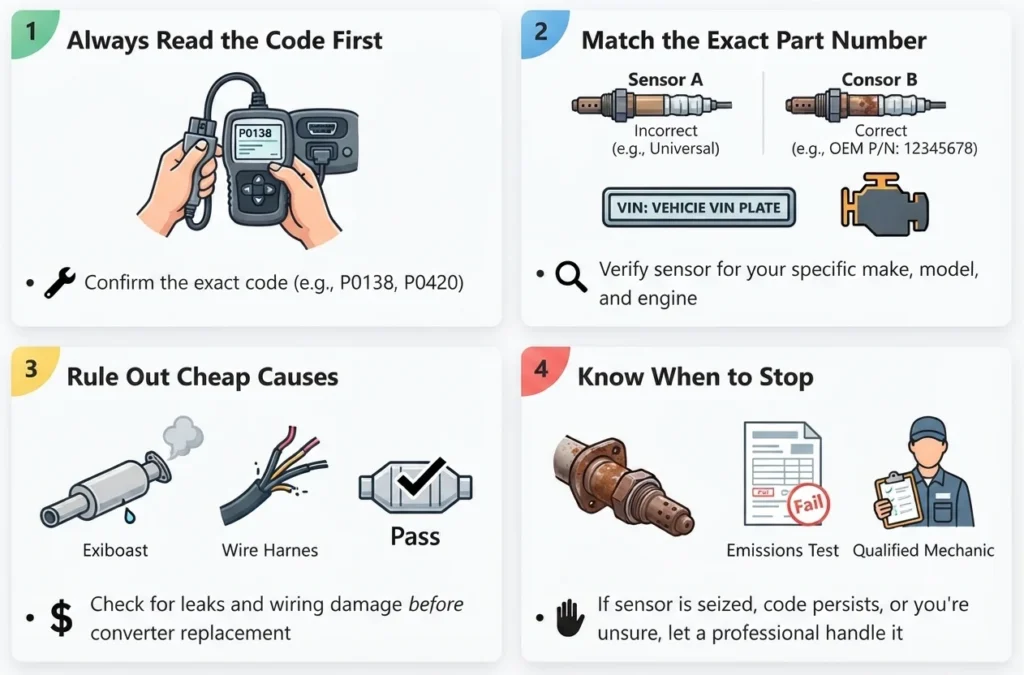
Always read the code first
Confirm exactly which sensor and code you’re dealing with. Guessing leads straight to buying parts you don’t need.
Match the exact part number
Bank 1 sensor 2 differs from sensor 1 and from the other bank. Order the sensor listed for your specific make, model, and engine.
Rule out cheap causes
Check for exhaust leaks and damaged wiring before condemning a costly catalytic converter. It’s the step that saves the most money.
Know when to stop
A seized sensor, a code that won’t clear, or an emissions test on the line are all fair reasons to hand it to a qualified mechanic.
Bank 1 Sensor 2 FAQs
Is bank 1 sensor 2 upstream or downstream?
Downstream. Sensor 1 is upstream (before the catalytic converter) and sensor 2 is downstream (after it). Bank 1 sensor 2 is the downstream O2 sensor on the cylinder-1 side.
Can I drive with a bad bank 1 sensor 2?
Often for a short while, since sensor 2 mainly monitors the converter rather than controlling fuel. But you may lose some fuel economy and you’ll fail emissions. Get it confirmed and fixed rather than ignoring the light long term.
Does a P0420/P0430 code mean I need a new catalytic converter?
Not always. A lazy downstream sensor, an exhaust leak, or wiring faults can trigger the same efficiency code. Rule out those cheaper causes with a scan tool before spending on a converter.
How do I tell bank 1 from bank 2?
Bank 1 is the side with cylinder number 1; bank 2 is the opposite cylinder head. A 4-cylinder engine usually has only bank 1. Which physical side is which varies by manufacturer, so check your vehicle’s manual to be sure.
What should the bank 1 sensor 2 voltage read?
A healthy warm downstream sensor typically sits fairly steady, often around 0.6–0.9 volts, and moves slowly. If it swings quickly and mirrors the upstream sensor, the converter may not be working. Compare against your car’s specs using live data.
Is replacing an O2 sensor a DIY job?
It can be, if the sensor is accessible and not seized. You’ll want an O2 sensor socket and penetrating oil. If it’s rusted solid, the wiring is damaged, or the code won’t clear, a mechanic is the safer choice.
Not Sure Which Part Is Failing?
When the code and readings leave you guessing, don’t start swapping expensive parts. Read the code, check the sensor’s live data, and rule out leaks and wiring first — and if it’s still unclear, a quick professional diagnosis is the cheapest way to avoid buying the wrong part.
🔍 Read the code before you buy parts🛠️ Rule out leaks & wiring first