
New to how a car engine works? Here’s a friendly, visual walk through the engine block, the main parts of a car engine, and how to rev an engine safely — no heavy mechanic jargon.
Think of the engine block as the main body of the engine. Many important parts of a car engine sit inside or around it — cylinders, pistons, coolant passages, and oil passages. Once you understand the engine block, the rest of the car engine parts become much easier to follow.
If you’ve heard terms like engine valve, camshaft, or crankshaft and felt lost, you’re in the right place. This beginner-friendly guide covers car engine anatomy in plain language: what the engine block does, the main parts of an engine and what each one does, a simple engine diagram so you can picture how they fit together, and an easy answer to how to rev a car. No mechanic experience needed.
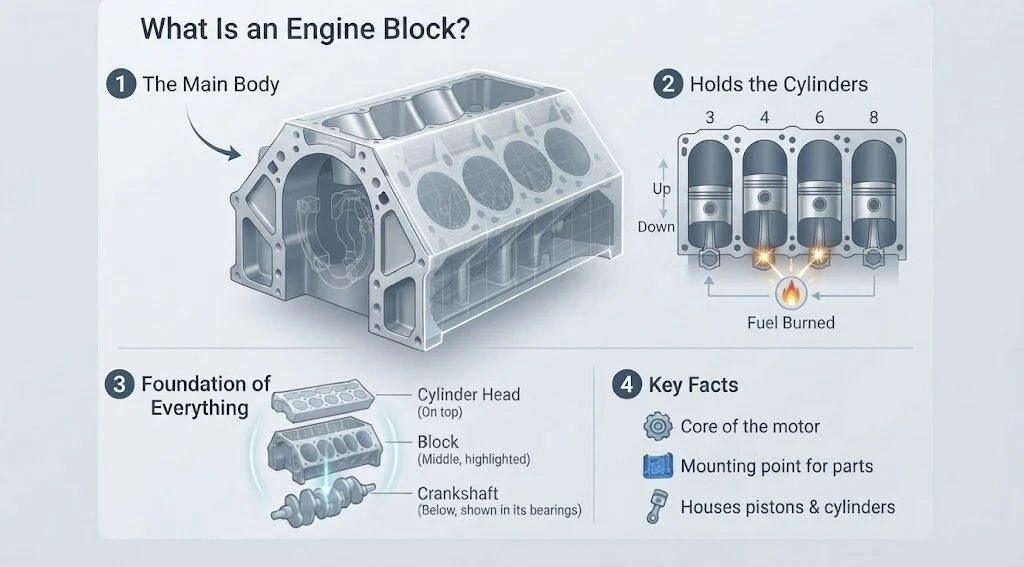
What Is an Engine Block?
The engine block is the large metal casting that forms the core of the motor. It’s the foundation that holds most other engine components in place — so it’s the best place to start when you’re learning engine and parts.
The Main Body
The engine block is the big, heavy metal body of the engine. Almost every other part bolts onto it or sits inside it, which is why it’s the starting point for understanding any car engine.
Holds the Cylinders
Inside the block are the cylinders — round chambers where the pistons move up and down. Most cars have 3, 4, 6, or 8 cylinders, and this is where fuel is burned to create power.
Holds the Cylinders
Inside the block are the cylinders — round chambers where the pistons move up and down. Most cars have 3, 4, 6, or 8 cylinders, and this is where fuel is burned to create power.
Foundation of Everything
The cylinder head sits on top, the crankshaft sits below, and the pistons run inside. Get the block, and the rest of the parts of the engine in a car click into place. this is where fuel is burned to create power.
Engine Block vs the Whole Engine
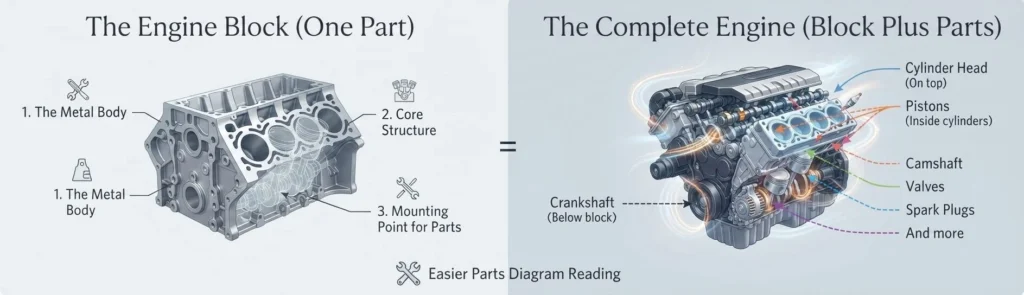
People sometimes say “engine block engine” when they really mean the whole motor. It helps to keep them separate. The engine block is one part — the metal body. The complete engine is the block plus all the other parts: the cylinder head, pistons, crankshaft, camshaft, valves, spark plugs and more. So when you look at a car engine diagram, the block is the big central shape and the other auto engine parts attach to it. Understanding this difference makes every engine parts diagram far easier to read.
Main Parts of a Car Engine
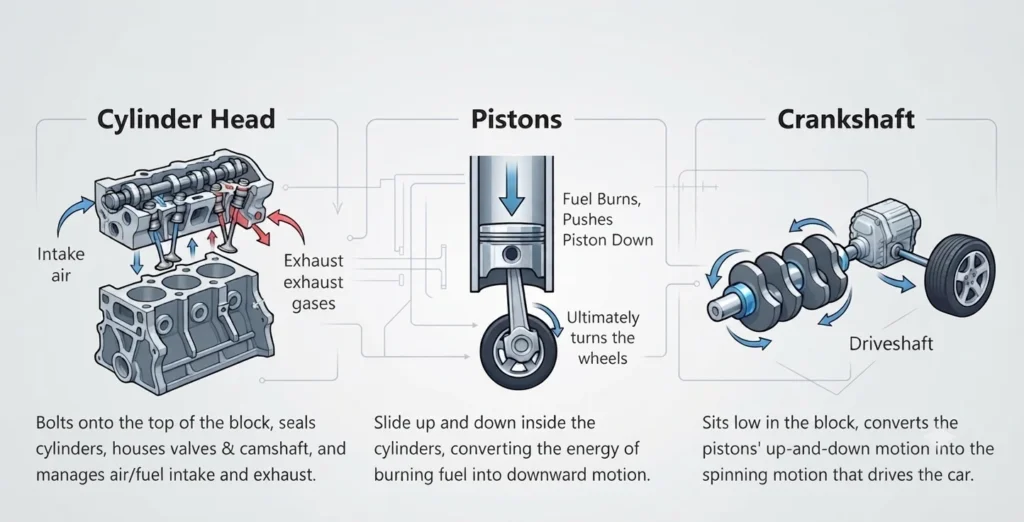
Beyond the block, a handful of key parts do the real work. Here are three of the most important motor car engine parts and what each one does.
Cylinder Head
The cylinder head bolts onto the top of the block and seals the cylinders. It houses the engine valves and often the camshaft, letting air and fuel in and exhaust gases out.
Pistons
Pistons slide up and down inside the cylinders. When fuel burns, it pushes the piston down — and that push is what ultimately turns the wheels of your car.
Crankshaft
The crankshaft sits low in the block and turns the pistons’ up-and-down motion into the spinning motion that drives the car. It’s one of the busiest parts of an engine.
A Simple Engine Diagram
How the Parts Fit Together
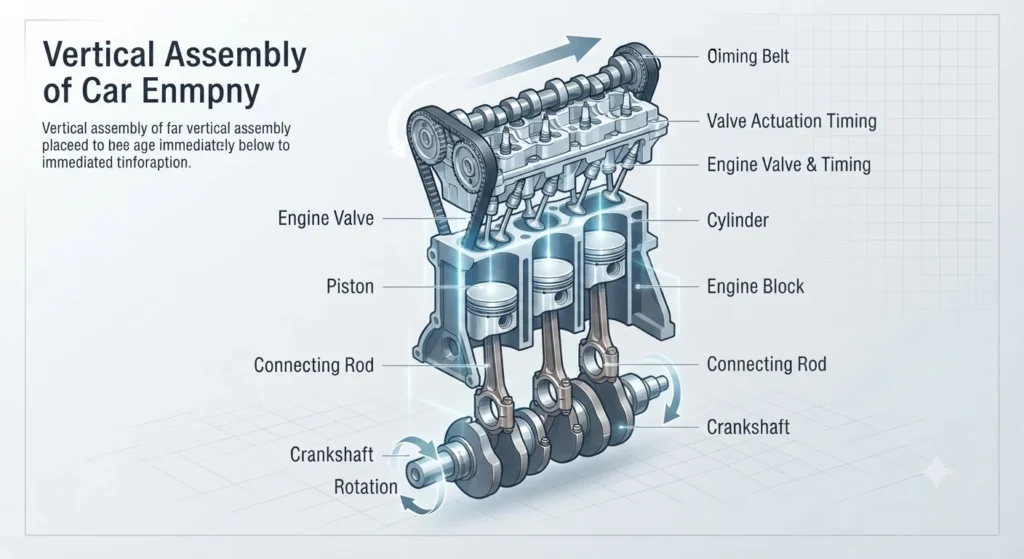
Picture a simple diagram of the engine from the bottom up: the crankshaft spins at the base of the block, connecting rods link it to the pistons, the pistons ride inside the cylinders, and the cylinder head with its engine valves caps it all off. The camshaft opens and closes the valves in time with the pistons. Studying a labeled car diagram or engine parts diagram like this — even a basic sketch — is the fastest way to make engine anatomy click.
More Key Engine Components
A few more parts of the engine in a car keep everything running smoothly. Here’s what each of these vehicle engine parts does in plain terms.
Camshaft & Engine Valves
The camshaft spins and pushes the engine valves open and shut at exactly the right moment. Valves let the fuel-air mix in and the exhaust out — timing is everything.
Spark Plug
In a petrol engine, the spark plug creates the tiny spark that ignites the fuel-air mixture inside the cylinder. No spark, no combustion, no power.
Fuel Injector
The fuel injector sprays a fine mist of fuel into the engine at just the right time. It replaced the old carburettor in most modern cars for cleaner, more precise fuelling.
How Do You Rev an Engine?
Revving simply means pressing the accelerator to make the engine spin faster, raising the RPM you see on the tachometer. In a parked car it doesn’t move you anywhere — it just increases engine speed. People rev to warm a cold engine slightly, to listen for problems, or just to hear it run. Below is a simple, safe way to do it, plus a few cautions so you don’t strain the engine parts you just learned about.
Timing Belt, Oil Pan & Radiator
A few supporting parts round out the picture. The timing belt (or timing chain) links the crankshaft and camshaft so the valves and pistons stay perfectly in sync — if it breaks, the engine stops and can be damaged, so it’s a key maintenance item. The oil pan sits at the very bottom of the block and stores the engine oil that lubricates everything.
And while the radiator isn’t inside the engine, it’s closely connected: coolant flows from the block’s passages out to the radiator, sheds heat, then flows back — that loop is what stops your engine from overheating. Knowing these auto engine parts by name makes any conversation with a mechanic far less stressful, and helps you avoid being overcharged for parts on a car engine you now understand.
How to Rev a Car — Step by Step
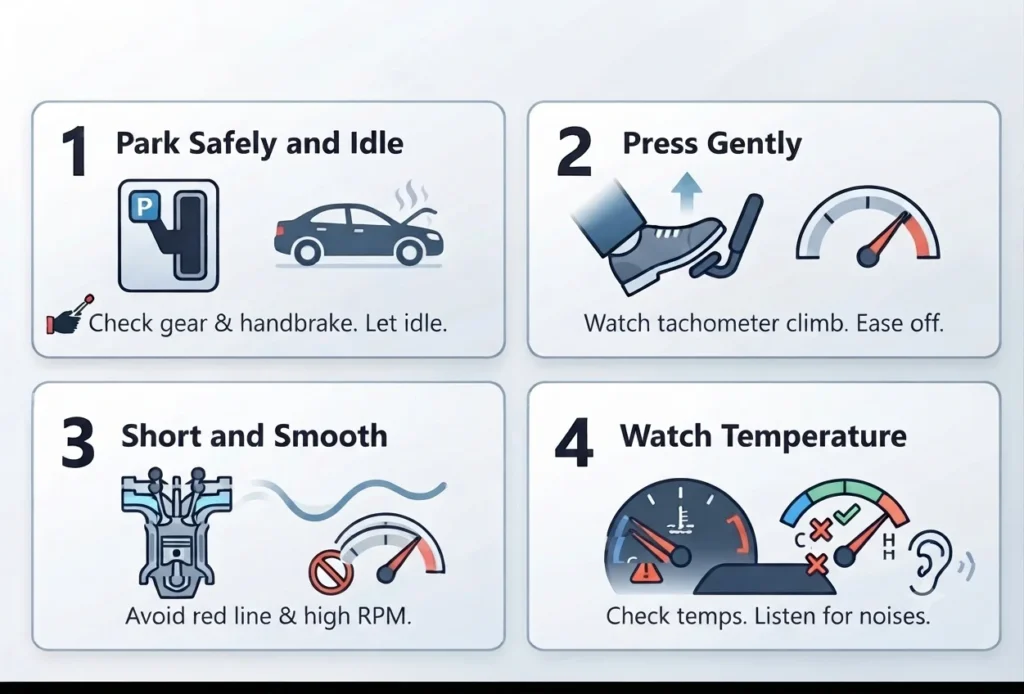
Revving a car is easy once you know the basics. Whether the car is manual or automatic, the safe approach is the same: make sure the car can’t move, then use the accelerator gently. Follow these four steps and keep the safety tips in mind.
Park safely and idle
Put the car in Park (automatic) or Neutral with the handbrake on (manual). Let the engine idle for a moment so it’s ready. Never rev while in gear.
Press the accelerator gently
Lightly press the gas pedal and watch the tachometer climb, then ease off and let the RPM settle. That gentle press-and-release is all revving is.
Keep it short and smooth
Don’t hold high RPM or hit the red line, especially on a cold engine. Short, smooth revs protect the pistons, valves and other engine components.
Watch the temperature
Keep an eye on the temperature gauge and listen for odd noises. If anything sounds or looks wrong, stop and let the engine idle back down.
Engine Parts FAQs
What is the engine block in simple terms?
It’s the large metal body of the engine that holds the cylinders, pistons, and passages for oil and coolant. Almost every other part of a car engine attaches to it, which is why it’s called the block.
What are the main parts of a car engine?
The core parts of an engine are the engine block, cylinder head, pistons, crankshaft, camshaft, engine valves, spark plugs and fuel injectors — plus supporting parts like the timing belt, oil pan and radiator connection.
What does an engine valve do?
An engine valve opens and closes to let the fuel-air mixture into the cylinder and let exhaust gases out. The camshaft controls their timing so they open exactly when needed.
How do you rev an engine safely?
Make sure the car is parked or in neutral with the brake on, then gently press the accelerator and release. Keep revs short and smooth, avoid the red line, and never rev a cold engine hard.
Where can I find a car engine diagram?
A simple engine diagram labels the block, cylinder head, pistons, crankshaft, camshaft and valves. Studying a labeled engine parts diagram alongside this guide is the quickest way to learn car engine anatomy.
Is ‘engine block engine’ the same as the whole motor?
Not quite. The engine block is one part — the metal core. The whole engine is the block plus all the other components. People often say engine block engine when they mean the complete motor.
You Know Your Engine Now
From the engine block to the pistons, valves and crankshaft, you’ve covered the main parts of a car engine and how to rev one safely. Next time you pop the hood or talk to a mechanic, the engine won’t feel like a mystery.
🔧 Learn the block first📖 Keep an engine diagram handy