Got a used catalytic converter and want to know what it’s worth before you sell? Here’s a plain-English guide to catalytic converter scrap price, why one cat converter price is $50 and another is $1,000+, and how to get a fair offer without getting ripped off.
In plain terms: a catalytic converter is valuable because it contains tiny amounts of precious metals — platinum, palladium, and rhodium. The catalytic converter scrap price is what a recycler pays to recover those metals, and it can range from around $50 to well over $1,000 depending on the exact converter you have.
If you’re trying to figure out how much your used catalytic converter is worth before selling, this free catalytic converter scrap price guide keeps it simple: what really sets the price, realistic ranges by vehicle, the difference between scrap value and replacement cost, where to sale a catalytic converter, and the warning signs of a lowball offer — so you don’t leave money on the table.
What Sets the Catalytic Converter Scrap Price
Buyers don’t pull a number out of thin air. A converter’s scrap value comes down to a few practical things — here’s what actually moves the price.
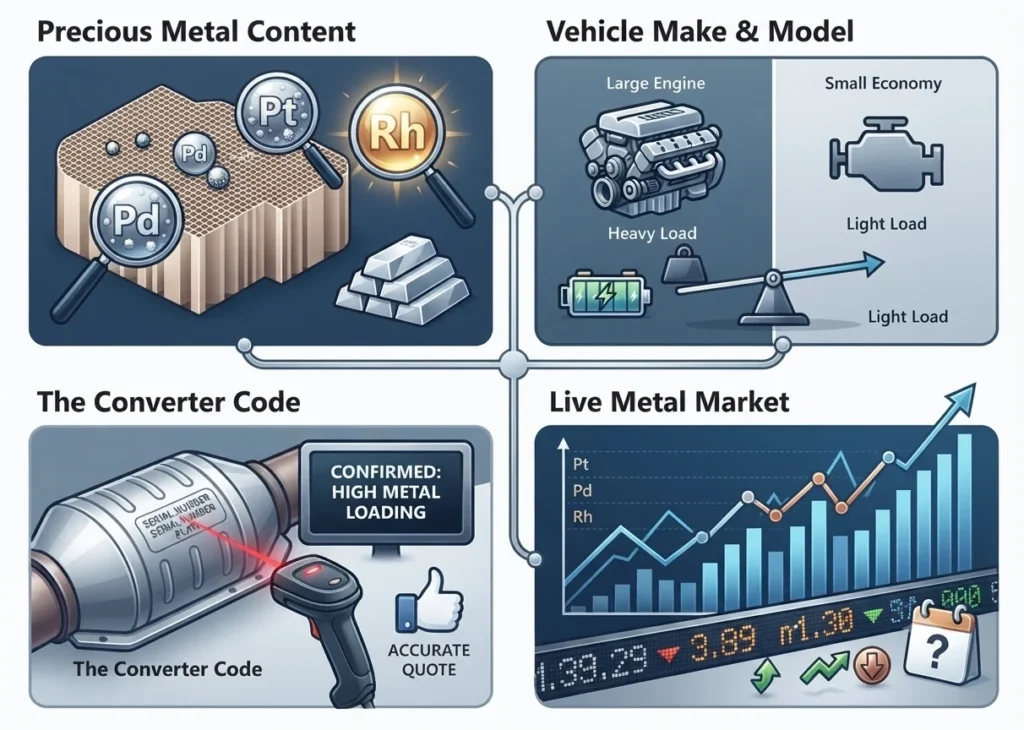
Precious Metal Content
The internal honeycomb is coated with platinum, palladium, and rhodium. More metal loading means a higher catalytic converter scrap value. Rhodium is especially valuable, so converters rich in it command the top prices.
Vehicle Make & Model
Value depends heavily on the vehicle. Larger engines, hybrids, and certain brands use denser precious-metal loading. That’s why a scrap catalytic converters price list by vehicle only gives ranges — your exact model matters.
The Converter Code
Most converters have a serial or part number stamped on the shell. Recyclers look this up to identify metal content. A readable code almost always means a more accurate — and usually higher — offer than ‘by the pound’ guesses.
Live Metal Market
Platinum, palladium, and rhodium trade daily like stocks. When those markets rise or fall, catalytic converter prices for scrap move with them — so a quote today may not match one from a few weeks ago.
Why Cat Converter Prices Vary So Much
This is the part that confuses most sellers. Two converters can look almost identical yet one is worth $80 and the other $900. The difference is what’s inside. A small four-cylinder economy car may hold just a fraction of the precious metals packed into a larger V6 or a foreign import built to tighter emissions rules. On top of that, the metal markets swing constantly — rhodium in particular has spiked to extraordinary prices in the past, dragging certain converters up with it. So when you see catalytic converter scrap prices online, treat them as ballpark ranges, not fixed quotes. The only way to know your converter’s real catalytic converter salvage price is to have it identified by its code and weighed by a reputable buyer using current metal rates.
Rough Scrap Prices by Vehicle Type
These are general ranges only — real offers depend on your exact converter code, condition, and the metal market on the day. Use them to spot roughly where your converter falls.
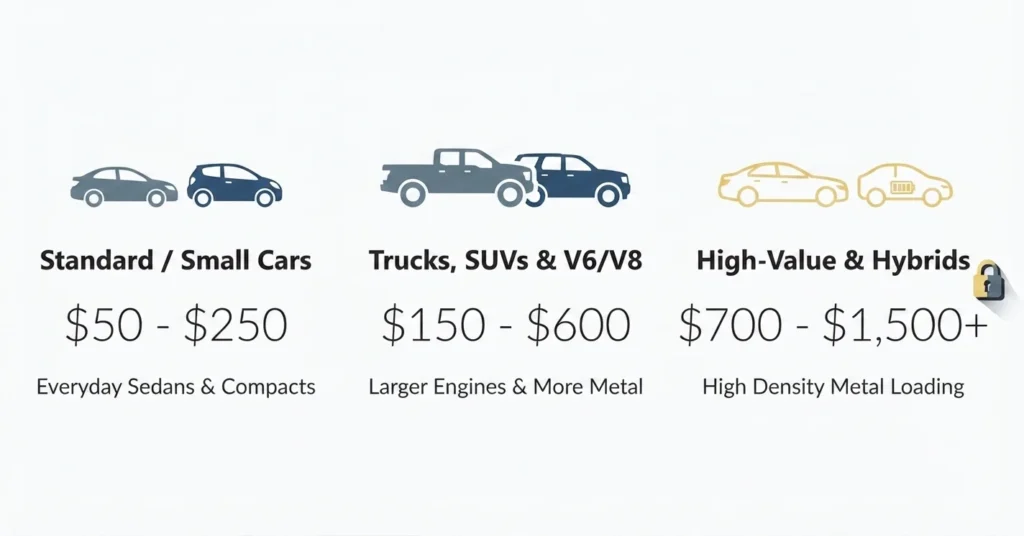
Standard / Small Cars
Everyday sedans and compacts often fall in the lower band — roughly $50 to $250 for a used catalytic converter. Aftermarket units on older economy cars sit at the very bottom because they carry little precious metal.
Trucks, SUVs & V6/V8
Larger engines usually mean larger converters with more metal — commonly $150 to $600 each. Some full-size trucks and vans have two, so the combined catalytic converter salvage price adds up quickly.
High-Value & Hybrids
Certain hybrids, luxury models, and specific imports carry dense metal loading and can reach $700 to $1,500+. These are the converters most targeted by thieves — a strong sign of their catalytic converter scrap cost.
What Buyers Actually Check Before Paying
How Scrap Yards Evaluate a Converter
Most recyclers do not price a converter only by the vehicle name. They check the converter code stamped on the shell, the type (OEM factory unit vs aftermarket), and whether the ceramic honeycomb inside is intact. A whole, undamaged OEM converter with a readable code gets the best offer. A hollowed-out, gutted, or aftermarket unit is worth far less. They then apply the current platinum, palladium, and rhodium prices to estimate metal content — which is why identification matters more than a vehicle badge.
Used vs Scrap · OEM vs Aftermarket
A few terms trip sellers up. Knowing the difference helps you understand which price you’re really being quoted — and stops you from underselling.
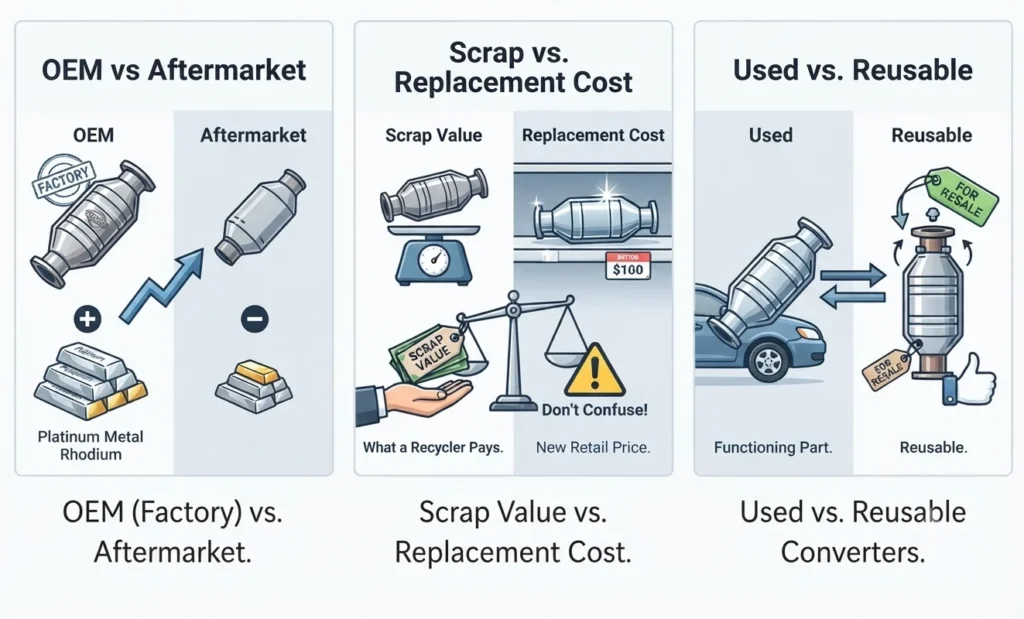
OEM vs Aftermarket
OEM (factory) converters carry more precious metal and fetch higher scrap prices. Aftermarket replacements are built to a budget with far less metal, so their catalytic converter scrap price is usually low — sometimes only scrap-steel value.
Scrap vs Replacement Cost
Scrap value is what a recycler pays to recover the metals. Replacement (retail) cost is what a new converter sells for — often much higher. Don’t confuse the two: you’re being paid scrap value, not retail.
Used vs Reusable Converters
A working used catalytic converter that can be resold for another car may be worth more than its scrap value. If it still functions and passes emissions, ask whether a buyer wants it as a reusable part, not just for recycling.
The Precious Metals Doing the Work
In short: three metals give a catalytic converter almost all of its value. Platinum and palladium help convert harmful exhaust gases, and rhodium — the rarest and often the priciest — handles the toughest reactions. Because these metals trade on global markets and prices shift daily, the same converter can be worth noticeably more or less from one month to the next. You don’t need the chemistry; just remember that a converter loaded with rhodium and palladium is worth the most, and that no honest buyer can promise an exact figure without checking today’s rates and identifying your specific unit.
How to Get an Accurate Valuation
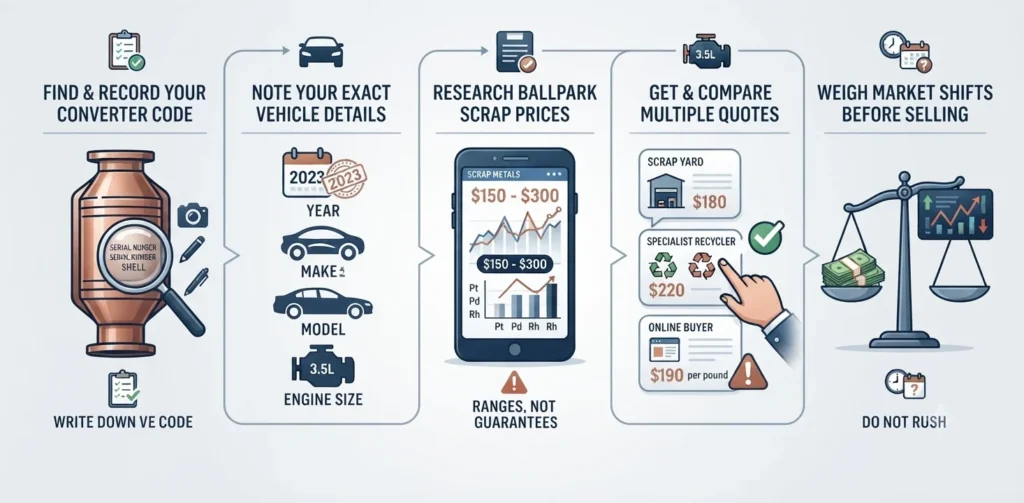
You can do a surprising amount of homework yourself before you sell. First, find the code — most converters have a serial or part number stamped or printed on the metal shell; write it down or photograph it clearly. Next, note your exact vehicle year, make, model, and engine size, since these narrow down the metal content. Then look up recent catalytic converter scrap prices for that code or a similar vehicle online to get a ballpark, remembering these are ranges, not guarantees.
Get quotes from more than one buyer — a local scrap yard, a specialist converter recycler, and an online buyer — and compare. If a buyer offers a flat ‘per pound’ price without asking for the code, be cautious: that usually means a lower, generic figure. Finally, weigh the offers against the fact that prices move with the metal market, and don’t feel pressured to sell on the spot.
Where to Sell a Catalytic Converter
You have a few solid options for where to sale a catalytic converter, and the best one depends on how much effort you want and how fair a price you’re after. Local scrap yards and metal recyclers are convenient but may pay generic rates. Specialist catalytic converter recyclers who read the code and pay by actual metal content usually give the most accurate catalytic converter salvage price. Online converter buyers can be competitive too, though you’ll ship the part and wait. Whichever you choose, always compare at least two or three quotes first.
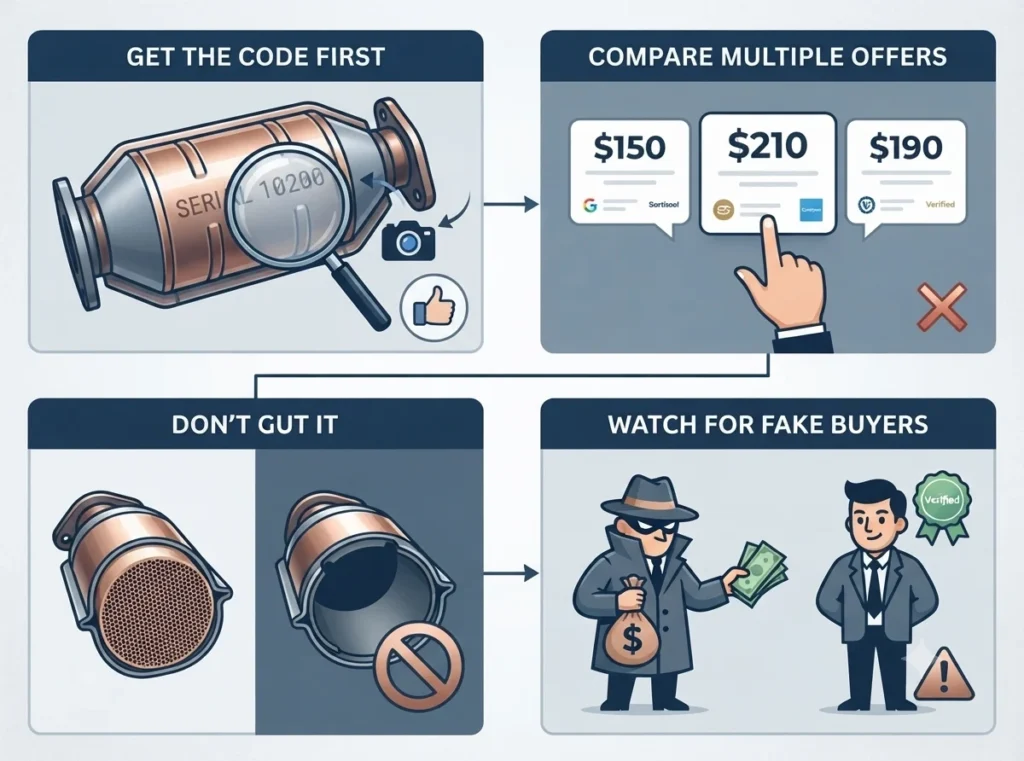
Get the code first
Photograph the serial number on the shell before you sell. It’s the single best way to get an accurate, fair quote.
Compare multiple offers
Never accept the first number. Get quotes from at least two or three buyers so you can spot a lowball offer.
Don’t gut it
A whole, undamaged converter is worth more than a hollowed-out one. Removing the honeycomb destroys much of its value.
Watch for fake buyers
Deal with reputable, reviewed recyclers. Vague pricing, cash-only pressure, or no code check are warning signs of a bad deal.
Catalytic Converter Price FAQs
What is a catalytic converter scrap price today?
It varies widely — commonly $50 to over $1,000 — because it depends on your exact converter, its precious metal content, and the live metal market. Prices change daily, so treat any figure as a ballpark until a buyer identifies your specific unit.
Why is one cat converter price $50 and another over $1,000?
The difference is what’s inside. OEM converters on larger engines, hybrids, or certain imports carry far more platinum, palladium, and rhodium than small aftermarket units, so their catalytic converter scrap value is much higher.
How much is a ‘Cadillac converter’ worth?
‘Cadillac converter’ is a common mishearing of ‘catalytic converter.’ A used Cadillac converter — like any converter — is priced by its code and metal content, not the brand name alone, so ranges follow the same rules as any other vehicle.
Is a used catalytic converter worth anything?
Almost always, yes. Even a lower-value unit holds recoverable precious metals. A working OEM converter can be worth even more if a buyer wants it as a reusable part rather than for scrap.
Where can I sell a catalytic converter for the best price?
Specialist converter recyclers who read the code and pay by actual metal content usually offer the most. Compare them against local scrap yards and reputable online buyers, and get several quotes before deciding.
Are online scrap price lists accurate for my converter?
They’re useful for ranges, not exact figures. A scrap catalytic converters price list by vehicle can’t account for your specific code, condition, or today’s metal prices — only a buyer identifying your unit can give a firm offer.
Before You Sell, Know the Value
Don’t accept the first offer on your used catalytic converter. Find the code, note your vehicle details, check current ranges, and compare a few reputable buyers — that’s how you avoid getting underpaid.
📷 Photograph the converter code💵 Compare at least three quotes