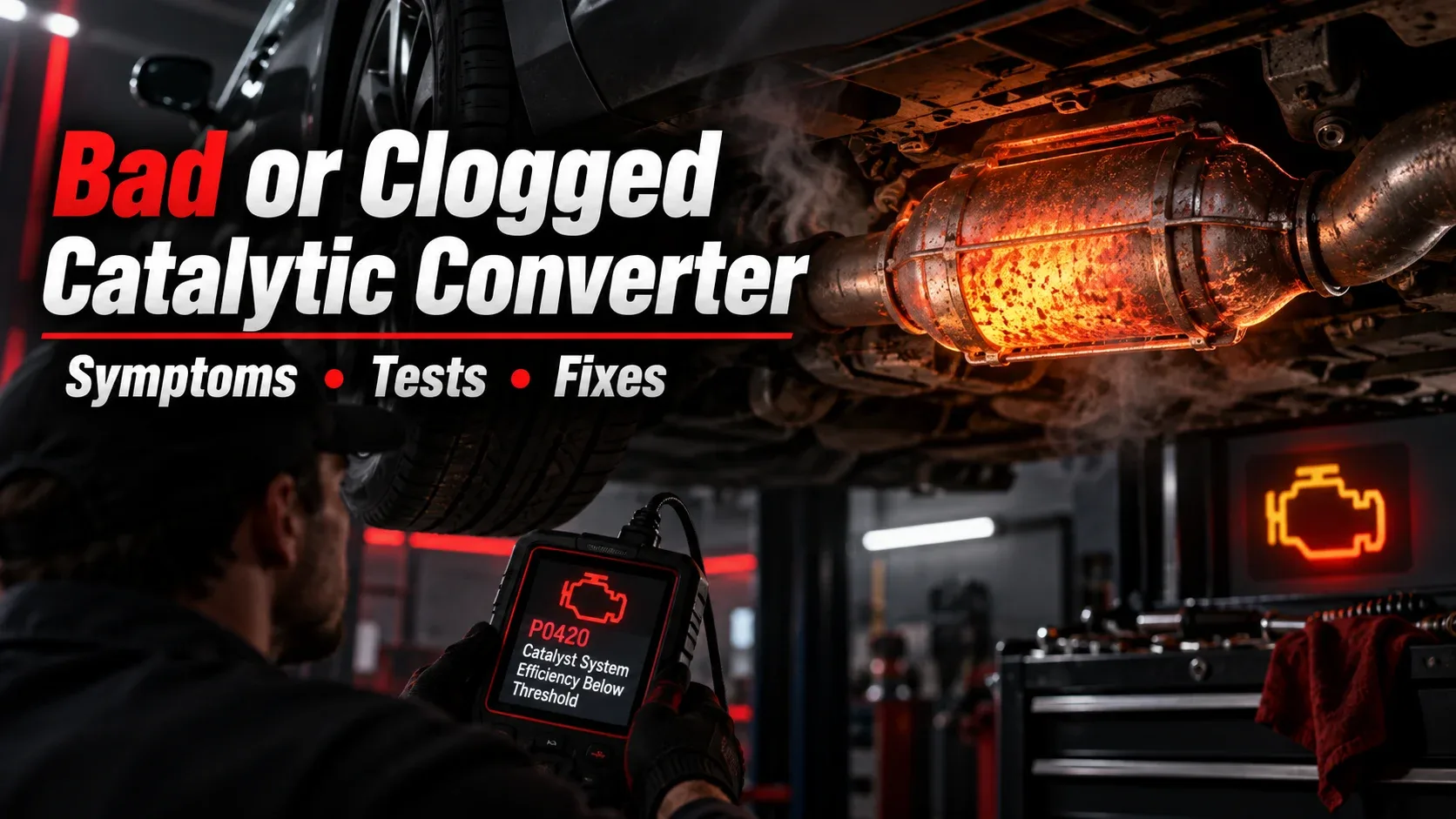
Loss of power and a check-engine light can point toward restricted exhaust flow—but symptoms are not a diagnosis. Here is how to gather meaningful evidence before paying for a catalytic converter.
Quick answer: diagnose before replacing
A clogged catalytic converter can cause weak acceleration, heat, unusual exhaust behavior, and a check-engine light. But ignition faults, fuel-delivery issues, oxygen-sensor faults, and other exhaust restrictions can feel similar. A trouble code or symptom alone is not enough to condemn the converter.
Stage 1 — Recognize the pattern
Clogged catalytic converter symptoms: what drivers commonly notice
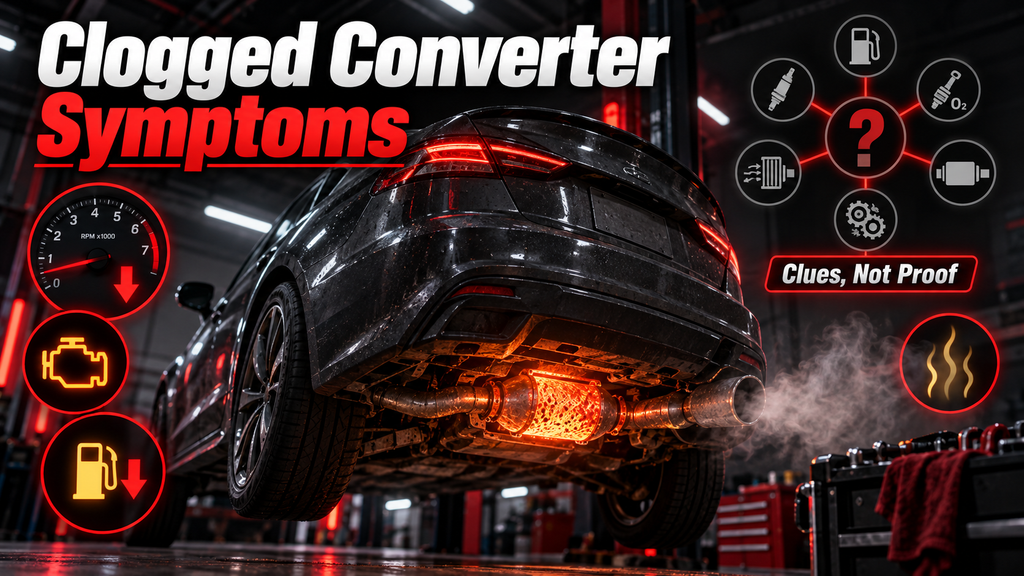
A converter that is restricted internally can make it harder for exhaust gases to leave the engine. The result may be most noticeable when the engine is working hard, such as merging, climbing, towing, or accelerating at higher RPM. These signs raise suspicion; they do not prove the cause.
Symptoms that can fit a restricted converter
- Noticeable loss of power under load or at higher engine speeds.
- Slow acceleration that feels like the engine cannot breathe out.
- A check-engine light, sometimes alongside catalyst-efficiency codes.
- Excessive heat from the floor area or a hot, sulfur-like exhaust smell.
- Poor fuel economy, rough running, or an engine that struggles to rev freely.
Important distinction
Symptoms are clues, not proof.
A misfire, weak fuel pump, clogged fuel filter, intake restriction, failing sensor, damaged muffler, or transmission problem may overlap with these symptoms. The key question is whether testing shows a real exhaust restriction or catalyst failure—not whether the symptom list sounds familiar.
Stage 2 — Confirm the cause
How do you know if your catalytic converter is bad?
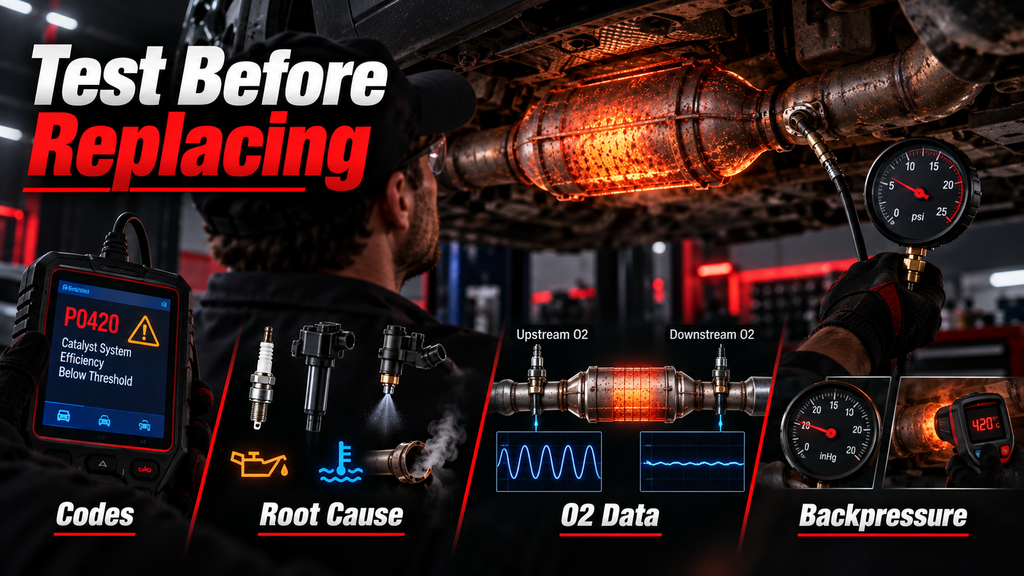
A good diagnosis combines scan data, engine-condition checks, and a test that looks for restricted exhaust flow when restriction is suspected. Procedures and readings vary by vehicle, so use service information for your exact year, make, model, and engine.
Read codes—but do not stop there
Codes such as P0420 or P0430 indicate that the emissions monitor sees lower-than-expected catalyst efficiency. They do not automatically prove a physically clogged converter. Record all stored and pending codes, plus freeze-frame data, before clearing anything.
Rule out the problem that damaged it
An active misfire, rich mixture, oil consumption, coolant entry, or exhaust leak can trigger converter-related codes and can damage a new converter too. Address engine faults first; replacing the converter without solving the cause can be an expensive repeat repair.
Check upstream and downstream sensor behavior
A technician can evaluate oxygen-sensor signals and fuel-trim data with a scan tool. This helps determine whether the monitor result is credible and whether the engine is running in a condition that can harm the catalyst. Interpretation is vehicle-specific.
Measure exhaust restriction when needed
A backpressure test measures resistance in the exhaust, often through an oxygen-sensor port with the correct adapter. Vacuum behavior, temperature comparisons, and visual inspection may support the diagnosis, but a qualified shop should interpret results against manufacturer guidance.
Know the difference
Clogged, inefficient, contaminated, or broken?
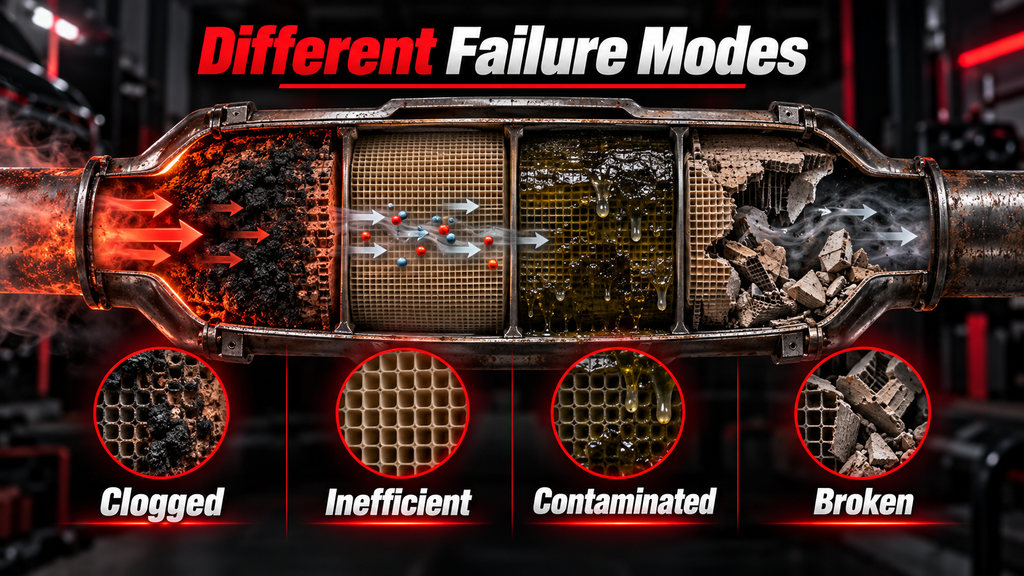
These conditions are related, but they are not interchangeable. Naming the actual failure mode helps prevent false promises about a cleaner or a replacement.
Restricted / clogged
Exhaust flow is reduced. The substrate may be loaded with deposits, melted, collapsed, or obstructed by broken material.
Inefficient
The converter may still flow normally but no longer stores and converts pollutants effectively enough for the monitor.
Contaminated
Oil, coolant, excessive fuel, or fuel additives can coat or poison the catalyst. The source of contamination matters as much as the converter.
Physically damaged
A rattling converter, melted brick, or broken substrate is a mechanical failure. Cleaning products cannot rebuild damaged internal material.
Stage 3 — Choose the realistic repair
How to unclog a catalytic converter—and when you cannot
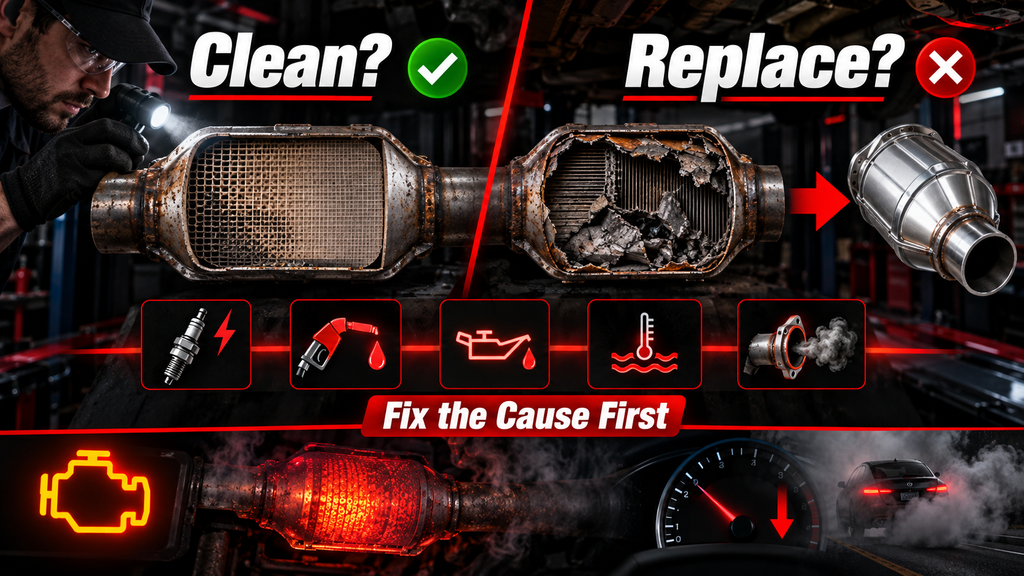
The honest answer depends on why flow is restricted. There is no universal pour-in product or shortcut that can reliably reverse every converter problem. First identify the failure mode and correct the condition that caused it.
When cleaning may be discussed
If diagnosis suggests light deposits rather than melted, collapsed, or broken substrate, a technician may discuss an approved cleaning approach after correcting the engine issue. Treat products marketed as catalytic-converter cleaners cautiously: they cannot repair physical damage or reliably cure every efficiency code.
When replacement is more realistic
Replacement is usually the practical repair for a converter with melted, collapsed, rattling, or heavily contaminated substrate—or confirmed low efficiency after other faults are corrected. Use a compliant part for your vehicle and location, and verify that the root cause has been repaired before installation.
Arrange inspection promptly if the vehicle is overheating, losing power severely, or has a flashing check-engine light.
A flashing light commonly indicates an active misfire, which can quickly overheat and damage the converter. Strong exhaust odor, visible smoke, glowing exhaust components, or a dramatic loss of power also justify stopping safely and seeking professional advice rather than continuing to drive.
Catalytic converter FAQ
Can a bad catalytic converter cause poor acceleration?
Yes. A restricted converter can limit exhaust flow and reduce power, especially under load. However, poor acceleration also occurs with fuel, ignition, air-intake, transmission, and sensor problems. A restriction test and basic engine diagnosis help separate those causes.
Does a P0420 code mean I need a new catalytic converter?
No. P0420 is a catalyst-system efficiency code, not a replacement order. Exhaust leaks, sensor concerns, incorrect air-fuel control, misfires, and vehicle-specific monitor conditions can affect the result. Confirm the cause before approving a converter.
Can I keep driving with a clogged catalytic converter?
It depends on severity and the underlying cause, but significant restriction, overheating, a flashing check-engine light, or major loss of power should not be ignored. Continuing to drive an actively misfiring vehicle can further damage the converter and create safety concerns.
How can a mechanic confirm a clogged converter?
A mechanic typically reviews codes and live data, checks for misfires and fuel-control faults, inspects for leaks or damage, and may measure exhaust backpressure. The goal is to document restriction and identify what caused it before any replacement is installed.