
If you are replacing, removing, or reconnecting a car battery, the order of the terminals matters. On a typical 12-volt negative-ground vehicle, the safe rule is simple: disconnect the negative terminal first and reconnect the positive terminal first.
Following the correct sequence helps reduce the risk of an accidental short circuit if a tool touches metal bodywork while you are working around the battery.
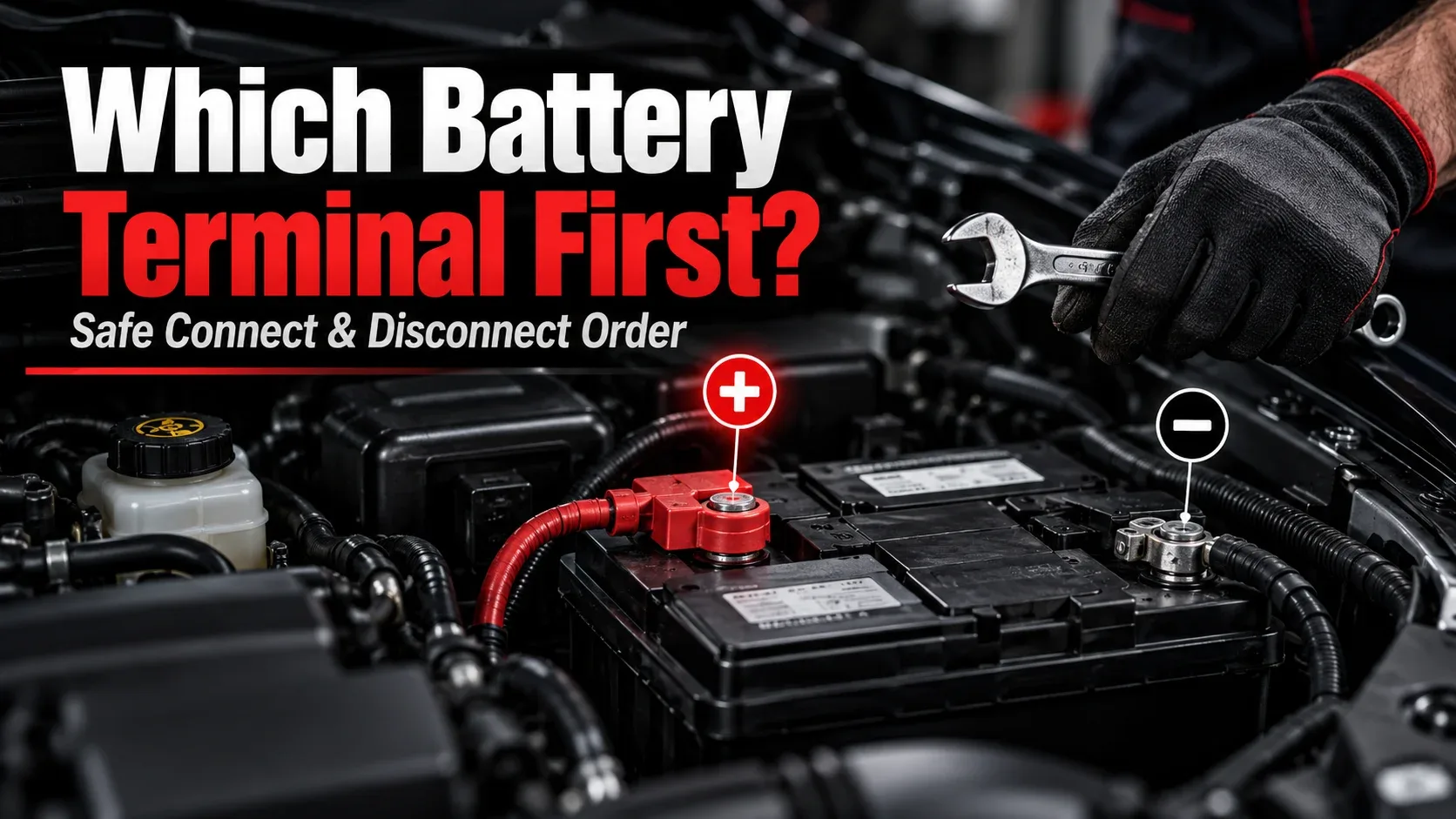
When Connecting a Battery, Which Terminal First?
When connecting a typical car battery, connect the positive terminal first. After the positive cable is secure, connect the negative terminal.
Connecting a Battery
Disconnecting a Battery
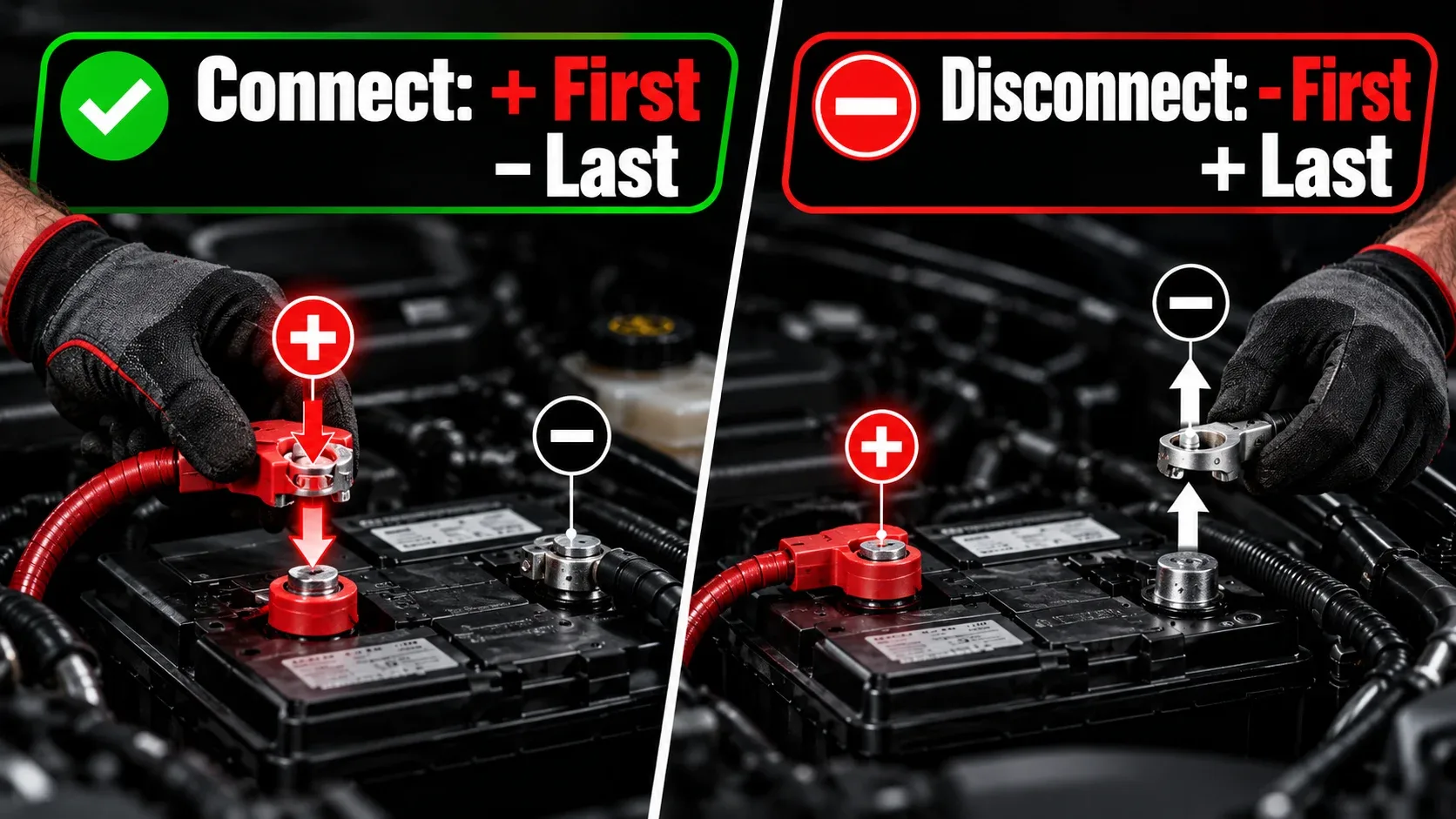
Easy Rule to Remember
That leaves you with the correct order for both disconnecting and reconnecting.
Why Does Battery Terminal Order Matter?
On most modern passenger vehicles, the negative battery terminal is connected to the vehicle’s chassis. That means much of the metal structure of the vehicle acts as part of the electrical ground path.
If the negative cable is still connected while you are loosening the positive terminal, a metal wrench that touches both the positive terminal and grounded vehicle metal can create a direct short circuit.
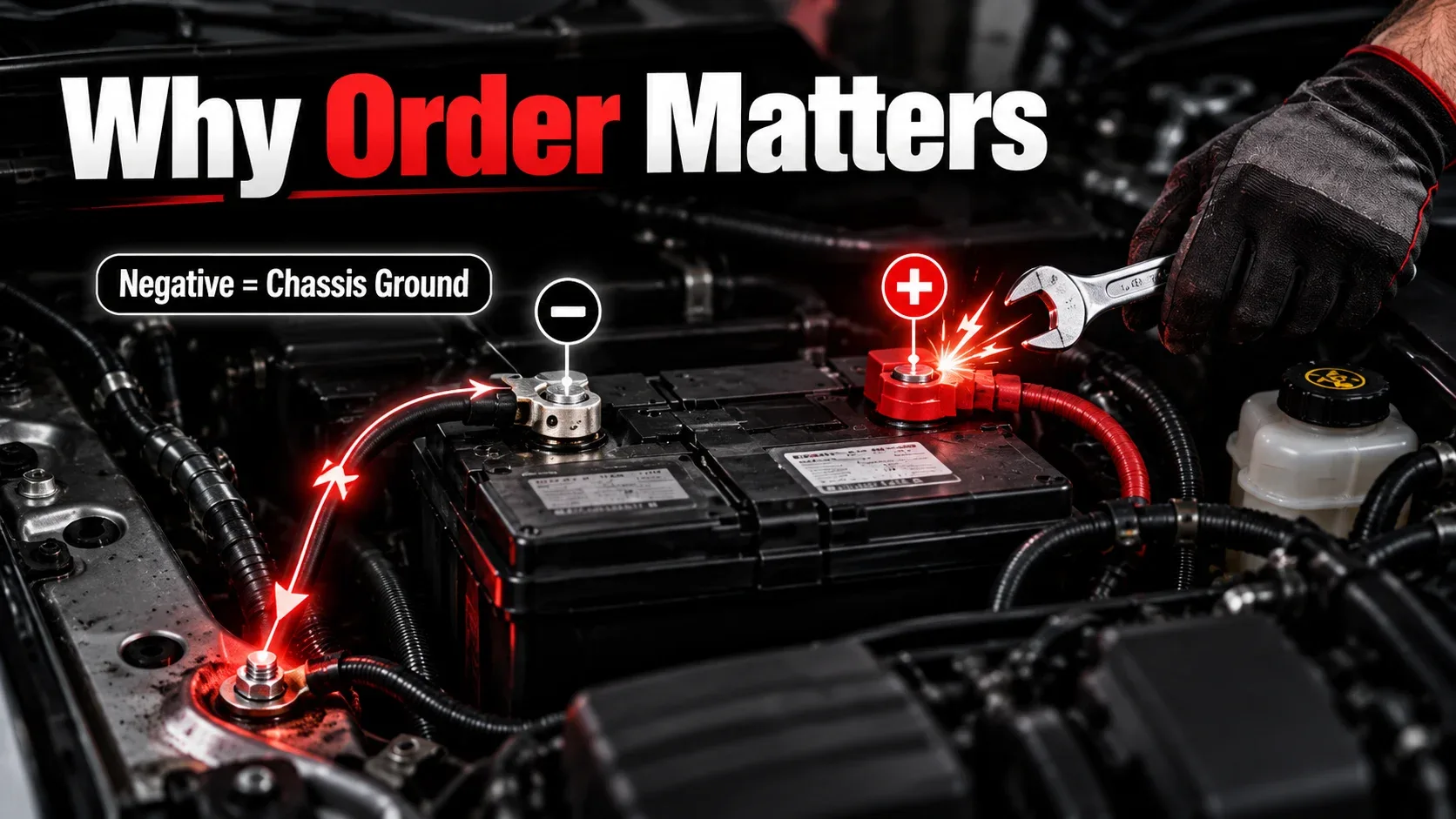
Important Safety Point
Never intentionally bridge the positive battery terminal to the negative terminal or grounded vehicle metal with a wrench, tool, jewelry, or other conductive object.
Which Battery Terminal to Disconnect First?
If you are removing or replacing a battery, disconnect the negative terminal first. It is usually marked with a minus symbol (–) and is commonly connected to a black cable.
Once the negative cable is safely moved away from the battery terminal, the positive cable can be disconnected.
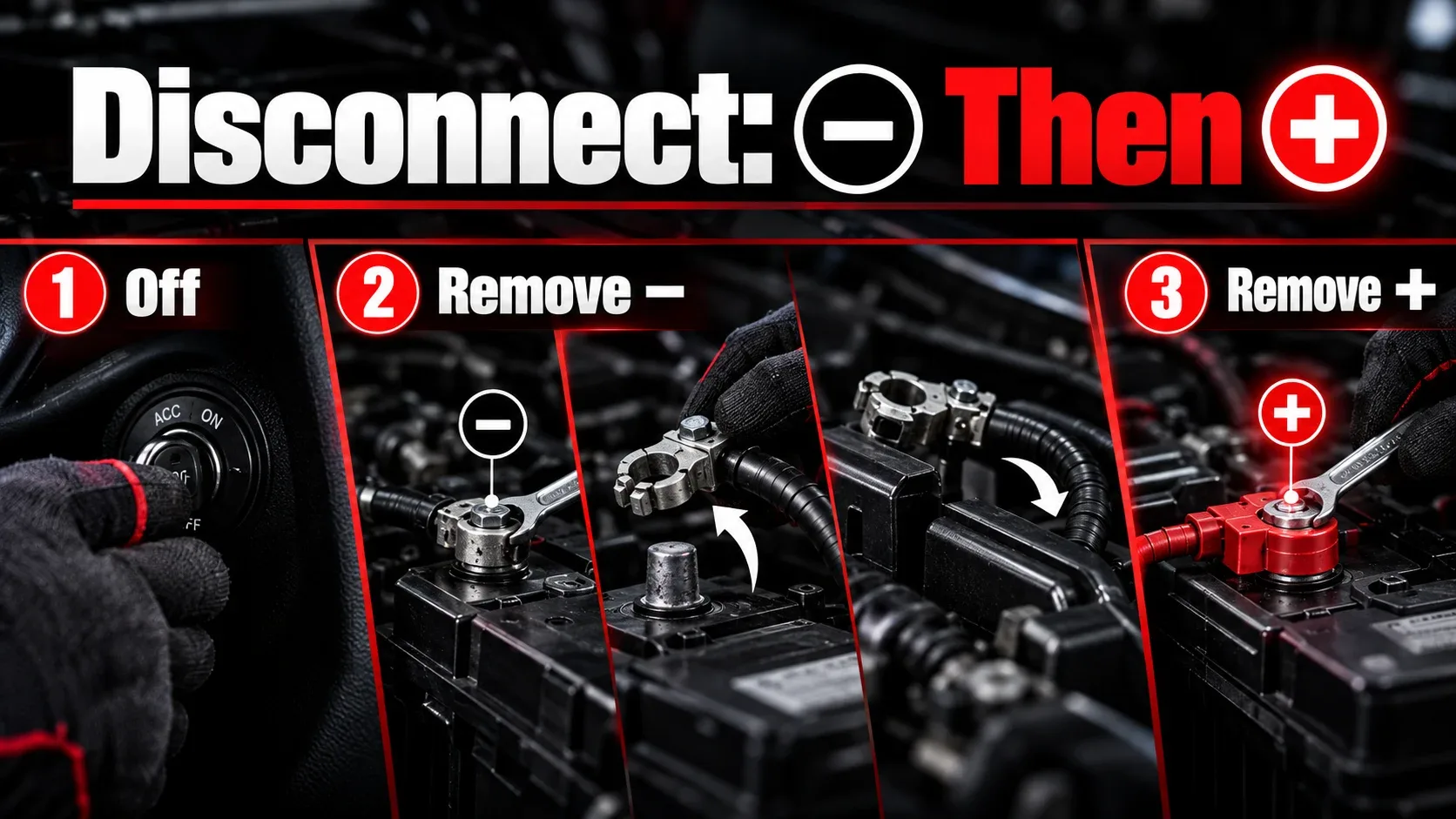
Switch the Vehicle Off
Turn off the engine and electrical accessories, engage the parking brake, and follow any vehicle-specific shutdown instructions.
Identify the Negative Terminal
Look for the minus (–) marking. Cable color can help, but terminal symbols are more reliable than color alone.
Disconnect Negative First
Loosen the negative cable clamp carefully and move the cable away so it cannot spring back onto the terminal.
Disconnect Positive Second
Once the negative connection is isolated, loosen and remove the positive cable from the positive terminal.
How to Connect a Car Battery Safely
When installing or reconnecting a battery, use the opposite sequence. Connect the positive terminal first, then connect the negative terminal.
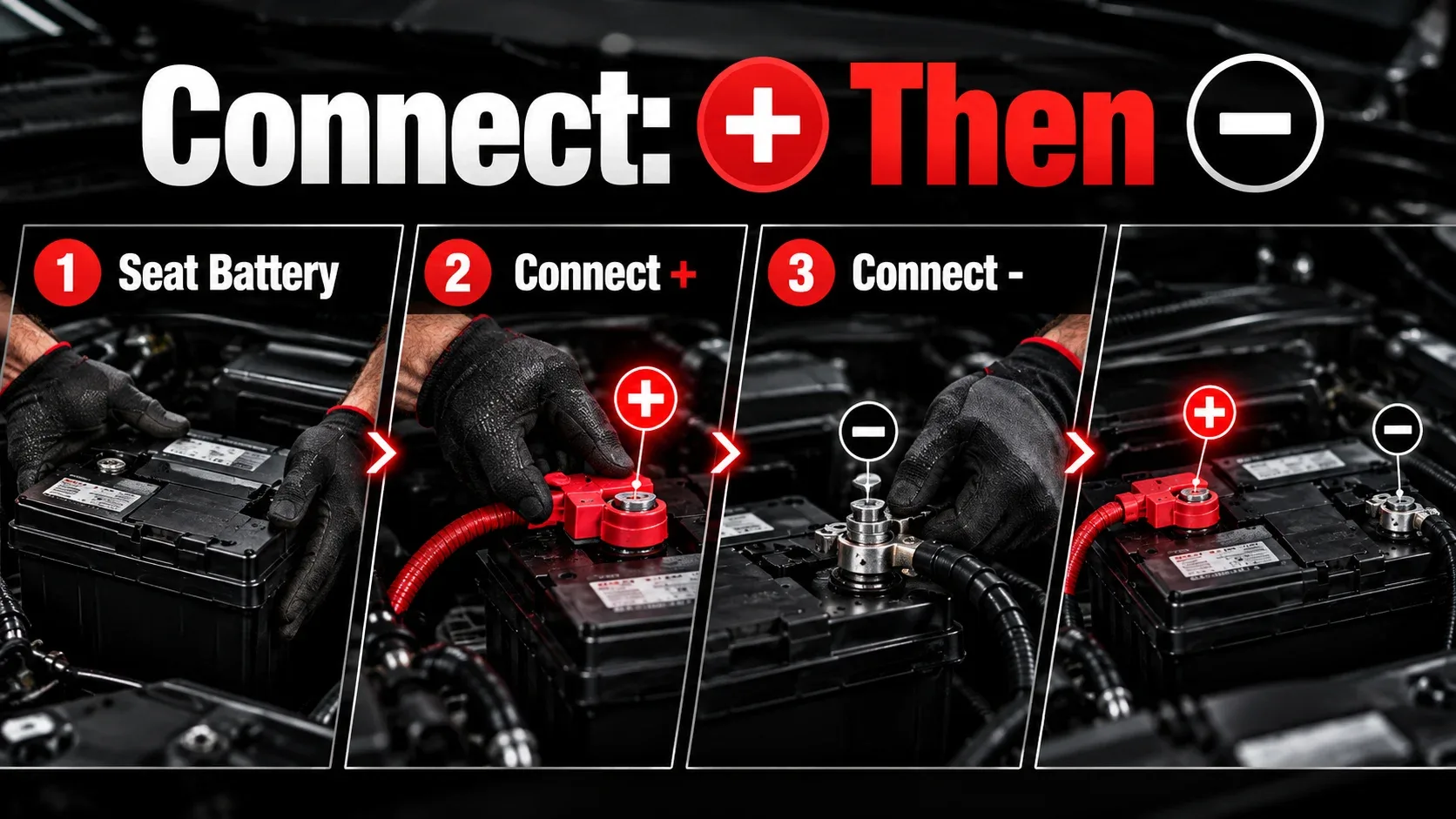
Check Battery Position
Make sure the battery is correctly seated and secured in its tray with the positive and negative terminals positioned correctly.
Connect Positive First
Attach the positive cable to the positive (+) battery terminal and tighten the connection securely.
Connect Negative Last
Attach the negative cable to the negative (–) terminal after the positive connection is complete.
Check Both Connections
Verify that the terminals are secure without overtightening or damaging the posts or clamps.
Positive or Negative First? How to Identify the Terminals
Before touching the battery cables, identify the terminals carefully. Most batteries have a plus symbol for positive and a minus symbol for negative.
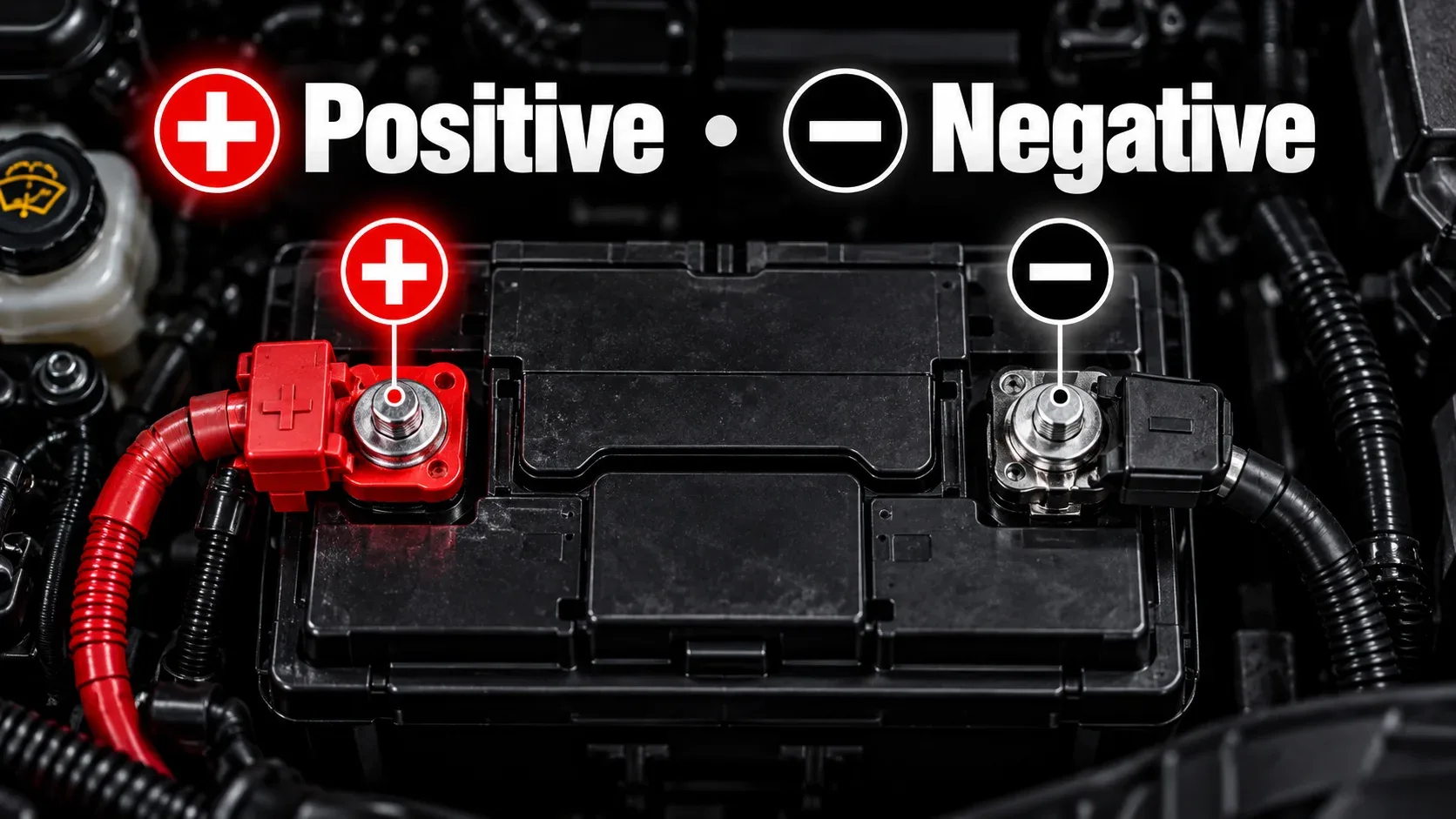
Positive Terminal
- Marked with a plus (+)
- Often associated with a red cable or cover
- Connect first
- Disconnect last
Negative Terminal
- Marked with a minus (–)
- Often associated with a black cable
- Disconnect first
- Connect last
Do Not Rely on Color Alone
Cable colors can vary, particularly on modified or older vehicles. Confirm polarity using the battery’s + and – markings and the vehicle manufacturer’s information.
What Happens If You Disconnect the Positive Terminal First?
Removing the positive terminal first does not automatically damage the vehicle, but it can increase the risk of an accidental short while the negative terminal is still connected.
For example, if a metal wrench is touching the positive clamp and the other end of the wrench contacts grounded metal on the vehicle, current can flow through the tool.

Avoid Sparks Around Batteries
Automotive batteries can produce gases under some conditions. Keep flames, smoking materials, sparks, and unnecessary electrical arcing away from the battery.
What Happens If You Connect the Negative Terminal First?
If the negative terminal is connected first, the vehicle chassis becomes electrically connected to the battery before you work on the positive terminal. That means a tool touching the positive terminal and grounded metal can complete a circuit.
Connecting the positive cable first keeps the chassis disconnected from the battery while the positive connection is being secured.
Battery Connection Order at a Glance
| Task | First | Second | Easy Rule |
|---|---|---|---|
| Disconnect Battery | Negative (–) | Positive (+) | Negative OFF first |
| Connect Battery | Positive (+) | Negative (–) | Negative ON last |
Safety Precautions Before Working on a Car Battery
Car batteries can deliver very high current, so even a routine battery change deserves careful preparation.
Is the Terminal Order Different When Jump-Starting?
Yes. Battery replacement and jump-starting are different procedures. Do not assume that the simple battery-removal sequence is the complete jumper-cable procedure.
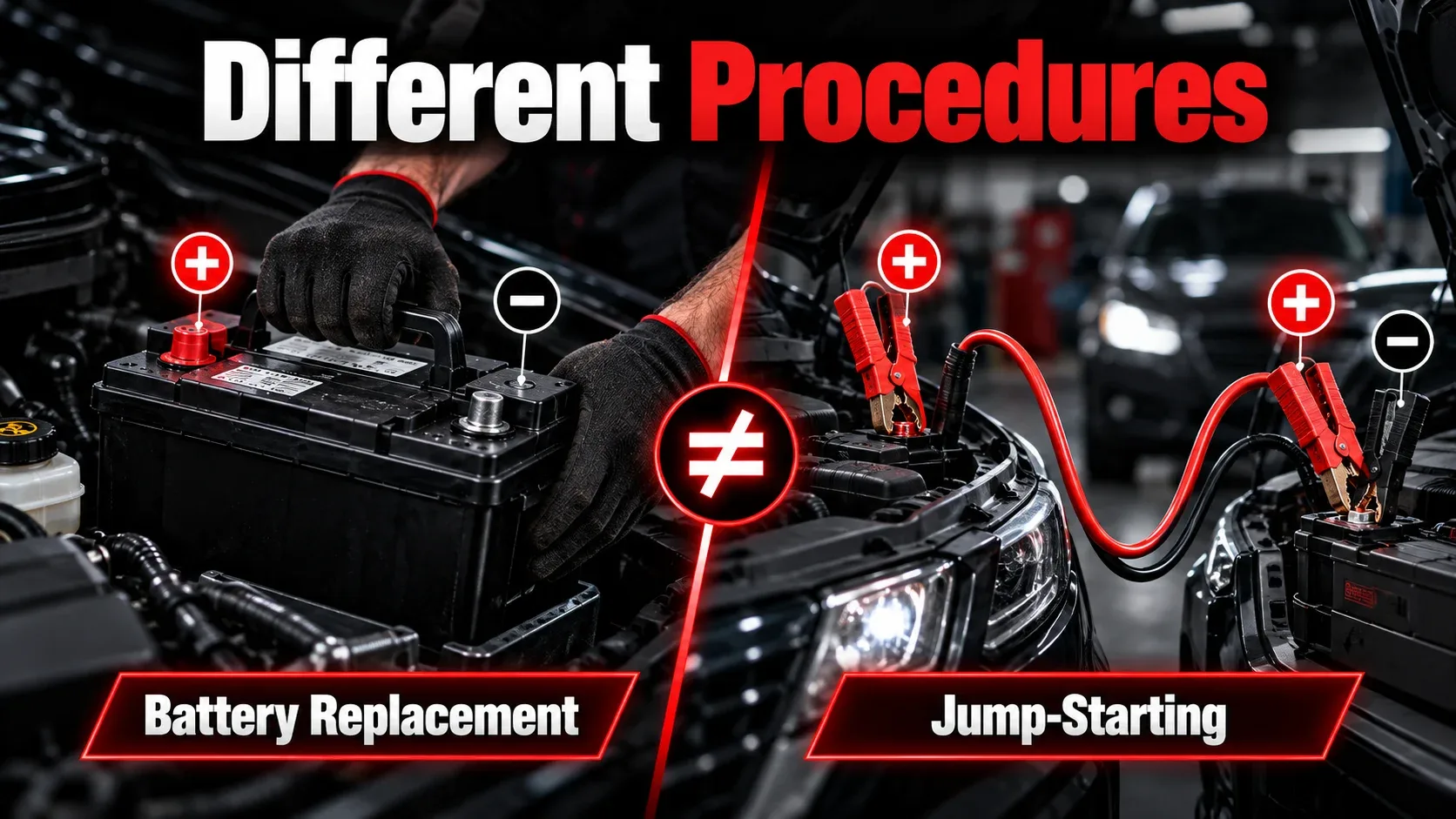
Follow the Vehicle’s Jump-Start Procedure
Many vehicles specify a designated ground point away from the battery for the final jumper-cable connection. Follow the owner’s manual for the exact procedure.
Modern Cars, Hybrids and EVs Need Extra Attention
Modern vehicles can contain electronic modules that remain active after the ignition is switched off. Disconnecting the 12-volt battery may also reset stored settings or require initialization procedures afterward.
Hybrid and electric vehicles also contain high-voltage systems that are separate from the conventional 12-volt battery. Do not work on high-voltage components unless you are properly trained and equipped.
Check Vehicle-Specific Instructions
Before disconnecting the battery on a modern, hybrid, luxury, or heavily computerized vehicle, review the owner’s manual or manufacturer service instructions.
Final Battery Safety Checklist
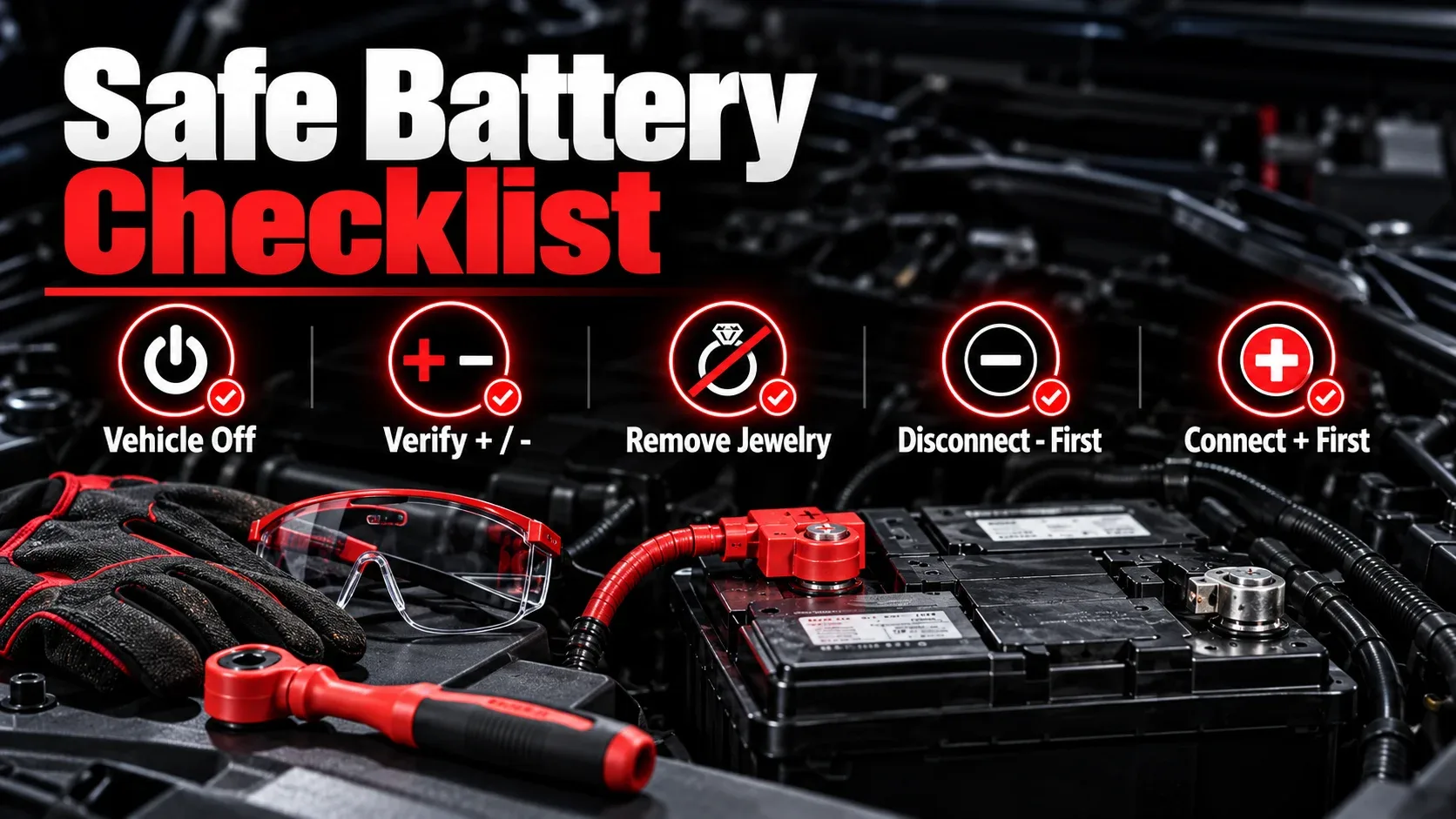
Turn the Vehicle Off
Switch off the engine and accessories and follow the vehicle’s shutdown procedure.
Identify + and –
Confirm terminal polarity before loosening or attaching any cable.
Disconnect Negative First
Remove and secure the negative cable before touching the positive connection.
Connect Positive First
During installation, attach positive first and finish with negative.
Inspect the Final Installation
Make sure the battery is secure and both terminal connections are properly tightened.
Frequently Asked Questions
When connecting a battery, which terminal first?
On a typical negative-ground car, connect the positive (+) terminal first, then connect the negative (–) terminal.
Which battery terminal should I disconnect first?
Disconnect the negative (–) battery terminal first, then disconnect the positive (+).
Positive or negative first when connecting a battery?
Positive first. Once the positive connection is secure, connect the negative terminal.
Why do you disconnect the negative battery terminal first?
On a negative-ground vehicle, disconnecting negative first separates the battery from the chassis ground and reduces the risk of accidentally shorting the positive terminal to metal bodywork with a tool.
What happens if I connect the negative terminal first?
The chassis becomes connected to the battery before the positive terminal is secured, increasing the chance of a short if a tool bridges the positive terminal and grounded metal.
Can I remove the positive battery terminal first?
The safer standard procedure on a typical negative-ground vehicle is to remove the negative terminal first and the positive terminal second.
Is red always positive on a car battery?
Red is commonly used for positive and black for negative, but you should verify the + and – markings because cable colors can vary.
Does battery terminal order matter?
Yes. Correct terminal order reduces the risk of accidental short circuits while using metal tools around a vehicle’s battery.
Final Takeaway
For a typical 12-volt negative-ground car, remember one simple rule: negative comes off first and goes on last.
- Disconnect: Negative (–) first, positive (+) last.
- Connect: Positive (+) first, negative (–) last.
Always identify the terminals correctly, keep metal tools from bridging the battery to the chassis, and follow the vehicle manufacturer’s instructions when a model requires a special procedure.