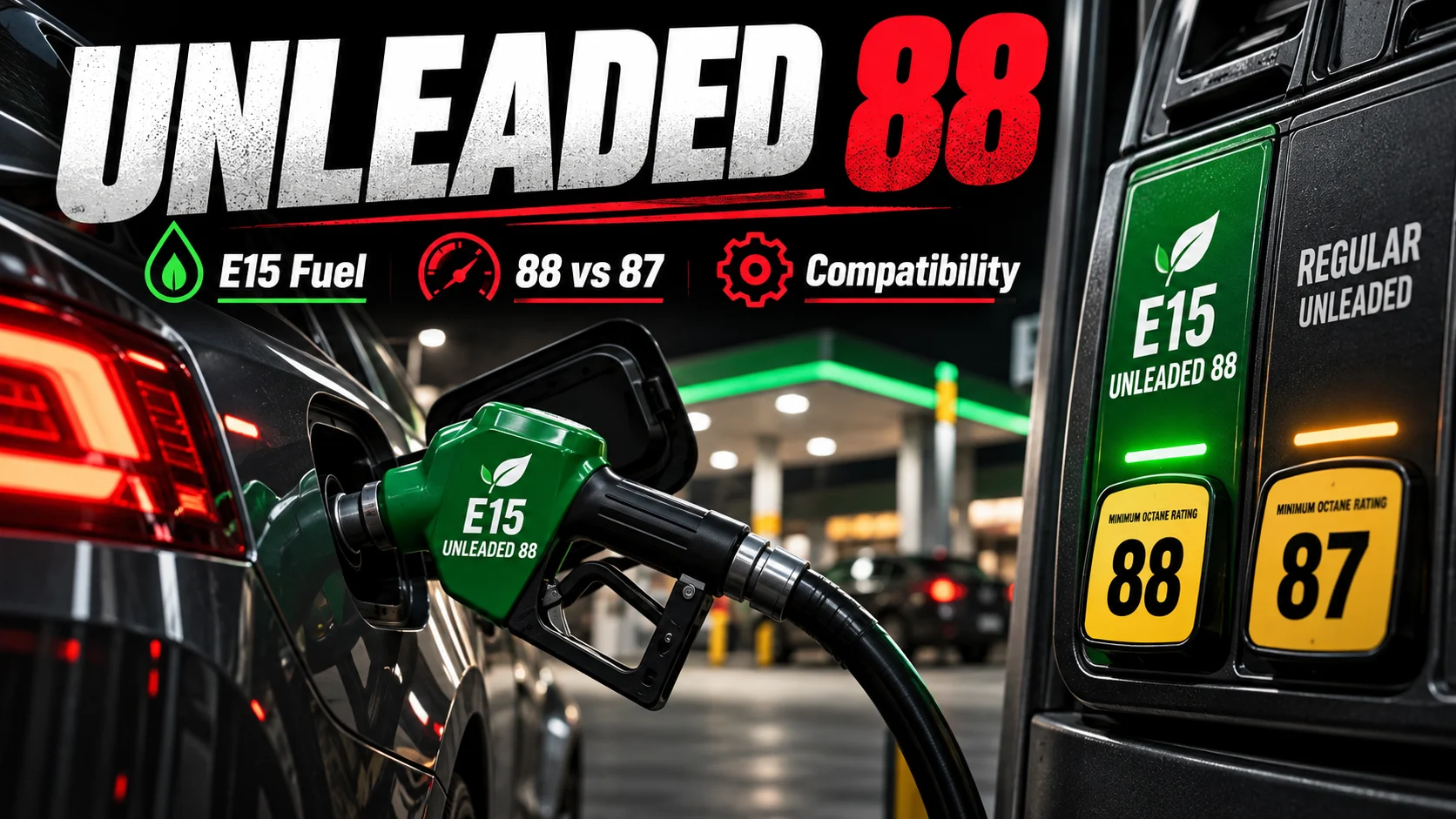

If you have seen Unleaded 88 at a gas station, you may have wondered why it can cost less than regular 87 and whether it is safe to put in your car. The number 88 refers to its octane rating, while Unleaded 88 is commonly sold as E15 gasoline containing up to 15% ethanol.
That does not mean it is the right fuel for every vehicle or engine. Vehicle compatibility matters, and your owner’s manual, fuel-door label, and manufacturer guidance should be checked before filling up.
What Is Unleaded 88?
The simplest answer to what is Unleaded 88 is that it is a gasoline blend with an octane rating of 88 that is commonly marketed as E15.
The “E” in E15 refers to ethanol. E15 gasoline can contain up to 15% ethanol by volume, with the remainder primarily gasoline and other permitted fuel components.
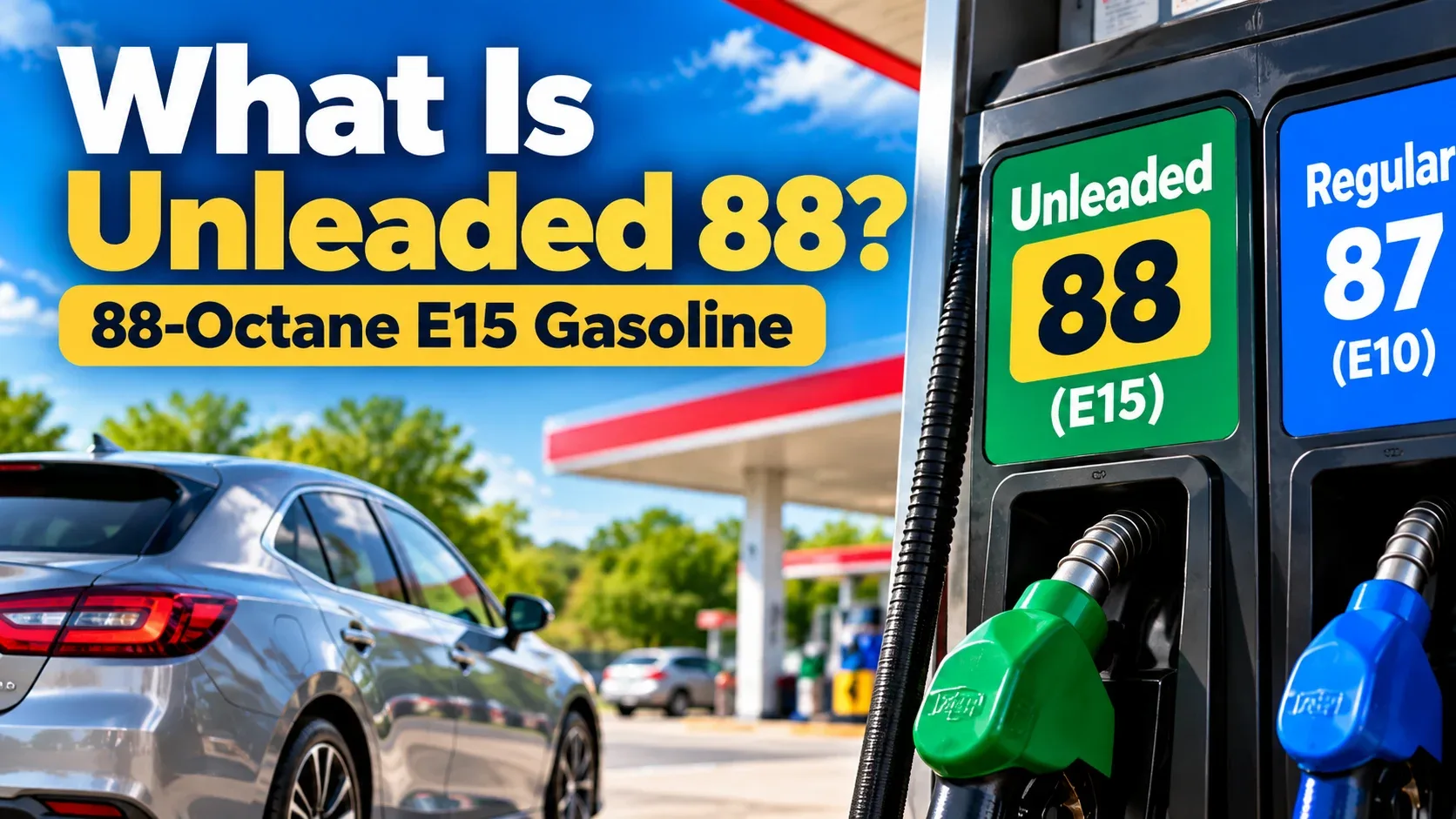
Octane Rating
The 88 identifies the fuel’s octane rating, not its ethanol percentage.
E15 Blend
E15 refers to gasoline containing more than 10% and up to 15% ethanol.
Is Unleaded 88 the Same as E15?
At many U.S. gas stations, the term Unleaded 88 is used to market E15 gasoline. The names emphasize different characteristics of the same general fuel category: “88” highlights octane, while “E15” describes the ethanol content.
Pump names and labels can vary, however, so look at the ethanol-content notice and required pump labels instead of relying only on the marketing name.
88 Does Not Mean 88% Ethanol
A common misunderstanding is that the number 88 refers to ethanol content. It does not. The number identifies octane. E15 describes the ethanol blend.
Unleaded 88 vs 87: What’s the Difference?
The biggest differences in an Unleaded 88 vs 87 comparison are octane rating and, often, ethanol content.
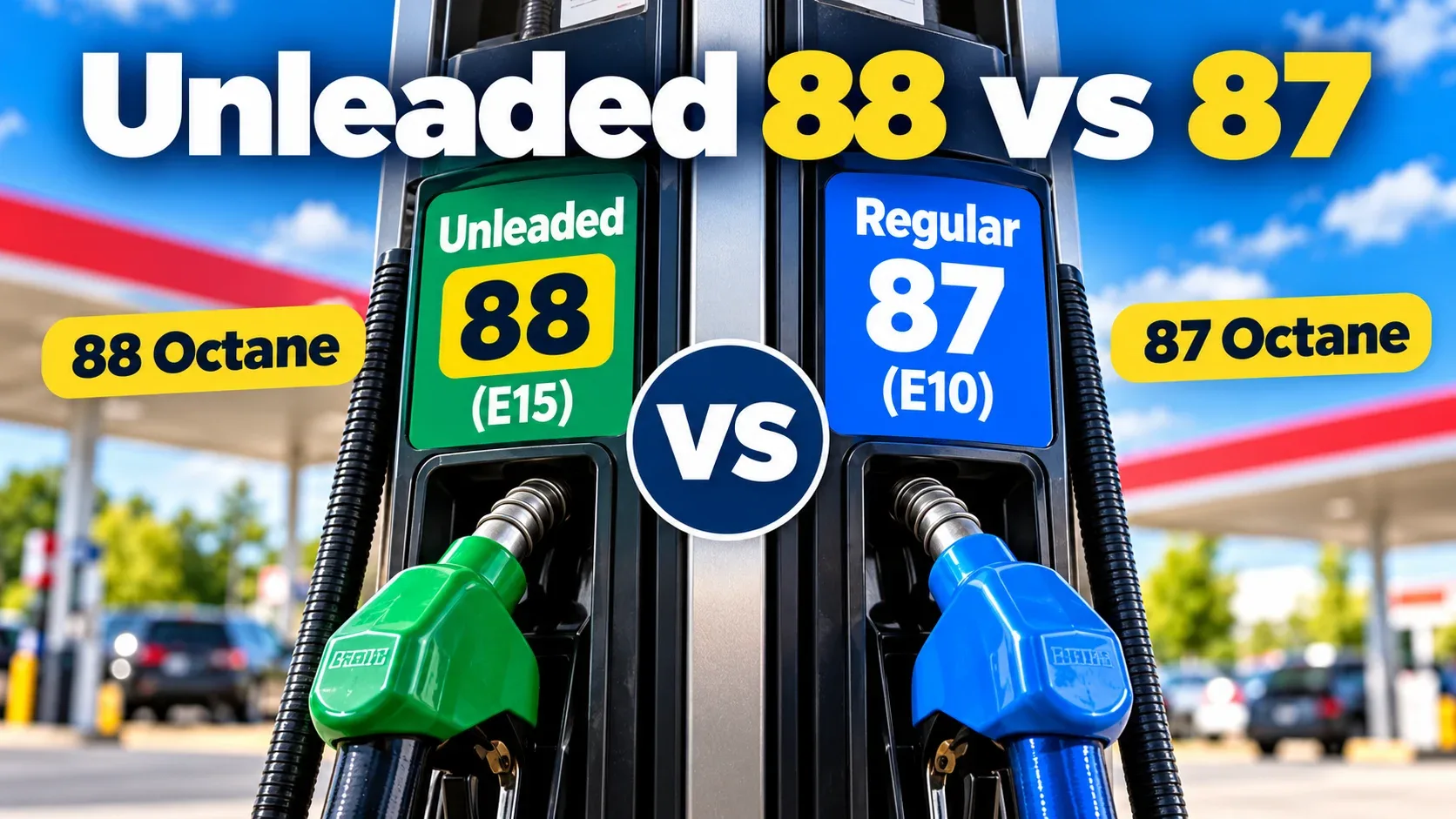
| Feature | Regular 87 | Unleaded 88 |
|---|---|---|
| Octane | 87 | 88 |
| Common Ethanol Blend | Often E10, depending on location and product | Commonly E15 |
| Vehicle Compatibility | Very broad for gasoline vehicles when manufacturer-approved | Requires E15-compatible application |
| Energy Content | Typically slightly more energy per gallon when it contains less ethanol | May contain slightly less energy per gallon due to higher ethanol content |
| Price | Varies | May be cheaper at some stations, but not always |
Which Vehicles Can Use Unleaded 88?
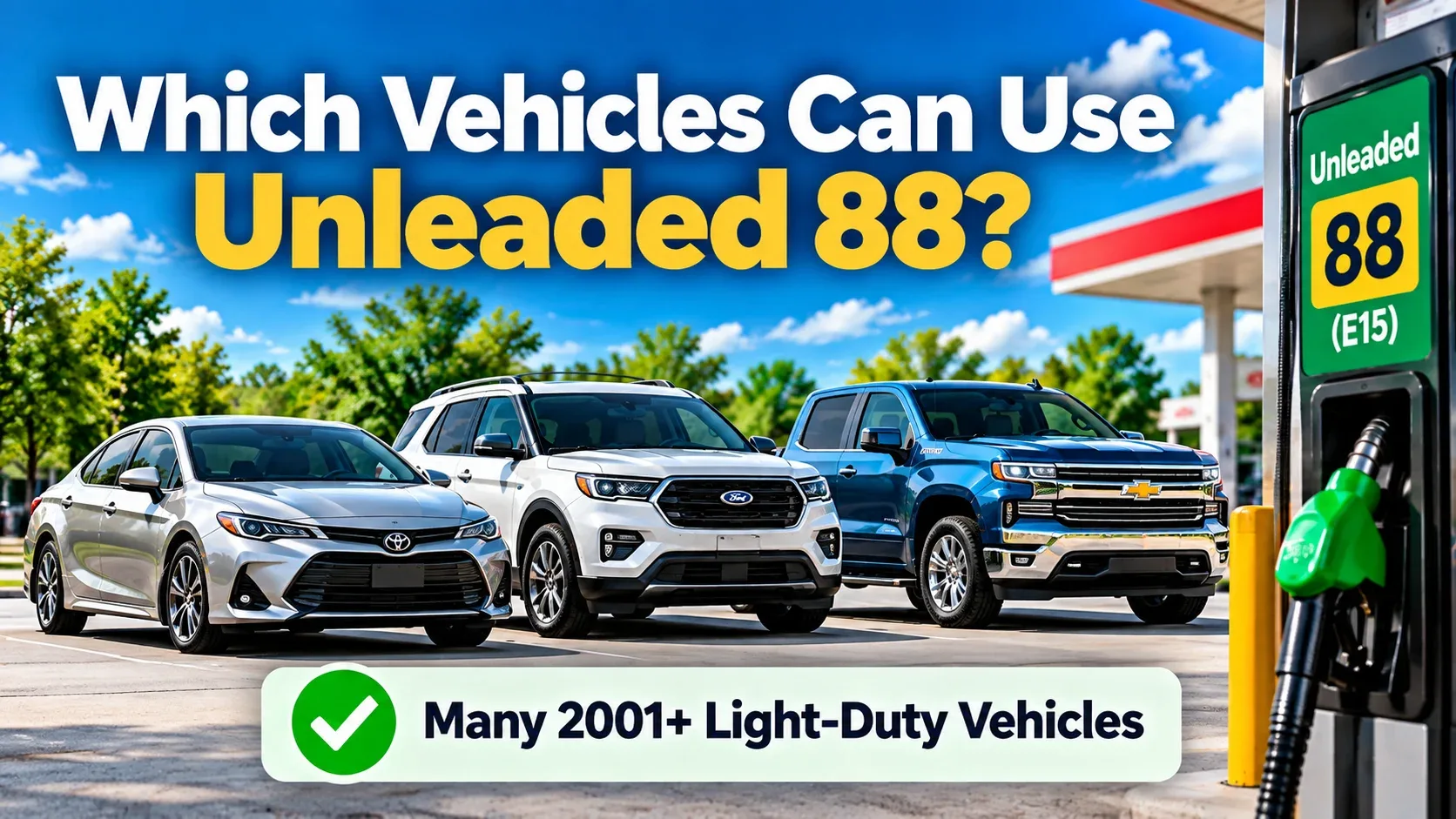
EPA’s E15 waiver allows E15 for model-year 2001 and newer light-duty vehicles, including many passenger cars, SUVs, and light-duty trucks. However, that does not replace vehicle-specific manufacturer instructions.
Before using Unleaded 88, check:
- Your owner’s manual
- The label inside the fuel door
- The manufacturer’s fuel recommendations
- The E15 label on the pump
- Your vehicle’s model year and fuel requirements
Manufacturer Guidance Comes First
Even when a vehicle falls within a broad regulatory category that permits E15, following the fuel recommendation for your exact make, model, engine, and model year is the safest approach.
Which Vehicles and Engines Should Avoid E15?
Unleaded 88 should not be treated as a universal gasoline substitute. EPA’s E15 rules specifically address misfueling because some vehicles and engines are not approved for gasoline containing more than 10% ethanol.
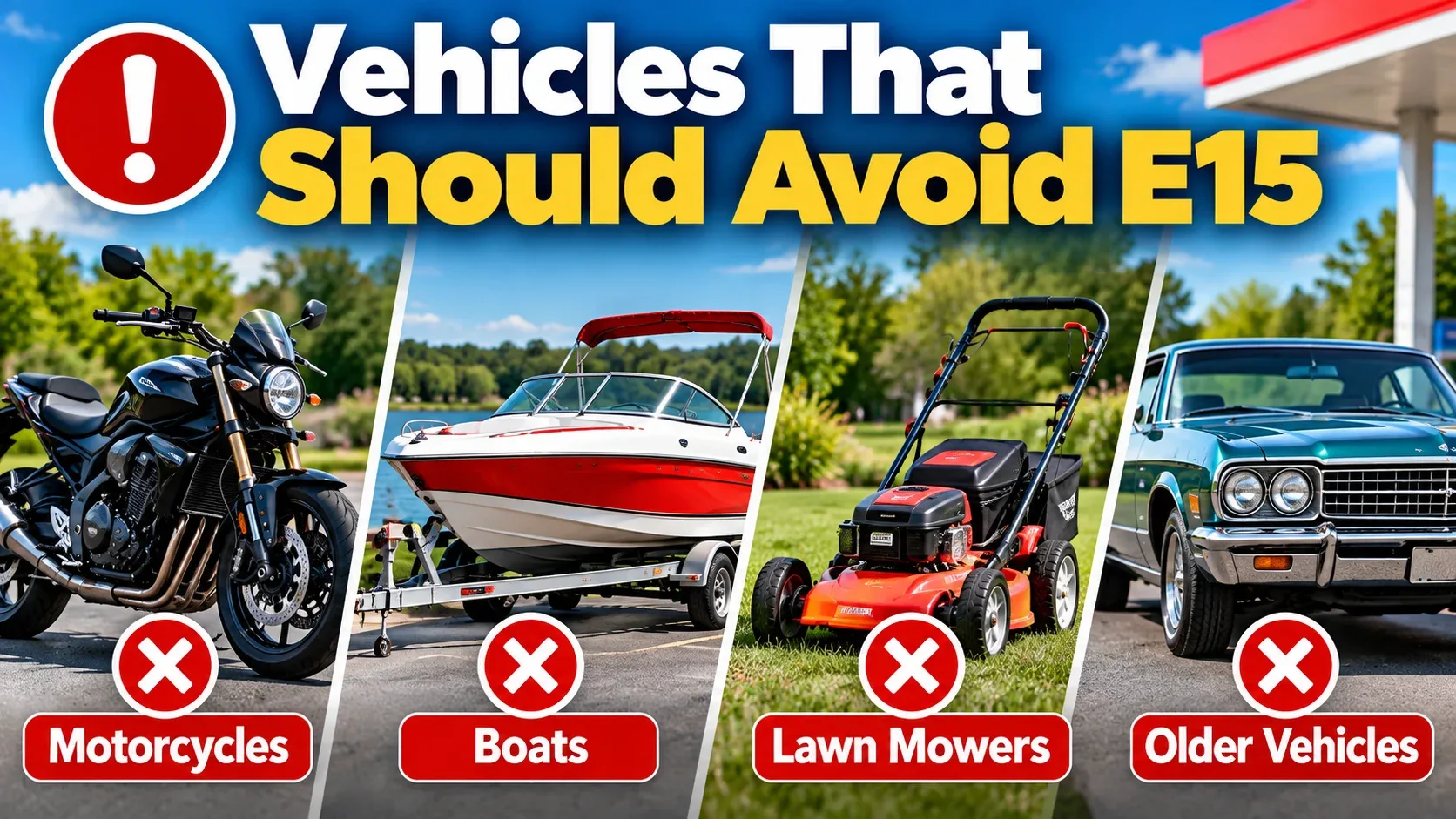
Applications that should not automatically be filled with E15 include:
- Model-year 2000 and older light-duty vehicles
- Motorcycles
- Boats and marine engines
- Lawn mowers and other small engines
- Off-road recreational equipment
- Other engines or vehicles whose manufacturer does not approve E15
Not for Every Gasoline Engine
Seeing “unleaded” on the pump does not mean the fuel is automatically suitable for every gasoline-powered machine.
Unleaded 88 vs E85: They Are Not the Same Fuel
One of the most important distinctions for drivers researching what is 88 gas is that Unleaded 88/E15 should not be confused with E85.
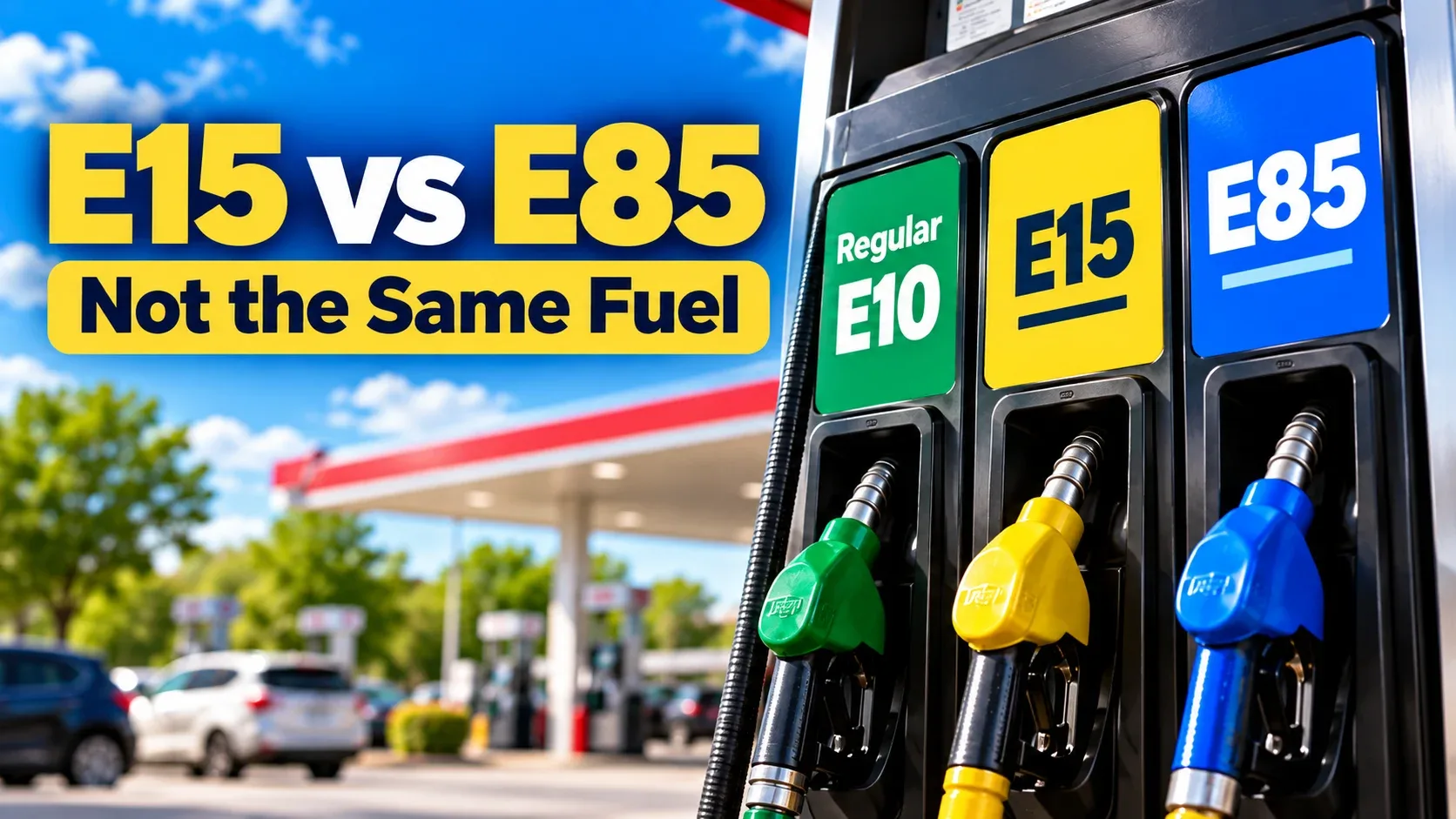
| Fuel | Typical Meaning | Compatibility Note |
|---|---|---|
| E10 | Gasoline containing up to about 10% ethanol | Commonly used in a broad range of gasoline vehicles |
| E15 / Unleaded 88 | Gasoline containing up to 15% ethanol | Use only in compatible vehicles |
| E85 | High-ethanol flex fuel | Designed for compatible flex-fuel vehicles |
E15 Is Not E85
The similar names can be confusing, but their ethanol content and intended applications are very different. Never select E85 unless your vehicle is approved for flex fuel.
Does Unleaded 88 Affect Gas Mileage?
Ethanol contains less energy per gallon than conventional gasoline. Because Unleaded 88 commonly contains more ethanol than E10 regular gasoline, fuel economy can differ slightly.
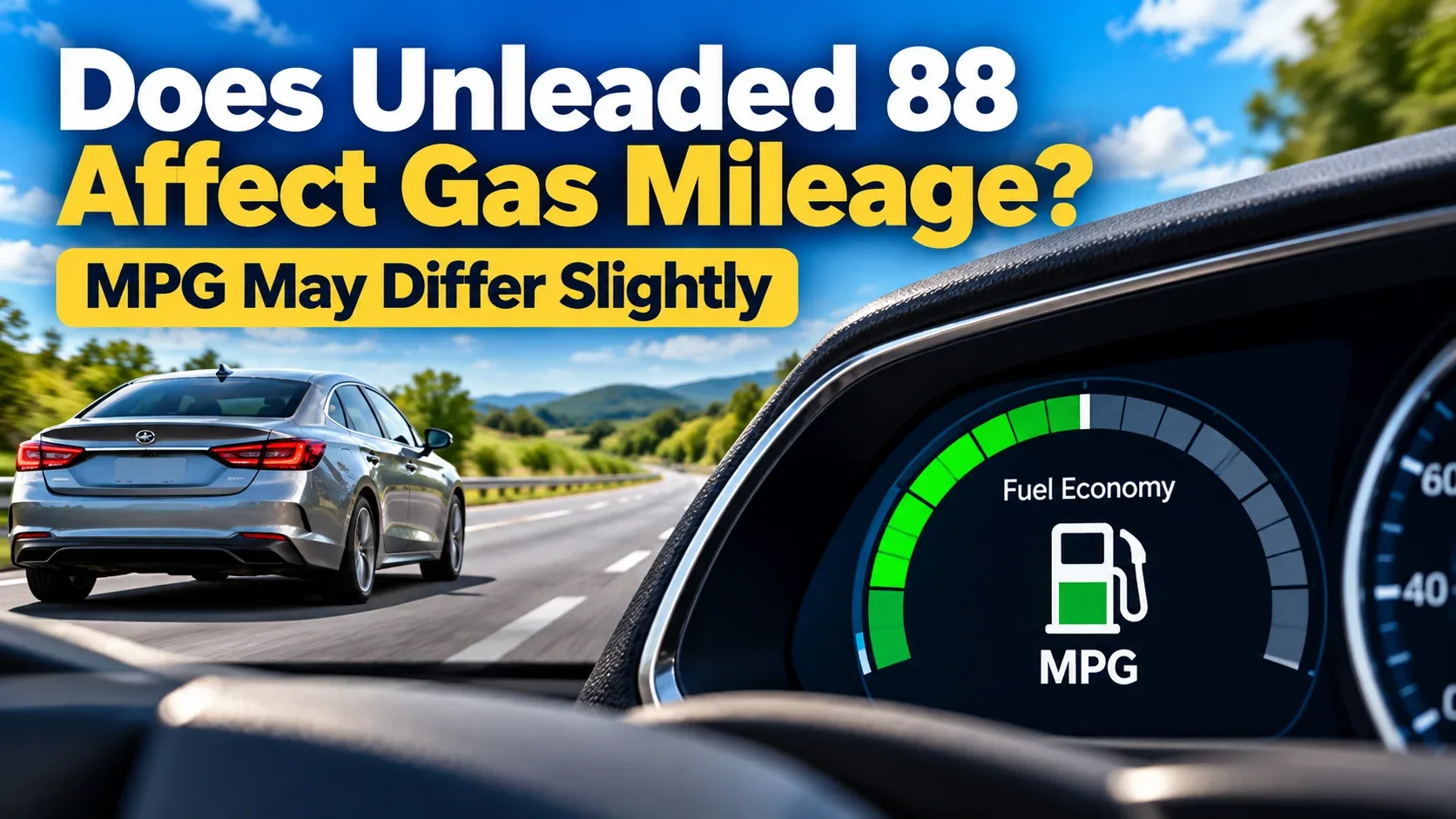
The actual difference a driver notices depends on the vehicle, driving style, temperature, traffic, trip length, and the specific fuel formulation. A small pump-price saving therefore does not automatically guarantee a lower cost per mile.
Why Is Unleaded 88 Sometimes Cheaper Than 87?
Drivers often notice Unleaded 88 listed below 87 on a station price board. Pricing can be influenced by ethanol economics, regional fuel supply, government programs, taxes, incentives, seasonal conditions, and individual retailer pricing.
It is better to think of Unleaded 88 as a different fuel blend rather than “cheap regular gas.”
Compare Cost per Mile, Not Pump Price Alone
If Unleaded 88 is approved for your vehicle, compare its price advantage with any change you observe in fuel economy before deciding which fuel provides better value for your driving.
Can Unleaded 88 Damage Your Engine?
In a vehicle designed and approved for E15, using Unleaded 88 as intended is different from putting E15 into an incompatible engine.
Concerns with incompatible applications can involve fuel-system materials, emissions-system calibration, engine controls, and the manufacturer’s approved fuel specification.
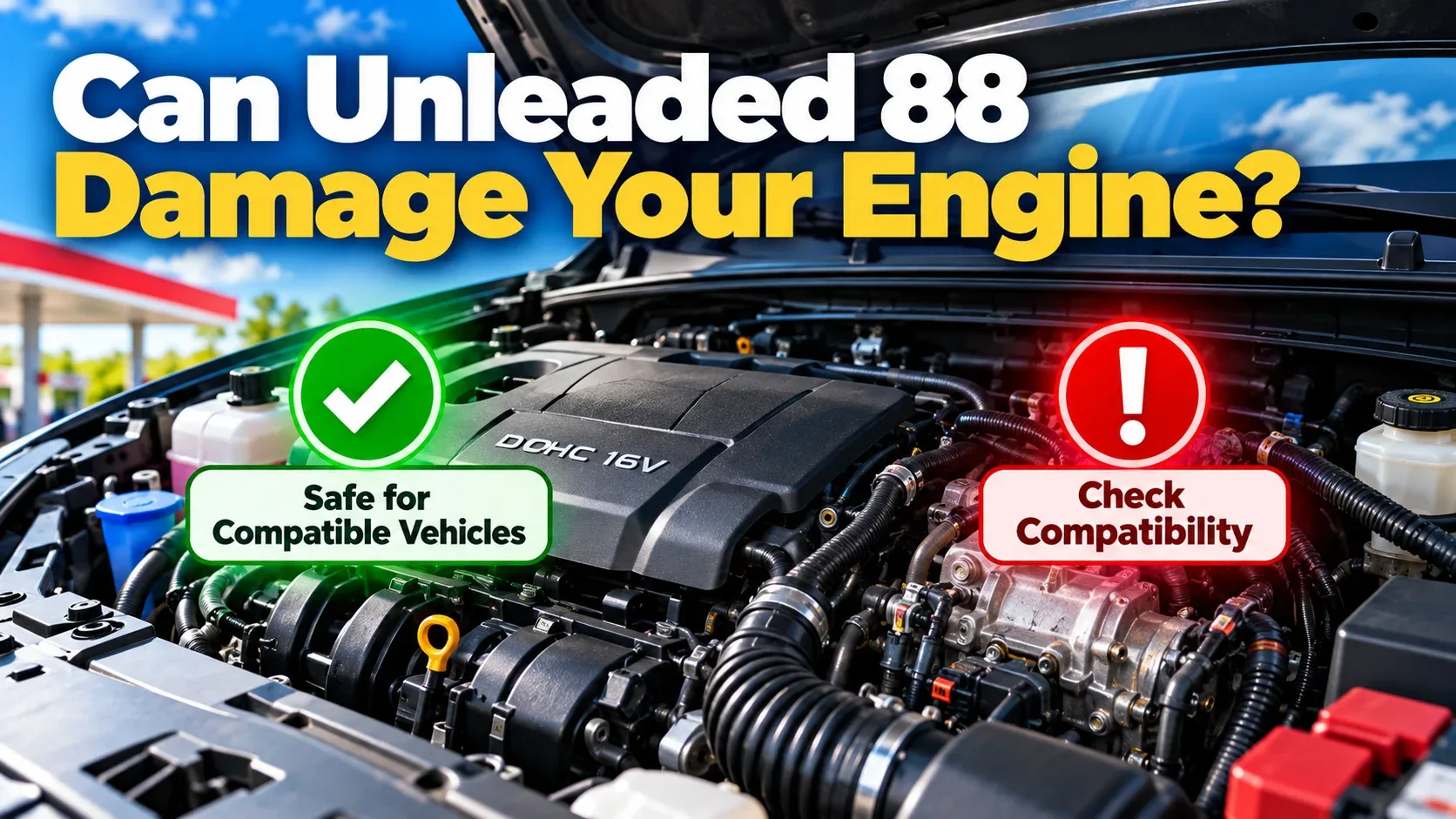
Compatible Vehicle?
Use the fuel according to the vehicle manufacturer’s instructions and the required pump labeling.
Compatibility Unknown?
Check before filling instead of assuming that a newer-looking vehicle or gasoline engine can use E15.
What If You Accidentally Put Unleaded 88 in Your Car?
If you accidentally select Unleaded 88, first determine whether your vehicle is approved for E15. Check the owner’s manual, fuel-door information, or manufacturer documentation.
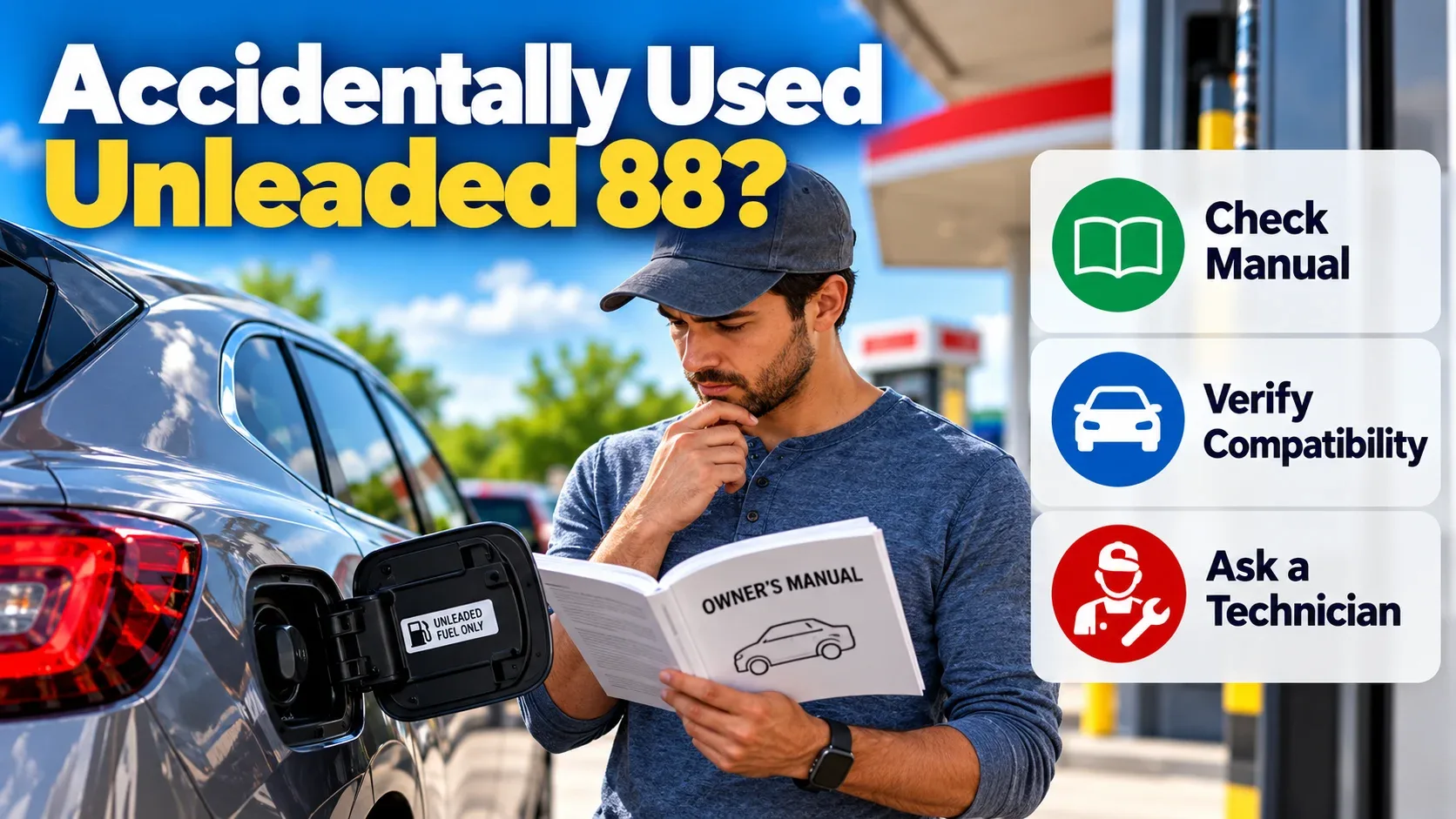
If the manufacturer does not approve E15, or if you filled a motorcycle, marine engine, small engine, or another excluded application, seek guidance from the manufacturer, dealer, or qualified technician before continuing to operate it.
Do Not Guess Based on the Fuel Gauge
The appropriate response depends on the vehicle, fuel already in the tank, amount added, and manufacturer guidance.
Pros and Cons of Unleaded 88
Potential Advantages
- 88-octane rating
- May cost less than regular 87 at some stations
- Provides another fuel option for compatible vehicles
- Available at a growing number of fuel stations
Things to Consider
- Not approved for every vehicle or engine
- May produce slightly different fuel economy
- Can be confused with E85
- Requires checking vehicle compatibility
How to Check Whether Your Car Can Use Unleaded 88
You do not need to guess at the pump. Use vehicle-specific information before choosing E15.
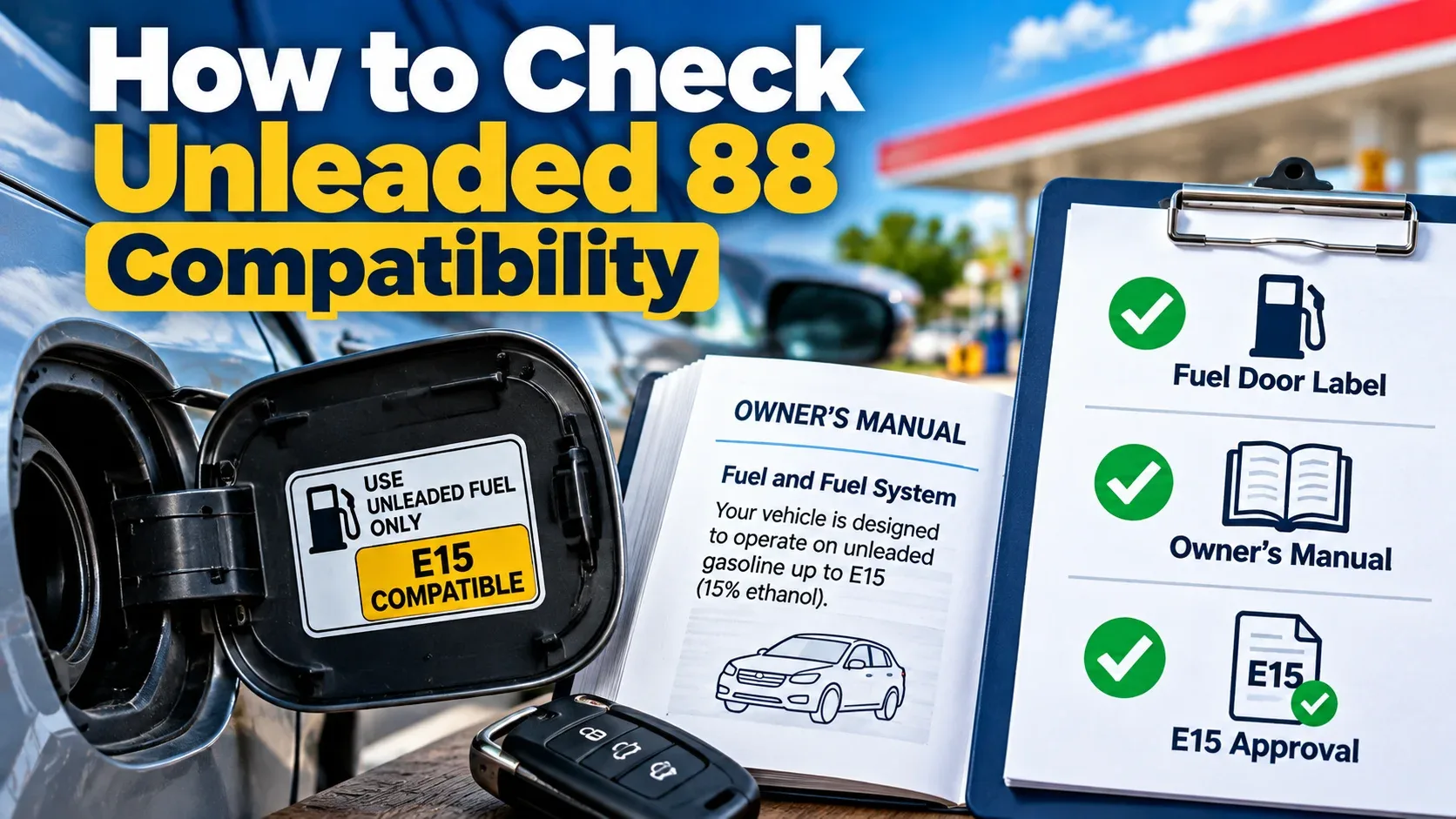
- Check the label inside or near the fuel door.
- Open the fuel section of the owner’s manual.
- Look for references to E15 or gasoline containing up to 15% ethanol.
- Check the vehicle manufacturer’s current fuel guidance if necessary.
- Read the E15 warning or compatibility label on the pump.
- Use Unleaded 88 only if your vehicle is compatible.
Unleaded 88 Decision Checklist
Identify the Fuel
Confirm that the pump is dispensing E15/Unleaded 88 rather than E85.
Check Your Vehicle
Verify the make, model, model year, engine, and manufacturer’s fuel recommendation.
Read the Fuel Door
Look for ethanol and minimum-octane guidance.
Compare Price and MPG
If both fuels are approved, consider cost per mile rather than pump price alone.
Frequently Asked Questions About Unleaded 88
What is Unleaded 88?
Unleaded 88 is commonly an 88-octane E15 gasoline blend containing more than 10% and up to 15% ethanol. It is intended only for compatible vehicles and engines.
What’s Unleaded 88 compared with regular gas?
Compared with regular 87 gasoline, Unleaded 88 has a one-point higher octane rating and commonly contains a higher percentage of ethanol.
Is Unleaded 88 the same as E15?
Unleaded 88 is commonly the retail name used for 88-octane E15 gasoline. Always check the pump label because retail terminology can vary.
Is Unleaded 88 the same as E85?
No. E15 and E85 are different fuel blends. E85 contains much more ethanol and is intended for compatible flex-fuel vehicles.
Can I use Unleaded 88 in my car?
Many model-year 2001 and newer light-duty vehicles fall within EPA’s E15 waiver, but you should still verify E15 compatibility in your vehicle’s owner’s manual, fuel-door label, or manufacturer guidance.
Can motorcycles use Unleaded 88?
Do not assume E15 is suitable for motorcycles. Follow the motorcycle manufacturer’s fuel specification and the E15 pump restrictions.
Can I use Unleaded 88 in a lawn mower?
E15 is not intended as a universal fuel for small engines. Use the fuel specified by the equipment manufacturer.
Does Unleaded 88 give worse gas mileage?
Fuel economy may differ slightly because ethanol contains less energy per gallon than gasoline. The actual difference varies by vehicle and driving conditions.
Why is Unleaded 88 cheaper?
It may be cheaper at some stations because of ethanol economics, local supply, fuel-market conditions, policies, incentives, and retailer pricing. It is not guaranteed to be cheaper everywhere.
What is E88 gas?
Drivers sometimes use the phrase “E88 gas” when referring to Unleaded 88, but the clearer terminology is usually Unleaded 88 or E15. The number 88 refers to octane, not an 88% ethanol concentration.
Final Takeaway
Unleaded 88 is commonly an 88-octane E15 gasoline blend containing up to 15% ethanol. It is not the same as regular 87 and should not be confused with E85.
The most important question is compatibility. Before choosing Unleaded 88, check your owner’s manual, fuel-door label, and manufacturer fuel guidance. Motorcycles, boats, small engines, older vehicles, and other excluded applications should not be assumed compatible with E15.
If both 87 and Unleaded 88 are approved for your vehicle, you can then compare fuel price, observed MPG, and availability to decide which option makes more sense for your driving.