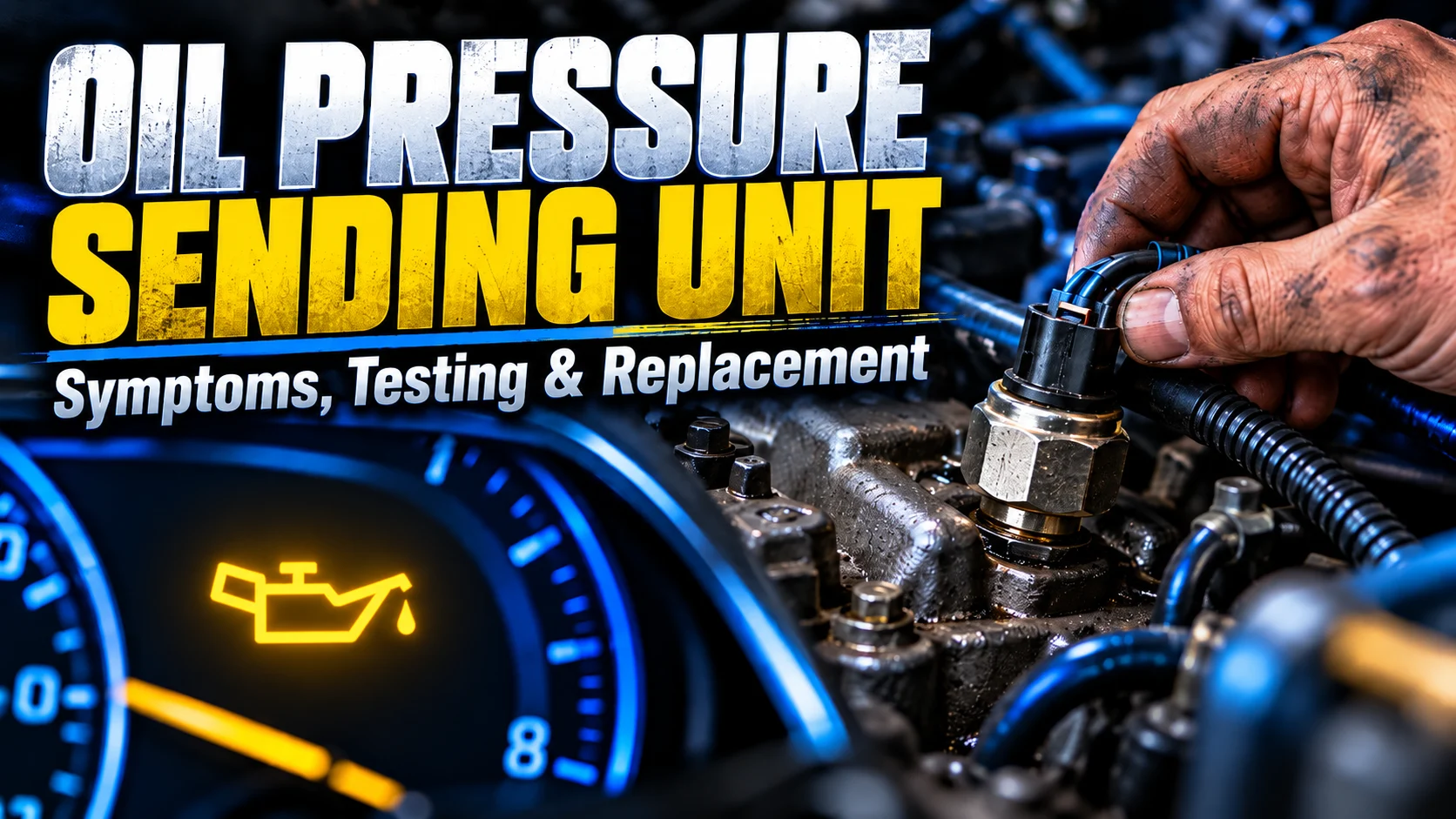

The oil pressure sending unit helps your vehicle report what is happening inside the engine’s lubrication system. When it fails, it can trigger a false oil-pressure warning, cause an inaccurate gauge reading, or even leak oil. The challenge is that the same dashboard warning can also indicate genuine low oil pressure, which can quickly damage an engine.
Quick Answer
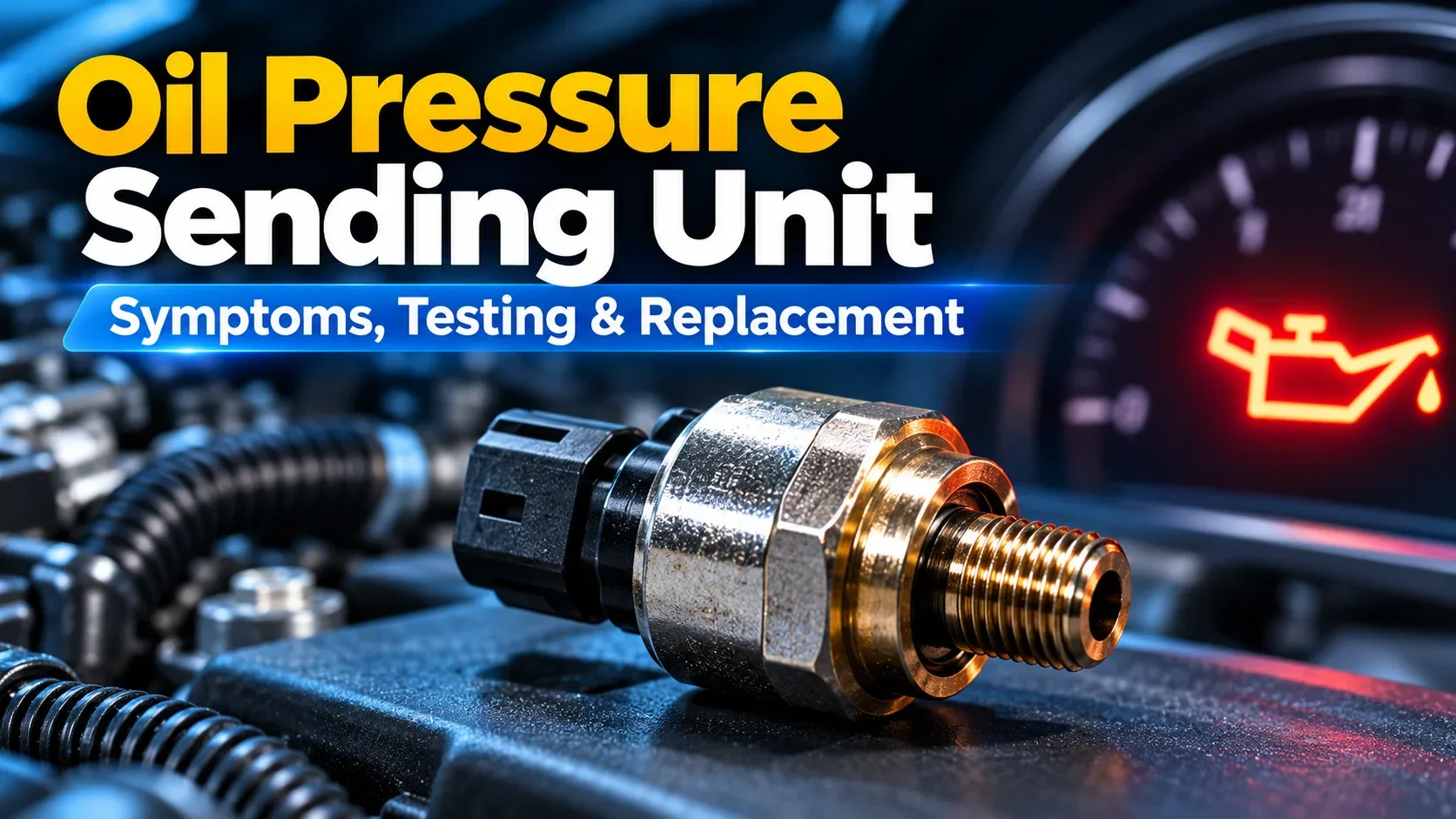
An oil pressure sending unit monitors engine oil pressure and sends an electrical signal to the dashboard gauge, warning light, engine computer, or a combination of these systems depending on the vehicle.
A faulty oil sending unit can cause incorrect warnings or gauge readings, but never assume the sender is the problem until oil level and actual oil pressure have been considered.
What Is an Oil Pressure Sending Unit?
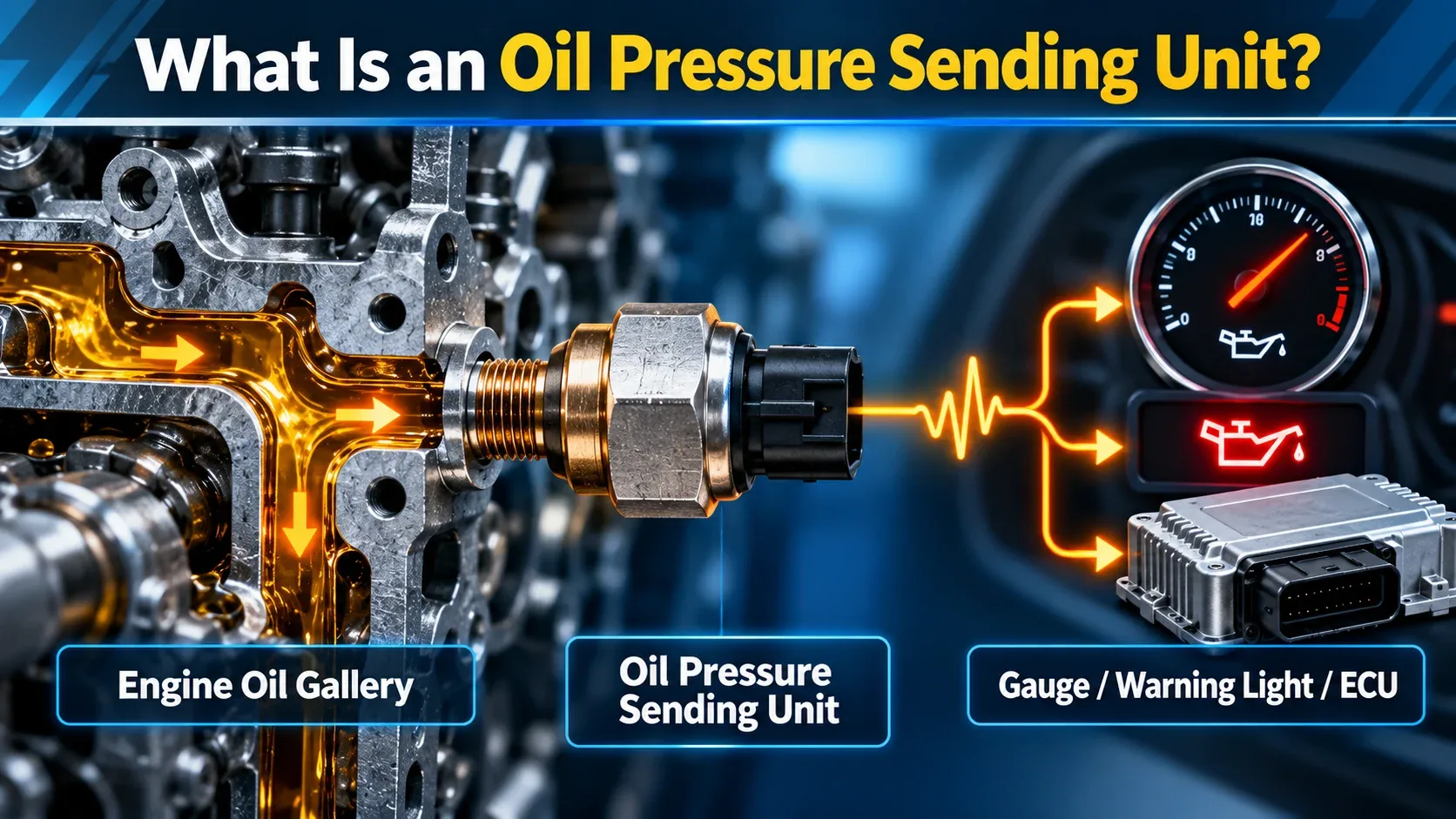
An oil pressure sending unit is an electrical device connected to an oil passage in the engine. It reacts to the pressure of the engine oil and converts that information into an electrical signal that can be interpreted by the dashboard or engine-control system.
Depending on the vehicle, the component may be called an oil pressure sender, oil pressure switch, oil pressure sensor, or simply an oil sending unit.
How Does the Oil Sending Unit Work?
The sending unit is exposed to engine oil pressure through a small opening or passage. As oil pressure changes, the internal mechanism responds and changes an electrical signal.
On some vehicles, the unit simply turns a warning-light circuit on or off at a predetermined pressure. On others, it produces a variable signal that allows the gauge or control module to display a pressure value.
Because designs differ, there is no universal resistance, voltage, or pressure value that applies to every oil pressure sending unit.
Oil Pressure Sender vs Switch vs Sensor
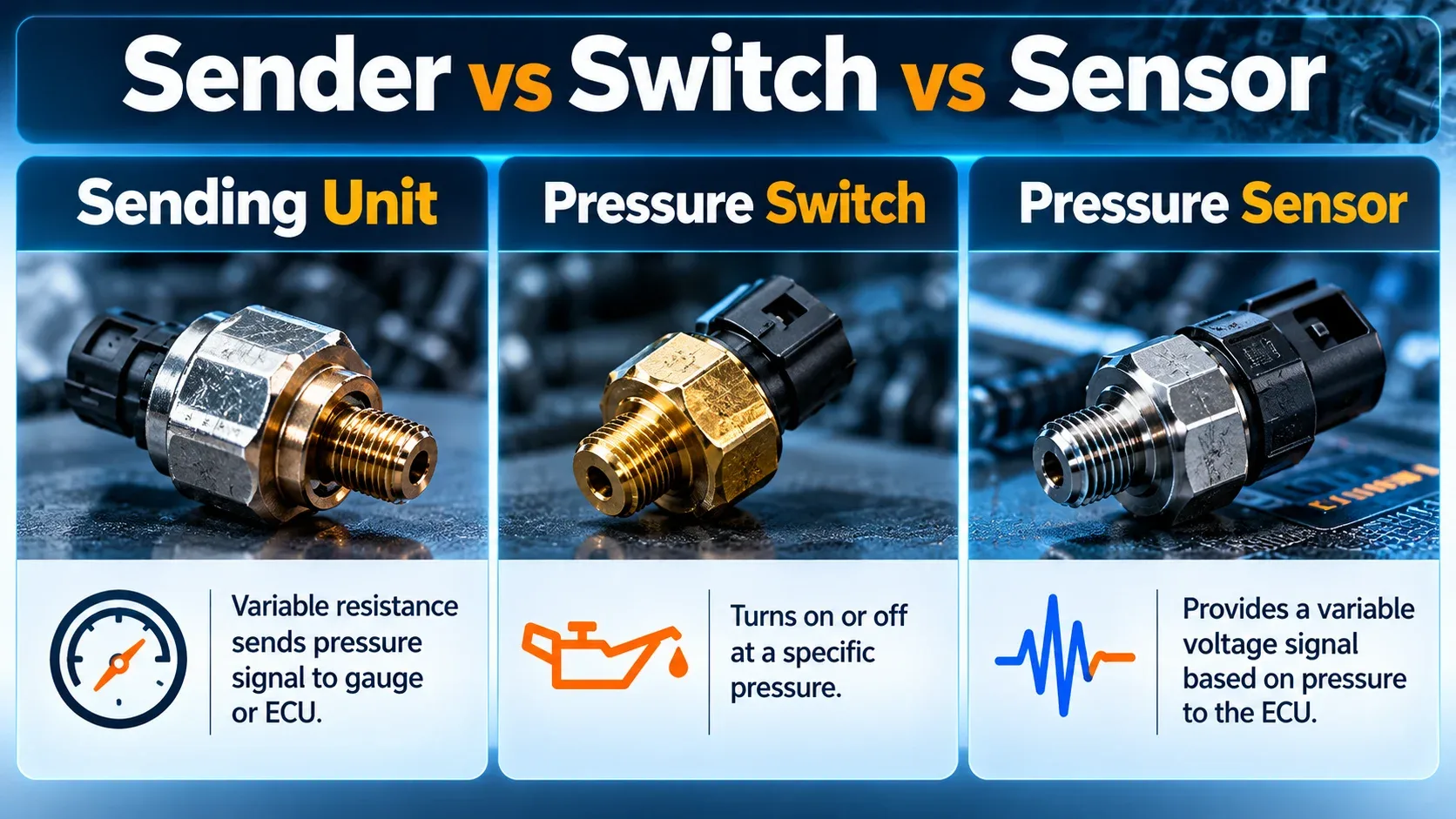
Sending Unit
A broad term commonly used for a device that reports oil-pressure information to the vehicle.
Pressure Switch
Usually changes electrical state when pressure crosses a specified threshold.
Pressure Sensor
Typically produces a variable signal that allows the control module or gauge to estimate pressure.
Where Is the Oil Pressure Sending Unit Located?
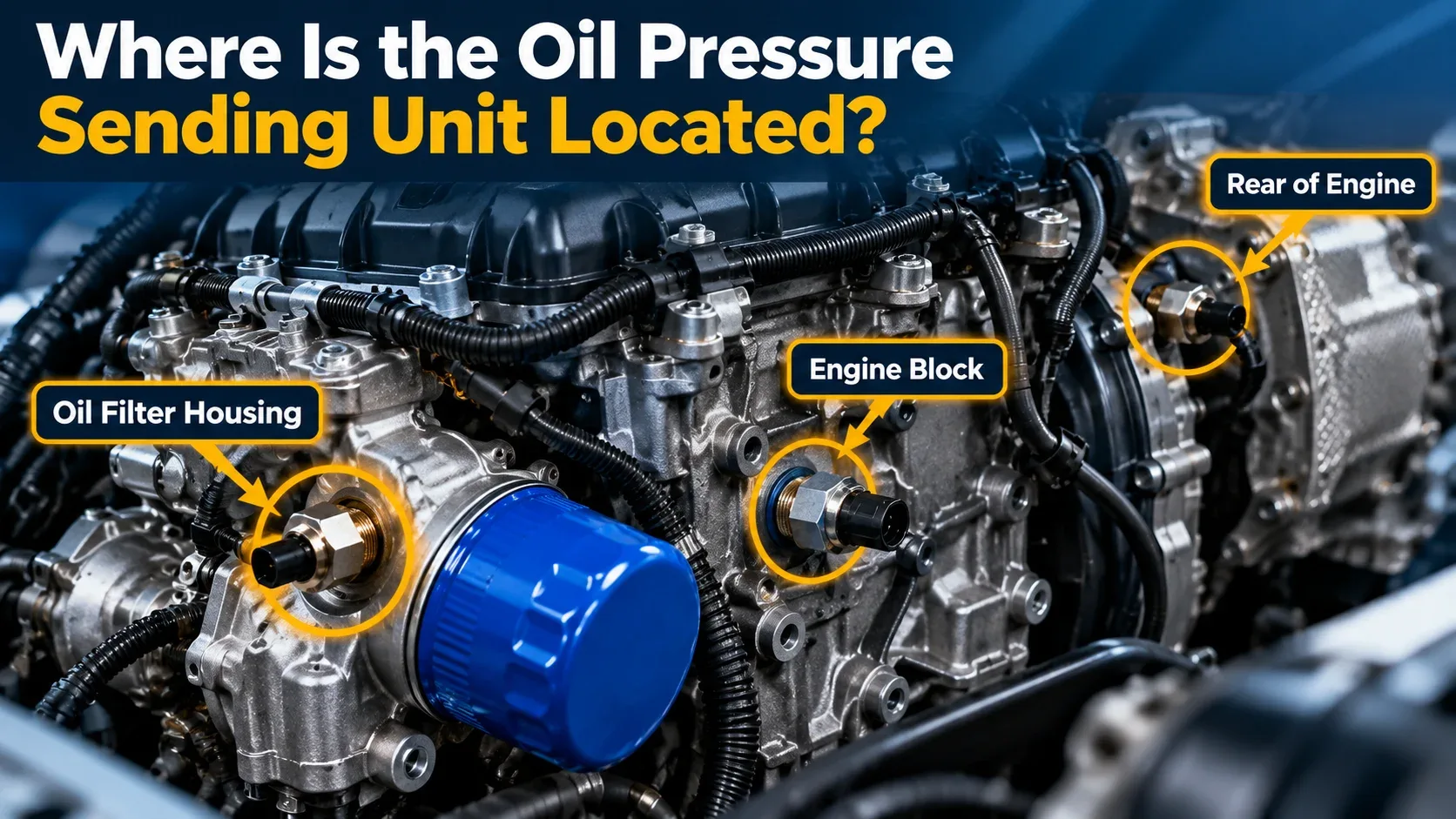
The location varies by engine. It is commonly threaded into the engine block, cylinder head, oil filter housing, or another component connected to an oil gallery.
- Near the oil filter housing
- On the side of the engine block
- Near the cylinder head
- At the rear of the engine
- Near an oil cooler or filter adapter
Symptoms of a Bad Oil Pressure Sending Unit
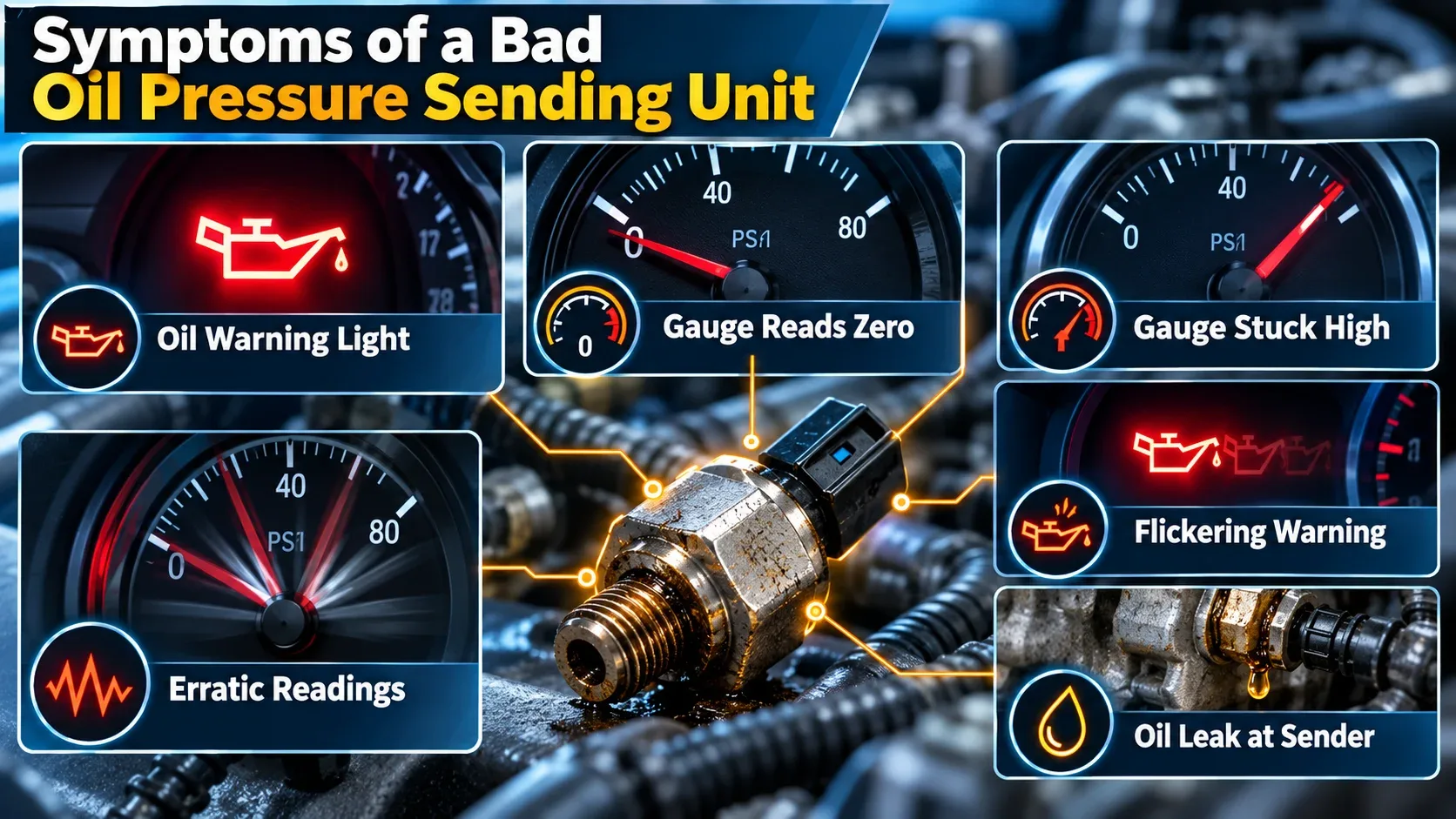
Oil Warning Light
The warning may remain on or appear intermittently even when actual pressure is normal.
Gauge Reads Zero
A failed sender or circuit can cause the gauge to suddenly fall to zero.
Gauge Stuck High
Electrical or sender faults may produce an unrealistically high reading.
Erratic Gauge Movement
The gauge may jump between readings instead of changing smoothly.
Flickering Warning
A damaged sender or connection may cause intermittent warning-light operation.
Oil Leak at the Sender
Some sending units can leak through their body, threads, seal, or electrical end.
Bad Sending Unit or Real Low Oil Pressure?
| Possible Sender / Electrical Issue | Possible Real Oil-Pressure Problem |
|---|---|
| Gauge suddenly changes while engine sounds normal | Oil-pressure warning with ticking or knocking |
| Reading changes when connector or wiring is disturbed | Mechanical gauge confirms low pressure |
| Visible oil leaking through sender body | Very low oil level |
| Known wiring or connector damage | Pressure remains low at different engine speeds |
| Electrical test fails specification | Abnormal valvetrain or bearing noise |
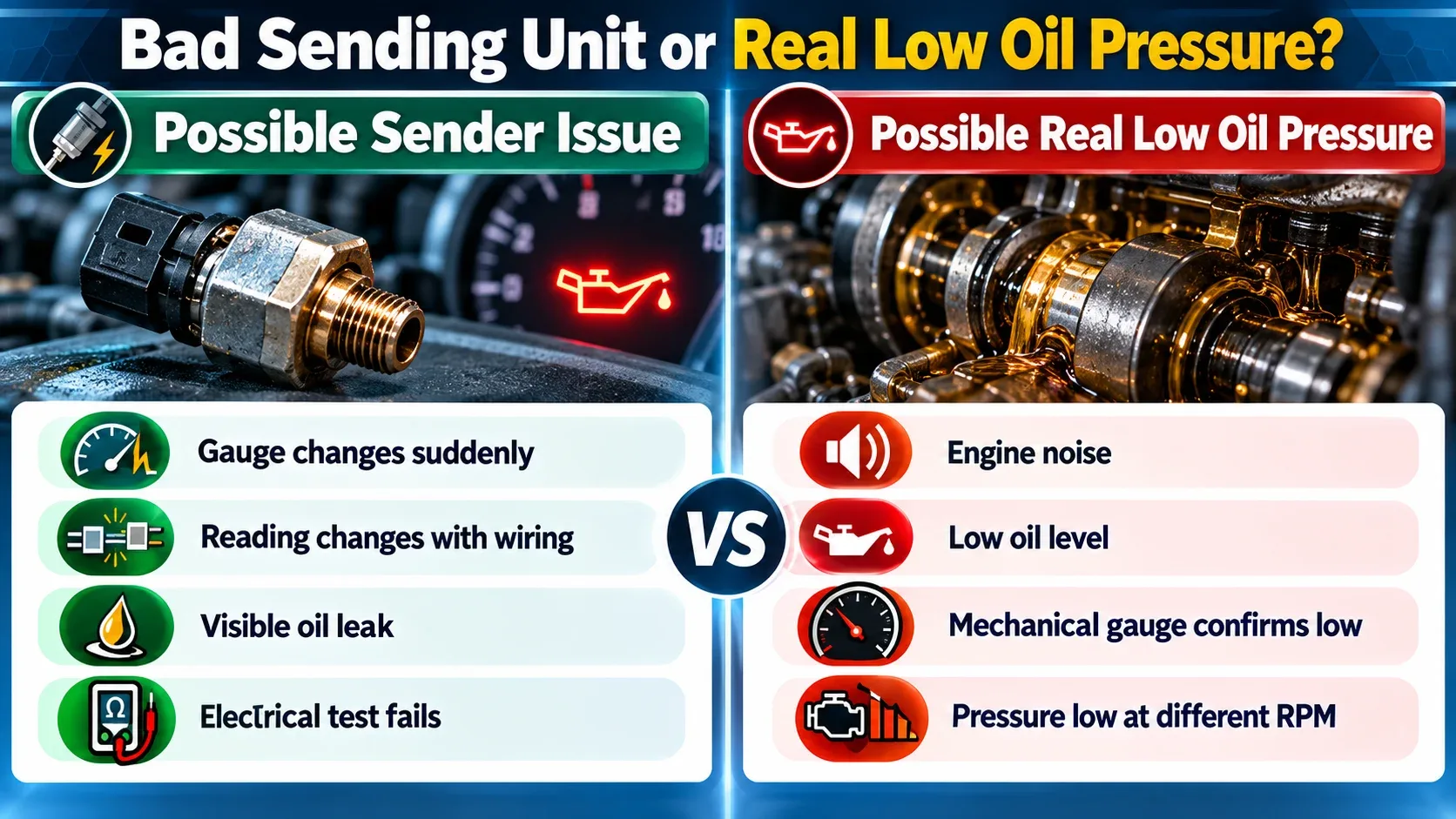
Warning Signs of Real Low Oil Pressure
- Oil-pressure warning remains on while the engine is running
- Ticking or clattering from the valvetrain
- Deep knocking from the engine
- Oil level is extremely low
- Mechanical gauge confirms pressure below specification
- Engine noise increases as pressure reading falls
Engine Noise Changes the Situation
If the oil-pressure warning appears together with ticking, knocking, or other abnormal engine noise, shut the engine off as soon as it is safe to do so.
Can You Drive With the Oil Pressure Light On?
Do not assume it is safe simply because the engine still runs. The first priority is determining whether the warning represents a sensor problem or actual low pressure.
Why Oil Pressure Sending Units Fail
Age
Internal components and seals can deteriorate after years of heat cycles.
Heat
High engine-bay temperatures can damage plastic housings, seals, and electronics.
Vibration
Continuous engine vibration can contribute to internal or connector failures.
Oil Leakage
Internal seals can fail and allow oil to escape through the sender body.
Connector Corrosion
Moisture and contamination can interfere with the electrical connection.
Damaged Wiring
Heat, abrasion, rodents, or previous repairs can damage the circuit.
How to Inspect the Oil Pressure Sending Unit
- Check the engine oil level
- Confirm the correct oil viscosity is being used
- Look for oil leaking around the sending unit
- Inspect the connector for oil contamination
- Check for bent, loose, or corroded terminals
- Look for damaged or melted wiring
- Check for relevant diagnostic trouble codes
How to Test an Oil Pressure Sending Unit
Testing depends on the type of sender used by the vehicle. Some switches can be checked for continuity, while variable-output sensors may require voltage, resistance, scan-tool, or waveform testing.
- A digital multimeter
- A scan tool
- A vehicle-specific wiring diagram
- Known-good ground and power references
- A mechanical oil-pressure gauge
Do Not Diagnose From Resistance Alone
Sender designs differ. Use manufacturer-specific specifications.
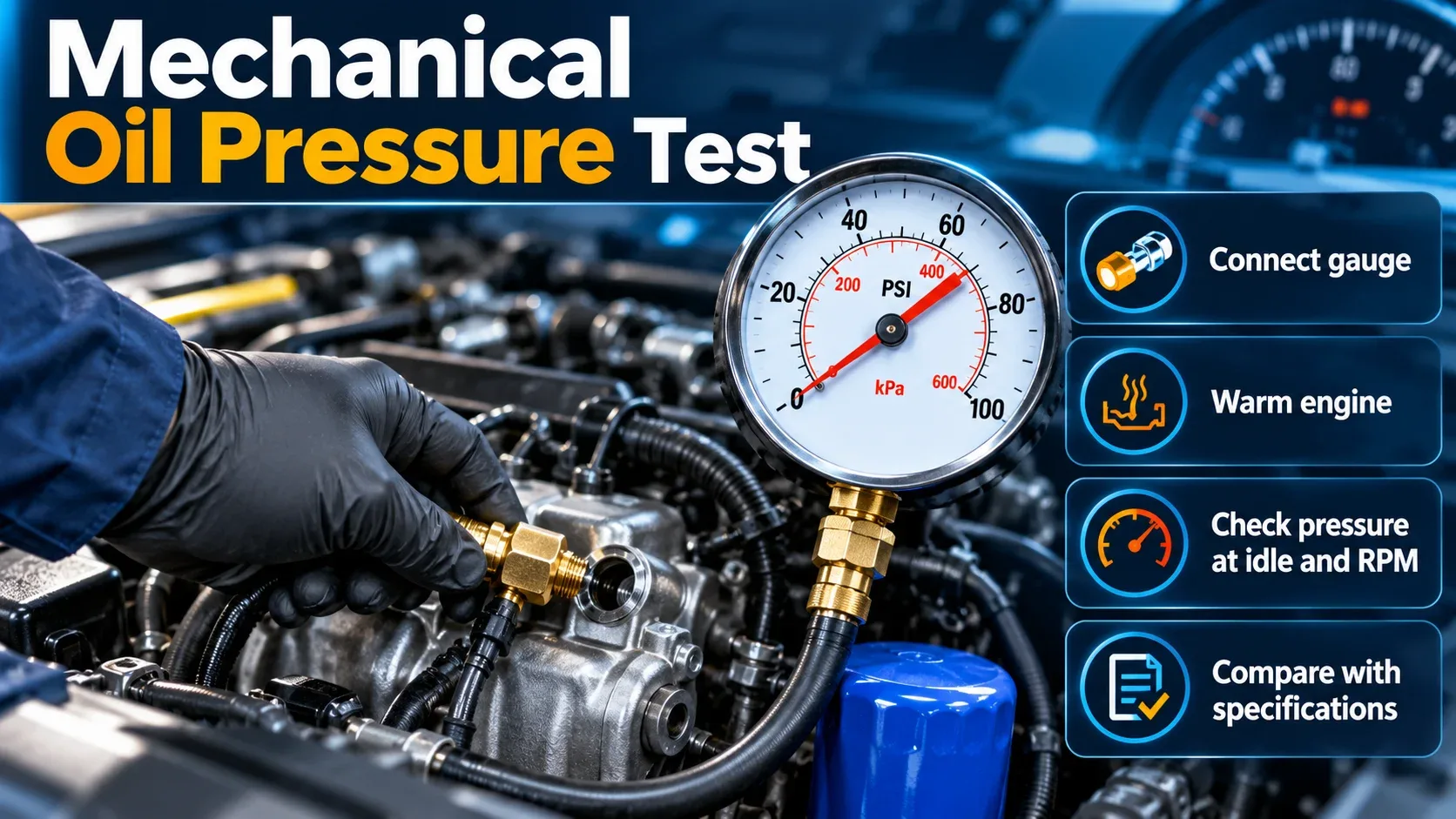
Mechanical Oil Pressure Test
When there is uncertainty about whether the problem is electrical or mechanical, a mechanical oil-pressure test is one of the most useful diagnostic steps.
The sending unit is removed or an appropriate test port is used, then a mechanical gauge is connected. Actual pressure is compared with manufacturer specifications at the required temperature and RPM.
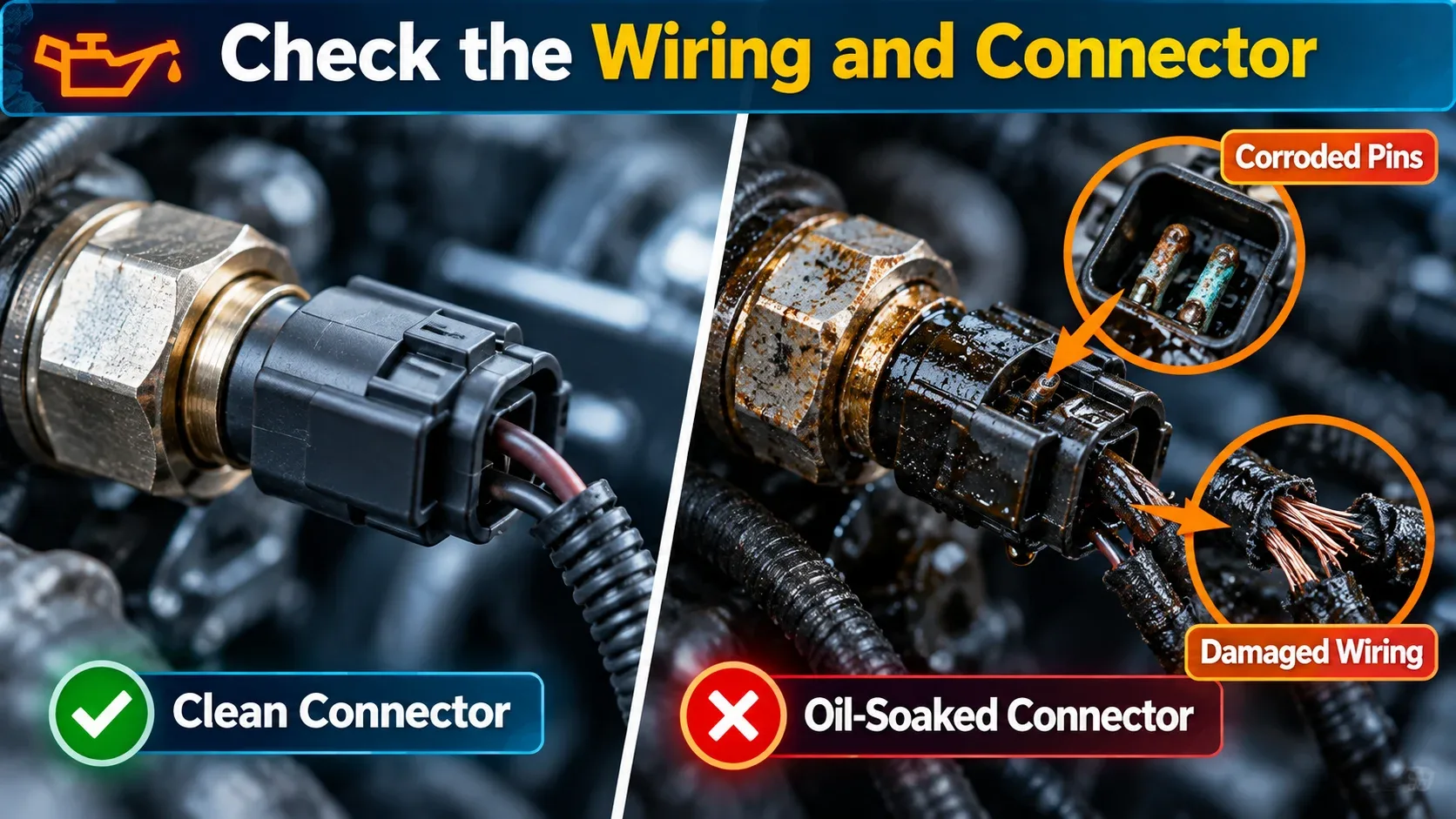
Check the Wiring and Connector
Look For
- Secure connector fit
- Clean terminals
- Intact wire insulation
- Correct reference voltage or ground
Possible Problems
- Oil inside the connector
- Corroded pins
- Broken wiring
- Loose terminals
- Heat-damaged insulation
How to Replace an Oil Pressure Sending Unit
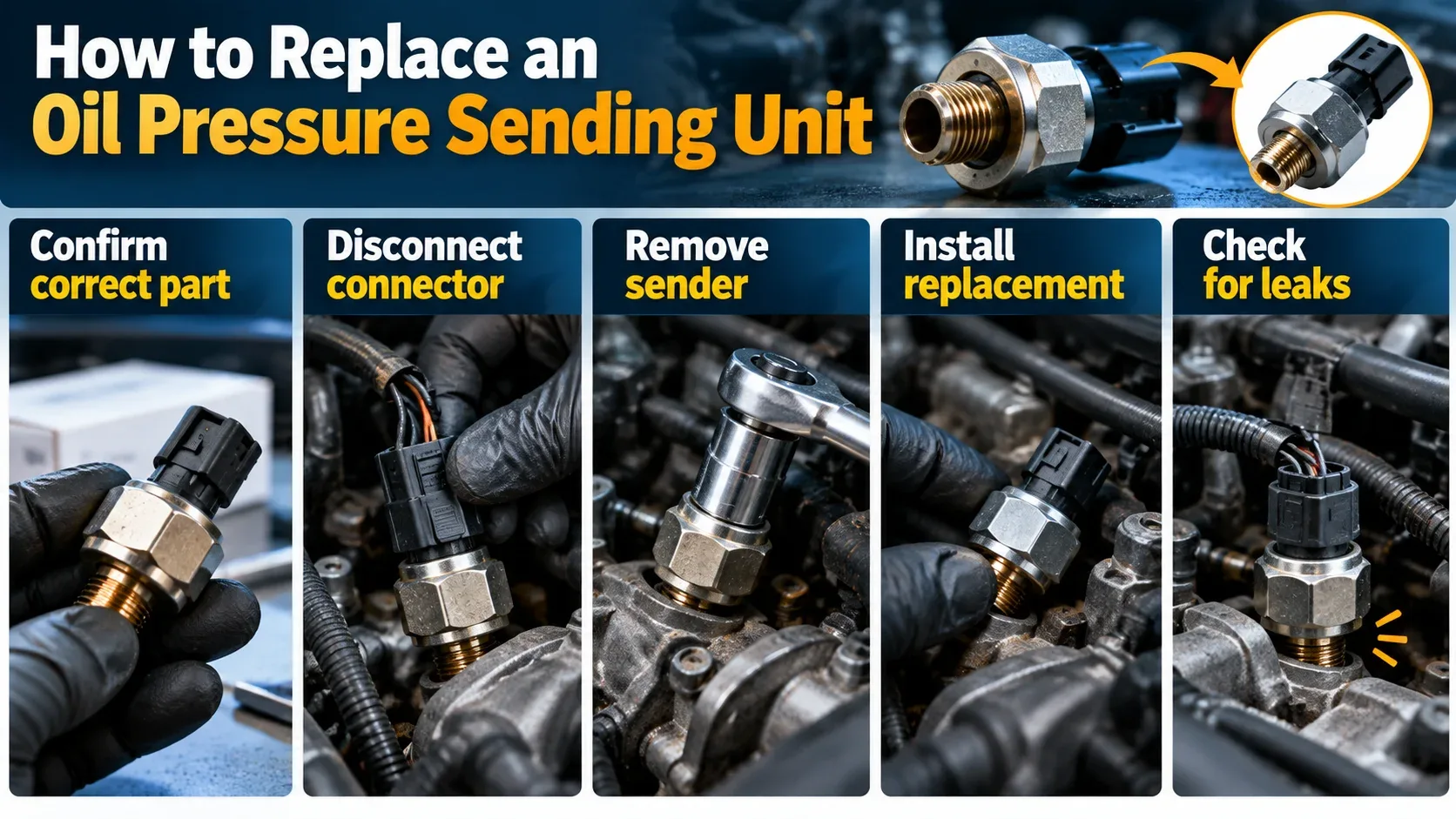
Do Not Overtighten the Sender
Follow the manufacturer procedure and specified torque or sealing requirements.
Oil Pressure Sending Unit Replacement Cost
| Cost Factor | Why It Matters |
|---|---|
| Part Price | Sensor and sender prices vary by vehicle and manufacturer. |
| Access | Some senders are exposed, while others are difficult to reach. |
| Diagnostic Time | Pressure and wiring tests may be needed first. |
| Oil Leakage | Cleaning and related repairs may add labor. |
| Connector Repair | An oil-soaked or damaged connector may need replacement. |
| Labor Rate | Shop labor rates vary by region and repair facility. |
DIY vs Professional Replacement
DIY May Be Reasonable When
- The sender is easy to access
- The correct replacement part is known
- The problem has already been diagnosed
- You have the correct tool
Professional Diagnosis Is Better When
- The engine is making abnormal noise
- Actual oil pressure has not been verified
- The sender is difficult to access
- Wiring problems are suspected
- The warning remains after replacement
What Replacing the Sender Will Not Fix
Low Oil Level
A new sender cannot replace missing engine oil.
Worn Oil Pump
A weak pump can cause actual low oil pressure.
Clogged Pickup
Sludge or debris can restrict oil flow into the pump.
Wrong Oil Viscosity
Incorrect oil can affect pressure behavior.
Bearing Wear
Excessive internal clearances can reduce oil pressure.
Internal Engine Damage
A sender cannot repair worn lubrication components.
Questions to Ask a Mechanic
- Was actual oil pressure verified with a mechanical gauge?
- Is the sending unit leaking oil?
- Was the electrical connector checked?
- Were the wiring and ground circuits tested?
- What is the manufacturer oil-pressure specification?
- Is the engine using the correct oil viscosity?
- Are there signs of oil-pump or bearing problems?
- Will the system be retested after replacement?
Oil Pressure Sending Unit FAQs
What is an oil pressure sending unit?
It monitors engine oil pressure and communicates that information to the gauge, warning light, or engine computer.
Is an oil sending unit the same as an oil pressure sensor?
The terms are often used interchangeably, but exact component design varies by vehicle.
Can a bad oil pressure sending unit cause a zero reading?
Yes, but real low oil pressure can also cause a zero reading.
Can an oil pressure sending unit leak oil?
Yes. Oil can leak through the sender body, threads, sealing area, or electrical end.
How do you test an oil pressure sending unit?
The correct test may involve continuity, resistance, voltage, scan-tool data, wiring checks, and a mechanical pressure gauge.
Can you drive with a bad oil pressure sending unit?
Only after confirming the engine actually has safe oil pressure.
Bottom Line
A faulty oil pressure sending unit can cause false warnings, incorrect gauge readings, or oil leaks, but the same warning can also indicate a genuine lubrication problem. Check the oil level, inspect the sender and wiring, and verify actual pressure when necessary before assuming the sending unit is at fault.