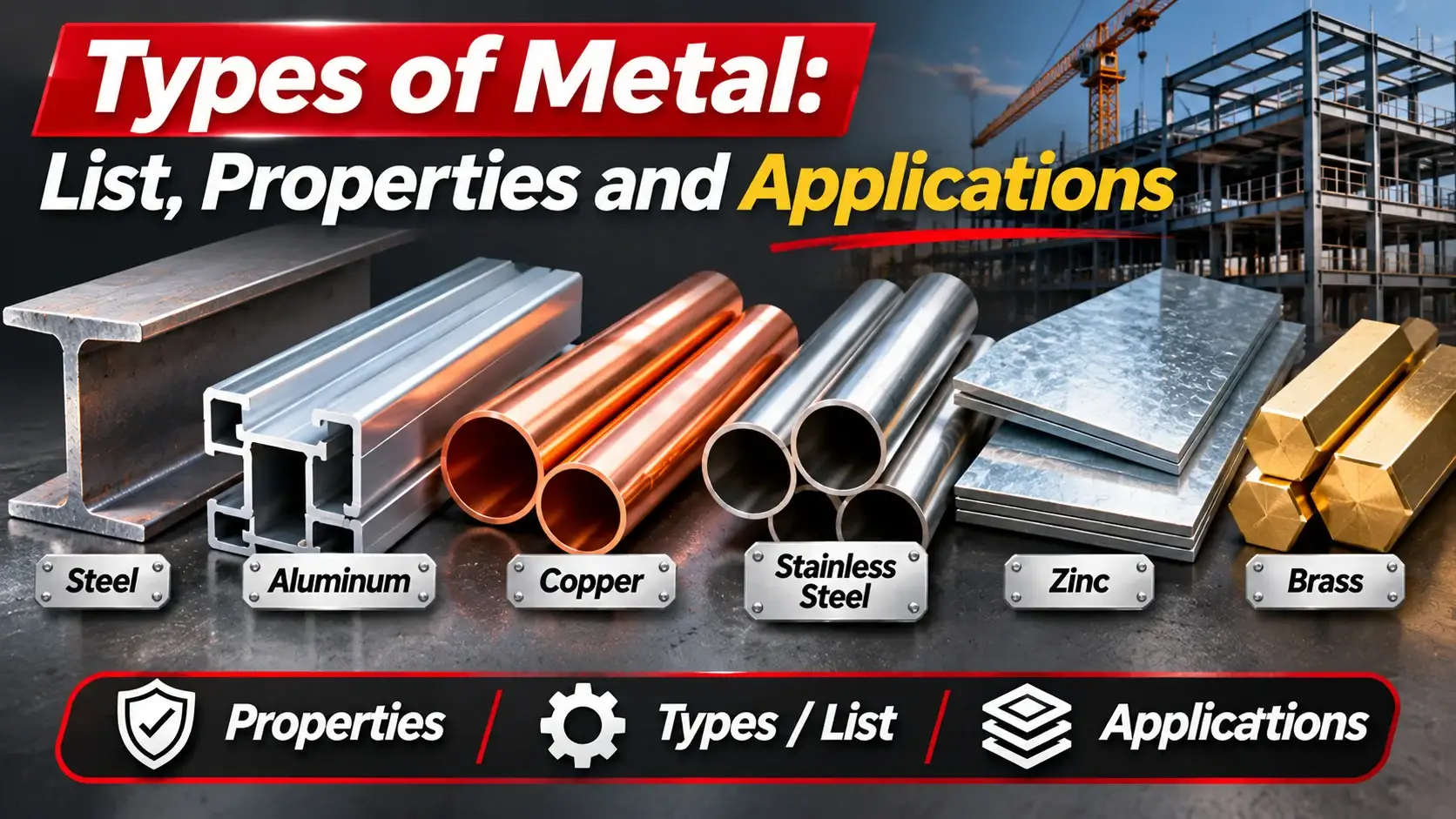
Construction materials / Practical guide
Choosing a metal for a building project is not just a question of strength or price. The right choice depends on the grade, the environment, fabrication method, applicable standards, and what the component must do throughout its service life. This guide gives construction and procurement teams a useful first-pass comparison—and a clear list of what to verify before ordering.
01 / The essentials
A practical metal listing
The most useful division is between ferrous metals, which are iron-based, and non-ferrous metals, which are not. An alloy combines elements to achieve particular properties; a grade identifies a defined material specification. “Steel” alone is rarely precise enough for a purchase order.
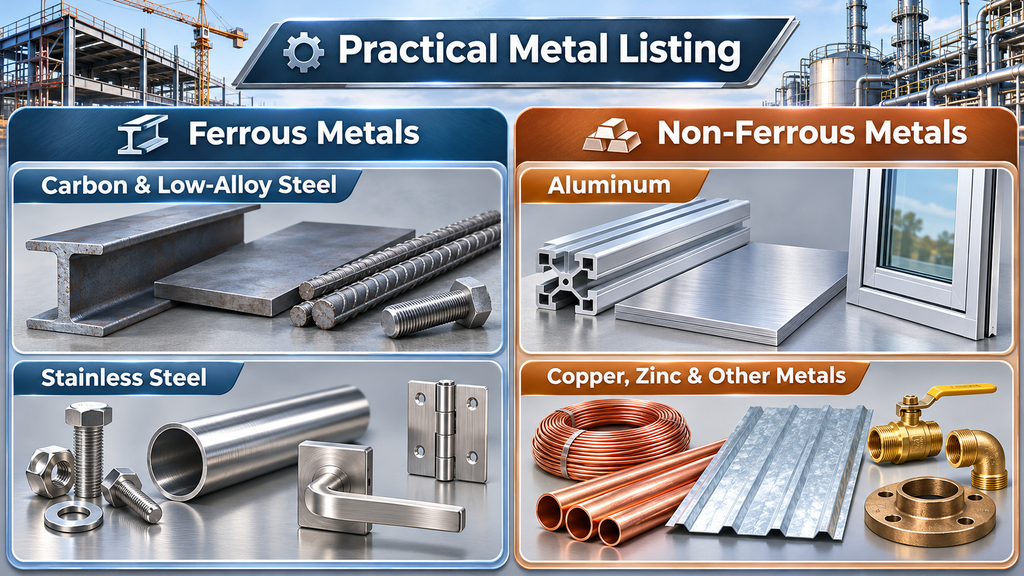
Carbon & low-alloy steel
Common for structural frames, reinforcement, plate, and fasteners. Strong, widely available, and generally economical; exposed steel usually needs an appropriate corrosion strategy.
Stainless steel
Iron-based alloys containing at least 10.5% chromium. Used for exposed fixings, architectural details, and equipment where corrosion resistance matters; grade and environment still matter.
Aluminum
Lightweight and readily formed into extrusions and sheet. Common in façades, windows, and roofing; alloy, temper, and connection design affect performance.
Copper, zinc & other metals
Copper serves electrical systems and some piping or roofing; zinc is used in coatings and architectural sheet. Brass and bronze are copper alloys often chosen for fittings or hardware.
Specification distinction: Galvanized steel is steel with a zinc coating, not a separate base-metal family. “316 stainless” and “6061-T6 aluminum” identify more specific materials than “stainless” or “aluminum,” but the product form and governing standard must also be confirmed.
02 / Compare responsibly
Metal properties at a glance
These approximate densities are useful for early weight comparisons. Corrosion and strength descriptions are qualitative because actual performance depends on grade, product form, processing, coating, and exposure.
| Metal type | Approx. density | Typical advantage | Key limitation to check |
|---|---|---|---|
| Carbon steel | 7,850 kg/m³ | High structural utility and broad supply | Corrosion protection; grade and weldability |
| Stainless steel | 7,900–8,000 kg/m³ | Corrosion resistance with suitable grade | Chlorides, crevices, finish, and higher cost |
| Aluminum alloys | ~2,700 kg/m³ | Low weight and versatile shapes | Lower stiffness than steel; alloy/temper |
| Copper | ~8,960 kg/m³ | Electrical and thermal conductivity | Cost, theft exposure, and contact compatibility |
| Zinc | ~7,140 kg/m³ | Protective coating and architectural sheet use | Coating thickness, runoff, and exposure |
Density figures are rounded reference values, not acceptance criteria. Do not infer a design strength from this table: obtain certified values for the specified grade and product.
Beyond density, compare yield and tensile strength (MPa), elastic modulus (GPa), ductility, corrosion behavior, thermal movement, fire performance, and fabrication compatibility. For example, aluminum is much lighter than steel, but its elastic modulus is roughly one-third that of steel; a member may need a different section to satisfy deflection limits.
03 / Iron-based materials
Ferrous metal types
Carbon and structural steel
Specify the required grade, section or plate form, dimensional tolerance, and protective system. Structural applications depend on engineer-approved design and locally adopted codes.
Typical uses: beams, columns, connections, reinforcement, and secondary framing.
Stainless steel
Grades such as 304 and 316 differ in alloy chemistry and corrosion performance. Neither is universally “rust-proof”; chloride exposure, cleaning, crevices, and finish can change the outcome.
Typical uses: exposed fasteners, handrails, façades, and process equipment.
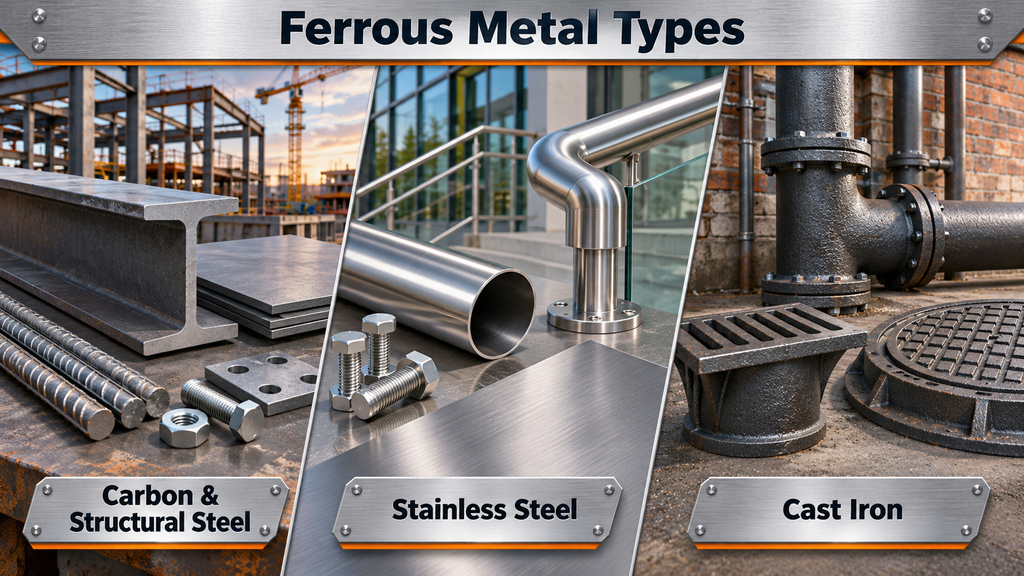
Also encountered: Cast iron is valued in some pipes, drainage products, and architectural components, but its brittleness and product-specific requirements make it different from structural steel.
04 / Beyond iron
Non-ferrous metal types
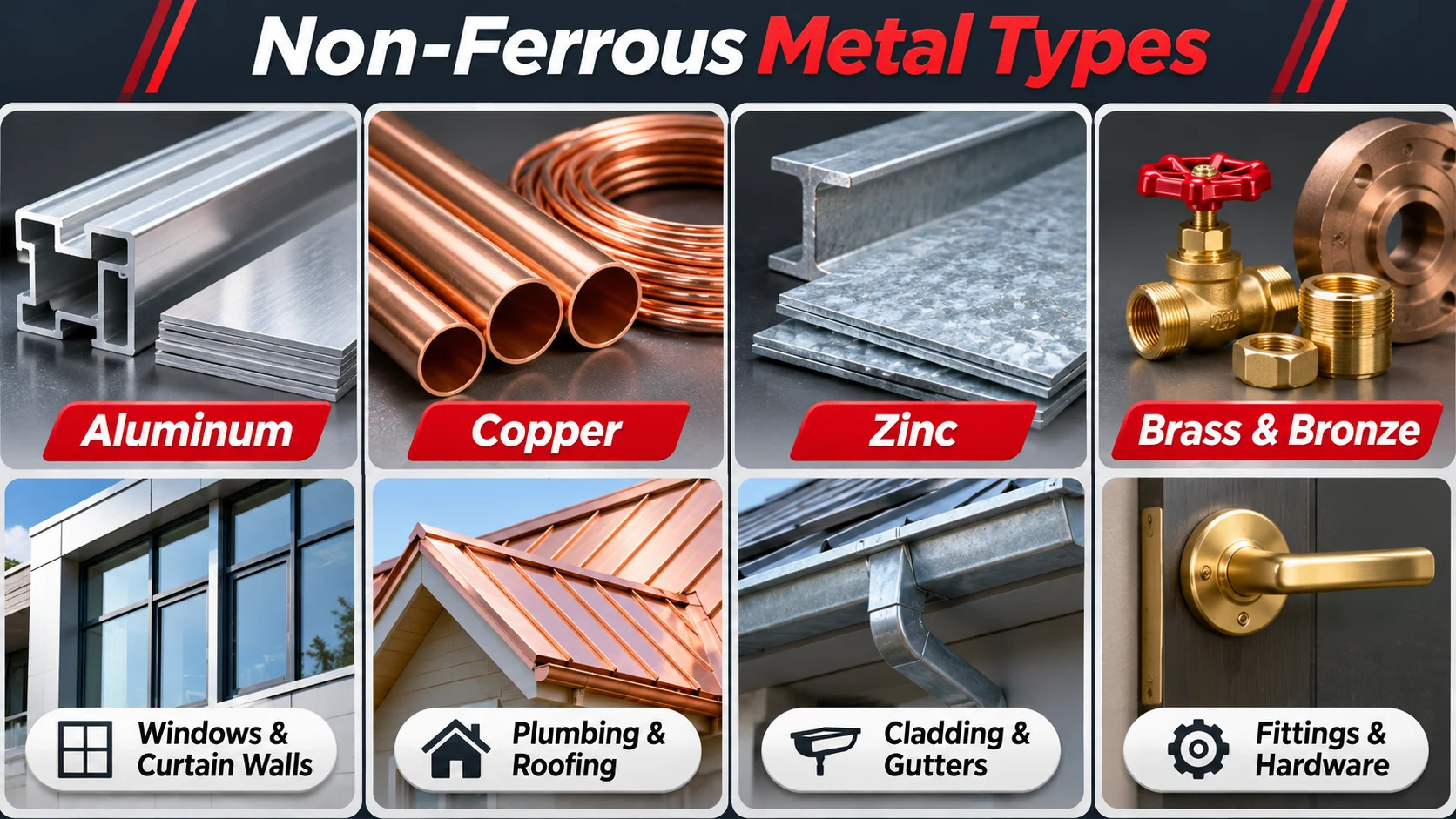
Aluminum
Lightweight, naturally oxide-forming, and suitable for extruded profiles. Check alloy and temper, finish, fire and temperature requirements, and isolation from incompatible metals.
Typical uses: curtain walls, windows, louvers, and lightweight roofing.
Copper
Excellent conductor with a long history in building services. Confirm the right tube or sheet specification, water chemistry where relevant, and compatibility at joints.
Typical uses: wiring, plumbing, flashing, and roofing.
Zinc
Used as a sacrificial coating on steel and as a sheet material. For galvanized products, specify the coating process and required coating standard rather than merely saying “zinc finish.”
Typical uses: galvanized steel protection, cladding, and gutters.
Brass and bronze
These copper-alloy families cover many compositions. Their wear, appearance, and corrosion characteristics depend on the particular alloy and service conditions.
05 / Put properties to work
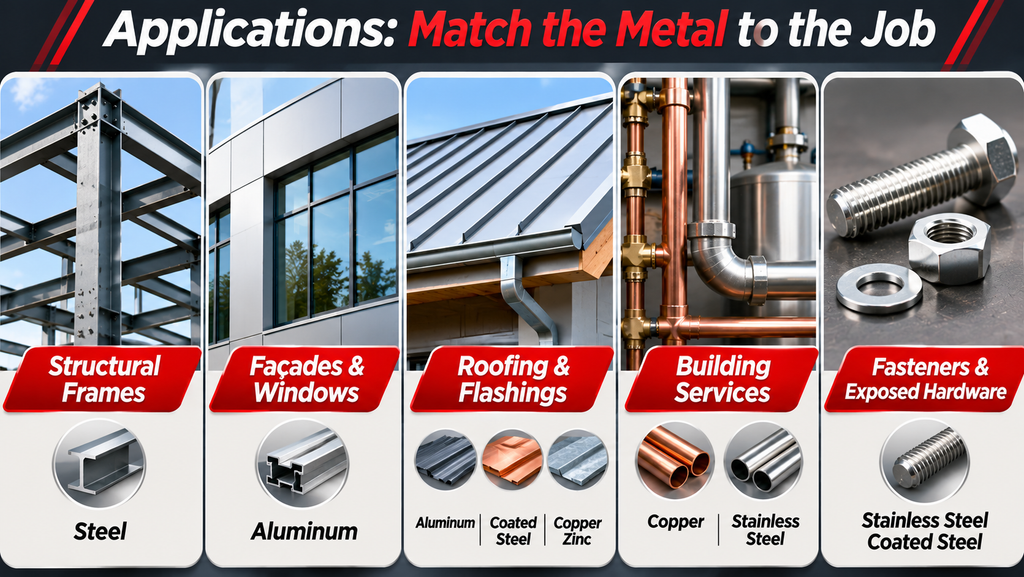
Applications: match the metal to the job
- Structural frames: Steel is frequently selected for its strength, predictable design standards, and established fabrication supply chain. Confirm section grade, connection design, fire protection, and corrosion system.
- Façades and windows: Aluminum extrusions can reduce weight and support complex profiles. Assess thermal movement, deflection, finishes, and galvanic isolation at interfaces.
- Roofing and flashings: Aluminum, coated steel, copper, and zinc all appear in roof assemblies. Choose based on exposure, runoff compatibility, fixing details, expected life, and maintenance.
- Building services: Copper and stainless steel are used in particular piping and equipment applications. Check the actual fluid, temperature, pressure, local rules, and manufacturer approvals.
- Fasteners and exposed hardware: A durable base metal can still fail at a poorly selected connection. Match fastener grade and coating to the joined materials and environment.
Safety context: Cutting, welding, grinding, and coating removal can introduce fumes, dust, sharp edges, and fire hazards. Follow the applicable safety data, ventilation and exposure controls, hot-work procedures, and site rules. A material comparison is not a substitute for a safe-work method or engineered design.
06 / Before the purchase order
A selection checklist for specifiers and buyers
Use this shortlist with your engineer, fabricator, and supplier before committing to a type of metal.
- Define loads, deflection limits, temperature range, design life, and required fire performance.
- Describe the exposure: interior, coastal, industrial, wet, chemically aggressive, or concealed.
- Specify the grade, alloy or temper, product form, dimensions, and applicable standard and edition.
- Confirm coating or finish, joining method, contact-metal compatibility, and maintenance access.
- Request relevant mill test certificates, traceability, coating records, and product data.
- Compare installed cost, availability, fabrication capacity, lead time, and replacement implications—not material price alone.