If a dealership or repair shop has recommended a fuel induction service, you may be wondering what the service actually does, how much it costs, and whether your vehicle genuinely needs it. Fuel induction cleaning can be useful when deposits affect engine operation, but it is not automatically necessary for every car at a specific mileage.
Quick Answer
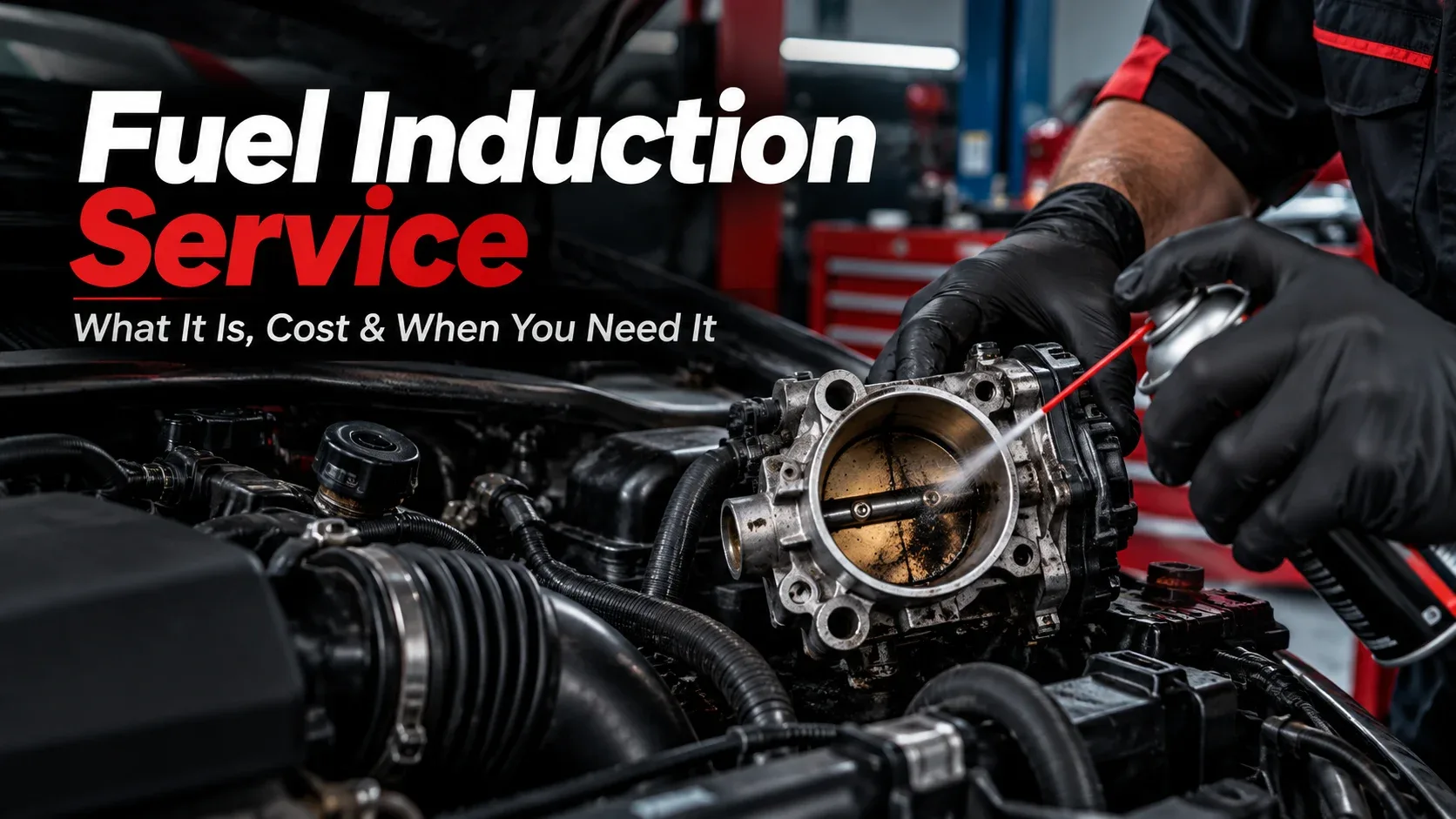
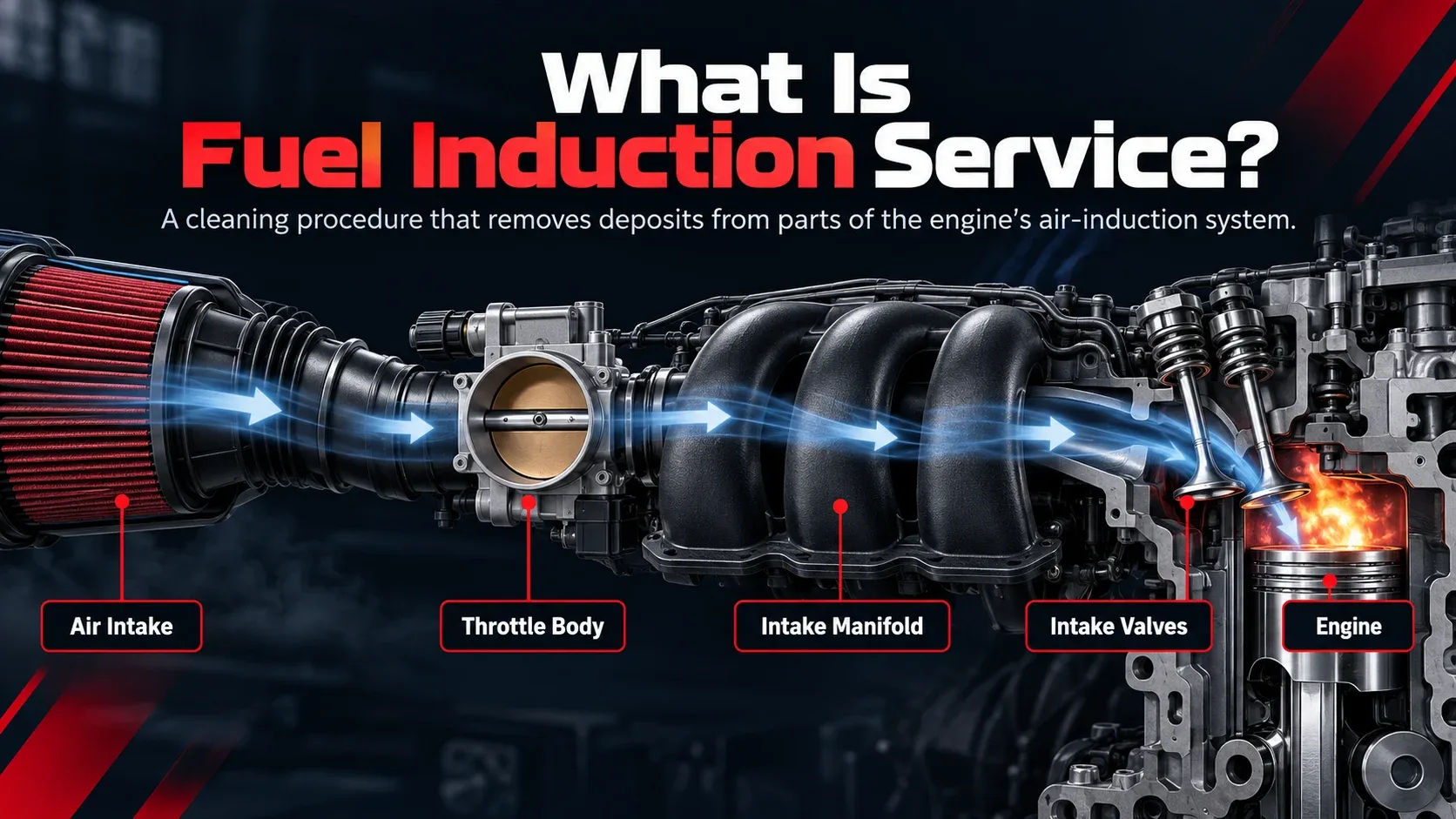
A fuel induction service is a cleaning procedure designed to remove deposits from parts of the engine’s air-induction system. Depending on the service, this may include the throttle body, intake manifold, intake valves, combustion chambers, and sometimes fuel injectors.
Whether your vehicle needs the service depends on engine design, manufacturer guidance, symptoms, mileage, maintenance history, and evidence of deposit buildup.
What Is Fuel Induction Service?
Fuel induction service is a general term used for cleaning deposits from parts involved in bringing air—and in some cases fuel—into the engine.
The engine needs a controlled amount of clean air and fuel to run properly. Over time, deposits can develop around the throttle body, inside intake passages, on intake valves, or in other areas of the induction system.
A technician may use specialized cleaning chemicals, equipment, or mechanical cleaning methods to remove these deposits.
However, the exact meaning of fuel induction service can differ between repair facilities. One shop may include only throttle-body and intake cleaning, while another may also include injector cleaning.
What Does a Fuel Induction Service Include?
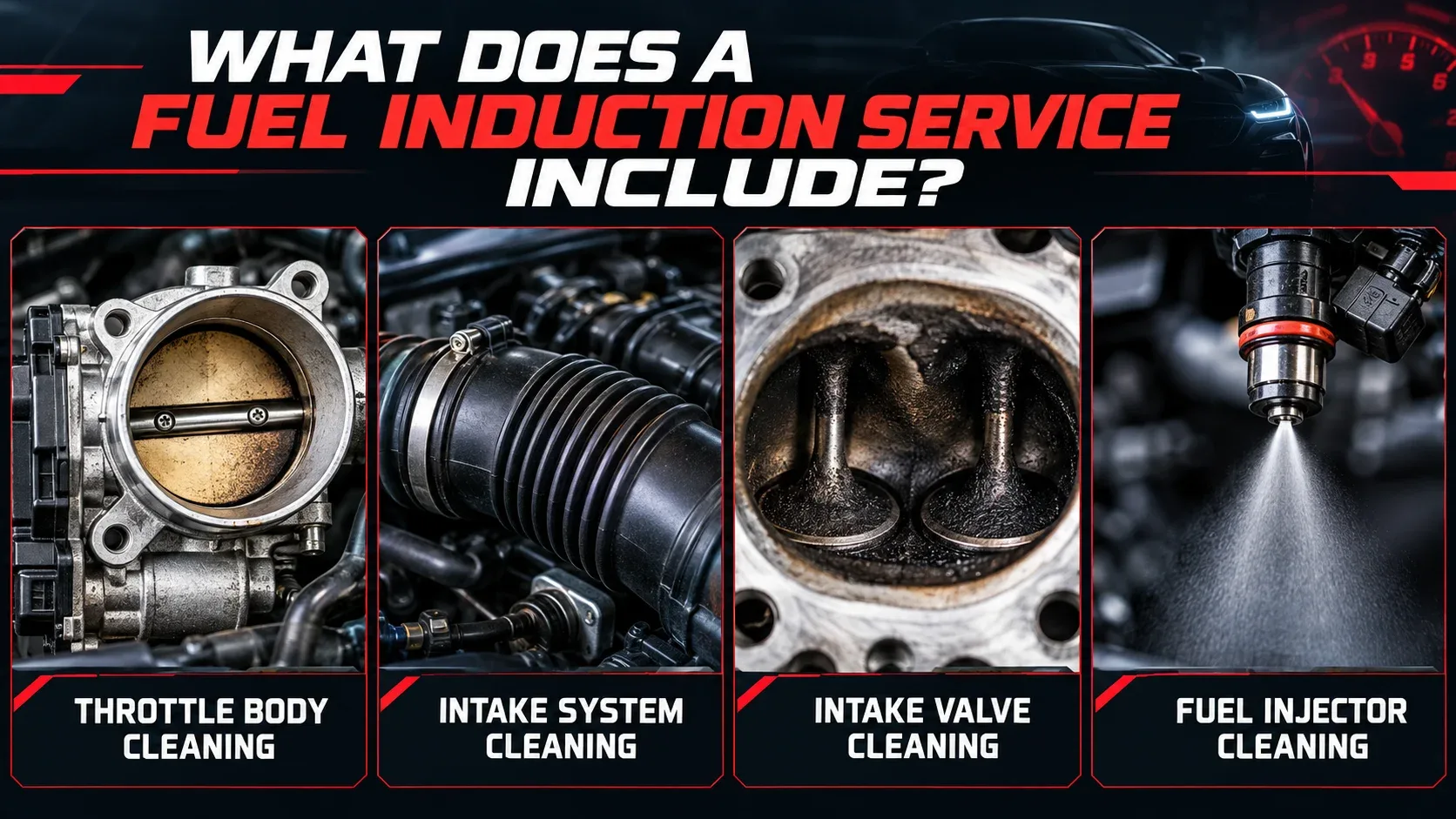
The exact procedure depends on the vehicle, engine design, and service package. A typical service may include one or more of the following.
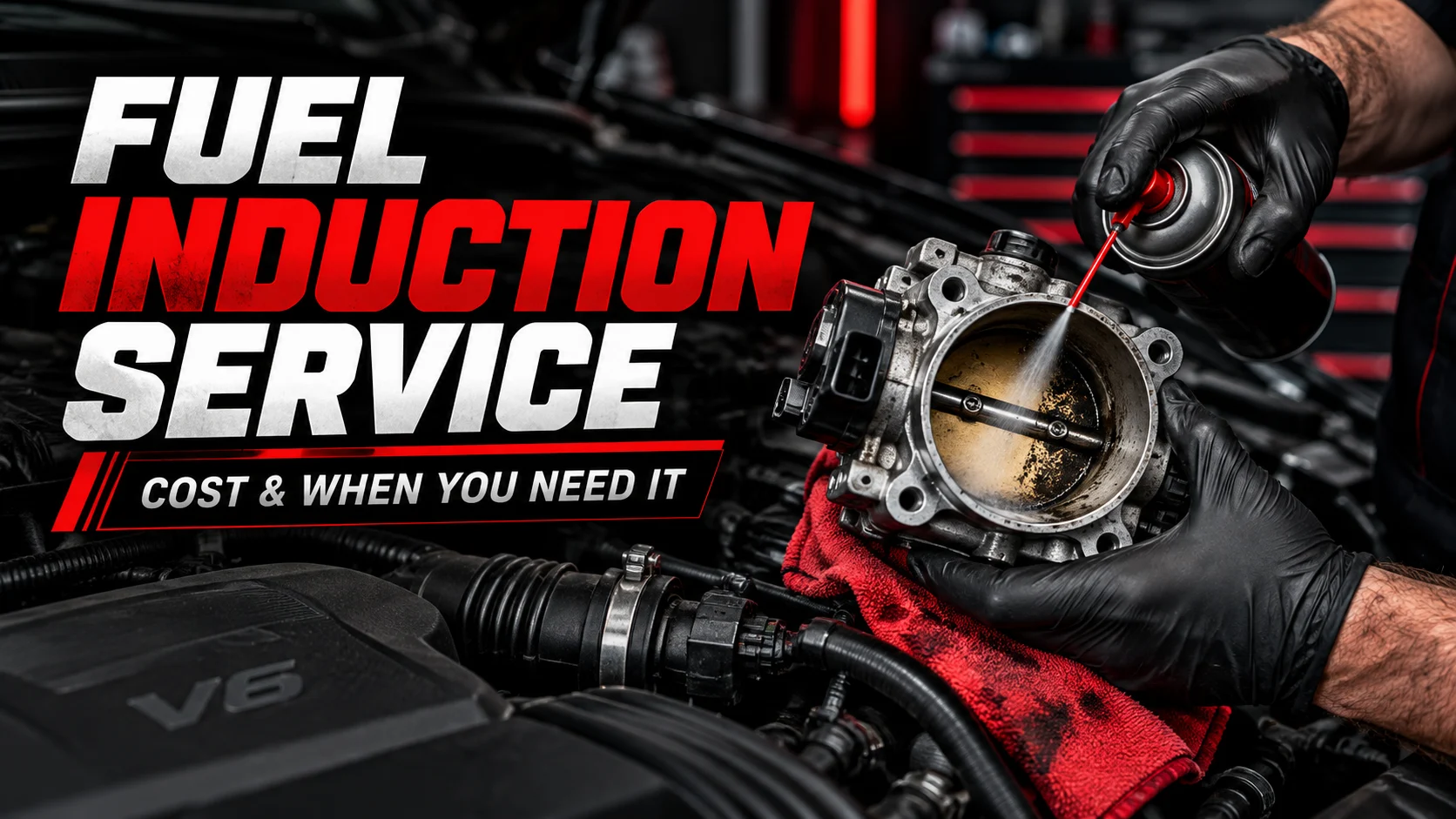
Throttle Body Cleaning
Deposits around the throttle plate and bore are removed to help maintain proper airflow and throttle operation.
Intake System Cleaning
A cleaning solution may be introduced into the intake system to address deposits in accessible passages.
Intake Valve Cleaning
Certain procedures target deposits on intake valves, especially when buildup has been confirmed or strongly suspected.
Fuel Injector Cleaning
Injector cleaning may be included in some packages, while other shops treat it as a separate service.
Why Carbon Deposits Build Up
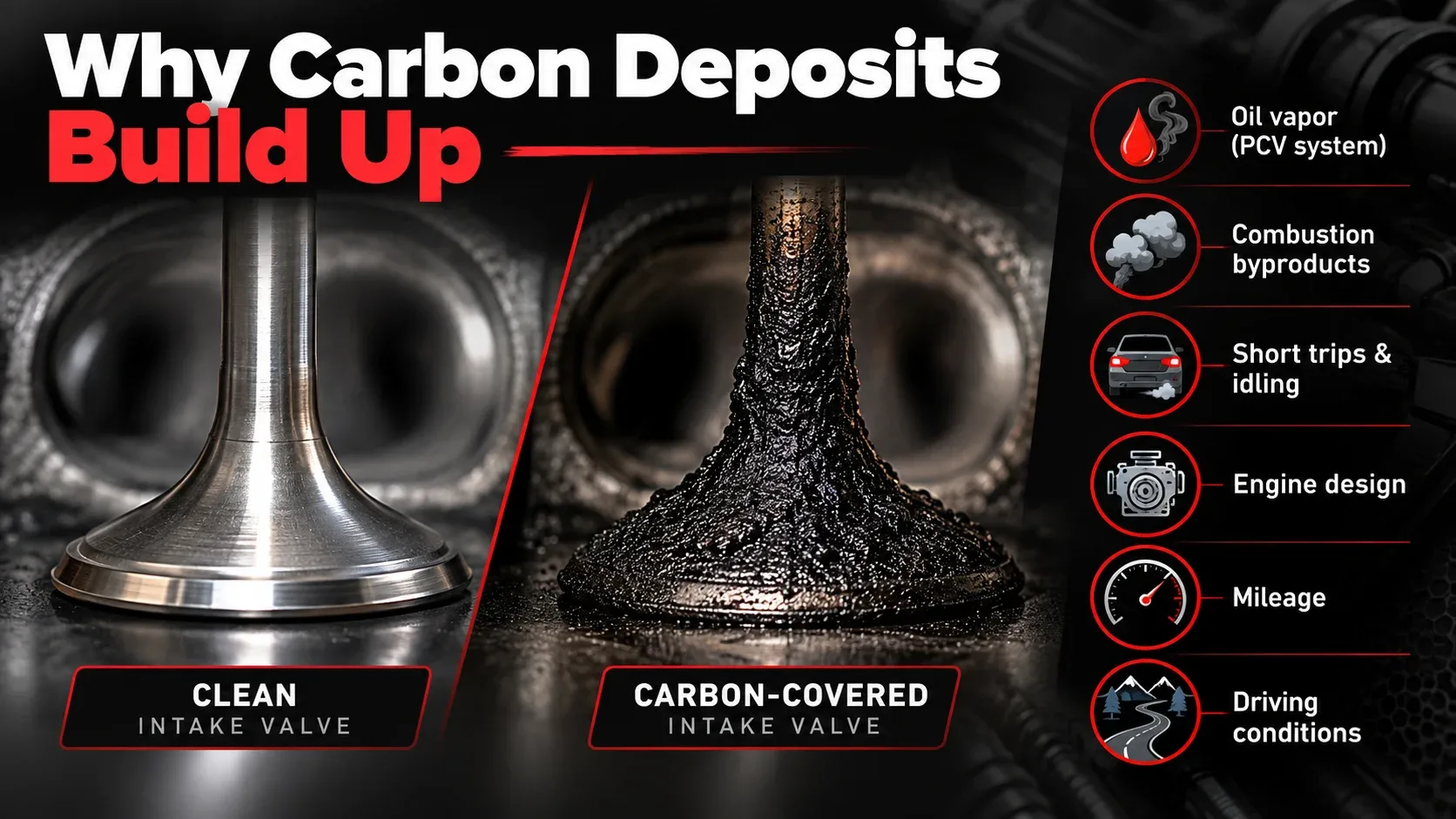
Internal combustion engines naturally produce contaminants and vapors during operation. Oil vapor from the crankcase ventilation system, combustion byproducts, and other residues can contribute to deposits over time.
Deposit formation can be influenced by:
- Engine design
- Mileage
- Oil consumption
- Maintenance history
- Frequent short trips
- Long periods of idling
- Driving conditions
- Crankcase ventilation system operation
Some deposit formation is normal. The important question is whether the buildup is severe enough to interfere with airflow, combustion, or normal engine operation.
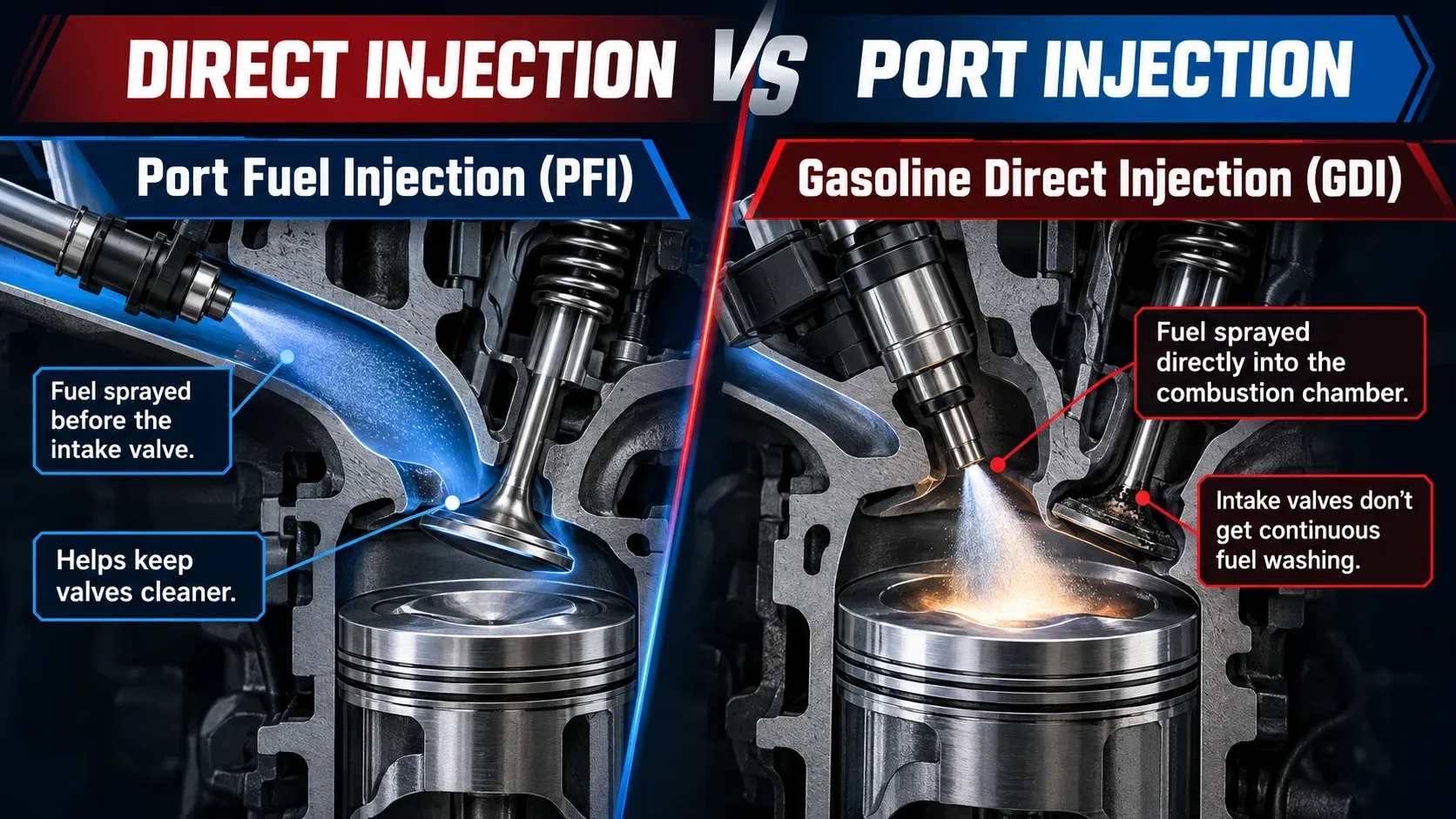
Direct Injection vs Port Injection
Engine design plays an important role when discussing intake deposits. Two common gasoline fuel-delivery systems are port fuel injection and gasoline direct injection.
Port Fuel Injection
Port-injected engines generally spray fuel into the intake port before the intake valve. Fuel passes across the back of the valve before entering the combustion chamber.
Gasoline Direct Injection
Direct-injection engines spray gasoline directly into the combustion chamber. The fuel therefore does not continuously pass across the back of the intake valve.
This difference is one reason intake-valve deposits receive particular attention on some direct-injection engines.
However, not every GDI engine develops severe deposits, and owning a direct-injection vehicle does not automatically mean you need frequent induction cleaning.
Signs You May Need a Fuel Induction Service
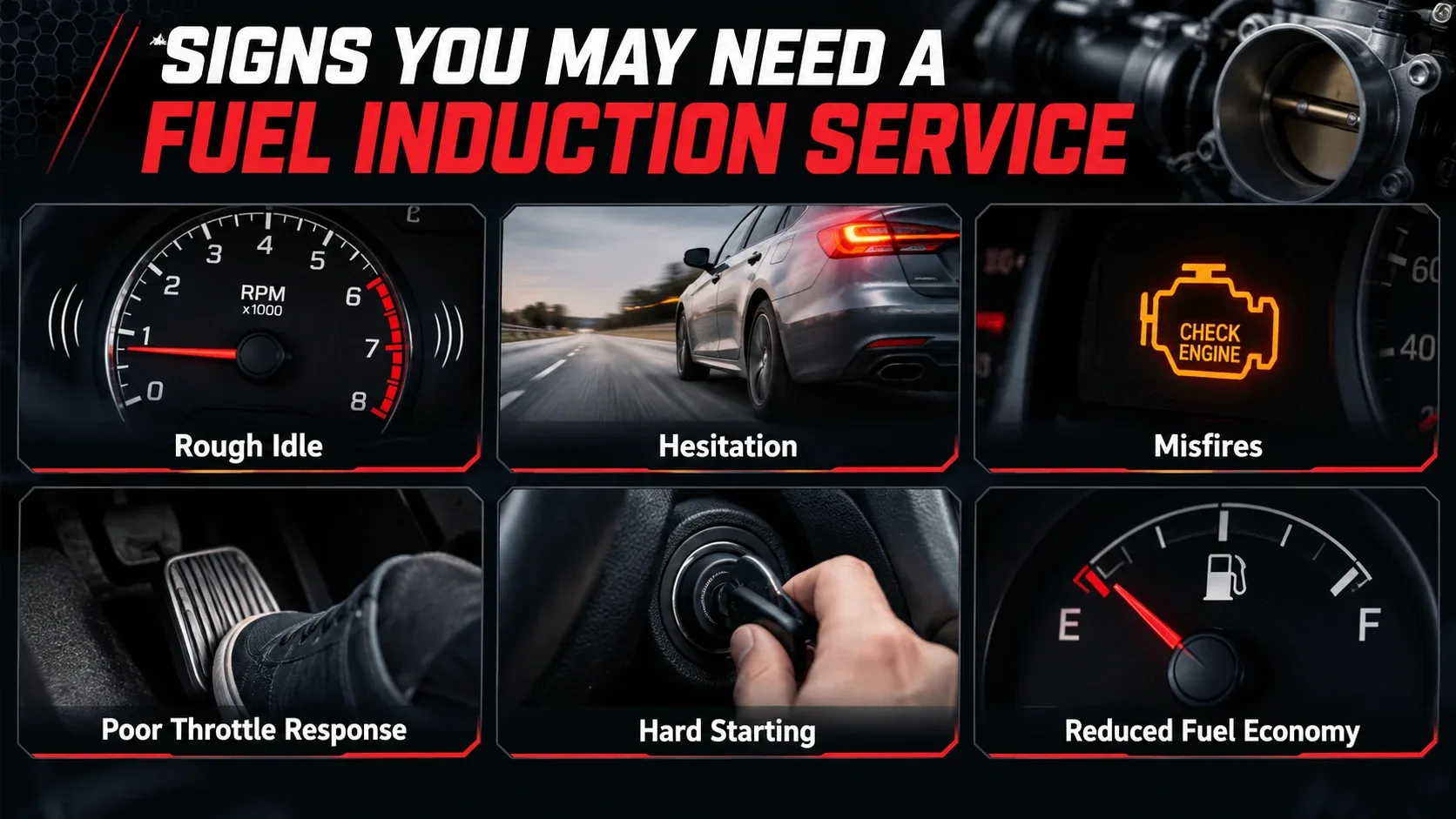
Excessive deposits can sometimes contribute to drivability problems. Possible symptoms include:
Rough Idle
The engine feels uneven or vibrates more than normal while idling.
Hesitation
The vehicle responds slowly or unevenly when you press the accelerator.
Misfires
Uneven combustion may cause shaking or trigger the check-engine light.
Poor Throttle Response
The engine feels less responsive when accelerating.
Hard Starting
The engine takes longer than usual to start under certain conditions.
Reduced Fuel Economy
Efficiency may decline, although many other problems can cause the same symptom.
Symptoms Are Clues, Not Proof
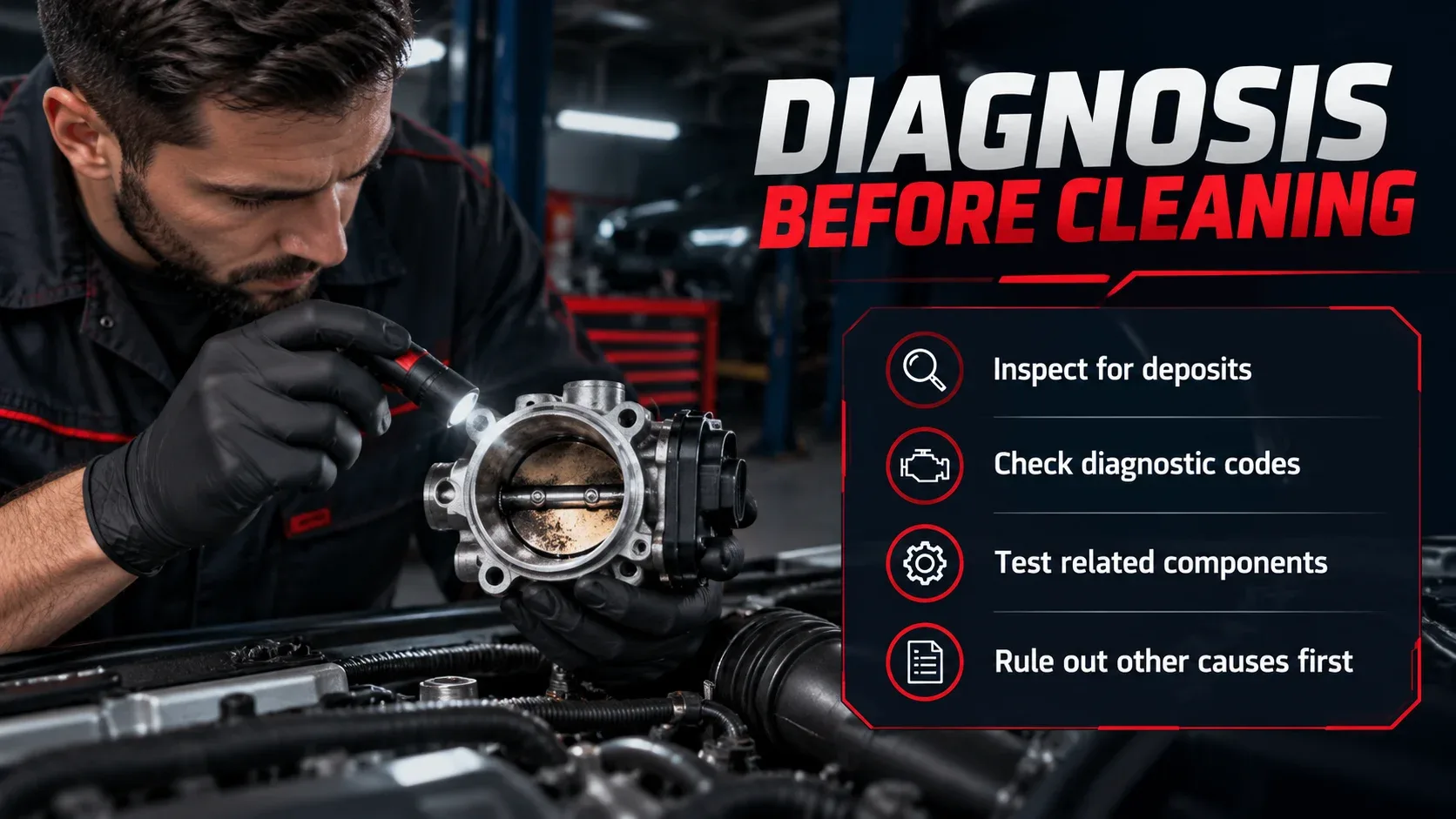
Rough idle, hesitation, misfires, hard starting, and poor fuel economy can have many causes besides carbon deposits.
Worn spark plugs, ignition coils, vacuum leaks, sensors, injector problems, fuel-pressure faults, compression problems, and other issues can produce similar symptoms.
A proper diagnosis should come before cleaning.
When Do You Actually Need a Fuel Induction Service?
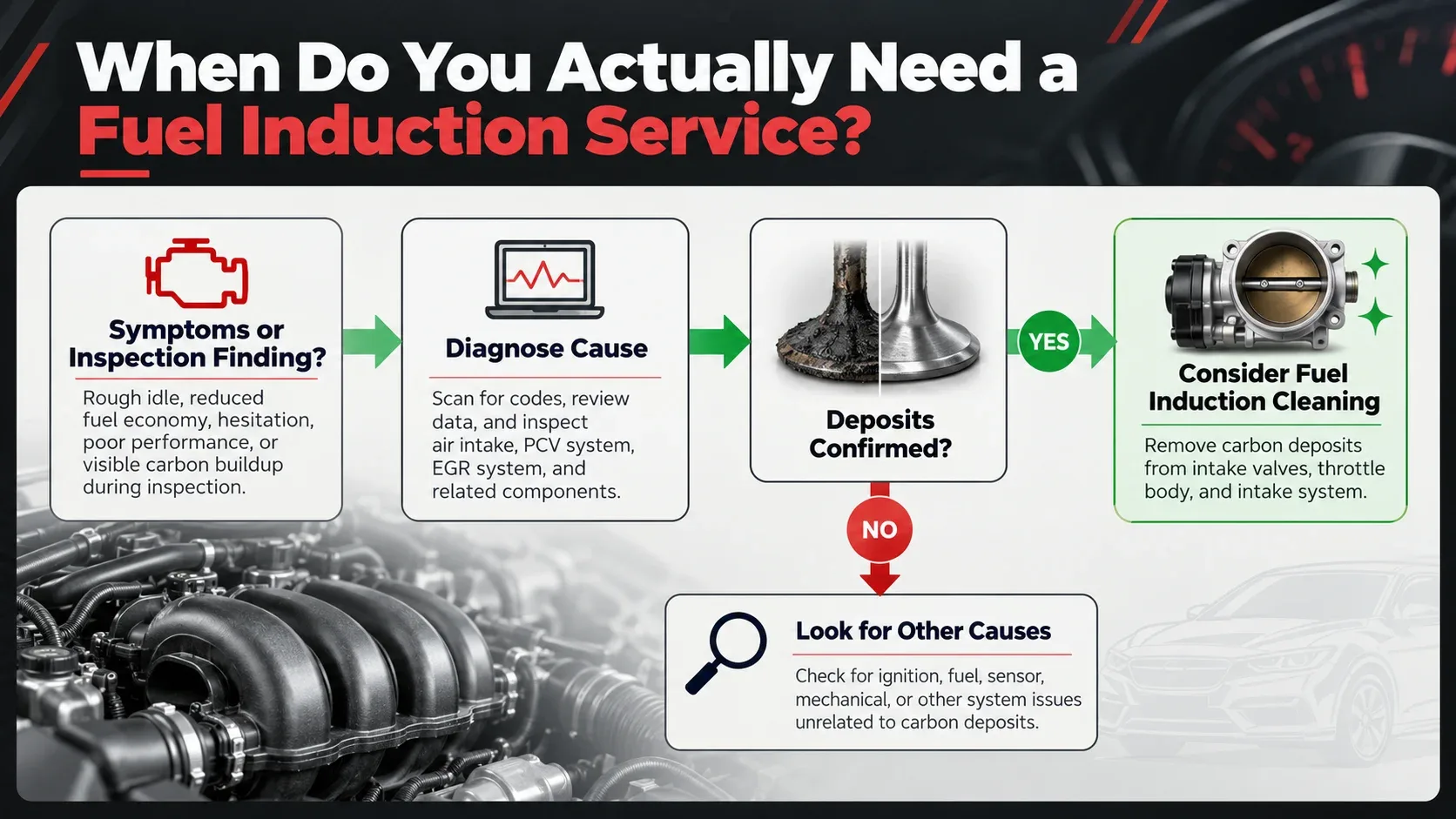
A fuel induction service is most reasonable when there is evidence that deposits are contributing to a problem rather than simply because your odometer has reached a generic mileage interval.
You may have a stronger reason to consider the service when:
- A technician has confirmed significant intake deposits.
- Your symptoms have been traced to contaminated intake components.
- The throttle body is visibly dirty and affecting engine operation.
- Your specific engine has a documented history of intake-valve deposit problems.
- The manufacturer recommends a related cleaning procedure.
- Other more likely causes of your symptoms have been ruled out.
How Often Should You Get a Fuel Induction Service?
There is no universal fuel induction service interval that applies to every vehicle.
Some dealerships and repair shops recommend cleaning at intervals such as 30,000, 45,000, or 60,000 miles. Those numbers may be used as inspection points, but they should not automatically replace manufacturer-specific maintenance guidance.
Check These Before Following a Generic Mileage Interval
- Your owner’s manual
- Manufacturer maintenance schedule
- Your specific engine design
- Current drivability symptoms
- Diagnostic trouble codes
- Inspection findings
- Previous repair history
Fuel Induction Service Cost
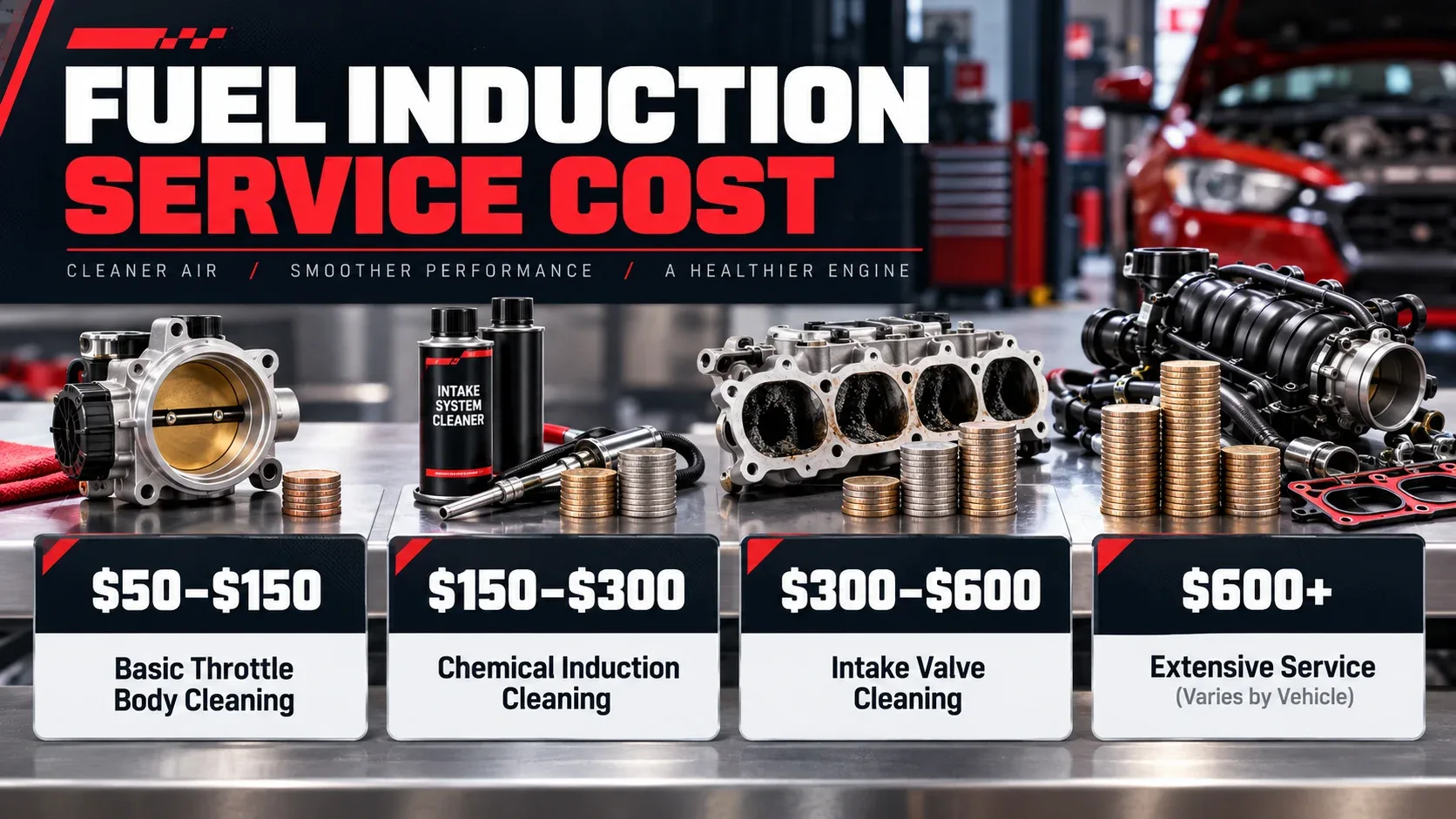
The cost of a fuel induction service varies because the name can describe very different procedures.
A basic throttle-body or chemical induction cleaning may cost in the low hundreds of dollars, while a more extensive intake-valve cleaning procedure can cost significantly more.
Your final price depends on the vehicle, labor rates, cleaning method, engine accessibility, deposit severity, and whether injector cleaning or diagnostic work is included.
| Cost Factor | Why It Matters |
|---|---|
| Vehicle Design | Some engines require much more labor to access intake components. |
| Cleaning Method | Simple chemical treatments generally require less labor than mechanical cleaning. |
| Deposit Severity | Heavy buildup may require additional time and specialized procedures. |
| Injector Cleaning | Injector service may be included or charged separately. |
| Labor Rates | Shop labor prices vary by region and facility. |
| Diagnosis | Testing and inspection may be billed separately from the cleaning. |
Fuel Induction Service vs Fuel Injector Cleaning
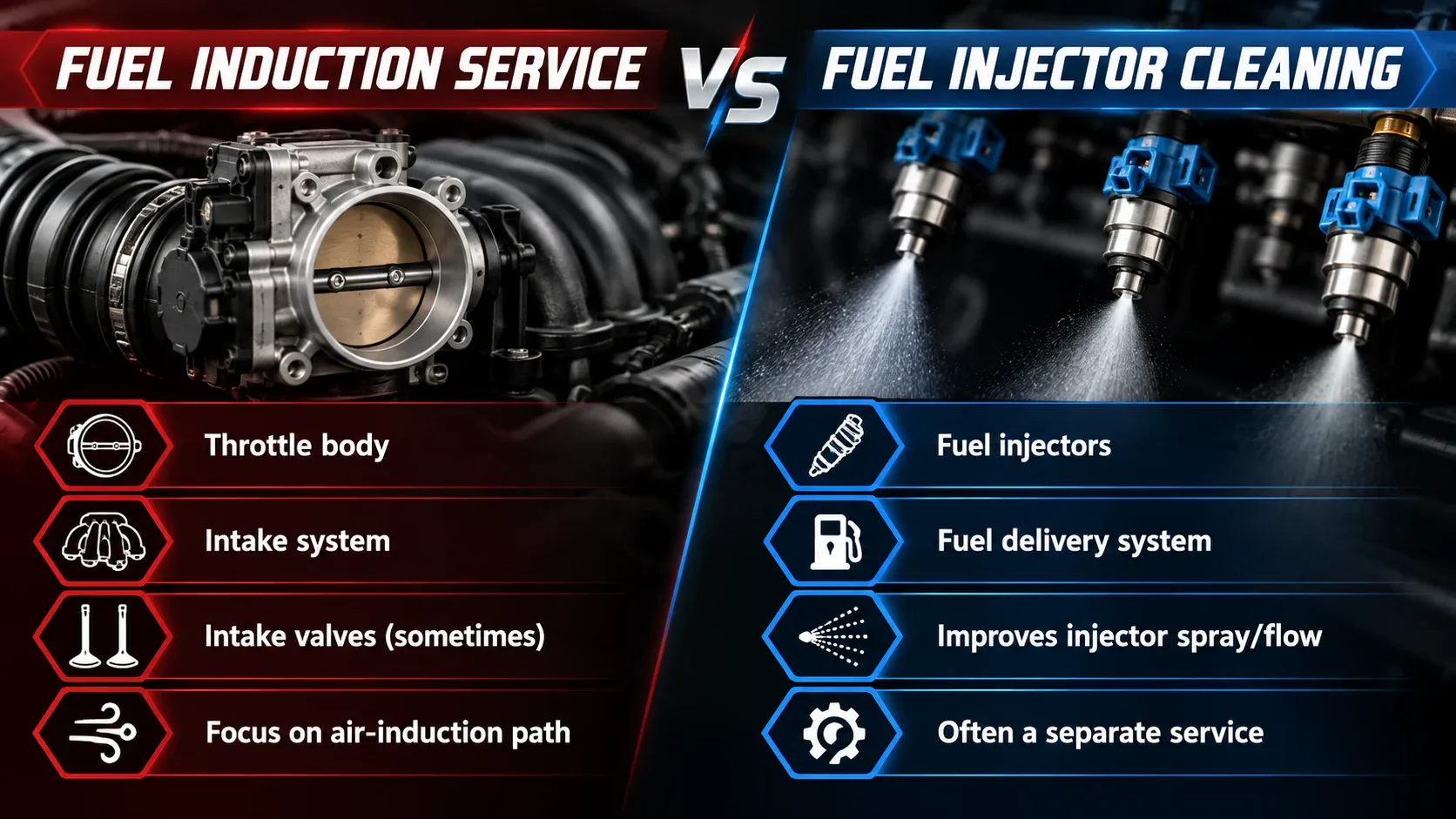
Fuel induction cleaning and fuel injector cleaning are related, but they are not necessarily the same service.
| Service | Main Area Targeted | Purpose |
|---|---|---|
| Fuel Induction Service | Throttle body, intake passages and potentially intake valves | Address deposits in the air-induction path |
| Fuel Injector Cleaning | Fuel injectors and related fuel-delivery components | Address deposits affecting injector spray or fuel delivery |
Some repair shops combine both procedures into one package. Others sell them separately. Always ask exactly what is included.
Can a Fuel Additive Replace a Fuel Induction Service?
Not always.
A fuel-system cleaner added to the gas tank travels through the fuel system and may help address certain deposits in components contacted by the fuel.
However, direct-injection engines spray fuel directly into the combustion chamber. Because the gasoline does not normally flow over the backs of the intake valves, a tank additive cannot simply wash away intake-valve deposits.
DIY vs Professional Fuel Induction Cleaning
Some basic procedures may be suitable for experienced DIY owners, while more extensive intake-valve cleaning is generally better handled by a qualified technician.
DIY May Be Reasonable When
- The vehicle procedure is clearly documented.
- The throttle body is easily accessible.
- You understand electronic throttle precautions.
- You have the correct cleaner and tools.
Professional Help Is Better When
- The engine is misfiring.
- Heavy valve deposits are suspected.
- Intake components require removal.
- Specialized equipment is required.
- The real cause of the symptoms is unclear.
Is Fuel Induction Service Worth It?
A fuel induction service can be worthwhile when deposits are genuinely affecting engine operation and the cleaning method addresses the actual problem.
For example, cleaning a contaminated throttle body or intake system may improve operation when those deposits are causing unstable airflow or drivability problems.
The service becomes harder to justify when it is recommended only because the vehicle has reached a generic mileage number and there are no symptoms, inspection findings, manufacturer recommendations, or engine-specific concerns.
A Better Question to Ask
Instead of simply asking, “Is fuel induction service worth it?” ask: “What evidence shows that my engine needs this service right now?”
Questions to Ask Before Approving the Service
- What exactly will you clean?
- Why does my vehicle need the service?
- Did you inspect or confirm carbon buildup?
- Is the service listed in the manufacturer maintenance schedule?
- Does my vehicle use direct injection or port injection?
- Does the price include injector cleaning?
- Are any diagnostic trouble codes present?
- Could another problem be causing the symptoms?
- What cleaning method will you use?
A trustworthy recommendation should include a clear explanation rather than relying only on mileage.
What Fuel Induction Cleaning Will Not Fix
Cleaning cannot repair every rough-running engine. Several mechanical and electrical problems can produce symptoms similar to intake deposits.
Worn Spark Plugs
Ignition problems can cause hesitation and misfires.
Weak Ignition Coil
A failing coil can create intermittent or constant misfires.
Vacuum Leak
Unmetered air can cause unstable idle and mixture problems.
Faulty Sensor
Incorrect sensor readings can disrupt fuel and airflow calculations.
Injector Failure
A mechanically damaged injector may require repair or replacement.
Mechanical Problems
Compression, timing, valve, or internal engine faults require proper repair.
Possible Benefits When Cleaning Is Actually Needed
When deposits are genuinely responsible for a drivability problem and the correct cleaning procedure removes them, possible improvements may include:
- Smoother engine idle
- More consistent throttle response
- Reduced deposit-related hesitation
- Fewer deposit-related misfires
- Restored performance that had been reduced by contamination
These are possible outcomes rather than guarantees. Cleaning cannot repair worn or damaged mechanical components, and cleaning an already healthy engine should not be expected to create dramatic performance gains.
Fuel Induction Service FAQs
What is fuel induction service?
Fuel induction service is a cleaning procedure used to remove deposits from parts of the engine’s air-induction system. Depending on the service package, it may include throttle-body, intake, intake-valve, combustion-chamber, or injector cleaning.
Is fuel induction service necessary?
Not for every vehicle. The service makes more sense when manufacturer guidance, inspection, diagnosis, or engine-specific evidence indicates that deposits are contributing to a problem.
How often should fuel induction service be performed?
There is no single interval for every engine. Follow manufacturer guidance and consider symptoms, engine design, inspection results, and vehicle history instead of relying only on a generic mileage number.
Does fuel induction service improve gas mileage?
It may help restore lost efficiency if deposits were interfering with normal engine operation. It should not be expected to dramatically improve fuel economy in an engine that was already functioning correctly.
Is fuel induction service the same as fuel injector cleaning?
No. Fuel injector cleaning primarily targets the fuel-delivery system, while induction cleaning mainly addresses components in the engine’s air-intake path. Some service packages combine both procedures.
Do direct-injection engines need fuel induction cleaning?
Some direct-injection engines can develop deposits on the intake valves because fuel does not continuously wash over the valve surfaces. However, this does not mean every GDI engine automatically requires routine cleaning.
Can fuel injector cleaner replace induction cleaning?
Not necessarily. Tank additives travel through the fuel system, while intake-valve deposits on many direct-injection engines are located where the fuel itself does not normally flow.
Can fuel induction service fix a rough idle?
It may help if intake deposits are actually causing the rough idle. However, spark plugs, ignition coils, vacuum leaks, sensors, injector problems, and mechanical faults can cause similar symptoms, so diagnosis should come first.
Bottom Line
A fuel induction service can be useful when deposits are genuinely affecting your engine, but it should not automatically be approved just because a shop recommends it at a particular mileage. Check the manufacturer’s guidance, understand what the quoted service includes, consider your engine design, and look for diagnostic or inspection evidence. If your vehicle has symptoms, remember that those symptoms are clues—not proof that carbon buildup is the cause.