
A fuel line is one of the most important parts of a vehicle’s fuel system. Fuel lines carry gasoline, diesel fuel, or fuel vapor between the tank, engine, and related components. When a line becomes cracked, corroded, damaged, or loose, the result can range from hard starting and poor performance to a dangerous fuel leak.
Quick Answer
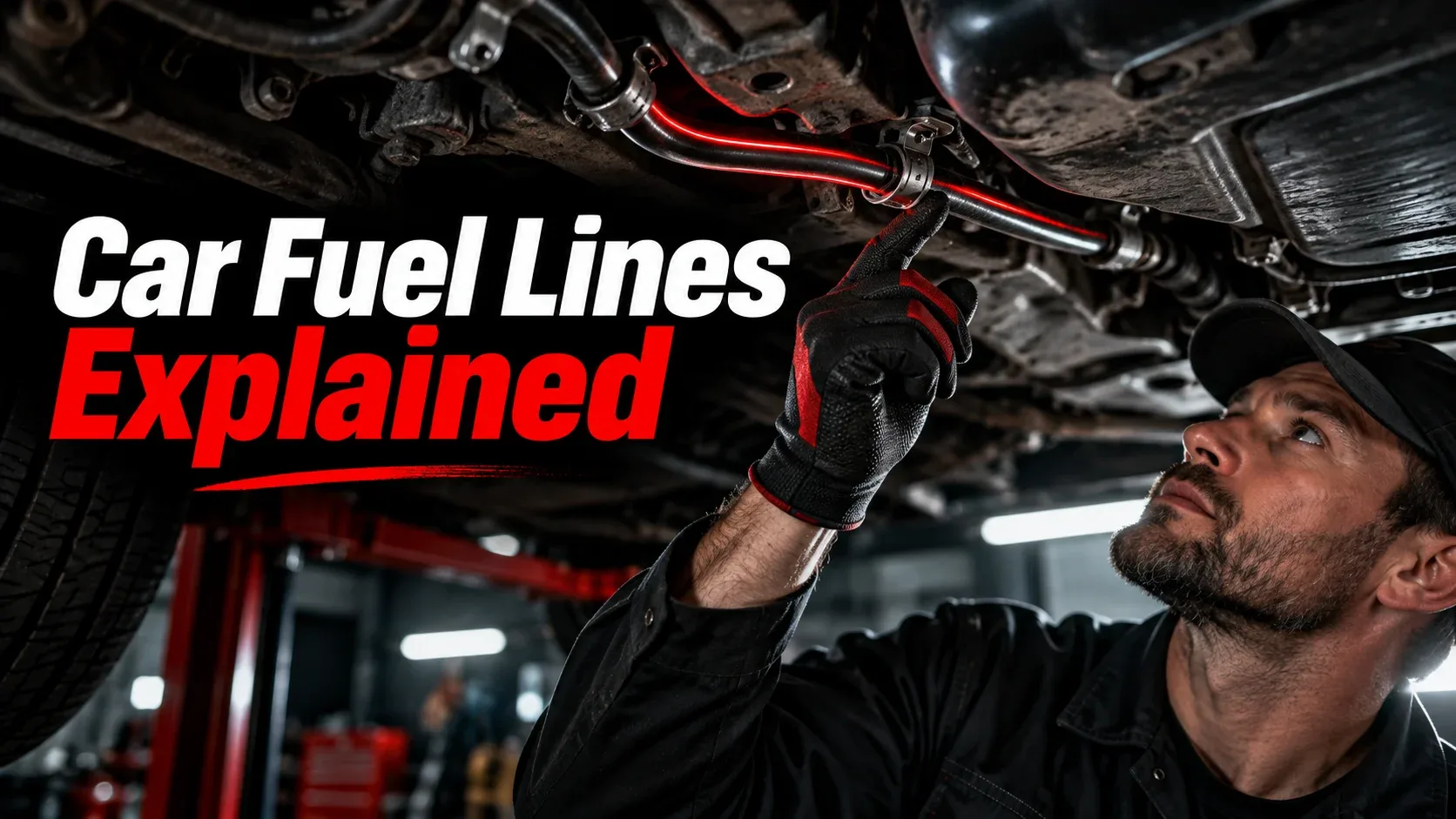
A fuel line carries liquid fuel or fuel vapor through a vehicle’s fuel system. Depending on the vehicle, fuel lines may be made from steel, coated metal, rubber fuel hose, or nylon/plastic tubing.
If you see liquid fuel dripping, spraying, or pooling, treat it as a safety issue. Shut the engine off, keep sparks and flames away, and have the vehicle inspected before driving.
What Is a Fuel Line?
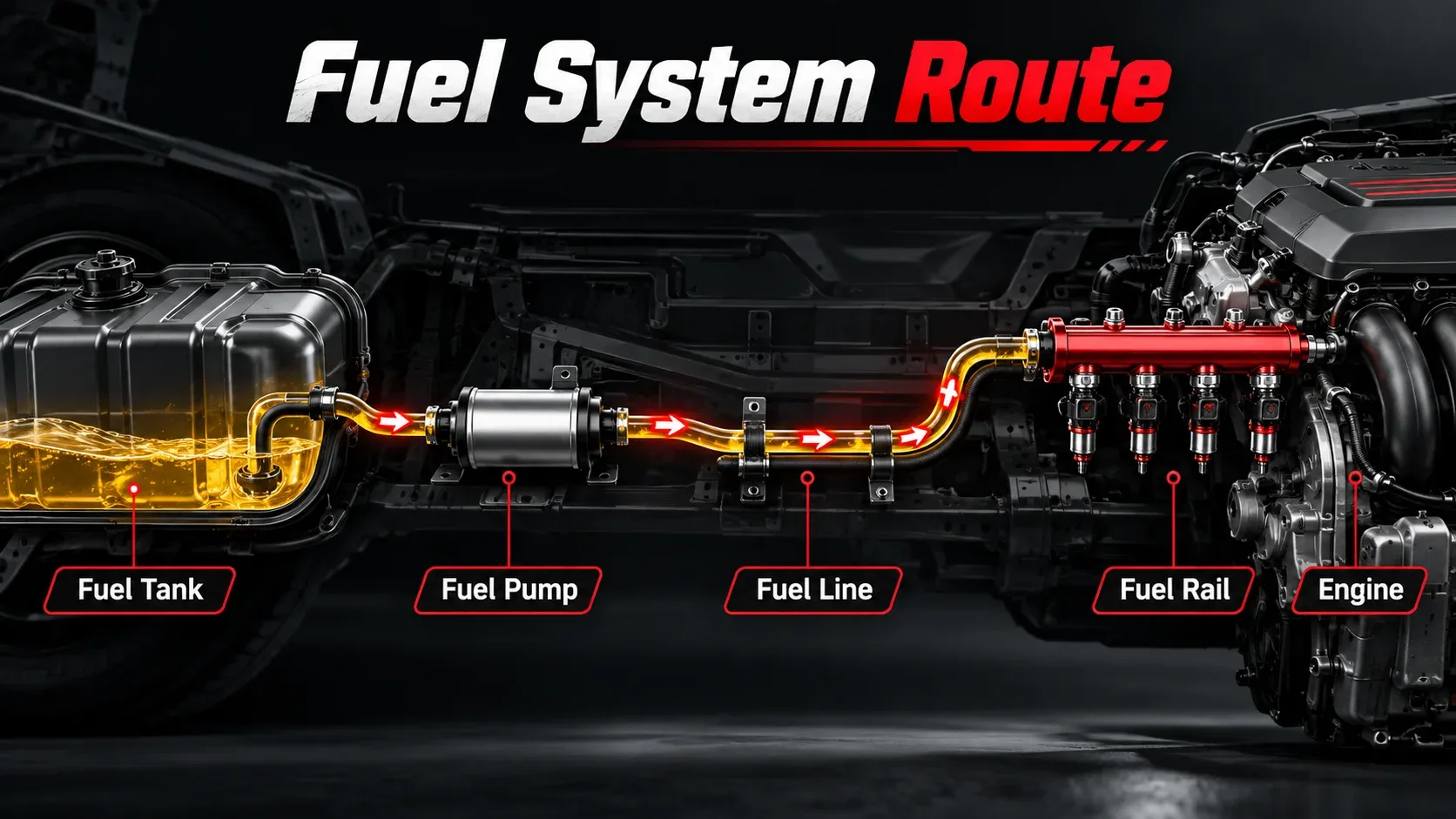
A fuel line is a hose, tube, or hard pipe that carries fuel from one part of the fuel system to another. In a typical vehicle, fuel travels from the tank toward the engine through a supply line. Depending on the system design, there may also be a return line and one or more vapor lines.
Modern fuel systems are designed to maintain controlled pressure and prevent fuel from escaping. That means the line material, fittings, seals, and connections must all be compatible with the vehicle’s fuel type and operating pressure.
Main Types of Fuel Lines
The term fuel lines can refer to several different lines in the system. Their purpose depends on the vehicle design.
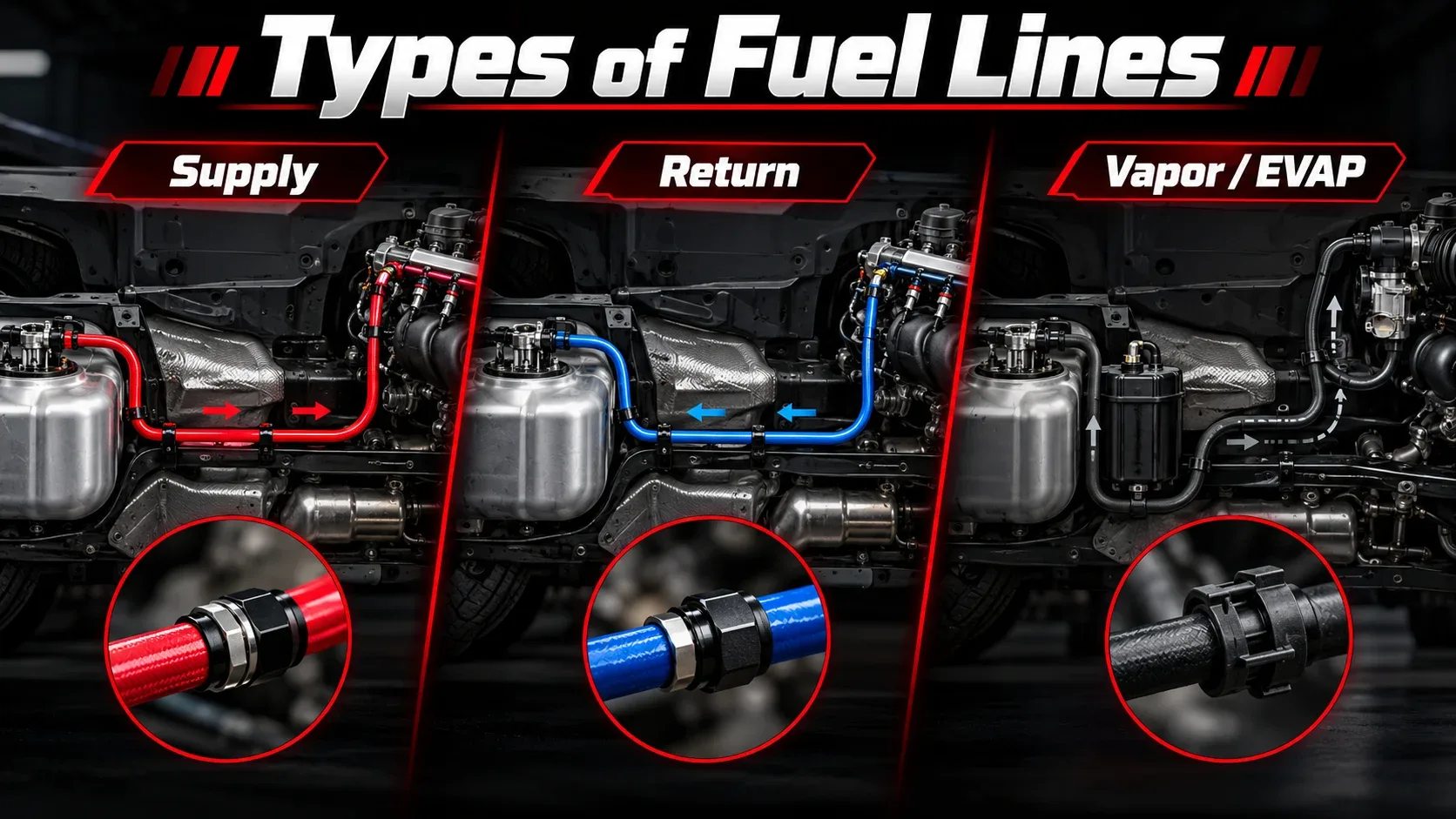
Fuel Supply Line
Carries fuel from the tank toward the engine or fuel rail.
Fuel Return Line
On systems that use one, this sends excess fuel back toward the tank.
Fuel Vapor / EVAP Line
Carries fuel vapor rather than liquid fuel as part of the evaporative-emissions system.
What Are Fuel Lines Made From?
Vehicle manufacturers use different materials depending on location, fuel type, pressure, heat exposure, and corrosion protection requirements.
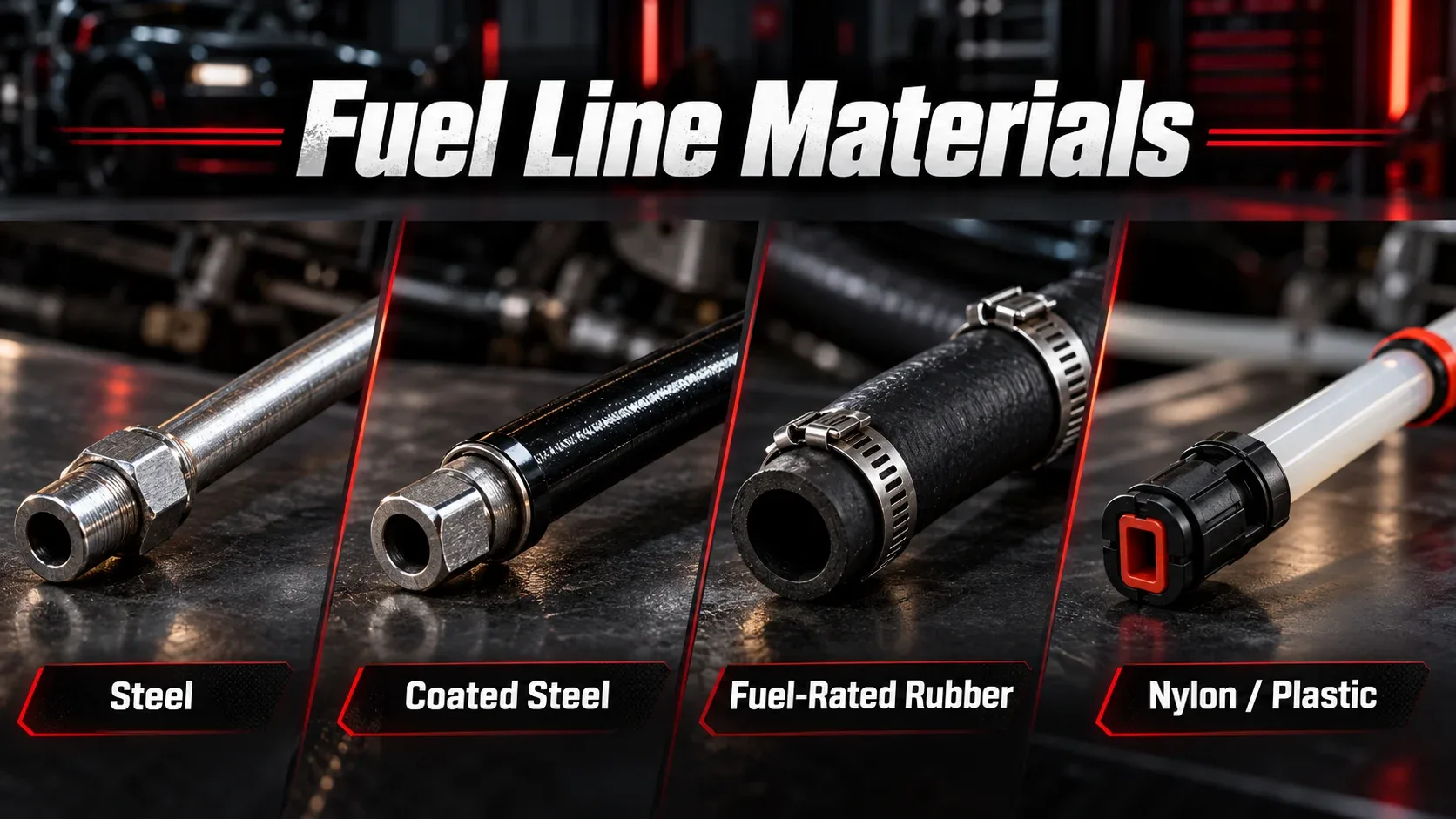
Steel
Strong and capable of handling fuel-system pressure.
Coated Steel
Protective coatings help reduce corrosion underneath the vehicle.
Fuel-Rated Rubber
Used where flexibility is required because of movement or vibration.
Nylon / Plastic
Common on modern vehicles because it is lightweight and corrosion resistant.
Use the Correct Material
Ordinary rubber tubing, vacuum hose, or non-fuel-rated plastic should not be substituted for a proper fuel line. Replacement material must be compatible with the fuel and pressure used by the vehicle.
Where Are Fuel Lines Located?
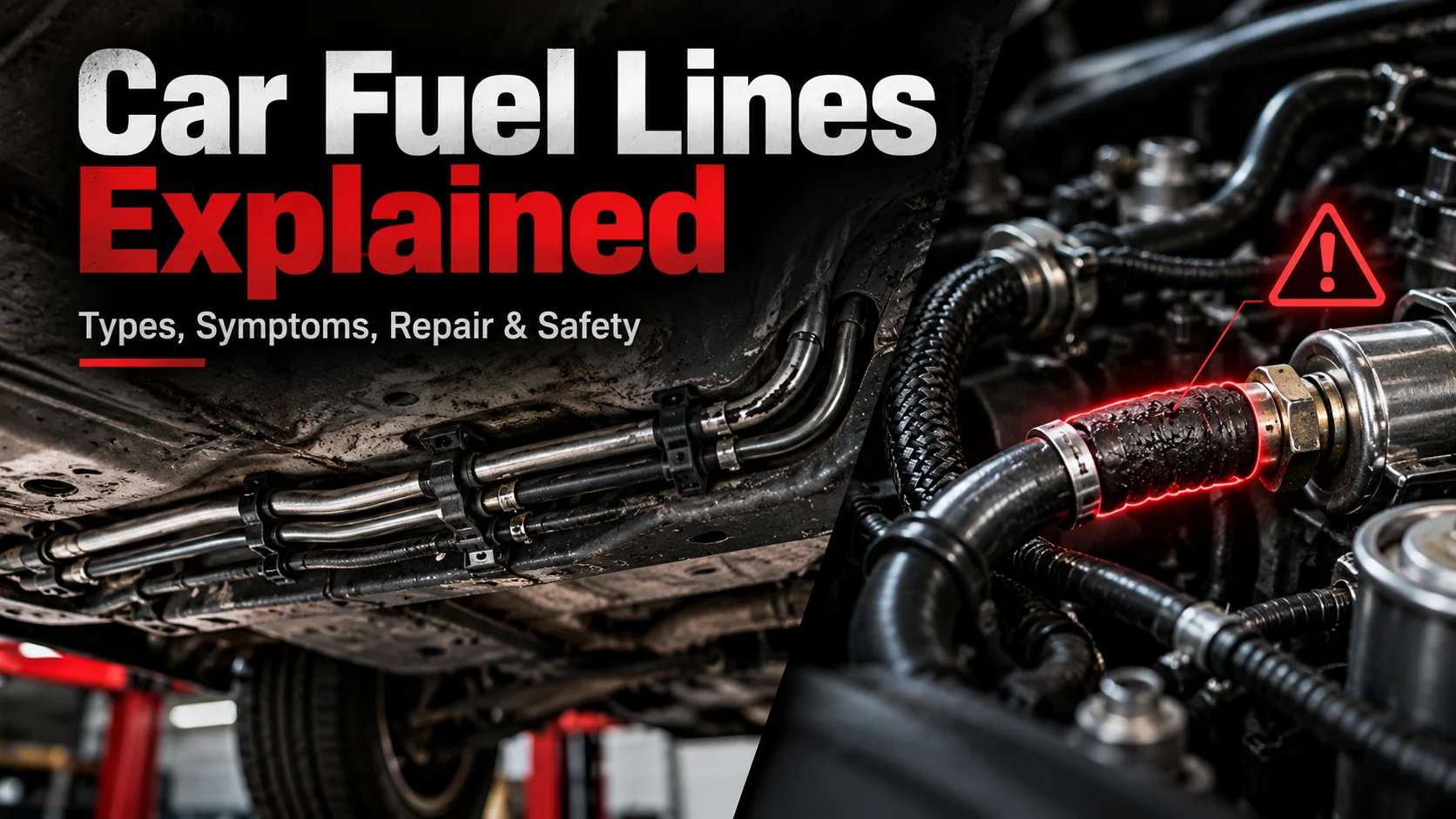
Fuel lines usually begin near the fuel tank and run along the underside of the vehicle toward the engine compartment. They are commonly secured with clips, brackets, shields, or retainers.
In the engine bay, the line connects to components such as the fuel rail, high-pressure pump, or injector system depending on the engine design.
Symptoms of a Bad Fuel Line
A damaged fuel line can cause several symptoms, but none of these signs alone proves that the line is faulty. Inspection is needed to confirm the source.
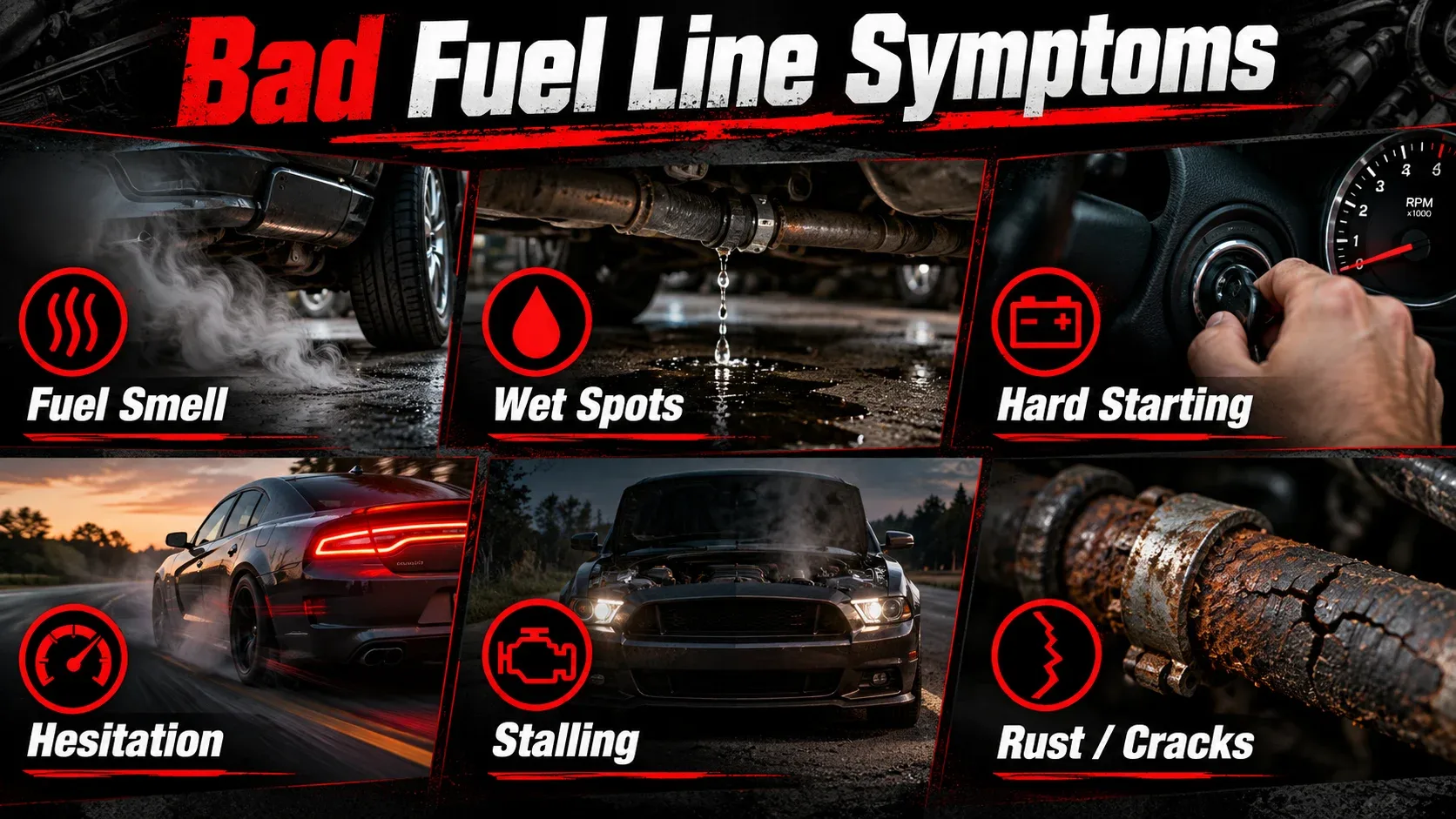
Fuel Smell
A persistent raw fuel odor can indicate a leak somewhere in the system.
Visible Wetness
Damp spots, stains, or wet fittings may indicate escaping fuel.
Hard Starting
Pressure loss can contribute to longer crank times.
Engine Hesitation
Restricted flow or pressure loss may cause hesitation under load.
Stalling
Severe fuel-delivery problems can cause the engine to stall.
Rust or Cracks
Heavy corrosion, cracked hose, or damaged plastic are physical warning signs.
Fuel Leak Warning Signs
A suspected liquid-fuel leak deserves immediate attention because fuel can create a fire hazard.
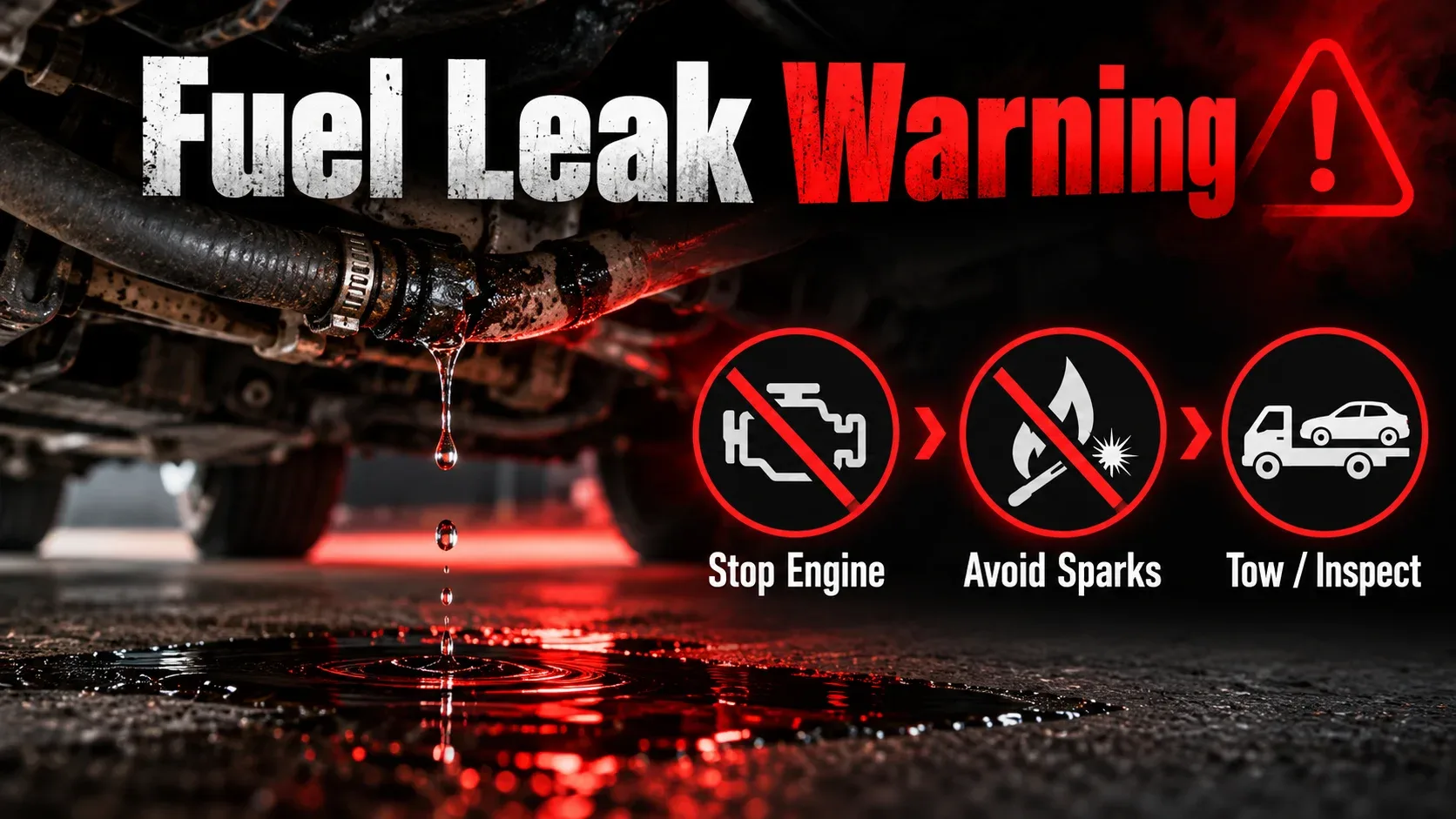
- Fuel visibly dripping from underneath the vehicle
- Fuel spraying from a line, hose, or fitting
- A puddle or wet area with a strong fuel smell
- Wetness around a pressurized fuel connection
- A strong raw-fuel odor that persists after the engine is shut off
If You See Liquid Fuel Leaking
Shut the engine off. Keep cigarettes, flames, sparks, heaters, and other ignition sources away. Do not continue driving until the source has been identified and repaired.
Can You Drive With a Leaking Fuel Line?
If liquid fuel is actively leaking, driving the vehicle is unsafe. Fuel can reach hot exhaust components, electrical equipment, or other ignition sources.
Common Causes of Fuel Line Failure
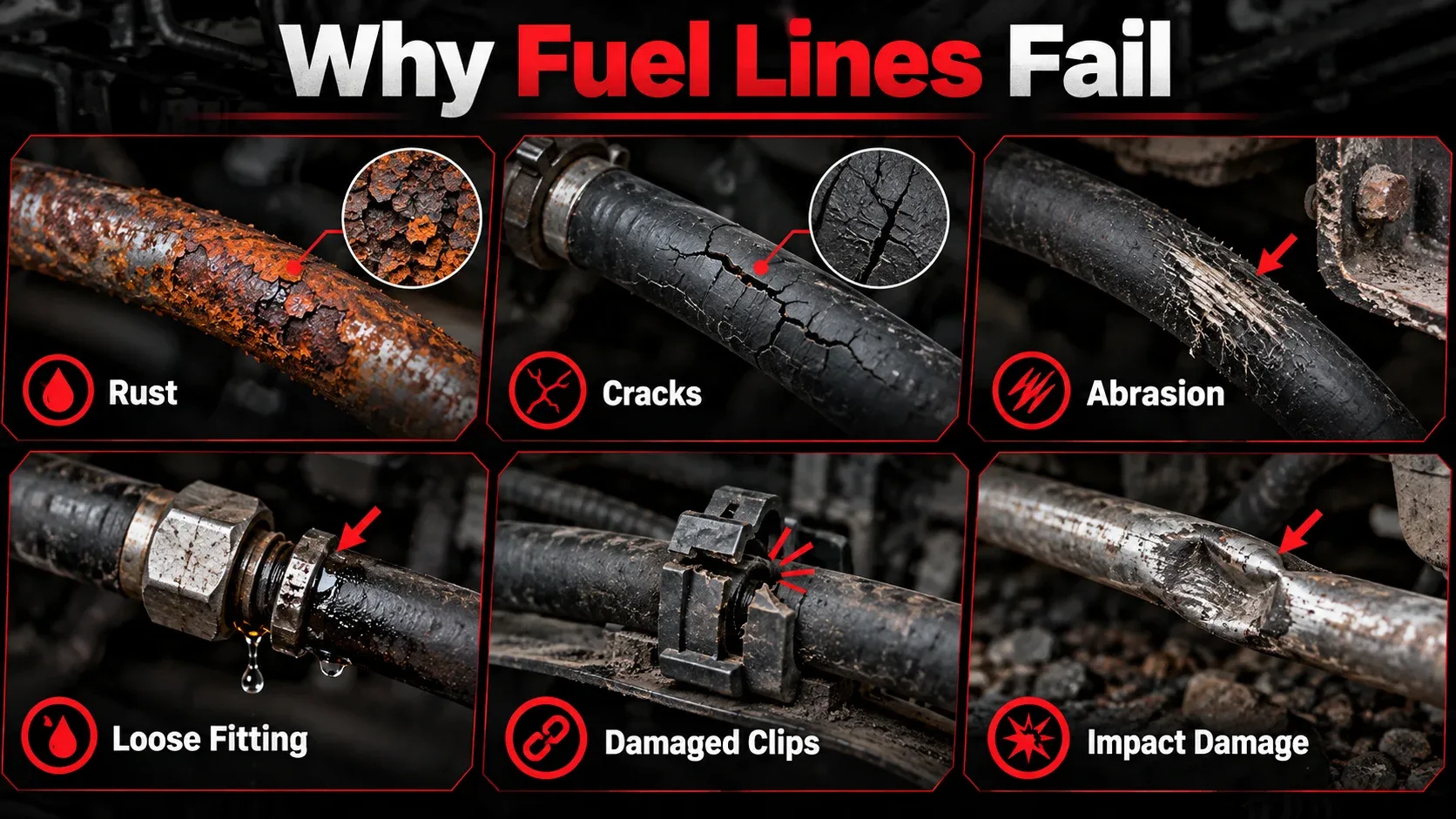
Rust and Corrosion
Moisture and road salt can weaken metal lines over time.
Cracked Rubber
Age, heat, and fuel exposure can cause rubber hose to harden or crack.
Abrasion
A line rubbing against another component can eventually wear through.
Damaged Clips
Missing retainers can allow the line to move and contact sharp surfaces.
Failed Fittings
Seals and connectors can leak when worn or incorrectly installed.
Accident Damage
Road debris, collisions, or improper lifting can crush or puncture a line.
How to Inspect Fuel Lines Safely
A visual inspection may reveal corrosion, cracks, wetness, or damaged fittings. Pressurized fuel systems should always be treated carefully.
- Wet or shiny areas around lines and fittings
- Heavy rust or flaking metal
- Cracks in flexible hose
- Scuffed or abraded nylon lines
- Loose or missing retaining clips
- Damaged quick-connect fittings
- Fuel staining around connection points
Avoid Unsafe Leak Testing
Never use an open flame to look for a fuel leak and never deliberately create sparks around the fuel system.
Fuel Line Repair vs Replacement
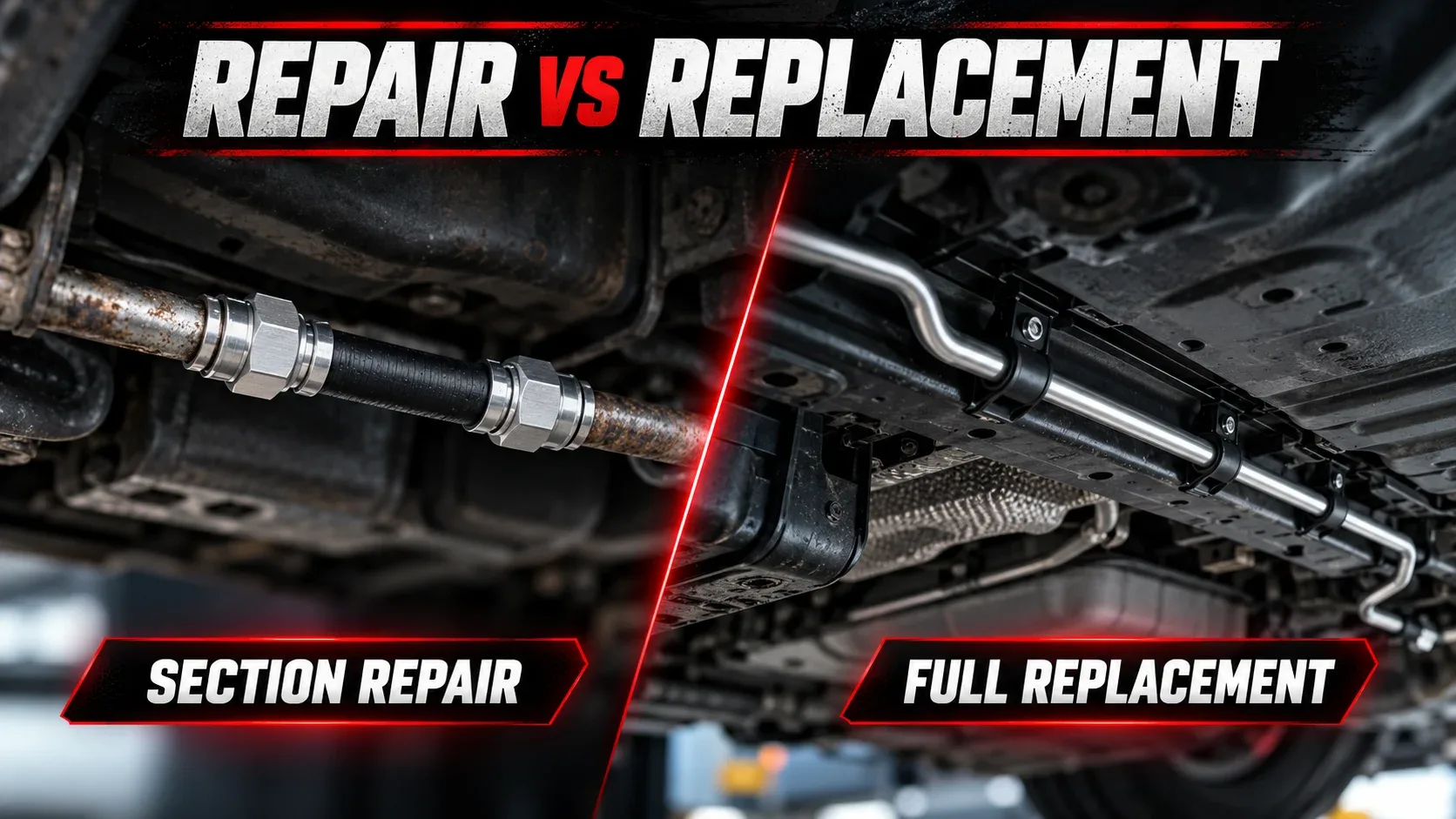
A Localized Repair May Be Possible When
- The manufacturer allows section repair
- Only a limited portion is damaged
- Approved fuel-rated fittings are available
- The surrounding line is still in good condition
Full Replacement May Make More Sense When
- Corrosion extends over a large area
- The line is brittle or cracked in multiple places
- Previous repairs are unsafe
- Damage affects a critical pressurized section
Can You Patch a Fuel Line?
Some fuel-line systems can be repaired using approved connectors, unions, replacement sections, or fuel-rated hose.
Avoid Improvised Repairs
- Electrical tape
- Duct tape
- Ordinary vacuum hose
- Household rubber tubing
- Non-fuel-rated plastic
- Random clamps or fittings
Fuel Line Repair Cost
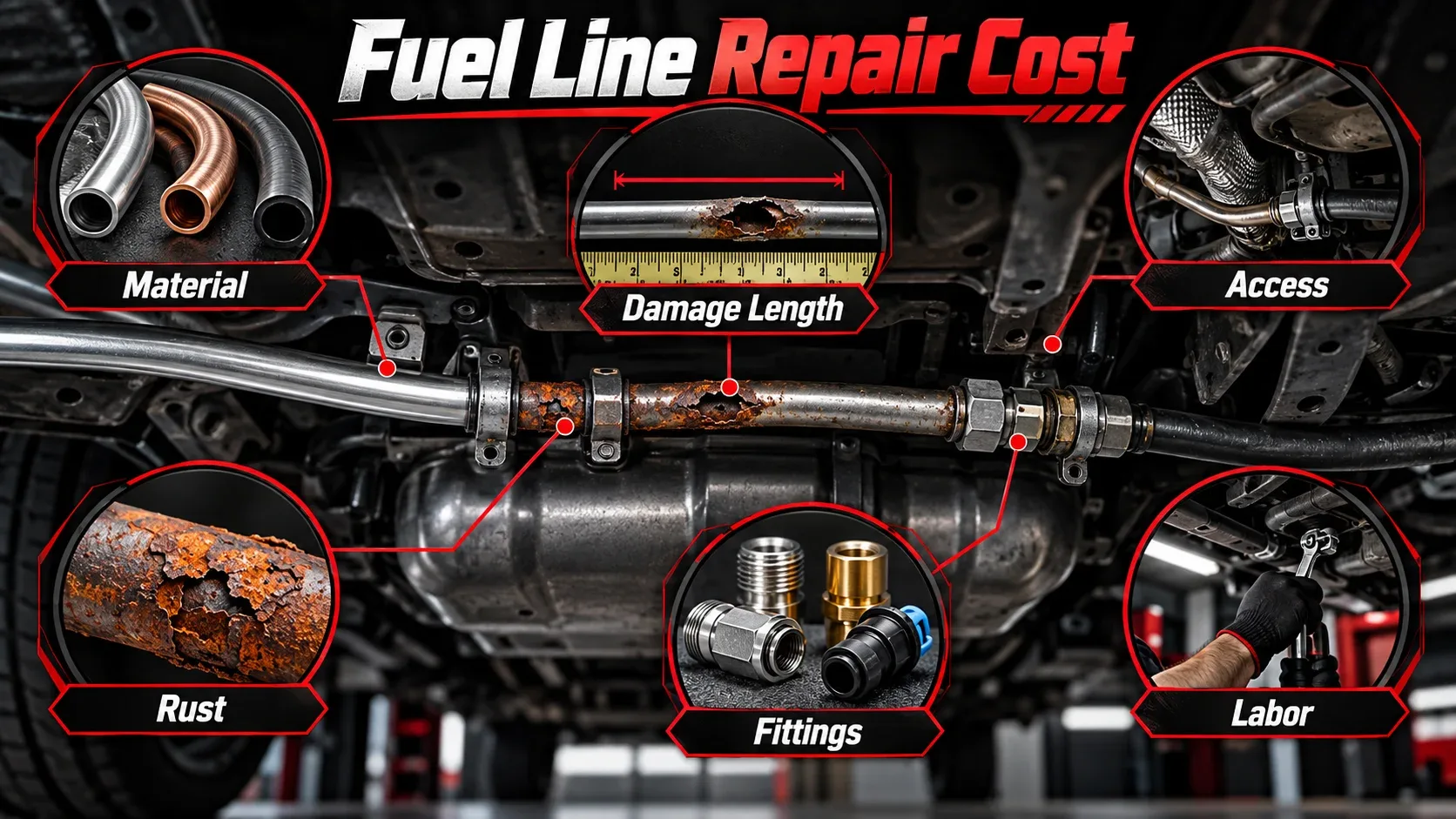
Fuel line repair cost varies widely because replacing a short flexible section is very different from replacing a long rusted hard line running from the tank to the engine.
| Cost Factor | Why It Matters |
|---|---|
| Fuel Line Material | Steel, nylon, and flexible hose require different repair methods. |
| Length of Damage | A small section is usually simpler than replacing an entire line. |
| Access | Some lines run above tanks, shields, or subframes. |
| Corrosion | Heavy rust can greatly increase labor. |
| Fittings | Special connectors and seals may increase parts cost. |
| Labor | Vehicle design and regional labor rates affect the total bill. |
| Fuel Tank Removal | Some repairs require lowering or removing the tank. |
DIY vs Professional Fuel Line Repair
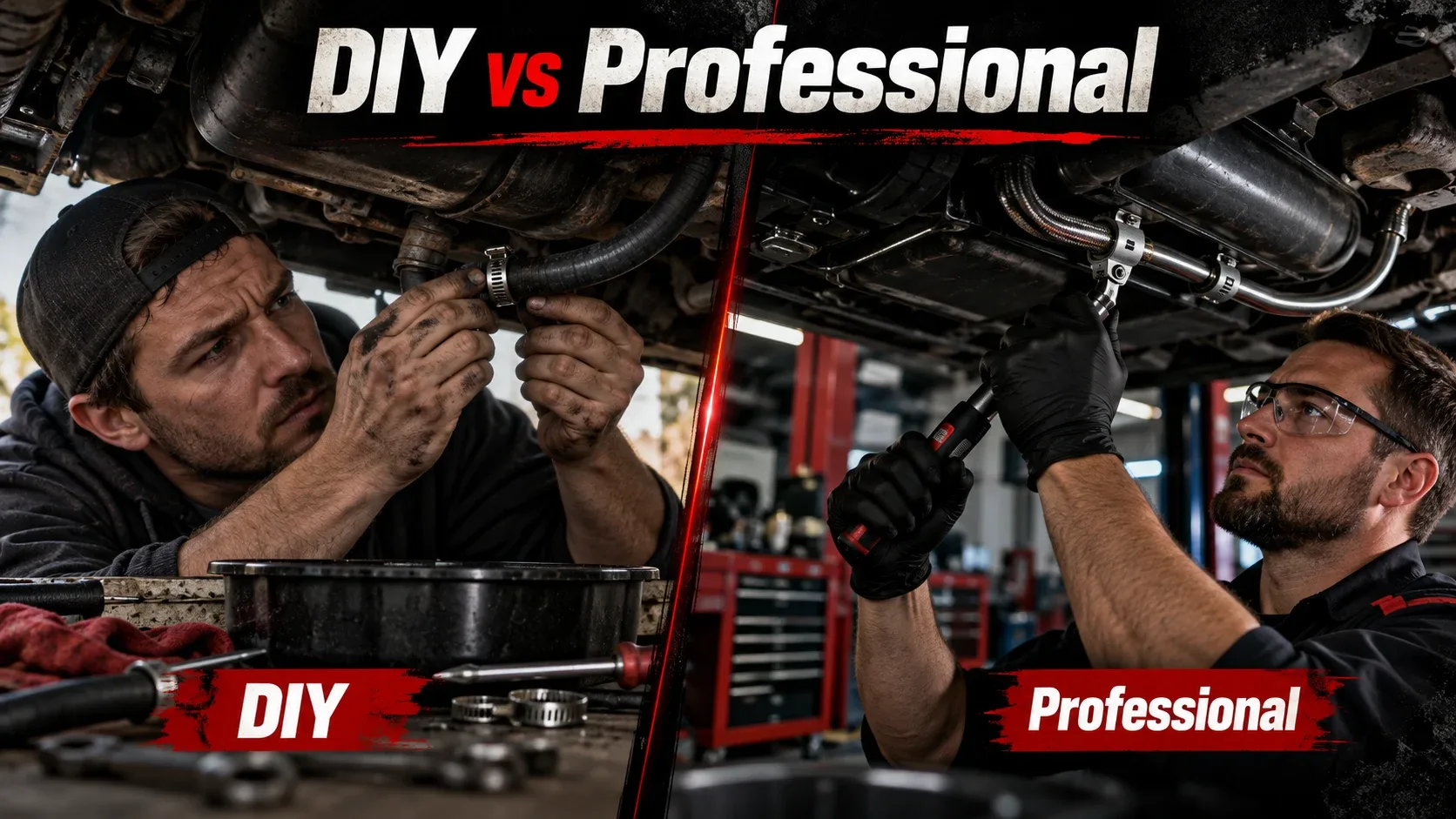
DIY May Be Reasonable When
- The procedure is clearly documented
- The system is low pressure
- The line is easily accessible
- Correct fuel-rated parts are available
Professional Repair Is Better When
- Fuel is actively leaking
- The vehicle has extensive rust
- The line runs above the tank
- High-pressure direct injection is involved
- The leak source is uncertain
Gasoline vs Diesel Fuel Lines
Gasoline and diesel systems both use fuel lines, but operating pressures can be very different. Modern diesel common-rail systems and gasoline direct-injection systems can include extremely high-pressure sections.
High-Pressure Fuel Systems Require Extra Caution
Never loosen a high-pressure fuel line while the system is operating or still pressurized.
Fuel Line vs Brake Line
| Feature | Fuel Line | Brake Line |
|---|---|---|
| Purpose | Carries fuel or fuel vapor | Carries hydraulic brake fluid |
| System | Fuel delivery / EVAP | Hydraulic braking system |
| Connections | Fuel-specific fittings | Brake-specific flare fittings |
| Failure Risk | Fuel leakage and fire hazard | Loss of braking ability |
How Fuel Line Problems Affect the Car
Questions to Ask a Mechanic About Fuel Line Repair
- Where exactly is the fuel leak or damage?
- Is the line rusted, cracked, punctured, or leaking at a fitting?
- Does the full line need replacement?
- Can the damaged section be repaired using an approved method?
- What material will be used for the replacement?
- Is the new line rated for the vehicle’s fuel and pressure?
- Are nearby lines or fittings also corroded?
- Does the fuel tank need to be removed?
- Will the system be pressure-tested after repair?
Fuel Line FAQs
What is a fuel line?
A fuel line carries liquid fuel or fuel vapor between parts of the vehicle’s fuel system.
How do I know if my fuel line is bad?
Common signs include fuel odor, visible wetness, rust, cracks, hard starting, hesitation, or a visible leak.
Can I drive with a leaking fuel line?
If liquid fuel is visibly leaking, shut the engine off and avoid driving until the problem is repaired.
What causes fuel lines to rust?
Moisture, road salt, damaged protective coatings, age, and underbody exposure can all contribute to corrosion.
Can a fuel line be repaired?
Some lines can be repaired using approved replacement sections and fuel-rated fittings, depending on the vehicle and system pressure.
Can a bad fuel line cause hard starting?
Yes, a leak or pressure loss may contribute to hard starting, although many other problems can cause the same symptom.
Are fuel lines pressurized?
Most modern fuel supply lines operate under pressure, and some direct-injection systems operate at very high pressure.
Bottom Line
Fuel lines are essential parts of the fuel-delivery system. Rust, cracks, damaged fittings, abrasion, and age can cause leaks or pressure problems. If liquid fuel is dripping, spraying, or pooling, shut the engine off, keep ignition sources away, and have the vehicle repaired before driving again.