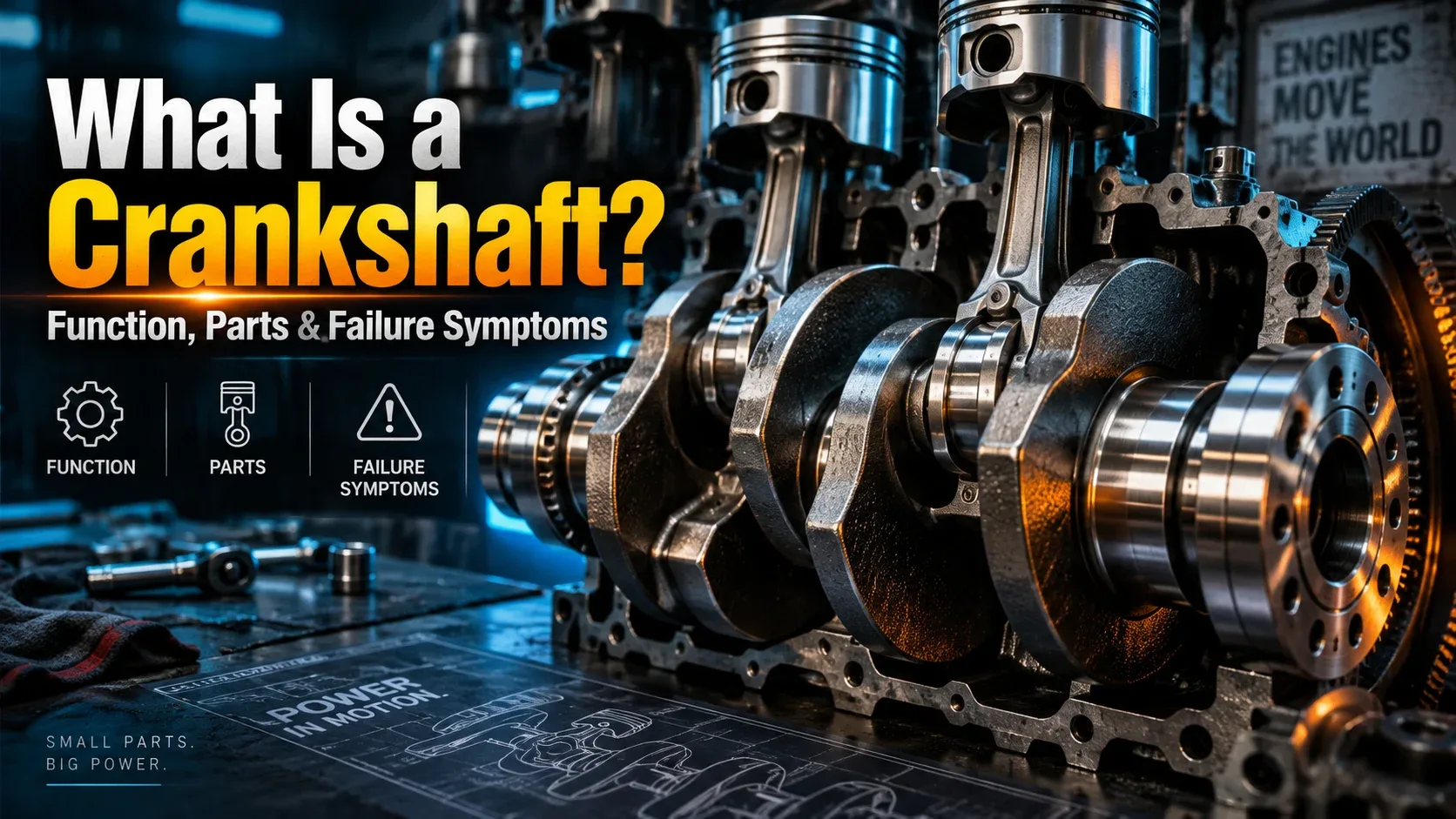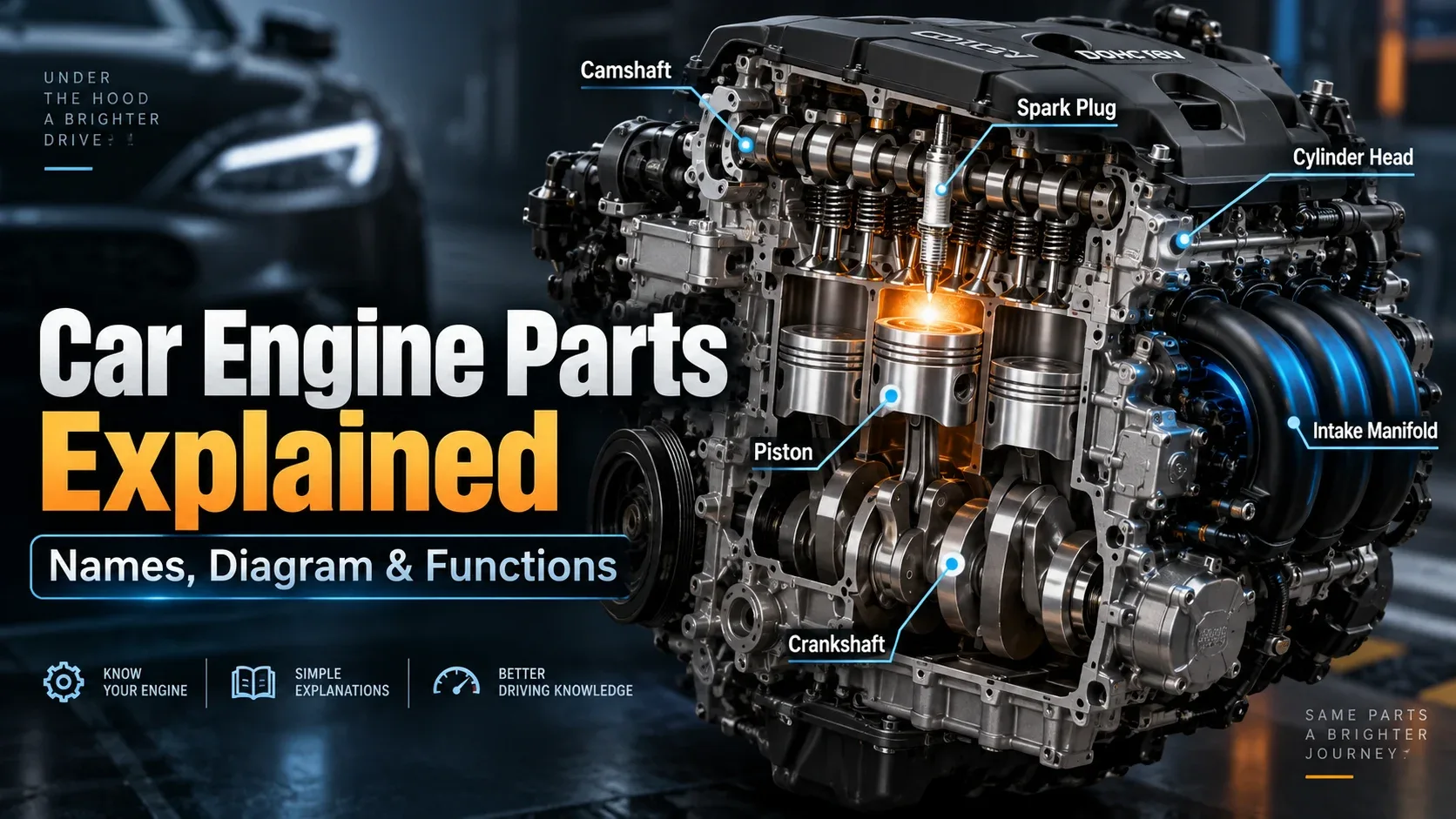

Most drivers never see the crankshaft, yet it is one of the engine’s most important moving parts. If you are investigating engine noise, vibration, an oil-pressure warning, or a used car’s mechanical condition, understanding the crankshaft can help you ask better questions and avoid expensive guesswork.
What is a crankshaft?
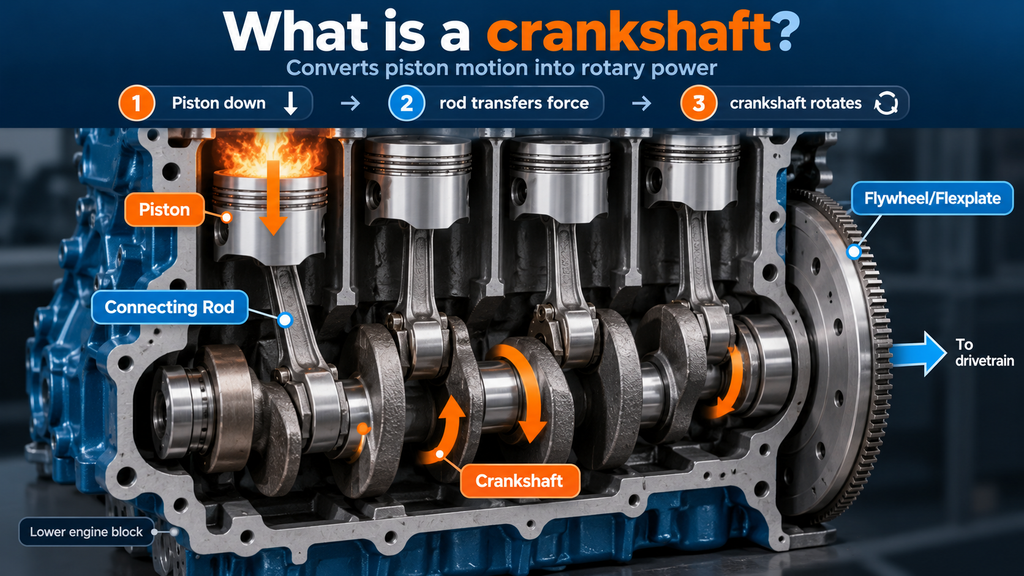
For anyone searching “crankshaft define,” the plain-language answer is this: a crankshaft is the rotating shaft inside an engine that converts the pistons’ up-and-down movement into rotational motion. It sits in the lower part of the engine block, supported by main bearings, while connecting rods link it to the pistons.
The basic power path is:
combustion pushes the piston down → the connecting rod transfers force → the crankshaft rotates → the drivetrain receives rotary power.
A flywheel in a manual-transmission vehicle, or a flexplate connected to an automatic transmission, helps transfer and smooth that rotation.
You may also see the term written informally as “crank shaft,” but “crankshaft” is the standard spelling. Think of it as a carefully balanced mechanical converter: it changes straight-line piston travel into the circular motion needed to turn the transmission, driveshafts, and wheels.
| Important limitation: Noise, vibration, low oil pressure, and metal in the oil can point to crankshaft or bearing damage, but they can also come from other engine faults. A qualified technician should confirm internal damage before major repairs or engine replacement. |
How a crankshaft works in a four-stroke engine
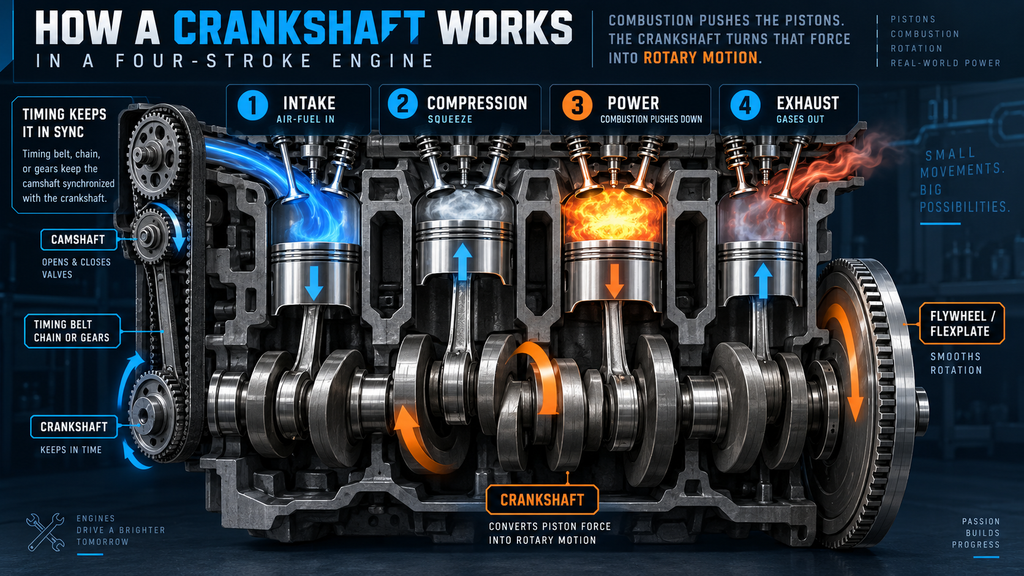
In a typical four-stroke engine, several pistons work together so the crankshaft can keep rotating smoothly. The crankshaft does not create combustion; it receives force from combustion and converts that force into usable rotary power.
- Intake: The piston moves down while the intake valve opens, drawing in an air-and-fuel mixture in a gasoline engine, or air in a diesel engine.
- Compression: The piston moves up with the valves closed, compressing the charge before ignition.
- Power: Ignition and combustion force the piston down. The connecting rod pushes on the crankpin, creating torque that turns the crankshaft.
- Exhaust: The piston moves up again while the exhaust valve opens, pushing out combustion gases.
The flywheel or flexplate stores rotational energy and helps smooth the pulses from individual power strokes. The drivetrain then carries the crankshaft’s rotation through the clutch or torque converter, transmission, final drive, and axles. A timing belt, timing chain, or gears keep the camshaft synchronized with the crankshaft so the valves open and close at the correct moments. Some engines also use the crankshaft position signal to control ignition and fuel injection.
Crankshaft parts and what they do
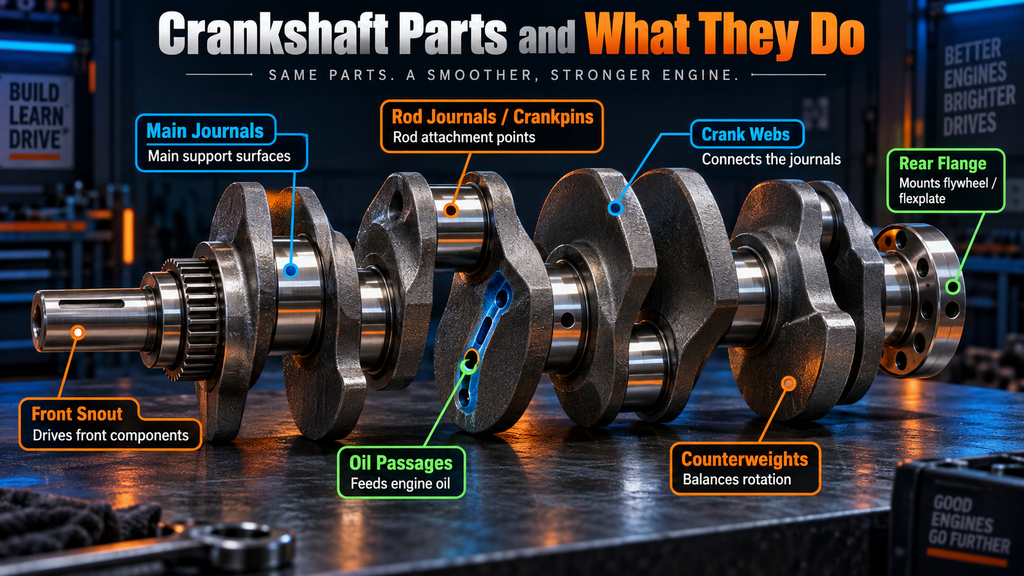
| Part | Beginner-friendly purpose |
| Main journals | Precision-machined round surfaces supported by the main bearings. They establish the crankshaft’s primary centerline in the engine block. |
| Rod journals or crankpins | Offset journals where the connecting rods attach. Their offset from the main centerline creates the crank throw and piston travel. |
| Crank webs | Heavy sections between journals that join the crankshaft together and help carry the forces from the connecting rods. |
| Counterweights | Balanced masses that oppose rotating and reciprocating forces, reducing vibration and bearing loads. |
| Oil passages | Internal drilled routes that carry pressurized engine oil from the main journals toward the rod journals and bearing surfaces. |
| Nose or front snout | The front end, which may drive the timing system, an accessory pulley, or other engine components. |
| Rear flange | The mounting surface at the back of the crankshaft for the flywheel or flexplate, depending on the vehicle. |
Crankshaft bearings and lubrication
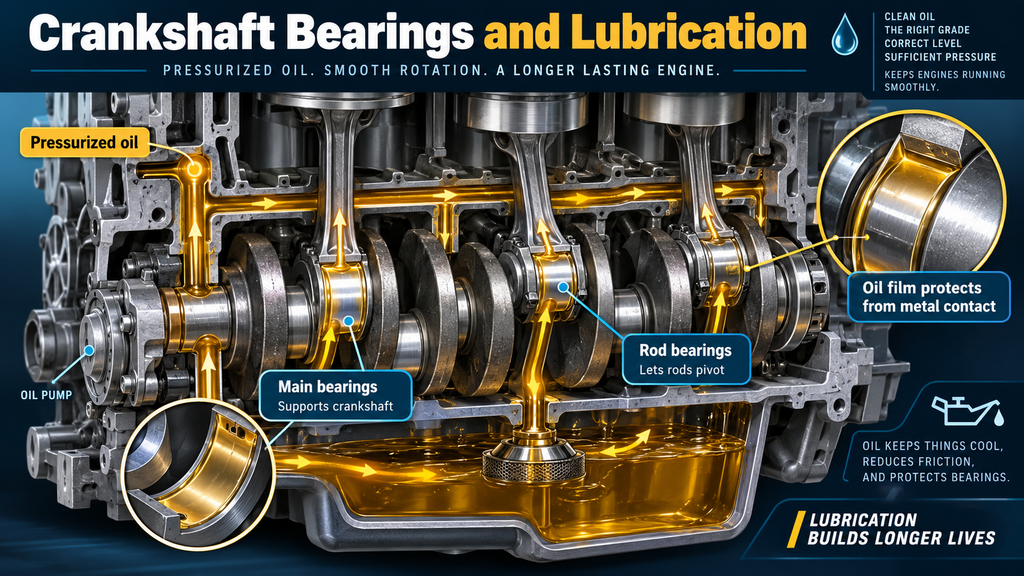
Crankshaft bearings are not ball bearings. They are precision-fitted, replaceable bearing shells that support a thin film of pressurized engine oil between the crankshaft and the bearing surface. That oil film allows the crankshaft to rotate with very little direct metal-to-metal contact.
| Bearing type | Location and job |
| Main bearings | Fit between the engine block, main caps, and the crankshaft’s main journals. They support the crankshaft and control its position in the block. |
| Connecting-rod bearings | Fit between each connecting rod and its crankpin or rod journal. They allow the rods to pivot as the crankshaft rotates. |
Clean oil, the correct oil grade, an adequate oil level, and sufficient oil pressure are all important. Oil travels through the engine’s passages to carry away heat, reduce friction, and protect the journals and bearings from direct contact.
Oil starvation means the moving parts receive too little oil. It can result from a low oil level, a failed oil pump, a blocked pickup, a severe leak, excessive oil consumption, or another lubrication fault. As the oil film collapses, bearing material can wipe away, journals can score or discolor, clearances can change, and a bearing may spin in its housing. Continued operation can damage the crankshaft, connecting rods, block, or entire engine.
Crankshaft vs. camshaft: what is the difference?
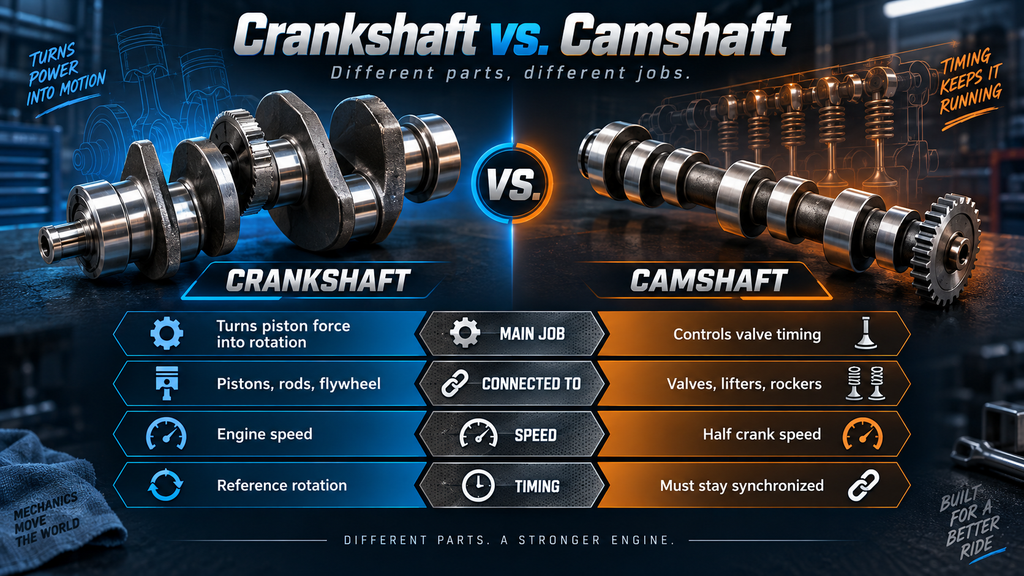
The crankshaft and camshaft work together but perform different jobs. The crankshaft is primarily a power-conversion and output component; the camshaft controls valve timing.
| Feature | Crankshaft | Camshaft |
| Main job | Converts piston movement into rotary motion and sends torque toward the drivetrain. | Opens and closes the intake and exhaust valves at the required times. |
| Connected to | Connecting rods, pistons, flywheel or flexplate, and drivetrain. | Valve train components such as lifters, rockers, or followers. |
| Typical speed | Turns at engine speed. | In a conventional four-stroke engine, turns at half crankshaft speed. |
| Timing relationship | Provides the reference rotation for piston position and engine timing. | Must remain synchronized with the crankshaft to prevent incorrect valve operation. |
Frequently asked questions about crankshafts
What is a crankshaft?
A crankshaft is the rotating shaft inside an engine that converts the pistons’ up-and-down movement into rotational motion. Connecting rods transfer piston force to offset crankpins, and the crankshaft sends rotary power toward the flywheel or flexplate, transmission, and drivetrain.
What does a crankshaft do?
It changes the straight-line movement created by combustion into continuous rotary motion. Its counterweights help balance forces, while its oil passages deliver lubrication to the journals and bearings. It also provides the timing reference used to coordinate piston position and valve operation.
What does a bad crankshaft sound like?
A damaged crankshaft or its bearings may produce a deep, dull knock from the lower engine that changes with engine speed or load. However, tapping, rattling, ticking, and knocking can also come from valve-train parts, piston problems, accessories, mounts, or drivetrain components. Sound alone cannot confirm the fault.
Can a crankshaft be repaired?
Some crankshafts can be polished, ground for approved undersize bearings, or rebuilt; others require replacement. The decision depends on journal measurements, hardness, cracks, alignment, runout, oil passages, and the manufacturer’s repair limits. A crankshaft should not be machined and reused automatically just because the damage looks small.
How long does a crankshaft last?
There is no reliable universal mileage figure. A crankshaft can last for the useful life of an engine when oil quality, oil level, temperature, clearances, operating loads, and assembly quality remain within design limits. Oil starvation, contamination, severe over-revving, overheating, or an untreated bearing failure can shorten its life dramatically.