Most transmission fluid changes cost far less than transmission repairs. Learn typical price ranges, what a shop is actually charging for, and when your vehicle may need service.
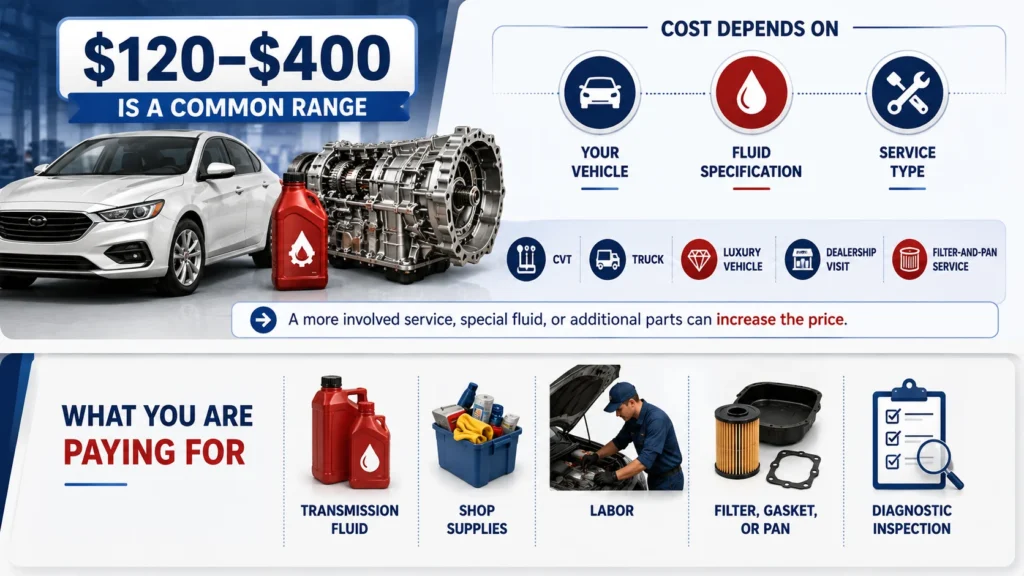
$120–$400 is a common range
A typical transmission fluid change cost depends on your vehicle, the fluid specification, and whether the shop performs a basic drain-and-fill or a more involved service. A CVT, truck, luxury vehicle, dealership visit, or filter-and-pan service can move the price higher.
If you are asking how much does a transmission fluid change cost, the honest answer is that there is no single price. A basic transmission fluid replacement cost can be modest when the vehicle uses common fluid and the job is a simple drain-and-fill. The cost rises when a transmission needs proprietary fluid, a new filter, a pan gasket, extra labor, or diagnostic work. The best comparison is an itemized estimate that identifies the fluid type, quantity, labor, and exact service procedure.
What you are paying for
The invoice usually combines transmission fluid, shop supplies, labor, and sometimes a filter, gasket, pan cleaning, or diagnostic inspection.
Typical transmission fluid change price ranges
These broad US pricing ranges are useful for budgeting, not for replacing a written quote. Local labor rates, vehicle design, and fluid requirements can change the final number.
| Service type | Typical price range | What is commonly included |
|---|---|---|
| Basic drain-and-fill | $120–$250 | A portion of old fluid is drained and replaced with the correct new fluid. |
| Fluid and filter / pan service | $220–$450 | May include pan removal, cleaning, a filter or strainer, and a new gasket. |
| Transmission fluid flush | $180–$500+ | Uses more fluid and equipment; only appropriate when the manufacturer or qualified technician recommends it. |
| CVT fluid change | $160–$520 | Often costs more because CVT-specific fluid and procedures can be more exacting. |
Drain-and-fill vs. transmission fluid flush cost
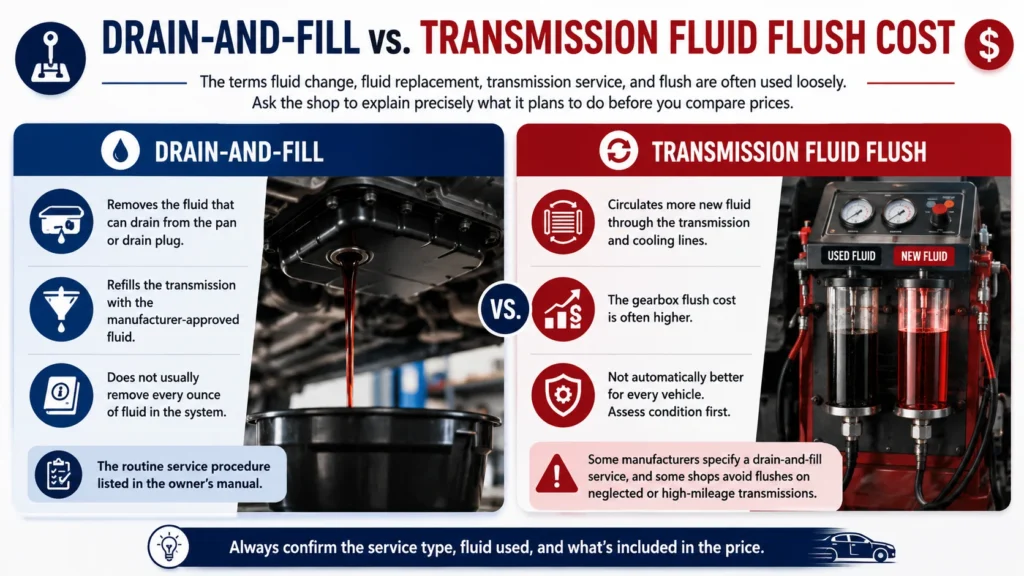
The terms fluid change, fluid replacement, transmission service, and flush are often used loosely. Ask the shop to explain precisely what it plans to do before you compare prices.
Drain-and-fill
A drain-and-fill removes the fluid that can drain from the pan or drain plug, then refills the transmission with the manufacturer-approved fluid. It does not usually remove every ounce of fluid in the system. For many vehicles, this is the routine service procedure listed in the owner’s manual.
Transmission fluid flush
A flush generally circulates more new fluid through the transmission and cooling lines, so the gearbox flush cost is often higher. It is not automatically better for every vehicle. Some manufacturers specify a drain-and-fill instead, and some shops avoid flushes on neglected or high-mileage transmissions without first assessing the condition.
Why the cost of a transmission fluid change varies
Two vehicles can receive the same named service and have very different bills. These are the biggest drivers of the transmission oil change price.
- Fluid specification and quantity: Many modern automatics and CVTs need proprietary fluid that costs more than a common universal product.
- Transmission design: Accessing a filter, pan, fill port, or sealed transmission can require more labor and special equipment.
- Shop labor rate: Dealership labor rates are often higher than independent repair shops, especially in high-cost metro areas.
- Extra repairs or diagnosis: Leaks, damaged pans, contaminated fluid, warning lights, and shift concerns can add work beyond routine maintenance.
How often should transmission fluid be changed?
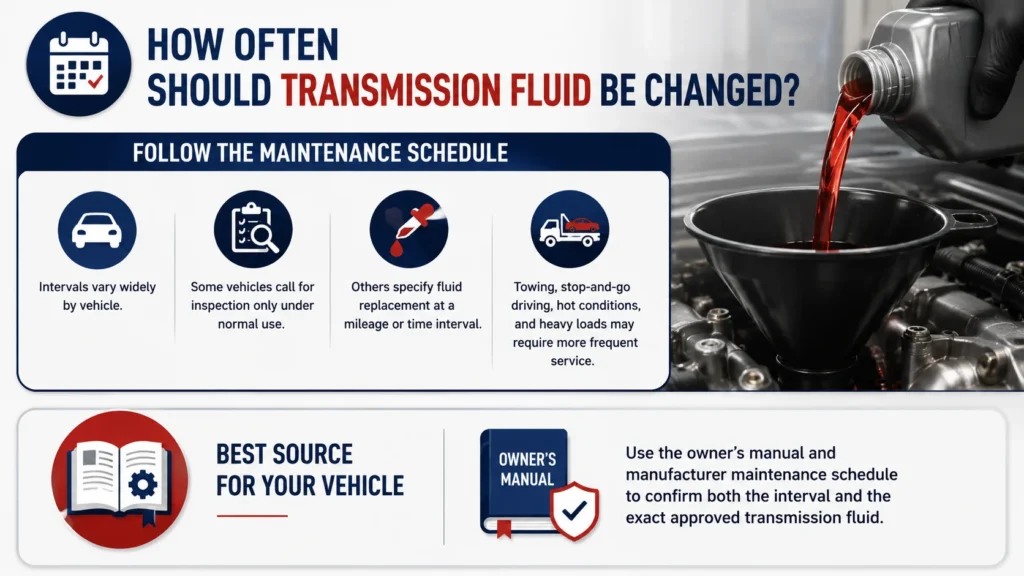
Follow the maintenance schedule for your exact year, make, model, engine, and transmission. Intervals vary widely: some vehicles call for inspection only under normal use, while others specify fluid replacement at a mileage or time interval. Towing, frequent stop-and-go driving, hot conditions, and heavy loads may call for a more demanding schedule.
Best source for your vehicle
Use the owner’s manual and manufacturer maintenance schedule to confirm both the interval and the exact approved transmission fluid.
How do you know when your transmission fluid is low?
Not every vehicle has a dipstick or allows an easy home fluid-level check. Still, certain changes may mean it is time to inspect the transmission and look for leaks.
- Delayed engagement when shifting from Park into Drive or Reverse.
- Slipping, shuddering, surging, or unusually rough shifts.
- A visible red, brown, or dark fluid leak beneath the vehicle.
- A burning smell, overheating warning, or a transmission-related warning light.
These symptoms do not prove that low fluid is the cause, and fresh fluid does not automatically fix a transmission problem. If symptoms are new, severe, or accompanied by a warning light, ask for a proper diagnosis before authorizing a maintenance-only service.
Three questions to ask before approving service
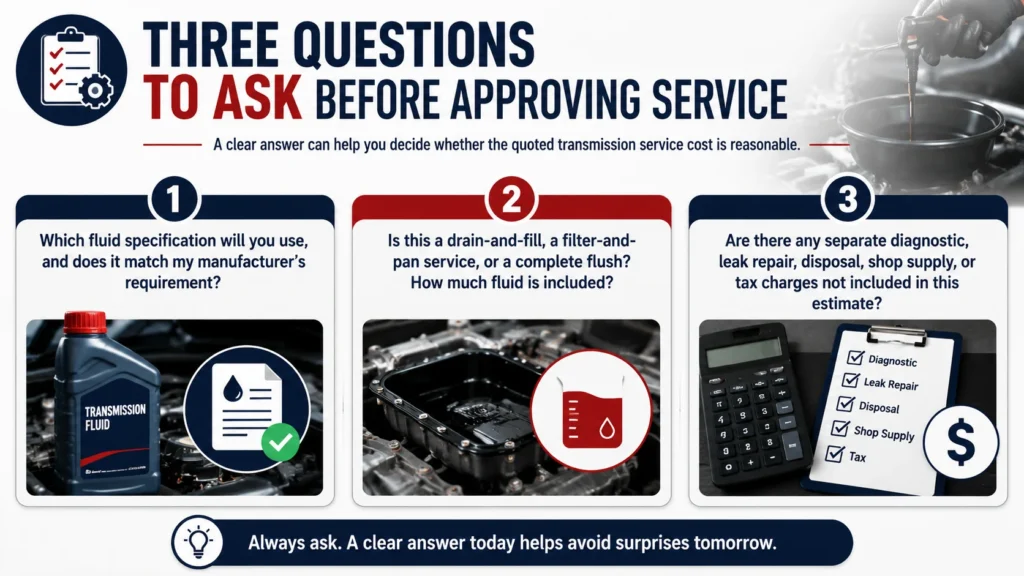
A clear answer can help you decide whether the quoted transmission service cost is reasonable.
- Which fluid specification will you use, and does it match my manufacturer’s requirement?
- Is this a drain-and-fill, a filter-and-pan service, or a complete flush? How much fluid is included?
- Are there any separate diagnostic, leak repair, disposal, shop supply, or tax charges not included in this estimate?
Transmission fluid change cost FAQ
How much is a transmission fluid change at a dealership?
A dealership may charge more than an independent shop because of higher labor rates, OEM fluid, and brand-specific procedures. The higher price is not automatically unreasonable, but compare the exact service, fluid specification, parts, and warranty coverage rather than comparing one headline price.
How much does it cost to replace transmission fluid in a CVT?
A CVT fluid change cost often falls around $160 to $520, depending on capacity, fluid type, shop rate, and whether the service includes a filter or additional inspection. CVTs are especially important to service with the correct manufacturer-approved fluid.
Can I change transmission fluid myself to save money?
Some older vehicles are straightforward, but many newer transmissions need the vehicle level, fluid at a specified temperature, and a precise fill procedure. Using the wrong fluid or setting the level incorrectly can be expensive. Review the factory procedure before attempting it.
Is it worth changing old transmission fluid?
Routine service at the manufacturer’s interval can be worthwhile preventive maintenance. If the transmission already slips, makes noise, or shifts poorly, first get it assessed. A fluid change may be part of the recommendation, but it is not a guaranteed cure for internal wear or mechanical faults.