Mechanical Engineering & Tools / Practical Guide
Taking apart an old frame, trimming a pipe, or cutting through a wall stud? Learn what makes this fast-moving saw useful—and when to reach for a different tool.
Quick answer
A reciprocating saw is a handheld power saw whose straight blade rapidly moves back and forth. It is especially suited to demolition, remodeling, pipe cutting, and rough cuts in wood, metal, and plastic when fitted with the correct blade. Its strength is versatility—not cabinetmaking precision.
01 / Meet the tool
What Is a Reciprocating Saw?
Picture yourself renovating a room. A damaged door frame needs to come out, and a length of exposed pipe is blocking access. A handsaw could work in some situations, but there may be too little room for long manual strokes. A reciprocating saw lets a motor do the repeated cutting motion while you guide the tool.
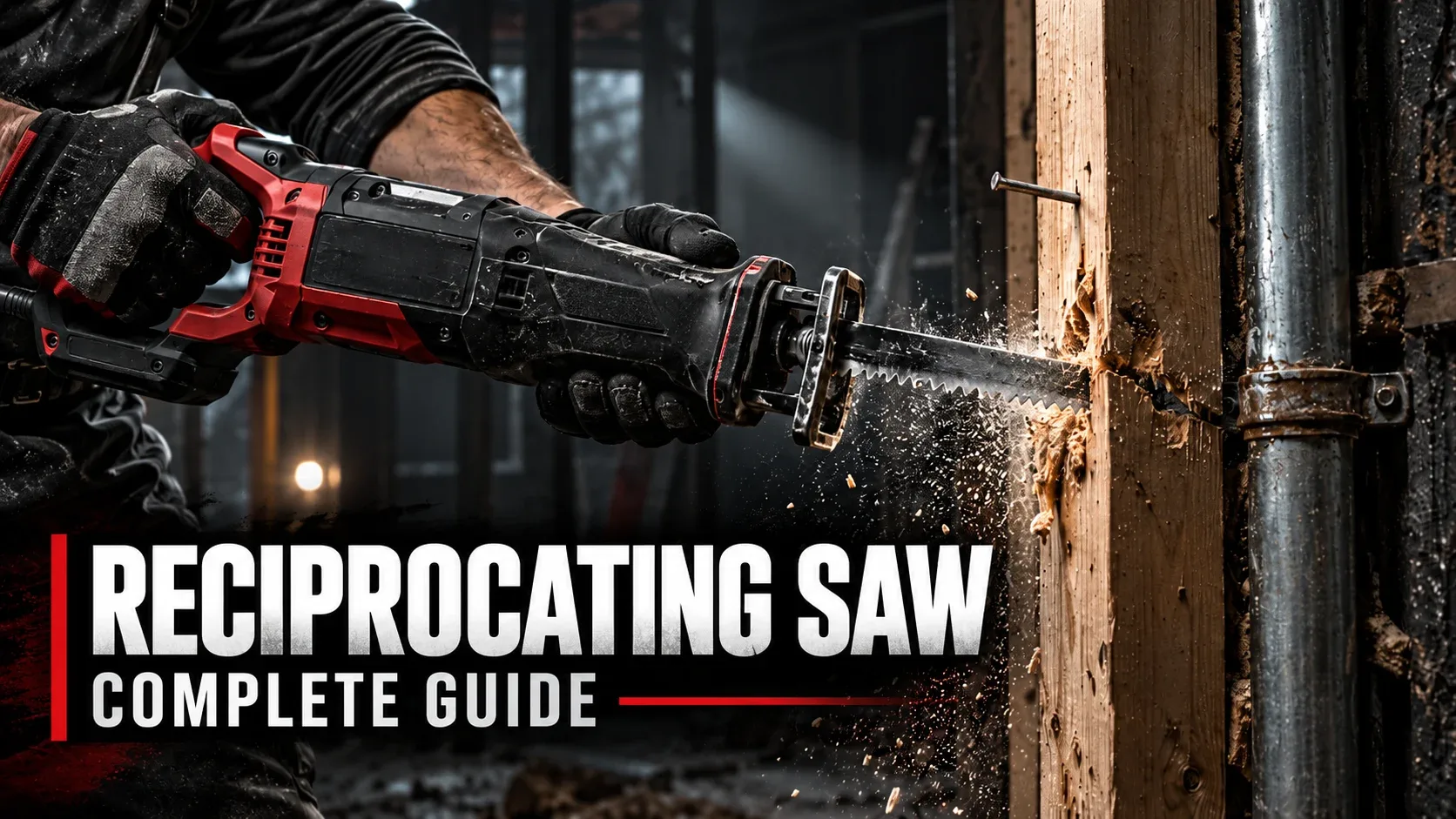
The name reciprocating describes that motion: the blade travels forward and backward along its own length. Unlike a circular saw, it has no rotating cutting disc. Unlike a jigsaw, it is generally built for aggressive, less precise cuts and can reach awkward spots with its projecting blade.
You may hear people call one a “Sawzall.” That is a Milwaukee brand name widely associated with reciprocating saws, not the generic name of every model.
Demolition and quick rough cuts
Wood, selected metals, PVC and other materials with a suitable blade
Convenient access but less precision and a rougher finish
02 / Inside the mechanism
How Does a Reciprocating Saw Work?
The cutting action looks simple, but the mechanism is a useful mechanical engineering example. An electric motor produces rotary motion. A drive assembly—including gearing and a mechanism such as a crank or eccentric—converts that rotation into the blade’s rapid linear strokes. Actual internal arrangements vary by model.
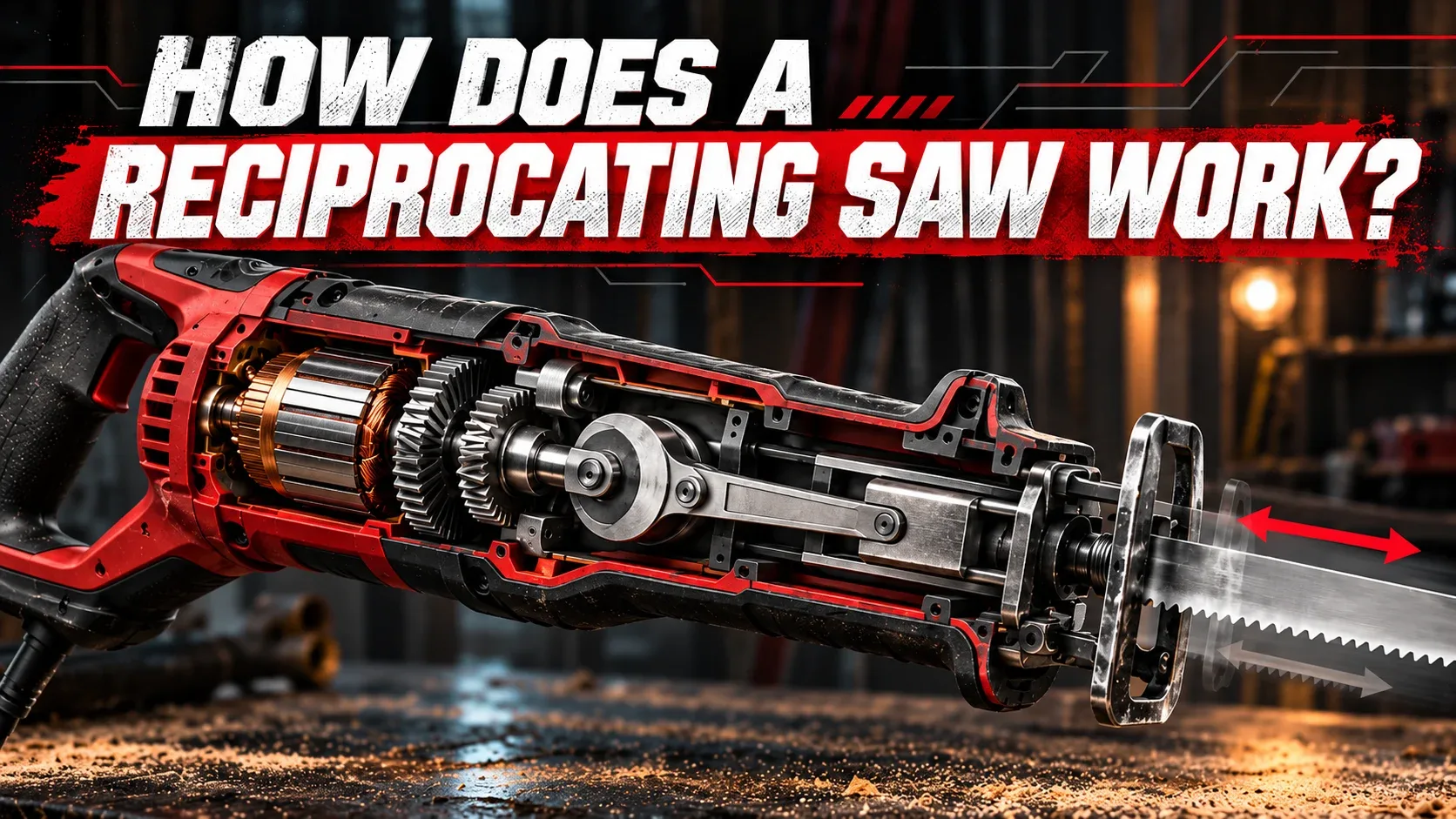
- The motor spins. Pulling the trigger powers an electric motor from the cord or battery.
- The drive transfers motion. Gears and a motion-conversion mechanism turn rotation into repeated travel along the blade axis.
- The blade moves back and forth. Teeth remove material as the saw is guided through the cut.
- The shoe supports the cut. Keeping the shoe against the workpiece helps control vibration and tool movement.
Stroke length vs. strokes per minute (SPM)
A longer stroke may improve cutting efficiency in some applications, while variable speed helps the operator match the action to the material. Neither specification automatically makes a saw better for every job. Blade geometry, load, motor capability, and technique also matter.
Engineering insight: Some models add orbital action, which gives the blade an extra movement component that can speed rough wood cutting. This is generally not the setting to favor for fine control or many metal-cutting tasks; always follow the tool and blade instructions.
03 / Know the components
Main Parts of a Reciprocating Saw
Before operating the tool, identify the parts you will handle and inspect. They affect not just cutting performance, but control and safety.
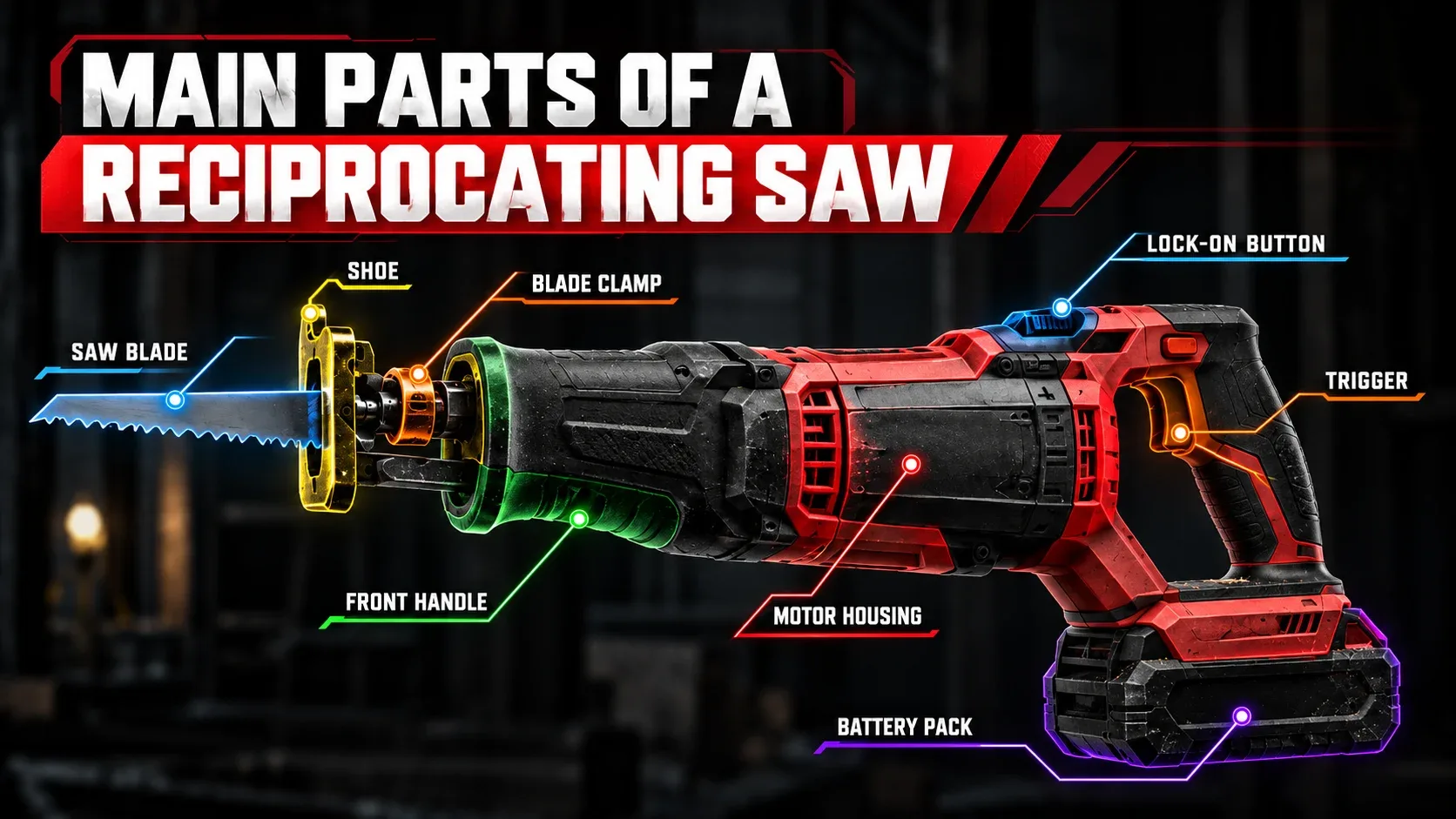
| Component | Purpose |
|---|---|
| Blade | Performs the cut; material, teeth and length must suit the job. |
| Blade clamp | Locks the blade in place; many models have tool-free changes. |
| Shoe / pivoting shoe | Bears against the material and helps stabilize the tool. |
| Trigger / speed control | Starts the tool and, on variable-speed models, controls stroke speed. |
| Front gripping area | Provides a stable second-hand hold on two-handed models. |
| Motor and gearbox housing | Protects the parts that create and transfer motion. |
| Battery or power cord | Supplies energy to the motor. |
| Optional orbital selector | Changes the blade’s cutting motion on compatible saws. |
Not every saw includes every feature. A compact one-handed unit may look and handle differently from a full-size demolition saw.
04 / Choose the format
Types of Reciprocating Saws
Imagine cutting in the backyard with no convenient outlet, then moving to an all-day indoor demolition job. Those situations explain why different saw formats exist.
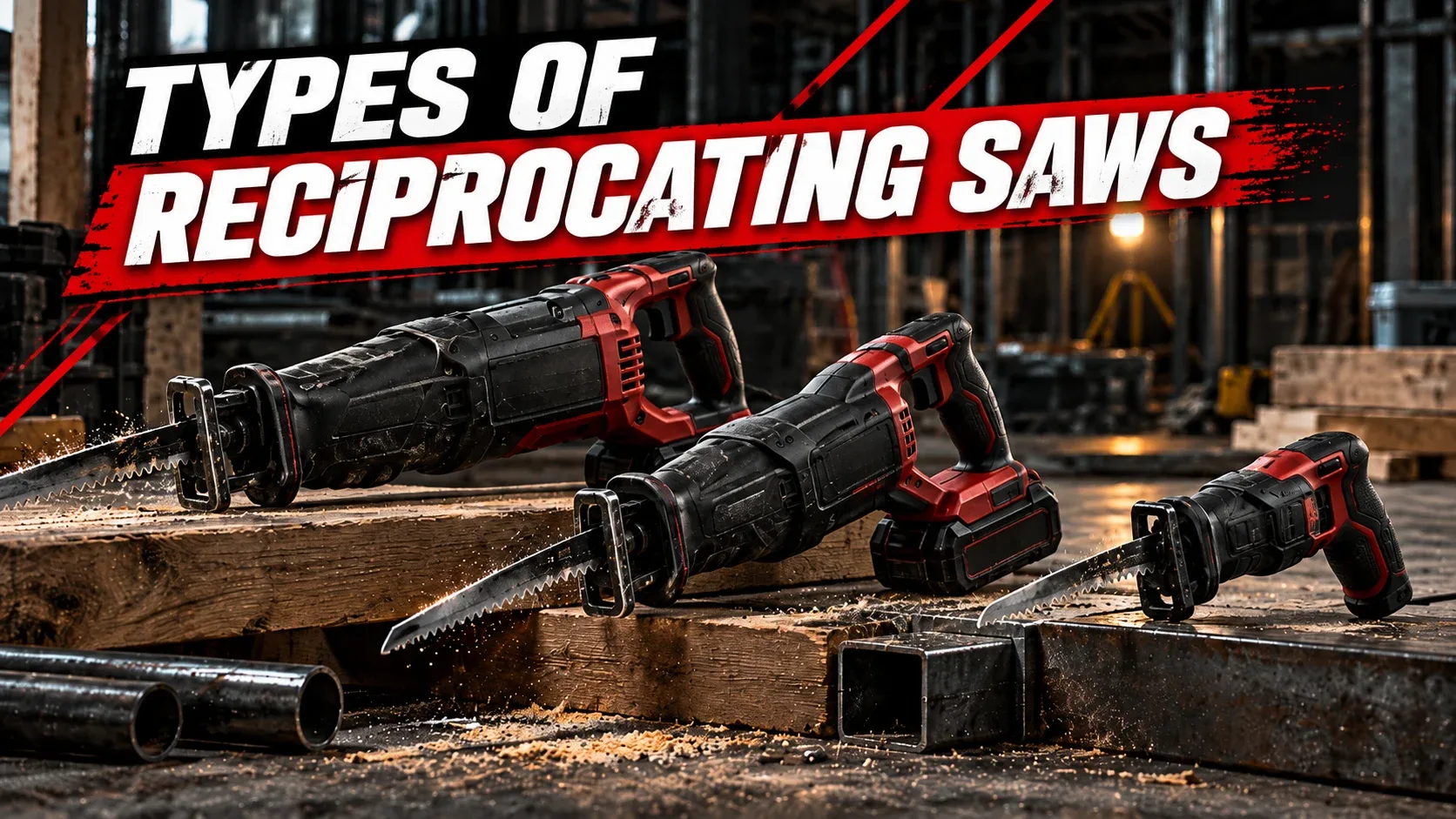
Corded reciprocating saw
Runs from a power outlet. Often a practical choice for extended work where a safe power supply is available, without depending on battery runtime.
Cordless reciprocating saw
Runs from a rechargeable battery. It is convenient for moving between jobs and working away from outlets; runtime and performance depend on the model, battery and load.
Compact / one-handed saw
Smaller design for access-limited situations and lighter jobs, within the tool’s capacity and the manufacturer’s operating instructions.
Full-size demolition saw
Typically designed for demanding cuts and two-handed control. Features such as vibration reduction can matter during extended use.
| Consideration | Corded | Cordless |
|---|---|---|
| Mobility | Limited by outlet and cord | Highly portable |
| Runtime | Not battery-limited | Depends on battery and workload |
| Power | Model-dependent | Model-dependent; many can handle demanding tasks |
| Best fit | Stationary, lengthy work with power nearby | Frequent movement and remote jobs |
05 / Put it to work
What Is a Reciprocating Saw Used For?
Its signature advantage is reaching materials that are difficult to cut cleanly with a larger saw. The right blade allows one tool to handle several rough-cutting jobs—but it does not make every material or location safe to cut.
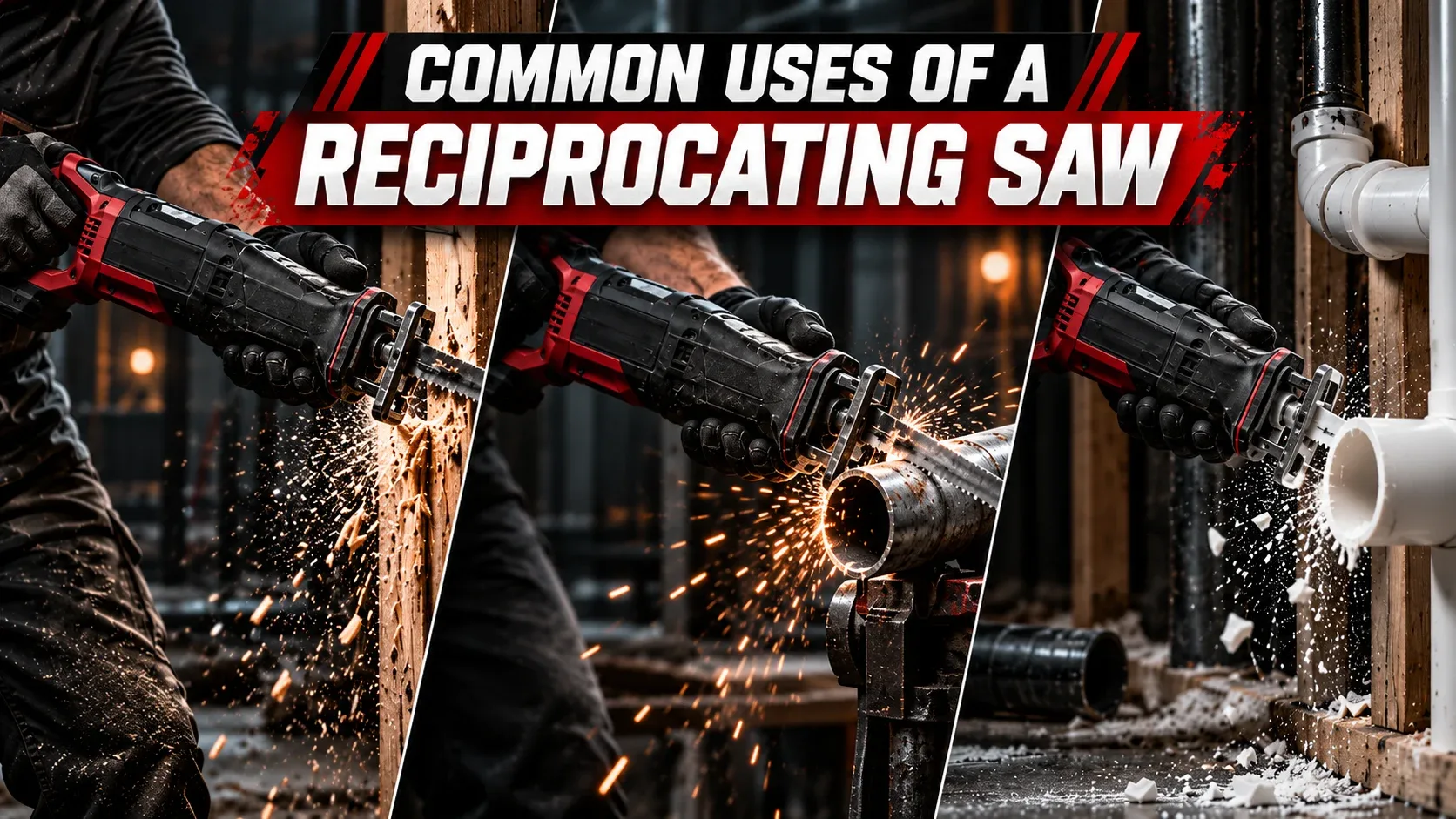
Removing studs, trim or damaged framing after checking for concealed services.
Cutting accessible metal or plastic pipe after it is isolated, drained where needed and supported.
Demolition cuts through wood that may contain nails, with a suitable rated blade.
Cutting suitable branches with a pruning blade, where the saw is specifically appropriate and safe to use.
Rough-cutting compatible metal profiles and sheet with the proper blade and setup.
Working in confined areas where the blade and tool can still move freely and safely.
Before cutting into a wall, floor or pipe: Confirm what lies behind or inside it. Hidden wiring, gas lines, plumbing and structural members can create serious hazards. Isolation and competent inspection come before cutting.
06 / The right teeth matter
Reciprocating Saw Blade Types: What Should You Use?
Think of the blade as the tool’s decision-maker. A blade that works quickly in softwood may perform poorly in steel. Look at the intended material, tooth configuration, blade length, and manufacturer’s specifications—not color alone.
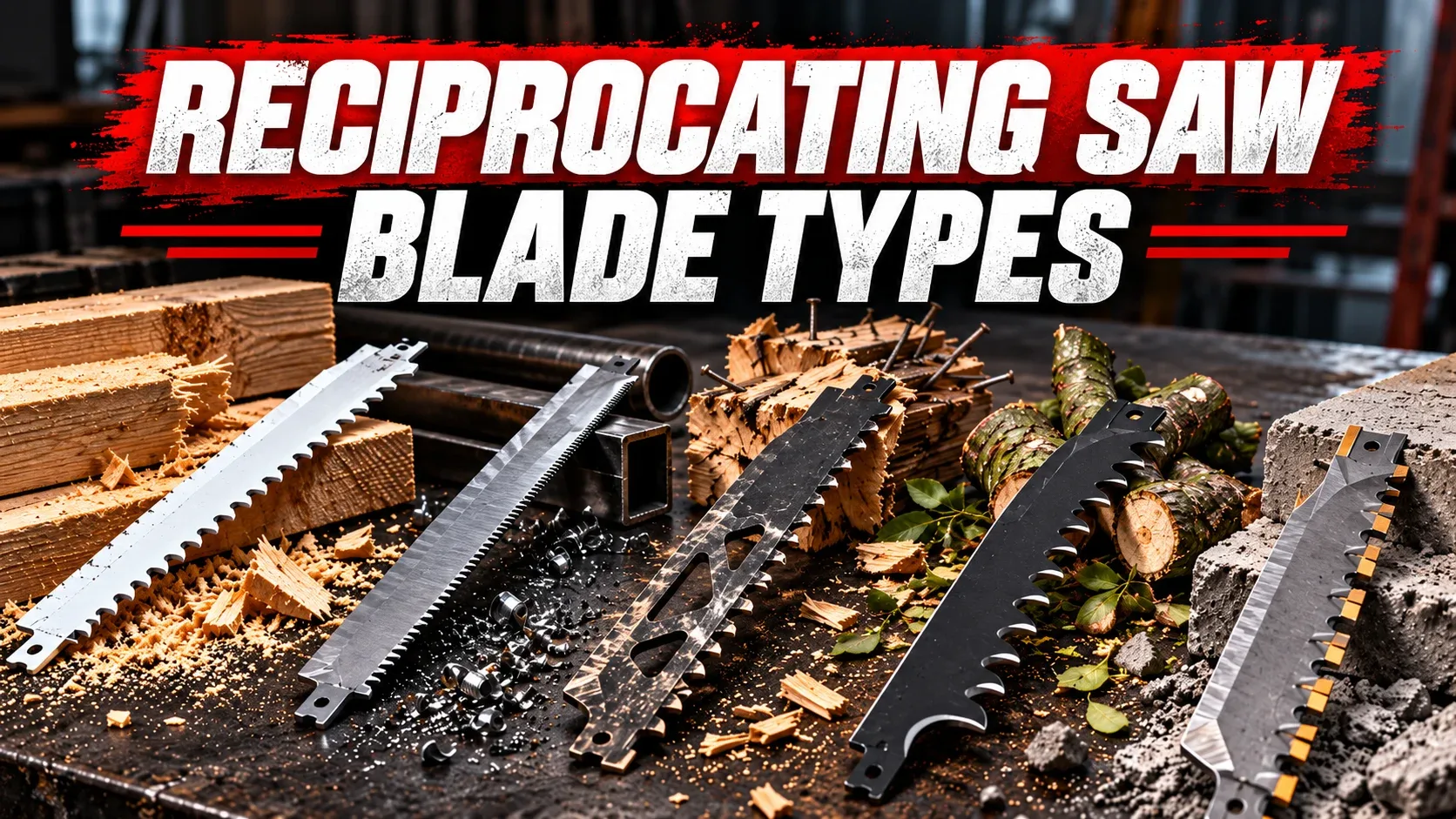
| Blade category | Typical application | What to check |
|---|---|---|
| Coarse-tooth wood blade | Fast rough cuts in clean wood | Suitable TPI, length and blade stiffness |
| Demolition / nail-embedded wood blade | Wood containing occasional fasteners | Manufacturer’s nail-embedded-wood rating |
| Bi-metal metal-cutting blade | Many common metal-cutting jobs | Material type, thickness and tooth pitch |
| Carbide-tooth or specialty blade | Selected hard or abrasive materials | Explicit compatibility with the material |
| Pruning blade | Suitable branches and green wood | Blade size, saw capacity and operating conditions |
| Plastic-cutting blade | PVC and other compatible plastics | Tooth pattern and technique to limit snagging or melting |
What does TPI mean?
TPI means teeth per inch. Coarser teeth generally help clear chips in wood; finer teeth are often useful on thinner metal. But there is no universal TPI setting for every material. Follow the blade manufacturer’s thickness and material recommendations, keeping enough teeth engaged to avoid grabbing or tooth damage.
Quick selection rule: Pick the blade for the hardest material actually in the cut. For example, demolition lumber with embedded nails calls for a blade specifically rated for nail-embedded wood—not an ordinary clean-wood blade.
What about blade length?
Choose a blade that safely extends through the material over the entire stroke without the tip striking a hidden surface. Excessively long blades can flex; a blade that is too short may hit the work with its tip or bind. Use the tool and blade manufacturer’s sizing guidance.
07 / Practical skills
How to Use a Reciprocating Saw Safely
You have a suitable blade, a properly supported workpiece, and clear access. Here’s the basic workflow for a straightforward cut. This overview is not a substitute for the exact instructions and training applicable to your saw and worksite.
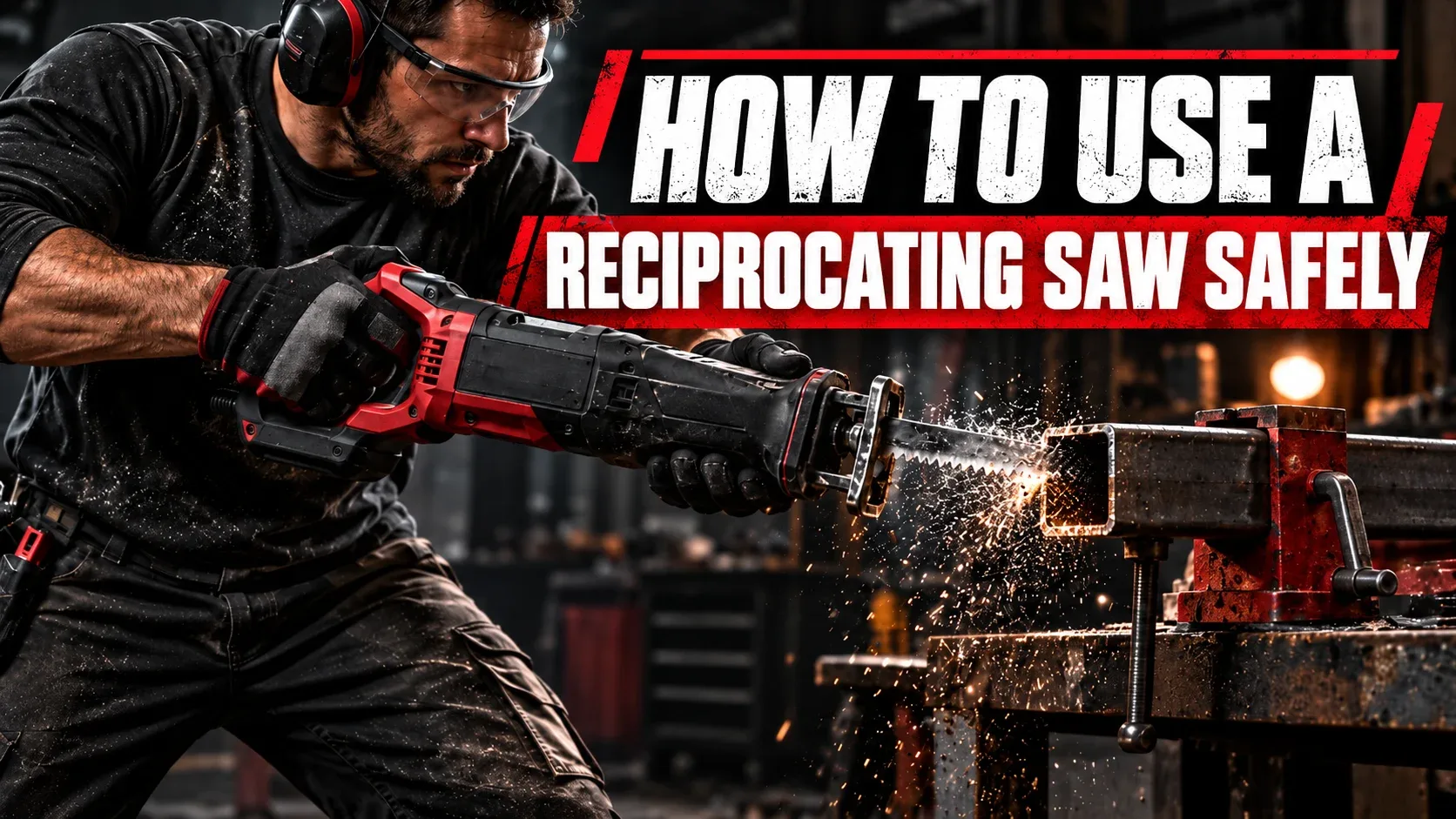
- Inspect the work area. Check for people, obstacles, hidden electrical wiring, pressurized lines and anything the blade might strike after the cut.
- Inspect and isolate the tool. Check the saw, clamp, shoe and blade for damage. Unplug it or remove the battery before installing or changing the blade.
- Secure the material. Use appropriate clamps or supports so the work cannot shift, drop, roll or pinch the blade during the cut.
- Put on appropriate protection. Wear safety glasses and other task-required protection such as hearing protection and suitable respiratory protection. Avoid loose clothing and anything that can catch moving parts.
- Establish your grip and stance. Hold the tool as the manufacturer directs; use both hands on tools designed for two-handed control. Keep hands clear of the cutting line.
- Position the shoe. Put the shoe firmly against the work, with the blade clear of obstructions before starting, unless the manufacturer specifies a different procedure.
- Begin the cut under control. Start at a manageable speed, guide the blade without forcing it, and keep the shoe engaged. Watch for sudden binding and movement of the cutoff piece.
- Finish and switch off. Release the trigger, maintain control until the blade completely stops, and allow the blade to cool before handling or changing it.
Never force a cut or use the saw on an unknown hidden utility. A jammed blade can bend, break or drive sudden tool movement. If the saw binds, release the trigger, isolate the power and resolve the obstruction before restarting. Specialized work may require a trained professional.
08 / Which cutting tool?
Reciprocating Saw vs Jigsaw, Circular Saw and Hacksaw
All four can cut materials, but they solve different problems. A reciprocating saw is often the right demolition tool; it is seldom the best tool for a furniture-quality edge.
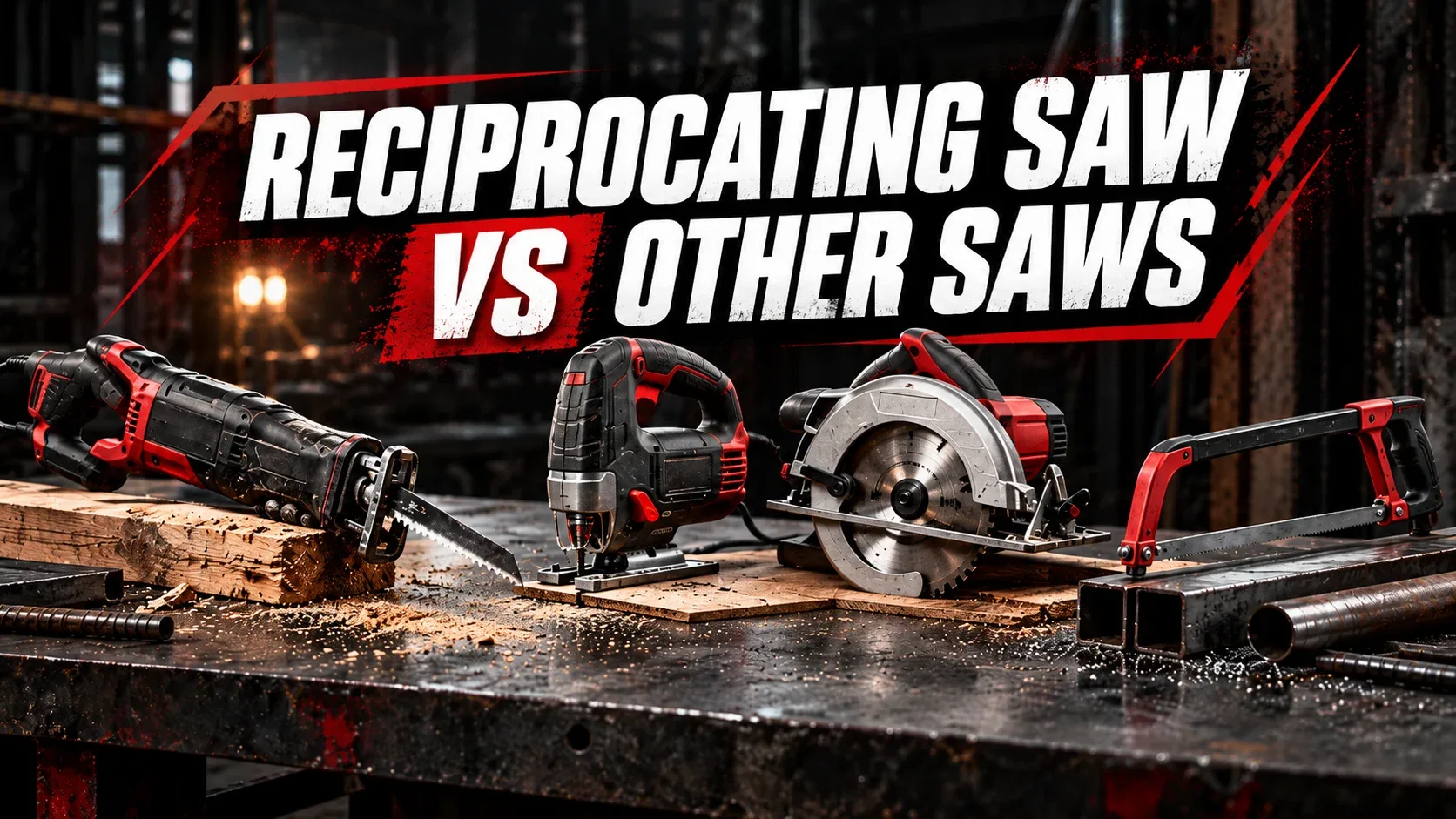
| Tool | Best strength | Typical limitation |
|---|---|---|
| Reciprocating saw | Rough cuts, demolition, awkward access | Vibration and lower precision |
| Jigsaw | Controlled curves and shapes in sheet materials | Not ideal for heavy demolition |
| Circular saw | Efficient straight cuts with proper support and setup | Access and blade geometry limitations |
| Hacksaw | Small manual metal cuts without electrical power | Slower and labor-intensive |
Removing an old door frame?
A reciprocating saw may be a good fit after inspecting the framing and surrounding services.
Cutting a smooth curved shape?
A jigsaw is usually the better starting point.
Cutting long straight sheet edges?
A circular saw or another guided cutting tool may provide better accuracy.
Cutting one small piece by hand?
A hacksaw may be the simplest practical solution.
09 / Strengths and trade-offs
Advantages and Disadvantages of a Reciprocating Saw
Advantages
- Handles many materials with appropriate blades.
- Reaches spaces where larger saws may not fit.
- Useful for dismantling assemblies and rough demolition.
- Offers corded and cordless formats.
- Blade replacement is straightforward on many models.
Limitations
- Generally leaves rougher, less precise edges.
- Can transmit noticeable vibration.
- Blade binding and hidden hazards require care.
- Consumable blades wear or break.
- Noise, dust and debris can be substantial.
Bottom line: Choose this saw for access and practical cutting versatility—not when the project demands fine finish or exceptionally straight edges.
10 / Buying smarter
How to Choose the Right Reciprocating Saw
Don’t shop by advertised speed alone. Start with the actual work you’ll do most often.
| Your situation | Features worth prioritizing |
|---|---|
| Occasional DIY repairs | Easy blade changes, comfortable grip, manageable weight and useful speed control |
| Frequent demolition | Durability, vibration control, adequate power, shoe design and blade availability |
| Traveling between jobs | Battery compatibility, runtime planning, charger availability and portability |
| Confined work areas | Compact design, reachable controls, working clearance and secure grip |
Buying checklist
- Power source: Do you have reliable outlet access, or is cordless mobility essential?
- Variable speed: Can you control the cutting rate for different materials?
- Comfort: Is the saw well balanced for your hands and typical cutting orientation?
- Vibration: Does it have a comfortable grip and appropriate vibration-reduction design?
- Blade system: Are compatible blades easy to buy and change safely?
- Support: Are the manual, service, warranty and spare parts accessible?
Professional users should also consider duty cycle, exposure to vibration, and the requirements of the specific jobsite. Tool capability differs substantially by model.
11 / Keep it ready
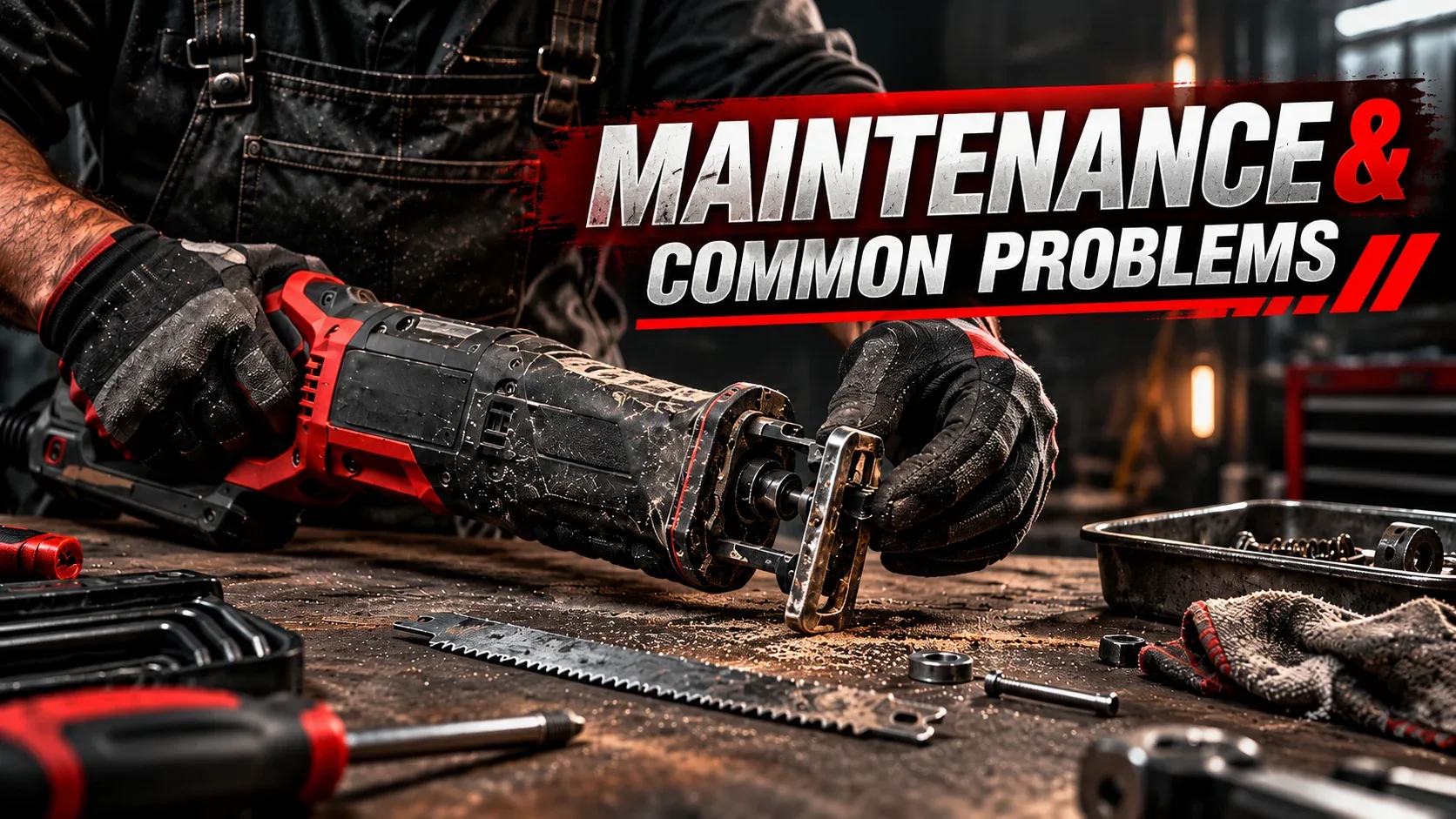
Reciprocating Saw Maintenance and Common Problems
Most everyday care is straightforward: inspect the blade and clamp, keep vents clear using approved cleaning methods, store the saw dry, and follow the manual’s service instructions. Always disconnect the power first.
| Symptom | Possible cause | What to do |
|---|---|---|
| Slow cutting | Dull or unsuitable blade, excessive force, low battery | Stop, isolate power, check blade specification and condition; recharge where relevant |
| Excessive vibration | Bent blade, loose workpiece, damaged parts | Stop and inspect setup; seek service if vibration continues |
| Blade comes loose | Incorrect insertion, worn or damaged clamp | Do not operate until the clamp and blade are secure and serviceable |
| Saw overheats | Heavy load, obstructed vents, potential fault | Stop, let it cool as directed, check approved maintenance steps |
| Tool will not start | Battery or power supply issue, safety control or internal fault | Check safe basic items per manual; refer internal repairs to qualified service |
Maintenance habit: Check the blade before each use and remove a damaged tool from service. Never defeat safety features or open electrical components without appropriate qualifications.
12 / Quick answers
Frequently Asked Questions
What is a reciprocating saw mainly used for?
It is mainly used for demolition, remodeling, pipe cutting and other rough-cutting tasks, with a blade selected for the material.
Can a reciprocating saw cut metal?
Yes, many models can cut compatible metal using the appropriate blade and safe cutting setup. Check the blade’s material and thickness ratings.
Can you use a reciprocating saw to cut tree branches?
Some models can cut suitable branches with an appropriate pruning blade. Follow the manufacturer’s limits, maintain stable ground-level footing, and do not use it for hazardous overhead tree work.
What is the difference between a reciprocating saw and a jigsaw?
Both use a moving blade, but a jigsaw is typically designed for controlled curved or shaped cuts, while a reciprocating saw generally favors rough, aggressive cuts and demolition.
What blade should I use for wood?
Use a wood-cutting blade matched to the thickness and desired cut. If the wood includes nails, choose a blade explicitly rated for nail-embedded wood.
Can it cut through nails?
With a blade rated for nails or nail-embedded wood, it can cut many common fasteners. The exact capability depends on the blade and fastener material.
Is a reciprocating saw suitable for beginners?
It can be, with appropriate instruction, the correct blade, proper workpiece support and manufacturer-approved technique. Start with controlled, accessible cuts rather than hidden or high-risk work.
How long does a reciprocating saw blade last?
There is no fixed lifespan. Wear varies with blade quality, material, cutting technique and heat. Replace it when damaged, bent, missing teeth or no longer cutting efficiently.
Final Thoughts: Is a Reciprocating Saw Right for You?
Go back to that renovation project: a frame to remove, an awkward pipe to cut, and very little room to work. A reciprocating saw might be the ideal solution—provided the material is identified, hazards are ruled out, the blade is appropriate, and the cut can be controlled safely. Understand the mechanism, choose by task, and you’ll know when this versatile saw belongs in your toolbox and when another saw is the better option.
This general educational guide should be used alongside the operating manual for your exact saw and blade. Helpful occupational safety resources include:
- OSHA — Power Tool Safety
- OSHA — Handheld Saw Safety
- OSHA — Hand and Power Tools