Ignition & Spark Plugs / Troubleshooting Guide
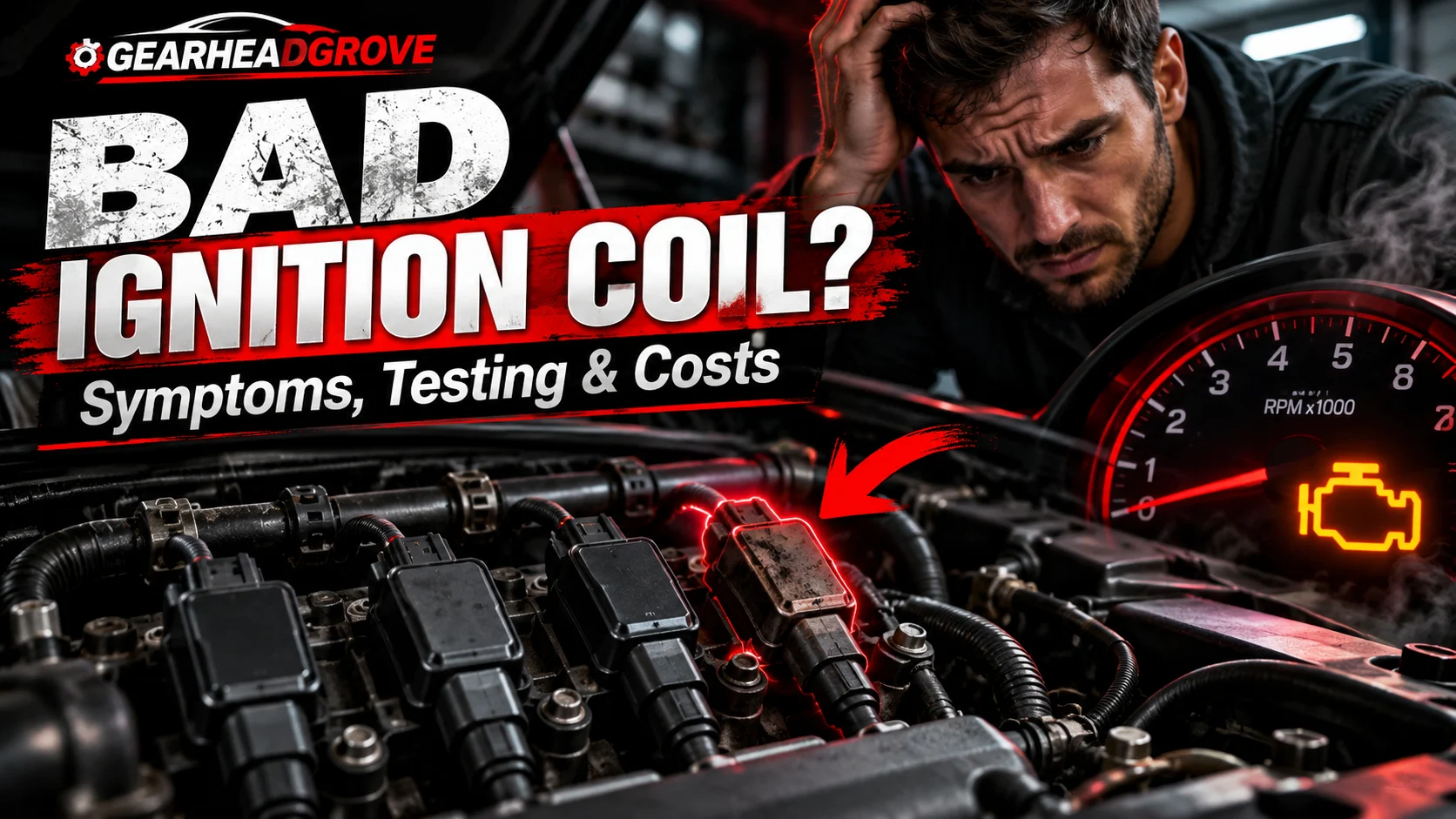
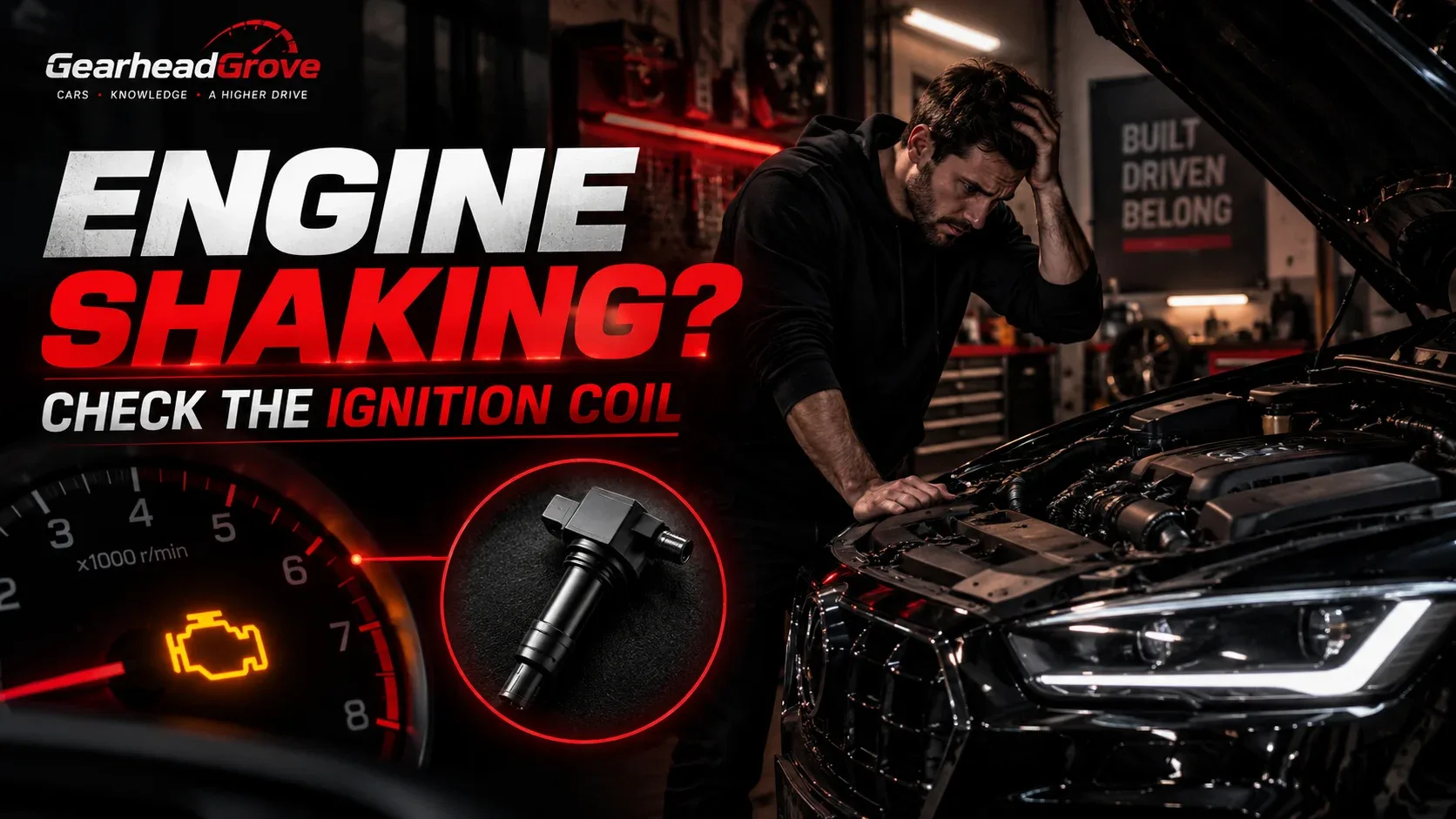
Your car starts shaking at a stoplight. The check engine light comes on, and acceleration suddenly feels weak. Could a bad ignition coil be behind it—or are you about to replace a perfectly good part?
Picture this: Jason is on his usual morning commute when his SUV develops a rough idle. He searches for bad ignition coil symptoms and finds everything from a worn spark plug to a major engine repair. He doesn’t need a guess. He needs a way to narrow the problem down.
That’s what this guide does. We’ll cover the warning signs, explain how to check an ignition coil, discuss safe testing methods, walk through changing an ignition coil, and examine realistic US repair costs. You’ll also find a dedicated example for the 2014 Lincoln MKX.
Quick Answer: Is Your Ignition Coil Bad?
A failing coil can interrupt the spark needed for combustion. Common warning signs include:
- ✓ Engine misfires
- ✓ Rough idle or shaking
- ✓ Check engine light
- ✓ Hesitation or weak acceleration
- ✓ Hard starting
- ✓ Reduced fuel economy
- ✓ Occasional stalling
But symptoms are not proof. Spark plugs, injectors, wiring, and mechanical faults can look similar. Confirm the cause before buying a new coil.
What Is an Ignition Coil and How Does It Work?
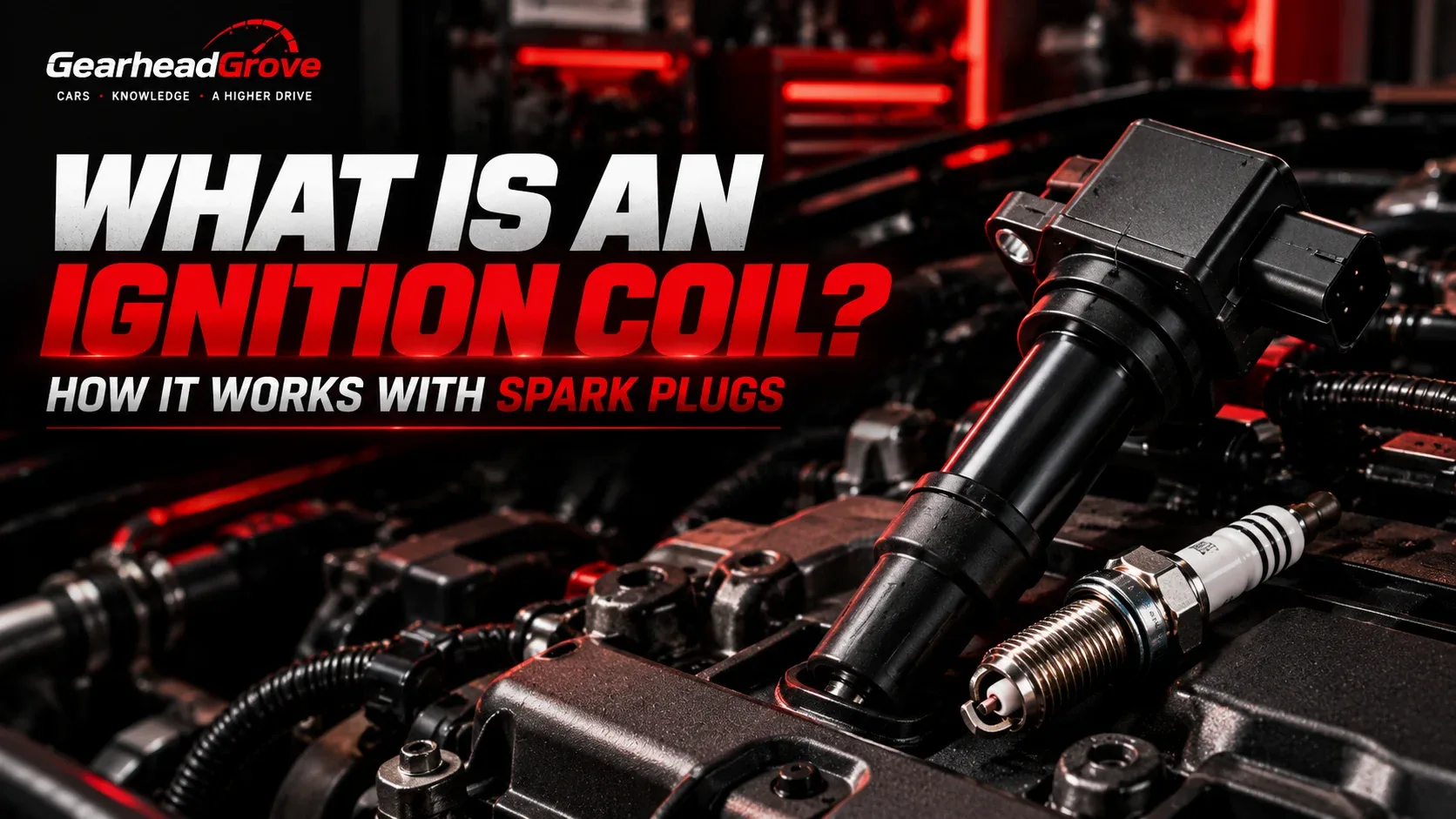
Think of your automotive ignition coil as a compact electrical transformer. Your battery supplies relatively low voltage, but a spark plug needs a much higher voltage to jump its gap. The coil’s windings and magnetic field make that possible when the ignition system commands a spark.
On a modern coil-on-plug engine, a separate coil usually sits directly above each spark plug. In older or different designs, a single coil or an ignition coil pack can serve more than one cylinder. Exact layouts vary by engine.
Ignition Coil vs. Ignition Coil Pack
People sometimes use the terms interchangeably, but they aren’t always the same hardware. A single coil-on-plug unit generally serves one cylinder, while a multi-tower coil pack may distribute sparks to two or more cylinders. When ordering parts, use your vehicle’s year, make, model, engine, and VIN—not just the search phrase “ignition coil.”
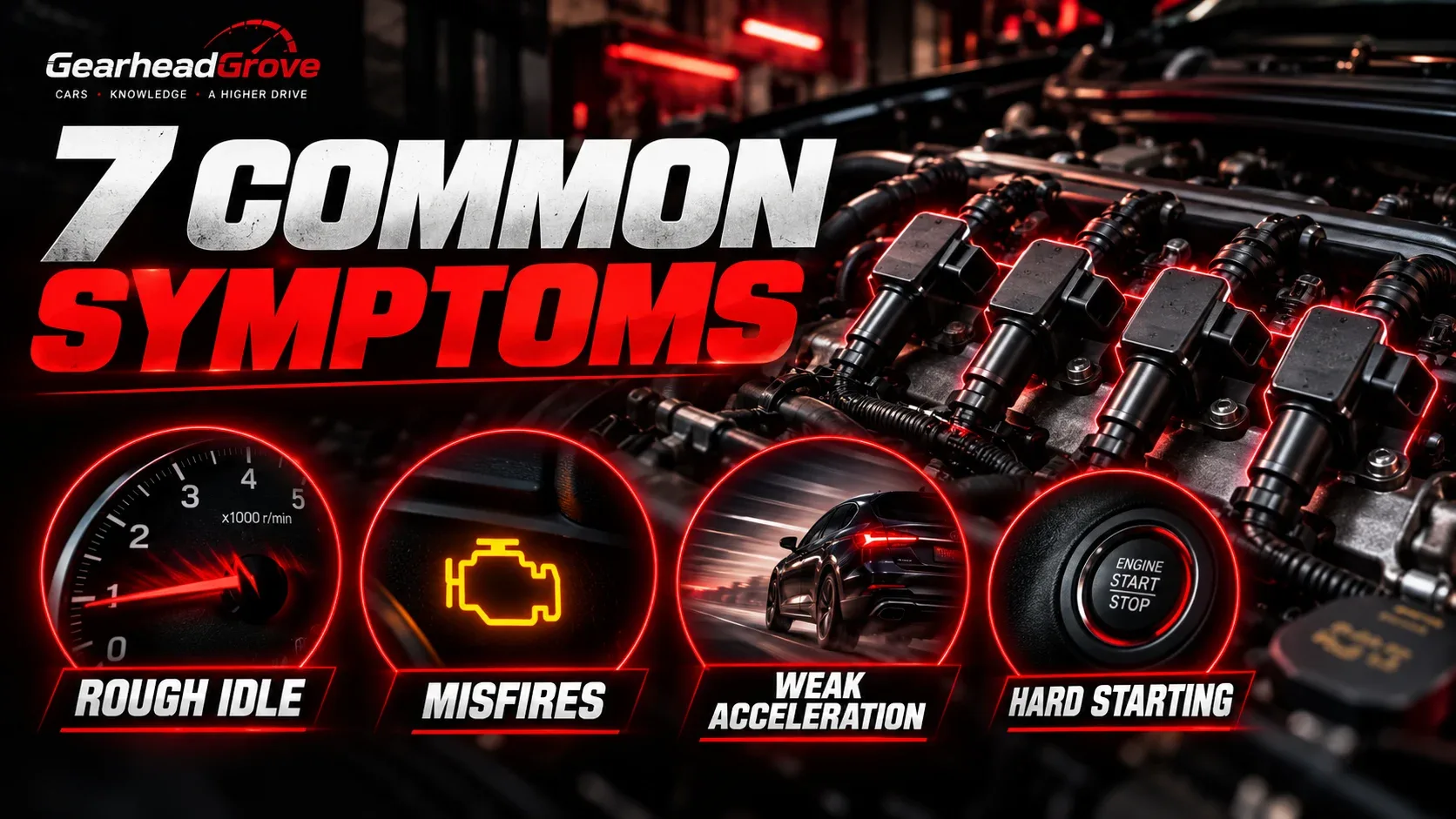
7 Common Bad Ignition Coil Symptoms
Jason’s rough idle is one clue, not a verdict. Look at the pattern of symptoms and what the vehicle’s diagnostic data says.
01. Engine misfires
A cylinder may skip combustion or fire inconsistently. You might notice a stumble at idle or under load. Misfires also have many non-coil causes.
02. Rough idle or vibration
The engine can shake while stopped because the cylinders are not contributing evenly. Engine mounts and fuel issues can cause shaking too.
03. Check engine light
Codes such as P0301 can point to a cylinder misfire; P0351-style codes concern ignition coil circuits. Neither code automatically proves the coil itself failed.
04. Weak acceleration
A misfiring engine may hesitate, jerk, or feel low on power—especially under acceleration when the ignition system is stressed.
05. Hard starting
If ignition spark is inadequate, starting may take longer. A single failed coil on a multi-cylinder engine often still allows starting, so don’t assume a no-start means one bad coil.
06. Worse fuel economy
Combustion faults can hurt efficiency, though tire pressure, driving habits, sensors, and other factors can also change fuel consumption.
07. Stalling or severe hesitation
On some vehicles and with multiple faults, ignition problems can make the engine run very poorly or stall. Treat this as a drivability concern.
Symptoms at a Glance
| What you notice | Could point to | Other possibilities to rule out |
|---|---|---|
| Misfire under acceleration | Weak coil or spark | Worn plug, injector, fuel pressure |
| Misfire on one cylinder | Coil serving that cylinder | Plug, connector, injector, compression |
| Rough idle on several cylinders | Ignition system problem | Vacuum leak, fuel issue, mechanical fault |
| Check engine light | Possible misfire or coil-circuit issue | Many unrelated engine or emissions faults |
Is It Safe to Drive With a Bad Ignition Coil?
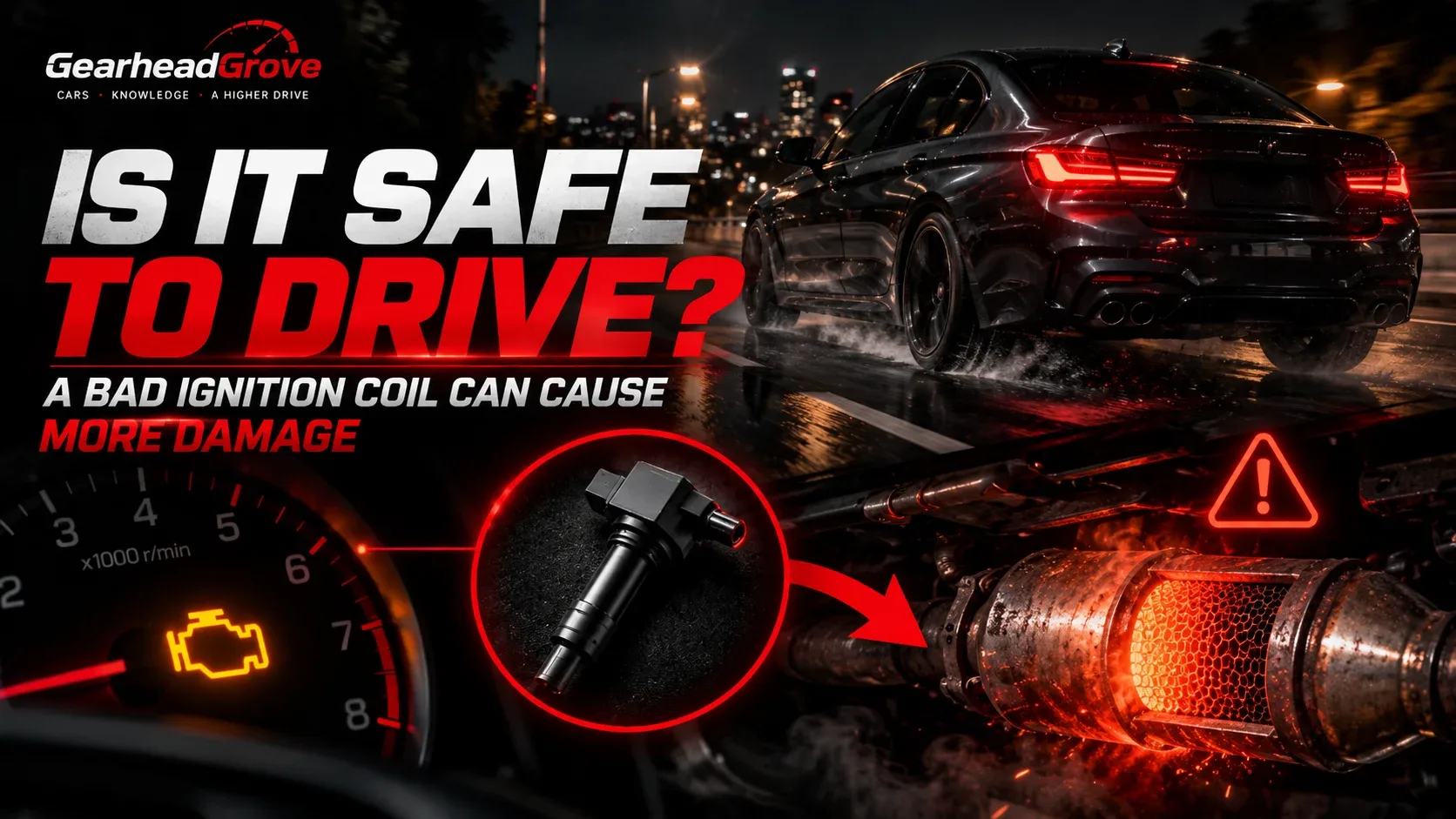
Driving with a suspected misfire isn’t something to postpone for weeks. Unburned fuel can overheat or damage the catalytic converter, and the vehicle may lose power unexpectedly. How urgent the problem is depends on severity, engine behavior, and warning indicators.
Flashing check engine light? Reduce demand on the engine, pull over safely as soon as practical, stop driving, and arrange professional assistance. A flashing light can indicate a severe misfire that risks catalytic-converter damage. If the engine is shaking violently, stalls, or lacks power, do not continue driving.
A steady light without obvious drivability problems is not an invitation to ignore the fault. Read the code, consult the owner’s manual, and address the cause promptly.
How to Check an Ignition Coil: A Sensible Testing Sequence
Before Jason orders parts, he needs more than a symptom list. These steps provide a diagnostic overview, not a substitute for the service procedure for your specific vehicle.
1Read and record the codes
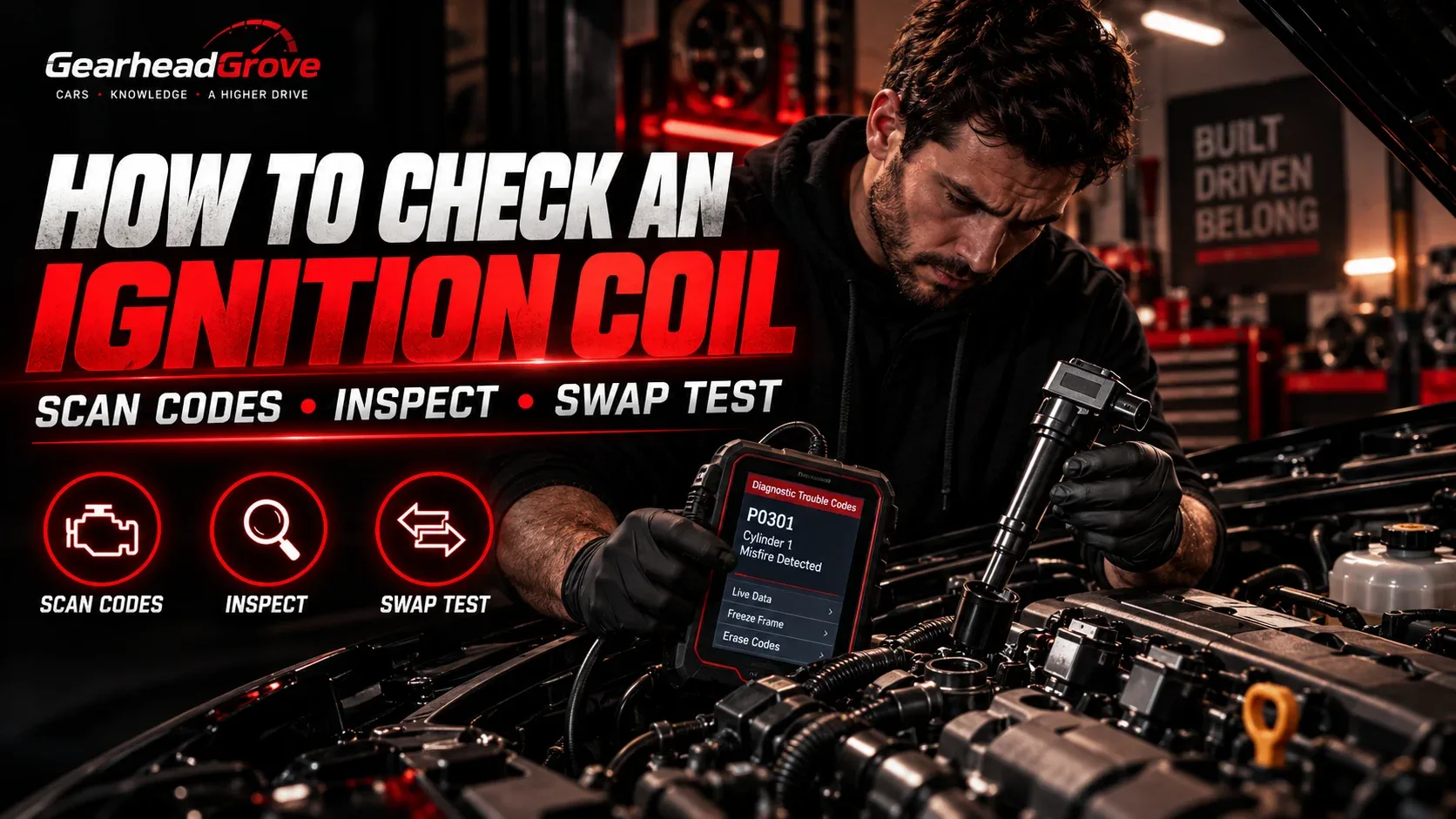
Connect a compatible OBD-II scanner, record stored and pending codes, and note freeze-frame data if available. P0300 describes a random/multiple-cylinder misfire; P0301–P0308 identify misfires associated with specific cylinders. P0351–P0358 are ignition-coil primary/secondary circuit codes on many vehicles, but exact interpretation is manufacturer-specific. Don’t erase codes before documenting them.
2Inspect the coil and electrical connector
With the engine off, ignition disabled, and components cooled, look for cracked plastic, oil or moisture in the plug well, damaged insulation, corrosion, a loose connector, or a torn coil boot. Oil in a plug well may signal another repair is needed.
3Check the spark plug and related systems
A worn, incorrectly gapped, or fouled spark plug can mimic a bad ignition coil. A misfire may also come from the injector, wiring, air/fuel delivery, or compression. Inspect according to the manufacturer’s procedure.
4Consider a coil-swap test—where appropriate
Some coil-on-plug engines allow a qualified person to move a suspect coil to another cylinder and observe whether the misfire follows it. Shut the engine off and follow the correct removal procedure. If the misfire moves with the coil, that supports a coil fault; if it stays, investigate the original cylinder. Don’t perform this on systems where the service manual advises against it or where access makes it unsafe.
5Use the right ignition coil tester
A dedicated ignition coil tester, oscilloscope, or vehicle-specific electrical checks may provide additional evidence. A basic multimeter resistance check does not reliably diagnose every modern electronic coil. Never make an improvised open-air spark test or handle energized ignition parts.
6Confirm the repair plan
Only replace the coil after the diagnostic evidence supports it. If the problem persists after replacement, continue diagnosis rather than assuming every coil is bad.
Beginner tip: If you own only a basic code reader, your safest useful first step is to record codes and symptoms. A professional can check coil command signals, supply voltage, grounding, wiring, and combustion-related causes as needed.
Bad Ignition Coil vs. Bad Spark Plug: How Can You Tell?
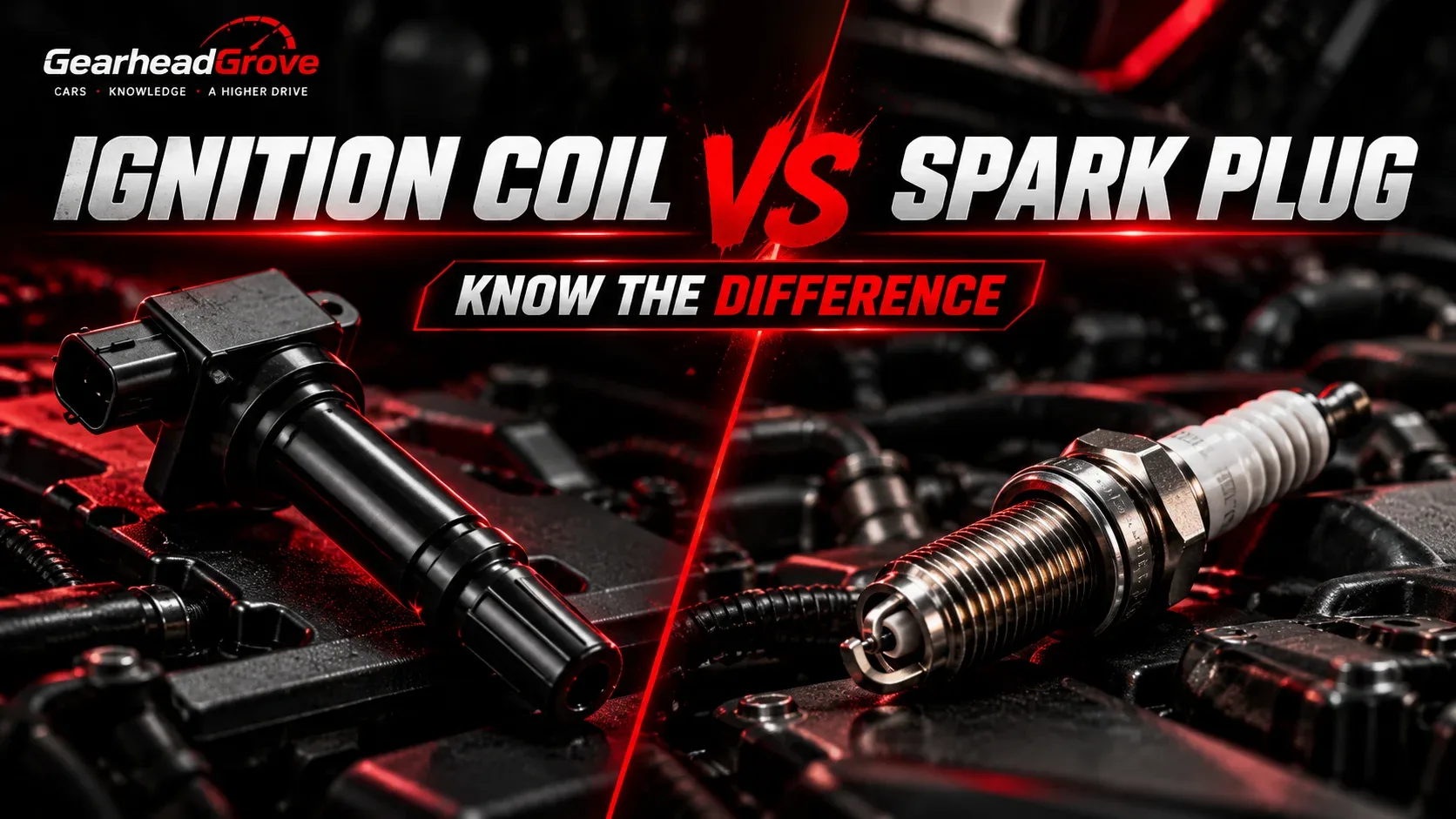
Both can cause the same rough idle and misfire. The difference is their job: the coil supplies high voltage, while the plug creates the spark gap inside the cylinder. A good diagnosis checks both rather than replacing whichever part is easier to reach.
| Comparison | Ignition coil | Spark plug |
|---|---|---|
| Primary job | Generate ignition voltage | Create the spark in the cylinder |
| Common problems | Internal failure, insulation breakdown, boot or circuit fault | Worn electrode, deposits, damage, incorrect gap |
| Typical clues | Misfire and sometimes coil-circuit codes | Misfire, wear or fouling on inspection |
| What confirms it? | Vehicle-appropriate electrical/functional testing | Inspection and manufacturer-approved testing |
How to Replace an Ignition Coil
If testing confirms a failed unit, changing an ignition coil on an accessible coil-on-plug engine can be a manageable DIY repair. On a cramped V6 or a vehicle with required intake removal, it may be best left to a shop.
Tools and supplies you may need
- Correct replacement coil matched to the vehicle and engine
- Appropriate socket, ratchet, extensions, and torque wrench
- Basic protective equipment and manufacturer service instructions
- OBD-II scanner for checking the result
- Replacement boot, seal, or spark plug only if inspection and service information call for it
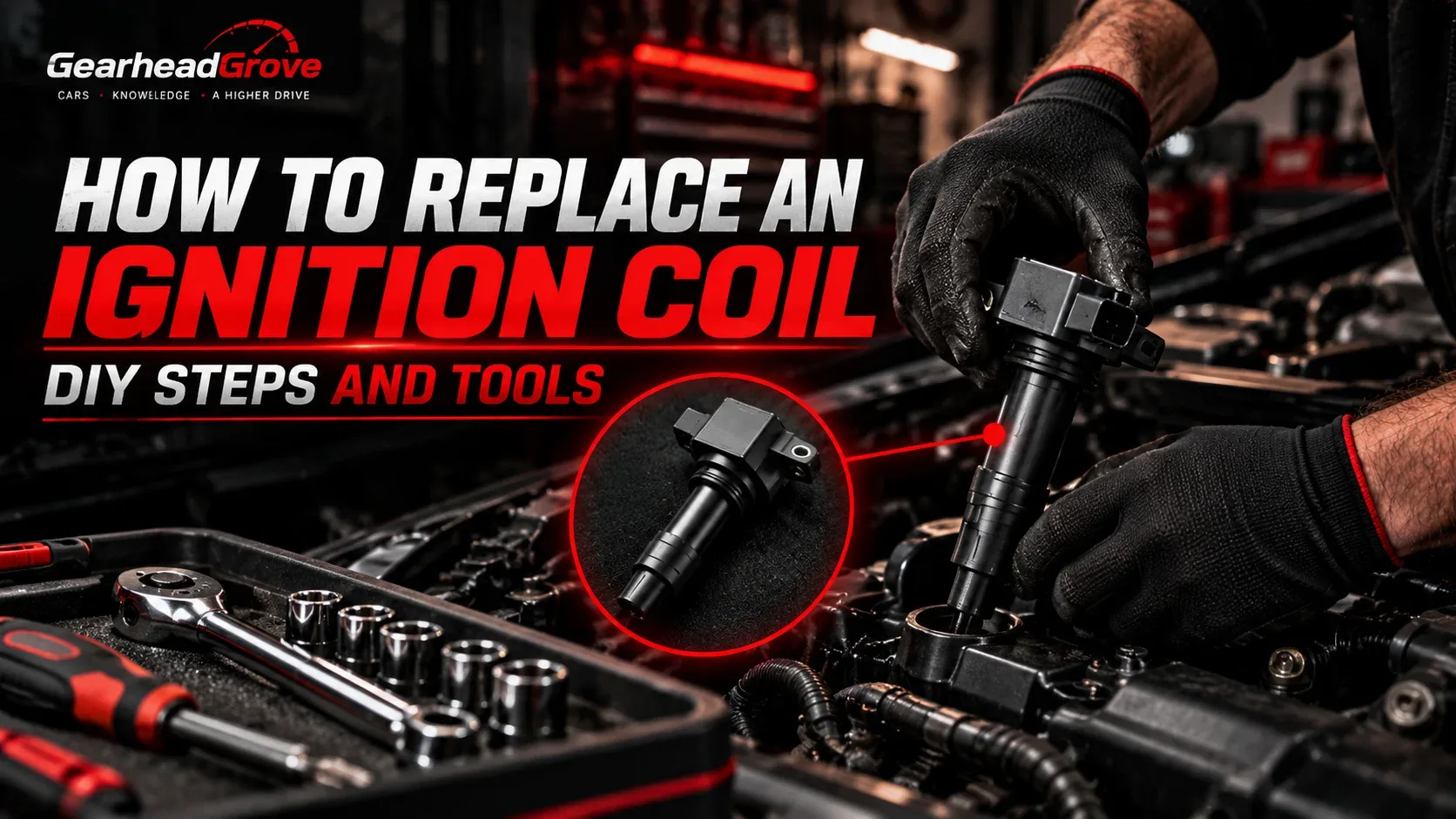
- Prepare: Park securely, shut down the engine, remove the key or disable the starting system, allow parts to cool, and follow the vehicle’s electrical safety instructions.
- Locate: Identify the confirmed faulty coil using the correct cylinder layout.
- Disconnect: Release its electrical connector without pulling on the wiring.
- Remove: Undo the retaining fastener where fitted and carefully lift the coil from its spark plug well.
- Inspect: Look for moisture, oil, damaged boots, or an obviously worn plug. Resolve underlying issues as needed.
- Install: Seat the correct new coil properly, reinstall any fastener to the manufacturer’s specified torque, and reconnect the wiring securely.
- Verify: Reassemble removed components, start the engine, check for smooth operation and new fault codes, and complete an appropriate verification drive only if safe.
Do you have to replace every coil? Usually not solely because one has failed. A confirmed failed coil can often be replaced individually. Consider age, access labor, plug condition, and a mechanic’s advice before choosing a full set.
Ignition Coil Replacement Cost: What Should You Expect?
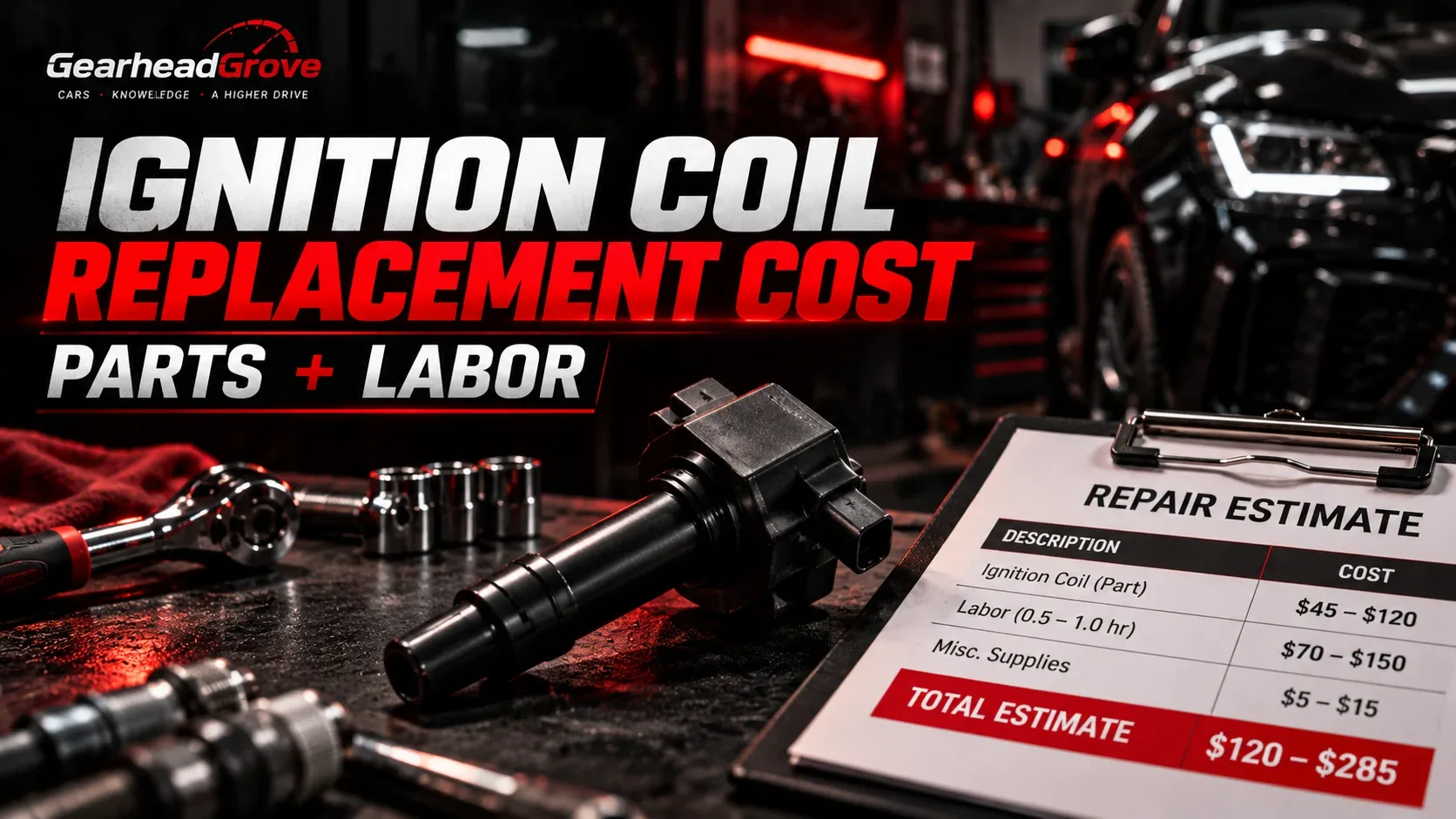
Jason checks a national price benchmark before approving repairs. According to RepairPal’s US estimate updated September 3, 2026, average ignition coil replacement is $238–$320 in parts and labor. Your actual total can differ substantially by vehicle, shop, location, and which coils are accessible.
| Repair-cost component | Published US benchmark | What affects it? |
|---|---|---|
| Parts | $164–$211 | OEM vs. aftermarket, specific engine and coil |
| Labor | $74–$109 | Access, labor rate and service procedure |
| Average replacement total | $238–$320 | Does not include taxes, fees or additional repairs |
| Diagnostic fee | Ask your shop | Shop policy and testing complexity |
Source: RepairPal, national ignition coil replacement estimate, September 3, 2026. The benchmark is not a quote for the 2014 Lincoln MKX and should not be treated as a fixed price per coil or a complete set.
DIY vs. Professional Replacement
For a DIY job, you generally pay for the replacement part and any tools you don’t have. A shop adds labor, diagnosis when needed, and potentially related service. The lowest-cost repair isn’t necessarily the best one: replacing the wrong part wastes money, while a difficult-access repair can introduce new problems.
What Makes One Quote Higher?
- Several coils or spark plugs need replacement
- Rear-bank coils require additional parts to be removed
- OEM-grade parts cost more than budget substitutes
- Diagnosis finds damaged wiring, oil leaks, or another underlying problem
- Local shop labor rates, taxes, and fees differ
2014 Lincoln MKX Ignition Coil: A Vehicle-Specific Example
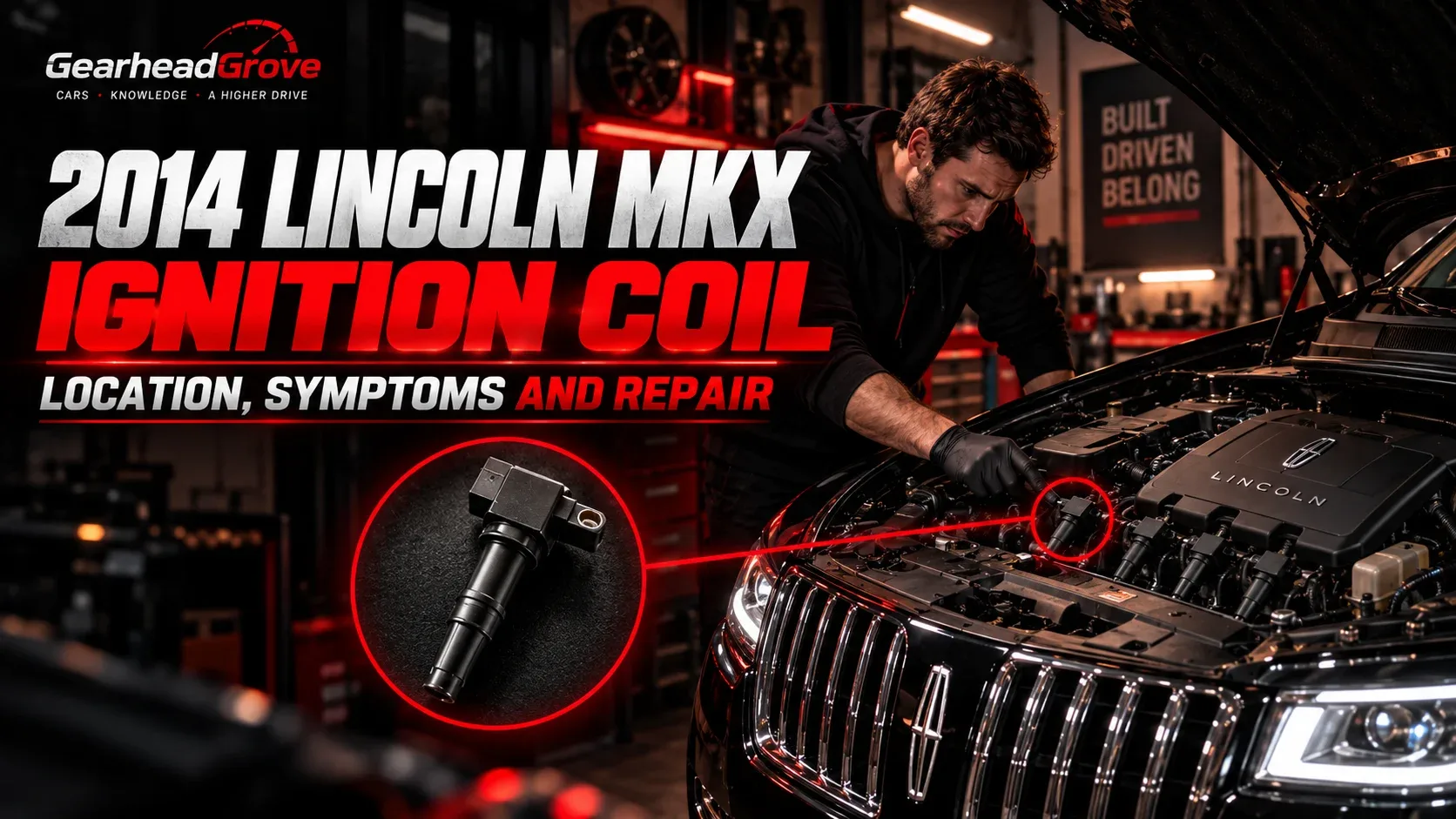
Let’s return to Jason, this time assuming his SUV is a 2014 Lincoln MKX. The owner’s manual specifies a 3.7-liter V6 with a coil-on-plug ignition system. That means each spark plug is served by an individual ignition coil; there isn’t one shared external coil pack to replace for the whole engine.
The coils sit at the spark plug locations on the engine. Access to the front and rear cylinder banks can differ, so identify the correct cylinder and review the exact service procedure before removing anything. Don’t guess which coil corresponds to a trouble code based only on a generic diagram.
What should an MKX owner check?
- Record the exact misfire or ignition-circuit trouble code.
- Confirm the engine and cylinder numbering before any coil-swap test.
- Inspect the coil connector, boot, plug well, and associated spark plug.
- Account for additional disassembly if access is obstructed.
- Use VIN-compatible replacement parts and manufacturer torque procedures.
The 2014 MKX owner’s manual identifies the 3.7L engine’s ignition system as coil-on-plug and lists Motorcraft SP-520 spark plugs in its parts specifications. That spark plug number is not an ignition coil part number; always verify current replacement part compatibility by VIN and service catalog.
Model-specific accuracy matters: The national cost table above is not an MKX-specific quote. Rear-bank accessibility, actual needed repairs, and shop rates can change the price. Ask for a written estimate that separates diagnosis, parts, and labor.
How Long Do Ignition Coils Last?
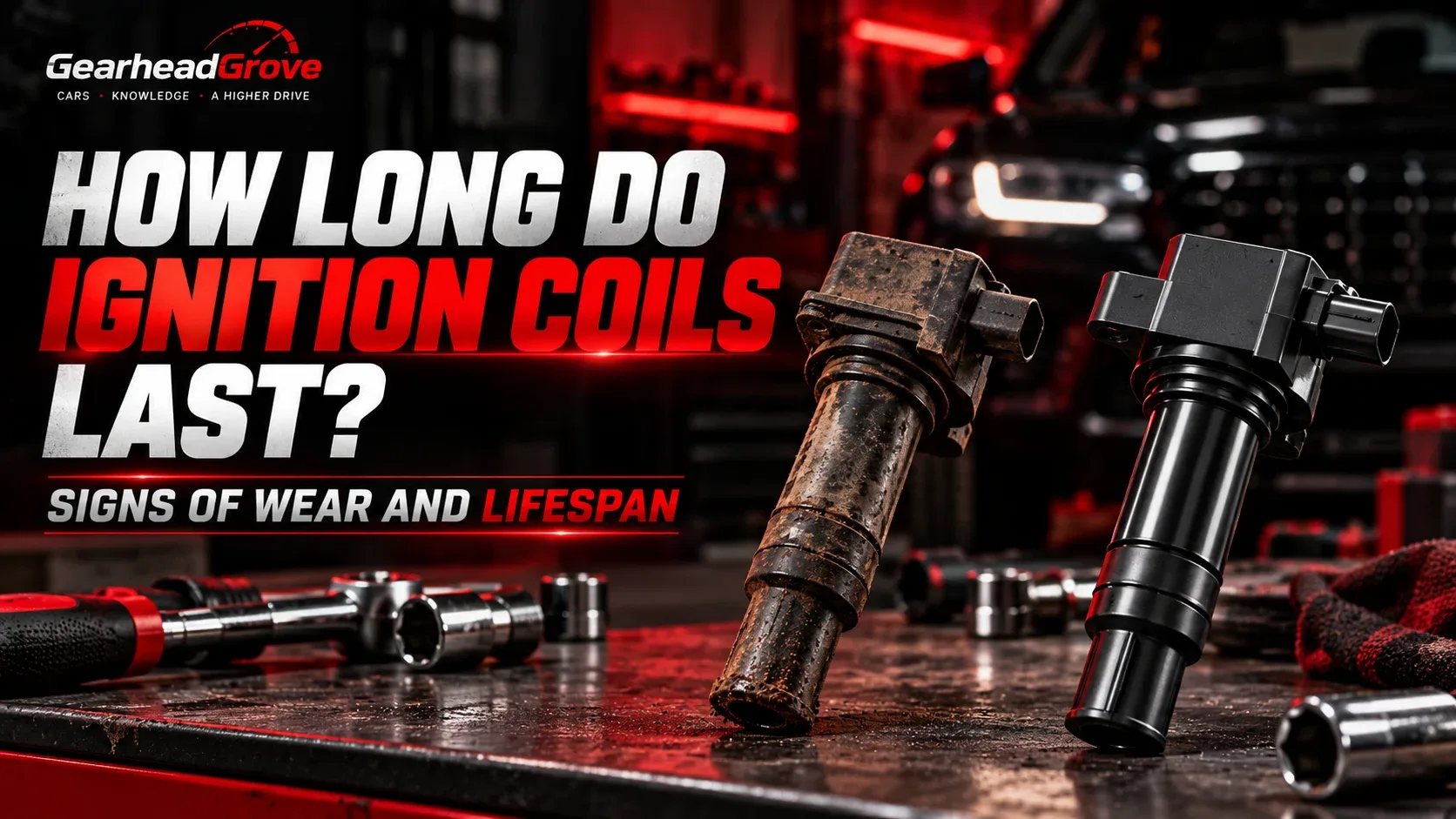
Ignition coils do not have one universal scheduled replacement interval. Many last for years, but heat cycles, moisture, age, vibration, insulation failure, and neglected spark plug problems can shorten service life.
Rather than changing perfectly functional coils on a fixed schedule, keep spark plugs serviced at the interval in your owner’s manual, address leaks into spark plug wells, and investigate new misfires early. If multiple coils repeatedly fail, have the electrical system and related components checked instead of simply fitting more coils.
Frequently Asked Questions About Ignition Coils
Can a bad ignition coil cause a car not to start?
Yes, in some circumstances—particularly when spark is missing on multiple cylinders or a shared ignition component fails. But a single failed coil on a multi-cylinder coil-on-plug engine often causes a misfire rather than a complete no-start. Confirm the actual cause.
How do I check an ignition coil without replacing it?
Start by recording OBD-II codes, checking connectors and spark plugs with the engine safely off, and consulting your vehicle’s diagnostic procedure. An approved coil-swap or professional electrical test may help isolate the fault.
Can I test an ignition coil with a multimeter?
Only if the manufacturer provides an appropriate procedure and specifications for that coil. Many modern coils contain electronics, so a simple resistance reading may not confirm whether the coil works under engine load.
Do I need to replace all ignition coils at once?
Not necessarily. If only one coil is confirmed faulty, replacing that unit alone is commonly reasonable. Consider mileage, access and any other confirmed failures before choosing a full set.
Can a bad spark plug damage an ignition coil?
Worn plugs or excessive gaps can increase the voltage demand on ignition components and contribute to stress. Inspect plugs when diagnosing a coil issue, and replace them according to the vehicle’s maintenance schedule.
How long does changing an ignition coil take?
An accessible coil may take relatively little hands-on time, while coils hidden beneath other components can require substantially more work. The service procedure for your exact engine is the best guide.
Can a faulty ignition coil damage the catalytic converter?
Yes. A persistent misfire can send unburned fuel into the exhaust, potentially overheating the catalytic converter. A flashing check engine light or severe shaking calls for immediate attention.
What is the average ignition coil replacement cost?
RepairPal’s September 2026 national US estimate is $238–$320 for ignition coil replacement, including typical parts and labor. A specific vehicle, multiple coils, additional diagnosis, or difficult access may change the total.
- Write down symptoms and whether the check engine light is steady or flashing.
- Read and save diagnostic trouble codes and freeze-frame data.
- Inspect the spark plug, coil boot, connector and wiring where safely accessible.
- Confirm the suspected coil using vehicle-appropriate testing.
- Verify the correct part by VIN and compare a written repair estimate.
Final Thoughts: Diagnose First, Replace Second
At the beginning of our story, Jason had a shaking SUV and a lot of questions. By the end, he has a better plan: recognize the symptoms, record the codes, check the likely causes, and confirm a failure before spending money.
A bad ignition coil can be a straightforward repair—but it’s only one possible reason for a misfire. The most useful tool isn’t a new part. It’s an accurate diagnosis.
Sources and Editorial Notes
Technical reference: 2014 Lincoln MKX owner’s manual, engine specifications and Motorcraft part numbers. Cost reference: RepairPal ignition coil replacement cost estimate, updated September 3, 2026.
This article provides general education, not a vehicle-specific repair authorization. Ignition systems generate dangerous high voltage. Consult the appropriate service manual or a qualified technician for testing and repairs. Jason is a fictional example, not a documented customer case.