
Used Car Buying & Vehicle Verification
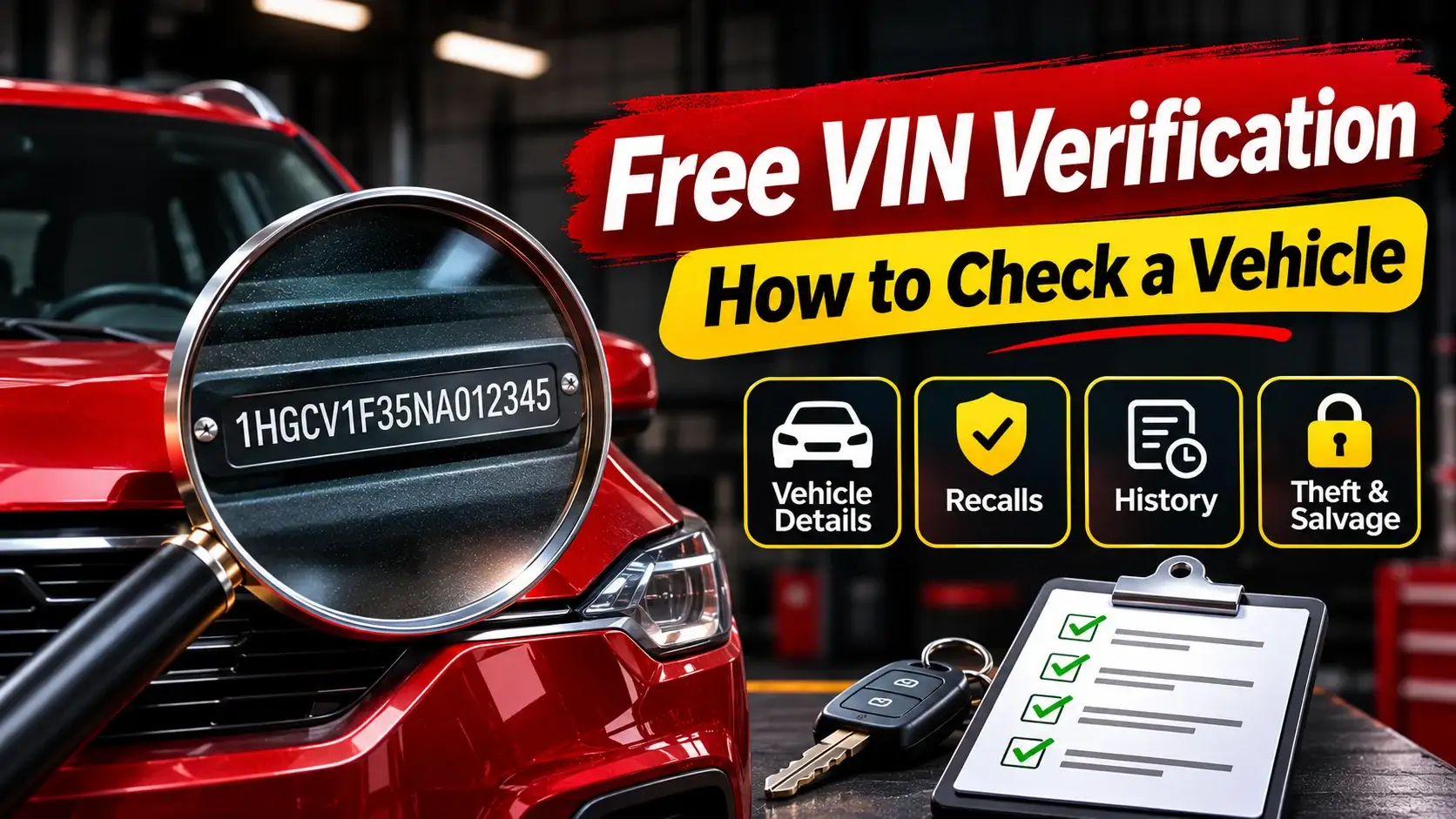
Buying a used car? Free VIN verification can help you confirm a vehicle’s identity, check certain theft and salvage records, and look for open safety recalls before you hand over any money.
A Vehicle Identification Number, or VIN, is the unique identification code assigned to a vehicle. Most modern U.S.-market passenger vehicles use a 17-character VIN that can reveal important identifying details.
But there is a catch: a free VIN lookup does not provide a complete accident, ownership, or repair history. Different services search different records.
This guide shows you how to verify a VIN using trusted resources, understand the results, and recognize warning signs before buying a used vehicle
Quick Answer: How Can You Check a VIN for Free?
Start with the NHTSA VIN Decoder to confirm basic vehicle information. Next, check NICB VINCheck for available theft and salvage records. Then use NHTSA’s recall lookup to check for outstanding safety recalls.
These services are free, but none guarantees that the vehicle has a clean title, complete history, or good mechanical condition.
What Is Free VIN Verification?
Free VIN verification is the process of checking a vehicle’s identification number against available databases without paying for the initial searches. It helps you compare a car’s identity with what the seller claims.
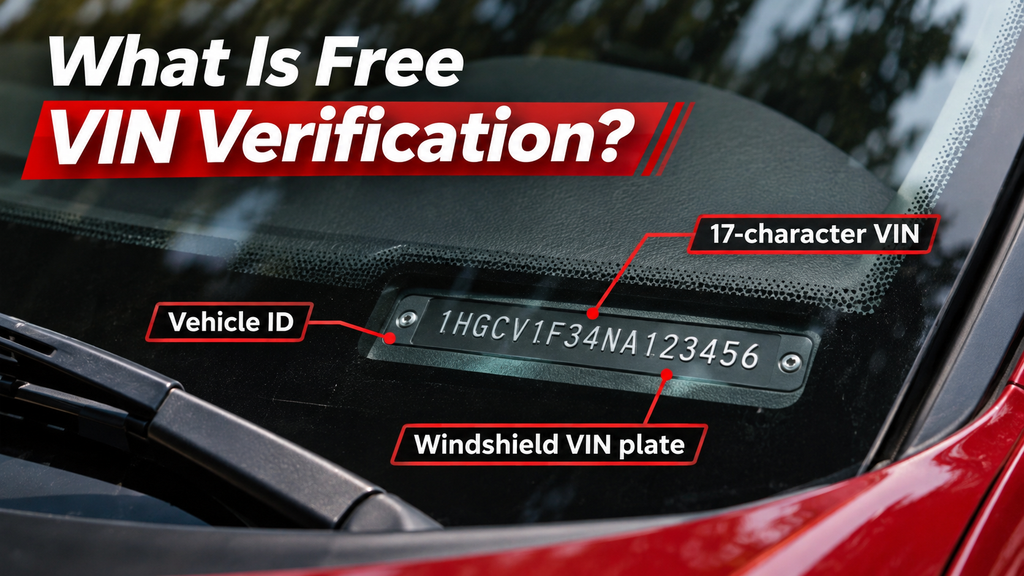
For example, suppose a seller advertises a certain make, model, and model year. A VIN decoder may help you check whether those details are consistent with the manufacturer’s reported information.
Other services can search particular theft, salvage, or recall records. However, these checks serve different purposes.
| Type of Check | Main Purpose |
|---|---|
| VIN decoding | Identify vehicle characteristics encoded in the VIN. |
| Theft and salvage screening | Search available reports from participating insurers. |
| Recall lookup | Check available information about outstanding safety recalls. |
| Title history | Investigate title brands and related records through appropriate sources. |
If you want to understand how each VIN character works, read our related guide: VIN Lookup and Decoder: How to Read a Vehicle VIN .
Where to Find Your Vehicle’s VIN
Before using any VIN verification website, locate the actual number on the vehicle. Do not rely only on the VIN typed into an online advertisement.
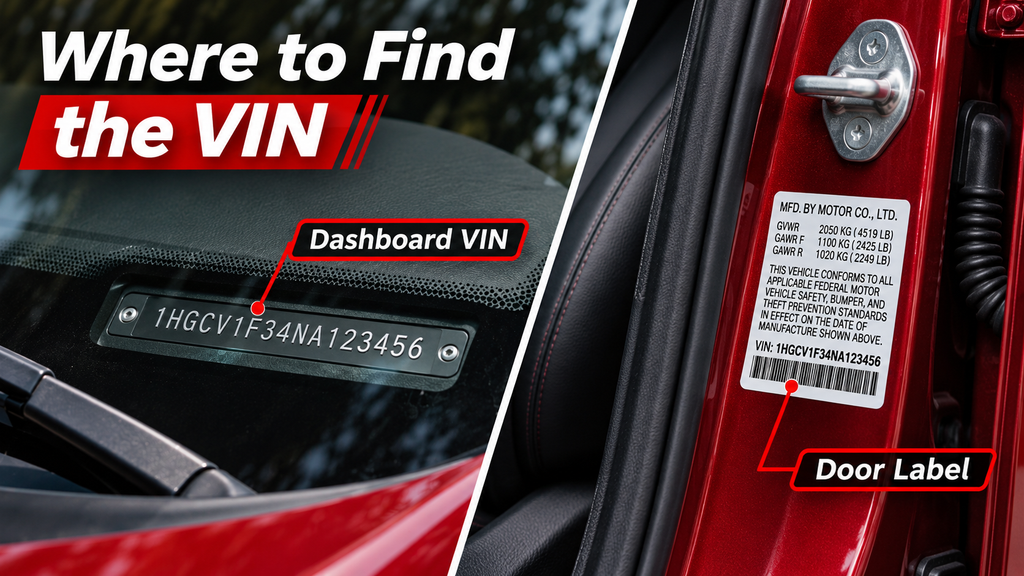
Dashboard Near the Windshield
On many passenger vehicles, the VIN is visible through the windshield near the driver’s side of the dashboard. You can often read it from outside the car.
Driver-Side Door Jamb
Open the driver’s door and look for a manufacturer label on the door frame or pillar. It may display the VIN along with tire and vehicle specification information.
Vehicle Documents
The VIN also commonly appears on the vehicle title, registration, and insurance documents.
Compare the VIN on the vehicle with the VIN on the documents. Every character should match. If they do not, investigate before proceeding.
Tip: Take a clear photograph of the VIN when the owner permits it. Watch for easily confused characters. Standard modern VINs do not use the letters I, O, or Q.
How to Verify a VIN for Free: Step-by-Step
You do not need to begin with an expensive vehicle history report. First, use a few trusted free services that check different parts of a vehicle’s identity and available history.
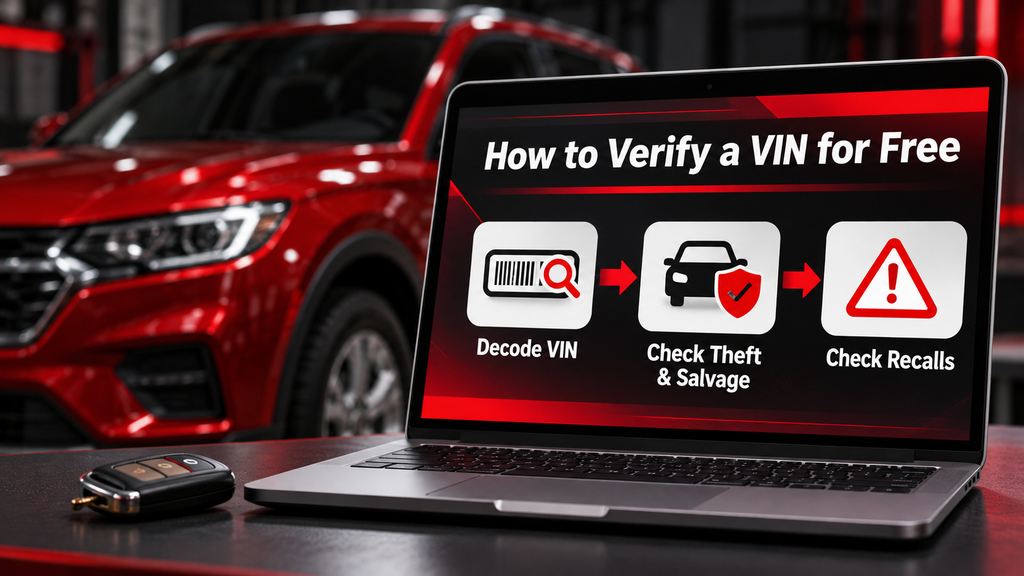
Step 1: Copy the Complete VIN
Find the VIN on the vehicle and record all 17 characters, if it uses the standard modern VIN format. Check that the dashboard, door label, and available ownership documents match.
Step 2: Use the NHTSA VIN Decoder
Visit the official NHTSA VIN Decoder . Enter the number and review the information the decoder returns.
Depending on the vehicle, results may include the manufacturer, model year, body type, assembly location, and other reported vehicle details.
Compare the decoded information with the seller’s listing. A difference deserves further investigation, although not every missing or unusual field proves fraud.
Step 3: Check NICB VINCheck
Use the free NICB VINCheck to search available theft and salvage records reported by participating insurance companies.
A clean result only means no matching report was found within that service’s coverage. It does not prove the car has never been stolen, damaged, or declared salvage.
Step 4: Check Open Safety Recalls
Visit NHTSA’s recall search and enter the VIN.
Review any outstanding recall information and contact the vehicle manufacturer or authorized dealer about necessary repairs.
Recall lookup coverage has limitations, so check with the manufacturer if you need confirmation.
Step 5: Verify the Title and Vehicle
Compare the physical VIN with the title and registration. Ask the seller to explain any discrepancy or title brand.
Before purchasing, consider additional title-history research and a pre-purchase inspection by an independent mechanic.
Buying safety: Never send a deposit or complete payment solely because a free VIN lookup shows no warning. Check the vehicle, ownership documents, seller details, and mechanical condition first.
What Information Can a Free VIN Check Reveal?
A free VIN search can reveal useful information, but the results depend on the database. Some services decode vehicle specifications, while others check selected history records.
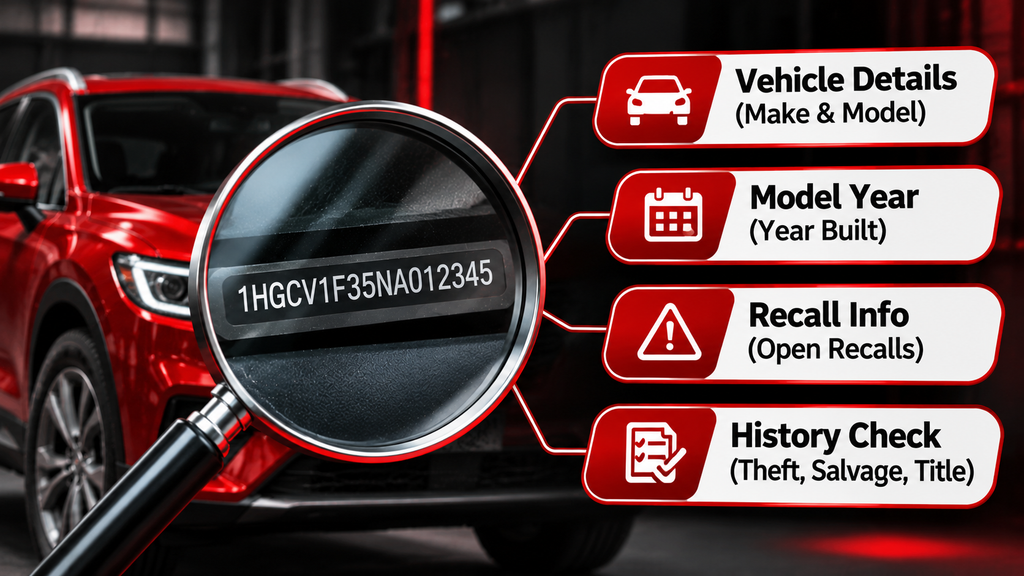
| Information | Free Availability | Limitations |
|---|---|---|
| Manufacturer | Usually available | Based on VIN decoding data. |
| Model year | Usually available | Verify against the actual vehicle. |
| Body and engine information | Often available | Some fields may be missing. |
| Open safety recalls | Available through official lookup | Recall database coverage is not unlimited. |
| Reported theft | Limited free screening | Depends on reporting sources. |
| Salvage or flood history | Some records available | Not a complete title-history search. |
| All previous accidents | No guaranteed free record | Many incidents are never recorded in accessible databases. |
| Complete ownership history | Generally unavailable | Privacy and record-access restrictions apply. |
| Mechanical condition | No | Requires physical inspection and testing. |
A free result is most valuable when combined with direct inspection of the vehicle. Treat missing information as unknown rather than proof that everything is fine.
Free VIN Check vs. Paid Vehicle History Report
Free tools are ideal for initial research, but they do not replace every type of vehicle history investigation.
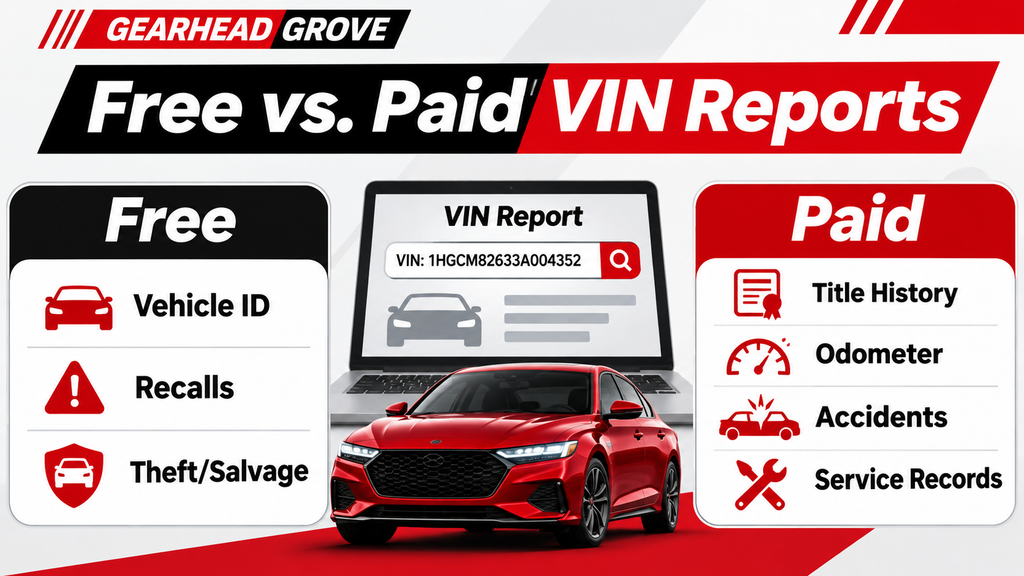
| Feature | Free VIN Tools | Paid History Reports |
|---|---|---|
| Basic vehicle identification | Usually included | Usually included |
| Open recall information | Official free lookup available | May be included |
| Selected theft/salvage screening | Limited records | Coverage varies |
| Title and brand history | Limited | Often broader available records |
| Odometer history | Generally limited | May include recorded readings |
| Accident and service history | Not comprehensive | May include reported events |
| Cost | No charge for official free services | Provider-dependent fee |
When Is a Paid VIN Report Worth Considering?
A paid report may be useful when you are seriously considering buying a used vehicle, especially if its history is unclear.
The National Motor Vehicle Title Information System lists approved providers that sell reports containing available title-related information, including title brands and certain other reported records.
A report is still not a guarantee that every accident or mechanical defect will appear.
Money-saving tip: Use free checks to eliminate obviously unsuitable vehicles before paying for additional history research on a serious purchase candidate.
For more information on the different types of free lookups, see our best free VIN check and decoder guide .
How to Tell Whether a VIN Is Valid
Most modern U.S.-market passenger vehicles have a 17-character VIN. The code uses letters and numbers to identify information about the manufacturer and vehicle.
Check the VIN Length and Characters
A standard modern VIN contains 17 characters and excludes the letters I, O, and Q to reduce confusion with similar-looking numbers.
Older vehicles and some special cases may use different identification formats. Do not automatically reject an older car simply because its VIN is shorter.
Use the Official Decoder
Enter the number into the NHTSA decoder and review any errors or warnings. A failed decode may indicate a typing mistake, an unsupported vehicle, or a VIN that needs closer investigation.
Compare the Physical Number
Even if a VIN successfully decodes, verify that it matches the actual car. A valid-looking number is not proof that the vehicle or its documents are legitimate.
Warning Signs When Checking a Used Car VIN
VIN verification is especially important when buying from a private seller or an unfamiliar dealership. Certain inconsistencies should prompt more research before you make a payment.
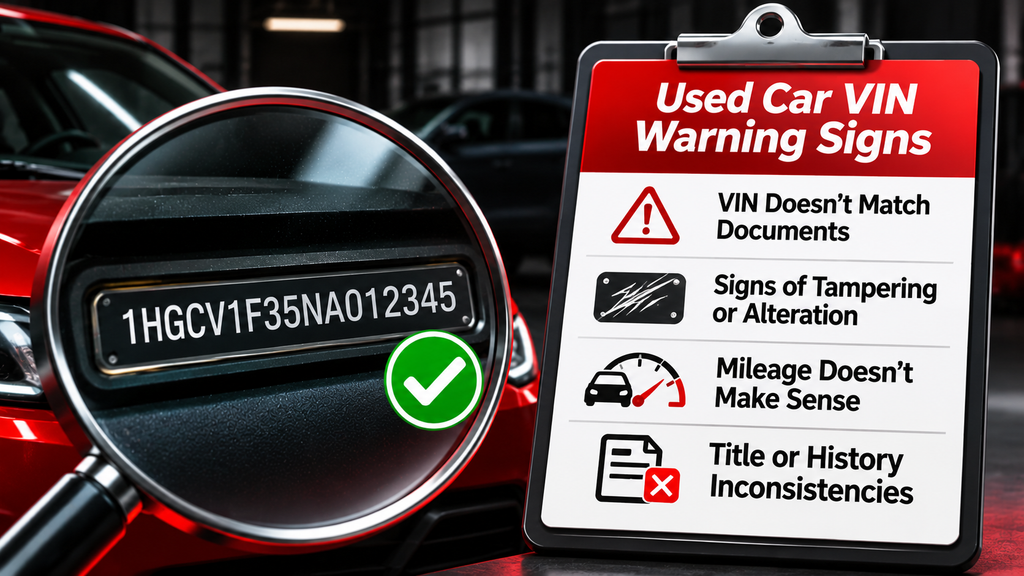
- VIN mismatch: The dashboard, door label, and title show different numbers.
- Altered identification: The VIN plate or nearby surfaces appear tampered with.
- Unexpected specifications: Decoded information significantly differs from the seller’s claims.
- Seller refuses access: You cannot inspect the VIN or ownership documents.
- Title concerns: The title is missing, branded, or inconsistent with the seller’s explanation.
- Unusual payment pressure: The seller demands immediate payment before reasonable checks.
- Unexplained damage: Repair evidence conflicts with claims that the vehicle has never been damaged.
These signs do not always prove fraud, but they justify further investigation. Do not ignore discrepancies to secure a seemingly good deal.
What Should You Do If the VIN Doesn’t Match?
A VIN mismatch can result from a simple documentation error, but it may also indicate a serious title or identification problem.
- Double-check every character and compare all available vehicle identification locations.
- Ask the seller for the original title and an explanation of the discrepancy.
- Contact the appropriate state DMV or motor vehicle agency for guidance.
- Do not alter identification labels or attempt to correct a VIN yourself.
- Do not complete the purchase until the discrepancy has been properly resolved.
Important: If you suspect a stolen vehicle, tampered VIN, or falsified title, avoid confronting anyone or attempting your own investigation. Contact the appropriate authorities for advice.
Used Car VIN Verification Checklist
Before making a final decision, use this checklist to bring the free VIN searches, document review, and vehicle inspection together.
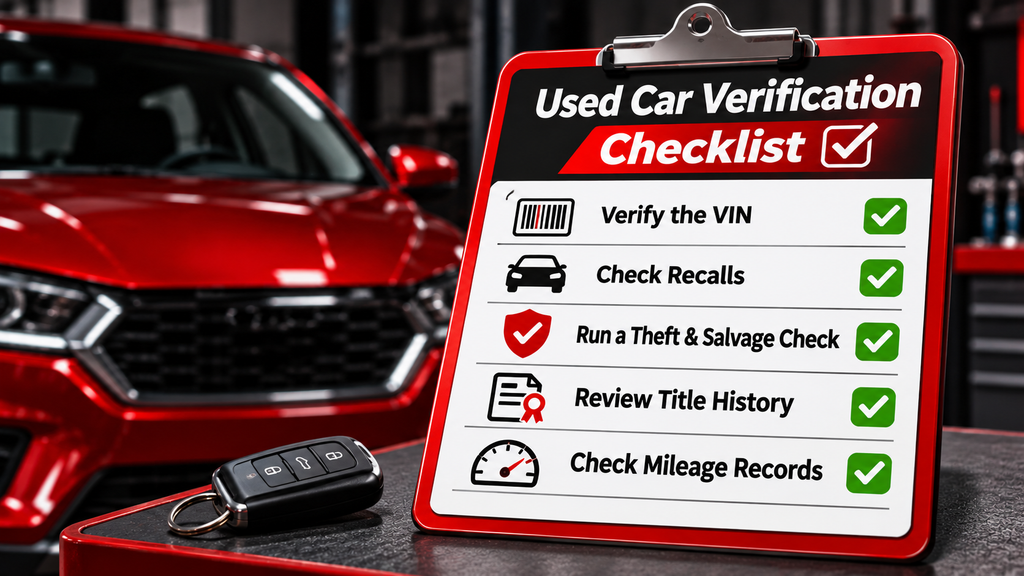
- Locate the VIN on the vehicle.
- Compare the VIN on the dashboard, door label, title, and registration.
- Decode the VIN using the official NHTSA service.
- Compare decoded details with the advertised vehicle.
- Check available theft and salvage records using NICB VINCheck.
- Check for outstanding safety recalls.
- Verify the title and seller’s authority to sell the vehicle.
- Review additional vehicle history information when appropriate.
- Arrange an independent pre-purchase mechanical inspection.
- Resolve any warning signs before transferring money.
Example: Checking a Used SUV Before Buying
Imagine you find a used SUV advertised at an attractive price. The seller provides the VIN and says the car has a clean history.
You decode the VIN and compare its identifying details with the listing. Next, you use NICB VINCheck and NHTSA’s recall tool.
Even if neither service returns a warning, you still inspect the title, check the actual vehicle, and arrange a mechanic’s pre-purchase inspection.
This process cannot eliminate every buying risk, but it gives you a more reliable basis for your decision than trusting the advertisement alone.
Frequently Asked Questions About Free VIN Verification
Can I verify a VIN for free?
Yes. NHTSA offers a free VIN decoder and recall lookup, while NICB offers free screening of certain reported theft and salvage records. These are not complete vehicle history reports.
What is the best free VIN verification website?
It depends on what you need. Use NHTSA for decoding and recalls, and NICB VINCheck for available participating-insurer theft and salvage records.
Can I check a vehicle’s accident history for free?
Some free searches may reveal limited damage-related records, but they cannot guarantee a complete accident history. Additional reports and a vehicle inspection may be needed.
Can a VIN check tell me if a car is stolen?
NICB VINCheck can identify certain reported unrecovered theft records from participating insurance companies. A negative result does not prove the vehicle has never been stolen.
Can I check a salvage title for free?
NICB may show some reported salvage information, but it does not replace an official title investigation or a more complete title-history report.
Does a free VIN decoder show previous owners?
No. A basic VIN decoder primarily identifies vehicle specifications. It does not provide a complete list of previous owners.
What does a 17-character VIN reveal?
It can encode information about the manufacturer, vehicle characteristics, model year, assembly plant, and production identification, depending on the vehicle and applicable VIN standards.
Is a clean free VIN check enough to buy a used car?
No. A clean lookup result does not guarantee an accident-free vehicle, clear title, or reliable mechanical condition. Verify the documents and inspect the vehicle.