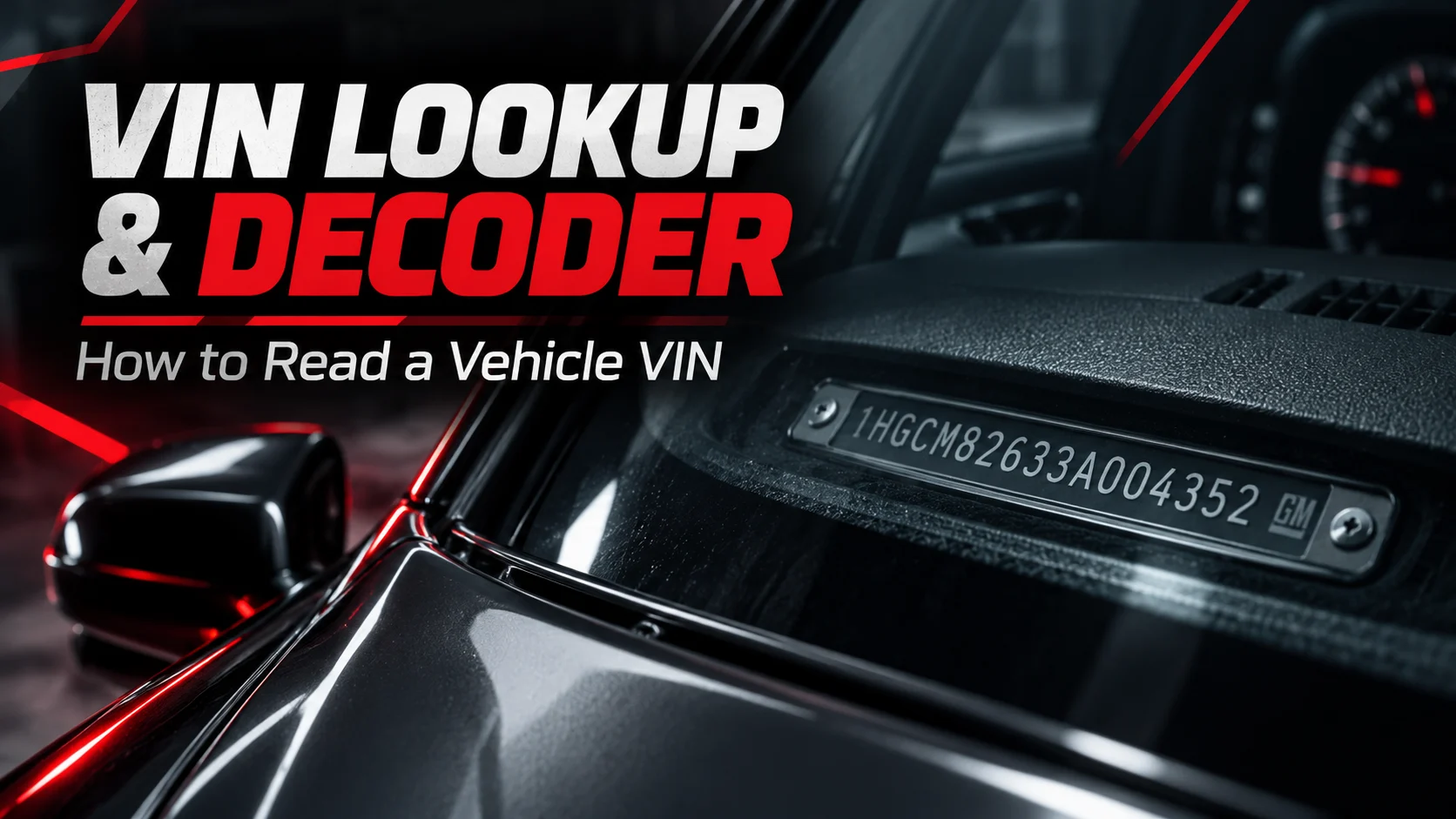
Buying a used car? Before trusting the seller’s description, check its vehicle identification number (VIN). This 17-character identifier helps confirm the manufacturer, model year, and selected factory specifications.
A free VIN lookup is useful for used-car research, replacement parts, and vehicle identification—but it has limits.
What Is a Vehicle Identification Number (VIN)?
A Vehicle Identification Number (VIN) is a unique identifier assigned by a manufacturer to identify a vehicle. Modern vehicles following US VIN standards use 17 characters made up of digits and letters.
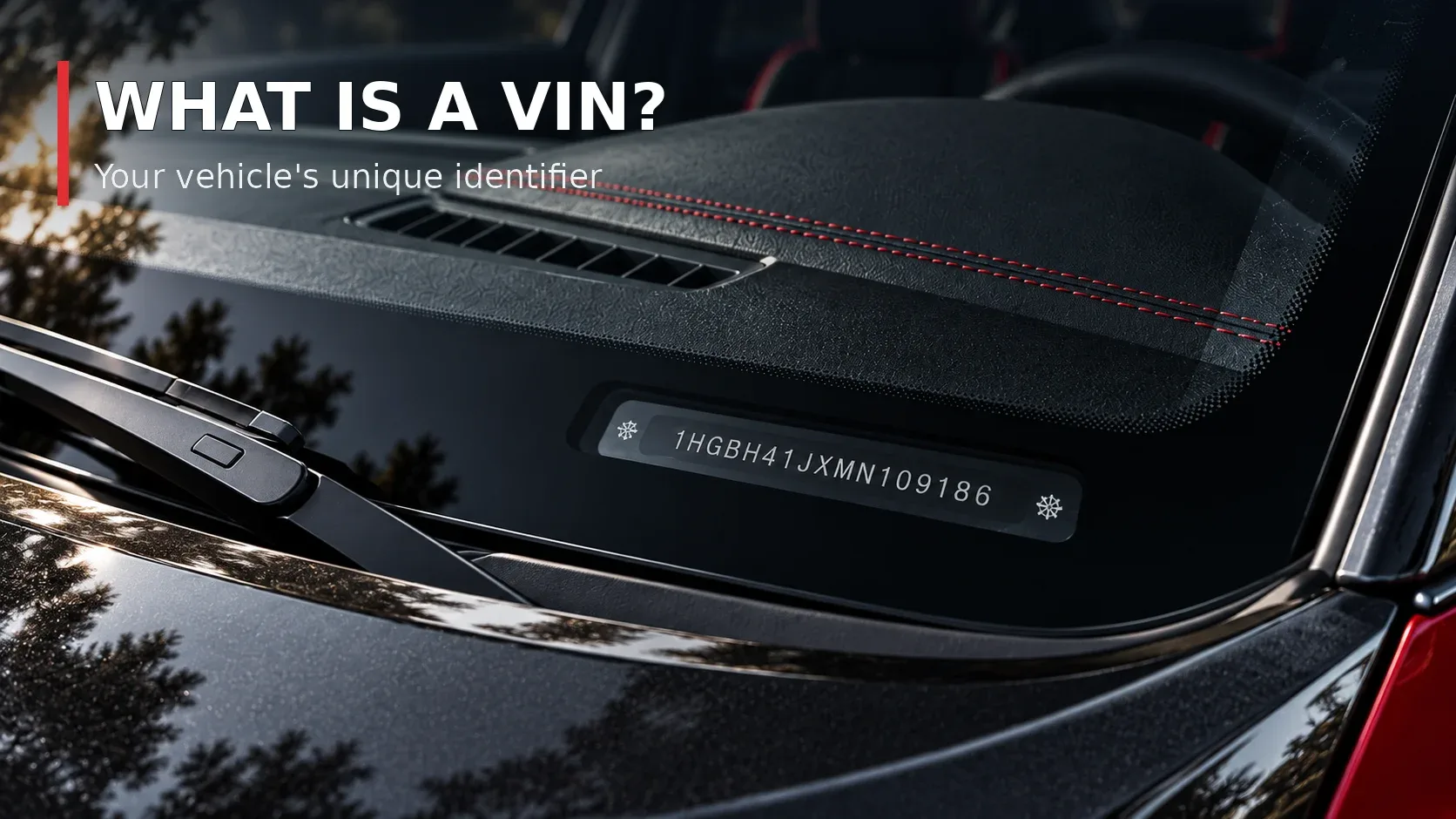
VINs help manufacturers, insurers, repair professionals and government agencies identify a vehicle and connect it to relevant records. A VIN is not a complete record of mechanical condition, title status or accident history.
Why a VIN Matters
A VIN helps verify the manufacturer, model year, selected vehicle characteristics, recall eligibility and compatibility with manufacturer parts data.
Where to Find the VIN Number on Your Car
The most familiar VIN location is the lower corner of the windshield on the driver’s side, visible from outside. Many vehicles also display the VIN on a manufacturer label near the driver’s door opening.
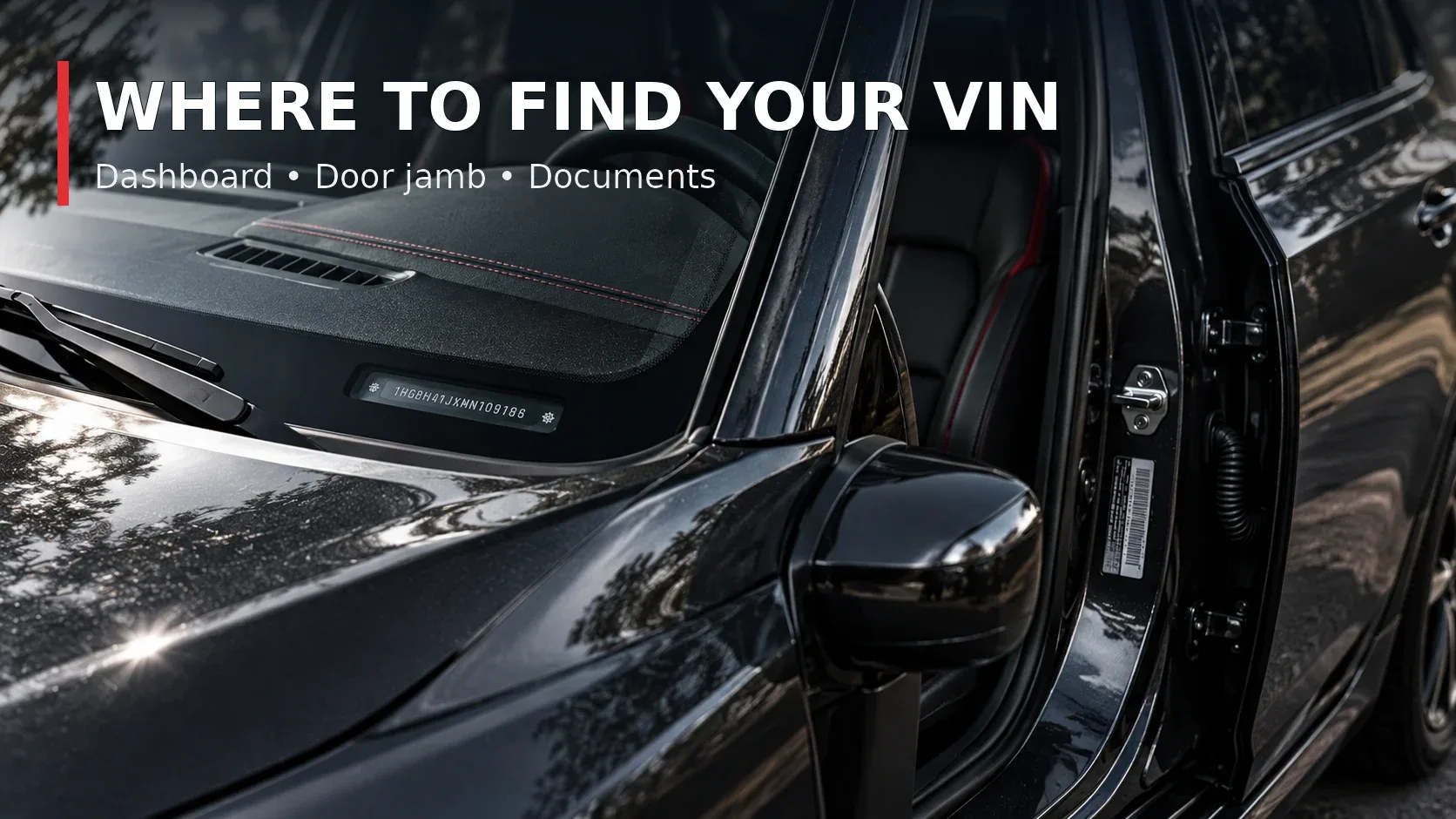
You can usually find the VIN on registration documents, the vehicle title and insurance records. Other physical identification locations vary by manufacturer.
Used-Car Tip
Compare the number on the car with the title and registration. Investigate unexplained differences or signs of tampering before buying.
How to Read and Decode a 17-Character VIN
The modern 17-character VIN has three general sections: the World Manufacturer Identifier (WMI), Vehicle Descriptor Section (VDS) and Vehicle Identifier Section (VIS). Specific codes depend on the manufacturer and applicable rules.
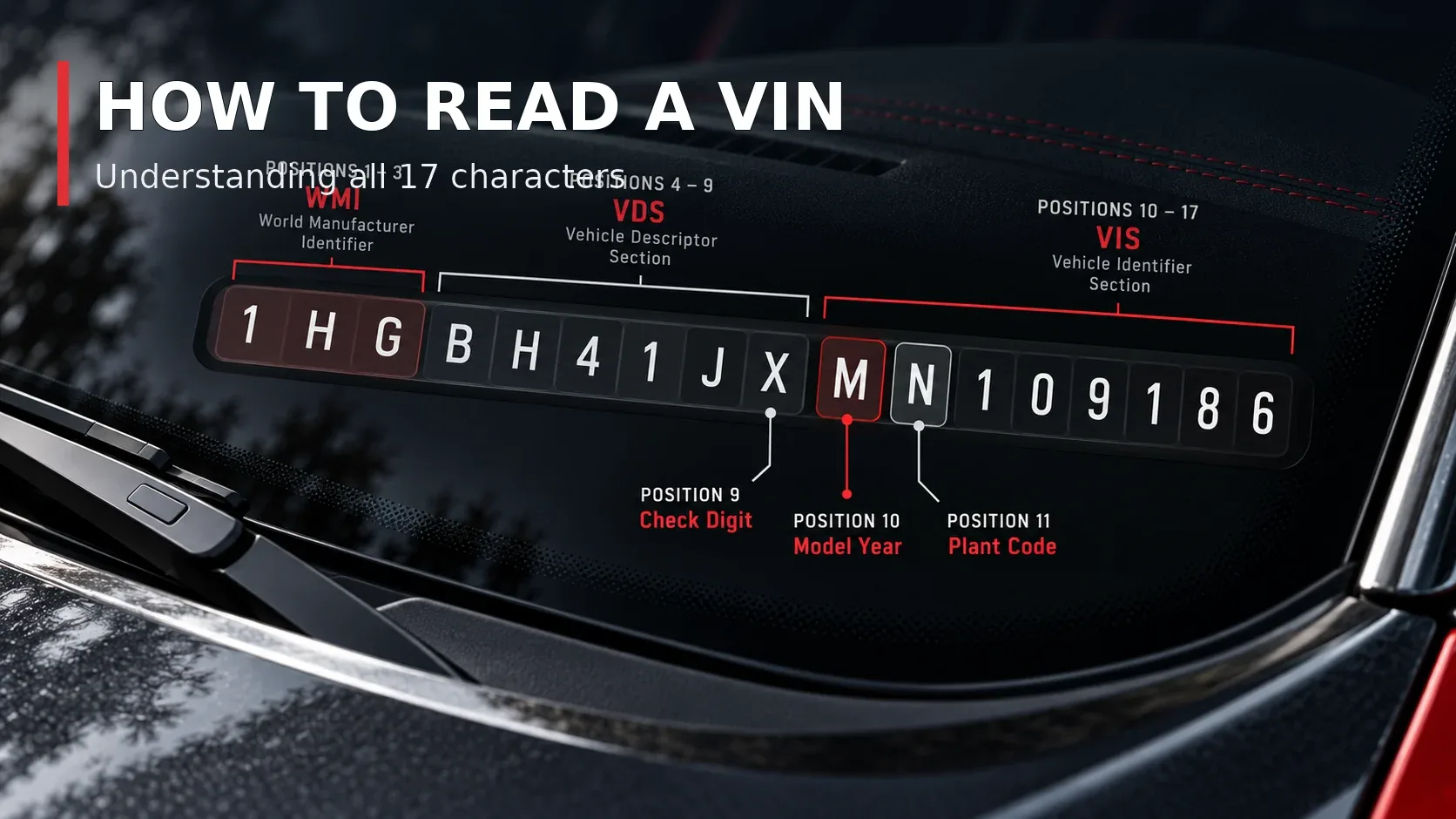
Positions 1–3 identify the manufacturer or manufacturer grouping. Positions 4–9 describe manufacturer-defined vehicle characteristics; in US VINs position 9 is a mathematical check digit. Position 10 indicates model year, position 11 indicates plant, and positions 12–17 supply the identifying sequence.
Model-year codes repeat, so decode the complete VIN instead of interpreting a single character in isolation.
| VIN position | Meaning in modern US VINs |
|---|---|
| 1–3 | World Manufacturer Identifier (WMI) |
| 4–8 | Manufacturer-defined vehicle characteristics |
| 9 | Check digit |
| 10 | Model-year code |
| 11 | Plant code |
| 12–17 | Identifying production sequence |
How to Decode a VIN Number for Free
You can decode a VIN number for free using the official NHTSA vehicle identification service. It displays information manufacturers report, which may include make, model, model year, body type, engine characteristics and other details.
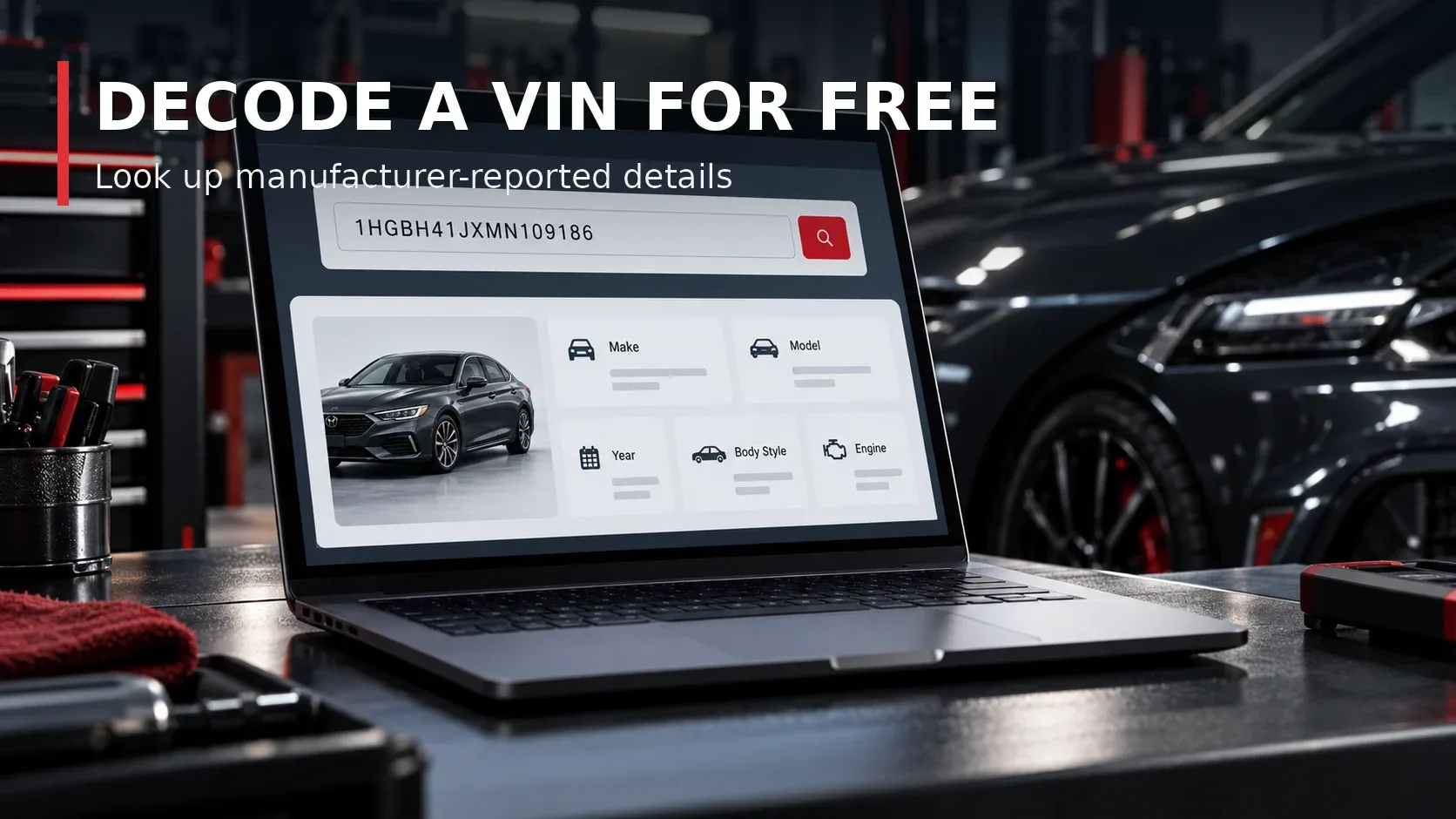
First, locate the complete VIN and carefully check all characters. Next, enter it in the official NHTSA VIN decoder. Review its results and any errors, then verify important specifications against vehicle labels or manufacturer documentation.
A free VIN decoder is not the same as a vehicle history report: it does not automatically show complete accident, ownership, title or mileage records.
Free VIN Decode Steps
- Find the complete VIN.
- Open the official NHTSA VIN decoder.
- Enter the full number carefully.
- Review manufacturer-reported results and any warnings.
- Confirm essential specifications using vehicle-specific records.
Example: How to Read a VIN
Consider the illustrative 17-character VIN 1HGCM82633A004352. Its first three characters form the WMI, positions 4–9 describe the vehicle under the relevant manufacturer coding scheme, and position 10 contains the model-year code. This example illustrates structure, not a verified specification sheet.
For a specific number such as 1FDWE3FS4KDC54615, run a complete lookup and verify the returned information rather than guessing exact engine, trim or equipment.
What Vehicle Specifications Can You Find by VIN?
A vehicle specifications lookup using a VIN may identify its make, model, model year, body type, engine or fuel details and sometimes its drivetrain or transmission. Results can differ by manufacturer and decoder.
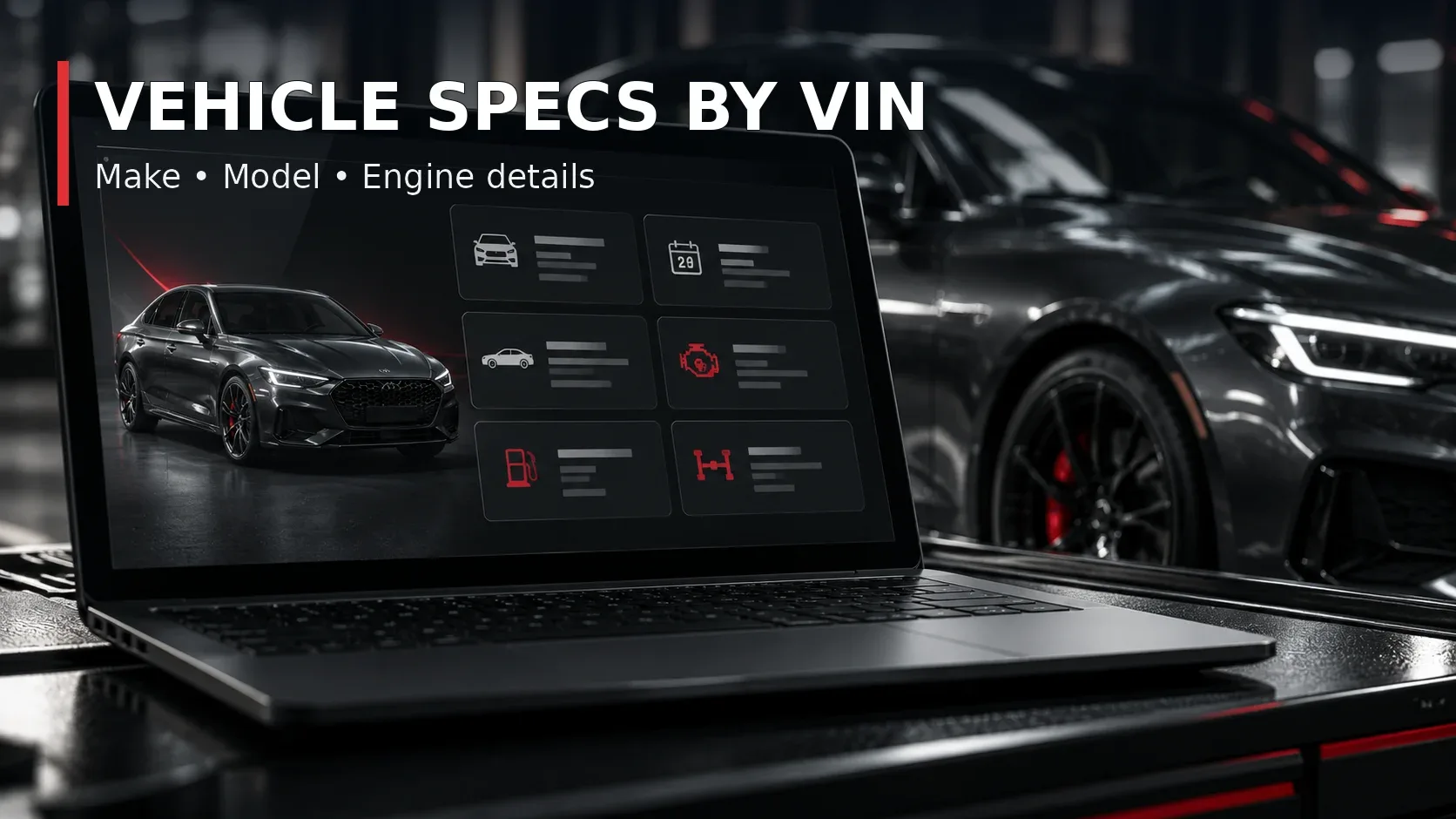
Exact trim packages, installed options, paint codes, towing ratings and replacement-part compatibility may require a build sheet, manufacturer catalog or physical labels. If a decoder returns a blank field, do not guess.
Can You Find Towing Capacity by VIN Number?
The VIN can help identify a truck or SUV configuration, but the number alone is generally insufficient to determine its exact safe trailer weight. Engine, axle ratio, drivetrain, wheelbase, towing package, payload, and weight limits can affect towing capability.
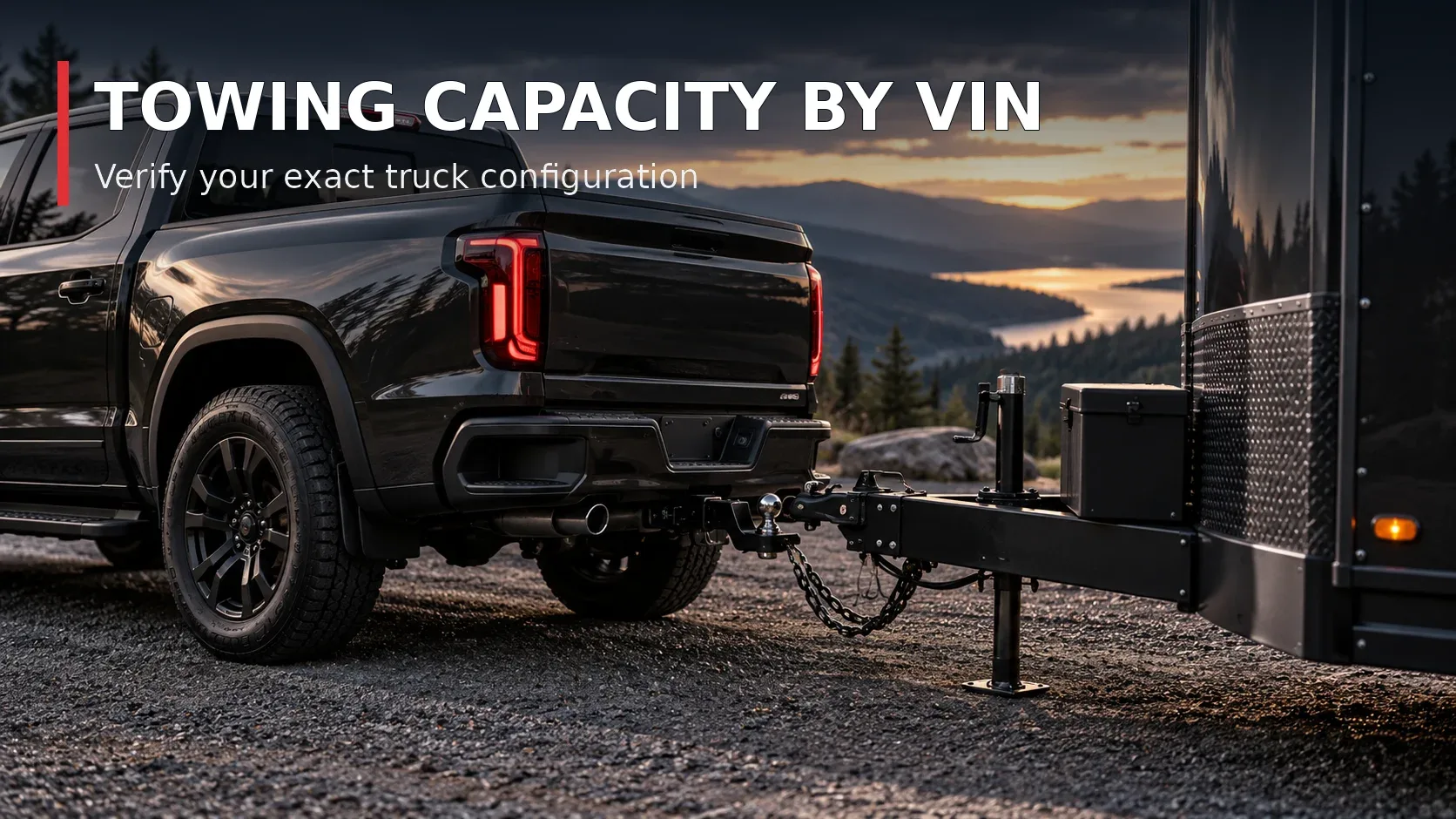
Confirm the correct model-year towing guide, exact factory configuration, vehicle labels and hitch limits. Follow the lowest applicable restriction rather than the highest towing figure advertised for the model.
How to Find Paint Codes Using a VIN
A standard VIN decoder usually does not show the exact factory paint code. The VIN may help an authorized dealer identify a vehicle’s build record, but color information often appears on a manufacturer label instead.
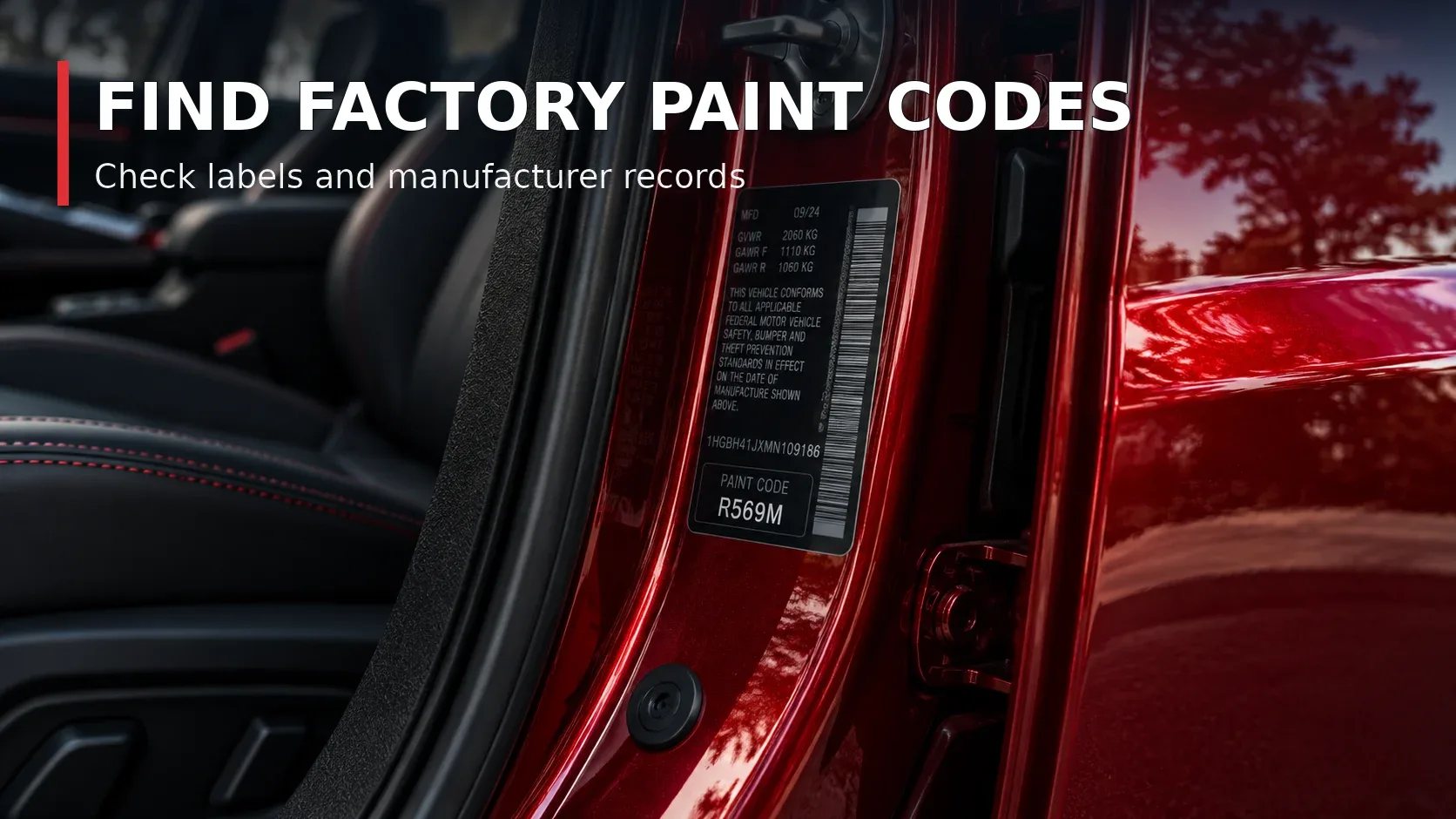
Inspect the driver’s door jamb and manufacturer-recommended label locations, review the owner’s manual, or ask an authorized dealer to check original build records. Confirm the code before buying touch-up paint; the current finish may have faded.
How to Check a Used Car Using Its VIN
Before buying a used vehicle, compare the dashboard VIN with its title, registration and manufacturer labels. Decode the number to confirm that make, model, model year and other available details match the seller’s description.
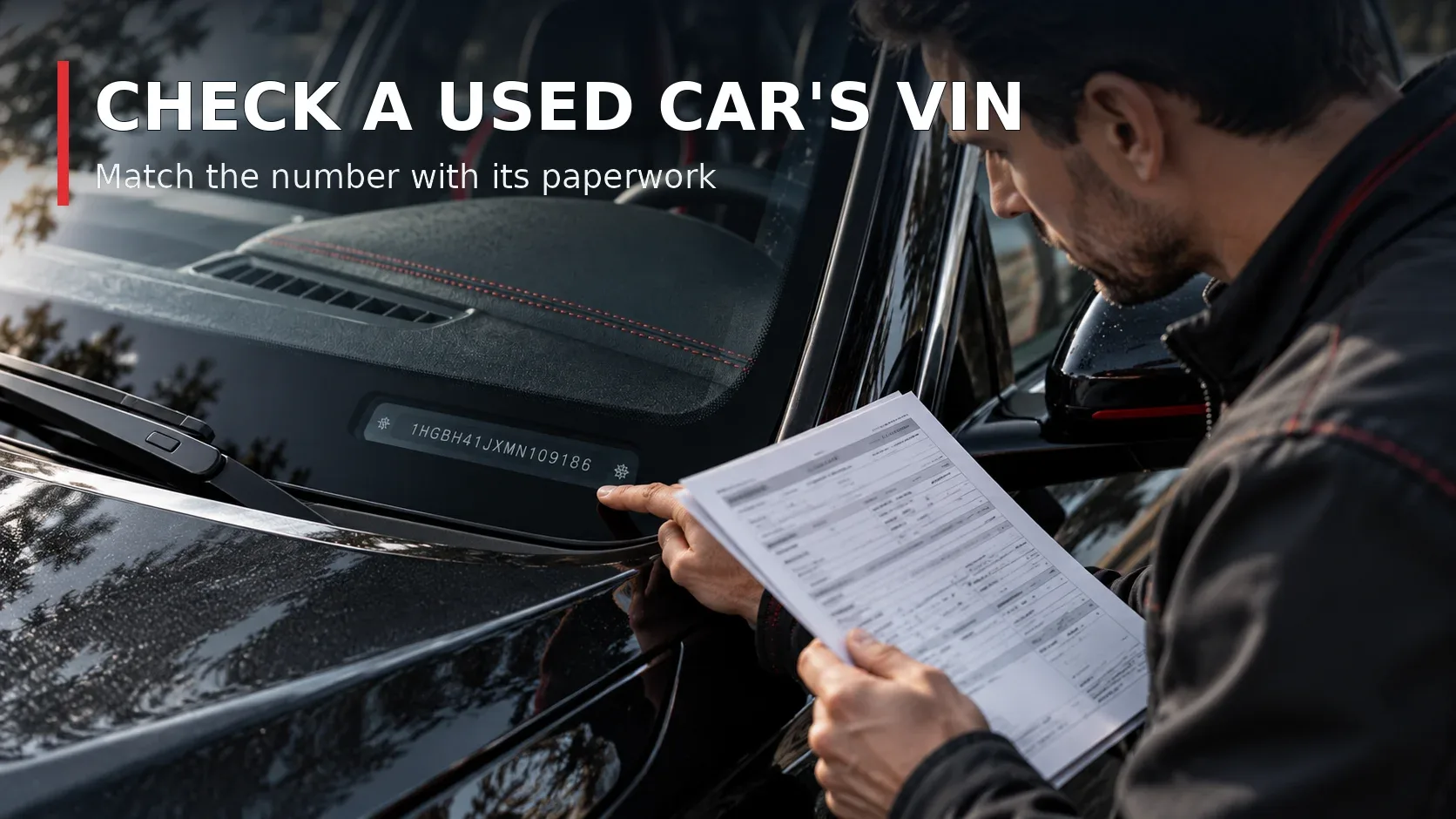
Check appropriate safety recall resources, investigate title and vehicle history records, and arrange an independent mechanical inspection. Even a clean history report may omit accidents or unreported repairs.
Can You Find a Used-Car Value by VIN?
A VIN can help a valuation service select a vehicle’s make, model and year, but it does not contain the vehicle’s current selling price.
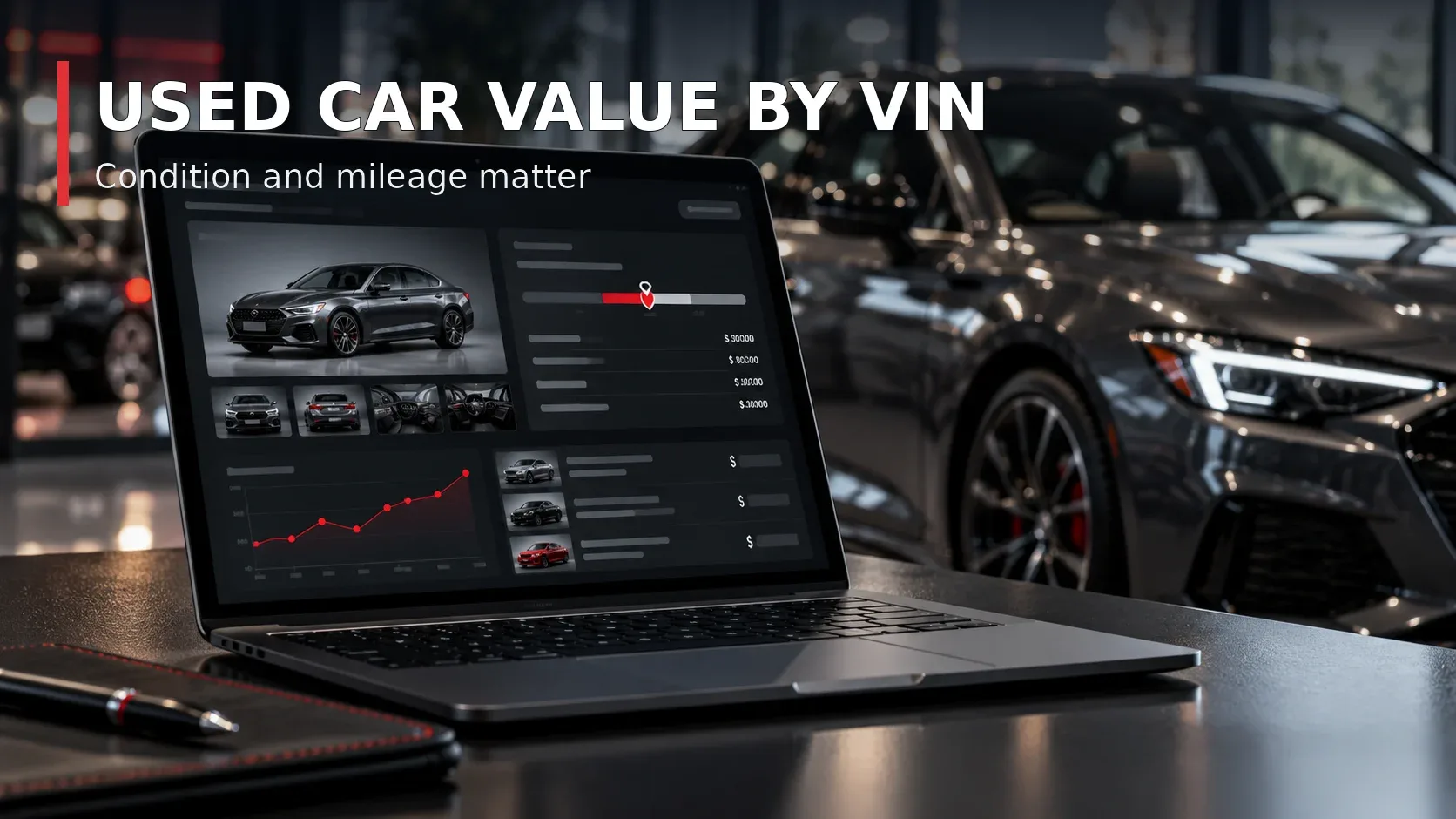
An accurate estimate also considers mileage, condition, trim, optional equipment, accident history, geographic location, demand and comparable listings. Compare estimates with local market evidence.
Why Is My VIN Not Decoding Correctly?
Common decoding problems include mistyped characters, unsupported older VIN formats, an invalid US check digit, incomplete manufacturer data and confusion between model-year cycles.
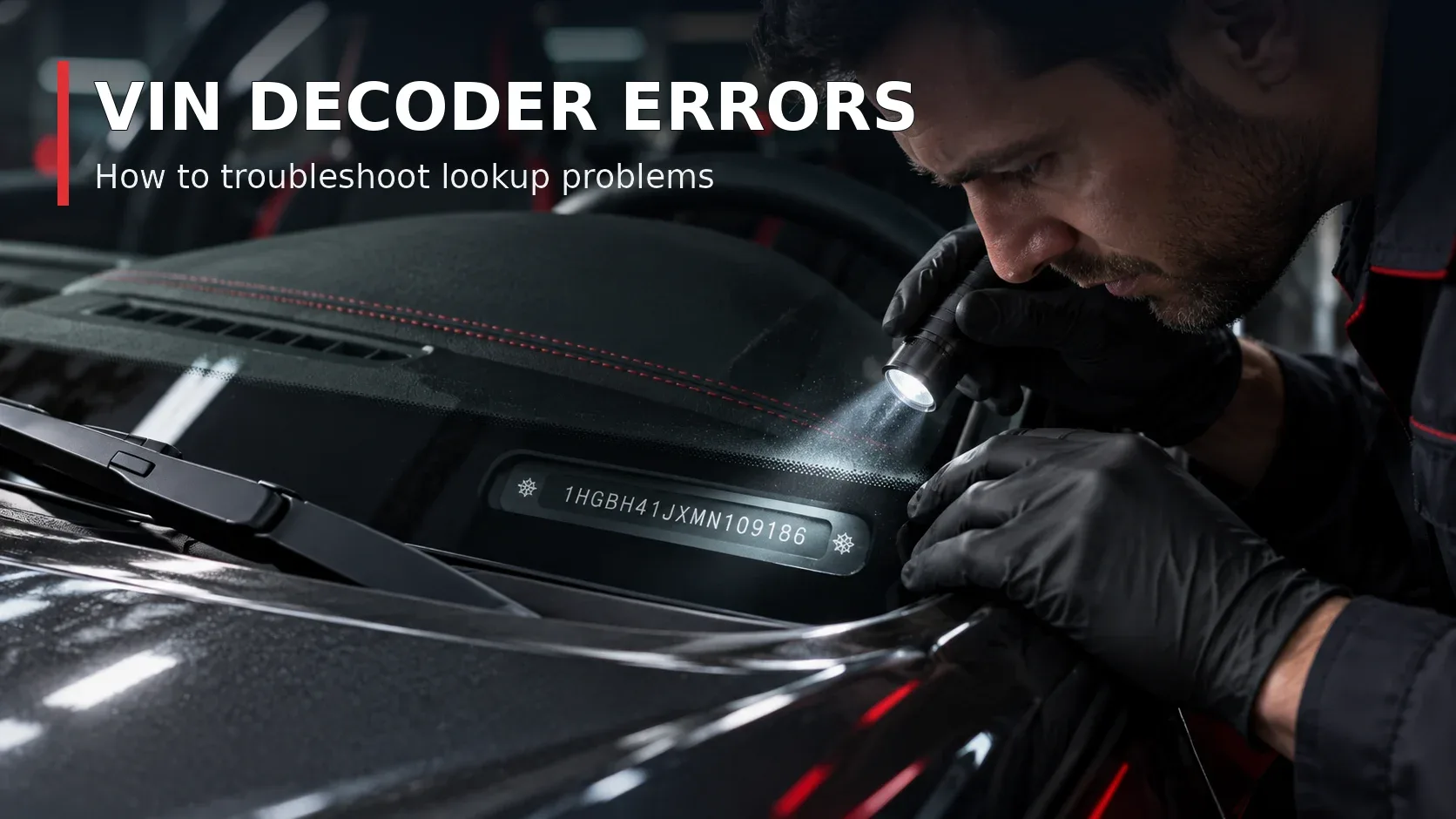
Modern standard VINs do not contain the letters I, O or Q. Check the physical identifier and all 17 characters before retrying. If the VIN disagrees with a vehicle title or appears altered, investigate with appropriate authorities before proceeding.
VIN Decoder vs. Vehicle History Report
A VIN decoder identifies manufacturer-reported specifications. A separate vehicle history report may include recorded accidents, title events, and odometer readings, but historical databases may be incomplete.
| Information | Basic VIN Decoder | Vehicle History Report |
|---|---|---|
| Make / model / year | Generally yes | Usually |
| Engine / body details | Some manufacturer data | Varies |
| Accident reports | No | Possibly |
| Title records | No | Possibly |
| Mileage history | No | Possibly |
Frequently Asked Questions About VIN Lookup
Can I decode a VIN number for free?
Yes. An official free VIN decoder can return manufacturer-reported details but not a complete vehicle history.
Where can I find my VIN?
Look near the lower driver-side windshield, the driver’s door jamb, and in registration, title or insurance documents.
Are all VINs 17 characters?
Modern US-standard VINs are 17 characters, while older vehicles may use different formats.
Can I get exact vehicle specs by VIN?
Many factory characteristics may be available, but exact trim, installed options and some engine information may require manufacturer confirmation.
Can towing capacity be determined by VIN?
Not reliably from a basic VIN decode alone. Confirm vehicle configuration, towing guides and relevant weight ratings.
Does a VIN reveal paint codes?
Usually not through basic decoding. Check manufacturer labels or build records.
Can VIN lookup show accidents?
Basic VIN decoding does not. Vehicle history reports may contain some recorded incidents but can be incomplete.
Can a VIN tell me the used car value?
It can identify the car for a valuation service, but value also depends on mileage, condition and market demand.
Why will my VIN not decode?
Check for typing errors, older formats, manufacturer database gaps and check-digit inconsistencies.
Does a valid VIN guarantee a clean title?
No. VIN validity does not establish ownership or title status.
Final Thoughts: Decode Your VIN With Confidence
VIN decoding is a useful first step for checking vehicle identity and factory specifications. For safety-critical, purchasing, maintenance or legal decisions, combine the VIN lookup with manufacturer documents, title research and an independent inspection.