Manual Transmission • Clutch System • Troubleshooting
Your clutch pedal suddenly feels soft, your manual-transmission car is difficult to shift, or you’ve noticed fluid around the transmission. Could the slave cylinder be responsible? It might be—but several clutch and hydraulic problems can create similar symptoms. Understanding what this small component does is the first step toward finding the actual fault.
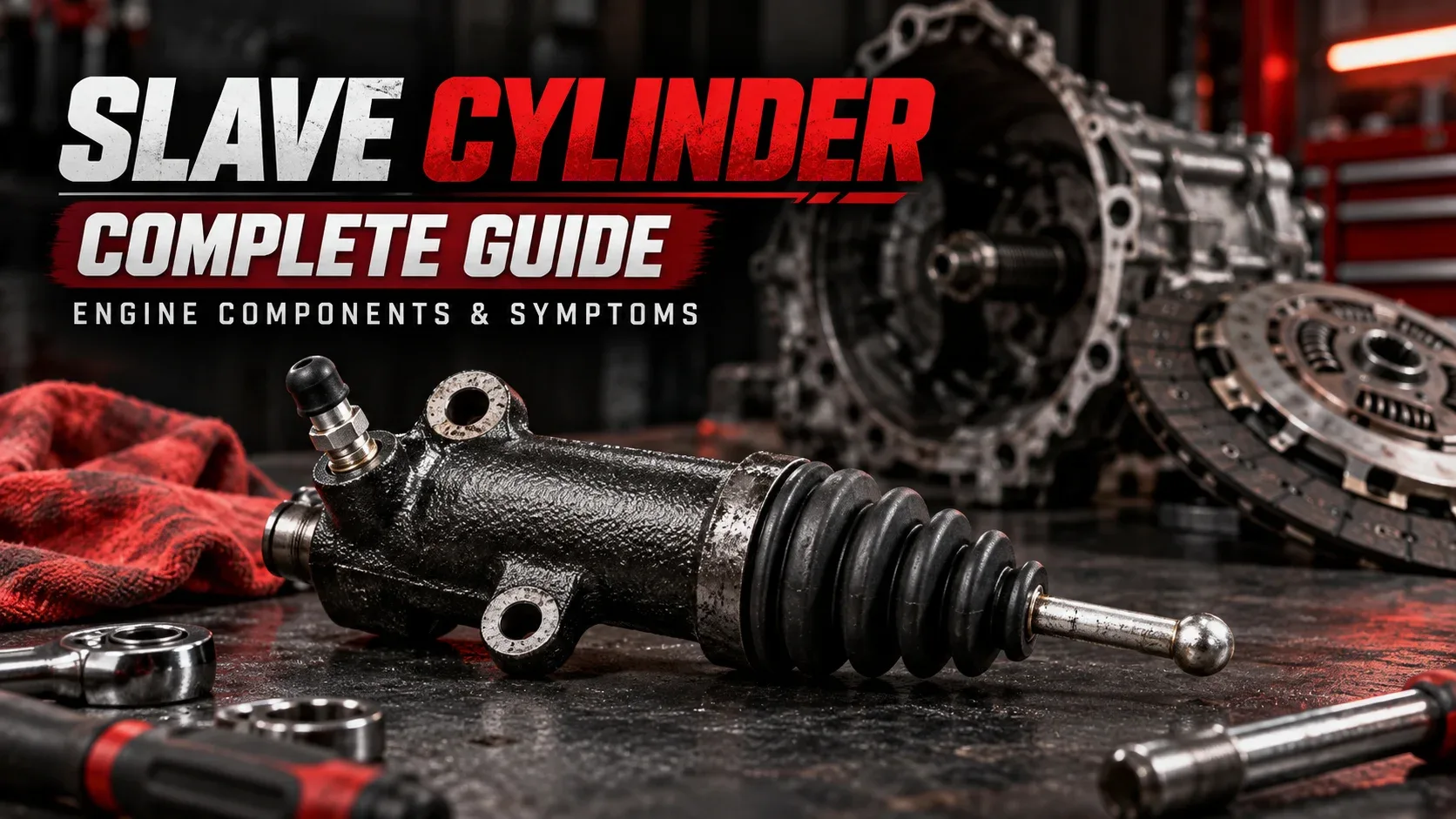
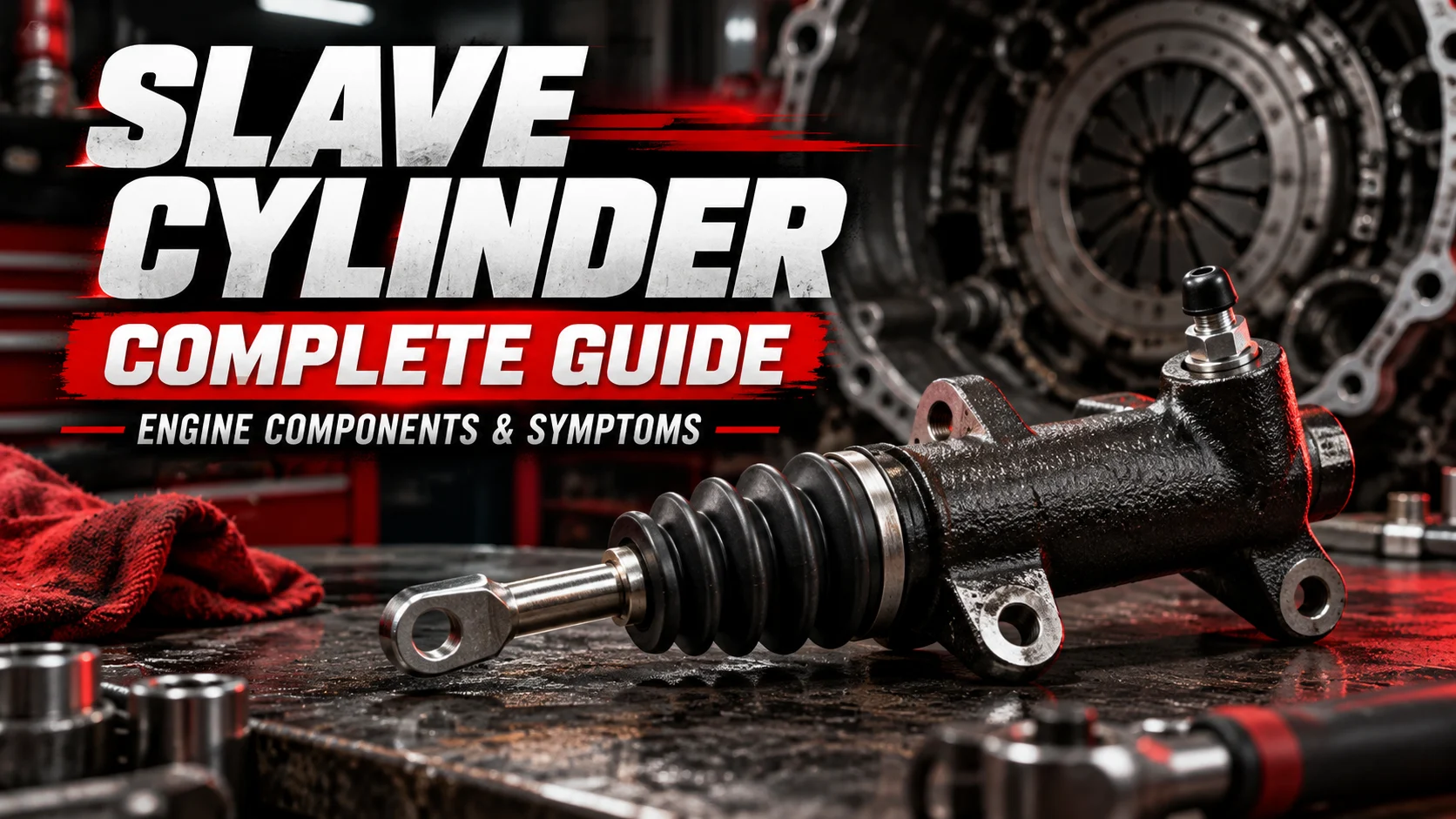
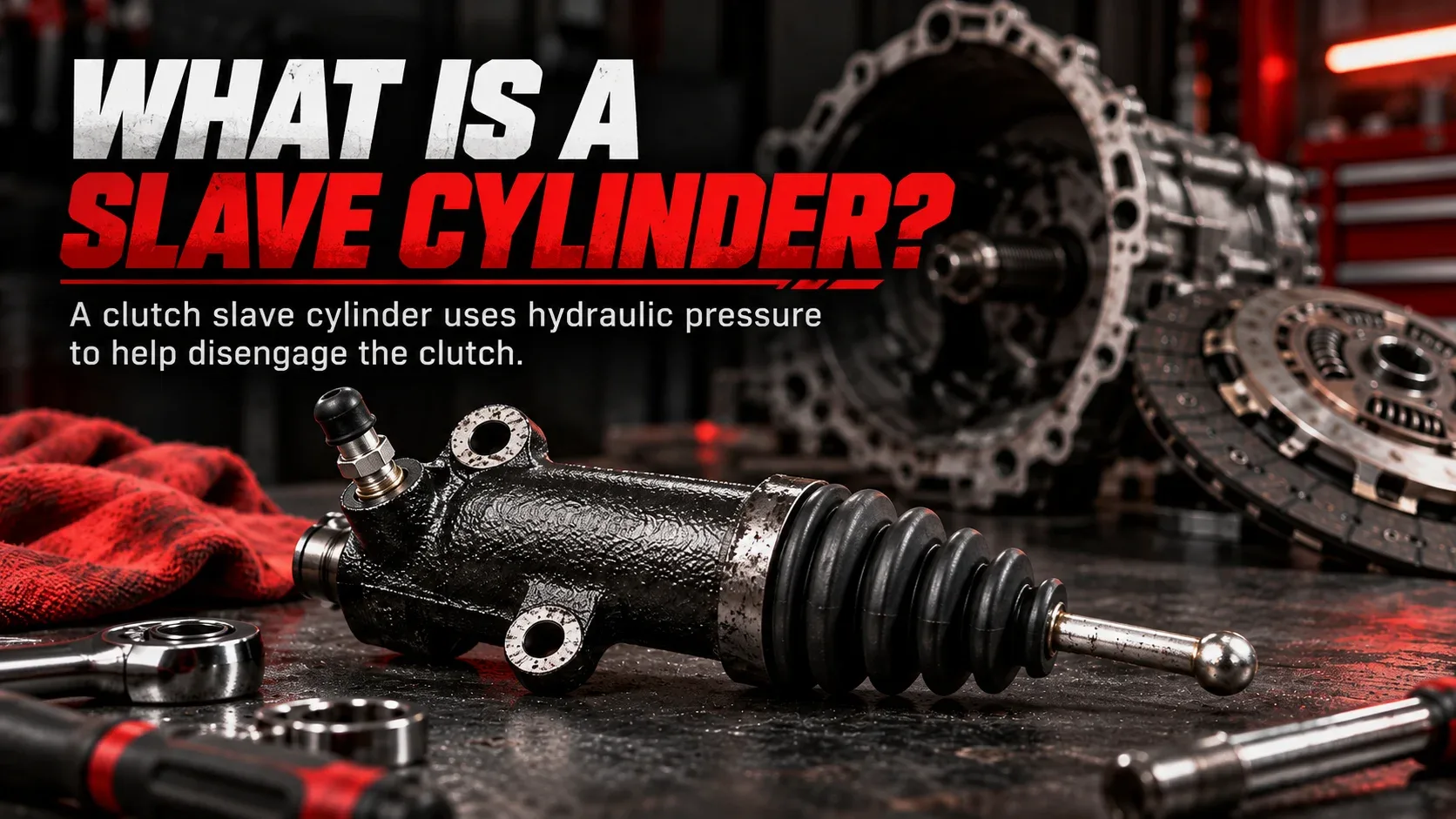
A clutch slave cylinder is a hydraulic actuator that helps disengage the clutch in many manual-transmission vehicles. When you press the clutch pedal, the master cylinder creates hydraulic pressure that moves the slave cylinder or its integrated release bearing. A faulty slave cylinder can cause a soft pedal, hydraulic-fluid leaks, or trouble selecting gears. Those signs call for inspection; they do not prove the slave cylinder is defective.
What Is a Slave Cylinder?
A slave cylinder is the working end of a hydraulic control system. In a manual-transmission clutch, it converts the hydraulic pressure produced by the master cylinder into movement that releases the clutch. This allows the engine and transmission to be temporarily disconnected so the driver can change gears.
Despite sometimes being grouped with engine components, the clutch slave cylinder belongs to the clutch actuation system. It is not an internal engine part. Some vehicles use a cable-operated clutch instead, so they do not have a hydraulic clutch slave cylinder.
How Does a Clutch Slave Cylinder Work?
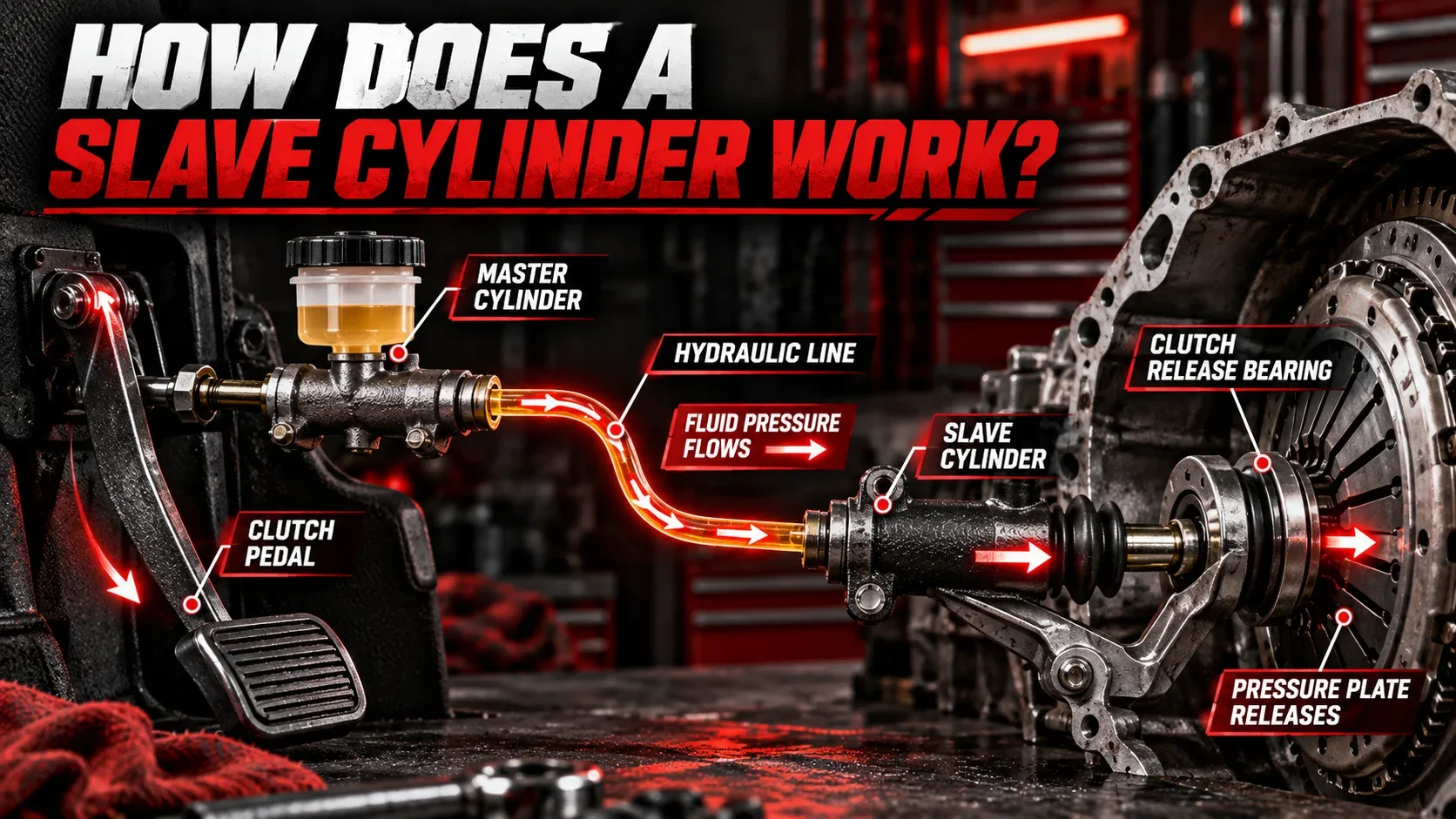
The operation is straightforward in principle: pressing the clutch pedal creates pressure in a sealed hydraulic circuit. That pressure travels through hydraulic fluid to the slave cylinder, where it produces movement at the clutch release mechanism.
- The driver presses the pedal. A pushrod actuates the clutch master cylinder.
- Hydraulic pressure builds. The master cylinder moves fluid through the clutch hydraulic line.
- The slave cylinder responds. Its piston moves, or an integrated concentric unit acts directly on the release bearing.
- The clutch disengages. The release mechanism reduces the clamping force on the clutch disc, allowing a gear change.
- The pedal is released. The clutch mechanism returns toward its engaged position and hydraulic pressure changes accordingly.
Remember: Hydraulic fluid transmits pressure; the system is designed to remain sealed. External leakage, internal seal bypass, or trapped air can prevent consistent clutch release.
Where Is the Clutch Slave Cylinder Located?
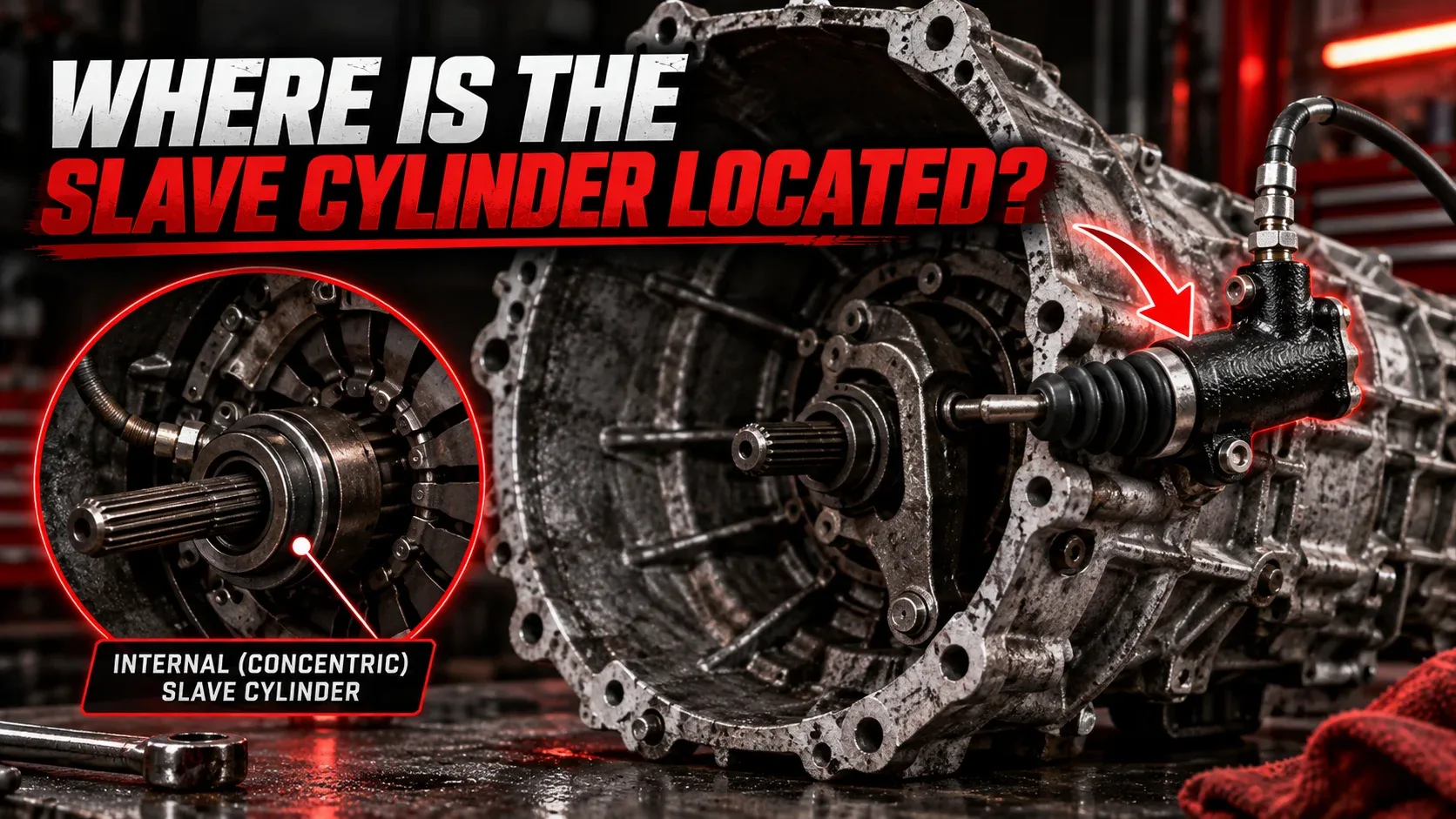
Its location depends on the design of your transmission. An external slave cylinder is commonly bolted to the transmission or bellhousing and uses a pushrod to move a clutch release fork. An internal concentric slave cylinder usually sits inside the bellhousing around the transmission input shaft and acts as part of the release-bearing assembly.
In some cars, an external slave cylinder is relatively easy to see. An internal unit may not be visible without transmission removal. Consult the correct service information for your vehicle before attempting to locate or replace it.
Types of Clutch Slave Cylinders
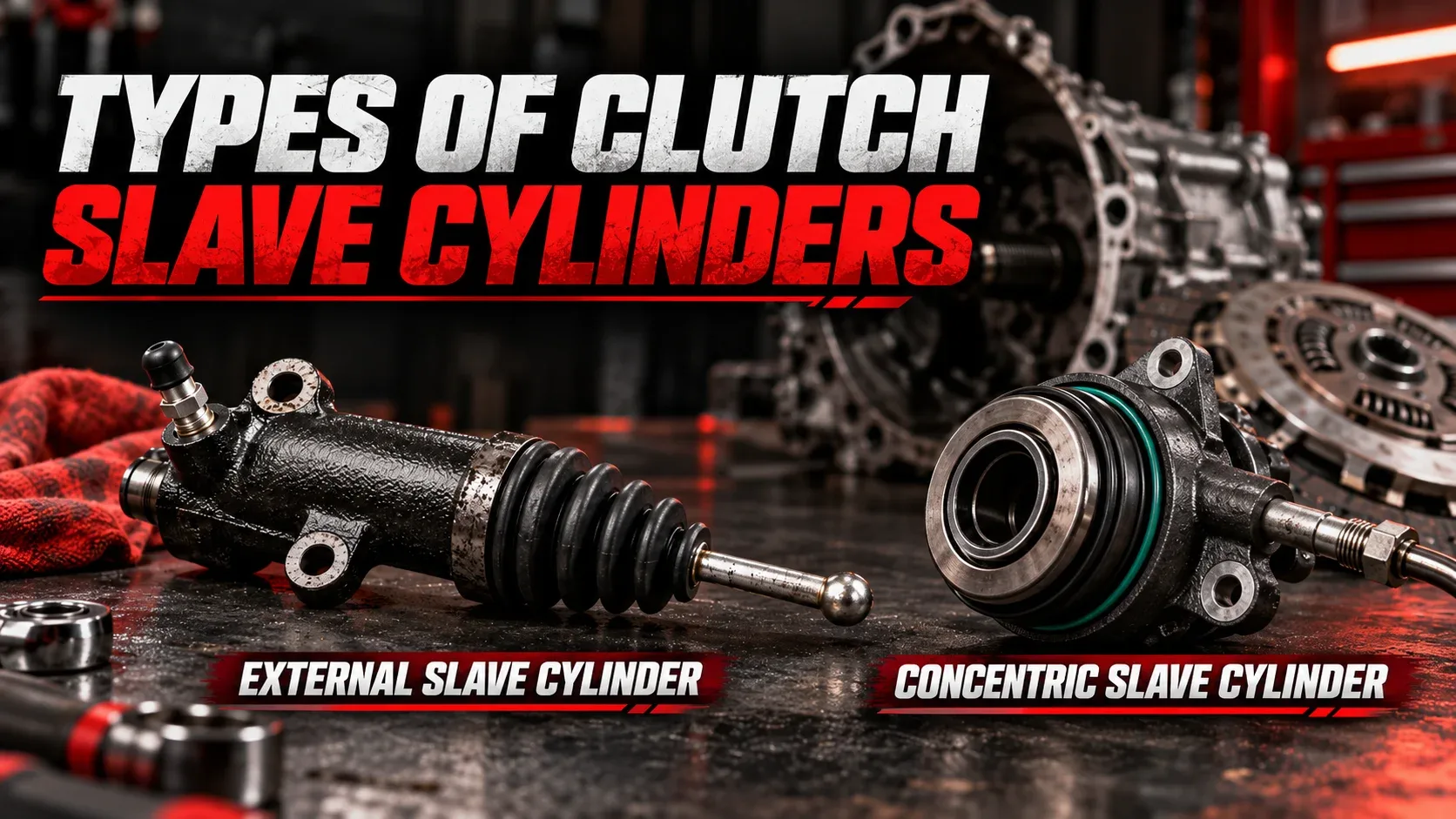
External Slave Cylinder
Usually mounted outside the bellhousing. It pushes on a release fork. Access can be simpler, depending on vehicle packaging and corrosion.
Concentric Slave Cylinder (CSC)
Located inside the bellhousing around the input shaft. It combines hydraulic actuation with the clutch release bearing, and replacement often requires transmission removal.
| Feature | External Cylinder | Concentric Cylinder |
|---|---|---|
| Typical location | Outside bellhousing | Inside bellhousing |
| Release mechanism | Usually moves a fork | Acts directly through release-bearing assembly |
| Leak visibility | May be visible externally | May appear from bellhousing area |
| Repair access | Often more accessible | Often requires transmission removal |
| Labor requirement | Vehicle-dependent | Typically higher |
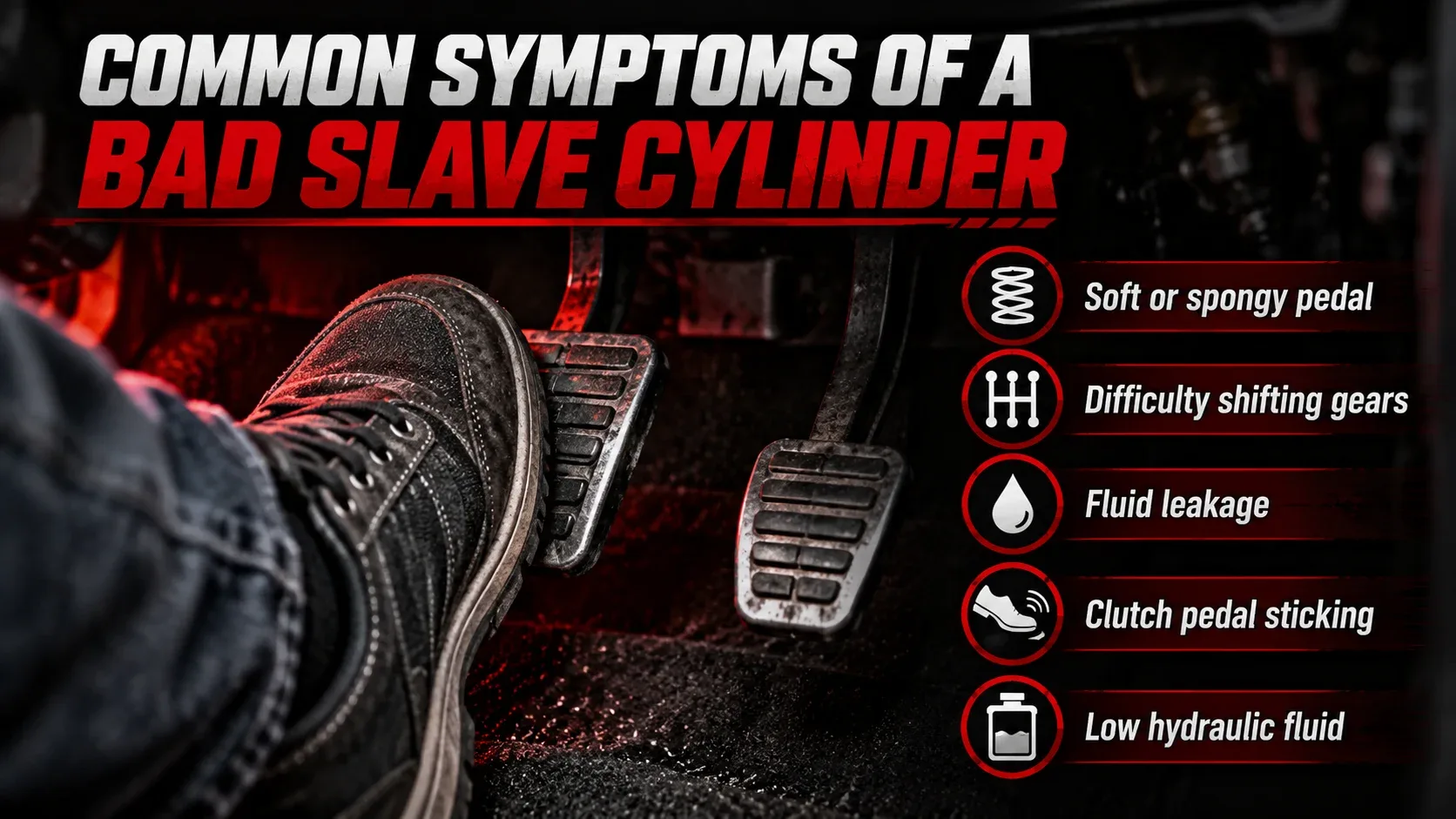
7 Common Symptoms of a Bad Slave Cylinder
A failing slave cylinder may not produce every symptom below. Some signs also occur with a worn clutch, faulty master cylinder, contaminated fluid, or other mechanical problems. Look for patterns rather than treating one symptom as a final diagnosis.
1. Soft or Spongy Clutch Pedal
If the pedal feels unusually light or spongy, there may be air in the hydraulic circuit, a leak, or another loss-of-pressure problem. A faulty slave cylinder is one possible source.
2. Clutch Pedal Stays on the Floor
A pedal that fails to return normally can signal hydraulic trouble, although pedal-return mechanisms, the master cylinder, and other clutch components also need consideration.
3. Difficulty Shifting Gears
When the clutch does not disengage completely, selecting first gear or reverse may become difficult, especially with the engine running. This is a common reason drivers start investigating the clutch hydraulics.
4. Visible Hydraulic-Fluid Leakage
Fluid around an external slave cylinder, its line connection, or the transmission bellhousing may suggest a hydraulic leak. Fluid near the bellhousing should be identified correctly; engine or transmission oil can appear in the same general area.
5. Low Clutch Hydraulic Fluid
A dropping reservoir level may indicate a leak somewhere in the system. Depending on the vehicle, the clutch may use its own reservoir or share a reservoir with the brake hydraulic system. Never assume the slave cylinder is the source without checking.
6. Inconsistent Clutch Disengagement
If the bite point changes or the clutch releases inconsistently, hydraulic pressure may not be acting as expected. The master cylinder, slave cylinder, and air in the lines are possible causes.
7. Grinding When Selecting a Gear
Incomplete clutch disengagement can lead to grinding during gear selection. Worn synchronizers and other transmission faults can also produce grinding, so proper diagnosis matters.
Important safety warning: If the clutch will not disengage reliably, do not continue driving to test it. Stop in a safe place and arrange professional assistance or recovery.
What Causes a Slave Cylinder to Fail?
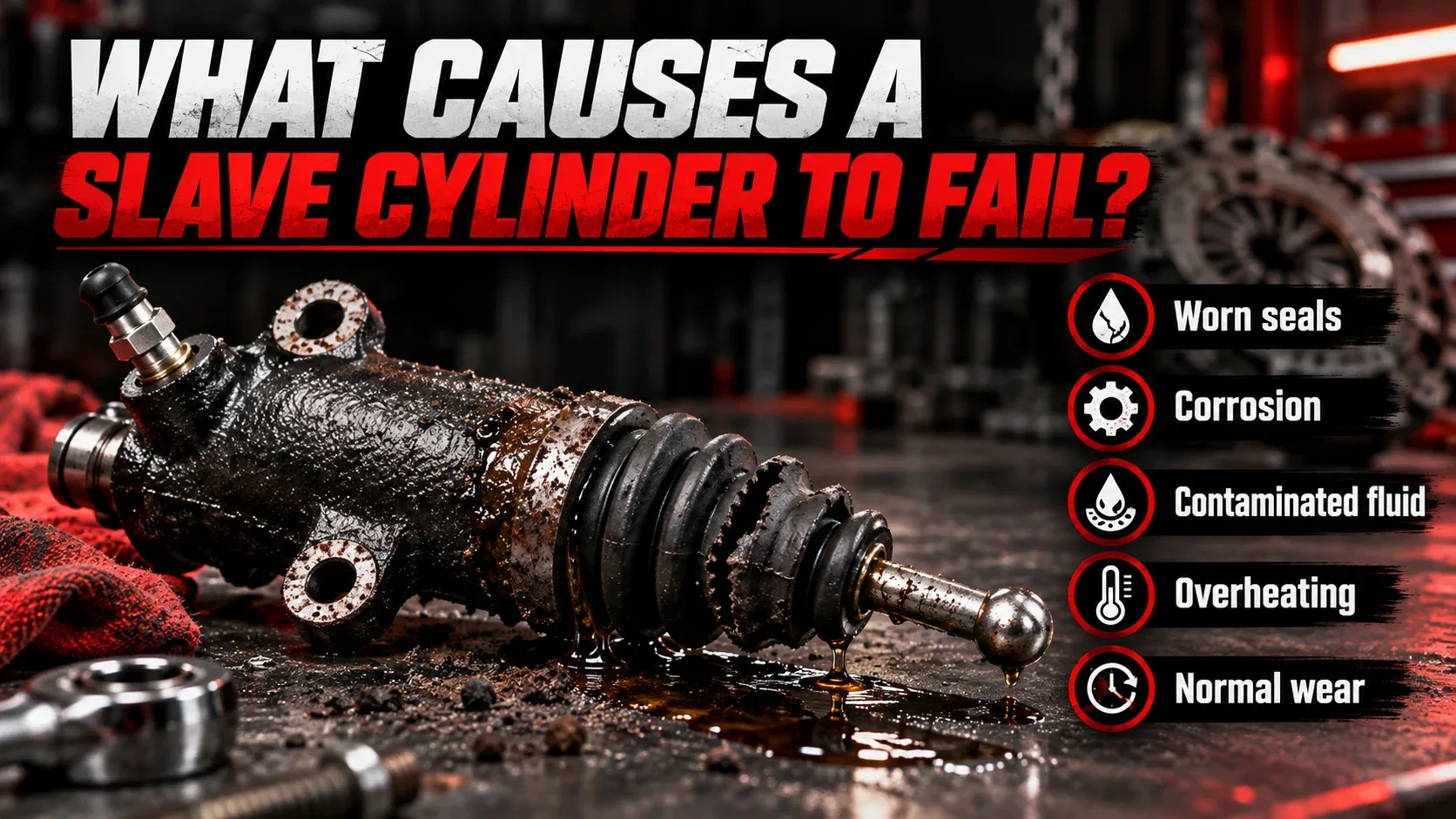
Most slave cylinders rely on internal seals to contain hydraulic pressure. Those seals can deteriorate with age, repeated use, corrosion, contaminated fluid, or damage. Failure may lead to fluid escaping from the cylinder or pressure bypassing an internal seal.
- Seal wear: Aging or damaged seals can allow leaks or pressure loss.
- Corrosion: Moisture and corrosion can damage the cylinder bore or piston surfaces.
- Fluid contamination: Incorrect or degraded fluid can contribute to component damage; use only the specified fluid.
- Line or fitting problems: A damaged hose or connection can mimic a leaking cylinder.
- Installation issues: Incorrect assembly, misalignment, or bleeding problems may impair operation after repair.
Slave Cylinder vs. Master Cylinder: What’s the Difference?
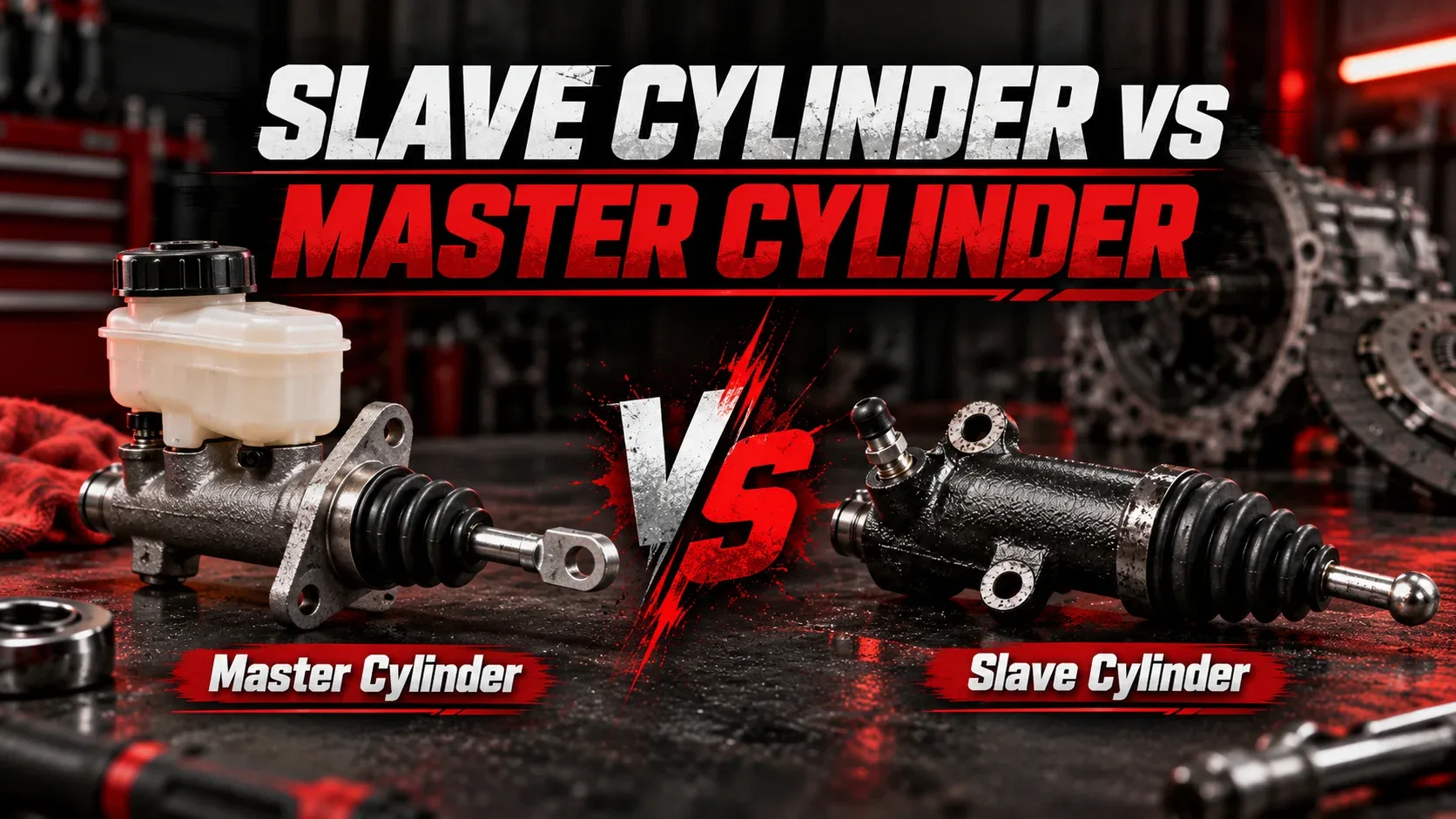
Both components are essential to many hydraulic clutch systems, but they have different jobs. The master cylinder starts the pressure transfer when you press the pedal. The slave cylinder receives that pressure and operates the clutch release mechanism.
| Question | Clutch Master Cylinder | Clutch Slave Cylinder |
|---|---|---|
| Main role | Generates hydraulic pressure | Converts pressure into release movement |
| Typical position | Near clutch pedal/firewall | At or inside transmission bellhousing |
| Possible leak location | Pedal area, firewall, or hydraulic fittings | Cylinder body, line connection, or bellhousing area |
| Possible failure signs | Soft pedal, poor disengagement, pressure loss | Soft pedal, poor disengagement, pressure loss |
| Can symptoms overlap? | Yes | Yes |
The key takeaway: Pedal feel alone usually cannot tell you which cylinder has failed. Inspect the full hydraulic circuit before buying replacement parts.
How to Diagnose a Bad Slave Cylinder
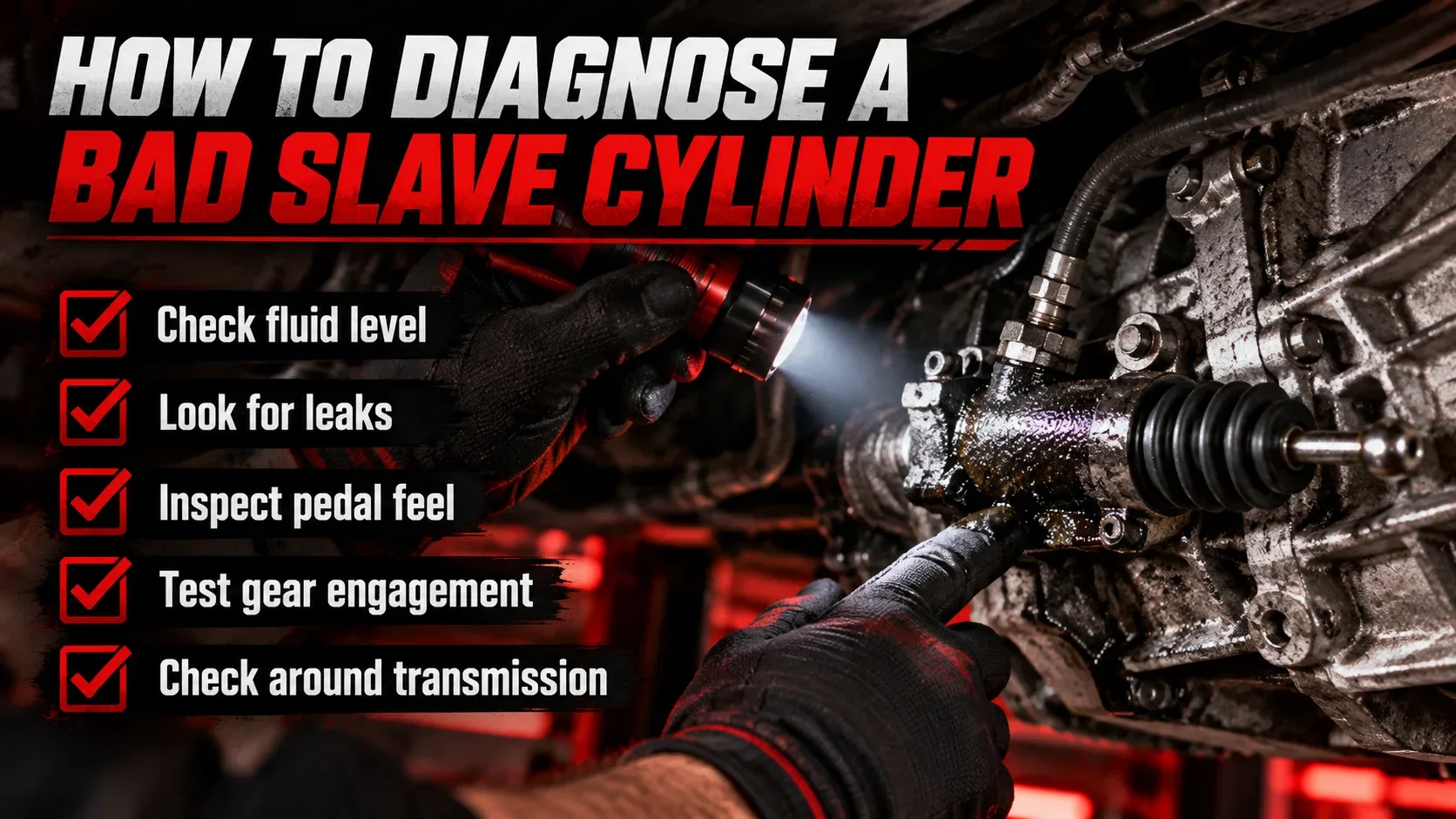
Begin with observations you can make safely while the vehicle is parked, the engine is off, and the parking brake is applied. A professional diagnosis may still be needed to confirm the cause.
- Check the correct fluid reservoir. Follow the owner’s manual and look for an abnormally low level. Do not use an unspecified fluid.
- Look for visible dampness. Inspect accessible areas around the master cylinder, hydraulic lines, external slave cylinder, and bellhousing without going beneath an unsupported car.
- Observe pedal behavior. Note whether the pedal feels spongy, sinks, fails to return, or changes feel after repeated presses.
- Document the conditions. Note whether shifting problems happen with the engine running, after warm-up, or after sitting overnight.
- Arrange confirmation. A qualified technician can inspect for external leaks, internal pressure loss, trapped air, and mechanical clutch faults.
| Observation | Possible Causes to Investigate | Recommended Next Step |
|---|---|---|
| Fluid near external slave cylinder | Cylinder seal, fitting, or hose leak | Identify source and repair |
| Soft pedal without visible leak | Air, internal seal bypass, hidden leak | Hydraulic-system diagnosis |
| Fluid emerging near bellhousing | CSC leak or unrelated oil leak | Confirm fluid and source |
| Hard shifting but normal pedal | Clutch adjustment/actuation or transmission problem | Broader driveline diagnosis |
| Pedal stays on floor | Hydraulic or return-mechanism problem | Do not drive until inspected |
Diagnostic tip: Bleeding can remove trapped air, but it will not permanently repair a leaking cylinder or worn seal. If air returns or fluid continues to drop, the source of the problem must be addressed.
Can You Drive With a Bad Slave Cylinder?
Driving with an unreliable clutch slave cylinder is not recommended. If the clutch fails to disengage properly, you may be unable to select gears normally or control drivetrain engagement as expected. The symptoms may also worsen without much warning.
When the pedal falls to the floor, gear selection becomes unreliable, or fluid is visibly leaking, stop safely and seek professional assistance. Avoid forcing the shifter or attempting an improvised drive to the repair shop.
Do not ignore a shared reservoir: On vehicles where the clutch shares hydraulic fluid with the brakes, a fluid-loss problem requires particular care. If brake performance or pedal feel is affected, the vehicle must not be driven.

How Is a Clutch Slave Cylinder Replaced?
Replacement procedures vary widely by make, model, transmission design, and whether the slave cylinder is external or internal. The following is a general overview—not a vehicle-specific repair manual.
- Confirm the failed component and check related hoses and fittings.
- Obtain the correct replacement part and manufacturer-specified hydraulic fluid.
- Access and remove the faulty component according to the service manual.
- Install the replacement using the specified seals, connections, and torque procedures.
- Bleed the hydraulic circuit using the correct model-specific method.
- Check for leakage, pedal operation, and proper clutch disengagement before returning the vehicle to service.
For an internal concentric slave cylinder, the transmission commonly must be removed to access the part. Because of the labor involved, a repair shop may recommend inspecting the clutch and release components at the same time; any additional replacement should be justified by condition, mileage, and vehicle-specific guidance.
How to Bleed a Clutch Slave Cylinder
Bleeding removes air from the clutch hydraulic system. Air compresses more readily than hydraulic fluid, which can leave the clutch pedal spongy and prevent complete disengagement. A system that has been opened for repairs commonly requires bleeding.
Depending on the vehicle, the specified method may involve a bleed screw, pressure equipment, vacuum equipment, or a manufacturer-defined sequence. Some concentric cylinders have special precautions and may be damaged by an incorrect method.
Use vehicle-specific instructions. Always use the specified fluid, protect painted surfaces from spills, and avoid allowing the reservoir to run dry. If the pedal remains abnormal, have the system inspected instead of repeatedly bleeding it without checking for leaks or failed components.
How Much Does Slave Cylinder Replacement Cost?
Slave cylinder replacement cost depends on the vehicle, component design, parts pricing, labor rate, and whether other repairs are necessary. An accessible external cylinder generally involves less labor than an internal concentric slave cylinder that requires transmission removal.
| Cost Factor | Why It Matters |
|---|---|
| Part type | External and concentric designs have different part costs and availability. |
| Labor access | An internal unit may require substantial transmission-removal labor. |
| Hydraulic service | Fluid, bleeding, and leak testing may be included in the estimate. |
| Related problems | Damaged lines or worn clutch components can affect the total if replacement is justified. |
| Local shop rates | Labor rates vary by region and repair facility. |
For an accurate estimate, request a written quote using your vehicle’s year, make, model, engine, and transmission. Ask the shop to separate parts, labor, fluid, and any suggested additional work. Exact prices should be checked against current local quotes rather than treated as universal.
How to Help Prevent Slave Cylinder Problems
You cannot eliminate wear, but regular attention to the clutch hydraulic system may help catch problems before they become severe.
- Follow the manufacturer’s hydraulic fluid specification and maintenance guidance.
- Have unexplained fluid-level drops investigated promptly.
- Address a change in clutch pedal behavior rather than forcing difficult shifts.
- Have leaking lines, fittings, and cylinders repaired instead of only topping up fluid.
- Ask the technician to inspect clutch hydraulics when related transmission or clutch work is performed.
There is no single guaranteed lifespan for a clutch slave cylinder. Service life varies with component design, conditions, fluid maintenance, and vehicle use.
Frequently Asked Questions About Slave Cylinders
How do I know if my slave cylinder is bad?
Possible signs include a soft or sinking clutch pedal, trouble engaging gears, and fluid leakage around the cylinder or bellhousing. Because a master cylinder, air in the line, or other clutch faults can look similar, a diagnosis is needed before replacement.
Can a slave cylinder fail without leaking?
Yes. Some hydraulic failures involve internal seal bypass or leaks that are not readily visible. A lack of obvious external fluid does not rule out a hydraulic problem.
Can a bad slave cylinder damage the transmission?
Incomplete clutch disengagement may cause grinding or forceful gear changes, which can contribute to wear. Avoid forcing the transmission into gear and have the cause inspected promptly.
Will bleeding fix a bad slave cylinder?
Bleeding may restore operation when trapped air is the only problem. It will not repair a leaking or damaged cylinder. If air keeps returning, the cause must be investigated.
Should I replace the master cylinder with the slave cylinder?
Not automatically. Both should be inspected, but replacement of a functioning master cylinder is not always necessary. Follow the actual diagnosis and vehicle-specific repair guidance.
Is an internal slave cylinder more expensive to replace?
Often, yes, because a concentric slave cylinder usually requires transmission removal. The actual expense depends on the vehicle and shop labor rate.
What fluid does a clutch slave cylinder use?
Use only the hydraulic fluid specified by the vehicle manufacturer. Many systems use specified brake fluid, but requirements vary; never guess or mix incompatible fluids.
Is a clutch slave cylinder the same as a brake wheel cylinder?
No. Both use hydraulic pressure, but a clutch slave cylinder operates the clutch release mechanism, while a wheel cylinder on a drum-brake system applies braking force.
Final Takeaway
A slave cylinder is a small but important part of the hydraulic clutch system. When it fails, the clutch may not disengage reliably, leading to unusual pedal feel, fluid loss, or difficulty shifting. However, these symptoms can have several causes.
Start with safe observations, consult vehicle-specific service information, and have the fault confirmed before replacing parts. If shifting or clutch control becomes unreliable, stop driving and arrange an inspection.
Editorial note: This guide explains general automotive principles and is not a substitute for the repair manual for your specific vehicle. The published version should display the genuine author, any qualified technical reviewer, and accurate update information supplied by the publisher.