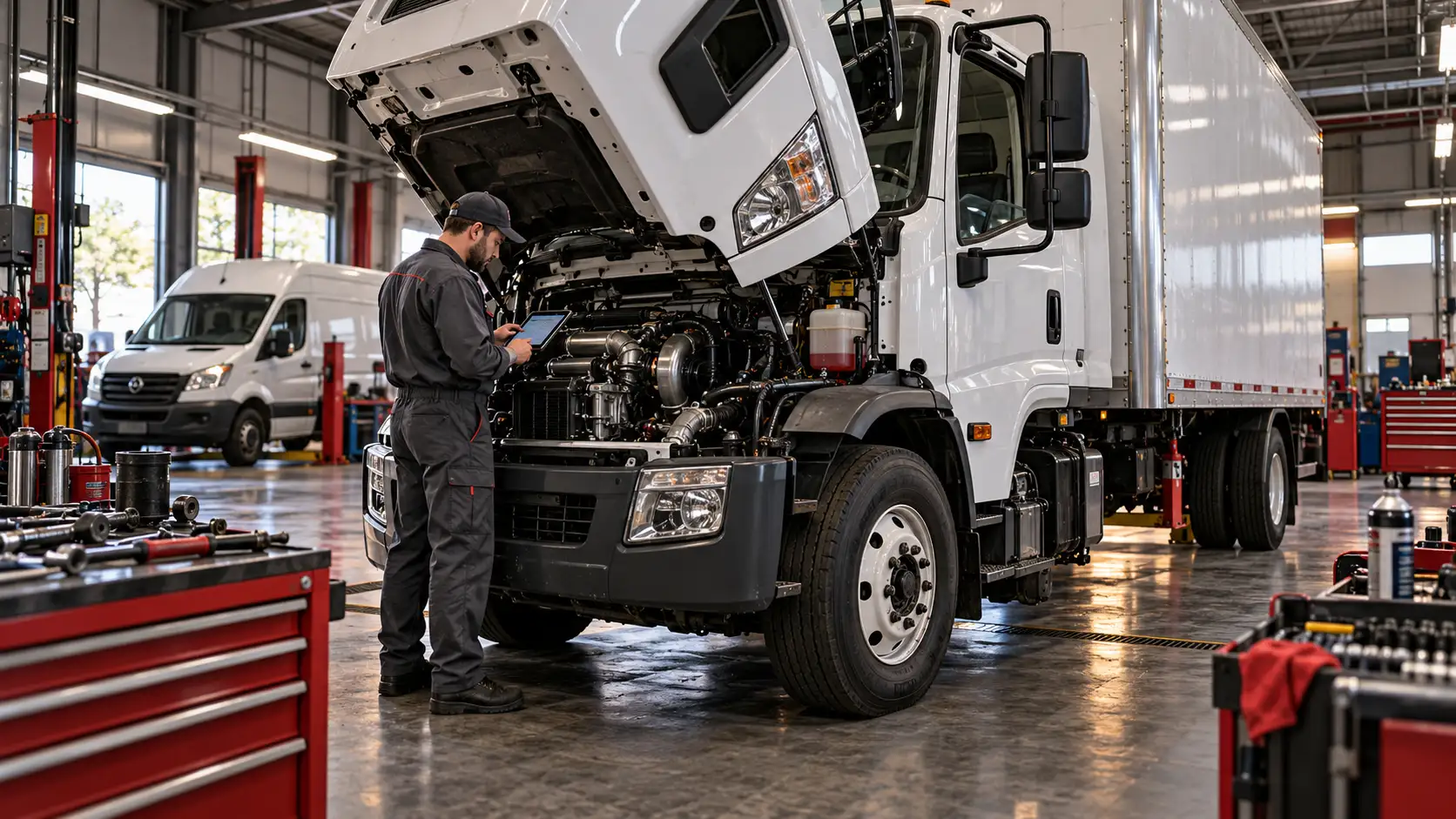
When a work truck refuses to start or a delivery van develops mechanical trouble halfway through its route, the consequences extend beyond the vehicle itself. Missed appointments, delayed shipments, and unexpected expenses can disrupt an entire business day. That’s why commercial vehicle repair plays such an important role in keeping companies productive and their operations running smoothly. Understanding common mechanical problems, recognizing warning signs, and making informed maintenance decisions can help business owners avoid unnecessary complications while extending the working life of their vehicles.
When One Breakdown Disrupts the Entire Schedule
Unlike personal vehicles, commercial trucks and vans often operate under demanding conditions. They may travel hundreds of miles each week, carry heavy equipment, make frequent stops, or spend long hours idling between assignments.
This constant use places considerable stress on engines, transmissions, brakes, and suspension systems.
When a vehicle breaks down, the immediate expense of replacing a damaged component is only part of the problem. Businesses may also face towing charges, missed delivery windows, temporary vehicle rentals, and additional labor costs.
For smaller companies operating just a few vehicles, losing even one truck can significantly affect daily productivity.
Addressing mechanical problems promptly helps reduce these disruptions. More importantly, understanding why a component failed can prevent similar problems from developing again.
Your Engine Usually Gives You a Warning
Engines rarely go from perfect working condition to complete failure without showing some signs of trouble. Unusual noises, reduced power, excessive exhaust smoke, and unexpected changes in fuel consumption can indicate developing mechanical issues.
A persistent knocking sound, for example, might suggest internal wear, while overheating could point to problems with the cooling system.
Dashboard warning lights also deserve attention, even when the vehicle appears to drive normally.
Modern diagnostic equipment allows technicians to retrieve fault codes and examine operating data. However, a fault code identifies an area requiring investigation rather than automatically proving that a specific component needs replacement.
An accurate diagnosis combines electronic information with physical inspections and mechanical testing.
Ignoring early symptoms may allow a manageable issue to develop into a major engine failure, creating far greater expenses and longer periods out of service.
Brake Problems Are Never Worth Postponing
Commercial vehicles frequently operate with substantial loads, making dependable braking performance essential.
Brake components experience wear through repeated stopping, particularly in urban delivery environments where drivers encounter traffic lights, intersections, and congested roads throughout the day.
Squealing, grinding, uneven braking, or changes in pedal response can indicate problems that require professional inspection.
For vehicles equipped with air brakes, pressure irregularities and air leaks can also affect system operation.
Maintenance should include appropriate checks of friction materials, drums or rotors, hoses, connections, and other relevant components.
A common mistake is focusing only on replacing worn brake pads or shoes without investigating why the wear occurred.
Sticking components, improper adjustment, and related mechanical defects can cause replacement parts to deteriorate prematurely.
A thorough inspection helps ensure that repairs address the underlying problem rather than merely its most visible symptom.
Transmission Trouble Can Bring Everything to a Halt
A vehicle’s transmission transfers engine power to the wheels, and problems within this system can quickly affect drivability.
Drivers may notice delayed gear engagement, slipping, unusual vibrations, or difficulty shifting under load. These symptoms should never be dismissed as ordinary wear without investigation.
Transmission problems can result from several causes, including fluid issues, mechanical deterioration, electrical faults, and control-system malfunctions.
The appropriate solution depends on identifying the actual source of the trouble.
Some problems can be corrected through targeted repairs, while extensive internal damage may require rebuilding or replacing the transmission.
Before approving major work, business owners should ask for a clear explanation of the diagnosis, the available repair options, and the expected costs.
Understanding whether a problem affects one component or the entire assembly helps businesses make more confident decisions.
Suspension and Steering Take a Daily Beating
Potholes, uneven pavement, heavy cargo, and repeated turning place considerable pressure on suspension and steering components.
Over time, bushings, shock absorbers, ball joints, and other parts may deteriorate. Drivers might notice excessive bouncing, steering looseness, unusual noises, or uneven tire wear.
These changes can affect vehicle handling and create additional stress on connected components.
For businesses transporting heavy equipment or making frequent deliveries, identifying suspension problems early is particularly important.
Technicians should inspect relevant components and determine whether the issue involves ordinary wear, damaged parts, or improper alignment.
Replacing worn components without checking related systems may leave the original handling problem unresolved.
Keeping steering and suspension systems in proper condition also helps protect tires from unnecessary wear, reducing another recurring operating expense.
Choosing Between Repairing and Replacing a Vehicle
Every business eventually faces the question of whether an aging truck is worth repairing.
A major mechanical failure can make replacement seem like the obvious choice, but the decision deserves a closer look.
Start by comparing the estimated repair cost with the vehicle’s overall condition, remaining useful life, and recent maintenance history.
A truck with a dependable engine and sound structural condition may justify a significant repair. On the other hand, a vehicle experiencing repeated failures across several major systems could become increasingly expensive to operate.
Consider downtime as well. Even a relatively affordable repair may affect profitability if replacement components are difficult to obtain.
Vehicle availability, financing costs, operational needs, and expected future maintenance should all influence the decision.
Rather than focusing exclusively on the current repair bill, evaluate what each option means for the business over the coming years.
Finding a Repair Shop That Understands Work Vehicles
Not every automotive workshop has the equipment or experience needed to service larger trucks, specialized vans, or vehicles fitted with commercial equipment.
When selecting a repair provider, consider the types of vehicles the facility regularly handles.
Ask about diagnostic capabilities, technician qualifications, parts availability, and experience with the specific mechanical systems involved.
Clear communication matters just as much as technical knowledge.
A reliable provider should explain the identified problem, recommend appropriate corrective work, and provide a written estimate before major repairs begin.
Businesses should also ask how unexpected findings will be communicated and whether the provider offers updates when work takes longer than anticipated.
Building a relationship with a dependable workshop can make future repairs easier to coordinate, particularly for companies managing several vehicles.
Keep Repair Records Working in Your Favor
Maintenance paperwork may seem unimportant once a truck returns to service, but accurate records become increasingly valuable as vehicles age.
Document mechanical repairs, replacement parts, service dates, mileage, and recurring problems.
These records help technicians understand previous work and identify patterns that might otherwise go unnoticed.
For example, repeated cooling-system failures could indicate an unresolved underlying problem rather than a series of unrelated component defects.
A vehicle that frequently requires suspension work may also benefit from closer examination of its operating conditions or loading practices.
Businesses can use this information to make informed decisions about maintenance schedules, future repairs, and eventual vehicle replacement.
Even a simple digital spreadsheet can provide useful insight when records are updated consistently.
Reliable Vehicles Keep Businesses Moving Forward
Mechanical problems are an unavoidable part of operating commercial trucks and vans, but the disruption they cause can often be reduced.
Responding promptly to warning signs, choosing qualified technicians, and making decisions based on accurate diagnoses can prevent relatively minor issues from becoming expensive complications.
Regular maintenance also helps identify worn components before they fail during an important delivery or service appointment.
Most importantly, business owners should view vehicle upkeep as an ongoing operational responsibility rather than an expense that matters only when something breaks.
A dependable fleet allows employees to complete their assignments, customers to receive services on schedule, and managers to focus on growing the business instead of constantly rearranging plans around unexpected breakdowns.